Results by title
681 books match the query 'English language' and 18 start with i
I-Writing
The Politics and Practice of Teaching First-Person WritingKaren Surman Paley
Southern Illinois University Press, 2001
In this ethnographic study of the teaching of writing, Karen Surman Paley reveals the social significance of first-person writing and the limitations of a popular taxonomy of composition studies. Paley looks critically at the way social constructionists have created an “Other” in the field of composition studies and named it “expressivist.”
Paley demonstrates the complexity of approaches to teaching writing through an ethnographic study of two composition faculty at Boston College, a programthat some would say is “expressivist.” She prompts her colleagues to consider how family experiences shape the way students feel about and treat people of races, religions, genders, and sexual preferences other than their own. Finally, she suggests to the field of composition that practitioners spend less time shoring up taxonomies of the field and more time sharing pedagogies.
Idiomatic Expressions and Grammatical Constructions
Paul Kay, Laura A. Michaelis, Ivan A. Sag, and Dan Flickinger
CSLI, 2025
Any theory of idioms should be part and parcel of a general theory of grammar, adding as little machinery to one's overall grammatical approach as possible in describing both the syntactic and semantic idiosyncrasies and regularities of this large class of linguistic expressions. This volume presents several lexicalist analyses of idioms within the framework of Sign-Based Construction Grammar, reflecting three guiding principles: many but not all idioms are syntactically and semantically compositional, dividing into distinct classes; idioms are analyzable in terms of a suitably rich lexicon and a set of constructions (lexical and syntactic rules) with corresponding meaning representations; and idiomaticity is a gradient phenomenon, exhibiting wide variation in degree of syntactic flexibility and meaning.
If at First You Don't Succeed?
Writing, Rhetoric, and the Question of FailureSteven J. Corbett
University Press of Colorado, 2025
Images of English
A Cultural History of the LanguageRichard W. Bailey
University of Michigan Press, 1992

Improving Library Services in Support of International Students and English as a Second Language Learners
Leila June Rod-Welch
Assoc of College & Research Libraries, 2019
Improvisations
Methods and Methodologies in Lifespan Writing ResearchRyan J. Dippre
University Press of Colorado, 2025

Indian Accents
Brown Voice and Racial Performance in American Television and FilmShilpa S. Dave
University of Illinois Press, 2013
Inference and Disputed Authorship
Frederick Mosteller and David L. Wallace
CSLI, 2013
Institutional Ethnography
A Theory of Practice for Writing Studies ResearchersMichelle LaFrance
Utah State University Press, 2019
In this book, Michelle LaFrance introduces the theories, rhetorical frames, and methods that ground and animate institutional ethnography. Three case studies illustrate key aspects of the methodology in action, tracing the work of writing assignment design in a linked gateway course, the ways annual reviews coordinate the work of faculty and writing center administrators and staff, and how the key term “information literacy” socially organizes teaching in a first-year English program. Through these explorations of the practice of ethnography within sites of writing and writing instruction, LaFrance shows that IE is a methodology keenly attuned to the material relations and conditions of work in twenty-first-century writing studies contexts, ideal for both practiced and novice ethnographers who seek to understand the actualities of social organization and lived experience in the sites they study.
Institutional Ethnography expands the field’s repertoire of research methodologies and offers the grounding necessary for work with the IE framework. It will be invaluable to writing researchers and students and scholars of writing studies across the spectrum—composition and rhetoric, literacy studies, and education—as well as those working in fields such as sociology and cultural studies.
Instructor Guide for Speechcraft
Discourse Pronunciation for Academic CommunicationWayne B. Dickerson
University of Michigan Press, 2027
Instructor Guide for Speechcraft helps shoulder time-consuming, non-teaching tasks so that instructors can focus on working directly with their students. Four-part lesson plans are adaptable for instructors who want to insert critical pronunciation topics into a non-pronunciation ESL/EFL course. To aid in professional development, each lesson plan includes a commentary on the order of topics in the syllabus and common student questions. Appendices provide pre- and post-tests to make sure that instructors have the resources they need to teach confidently. In addition to the 232 audio recordings for the textbook, instructors can access 37 additional recordings that can be used for class preparation or for in-class progress checks. With the Instructor Guide for Speechcraft, teachers will be able to help their students achieve the clear, intelligible speech they need to pursue their studies in their chosen discipline, to serve as international teaching assistants, and to interact well in their chosen professions.
International Students in First-Year Writing
A Journey Through Socio-Academic SpaceMegan M. Siczek
University of Michigan Press, 2018
This study raises questions about how to support international students:
- In what ways can it inform our practices and policies relative to the internationalization of education and the development of global perspectives and competencies?
- What does it reveal that could impact daily instruction of L2 writing, particularly when it comes to international students’ need to meet the expectations of “university-level writing” in U.S. institutions of higher education?
- On an individual level, what can we learn from these students and about ourselves as a result of our interactions?
Internationalization of US Writing Programs
Shirley K Rose
Utah State University Press, 2018
The Internationalization of US Writing Programs illuminates the role writing programs and WPAs play in defining goals, curriculum, placement, assessment, faculty development, and instruction for international student populations. The volume offers multiple theoretical approaches to the work of writing programs and illustrates a wide range of well-planned writing program–based empirical research projects.
As of 2016, over 425,000 international students were enrolled as undergraduates in US colleges and universities, part of a decade-long trend of increasing numbers of international students coming to the United States for both undergraduate and graduate degrees. Writing program administrators and writing teachers across the country are beginning to recognize this changing demographic as a useful catalyst for change in writing programs, which are tasked with preparing all students, regardless of initial level of English proficiency, for academic and professional writing.
The Internationalization of US Writing Programs is the first collection to focus specifically on this crucial aspect of the roles and responsibilities of WPAs, who are leading efforts to provide all students on their campuses, regardless of nationality or first language, with competencies in writing that will serve them in the academy and beyond.
Contributors: Jonathan Benda, Michael Dedek, Christiane Donahue, Chris W. Gallagher, Kristi Girdharry, Tarez Samra Graban, Jennifer E. Haan, Paula Harrington, Yu-Kyung Kang, Neal Lerner, David S. Martins, Paul Kei Matsuda, Heidi A. McKee, Libby Miles, Susan Miller-Cochran, Matt Noonan, Katherine Daily O’Meara, Carolina Pelaez-Morales, Stacey Sheriff, Gail Shuck, Christine M. Tardy, Stanley Van Horn, Daniel Wilber, Margaret Willard-Traub
Interrogating Privilege
Reflections of a Second Language EducatorStephanie Vandrick
University of Michigan Press, 2013
Interrogating Privilege is a welcome combination of personal essays and academic research, blending theory, analysis, and narrative to explore the function and consequences of privilege in second language education.
While teachers’ focus on the learning process and class goals are quite important, there is not enough attention paid to the types of privilege—or lack thereof—that individuals bring to the classroom. Through chapters that can either stand alone or be read together, with topics such as gender, age, and colonialism (the author is the daughter of missionary parents) in second language teaching, this book seeks to address the experiences of teachers, scholars, and students as “whole persons” and to observe the workings of identity and privilege in the educational setting.
Interrogative Investigations
The Form, Meaning, and Use of English InterrogativesJonathan Ginzburg and Ivan A. Sag
CSLI, 2001
This book closes the gap in research on this subject. By developing the frameworks of Head Driven Phrase Structure Grammar and Situation Semantics, the authors provide an account that rigorously integrates syntactic, semantic, and contextual dimensions of interrogatives. The challenge of providing exhaustive coverage of the interrogative constructions of English, including various constructions that occur solely in dialogue interaction, leads to new insights about a variety of contentious theoretical issues. These include matters of semantic ontology, the quantificational status of wh-phrases, the semantic effect of wh-fronting, the status of constructions in grammatical theory, the integration of illocutionary information in the grammar, and the nature of ellipsis resolution in dialogue. The account is stated with sufficient rigor to enable fairly direct computational implementation.
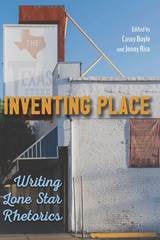
Inventing Place
Writing Lone Star RhetoricsEdited by Casey Boyle and Jenny Rice
Southern Illinois University Press, 2018
Divided into five sections corresponding to Texas regions, essays consider aesthetics, buildings, environment, food and alcohol, private and public memory, and race and class. Among the topics covered by contributors are the Imagine Austin urban planning initiative; the terroir of Texas barbecue; the racist past of Grand Saline, Texas; Denton, Texas, and authenticity as rhetorical; negative views of Texas and how the state (or any place) is subject to reinvention; social, historical, and economic networks of place and their relationship to the food we eat; and Texas gun culture and working-class character.
Invention as a Social Act
Karen Burke LevFevre. Foreword by Frank D'Angelo
Southern Illinois University Press, 1986
The act of inventing relates to the process of inquiry, to creativity, to poetic and aesthetic invention.
Building on the work of rhetoricians, philosophers, linguists, and theorists in other disciplines, Karen Burke LeFevre challenges a widely-held view of rhetorical invention as the act of an atomistic individual. She proposes that invention be viewed as a social act, in which individuals interact dialectically with society and culture in distinctive ways.
Even when the primary agent of invention is an individual, invention is pervasively affected by relationships of that individual to others through language and other socially shared symbol systems. LeFevre draws implications of a view of invention as a social act for writers, researchers, and teachers of writing.

It’s All Greek
Borrowed Words and their HistoriesAlexander Tulloch
Bodleian Library Publishing, 2018
This book offers a word-by-word look at the influence of Greek on everyday words in English, telling the stories behind the etymological developments of each example and tracing their routes into modern English via Latin and European languages. It also explains connections with ancient Greek culture, in particular mythology, politics, and warfare, and includes proverbs and quotations from Greek literature. Revealing how deeply indebted we are to the language spoken in Athens 2,500 years ago, this book is the perfect gift for any logophile.
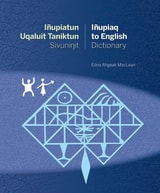
Iñupiatun Uqaluit Taniktun Sivuninit/Iñupiaq to English Dictionary
Compiled by Edna MacLean
University of Alaska Press, 2014