Results by title
511 books match the query 'Government policy' and 27 start with i

I Know It’s Dangerous
Why Mexicans Risk Their Lives to Cross the BorderLynnaire M. Sheridan
University of Arizona Press, 2009
As an Australian national, Lynnaire Sheridan brings a refreshingly neutral voice to this hot-button topic. With data gathered over two years of living in Baja California, Mexico, Sheridan draws out individual stories, motivations, and conceptions of risk that ultimately allow us a deeper understanding of migration. Sheridan enriches the migrants’ stories with examinations of popular songs, graffiti art on the border, analyses of newspaper articles, and in-depth interviews with migrants. Together these narratives show us that risk has become a strong motivating factor for migrants and that stricter border policies have not necessarily stemmed the rates of migration; they have merely changed how people migrate.
Sheridan’s findings have broad implications for both those interested in migration from Mexico to the United States and international migration scholars. This book will appeal to a range of disciplines in the humanities, from anthropology and criminology to art and ethnic studies. It will also resonate among legal professionals, policy makers, and social workers.
While numerous books have focused on the act of migration and its ripples across both the United States and Mexico, this book is unique in its attention to migrants in Mexico and its ability to draw out their individual stories.

If They Don't Bring Their Women Here
Chinese Female Immigration before ExclusionGeorge Anthony Peffer
University of Illinois Press, 1999
Seven years before the Chinese Exclusion Act of 1882, the Page Law sought to stem the tide of Chinese prostitutes entering the United States. Yet during these seven years, it was not just prostitutes but all Chinese females who encountered at best hostility and at worst expulsion when they reached the "Golden Door."
George Anthony Peffer looks at enforcement of immigration laws to provide the first detailed account of Chinese American women's lives in the pre-exclusion era. Peffer documents the habeas corpus trials in which the wives and daughters of Chinese laborers were required to prove their status as legal immigrants or return to China. He also surveys the virulently anti-Chinese coverage of these trials and the issue of Chinese immigration received in California newspapers, confirming that Chinatown's prostitution industry so dominated the popular imagination as to render other classes of female immigrants all but invisible.
Insightful and groundbreaking, If They Don't Bring Their Women Here amplifies the voices of Chinese immigrant women and establishes a place for them within the historiographic framework of Chinese American studies.
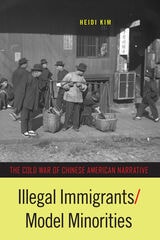
Illegal Immigrants/Model Minorities
The Cold War of Chinese American NarrativeHeidi Kim
Temple University Press, 2021
In the Cold War era, Chinese Americans were caught in a double-bind. The widespread stigma of illegal immigration, as it was often called, was most easily countered with the model minority, assimilating and forming nuclear families, but that in turn led to further stereotypes. In Illegal Immigrants/Model Minorities, Heidi Kim investigates how Chinese American writers navigated a strategy to normalize and justify the Chinese presence during a time when fears of Communism ran high.
Kim explores how writers like Maxine Hong Kingston, Jade Snow Wong, and C. Y. Lee, among others, addressed issues of history, family, blood purity, and law through then-groundbreaking novels and memoirs. Illegal Immigrants/Model Minorities also uses legal cases, immigration documents, and law as well as mass media coverage to illustrate how writers constructed stories in relation to the political structures that allowed or disallowed their presence, their citizenship, and their blended identity.
Kim illuminates the rapidly shifting political and social pressures on Chinese American authors who selectively concealed, revealed, and reconstructed issues of citizenship, belonging, and inclusion in their writing.

Imaginary Lines
Border Enforcement and the Origins of Undocumented Immigration, 1882-1930By Patrick Ettinger
University of Texas Press, 2009
Southwest Book Award, Border Regional Library Association, 2011
Although popularly conceived as a relatively recent phenomenon, patterns of immigrant smuggling and undocumented entry across American land borders first emerged in the late nineteenth century. Ingenious smugglers and immigrants, long and remote boundary lines, and strong push-and-pull factors created porous borders then, much as they do now.
Historian Patrick Ettinger offers the first comprehensive historical study of evolving border enforcement efforts on American land borders at the turn of the twentieth century. He traces the origins of widespread immigrant smuggling and illicit entry on the northern and southern United States borders at a time when English, Irish, Chinese, Italian, Russian, Lebanese, Japanese, Greek, and, later, Mexican migrants created various "backdoors" into the United States. No other work looks so closely at the sweeping, if often ineffectual, innovations in federal border enforcement practices designed to stem these flows.
From upstate Maine to Puget Sound, from San Diego to the Lower Rio Grande Valley in Texas, federal officials struggled to adapt national immigration policies to challenging local conditions, all the while battling wits with resourceful smugglers and determined immigrants. In effect, the period saw the simultaneous "drawing" and "erasing" of the official border, and its gradual articulation and elaboration in the midst of consistently successful efforts to undermine it.
Immigrant Identity and the Politics of Citizenship
A Collection of Articles from the Journal of American Ethnic HistoryJohn J Bukowczyk
University of Illinois Press, 2016
Immigrants and Boomers
Forging a New Social Contract for the Future of AmericaDowell Myers
Russell Sage Foundation, 2007
Immigrants and Welfare
The Impact of Welfare Reform on America's NewcomersMichael E. Fix
Russell Sage Foundation, 2009
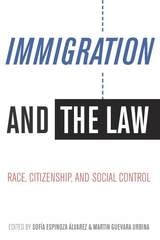
Immigration and the Law
Race, Citizenship, and Social ControlEdited by Sofía Espinoza Álvarez and Martin Guevara Urbina
University of Arizona Press, 2018
In today’s highly charged atmosphere, Immigration and the Law gives readers a grounded and broad overview of U.S. immigration law in a single book. Encompassing issues such as shifting demographics, a changing criminal justice system, and volatile political climate, the book is critically significant for academic, political, legal, and social arenas.
The contributors offer sound evidence to expose the historical legacy of violence, brutality, manipulation, oppression, marginalization, prejudice, discrimination, power, and control. Demystifying the ways that current ideas of ethnicity, race, gender, and class govern immigration and uphold the functioning and legitimacy of the criminal justice system, Immigration and the Law presents a variety of studies and perspectives that offer a pathway toward addressing long-neglected but vital topics in the discourse on immigration and the law.
Contributors
Sofía Espinoza Álvarez
Steven W. Bender
Leo R. Chávez
Arnoldo De León
Daniel Justino Delgado
Roxanne Lynn Doty
Brenda I. Gill
Ruth Gomberg-Muñoz
Peter Laufer
Lupe S. Salinas
Mary C. Sengstock
Martin Guevara Urbina
Claudio G. Vera Sánchez
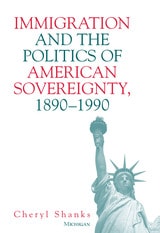
Immigration and the Politics of American Sovereignty, 1890-1990
Cheryl Shanks
University of Michigan Press, 2001

Immigration, Poverty, and Socioeconomic Inequality
David Card
Russell Sage Foundation, 2013

Imposing Decency
The Politics of Sexuality and Race in Puerto Rico, 1870–1920Eileen J. Suárez Findlay
Duke University Press, 2000
In showing how political projects and alliances in Puerto Rico were affected by racially contingent definitions of “decency” and “disreputability,” Findlay argues that attempts at moral reform and the state’s repression of “sexually dangerous” women were weapons used in batttles between elite and popular, American and Puerto Rican, and black and white. Based on a thorough analysis of popular and elite discourses found in both literature and official archives, Findlay contends that racialized sexual norms and practices were consistently a central component in the construction of social and political orders. The campaigns she analyzes include an attempt at moral reform by elite male liberals and a movement designed to enhance the family and cleanse urban space that ultimately translated into repression against symbollically darkened prostitutes. Findlay also explores how U.S. officials strove to construct a new colonial order by legalizing divorce and how feminist, labor, and Afro-Puerto Rican political demands escalated after World War I, often focusing on the rehabilitation and defense of prostitutes.
Imposing Decency forces us to rethink previous interpretations of political chronologies as well as reigning conceptualizations of both liberalism and the early working-class in Puerto Rico. Her work will appeal to scholars with an interest in Puerto Rican or Latin American studies, sexuality and national identity, women in Latin America, and general women’s studies.

In Defense of Public Lands
The Case against Privatization and TransferSteven Davis
Temple University Press, 2018
Debates continue to rage over the merits or flaws of public land and whether or not it should be privatized—or at least, radically reconfigured in some way. In Defense of Public Lands offers a comprehensive refutation of the market-oriented arguments. Steven Davis passionately advocates that public land ought to remain firmly in the public’s hands. He reviews empirical data and theoretical arguments from biological, economic, and political perspectives in order to build a case for why our public lands are an invaluable and irreplaceable asset for the American people.
In Defense of Public Lands briefly lays out the history and characteristics of public lands at the local, state, and federal levels while examining the numerous policy prescriptions for their privatization or, in the case of federal lands, transfer. He considers the dimensions of environmental health; markets and valuation of public land, the tensions between collective values and individual preferences, the nature and performance of bureaucratic management, and the legitimacy of interest groups and community decision-making. Offering a fair, good faith overview of the privatizers’ best arguments before refuting them, this timely book contemplates both the immediate and long-term future of our public lands.
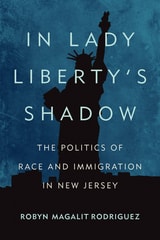
In Lady Liberty's Shadow
The Politics of Race and Immigration in New JerseyRobyn Magalit Rodriguez
Rutgers University Press, 2017
In Lady Liberty’s Shadow examines popular white perceptions of danger represented by immigrants and their children, as well the specter that lurks at the edges of suburbs in the shape of black and Latino urban underclasses and the ever more nebulous hazard of (presumed-Islamic) terrorism that threatening to undermine “life as we know it.” Robyn Magalit Rodriguez explores the impact of anti-immigrant municipal ordinances on a range of immigrant groups living in varied suburban communities, from undocumented Latinos in predominantly white suburbs to long-established Asian immigrants in “majority-minority” suburbs. The “American Dream” that suburban life is supposed to represent is shown to rest on a racialized, segregated social order meant to be enjoyed only by whites. Although it is a case study of New Jersey, In Lady Liberty’s Shadow offers crucial insights that can shed fresh light on the national immigration debate.
For more information, go to: https://www.facebook.com/inlibertysshadow
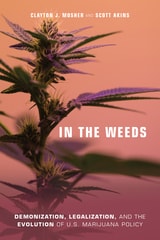
In the Weeds
Demonization, Legalization, and the Evolution of U.S. Marijuana PolicyClayton J. Mosher and Scott Aikins
Temple University Press, 2019
More and more states are legalizing marijuana in some form. Moreover, a majority of the U.S. population is in favor of the drug for recreational use. In the Weeds looks at how our society has become more permissive in the past 150 years—even though marijuana is still considered a Schedule I drug by the American government.
Sociologists Clayton Mosher and Scott Akins take a deep dive into marijuana policy reform, looking at the incremental developments and the historical, legal, social, and political implications of these changes. They investigate the effects, medicinal applications, and possible harms of marijuana. In the Weeds also considers arguments that youth will be heavy users of legalized cannabis, and shows how “weed” is demonized by exaggerations of the drug’s risks and claims of its lack of medicinal value. Mosher and Akins end their timely and insightful book by tracing the distinct paths to the legalization of recreational marijuana in the United States and other countries as well as discussing what the future of marijuana law holds.
Indian Migration and Empire
A Colonial Genealogy of the Modern StateRadhika Mongia
Duke University Press, 2018
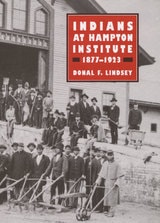
Indians at Hampton Institute, 1877-1923
Donal F. Lindsey
University of Illinois Press, 1995
Founded in 1868, Hampton Institute educated almost 1400 members of sixty-five Native American peoples. Donal F. Lindsey examines the interactions among Indigenous people, Blacks, and whites at the nation’s premier industrial school for racial minorities.
Lindsey's analysis traces the rise and decline of the program for Indigenous Americans while analyzing the program’s impact on the campaign for Native education. Lindsey also examines how the two marginalized races at Hampton viewed each other and white society. Though integration prevailed in much of student life, it resulted in even greater accommodation to a racist society. The weaknesses and strengths attributed to one race were used with “tender violence” to remake the other, in a program in which the powerful and the powerless remained so regardless of segregation or integration.

Indie Porn
Revolution, Regulation, and ResistanceZahra Stardust
Duke University Press, 2024

Indigenous Peoples, National Parks, and Protected Areas
A New Paradigm Linking Conservation, Culture, and RightsEdited by Stan Stevens
University of Arizona Press, 2014
Indigenous Peoples, National Parks, and Protected Areas integrates wide-ranging, multidisciplinary intellectual perspectives with detailed analyses of new kinds of protected areas in diverse parts of the world. Eleven geographers and anthropologists contribute nine substantive fieldwork-based case studies. Their contributions offer insights into experience with new conservation approaches in an array of countries, including Australia, Canada, Guatemala, Honduras, Nepal, Nicaragua, Peru, South Africa, and the United States.
This book breaks new ground with its in-depth exploration of changes in conservation policies and practices—and their profound ramifications for Indigenous peoples, protected areas, and social reconciliation.

Inequity in the Technopolis
Race, Class, Gender, and the Digital Divide in AustinEdited by Joseph Straubhaar, Jeremiah Spence, Zeynep Tufekci, and Roberta G. Lentz
University of Texas Press, 2012
Over the past few decades, Austin, Texas, has made a concerted effort to develop into a “technopolis,” becoming home to companies such as Dell and numerous start-ups in the 1990s. It has been a model for other cities across the nation that wish to become high-tech centers while still retaining the livability to attract residents. Nevertheless, this expansion and boom left poorer residents behind, many of them African American or Latino, despite local and federal efforts to increase lower-income and minority access to technology.
This book was born of a ten-year longitudinal study of the digital divide in Austin—a study that gradually evolved into a broader inquiry into Austin’s history as a segregated city, its turn toward becoming a technopolis, what the city and various groups did to address the digital divide, and how the most disadvantaged groups and individuals were affected by those programs.
The editors examine the impact of national and statewide digital inclusion programs created in the 1990s, as well as what happened when those programs were gradually cut back by conservative administrations after 2000. They also examine how the city of Austin persisted in its own efforts for digital inclusion by working with its public libraries and a number of local nonprofits, and the positive impact those programs had.
Innovation and Public Policy
Austan Goolsbee and Benjamin F. Jones
University of Chicago Press, 2021
In advanced economies like the United States, innovation has long been recognized as a central force for increasing economic prosperity and human welfare. Today, the US government promotes innovation through various mechanisms, including tax credits for private-sector research, grant support for basic and applied research, and institutions like the Small Business Innovation Research Program of the National Science Foundation. Drawing on the latest empirical and conceptual research, Innovation and Public Policy surveys the key components of innovation policy and the social returns to innovation investment. It examines mechanisms that can advance the pace of invention and innovative activity, including expanding the research workforce through schooling and immigration policy and funding basic research. It also considers scientific grant systems for funding basic research, including those at institutions like the National Institutes of Health and the National Science Foundation, and investigates the role of entrepreneurship policy and of other institutions that promote an environment conducive to scientific breakthroughs.

Inside the Eagle's Head
An American Indian CollegeAngelle A. Khachadoorian
University of Alabama Press, 2010
Where tradition meets bureaucracy—Native students redefine education on their own terms.
Inside the Eagle’s Head offers a compelling and deeply human portrait of the Southwestern Indian Polytechnic Institute (SIPI), a federally operated college serving Native American students from across the United States. In it, anthropologist Angelle Khachadoorian draws on years of teaching experience and extensive student interviews to illuminate the challenges and successes of life at SIPI. Far more than an institutional history, this book captures the voices of students navigating a complex educational landscape shaped by federal oversight, tribal identity, and personal ambition.
Through vivid metaphors—SIPI as a family, a prison, a reservation—students articulate their struggles and resilience within a system that is at once empowering and restrictive. Khachadoorian’s analysis reveals how SIPI’s hybrid nature—part community college, part BIA legacy—creates both opportunities and obstacles for its students. With empathy and insight, she explores how young Native Americans forge identity, community, and purpose in a setting few outsiders understand. Inside the Eagle’s Head is essential reading for educators, policymakers, and anyone interested in the intersection of Indigenous education, federal institutions, and student agency. It is a powerful testament to the transformative potential of listening to students’ stories.

Institutional Theatrics
Performing Arts Policy in Post-Wall BerlinBrandon Woolf
Northwestern University Press, 2021
2022 Outstanding Book Award Finalist from the Association for Theater in Higher Education (ATHE)
In a city struggling to determine just how neoliberal it can afford to be, what kinds of performing arts practices and institutions are necessary—and why?
Since the fall of the Berlin Wall, political and economic agendas in the reunified German capital have worked to dismantle long-standing traditions of state‑subsidized theater even as the city has redefined itself as a global arts epicenter. Institutional Theatrics charts the ways theater artists have responded to these shifts and crises both on- and offstage, offering a method for rethinking the theater as a vital public institution.
What is the future of the German theater, grounded historically in large ensembles, extensive repertoires, and auteur directors? Examining the restructuring of Berlin’s theatrical landscape and most prominent performance venues, Brandon Woolf argues that cultural policy is not simply the delegation and distribution of funds. Instead, policy should be thought of as an artistic practice of institutional imagination. Woolf demonstrates how performance can critique its patron institutions in order to transform the relations between the stage and the state, between the theater and the infrastructures of its support. Bold, nuanced, and rigorously documented, Institutional Theatrics offers new insights about art, its administration, and the forces that influence cultural production.

International Differences in Entrepreneurship
Edited by Josh Lerner and Antoinette Schoar
University of Chicago Press, 2010
Often considered one of the major forces behind economic growth and development, the entrepreneurial firm can accelerate the speed of innovation and dissemination of new technologies, thus increasing a country's competitive edge in the global market. As a result, cultivating a strong culture of entrepreneurial thinking has become a primary goal throughout the world.
Surprisingly, there has been little systematic research or comparative analysis to show how the growth of entrepreneurship differs among countries in various stages of development. International Differences in Entrepreneurship fills this void by explaining how a country's institutional differences, cultural considerations, and personal characteristics can affect the role that entrepreneurs play in its economy. Developing an understanding of the origins of entrepreneurs as well as the choices they make and the complexity of their activities across countries and industries are of central importance to this volume. In addition, contributors consider how environmental factors of individual economies, such as market regulation, government subsidies for banks, and support for entrepreneurial culture affect the industry and the impact that entrepreneurs have on growth in developing nations.
Invoking the Invisible Hand
Social Security and the Privatization DebatesRobert Asen
Michigan State University Press, 2009
In Invoking the Invisible Hand Robert Asen scrutinizes contemporary debates over proposals to privatize Social Security. Asen argues that a rights-based rhetoric employed by Social Security's original supporters enabled advocates of privatization to align their proposals with the widely held belief that Social Security functions simply as a return on a worker's contributions and that it is not, in fact, a social insurance program.
By analyzing major debates over a preeminent American institution, Asen reveals the ways in which language is deployed to identify problems for public policy, craft policy solutions, and promote policies to the populace. He shows how debate participants seek to create favorable contexts for their preferred policies and how they connect these policies to idealized images of the nation.

Islanders in the Empire
Filipino and Puerto Rican Laborers in Hawai'iJoAnna Poblete
University of Illinois Press, 2014
JoAnna Poblete's Islanders in the Empire: Filipino and Puerto Rican Laborers in Hawai'i takes an in-depth look at how the two groups fared in a third new colony, Hawai'i. Using plantation documents, missionary records, government documents, and oral histories, Poblete analyzes how the workers interacted with Hawaiian government structures and businesses, how U.S. policies for colonial workers differed from those for citizens or foreigners, and how policies aided corporate and imperial interests.
A rare tandem study of two groups at work on foreign soil, Islanders in the Empire offers a new perspective on American imperialism and labor issues of the era.
Islands of Sovereignty
Haitian Migration and the Borders of EmpireJeffrey S. Kahn
University of Chicago Press, 2018

Israel/Palestine and the Queer International
Sarah Schulman
Duke University Press, 2012
As Schulman learns more, she questions the contradiction between Israel's investment in presenting itself as gay friendly—financially sponsoring gay film festivals and parades—and its denial of the rights of Palestinians. At the same time, she talks with straight Palestinian activists about their position in relation to homosexuality and gay rights in Palestine and internationally. Back in the United States, Schulman draws on her extensive activist experience to organize a speaking tour for some of the Palestinian queer leaders whom she had met and trusted. Dubbed "Al-Tour," it takes the activists to LGBT community centers, conferences, and universities throughout the United States. Its success solidifies her commitment to working to end Israel's occupation of Palestine, and it kindles her larger hope that a new "queer international" will emerge and join other movements demanding human rights across the globe.