Results by title
679 books match the query 'Historiography' and 27 start with i
Ibn Khaldun
An Essay in ReinterpretationAziz Al-Azmeh
Central European University Press, 2003
Since its publication in 1981, this book has established itself as the major new interpretation of the historical concept of Ibn Khaldûn, the great figure of Arab-Islamic letters and of historical thought overall--a figure generally thought to be on a par with Thucydides, Vico, Herder and others of similar stature.
The author has eschewed the ahistorical interpretations to which Ibn Khaldûn has normally been subjected, both by authors who have sought unduly to modernise his thought, and by those who sought to freeze it in stereotypical models of Islamic philosophy.
Ibn Khaldûn is not only a true historical source of his time; he is also taken as the unchallenged sociological and cultural interpreter of medieval North Africa and much of medieval and modern Arab-Islamic culture as well. The validity of his discourse is considered to be so universal as to confer upon his ideas the status of progenitor--or, at least, anticipator--of a great variety of modern ideas.
Ideologies and National Identities
The Case of Twentieth-Century Southeastern EuropeMark Mazower
Central European University Press, 2004

Images in Spite of All
Four Photographs from AuschwitzGeorges Didi-Huberman
University of Chicago Press, 2008
Available today because they were smuggled out of the camp and into the hands of Polish resistance fighters, the photographs show a group of naked women being herded into the gas chambers and the cremation of corpses that have just been pulled out. Georges Didi-Huberman’s relentless consideration of these harrowing scenes demonstrates how Holocaust testimony can shift from texts and imaginations to irrefutable images that attempt to speak the unspeakable. Including a powerful response to those who have criticized his interest in these images as voyeuristic, Didi-Huberman’s eloquent reflections constitute an invaluable contribution to debates over the representability of the Holocaust and the status of archival photographs in an image-saturated world.
Imagined Empires
Tracing Imperial Nationalism in Eastern and Southeastern EuropeDimitris Stamatopoulos
Central European University Press, 2021
The Balkans offer classic examples of how empires imagine they can transform themselves into national states (Ottomanism) and how nation-states project themselves into future empires (as with the Greek “Great Idea” and the Serbian “Načertaniye”). By examining the interaction between these two aspirations this volume sheds light on the ideological prerequisites for the emergence of Balkan nationalisms.
With a balance between historical and literary contributions, the focus is on the ideological hybridity of the new national identities and on the effects of “imperial nationalisms” on the emerging Balkan nationalisms. The authors of the twelve essays reveal the relation between empire and nation-state, proceeding from the observation that many of the new nation-states acquired some imperial features and behaved as empires. This original and stimulating approach reveals the imperialistic nature of so-called ethnic or cultural nationalism.

Imperfection and Defeat
The Role of Aesthetic Imagination in Human SocietyVirgil Nemoianu
Central European University Press, 2006
Imports and Immigrants
Near Eastern Contacts with Iron Age CreteGail L. Hoffman
University of Michigan Press, 1998
Drawing together all the evidence and arguments for Near Eastern immigrants in Crete, Hoffman demonstrates there are basic problems with the accepted interpretations. Evidence of continued technical expertise casts doubt on the necessity of reintroduction, while careful scrutiny of the evidence supporting immigrant craftsmen reveals many inadequacies in the currently accepted analyses.
Imports and Immigrants identifies the need for reassessing all dimensions of the question of artistic relationships between ancient Greece and other regions of the Aegean basin and suggests new avenues of inquiry in this important debate. The volume also reassesses arguments made for the presence of Near Eastern immigrants in Crete. This book includes a catalogue indispensable for future work on these issues and illustrations of most of the known imports to Crete.
Gail L. Hoffman is Associate Professor of Greek Art and Archaeology, Department of Classics, Yale University.

In Pursuit of German Memory
History, Television, and Politics after AuschwitzWulf Kansteiner
Ohio University Press, 2006
The collective memories of Nazism that developed in postwar Germany have helped define a new paradigm of memory politics. From Europe to South Africa and from Latin America to Iraq, scholars have studied the German case to learn how to overcome internal division and regain international recognition.
In Pursuit of German Memory: History, Television, and Politics after Auschwitz examines three arenas of German memory politics—professional historiography, national politics, and national public television—that have played key roles in the reinvention of the Nazi past in the last sixty years. Wulf Kansteiner shows that the interpretations of the past proposed by historians, politicians, and television producers reflect political and generational divisions and an extraordinary concern for Germany's image abroad. At the same time, each of these theaters of memory has developed its own dynamics and formats of historical reflection.
Kansteiner’s analysis of the German scene reveals a complex social geography of collective memory. In Pursuit of German Memory underscores the fact that German memories of Nazism, like many other collective memories, combine two seemingly contradictory qualities: They are highly mediated and part of a global exchange of images and story fragments but, at the same time, they can be reproduced only locally, in narrowly circumscribed networks of communication.
In Search of Dreamtime
The Quest for the Origin of ReligionTomoko Masuzawa
University of Chicago Press, 1993
This ambivalence of contemporary scholars echoes their ambivalence toward the ancestral "giants" of the discipline: Durkheim, Müller, and Freud. Masuzawa shows that the speculations of these three men on the origins of religion render the very notion of time and history problematic and contain powerful instruments for dislodging the position of "Western man" as the keeper of knowledge. Her critical rereading of these forefathers is framed by a compelling discussion of the postmodernist subversion of absolute origins in the works of Walter Benjamin and Rosalind Krauss and a comparison of Mircea Eliade and Nancy Munn's accounts of the Australian aboriginal "dreamtime." Engaging a number of critical issues within the burgeoning field of cultural studies, Masuzawa's book will have far-reaching implications not only for religious studies but throughout the human sciences.
In Space We Read Time
On the History of Civilization and GeopoliticsKarl Schlögel
Bard Graduate Center, 2016
Here is both a model for thinking about history within physical space and a stimulating history of thought about space, as Schlögel reads historical periods and events within the context of their geographical location. Discussions range from the history of geography in France to what a town directory from 1930s Berlin can say about professional trades that have since disappeared. He takes a special interest in maps, which can serve many purposes—one poignant example being the German Jewish community’s 1938 atlas of emigration, which showed the few remaining possibilities for escape. Other topics include Thomas Jefferson’s map of the United States; the British survey of India; and the multiple cartographers with Woodrow Wilson at the Paris Peace Conference, where the aim was to redraw Europe’s boundaries on the basis of ethnicity. Moving deftly from the Austro-Hungarian Empire to 9/11 and from Vermeer’s paintings to the fall of the Berlin Wall, this intriguing book presents history from a completely new perspective.
In and Of the Mediterranean
Medieval and Early Modern Iberian StudiesMichelle M. Hamilton
Vanderbilt University Press, 2014

In the House of the Hangman
The Agonies of German Defeat, 1943-1949Jeffrey K. Olick
University of Chicago Press, 2005
In the House of the Hangman chronicles this delicate process, exploring key debates about the Nazi past and German future during the later years of World War II and its aftermath. What did British and American leaders think had given rise to National Socialism, and how did these beliefs shape their intentions for occupation? What rhetorical and symbolic tools did Germans develop for handling the insidious legacy of Nazism? Considering these and other questions, Jeffrey K. Olick explores the processes of accommodation and rejection that Allied plans for a new German state inspired among the German intelligentsia. He also examines heated struggles over the value of Germany's institutional and political heritage. Along the way, he demonstrates how the moral and political vocabulary for coming to terms with National Socialism in Germany has been of enduring significance—as a crucible not only of German identity but also of contemporary thinking about memory and social justice more generally.
Given the current war in Iraq, the issues contested during Germany's abjection and reinvention—how to treat a defeated enemy, how to place episodes within wider historical trajectories, how to distinguish varieties of victimhood—are as urgent today as they were sixty years ago, and In the House of the Hangman offers readers an invaluable historical perspective on these critical questions.

In the Name of History
Joan Wallach Scott
Central European University Press, 2020
In this book Joan Wallach Scott discusses the role history has played as an arbiter of right and wrong and of those who claim to act in its name—"in the name of history." Scott investigates three different instances in which repudiation of the past was conceived as a way to a better future: the International Military Tribunal at Nuremberg in 1946, the South African Truth and Reconciliation Commission in 1996, and the ongoing movement for reparations for slavery in the United States.
Scott shows how in these cases history was not only used to explain the past but to produce a particular future. Yet both past and future were subject to the political realities of their time and defined in terms of moral absolutes, often leading to deep contradictions. These three instances demonstrate that history is not an impartial truth, rather its very meaning is constructed by those who act in its name.
In the Work of Their Hands Is Their Prayer
Cultural Narrative and Redemption on the American Frontiers, 1830-1930Joel Daehnke
Ohio University Press, 2003
Westward expansion on the North American continent by European settlers generated a flurry of writings on the frontier experience over the course of a hundred years. Asserting that the dominant ideology of America’s Manifest Destiny embodied a tense, often contradictory union of Christian and secular republican views of social progress, In the Work of Their Hands Is Their Prayer investigates the ambivalence of the frontier as it was inscribed with redemptive, historical significance by a host of frontier writers.
Enlisting canonical and noncanonical sources, Joel Daehnke examines the manner in which the imagery of the human figure at work and play in the frontier landscape participated in the nationalist, “civilizing” project of westward expansion. While he acknowledges the growing secularization of American life, Professor Daehnke surveys the continuing claims of the Christian redemptive scheme as a powerful symbolic domain for these writers’ meditations on social progress and the potential for human perfectibility in the landscapes of the West.
Whether discussing the Edenic imagery of women’s gardens, the advocacy of an ethics of land use, or the affairs of fortune in the mining districts of Nevada, In the Work of Their Hands Is Their Prayer presents an enlightening reexamination of an American ideology of progress and its enduring fascination with mission, Manifest Destiny, and the ends of history.
In the Work of Their Hands Is Their Prayer is a welcome addition to the extended library of critical attention to the ideology, history, and literary traditions of the American frontier.

In the Workshop of History
François Furet
University of Chicago Press, 1985
Furet views history as a field bounded at each end by two ideal types. One end is concerned with the history of periods and with the empiricism of "facts" rather than received ideas. At the other end is problem-oriented history, which substitutes for the supposed coherence of a "period" the analytical examination of a question. Furet's own work leans toward the second, more conceptually oriented kind of historiography. The essays in this volume, most of them never before published in English, illustrate the breadth of his approach. Furet's discussion ranges through Tocqueville's conceptual system to present-day America, from the origins of history in France to the Jewish experience in the late twentieth century. Among Furet's recurrent themes is the contention that the historian constructs the object or field of his research rather than receiving it from the past.

Indian Nation
Native American Literature and Nineteenth-Century NationalismsCheryl Walker
Duke University Press, 1997
Walker examines the rhetoric and writings of nineteenth-century Native Americans, including William Apess, Black Hawk, George Copway, John Rollin Ridge, and Sarah Winnemucca. Demonstrating with unique detail how these authors worked to transform venerable myths and icons of American identity, Indian Nation chronicles Native American participation in the forming of an American nationalism in both published texts and speeches that were delivered throughout the United States. Pottawattomie Chief Simon Pokagon’s "The Red Man’s Rebuke," an important document of Indian oratory, is published here in its entirety for the first time since 1893.
By looking at this writing through the lens of the best theoretical work on nationality, postcoloniality, and the subaltern, Walker creates a new and encompassing picture of the relationship between Native Americans and whites. She shows that, contrary to previous studies, America in the nineteenth century was intercultural in significant ways.
Indian Resilience and Rebuilding
Indigenous Nations in the Modern American WestDonald L. Fixico
University of Arizona Press, 2013
Fixico identifies the tools to this empowerment such as education, navigation within cultural systems, modern Indian leadership, and indigenized political economy. He explains how these tools helped Indian communities to rebuild their nations. Fixico constructs an Indigenous paradigm of Native ethos and reality that drives Indian modern political economies heading into the twenty-first century.
This illuminating and comprehensive analysis of Native nation’s resilience in the twentieth century demonstrates how Native Americans reinvented themselves, rebuilt their nations, and ultimately became major forces in the United States. Indian Resilience and Rebuilding, redefines how modern American history can and should be told.

Indigenous Activism in the Midwest
Refusal, Resurgence, and Resisting Settler ColonialismMargret McCue-Enser
Michigan State University Press, 2025
Indigenous Alliance Making
Histories of Agency in Colonial Lowland South AmericaJames Andrew Whitaker and Mark Harris
University of Arizona Press, 2025
During the colonial and postcolonial eras, local people in lowland South America experienced exploitation from outsiders. But as new kinds of societies emerged from engagements between outside and Indigenous communities, Indigenous Amazonians formed strategic alliances to defend livelihoods, territory, and symbolic values, as well as to curb exploitation, predation, and threats.
The contributors in Indigenous Alliance Making bring together historical analyses with anthropological investigations to explore the organizational patterns, goals, and strategies through which Indigenous people have intentionally created various alliances, partnerships, and similar relations with outsiders in lowland South America. Emphasizing class, ethnicity, gender, and race, the chapters bring new dimensions to understanding a vital but understudied region.
Through missions, war, and broader conflict, as well as marriage and kinship, local people aimed to maintain control even as personal and collective transformations unfolded. This volume explores the formation of diverse historical relations across regional societies within past and contemporary contexts and contributes to a growing historiographical turn among anthropologists and historians that foregrounds agency in past and present understandings of Indigenous peoples’ engagements with others in lowland South America.
Contributors
Marta Amoroso
Elisa Frühauf Garcia
Mark Harris
Kris Lane
Camila Loureiro Dias
Cecilia McCallum
Gary Van Valen
Aparecida Vilaça
James Andrew Whitaker
Inside an Ancient Assyrian Palace
Looking at Austen Henry Layard's ReconstructionAda Cohen and Steven E. Kangas
University Press of New England, 2016

Interpretations of American History
Francis G. Couvares
University of Massachusetts Press, 2025
Without a doubt, the teaching of American history has changed since George Billias and Gerald Grob first issued Interpretations of American History, a comprehensive introduction to the major debates and schools of thought within the field of American history. For this ninth edition, Francis G. Couvares has thoroughly updated the text to include both developments in scholarly debate and changes in the format. He has consolidated two chapters on the revolutionary era into one, and he has also merged formerly separate chapters on profit and commerce in the trading of human beings and the complex and resilient culture that enslaved people sustained. Additionally, he has written a completely new chapter on environmental history and updated the final chapters of the text to include recent scholarship that connects the history of the Civil Rights Movement to the Black Lives Matter Movement; scholarship that discusses intersectionality within feminism, and recent work on political realignment and fragmentation.
In a major revision to the format, Couvares has omitted excerpts of scholarly articles. However, for curious students or research assignments, he includes ample current references. Further, this updated edition anticipates electronic reading of discrete chapters rather than the entire book, and each chapter stands alone well enough to be assigned individually.
Interpreting The Theatrical Past
Historiography Of PerformanceThomas Postlewait
University of Iowa Press, 1989

Into New Territory
American Historians and the Concept of US ImperialismJames G. Morgan
University of Wisconsin Press, 2014
Tracing the emergence of the concept of US imperialism, James G. Morgan shows how radical and revisionist scholars in the 1950s and 1960s first challenged the paradigm of denying an American empire. As the Vietnam War created a critical flashpoint, bringing the idea of American imperialism into the US mainstream, radical students of the New Left turned toward Marxist critiques, admiring revolutionaries like Che Guevara. Simultaneously, a small school of revisionist scholars, led by historian William Appleman Williams at the University of Wisconsin, put forward a progressive, nuanced critique of American empire grounded in psychology, economics, and broader historical context. It is this more sophisticated strand of thinking, Morgan argues, which demonstrated that empire can be an effective analytical framework for studying US foreign policy, thus convincing American scholars to engage with the subject seriously for the first time.

Inventing Africa
History, Archaeology and IdeasRobin Derricourt
Pluto Press, 2011
Inventing Africa is a critical account of narratives which have selectively interpreted and misinterpreted the continent's deep past.
Writers have created alluring images of lost cities, vast prehistoric migrations and golden ages of past civilisations. Debates continue on the African origins of humankind, the contributions of ancient Egypt to the world and Africa's importance to global history.
Images of 'Africa', simplifying a complex and diverse continent, have existed from ancient Mediterranean worlds, slave trading nations and colonial powers to today's political elites, ecotourists and aid-givers. Robin Derricourt draws on his background as publisher and practitioner in archaeology and history to explore the limits and the dangers of simplifications, arguing - as with Said's concept of 'Orientalism' - that ambitious ideas can delude or oppress as well as inform.
Defending Africa against some of the grand narratives that have been imposed upon its peoples, Inventing Africa will spark new debates in the history of Africa and of archaeology.

Inventing the Alphabet
The Origins of Letters from Antiquity to the PresentJohanna Drucker
University of Chicago Press, 2022
Inventing the Alphabet provides the first account of two-and-a-half millennia of scholarship on the alphabet. Drawing on decades of research, Johanna Drucker dives into sometimes obscure and esoteric references, dispelling myths and identifying a pantheon of little-known scholars who contributed to our modern understandings of the alphabet, one of the most important inventions in human history.
Beginning with Biblical tales and accounts from antiquity, Drucker traces the transmission of ancient Greek thinking about the alphabet’s origin and debates about how Moses learned to read. The book moves through the centuries, finishing with contemporary concepts of the letters in alpha-numeric code used for global communication systems. Along the way, we learn about magical and angelic alphabets, antique inscriptions on coins and artifacts, and the comparative tables of scripts that continue through the development of modern fields of archaeology and paleography.
This is the first book to chronicle the story of the intellectual history through which the alphabet has been “invented” as an object of scholarship.
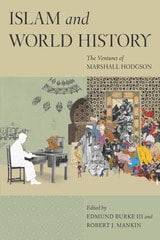
Islam and World History
The Ventures of Marshall HodgsonEdited by Edmund Burke and Robert J. Mankin
University of Chicago Press, 2018
In our post-9/11 world, Hodgson’s historical vision and moral engagement have never been more relevant. A towering achievement, Islam and World History will prove to be the definitive statement on Hodgson’s relevance in the twenty-first century and will introduce his influential work to a new generation of readers.
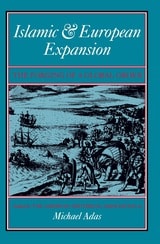
Islamic and European Expansion
The Forging of a Global OrderMichael Adas
Temple University Press, 1993
Israel and Settler Society
Lorenzo Veracini
Pluto Press, 2006
Veracini challenges two important myths: firstly, that the Israeli-Palestinian dispute is unique and defies comparative approaches; and secondly that the struggle is mainly based in nationality and religion and therefore different to typical colonial conflicts. On the contrary, Veracini shows how Israeli society is organised along apartheid lines -- and that apartheid was not unique to South Africa, but a common feature of colonisation. He examines wars of decolonization, and conflicts where whole native populations were all but eradicated -- as in Australia. Comparing and contrasting these with the more recent history of Israel and Palestine, he offers a critical perspective on colonialism as well as important new insights into patterns of imperialism today.