Results by title
670 books match the query 'History & Surveys' and 16 start with i
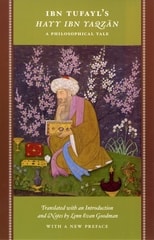
Ibn Tufayl's Hayy Ibn Yaqzan
A Philosophical TaleIbn Tufayl
University of Chicago Press, 2009
The Arabic philosophical fable Hayy Ibn Yaqzan is a classic of medieval Islamic philosophy. Ibn Tufayl (d. 1185), the Andalusian philosopher, tells of a child raised by a doe on an equatorial island who grows up to discover the truth about the world and his own place in it, unaided—but also unimpeded—by society, language, or tradition. Hayy’s discoveries about God, nature, and man challenge the values of the culture in which the tale was written as well as those of every contemporary society.
Goodman’s commentary places Hayy Ibn Yaqzan in its historical and philosophical context. The volume features a new preface and index, and an updated bibliography.
“One of the most remarkable books of the Middle Ages.”—Times Literary Supplement
“An enchanting and puzzling story. . . . The book transcends all historical and cultural environments to settle upon the questions of human life that perpetually intrigue men.”—Middle East Journal
“Goodman has done a service to the modern English reader by providing a readable translation of a philosophically significant allegory.”—Philosophy East and West
“Add[s] bright new pieces to an Islamic mosaic whose general shape is already known.”—American Historical Review
Ideas of the Twentieth Century
Daniel Bonevac
University of Texas Press, 2014
The twentieth century ushered in significant progress, as philosophers, scientists, artists, and poets across the world improved the way we lived. Yet the last century also brought increased levels of war, tyranny, and genocide, and people lost faith in values. Now, thinkers and leaders are reconstructing theories of value and creating institutions to embody them. In this thought-provoking, broad-sweeping course, you will learn how philosophy, art, literature, and history shaped the past century and continue to impact our world today.
Idiots
The History of the Homo NullusLeonhard Emmerling
Seagull Books, 2026
Dostoevsky and Nietzsche wrote about him; Dadaists and punks idolized him; artists like Warhol and Beuys made him their icon. From holy fool to punk rebel, the idiot—a figure that traces its roots back to the Greek idiotes, a person who was alienated from public life—has always challenged society’s norms from the margins. Far from a simple madman, the idiot is a powerful subversive, a person who disregards norms and finds profound insight in a state of unmediated inspiration. Using a cross-disciplinary approach bridging literature, religion, art, and philosophy, this volume traces a rich journey up to the present, where the idiot reemerges in a dramatic twist: a public figure who inverts social norms, confounds the boundary between private and public, and declares a new, paradoxical view of the world.

Imagination, Meditation, and Cognition in the Middle Ages
Michelle Karnes
University of Chicago Press, 2011
Immanuel Kant
The Very Idea of a Critique of Pure ReasonJ. Colin McQuillan
Northwestern University Press, 2016
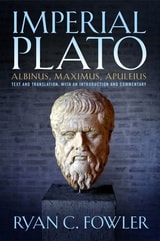
Imperial Plato
Albinus, Maximus, Apuleius: Text and Translation, with an Introduction and CommentaryRyan C. Fowler
Parmenides Publishing, 2016
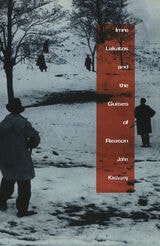
Imre Lakatos and the Guises of Reason
John Kadvany
Duke University Press, 2001
Lakatos escaped Hungary following the failed 1956 Revolution. Before then, he had been an influential Communist intellectual and was imprisoned for years by the Stalinist regime. He also wrote a lost doctoral thesis in the philosophy of science and participated in what was criminal behavior in all but a legal sense. Kadvany argues that this intellectual and political past animates Lakatos’s English-language philosophy, and that, whether intended or not, Lakatos integrated a penetrating vision of Hegelian ideas with rigorous analysis of mathematical proofs and controversial histories of science.
Including new applications of Lakatos’s ideas to the histories of mathematical logic and economics and providing lucid exegesis of many of Hegel’s basic ideas, Imre Lakatos and the Guises of Reason is an exciting reconstruction of ideas and episodes from the history of philosophy, science, mathematics, and modern political history.
In Quest of the Ordinary
Lines of Skepticism and RomanticismStanley Cavell
University of Chicago Press, 1988
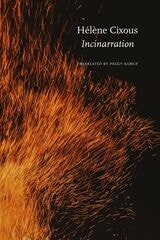
Incinarration
What Do We Carry?Hélène Cixous
Seagull Books, 2026
Hélène Cixous’s powerful new book, masterfully translated by Peggy Kamuf, is a vivid journey through fire. From the ashes of wars, wildfires, and upheaval, Cixous traces a dramatic path across time—from the Second World War and the Nazi occupation of Oran to the European wildfires of 2022—weaving a rich, intimate narrative that merges history, autobiography, and myth. With her piercing, lyrical voice, Cixous confronts the human cost of destruction and upheaval, and asks a universal question: What do we carry with us when everything we know is falling to ashes?
In Incinarration, Cixous finds hope in the power of words, memory, and imagination to illuminate our darkest moments and redeem the future. As forests burn and regimes collapse, Cixous shows us how stories become a form of resistance—a way to remember, to bear testimony, and to find renewal in the face of oblivion.
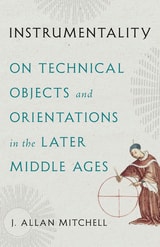
Instrumentality
On Technical Objects and Orientations in the Later Middle AgesJ. Allan Mitchell
University of Minnesota Press, 2024
From medieval to modern, exploring instrumental attitudes toward physical gadgets, diagrams, concepts, methods, and disciplines
Opening up the instrumental condition of the human for critical reflection and renewal, Instrumentality illuminates key moments in the intellectual history of the European Middle Ages. J. Allan Mitchell reveals how, in the predigital past, we can recognize many of the operative technics, analytics, and metaphorics that continue to shape human sense and cognition today.
Exploring the diverse modalities of medieval instruments, Mitchell’s case studies encompass techniques as seemingly distinct as time-keeping mechanisms, mathematical diagrams, logical syllogisms, and the literary devices of Geoffrey Chaucer and John Gower. A cultural and intellectual history, Mitchell’s work leads readers from three-dimensional objects (physical mechanisms) to two-dimensional inscriptions (maps and diagrams) and onward to overarching disciplinary norms in the early liberal and mechanical arts. Prying loose the subtle, adaptable, and generative concept of technical objects from limiting contemporary frameworks, he shows how these instruments are indispensable to the past—and the future—of the arts and culture at large.
Interanimations
Receiving Modern German PhilosophyRobert B. Pippin
University of Chicago Press, 2015
After opening up his territory with an initial discussion of contemporary revisionist readings of Kant’s moral theory, Pippin sets his sights on his main objects of interest: Hegel and Nietzsche. Through them, however, he offers what few others could: an astonishing synthesis of an immense and diverse set of thinkers and traditions. Deploying an almost dialogical, conversational approach, he pursues patterns of thought that both shape and, importantly, connect the major traditions: neo-Aristotelian, analytic, continental, and postmodern, bringing the likes of Heidegger, Honneth, MacIntyre, McDowell, Brandom, Strauss, Williams, and Žižek—not to mention Hegel and Nietzsche— into the same philosophical conversation.
By means of these case studies, Pippin mounts an impressive argument about a relatively under discussed issue in professional philosophy—the bearing of work in the history of philosophy on philosophy itself—and thereby he argues for the controversial thesis that no strict separation between the domains is defensible.
Introduction to Aristotle
Second Edition, Revised and EnlargedAristotle
University of Chicago Press, 1974
Aristotle's contribution to Western civilization is enormous. Our language, our distinctions, our ways of thinking, all are profoundly affected by his work. Since an understanding of Aristotle is indispensable for the understanding of our own culture, the ready availability of his work is crucial.
This collection, for students and general readers alike, provides in one volume Posterior Analytics (Logic), De Anima (On the Soul), Nicomachean Ethics, and Poetics, complete and unabridged, together with generous selections from Physics, On the Parts of Animals, Metaphysics, Politics, and Rhetoric. These works, together with Professor McKeon's revised introductions, provide a convenient and thorough exposure to the works of Aristotle and to the structural interrelations in the Aristotelian system of thought.
Inventing Philosophy's Other
Phenomenology in AmericaJonathan Strassfeld
University of Chicago Press, 2022
Phenomenology and so-called “continental philosophy” receive scant attention in most American philosophy departments, despite their foundational influence on intellectual movements such as existentialism, post-structuralism, and deconstruction. In Inventing Philosophy’s Other, Jonathan Strassfeld explores this absence, revealing how everyday institutional practices played a determinative role in the development of twentieth-century academic discourse.
Conventional wisdom holds that phenomenology’s absence from the philosophical mainstream in the United States reflects its obscurity or even irrelevance to America’s philosophical traditions. Strassfeld refutes this story as he traces phenomenology’s reception in America, delivering the first systematic historical study of the movement in the United States. He examines the lives and works of Marjorie Grene, Alfred Schütz, Hubert Dreyfus, and Iris Marion Young, among others, while also providing a fresh introduction to phenomenological philosophy.
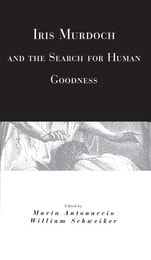
Iris Murdoch and the Search for Human Goodness
Edited by Maria Antonaccio and William Schweiker
University of Chicago Press, 1996
Inspired by Murdoch's tenacious wrestling with basic questions of human existence, these essays not only clarify her thoughts on human goodness, but also move beyond the academy to reflect on how we can and ought to undertake the human adventure in our daily lives.
Contributors are Charles Taylor, Martha Nussbaum, David Tracy, Cora Diamond, Maria Antonaccio, Elizabeth Dipple, Franklin I. Gamwell, Stanley Hauerwas, and William Schweiker. This volume also includes "Metaphysics and Ethics," a classic essay by Iris Murdoch.
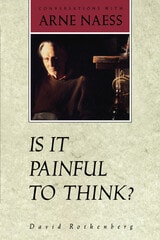
Is It Painful To Think
Conversations with Arne NaessDavid Rothenberg
University of Minnesota Press, 1992

Isaiah Berlin
A CelebrationEdited by Edna Ullmann-Margalit and Avishai Margalit
University of Chicago Press, 1991
"Some [essays], like Joseph Brodsky's tribute, are touchingly personal. Others, like G. A. Cohen's 'Isaiah's Marx, and Mine,' mingle personal reminiscences with a more theoretical look at Berlin's ideas. . . . The volume is a fitting tribute to a thinker famed for his erudition, eclecticism, and clarity of style."—Merle Rubin, The Christian Science Monitor
"One of the many merits of this rich and rewarding collection is the sense-very imperfectly conveyed here-it transmits of the tone of Berlin's writings and conversation, of the multiplicity of his interests and the variety of his achievements. . . . The essays testify to the character of Berlin's mind as a luminous prism, in which the cultural traditions of Russia, England and Judaism are marvelously refracted."—John Gray, Times Literary Supplement
"[T]he collection testifies to the learning and profundity of Berlin's thought and, by way both of reminiscence and influence, to the charm and gaity of its expression."—Anthony Quinton, The Times of London