Results by title
496 books match the query 'Jewish' and 14 start with i
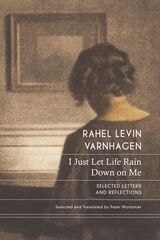
I Just Let Life Rain Down on Me
Selected Letters and ReflectionsRahel Levin Varnhagen
Seagull Books, 2024
At times poetic but not a poem, prosaic but not an essay, a letter is often pure writing for writing’s sake. Such is the case for Rahel Varnhagen von Ense, née Levin, the illustrious German-Jewish Berlin literary salon hostess from the early nineteenth century. She penned over ten thousand letters to more than three hundred recipients, including princes, philosophers, poets, family members, and the family cook. Written with a wink at posterity, collected and first published after her passing by her husband, Karl August Varnhagen von Ense, these letters constitute a singular contribution to German literature.
Varied in subject—from family affairs to linguistic, literary, and pressing social concerns—the poignant lyricism of her letters is all the more remarkable when we take into account that High German was not her first language; she grew up speaking, reading, and writing primarily Yiddish. Her shaky social status as a woman and a member of a precarious minority, combined with an astounding lucidity and a rare capacity to put her thoughts into words, made her a force to be reckoned with in her lifetime and thereafter as one of Germany’s preeminent women of letters. As we see in I Just Let Life Rain Down on Me, her voice is as fresh and original as that of any of the recognized poets and thinkers of her day. As Rahel herself put it: “[O]ur language is our lived life; I invented mine for my own purposes, I was less able than many others to make use of preconceived turns of phrase, which is why mine are often clumsy, and in all respects faulty, but always true.”
Compiled and translated by Peter Wortsman, this rewarding volume affords English-speaking readers the first privileged peek at the mindset of one of Europe’s first and foremost women of letters.
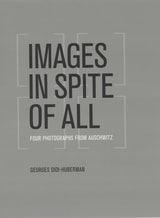
Images in Spite of All
Four Photographs from AuschwitzGeorges Didi-Huberman
University of Chicago Press, 2008
Available today because they were smuggled out of the camp and into the hands of Polish resistance fighters, the photographs show a group of naked women being herded into the gas chambers and the cremation of corpses that have just been pulled out. Georges Didi-Huberman’s relentless consideration of these harrowing scenes demonstrates how Holocaust testimony can shift from texts and imaginations to irrefutable images that attempt to speak the unspeakable. Including a powerful response to those who have criticized his interest in these images as voyeuristic, Didi-Huberman’s eloquent reflections constitute an invaluable contribution to debates over the representability of the Holocaust and the status of archival photographs in an image-saturated world.
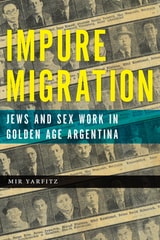
Impure Migration
Jews and Sex Work in Golden Age ArgentinaMir Yarfitz
Rutgers University Press, 2019
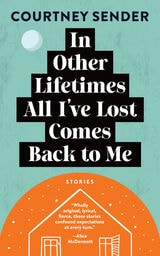
In Other Lifetimes All I've Lost Comes Back to Me
StoriesCourtney Sender
West Virginia University Press, 2023
“A deep and howling portrait of longing and loneliness.” —Boston Globe
“A distinctive debut from a promising author.” —Kirkus Reviews
“A stunner from the very first page.” —Deesha Philyaw, author of The Secret Lives of Church Ladies, in the Millions
And praise from Ann Patchett, Alice McDermott, Danielle Evans, Elisa Albert, and Aimee Bender
Populated with lovers who leave and return, with ghosts of the Holocaust and messages from the dead, Courtney Sender’s debut collection speaks in a singular new voice about the longings and loneliness of contemporary love. The world of these fourteen interlocking stories is fiercely real but suffused with magic and myth, dark wit, and distinct humor. Here, ancient loss works its way deep into the psyche of modern characters, stirring their unrelenting lust for life.
In “To Do With the Body,” the Museum of Period Clothes becomes the perfect setting for a bloody crime. In “Lilith in God’s Hands,” Adam’s first wife has an affair in the Garden of Eden. And in the title story, a woman spends her life waiting for any of the men who have left her to come back, only to find them all at her doorstep at once.
For readers of Elena Ferrante, Nicole Krauss, and Carmen Maria Machado, and for anyone who has known love and loneliness, In Other Lifetimes All I’ve Lost Comes Back to Me is a wise and sensual collection of old hauntings, new longings, and unexpected returns, with a finale that is a rousing call to the strength we each have, together or alone.
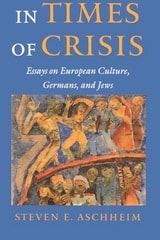
In Times of Crisis
Essays on European Culture, Germans, and JewsSteven E. Aschheim
University of Wisconsin Press, 2001
The nineteenth- and twentieth-century relationship between European culture, German history, and the Jewish experience produced some of the West’s most powerful and enduring intellectual creations—and, perhaps in subtly paradoxical and interrelated ways, our century’s darkest genocidal moments. In Times of Crisis explores the flashpoints of this vexed relationship, mapping the coordinates of a complex triangular encounter of immense historical import.
In essays that range from the question of Nietzsche’s legacy to the controversy over Daniel Goldhagen’s Hitler’s Willing Executioners, the distinguished historian Steven E. Aschheim presents this encounter as an ongoing dialogue between two evolving cultural identities. He touches on past dimensions of this exchange (such as the politics of Weimar Germany) and on present dilemmas of grasping and representing it (such as the Israeli discourse on the Holocaust). His work inevitably traces the roots and ramifications of Nazism but at the same time brings into focus historical circumstances and contemporary issues often overshadowed or distorted by the Holocaust.
These essays reveal the ubiquitous charged inscriptions of Nazi genocide within our own culture and illuminate the projects of some later thinkers and historians—from Hannah Arendt to George Mosse to Saul Friedlander—who have wrestled with its problematics and sought to capture its essence. From the broadly historical to the personal, from the politics of Weimar Germany to the experience of growing up German Jewish in South Africa, the essays expand our understanding of German Jewish history in particular, but also of historical processes in general.
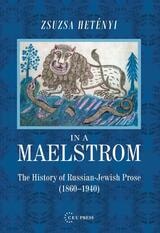
In a Maelstrom
The History of Russian-Jewish Prose, 1860–1940Zsuzsa Hetényi
Central European University Press, 2008

In the Future of Yesterday
A Life of Stefan ZweigRüdiger Görner
Haus Publishing, 2025
In the Future of Yesterday delves into Stefan Zweig’s considerable contribution to world literature, rooted in the Austro-Jewish tradition. His privileged social background saw him embrace European culture and cosmopolitanism. A world traveler from the outset, he liked to uproot himself, but whether he stayed in London, New York, or, eventually, in Brazil, his literary baggage continued to contain the flair of fin de siècle Vienna.
This biography re-examines Zweig’s influential time in England and offers new insights into his final years in the United States and Brazil. It discusses some of his prolific literary output in relation to his life and explores his political views on Europe, Zionism, and the world order in greater depth than previous appraisals of Zweig’s life.
The book also considers the many contradictions in Zweig’s views and attitudes, which included an initial, and surprising, leniency towards fascism. Most importantly, though, In the Future of Yesterday presents Zweig as a towering figure of a form of writing that was bursting with life and that was written in the knowledge that there can only be a future if we remain conscious of the past. In that sense, Zweig is a writer for our time.
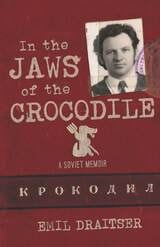
In the Jaws of the Crocodile
A Soviet MemoirEmil Draitser
University of Wisconsin Press, 2021
In this captivating memoir, Draitser explores what it means to be a satirist in a country lacking freedom of expression. His experience provides a window into the lives of a generation of artists who were allowed to poke fun and make readers laugh, as long as they toed a narrow, state-approved line. In the Jaws of the Crocodile also includes several of Draitser’s wry pieces translated into English for the first time.
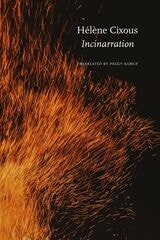
Incinarration
What Do We Carry?Hélène Cixous
Seagull Books, 2026
Hélène Cixous’s powerful new book, masterfully translated by Peggy Kamuf, is a vivid journey through fire. From the ashes of wars, wildfires, and upheaval, Cixous traces a dramatic path across time—from the Second World War and the Nazi occupation of Oran to the European wildfires of 2022—weaving a rich, intimate narrative that merges history, autobiography, and myth. With her piercing, lyrical voice, Cixous confronts the human cost of destruction and upheaval, and asks a universal question: What do we carry with us when everything we know is falling to ashes?
In Incinarration, Cixous finds hope in the power of words, memory, and imagination to illuminate our darkest moments and redeem the future. As forests burn and regimes collapse, Cixous shows us how stories become a form of resistance—a way to remember, to bear testimony, and to find renewal in the face of oblivion.
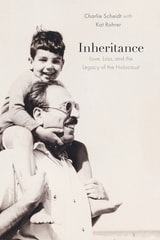
Inheritance
Love, Loss, and the Legacy of the HolocaustCharlie Scheidt
Rutgers University Press, 2026
2026 Independent Publisher Book Awards (IPPY) Silver Medal in the Autobiography/Memoir II (Coming of Age/Family Legacy) category.
After his mother’s death, Charlie Scheidt discovered a trove of historic documents that set him on a decade-long journey to uncover his family’s hidden past during the Holocaust. Joined by Kat Rohrer, the granddaughter of a Nazi officer, Scheidt embarked on a quest to trace his family’s harrowing efforts to escape from Nazi-occupied Europe. As they investigated, they uncovered stories of survival and loss. Their journey takes them across generations and continents, revealing a legacy of love, loss, and resilience. Grappling with questions about the long-lasting effects of inherited trauma, the book asks whether it is possible to break free of a familial cycle. This memoir, rooted in his family’s escape and the lasting trauma that followed, is a powerful reflection on history’s enduring scars, the importance of remembrance, and healing across generations.

Intimate Radicals
East European Jewish Women and Progressive American DesiresAshley Walters
Rutgers University Press, 2027
In the early 1900s, a handful of unconventional couples emerged within the American radical Left. In Intimate Radicals, Ashley Walters tells the story of a group of young, East European Jewish women and white, Anglo-Saxon Protestant men— such as Jack London, Sinclair Lewis, and William English Walling, among other notable figures in American literature, domestic and international affairs, and early Hollywood—and how they imbued their romances with revolutionary principles. The relationships captivated the public and became a source of intrigue, largely driven by the growth of human-interest journalism. Through individual biographies, historical narrative, and literary analysis, Walters reveals the cultural and political contingencies of desire.
As Progressive Era radicals rebelled against the constraints of an earlier era, East European Jews—and Jewish women in particular— came to embody a new cosmopolitan ideal and European revolutionary spirit. Drawing on letters, newspapers, literature, and film, Walters shows how the public reception of these patrician-immigrant relationships lent credence to a new cultural mythology of Jewish womanhood. The men’s desire for East European Jewish women, she also points out, can be viewed as a form of “radical tourism,” in which men who enjoy a degree of privilege pursue an alluring Other in the hope of obtaining a more worldly identity.
This book is published with the support of the Jordan Schnitzer First Book Publication Award, administered by the Association for Jewish Studies.
Invisible Walls and To Remember is to Heal
A German Family under the Nuremberg LawsIngeborg Hecht
Northwestern University Press, 1999
In Invisible Walls, Hecht writes of what it was like to live under these circumstances, sharing heartbreaking details of her personal life, including the loss of her daughter's father on the Russian front; the death of her own father after his deportation in 1944; and her fears of perishing coupled with the shame of faring better than most of her family and friends. This new volume adds the first translation of part of Hecht's second book, To Remember is to Heal, a collection of vignettes of encounters and experiences that resulted from the publication of the first.

Israel in Exile
Jewish Writing and the DesertRanen Omer-Sherman
University of Illinois Press, 2006
In contrast to other ethnic and national representations, Jewish writers since antiquity have not constructed a neat antithesis between the desert and the city or nation; rather, the desert becomes a symbol against which the values of the city or nation can be tested, measured, and sometimes found wanting. This book examines how the ethical tension between the clashing Mosaic and Davidic paradigms of the desert still reverberate in secular Jewish literature and produce fascinating literary rewards. Omer-Sherman ultimately argues that the ancient encounter with the desert acquires a renewed urgency in response to the crisis brought about by national identities and territorial conflicts.
It All Began in Nuremberg
Between History and MemoryRita Thalmann
University of Michigan Press, 2015