Results by title
998 books match the query 'Life' and 30 start with i
I Feel So Good
The Life and Times of Big Bill BroonzyBob Riesman
University of Chicago Press, 2011
A major figure in American blues and folk music, Big Bill Broonzy (1903–1958) left his Arkansas Delta home after World War I, headed north, and became the leading Chicago bluesman of the 1930s. His success came as he fused traditional rural blues with the electrified sound that was beginning to emerge in Chicago. This, however, was just one step in his remarkable journey: Big Bill was constantly reinventing himself, both in reality and in his retellings of it. Bob Riesman’s groundbreaking biography tells the compelling life story of a lost figure from the annals of music history.
I Feel So Good traces Big Bill’s career from his rise as a nationally prominent blues star, including his historic 1938 appearance at Carnegie Hall, to his influential role in the post-World War II folk revival, when he sang about racial injustice alongside Pete Seeger and Studs Terkel. Riesman’s account brings the reader into the jazz clubs and concert halls of Europe, as Big Bill's overseas tours in the 1950s ignited the British blues-rock explosion of the 1960s. Interviews with Eric Clapton, Pete Townshend, and Ray Davies reveal Broonzy’s profound impact on the British rockers who would follow him and change the course of popular music.
Along the way, Riesman details Big Bill’s complicated and poignant personal saga: he was married three times and became a father at the very end of his life to a child half a world away. He also brings to light Big Bill’s final years, when he first lost his voice, then his life, to cancer, just as his international reputation was reaching its peak. Featuring many rarely seen photos, I Feel So Good will be the definitive account of Big Bill Broonzy’s life and music.
I Wore Babe Ruth's Hat
Field Notes from a Life in SportsDavid Zang
University of Illinois Press, 2015
Whether pondering his long-unbuilt replica of Connie Mack Stadium or his eye-opening turn as the Baltimore Ravens' mascot, Zang offers tales at turns poignant and hilarious as he engages with the passions that shaped his life. Yet his meditations also probe the tragedy of a modern athletic culture that substitutes hyped spectatorship for participation. As he laments, American society's increasing scorn for taking part in play robs adults of the life-affirming virtues of games that challenge us to accomplish the impossible for the most transcendent of reasons: to see if it can be done.
From teammates named Lop to tracing Joe Paterno's long shadow over Happy Valley, I Wore Babe Ruth's Hat reports from the everyman's Elysium where games and life intersect.
Iceman
Uncovering the Life and Times of a Prehistoric Man Found in an Alpine GlacierBrenda Fowler
University of Chicago Press, 2001

Ideal Beauty
The Life and Times of Greta GarboLois W. Banner
Rutgers University Press, 2023
Ideal Beauty reveals the woman behind the mystique, a woman who overcame an impoverished childhood to become a student at the Swedish Royal Dramatic Academy, an actress in European films, and ultimately a Hollywood star. Chronicling her tough negotiations with Louis B. Mayer at MGM, it shows how Garbo carved out enough power in Hollywood to craft a distinctly new feminist screen presence in films like Queen Christina. Banner draws on over ten years of in-depth archival research in Sweden, Germany, France, and the United States to demonstrate how, away from the camera’s glare, Garbo’s life was even more intriguing. Ideal Beauty takes a fresh look at an icon who helped to define female beauty in the twentieth century and provides answers to much-debated questions about Garbo’s childhood, sexuality, career, illnesses and breakdowns, and spiritual awakening.

Idiotism
Capitalism and the Privatisation of LifeNeal Curtis
Pluto Press, 2012
Constructing a new vocabulary with which to understand contemporary society, Curtis examines 'idiotism' across the spheres of economics, politics and culture, drawing on the philosophy and political theories of Martin Heidegger, Louis Althusser, Franco Berardi, Jacques Rancière and Cornelius Castoriadis.
Idiotism recasts our conception of the new neoliberal 'common sense', presenting it as not simply a case of false consciousness, but an ontological problem related to our being-in-the-world.

If You Were Only White
The Life of Leroy "Satchel" PaigeDonald Spivey
University of Missouri Press, 2012
Spivey follows Paige from his birth in Alabama in 1906 to his death in Kansas City in 1982, detailing the challenges Paige faced battling the color line in America and recounting his tests and triumphs in baseball. He also opens up Paige’s private life during and after his playing days, introducing readers to the man who extended his social, cultural, and political reach beyond the limitations associated with his humble background and upbringing. This other Paige was a gifted public speaker, a talented musician and singer, an excellent cook, and a passionate outdoorsman, among other things.
Paige’s life intertwined with many of the most important issues of the times in U.S. and African American history, including the continuation of the New Negro Movement and the struggle for civil rights. Spivey incorporates interviews with former teammates conducted over twelve years, as well as exclusive interviews with Paige’s son Robert, daughter Pamela, Ted “Double Duty” Radcliffe, and John “Buck” O’Neil to tell the story of a pioneer who helped transform America through the nation’s favorite pastime.
Maintaining an image somewhere between Joe Louis’s public humility and the flamboyant aggression of Jack Johnson, Paige pushed the boundaries of segregation and bridged the racial divide with stellar pitching packaged with slapstick humor. He entertained as he played to win and saw no contradiction in doing so. Game after game, his performance refuted the lie that black baseball was inferior to white baseball. His was a contribution to civil rights of a different kind—his speeches and demonstrations expressed through his performance on the mound.
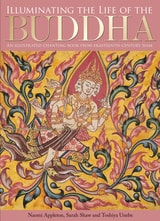
Illuminating the Life of the Buddha
An Illustrated Chanting Book from Eighteenth-Century SiamNaomi Appleton, Sarah Shaw, and Toshiya Unebe
Bodleian Library Publishing, 2013
Affording readers immense insight into a spectacular eighteenth-century manuscript, and Thai Buddhist manuscripts and temple culture as a whole, this book will be of great interest to art historians and scholars of Buddhism and Southeast Asia.
Image
Knowledge in Life and SocietyKenneth E. Boulding
University of Michigan Press, 1956
Imitation of Life
Fannie Hurst
Duke University Press, 2004
The author of numerous bestselling novels, a masterful short story writer, and an outspoken social activist, Fannie Hurst was a major celebrity in the first half of the twentieth century. Daniel Itzkovitz’s introduction situates Imitation of Life in its literary, biographical, and cultural contexts, addressing such topics as the debates over the novel and films, the role of Hurst’s one-time secretary and great friend Zora Neale Hurston in the novel’s development, and the response to the novel by Hurst’s friend Langston Hughes, whose one-act satire, “Limitations of Life” (which reverses the races of Bea and Delilah), played to a raucous Harlem crowd in the late 1930s. This edition brings a classic of popular American literature back into print.
Imitation of Life
Douglas Sirk, DirectorFischer, Lucy
Rutgers University Press, 1991
Because of the special stamp he put on his melodramas, Sirk's best works transcend the constraints of their genre. In them, he both exemplified and critiqued postwar, conservative, materialistic life and its false value systems. There is much in Sirk, particularly in Imitation of Life, that is of interest to us today. The time seems to be right for a new look at the film, its reception amidst scandal over the affairs of its star—Lana Turner—the relationships between its mothers and daughters, the tensions between its men and its women, the friendships between its black and white women, and the ambiguous, controversial approach of Sirk to his material.
This volume includes the complete continuity script of the film, critical commentary and published reviews, interviews with the director, and a filmography and bibliography. It also includes an excellent introduction by Lucy Fischer.
Imitations of Life
Fannie Hurst’s Gaslight SonatasAbe C. Ravitz
Southern Illinois University Press, 2009
In the early 1920s, Fannie Hurst’s enormous popularity made her the highest-paid writer in America. She conquered the literary scene at the same time the silent movie industry began to emerge as a tremendously profitable and popular form of entertainment. Abe C. Ravitz parallels Hurst’s growing acclaim with the evolution of silent films, from which she borrowed ideas and techniques that furthered her career. Ravitz notes that Hurst was amazingly adept at anticipating what the public wanted. Sensing that the national interest was shifting from rural to urban subjects, Hurst set her immigrant tales and her "woiking goil" tales in urban America. In her early stories, she tried to bridge the gap between Old World and New World citizens, each somewhat fearful and suspicious of the other. She wrote of love and ethnicity—bringing the Jewish Mother to prominence—of race relations and prejudice, of the woman alone in her quest for selfhood. Ravitz argues, in fact, that her socially oriented tales and her portraits of women in the city clearly identify her as a forerunner of contemporary feminism.
Ravitz brings to life the popular culture from 1910 through the 1920s, tracing the meteoric rise of Hurst and depicting the colorful cast of characters surrounding her. He reproduces for the first time the Hurst correspondence with Theodore Dreiser, Charles and Kathleen Norris, and Gertrude Atherton. Fellow writers Rex Beach and Vachel Lindsay also play important roles in Ravitz’s portrait of Hurst, as does Zora Neale Hurston, who awakened Hurst’s interest in the Harlem Renaissance and in race relations, as shown in Hurst’s novel Imitation of Life.
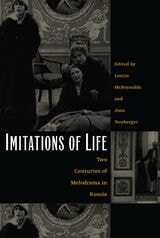
Imitations of Life
Two Centuries of Melodrama in RussiaLouise McReynolds and Joan Neuberger, eds.
Duke University Press, 2002
Drawing on a wide variety of sources, including plays, lachrymose novels, popular movies, and even highly publicized funerals and political trials, the essays in Imitations of Life argue that melodrama has consistently offered models of behavior for times of transition, and that contemporary televised versions of melodrama continue to help Russians cope with national events that they understand implicitly but are not yet able to articulate. In contrast to previous studies, this collection argues for a reading that takes into account the subtle but pointed challenges to national politics and to gender and class hierarchies made in melodramatic works from both the nineteenth and twentieth centuries. Collectively, the contributors shift and cross borders, illustrating how the cultural dismissal of melodrama as fundamentally escapist and targeted primarily at the politically disenfranchised has subverted the drama’s own intrinsically subversive virtues.
Imitations of Life will interest students and scholars of contemporary Russia, and Russian history, literature, and theater.
Contributors. Otto Boele, Julie Buckler, Julie Cassiday, Susan Costanzo, Helena Goscilo, Beth Holmgren, Lars Lih, Louise McReynolds, Joan Neuberger, Alexander Prokhorov, Richard Stites
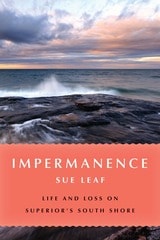
Impermanence
Life and Loss on Superior's South Shoreleaf
University of Minnesota Press, 2024
A personal journey through the ever-changing natural and cultural history of Lake Superior’s South Shore
Lake Superior’s South Shore is as malleable as it is enduring, its red sandstone cliffs, clay bluffs, and golden sand beaches reshaped by winds and water from season to season—and sometimes from one hour to the next. Generations of people have inhabited the South Shore, harvesting the forests and fish, mining copper, altering the land for pleasure and profit, for better or worse. In Impermanence, author Sue Leaf explores the natural and human histories that make the South Shore what it is, from the gritty port city of Superior, Wisconsin, to the shipping locks at Sault Ste. Marie, Michigan.
For Leaf, what began as a bicycling adventure on the coast of Lake Superior in 1977 turned into a lifelong connection with the area, and her experience, not least as owner of a rustic cabin on a rapidly eroding lakeside cliff, imbues these essays with a passionate sense of place and an abiding curiosity about its past and precarious future. As waves slowly consume the shoreline where her family has spent countless summers, Leaf is forced to confront the complexity of loving a place that all too quickly is being reclaimed by the great lake.
Impermanence is a journey through the South Shore’s story, from the early days of the Anishinaabe and fur traders through the heyday of commercial fishing, lumber camps, and copper mining on the Keweenaw Peninsula to the awakening of the Northland to the perils and consequences of plundering its natural splendor. Noting the geological, ecological, and cultural features of each stop on her tour along the South Shore, Leaf writes about the restoration of the heavily touristed Apostle Islands National Lakeshore to its pristine conditions, even as Lake Superior maintains its allure for ice fishers, kayakers, and long-distance swimmers. She describes efforts to protect the endangered piping plover and to preserve the diverse sand dunes on the Michigan coast, and she observes the slough that supports rare intact wild rice beds central to Anishinaabe culture.
Part memoir, part travelogue, part natural and cultural history, Leaf’s love letter to Lake Superior’s South Shore is an invitation to see this liminal world in all its seasons and guises, to appreciate its ageless, ever-changing wonders and intimate charms.

In a Closet Hidden
The Life and Work of Mary E. Wilkins FreemanLeah Blatt Glasser
University of Massachusetts Press, 1996
The first literary biography of a much-neglected American writer, this book explores the multiple tensions at the core of Mary E. Wilkins Freeman's life and work. A prolific short story writer and novelist, Freeman (1852–1930) developed a reputation as a local colorist who depicted the peculiarities of her native New England. Yet as Leah Blatt Glasser shows, Freeman was one of the first American authors to write extensively about the relationships women form outside of marriage and motherhood, the role of work in women's lives, the complexity of women's sexuality, and the interior lives of women who rebel rather than conform to patriarchal strictures.
In a Closet Hidden traces Freeman's evolution as a writer, showing how her own inner conflicts repeatedly found expression in her art. As Glasser demonstrates, Freeman's work examined the competing claims of creativity and convention, self-fulfillment and self-sacrifice, spinsterhood and marriage, lesbianism and heterosexuality.

In for the Long Haul
The Life of John RuanWilliam B. Friedricks
University of Iowa Press, 2003
Driven by grit and determination during the Depression, John Ruan parlayed a one-truck business into Ruan Transportation Management Systems, one of the nation’s leading trucking, leasing, and logistics companies. The trucking business made John Ruan one of the wealthiest and most influential people in Iowa and was the foundation for his vast fortune which included interests in insurance, banking, financial services, international trade, and real estate.
In the 1970s and 80s, Ruan led Des Moines’s renaissance with the construction of the 36-story original Ruan Center, the Marriott Hotel tower, and the Two Ruan Center office complex. But his contributions reached far beyond the confines of Iowa. As a philanthropist, Ruan was a long-time sponsor of the World Food Prize, which recognizes the importance of a nutritious and sustainable food supply for all people.
Based on extensive interviews with Ruan, family members, business associates, friends, and colleagues, as well as privately held papers and archives, In for the Long Haul presents a discerning portrait of this hard-charging yet compassionate businessman.
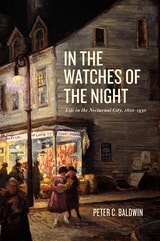
In the Watches of the Night
Life in the Nocturnal City, 1820-1930Peter C. Baldwin
University of Chicago Press, 2011
Before skyscrapers and streetlights glowed at all hours, American cities fell into inky blackness with each setting of the sun. But over the course of the nineteenth and early twentieth century, new technologies began to light up streets, sidewalks, buildings, and public spaces. Peter C. Baldwin’s evocative book depicts the changing experience of the urban night over this period, visiting a host of actors—scavengers, newsboys, and mashers alike—in the nocturnal city.
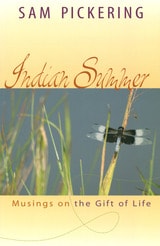
Indian Summer
Musings on the Gift of LifeSam Pickering
University of Missouri Press, 2005
Returning to Nova Scotia every summer contributes to the illusion of smooth continuance, each summer not the first thread in a new fabric but another button on a cardigan, perhaps looser than buttons below but still familiar and comfortable. Every summer the songs of white-throated sparrows bounce from scrub like novelty tunes from the fifties. Early in the morning ravens grind woodenly. . . . No matter how slowly I jog, on the headland butterflies spring from my feet in clumps, first azures and orange crescents, then wood nymphs, and finally over the lowlands near the Beaver River outlet cabbage whites spiraling, dizzy with mating.
Indian Summer is the newest collection of personal essays by Sam Pickering. In typical Pickering fashion, he seeks to capture the gift of living. He brings to the page again his family, students, and a wealth of country characters who live in places that exist only in his imagination and who wander through the stories he tells.

Infinite Variety
The Life and Legend of the Marchesa CasatiScot D. Ryersson
University of Minnesota Press, 2004
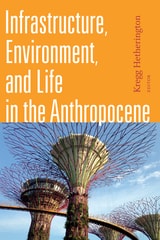
Infrastructure, Environment, and Life in the Anthropocene
Kregg Hetherington, editor
Duke University Press, 2019
Contributors. Nikhil Anand, Andrea Ballestero, Bruce Braun, Ashley Carse, Gastón R. Gordillo, Kregg Hetherington, Casper Bruun Jensen, Joseph Masco, Shaylih Muehlmann, Natasha Myers, Stephanie Wakefield, Austin Zeiderman
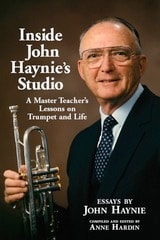
Inside John Haynie's Studio
A Master Teacher's Lessons on Trumpet and LifeJohn Haynie
University of North Texas Press, 2007

Into the Cool
Energy Flow, Thermodynamics, and LifeEric D. Schneider and Dorion Sagan
University of Chicago Press, 2005
Working from the precept that "nature abhors a gradient," Into the Cool details how complex systems emerge, enlarge, and reproduce in a world tending toward disorder. From hurricanes here to life on other worlds, from human evolution to the systems humans have created, this pervasive pull toward equilibrium governs life at its molecular base and at its peak in the elaborate structures of living complex systems. Schneider and Sagan organize their argument in a highly accessible manner, moving from descriptions of the basic physics behind energy flow to the organization of complex systems to the role of energy in life to the final section, which applies their concept of energy flow to politics, economics, and even human health.
A book that needs to be grappled with by all those who wonder at the organizing principles of existence, Into the Cool will appeal to both humanists and scientists. If Charles Darwin shook the world by showing the common ancestry of all life, so Into the Cool has a similar power to disturb—and delight—by showing the common roots in energy flow of all complex, organized, and naturally functioning systems.

Intrepid Lover of Perfect Grace
The Life and Thought of Prosper of AquitaineAlexander Y. Hwang
Catholic University of America Press, 2009
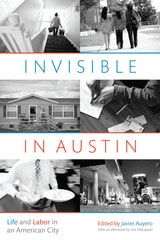
Invisible in Austin
Life and Labor in an American CityEdited by Javier Auyero with an afterword by Loïc Wacquant
University of Texas Press, 2015
Austin, Texas, is renowned as a high-tech, fast-growing city for the young and creative, a cool place to live, and the scene of internationally famous events such as SXSW and Formula 1. But as in many American cities, poverty and penury are booming along with wealth and material abundance in contemporary Austin. Rich and poor residents lead increasingly separate lives as growing socioeconomic inequality underscores residential, class, racial, and ethnic segregation.
In Invisible in Austin, the award-winning sociologist Javier Auyero and a team of graduate students explore the lives of those working at the bottom of the social order: house cleaners, office-machine repairers, cab drivers, restaurant cooks and dishwashers, exotic dancers, musicians, and roofers, among others. Recounting their subjects’ life stories with empathy and sociological insight, the authors show us how these lives are driven by a complex mix of individual and social forces. These poignant stories compel us to see how poor people who provide indispensable services for all city residents struggle daily with substandard housing, inadequate public services and schools, and environmental risks. Timely and essential reading, Invisible in Austin makes visible the growing gap between rich and poor that is reconfiguring the cityscape of one of America’s most dynamic places, as low-wage workers are forced to the social and symbolic margins.

Irish Born, American Made
The Life and Myth of Captain John EganKen Egan Jr.
University of Wisconsin Press, 2026
Born to poverty in the Irish county of Tipperary, John Egan participated in some of the most dramatic events of the nineteenth century, including mass migration to the United States during a catastrophic famine, the “opening” of Japan via gunboat diplomacy, Sherman’s March to the Sea, and homesteading in the Upper Midwest. In Irish Born, American Made, his great-grandson examines the processes by which a scorned British subject became a proud American citizen.
Although Egan’s life was filled with epic drama, the author does not shy away from unsavory truths, such as his ancestor’s doubts about the virtues of abolition or his enthusiastic participation in settling land appropriated from Indigenous peoples. Equally, Egan recognizes the real hardships his ancestor faced in assimilating to American society, from the prejudices of the ascendant Know-Nothing movement to the condescending caricatures of Irish soldiers by his Union compatriots during and after the Civil War. The result is both a moving reminder of the hardships of immigration and a timely reckoning with the imperfections of our forebears.
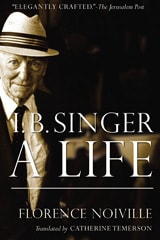
Isaac B. Singer
A LifeFlorence Noiville
Northwestern University Press, 2008
In this vivid biography, Florence Noiville offers a glimpse into the world of this much-loved but persistently elusive writer: Isaac Bashevis Singer. Singer (1904–91) is generally recognized as the most popular Yiddish writer of the twentieth century. His widely translated body of work, for which he received the Nobel Prize in Literature in 1978, is beloved around the world. But although Singer was a very public and outgoing figure, much about his personal life remains unknown.
Singer was greatly influenced by his early years in Poland, with his rabbi father and rationalist, secular mother. His interest in themes of faith and dilemma stem directly from this set of conflicts; he bounced back and forth between revering and fighting orthodoxy. This was not the only paradox in his life, however: this man, who wrote many successful children’s books, had abandoned his first wife and only son in Poland as the Nazis began to sweep across Europe. His novels and stories are recognized for their mystical, folkloric tone and his public image was that of a grandfather or uncle; but he was wracked with self-doubt, a womanizer, and, as Noiville writes, a “modern virtuoso of anguish, inhibition, and fiasco.”
Noiville speaks to these and other paradoxes surrounding her subject, drawing on letters, personal stories, Singer’s own autobiographies, and interviews with friends, family, and publishing contemporaries. She travels as he did, from Poland to New York to Florida, tracing his journey from penniless immigrant to Nobel laureate. By pursuing Singer’s public and private past, she rebuilds his story and the story of the world he wrote from: a Yiddish world, a Poland removed from history by Nazi Germany.

Isaac Bashevis Singer
A LifeJanet Hadda
University of Wisconsin Press, 2003
Isaac Bashevis Singer brought the vibrant milieu of pre-Holocaust Polish Jewry to the English-speaking world through his subtle psychological insight, deep sympathy for the eccentricities of Jewish folk custom, and unerring feel for the heroism of everyday life. His novels, including The Family Moskat and Enemies: A Love Story, and his short stories, such as "Yentl" and "Gimpel the Fool," prove him a consummate storyteller and probably the greatest Yiddish writer of the twentieth century.

Isak Dinesen
The Life And Imagination Of A SeducerOlga Anastasia Pelensky
Ohio University Press, 1991
Born into a Victorian Danish family, Karen Christentze Dinesen married her second cousin, a high-spirited and philandering baron, and moved to Kenya where she ran a coffee plantation, painted, and wrote. She later returned to Denmark, lived through the German occupation during World War II, and became a pivotal figure in Heretica, a major literary movement that flourished in Denmark after the war. By the time of her death, Dinesen was an international figure. Truman Capote would later call Out of Africa one of the most beautiful books of the century.
Despite the popularity of her writing, little is known about her life. For this provocative biography, Pelensky has uncovered hundreds of papers in libraries and private collections, and discovered new interview sources in Africa, Denmark, and England to help put the pieces of Dinesen’s life together. Her father’s outspoken sympathy for the plight of the American Indians, his suicide and the effects of his personal anguish as a failed adventurer are illuminated as major forces on Dinesen’s imagination. The Danish history of romance and masquerade and the tradition of pantomime in Denmark are also explored as themes that recur in Dinesen’s work.

Islam
A Way of LifePhilip Hitti
University of Minnesota Press, 1970
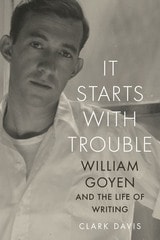
It Starts with Trouble
William Goyen and the Life of WritingBy Clark Davis
University of Texas Press, 2015
William Goyen was a writer of startling originality and deep artistic commitment whose work attracted an international audience and the praise of such luminaries as Northrop Frye, Truman Capote, Gaston Bachelard, and Joyce Carol Oates. His subject was the land and language of his native East Texas; his desire, to preserve the narrative music through which he came to know his world. Goyen sought to transform the cherished details of his lost boyhood landscape into lasting, mythic forms. Cut off from his native soil and considering himself an “orphan,” Goyen brought modernist alienation and experimentation to Texas materials. The result was a body of work both sophisticated and handmade—and a voice at once inimitable and unmistakable.
It Starts with Trouble is the first complete account of Goyen’s life and work. It uncovers the sources of his personal and artistic development, from his early years in Trinity, Texas, through his adolescence and college experience in Houston; his Navy service during World War II; and the subsequent growth of his writing career, which saw the publication of five novels, including The House of Breath, nonfiction works such as A Book of Jesus, several short story collections and plays, and a book of poetry. It explores Goyen’s relationships with such legendary figures as Frieda Lawrence, Katherine Anne Porter, Stephen Spender, Anaïs Nin, and Carson McCullers. No other twentieth-century writer attempted so intimate a connection with his readers, and no other writer of his era worked so passionately to recover the spiritual in an age of disabling irony. Goyen’s life and work are a testament to the redemptive power of storytelling and the absolute necessity of narrative art.

It's a Living
Work and Life in Vietnam TodayEdited by Gerard Sasges
National University of Singapore Press, 2013
Based on frank and freewheeling interviews conducted by students, the book engages a broad range of Vietnamese, both living in Vietnam and abroad, on their feelings about work, life and getting ahead. By providing a ground-level view of the texture of daily working life in the midst of rapid and unsettling change, the book reveals Vietnam today as a place where ordinary people are leveraging whatever assets they have, not just to survive, but to make a better life for themselves.