Results by title
968 books match the query 'Movements' and 39 start with i

I Was More American than the Americans
Sylvère Lotringer in Conversation with Donatien GrauSylvère Lotringer and Donatien Grau
Diaphanes, 2021
In the mid-1970s, Sylvère Lotringer created Semiotext(e), a philosophical group that became a magazine and then a publishing house. Since its creation, Semio-text(e) has been a place of stimulating dialogue between artists and philosophers, and for the past fifty years, much of American artistic and intellectual life has depended on it. The model of the journal and the publishing house revolves around the notion of the collective, and Lotringer has rarely shared his personal journey: his existence as a hidden child during World War II; the liberating and then traumatic experience of the collective in the kibbutz; his Parisian activism in the 1960s; his time of wandering, that took him, by way of Istanbul, to the United States; and then, of course, his American years, the way he mingled his nightlife with the formal experimentation he invented with Semiotext(e) and with his classes. Since the early 2010s, Donatien Grau has developed the habit of visiting Lotringer during his trips to Los Angeles; some of their dialogs were published or held in public. This book is an entry into Lotringer's life, his friendships, his choices, and his admiration for some of the leading thinkers of our times. The conversations between Lotringer and Grau show bursts of life, traces of a journey, through texts and existence itself, with an unusual intensity.
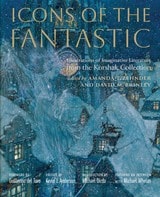
Icons of the Fantastic
Illustrations of Imaginative Literature from The Korshak CollectionAmanda T. Zehnder
University of Delaware Press, 2025
Winner of the 2026 PIA MidAmerica GraphEx Award for Best of Category, Hardcover Book Binding
Finalist for the 2026 Locus Awards in the Illustrated and Art Books category
"The Korshak Collection is a portrait and biography of a man and his family, who once looked upon the dark skies and saw Immortals, gods hunting in the storm clouds. Stephen Korshak decided to dedicate his life to tell us all how the thunder sounded and preserve the outlines of the cosmos for the awe of us all. Enjoy, believe—be amazed." —Guillermo del Toro, from the Foreword
Icons of the Fantastic: Illustrations of Imaginative Literature from the Korshak Collection features artwork by pioneering artists from over 160 years of published works of science fiction and fantasy. The illustrations in the collection appeared on the covers of timeless novels such as the Tarzan series by Edgar Rice Burroughs and classic pulp magazines from the 1930s through 1960s, such as Amazing Stories and Weird Tales. They accompany images of mischievous satyrs, ethereal mermaids, and spell-casting witches for texts ranging from The Tempest, Don Quixote, and Alice's Adventures in Wonderland to works by Edgar Allan Poe and H. G. Wells. Alongside essays about famous illustrators such as Arthur Rackham and Aubrey Beardsley, contributors engage in a critical reassessment of understudied artists such as José Segrelles, Wladyslaw Benda, Margaret Brundage, and Hannes Bok. The book includes a foreword by Guillermo del Toro, a preface by Kevin J. Anderson, an introduction by Michael Dirda, and an interview with renowned contemporary illustration artist Michael Whelan.
Idea of Phenomenology
Husserlian ExemplarismAndre de Muralt
Northwestern University Press, 1988
Idealism and Liberal Education
James O. Freedman
University of Michigan Press, 2001
Identity and Difference
Martin Heidegger
University of Chicago Press, 2002
Two essential works by Heidegger on the nature of identity
Illuminated Paris
Essays on Art and Lighting in the Belle ÉpoqueHollis Clayson
University of Chicago Press, 2019
Image on the Edge
The Margins of Medieval ArtMichael Camille
Reaktion Books, 2019
Imagination and Invention
Gilbert Simondon
University of Minnesota Press, 2023
A radical rethinking of the theory and the experience of mental images
Here, in English translation for the first time, is Gilbert Simondon’s fundamental reconception of the mental image and the theory of imagination and invention. Drawing on a vast range of mid-twentieth-century theoretical resources—from experimental psychology, cybernetics, and ethology to the phenomenological reflections of Sartre and Merleau-Ponty—Imagination and Invention provides a comprehensive account of the mental image and adds a vital new dimension to the theory of psychical individuation in Simondon’s earlier, highly influential work.
Simondon traces the development of the mental image through four phases: first a bundle of motor anticipations, the image becomes a cognitive system that mediates the organism’s relation to its milieu, then a symbolic and abstract integration of motor and affective experience to, finally, invention, a solution to a problem of life that requires the externalization of the mental image and the creation of a technical object. An image cannot be understood from the perspective of one phase alone, he argues, but only within the trajectory of its progressive metamorphosis.

Imaginative Horizons
An Essay in Literary-Philosophical AnthropologyVincent Crapanzano
University of Chicago Press, 2003
Imaging Animal Industry
American Meatpacking in Photography and Visual CultureEmily Kathryn Morgan
University of Iowa Press, 2024
Drawing on archival collections across the American Midwest, this book relates a history of the meatpacking industry’s use of images in the early to mid-twentieth century. In the process, it reveals the key role that images, particularly photographs, have played in assisting with the rise of industrial meat production.
Imagining Otherwise
Metapsychology and the Analytic A PosterioriAndrew Cutrofello
Northwestern University Press, 1997
Improvisation for the Theater
A Handbook of Teaching and Directing TechniquesViola Spolin
Northwestern University Press, 1983
In Force, Drive, Desire, Rudolf Bernet develops a philosophical foundation of psychoanalysis focusing on human drives. Rather than simply drawing up a list of Freud’s borrowings from Schopenhauer and Nietzsche, or Lacan’s from Hegel and Sartre, Bernet orchestrates a dialogue between philosophy and psychoanalysis that goes far beyond what these eminent psychoanalysts knew about philosophy. By relating the writings of Freud, Lacan, and other psychoanalysts to those of Aristotle, Leibniz, Schopenhauer, Nietzsche, Husserl, Heidegger, and, more tacitly, Bergson and Deleuze, Bernet brings to light how psychoanalysis both prolongs and breaks with the history of Western metaphysics and philosophy of nature.
Rereading the long history of metaphysics (or at least a few of its key moments) in light of psychoanalytic inquiries into the nature and function of drive and desire also allows for a rewriting of the history of philosophy. Specifically, it allows Bernet to bring to light a different history of metaphysics, one centered less on Aristotelian substance (ousia) and more on the concept of dunamis—a power or potentiality for a realization toward which it strives with all its might. Relating human drives to metaphysical forces also bears fruit for a renewed philosophy of life and subjectivity.
Imre Lakatos and the Guises of Reason
John Kadvany
Duke University Press, 2001
Lakatos escaped Hungary following the failed 1956 Revolution. Before then, he had been an influential Communist intellectual and was imprisoned for years by the Stalinist regime. He also wrote a lost doctoral thesis in the philosophy of science and participated in what was criminal behavior in all but a legal sense. Kadvany argues that this intellectual and political past animates Lakatos’s English-language philosophy, and that, whether intended or not, Lakatos integrated a penetrating vision of Hegelian ideas with rigorous analysis of mathematical proofs and controversial histories of science.
Including new applications of Lakatos’s ideas to the histories of mathematical logic and economics and providing lucid exegesis of many of Hegel’s basic ideas, Imre Lakatos and the Guises of Reason is an exciting reconstruction of ideas and episodes from the history of philosophy, science, mathematics, and modern political history.
In Praise of Philosophy and Other Essays
Maurice Merleau-Ponty
Northwestern University Press, 1988

In a Field of Static
Missed Encounters with Black Feminist TheorizingJames Bliss
Duke University Press, 2026

In a Shade of Blue
Pragmatism and the Politics of Black AmericaEddie S. Glaude Jr.
University of Chicago Press, 2007
“Eddie Glaude is poised to become the leading intellectual voice of our generation, raising questions that make us reexamine the assumptions we hold by expanding our inventory of ideas.”—Tavis Smiley
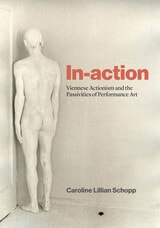
In-action
Viennese Actionism and the Passivities of Performance ArtCaroline Lillian Schopp
University of Chicago Press, 2025
Viennese Actionism represents a notorious case within art history, often cited but little studied, especially in the United States. By carefully looking at the unsettling performances that define this movement, Caroline Lillian Schopp offers a vital corrective to the narrative. Schopp observes that contrary to the reception of their graphic violence, many performances explore passivity, vulnerability, and dependence in gestures of “in-action.” Viennese Actionism registers hesitations about the liberatory ethos of the 1960s, amplified by Austria’s marginalized postwar social and artistic culture. In dialogue with feminist theory, In-action assembles a vocabulary for performance art without the standards of self-assertion, emancipation, and expressive action that continue to inform how art and politics are understood today.
Decentering the traditional focus on the male protagonists of Viennese Actionism—Günter Brus, Otto Muehl, Hermann Nitsch, and Rudolf Schwarzkogler—Schopp draws attention to women who performed with them, including Anna Brus, Hanel Koeck, and Ingrid Wiener. Doing so brings into view how these performances scrutinize intimate relationships like marriages, partnerships, and friendships, as well as the conventions of traditional artistic media such as painting and tapestry.
Incarnation, Pain, Theology
A Phenomenology of the BodyEspen Dahl
Northwestern University Press, 2024
While the phenomenological tradition has carefully treated both the objective and the lived body, Espen Dahl explores a dimension of the body that does not fall neatly into either category, suggesting that philosophers should take account of the inner density of our organic, material body. By integrating the dimension of “flesh-and-blood” into the phenomenological notion of the body, Dahl argues that it is possible to reach a more adequate notion of human incarnation. The author explores the body in its subjectivity and its resistance, in activity founded on passivity, and in the ambiguous limits of its skin. The phenomenon of pain is given particular attention in this investigation, since pain is, as Dahl argues, what makes the body inescapably manifest in its otherwise hidden dimensions, including its ambiguity and vulnerability. Related to this focus, Dahl also engages with the Christian theological concerns of incarnation, pain, and hope. Phenomenologists have long drawn on this religious inheritance, particularly in what has been dubbed the French “theological turn.” In a similar manner, Incarnation, Pain, Theology: A Phenomenology of the Body draws on these theological sources while firmly holding to its philosophical commitments in methodological approach and analytic aims.
Incarnation
A Philosophy of FleshMichel Henry; Translated from the French by Karl Hefty
Northwestern University Press, 2015
After having placed the difficult problem of the incarnation in an historical perspective going back to the thought of the Fathers of the Church, he makes in this book a critical review of the phenomenological tradition that leads to the reversal of phenomenology. He then proposes to elaborate a phenomenology of the flesh which leads to the notion of a not constituted original flesh given in the "Arch-revelation" of Life, as well as a phenomenology of Incarnation.
Although the flesh is traditionally understood as the place of sin, it is also in Christianity the place of salvation, which consists in the deification of man, that’s to say in the fact of becoming Son of God, to come back to the eternal and absolute Life we had forgotten getting lost in the world, caring only about things and ourselves. In the fault, we make the tragic experience of our powerlessness to do the good we would like to do and of our inability to avoid the evil. In this way in front of the magic body of the other, that’s the anguished desire to meet the life in it that leads to the fault. In the night of the lovers, the sexual act couples two impulsive movements, but the erotic desire fails to reach the pleasure of the other where it is experienced, in a total loving fusion. The erotic relation is however doubled by a pure affective relation, foreign to the carnal coupling, a relation made of mutual gratitude or of love. That’s this affective dimension that is denied in this way of violence that is pornography, which extracts the erotic relation from the pathos of life to abandon it to the world, and which consists in a real profanation of life.
Induction
Socrates to PopperJohn P. McCaskey
University of Chicago Press, 2026
Charts the historical development of induction and challenges contemporary understandings of the concept and its foundations.
The problem of induction continues to vex and beguile. How can we reliably draw universal conclusions from limited observations? In Induction, John P. McCaskey steps back and rethinks long-held assumptions, tracing the ideas of Socrates and Aristotle in ancient Greece to those of Karl Popper in the twentieth century.
This comprehensive account does not look at how people of the past answered the questions we ask today. Instead, it asks: How did they understand the very meaning of the words epagōgē in Greek, inductio in Latin, istiqrāʾ in Arabic, Induktion in German, and induction in English? McCaskey’s careful treatment of texts in their context dispels many long-standing myths, and importantly, he introduces us to a now-unfamiliar way to think about what induction is—a way in which there simply is no “problem of induction.” McCaskey reveals that the problem was one of our own making and that an accurate history may help us recover old ways—and thereby introduce new ways—to think about the whole idea. A must-read for philosophers, historians of ideas, and anyone interested in the scientific method.
Infinite Phenomenology
The Lessons of Hegel's Science of ExperienceJohn Russon
Northwestern University Press, 2016
Infinite Phenomenology builds on John Russon’s earlier book, Reading Hegel’s Phenomenology, to offer a second reading of Hegel’s Phenomenology of Spirit. Here again, Russon writes in a lucid, engaging style and, through careful attention to the text and a subtle attunement to the existential questions that haunt human life, he demonstrates how powerfully Hegel’s philosophy can speak to the basic questions of philosophy. In addition to original studies of all the major sections of the Phenomenology, Russon discusses complementary texts by Hegel, namely, the Philosophy of Spirit, the Philosophy of Right, and the Science of Logic. He concludes with an appendix that discusses the reception and appropriation of Hegel’s Phenomenology in twentieth-century French philosophy. As with Russon’s earlier work, Infinite Phenomenology will remain essential reading for those looking to engage Hegel’s essential, yet difficult, text.
Influences
Art, Optics, and Astrology in the Italian RenaissanceMary Quinlan-McGrath
University of Chicago Press, 2013
Infrathin
An Experiment in MicropoeticsMarjorie Perloff
University of Chicago Press, 2021
The “infrathin” was Marcel Duchamp’s playful name for the most minute shade of difference: that between the report of a gunshot and the appearance of the bullet hole, or between two objects in a series made from the same mold. “Eat” is not the same thing as “ate.” The poetic, Marjorie Perloff suggests, can best be understood as the language of infrathin. For in poetry, whether in verse or prose, words and phrases that are seemingly unrelated in ordinary discourse are realigned by means of sound, visual layout, etymology, grammar, and construction so as to “make it new.”
In her revisionist “micropoetics,” Perloff draws primarily on major modernist poets from Stein and Yeats to Beckett, suggesting that the usual emphasis on what this or that poem is “about,” does not do justice to its infrathin possibilities. From Goethe’s eight-line “Wanderer’s Night Song” to Eliot’s Four Quartets, to the minimalist lyric of Rae Armantrout, Infrathin is designed to challenge our current habits of reading and to answer the central question: what is it that makes poetry poetry?
Inglorious Artists
Art World Satire and the Emergence of a Capitalist Art Market in Paris, 1750-1850Kathryn Desplanque
University of Delaware Press, 2025
This book is also freely available online as an open access digital edition.

Inorganic Life
On Post-VitalismEckardt Lindner
Diaphanes, 2024
Contemporary theory has pushed the boundaries of the concept of the living, urging us to consider a vitality that manifests beyond the human, animal, or even the organic altogether. Recognizing the vast variety of modes of existence and vibrancy entails—such is the claim—a new ethics and politics. In Inorganic Life, the philosopher Eckardt Lindner intervenes in this discussion. He claims that we have not yet properly understood how and to what effect we can break the organo-centrism of philosophy and have neglected to consider the inner contradictions of such novel amalgams of vitalism and materialism.
As an unlikely ally in his critical project, he investigates the inner tension in Deleuze’s works between an overtly vitalist stance and critiques of classical forms of vitalism, bordering on a novel anti-vitalism. Against active forms of vitalism, interested in more immersion in the world, interconnectedness, and ever more efficacious praxis, one can find in Deleuze a passive vitalism. This subterranean thought in the philosophy of immanence highlights the capacity of life to disorient itself, to be out of line with itself, to detach itself from purposeful action and its own inner goals.
Lindner explores this passive vitalism by drawing together thinkers such as Deleuze, Cioran, Laruelle, Kant, and Derrida. Suspicious of the moralistic and enthusiastic tendency of new materialisms, this vitalism would be inherently critical—even of its own commitments to liveliness—and thus gestures to a new politics and ethics of life.
Inscriptions
After Phenomenology and StructuralismHugh J. Silverman
Northwestern University Press, 1997
In Inscriptions, Hugh J. Silverman investigates two divergent yet related philosophical movements: phenomenology from the later Husserl through Sartre and Heidegger to Merleau-Ponty, and structuralism from de Saussure through Levi-Strauss and Lacan to Barthes. This reading of the tradition culminates in an assessment of Derrida and Foucault. From this foundation, Silverman moves beyond structuralism and phenomenology, and develops his own philosophical position in the context of semiotics, hermeneutics, and deconstruction. A new preface by the author updates this classic text.

Insubordinate Spaces
Improvisation and Accompaniment for Social JusticeBarbara Tomlinson
Temple University Press, 2019
Insubordinate spaces are places of possibility, products of acts of accompaniment and improvisation that deepen capacities for democratic social change. Barbara Tomlinson and George Lipsitz’s Insubordinate Spaces explores the challenges facing people committed to social justice in an era when social institutions have increasingly been reconfigured to conform to the imperatives of a market society.
In their book, the authors argue that education, the arts, and activism are key terrains of political and ideological conflict. They explore and analyze exemplary projects responding to current social justice issues and crises, from the Idle No More movement launched by Indigenous people in Canada to the performance art of Chingo Bling, Fandango convenings, the installation art of Ramiro Gomez, and the mass protests proclaiming “Black Lives Matter" in Ferguson, MO. Tomlinson and Lipsitz draw on key concepts from struggles to advance ideas about reciprocal recognition and co-creation as components in the construction of new egalitarian and democratic social relations, practices, and institutions.
Insult and the Making of the Gay Self
Didier Eribon
Duke University Press, 2004
Eribon describes the emergence of homosexual literature in Britain and France at the turn of the last century and traces this new gay discourse from Oscar Wilde and the literary circles of late-Victorian Oxford to André Gide and Marcel Proust. He asserts that Foucault should be placed in a long line of authors—including Wilde, Gide, and Proust—who from the nineteenth century onward have tried to create spaces in which to resist subjection and reformulate oneself. Drawing on his unrivaled knowledge of Foucault’s oeuvre, Eribon presents a masterful new interpretation of Foucault. He calls attention to a particular passage from Madness and Civilization that has never been translated into English. Written some fifteen years before The History of Sexuality, this passage seems to contradict Foucault’s famous idea that homosexuality was a late-nineteenth-century construction. Including an argument for the use of Hannah Arendt’s thought in gay rights advocacy, Insult and the Making of the Gay Self is an impassioned call for critical, active engagement with the question of how gay life is shaped both from without and within.
Intention, Plans and Practical Reason
Michael E. Bratman
CSLI, 1987
Interpreting Art
Sam Rose
University College London, 2022
How do people make sense of works of art? And how do they write to make others see the same way? There are many guides to looking at art, histories of art history and art criticism, and accounts of various theories and methods, but this book offers something very unlike the normal search for difference and division: it examines the general and largely unspoken norms shared by interpreters of many kinds.
Interpreting Art highlights the norms, premises, and patterns that tend to guide interpretation along the way. Why, for example, is the concept of artistic intention at once so reviled and so hard to let go of? What is involved when an interpretation appeals to an artwork’s reception? How can context be used by some to keep things under control and by others to make the interpretation of art seem limitless? And how is it that artworks only seem to grow in complexity over time?
This volume reveals subtle features of art writing central to the often unnoticed interpretative practices through which we understand works of art. In doing so, the book also sheds light on possible alternatives, pointing to how writers on art might choose to operate differently in the future.
Intersubjective Existence
A Critical Reflection on the Theory and the Practice of SelfhoodOliva Blanchette
Catholic University of America Press, 2021

Intimate Outsiders
The Harem in Ottoman and Orientalist Art and Travel LiteratureMary Roberts
Duke University Press, 2007
Roberts draws on a range of sources, including paintings, photographs, and travelogues discovered in archives in Britain, Turkey, Egypt, and Denmark. She rethinks the influential harem works of the realist painter John Frederick Lewis, a British artist living in Cairo during the 1840s, whose works were granted an authoritative status by his British public despite the actual limits of his insider knowledge. Unlike Lewis, British women were able to visit Ottoman harems, and from the mid-nineteenth century on they did so in droves. Writing about their experiences in published travelogues, they undermined the idea that harems were the subject only of male fantasies. The elite Ottoman women who orchestrated these visits often challenged their guests’ misapprehensions about harem life, and a number of them exercised power as patrons, commissioning portraits from European artists. Their roles as art patrons defy the Western idea of the harem woman as passive odalisque.
Introduction to Husserlian Phenomenology
Rudolf Bernet, Iso Kern, and Eduard Marbach
Northwestern University Press, 1993
Inventing Philosophy's Other
Phenomenology in AmericaJonathan Strassfeld
University of Chicago Press, 2022
Phenomenology and so-called “continental philosophy” receive scant attention in most American philosophy departments, despite their foundational influence on intellectual movements such as existentialism, post-structuralism, and deconstruction. In Inventing Philosophy’s Other, Jonathan Strassfeld explores this absence, revealing how everyday institutional practices played a determinative role in the development of twentieth-century academic discourse.
Conventional wisdom holds that phenomenology’s absence from the philosophical mainstream in the United States reflects its obscurity or even irrelevance to America’s philosophical traditions. Strassfeld refutes this story as he traces phenomenology’s reception in America, delivering the first systematic historical study of the movement in the United States. He examines the lives and works of Marjorie Grene, Alfred Schütz, Hubert Dreyfus, and Iris Marion Young, among others, while also providing a fresh introduction to phenomenological philosophy.
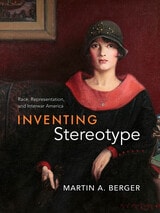
Inventing Stereotype
Race, Representation, and Interwar AmericaMartin A. Berger
University of Chicago Press, 2025
Upending a century of scholarly and popular thinking about stereotype, Martin A. Berger traces our current understanding of it to the 1920s, when American journalist and public intellectual Walter Lippmann borrowed the term from printmaking techniques and defined it as a shared mental picture that simplified a person, event, group, or thing so it could be easily grasped. Berger uncovers stereotype’s intellectual debts to philosophy, psychology, political science, and, in particular, art history and interwar racial theories.
Inventing Stereotype analyzes a series of plays, novels, and paintings from the 1920s and 1930s that sparked fierce debate about whether they employed racial stereotypes in the depiction of Black, Jewish, and other characters. Through careful attention to audience responses—parsed by race, political leanings, religion, and class—the book illustrates how artistic depictions are categorized as either stereotyped or not, relative to current representational norms, rather than to their success in conveying the authentic identities of individuals or racial groups.

Investigations into the Literary Use of Language
Course Notes from the Collège de France, 1953Maurice Merleau-Ponty, Bryan Smyth
Northwestern University Press, 2026
A closely annotated translation of Merleau-Ponty’s lecture notes on literary language
Investigations into the Literary Use of Language presents an annotated translation of Maurice Merleau-Ponty’s lecture notes from one of the two courses that he gave during his inaugural year teaching at the Collège de France. In his notes from the concurrent course, The Sensible World and the World of Expression, Merleau-Ponty contends that our embodied perceptual engagement with the sensible world already involves the same spontaneity that underlies cultural expression. Approaching it from the other side, he revisits here the analysis of language that he had undertaken in the unfinished manuscript The Prose of the World.
Focusing on the work of Paul Valéry (1871–1945) and Stendhal (Marie-Henri Beyle, 1783–1842), Merleau-Ponty explores how the spontaneity of literary language sheds light on the relation between lived experience and language more broadly, and how cultural expression remains grounded in embodied perceptual experience in a way that is homologous yet irreducible to it. Specifically, Merleau-Ponty shows how Stendhal had already overcome Valéry’s skepticism concerning literary sincerity by effectively incorporating what the latter called the linguistic “implex”—in effect, language as institution—and thus achieving a “total style” of improvisational spontaneity in which the “conquering function” characteristic of the literary use of language gives shape to an immanent model of political engagement.
Invoking Hope
Theory and Utopia in Dark TimesPhillip E. Wegner
University of Minnesota Press, 2020
An appeal for the importance of theory, utopia, and close consideration of our contemporary dark times
What does any particular theory allow us to do? What is the value of doing so? And who benefits? In Invoking Hope, Phillip E. Wegner argues for the undiminished importance of the practices of theory, utopia, and a deep and critical reading of our current situation of what Bertolt Brecht refers to as finsteren Zeiten, or dark times.
Invoking Hope was written in response to three events that occurred in 2016: the five hundredth anniversary of the publication of Thomas More’s Utopia; the one hundredth anniversary of the founding text in theory, Ferdinand de Saussure’s Course in General Linguistics; and the rise of the right-wing populism that culminated in the election of Donald Trump. Wegner offers original readings of major interventions in theory alongside dazzling utopian imaginaries developed from classical Greece to our global present—from Theodor Adorno, Ernst Bloch, Alain Badiou, Jacques Derrida, Fredric Jameson, Sarah Ahmed, Susan Buck-Morss, and Jacques Lacan to such works as Plato’s Republic, W. E. B. Du Bois’s John Brown, Isak Dinesen’s “Babette’s Feast,” Kim Stanley Robinson’s 2312, and more. Wegner comments on an expansive array of modernist and contemporary literature, film, theory, and popular culture.
With Invoking Hope, Wegner provides an innovative lens for considering the rise of right-wing populism and the current crisis in democracy. He discusses challenges in the humanities and higher education and develops strategies of creative critical reading and hope against the grain of current trends in scholarship.
Is Feminist Philosophy Philosophy?
Emanuela Bianchi
Northwestern University Press, 1999

Islam and the West
A Conversation with Jacques DerridaMustapha Chérif
University of Chicago Press, 2008