Results by title
336 books match the query 'Political Economy' and 13 start with i
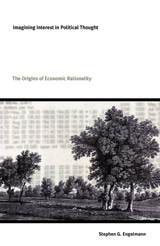
Imagining Interest in Political Thought
Origins of Economic RationalityStephen G. Engelmann
Duke University Press, 2003
Tracing the development of monistic interest from its origins in Reformation political theory and theology through late-twentieth-century neoliberalism, Engelmann reconceptualizes the history of liberalism as consisting of phases in the history of monistic interest or economic government. He describes how monistic interest, as formulated by Bentham, is made up of the individual’s imagined expectations, which are constructed by the very regime that maximizes them. He asserts that this construction of interests is not the work of a self-serving manipulative state. Rather, the state, which is itself subject to strict economic regulation, is only one cluster of myriad "public" and "private" agencies that produce and coordinate expectations. In place of a liberal vision in which government appears only as a protector of the free pursuit of interest, Engelmann posits that the free pursuit of interest is itself a mode of government, one that deploys individual imagination and choice as its agents.
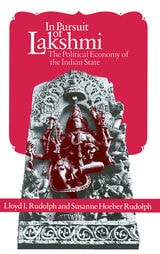
In Pursuit of Lakshmi
The Political Economy of the Indian StateLloyd I. Rudolph and Susanne Hoeber Rudolph
University of Chicago Press, 1987
India occupies a paradoxical plane among nation states: it is both developed and underdeveloped, rich and poor, strong and weak. These contrasts locate India in the international order. The Rudolphs' theory of demand and command polities provides a general framework for explaining the special circumstances of the Indian experience.
Contrary to what one might expect in a country with great disparities of wealth, no national party, right or left, pursues the politics of class. Instead, the Rudolphs argue, private capital and organized labor in India face a "third actor"—the state. Because of the dominance of the state makes class politics marginal, the state is itself an element in the creation of the centrist-oriented social pluralism that has characterized Indian politics since independence.
In analyzing the relationship between India's politics and its economy, the Rudolphs maintain that India's economic performance has been only marginally affected by the type of regime in power—authoritarian or democratic. More important, they show that rising levels of social mobilization and personalistic rule have contributed to declining state capacity and autonomy. At the same time, social mobilization has led to a more equitable distribution of economic benefits and political power, which has enhanced the state's legitimacy among its citizens.
The scope and explanatory power of In Pursuit of Lakshmi will make it essential for all those interested in political economy, comparative politics, Asian studies and India.
In Pursuit of Prosperity
Industrial Policy and the Politics of Economic UpgradingCharles R. Hankla
University of Michigan Press, 2025
Using a mixed-methods approach, Charles R. Hankla draws upon archival research and interviews from France and India as well as quantitative models of sixteen countries across six decades. He finds that when state and private actors are aligned in their institutional structures, which can happen in both corporatist and pluralist systems, industrial policy tends to be more effective. It is when the state or the private sector independently dominates industrial policy that poor outcomes are most likely. As In Pursuit of Prosperity shows, rather than being fixed characteristics of countries, policymaking styles vary across time and across sectors of the economy, reflecting the changing power dynamics and organizational resources of stakeholders. The book sheds light on how industrial policy—which is experiencing a comeback in the United States and beyond—can best be harnessed for upgrading. It offers a valuable contribution to our understanding of the complex relationship between state politics and economic performance in the modern globalized world.
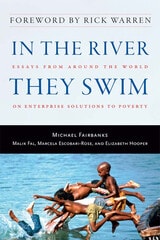
In the River They Swim
Essays from Around the World on Enterprise Solutions to PovertyMichael Fairbanks
Templeton Press, 2009
The sociologist Thomas Sowell writes, "We need to confront the most blatant fact that has persisted across centuries of social history—vast ddifferences in productivity among peoples, and the economic and other consequences of such differences." Poverty demeans dignity, shrinks the soul, wastes potential, and inflicts suffering on three billion people on our planet. We must also acknowledge that, during the past fifty yyears, the record in international assistance to the least developed countries has been disappointing; the economics-based abstractions developed in the think tanks of Europe and North America are insufficient.
In the River They Swim is the antithesis to that search for solutions the next big theory of global poverty. From the fresh perspective of advisors on the frontlines of development to the insight of leaders like President Paul Kagame of Rwanda and Pastor Rick Warren, it tells the story of change in the microcosms of emerging businesses, industries, and governments. These essays display a personal nature to their work that rigorous analysis alone cannot explain.
We learn that a Sufi master can teach us about the different levels of knowledge, the "different ways to know a river." These practitioners could have written about its length, its source, its depth, its width, the power of its current, and the life it contains. They could have invested time and money to travel to that river so that they could sit on its shores and look at it, feel the sand that borders it, and watch the birds at play over it. Instead, they dove in to swim in the river, felt its current along their bodies, and tasted something of it. They wondered, briefly, if they had the strength to swim its length, and now they share the answer.
If human development is a river, the authors in this volume, and perhaps some readers, will no longer be satisfied to stand along its banks.

In the Shadow of Russia
Reform in Kazakahstan and UzbekistanPamela Blackmon
Michigan State University Press, 2011
In the twenty years since the dissolution of the Soviet Union, the fifteen new independent republics have embarked on unprecedented transitions from command economies into market-oriented economies.
Important motivating factors for their reform efforts included issues of geographic and economic proximity to Europe and the influence of the pre-Soviet era histories in those countries. In the Shadow of Russia builds upon the conceptual frameworks that include geography and policy choices about economic integration in an analysis of the reform efforts of Kazakhstan and Uzbekistan.
Blackmon's book addresses such central questions as: How and in what areas has a republic's previous level of integration with Soviet-era Russia influenced its present economic orientation? What are the contributing factors that explain the differences in how leaders ( of a similar regime type) developed economic reform policies? To answer these questions, the author utilizes information from both the economic and the political literature on post-communist transitions, as well from political speeches.

Indian Reservations in the United States
Territory, Sovereignty, and Socioeconomic ChangeKlaus Frantz
University of Chicago Press, 1999
Informed by both historical research and extensive fieldwork, this book pays special attention to the natural resource base and economic outlook of the reservations, as well as the crucial issue of tribal sovereignty. Chapters also cover the demography of American Indian groups and their socioeconomic status (including standard of living, employment, and education). A new afterword treats some of the developments since the book's initial publication in German, such as the effects of the 1988 Indian gaming law that allowed Indian reservations to operate gambling establishments (with mixed success).
"Provides a good overview of the basic questions and problems facing reservation Indians today."—Peter Bolz, Journal of American History (on the German edition)
Individualism and Economic Order
F. A. Hayek
University of Chicago Press, 1948
In this collection of writings, Nobel laureate Friedrich A. Hayek discusses topics from moral philosophy and the methods of the social sciences to economic theory as different aspects of the same central issue: free markets versus socialist planned economies. First published in the 1930s and 40s, these essays continue to illuminate the problems faced by developing and formerly socialist countries.
F. A. Hayek, recipient of the Medal of Freedom in 1991 and winner of the Nobel Memorial Prize in Economics in 1974, taught at the University of Chicago, the University of London, and the University of Freiburg. Among his other works published by the University of Chicago Press is The Road to Serfdom, now available in a special fiftieth anniversary edition.
Inhuman Power
Artificial Intelligence and the Future of CapitalismNick Dyer-Witheford, Atle Mikkola Kjosen, and James Steinhoff
Pluto Press, 2019
Inhuman Power explores the relationship between Marxist theory and AI through three approaches, each using the lens of a different Marxist theoretical concept. While the idea of widespread AI tends to be celebrated as much as questioned, a deeper analysis of its reach and potential produces a more complex and disturbing picture than has been identified. Inhuman Power argues that on its current trajectory, AI is likely to render humanity obsolete and that the only way to prevent it is a communist revolution.
Institutional Change, Discretion, and the Making of Modern Congress
An Economic InterpretationGlenn R. Parker
University of Michigan Press, 1992
Institutional trust and economic policy Lessons from the history of the Euro
Lessons from the history of the EuroDóra Gyorffy
Central European University Press, 2013
Investing in the Homeland
Migration, Social Ties, and Foreign FirmsBenjamin A.T. Graham
University of Michigan Press, 2019
Graham’s analysis draws on new data from face-to-face interviews with the managers of over 450 foreign firms operating in two developing countries: Georgia and the Philippines. Diaspora-owned and diaspora-managed firms are better connected than other foreign firms and they use social ties to resolve disputes and influence government policy. At the same time, Graham shows that diaspora-affiliated firms are no more socially responsible than their purely foreign peers—at root, they are profit-seeking enterprises, not development NGOs. Graham identifies implications for policymakers seeking to capture the development potential of diaspora investment and for managers of multinational firms who want to harness diasporans as a source of sustained competitive advantage.
Investment Citizenship
Rhetoric and Affect Beyond Late NeoliberalismBlake Abbott
Michigan State University Press, 2027
This book maps the development of a social and rhetorical phenomenon called investment citizenship: a mode of citizen-subjectivity articulated primarily through financial and affective investments. Investment citizenship is both a marker of personal identity and a complex, interwoven set of rhetorics, forces, actions, and assumptions that articulate the role of investment in social life. To that end, it examines three rhetorical couplets—investment and citizenship, financial investment and affective investment, to invest and to be invested—directly and through several cultural phenomena implicated by the emergence of investment rhetoric, such as US government policy, consumerism, ownership, education, and financial planning. Taken together, these couplets both extend and challenge late neoliberalism through the various invocations and implications of investment citizenship that reconfigure the relationship between the individual and society.

Isle of Fire
The Political Ecology of Landscape Burning in MadagascarChristian A. Kull
University of Chicago Press, 2004