Results by title
62 books match the query 'Racially mixed people' and 7 start with i
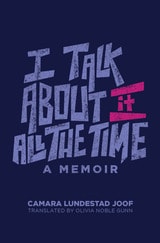
I Talk about It All the Time
Camara Lundestad Joof
University of Wisconsin Press, 2024
“I regularly decide to quit talking to white people about racism,” writes Joof. Such discussions often feel unproductive, the occasional spark of hope coming at enormous personal cost. But not talking about it is impossible, a betrayal of self. The book is a self-examination as well as societal indictment. It is an open challenge to readers, to hear her as she talks about it, all the time.
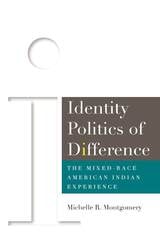
Identity Politics of Difference
The Mixed-Race American Indian ExperienceMichelle Montgomery
University Press of Colorado, 2021
In Identity Politics of Difference, author Michelle R. Montgomery uses a multidisciplinary approach to examine questions of identity construction and multiracialism through the experiences of mixed-race Native American students at a tribal school in New Mexico. She explores the multiple ways in which these students navigate, experience, and understand their racial status and how this status affects their educational success and social interactions.
Montgomery contextualizes students’ representations of their racial identity choices through the compounded race politics of blood quantum and stereotypes of physical features, showing how varying degrees of "Indianness" are determined by peer groups. Based on in-depth interviews with nine students who identify as mixed-race (Native American–White, Native American–Black, and Native American–Hispanic), Montgomery challenges us to scrutinize how the category of “mixed-race” bears different meanings for those who fall under it based on their outward perceptions, including their ability to "pass" as one race or another.
Identity Politics of Difference includes an arsenal of policy implications for advancing equity and social justice in tribal colleges and beyond and actively engages readers to reflect on how they have experienced the identity politics of race throughout their own lives. The book will be a valuable resource to scholars, policy makers, teachers, and school administrators, as well as to students and their families.
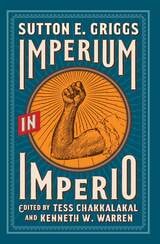
Imperium in Imperio
Sutton E. Griggs
West Virginia University Press, 2022
A new critical edition of Sutton Griggs’s turn-of-the-twentieth-century novel, which continues to shed light on understandings of Black politics.
Sutton E. Griggs’s first novel, originally published in 1899, paints a searing picture of the violent enforcement of disfranchisement and Jim Crow racial segregation. Based on events of the time, including US imperial policies, revolutionary movements, and racial protests, Imperium in Imperio introduces the fictional Belton Piedmont and Bernard Belgrave as “future leaders of their race” and uses these characters to make sense of the violence that marked the dawn of the twentieth century. Taking on contemporary battles over separatism and integration, Griggs’s novel continues to play a crucial role in understandings of Black politics.
Edited and introduced by Tess Chakkalakal and Kenneth W. Warren, this new critical edition offers not only an incisive biographical and historical introduction to the novel and its author but also a wealth of references that make the events and characters of Griggs’s Imperium in Imperio, and its aftermath, accessible to readers today.
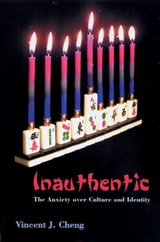
Inauthentic
The Anxiety over Culture and IdentityVincent J. Cheng
Rutgers University Press, 2004
Modern and contemporary cultures are increasingly marked by an anxiety over a perceived loss of authentic cultural identity. In this book, Vincent J. Cheng examines why we still cling to notions of authenticity in an increasingly globalized world that has exploded notions of authentic essences and absolute differences.
Who is “authentic” and who is “other” in a given culture? Who can speak for the “other?” What do we mean by authenticity? These are critical questions that today’s world––brought closer together and yet pulled farther apart by globalism and neocolonialism––has been unable to answer. Inauthentic compellingly probes these issues through revealing case studies on the pursuit of authenticity and identity.
Each chapter explores the ways in which we construct “authenticity” in order to replace seemingly vacated identities, including: the place of minorities in academia; mixed-race dynamics; the popularity of Irish culture in America; the Good Friday agreement in Northern Ireland; Jewish American identity; the status of Jewish America in relation to Israel and Palestine; the cultural problems of international adoptions; and the rapidly changing nature of the Asian American population in the United States.
Inauthentic combines the scholarly and the personal, informed argument and human interest. It will undoubtedly appeal to academic scholars, as well as to a broader reading audience.
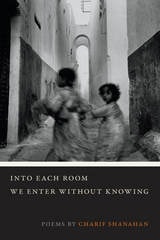
Into Each Room We Enter without Knowing
Charif Shanahan
Southern Illinois University Press, 2017
Finalist, Publishing Triangle's Thom Gunn Award
In this affecting poetry debut, Charif Shanahan explores what it means to be fully human in our wounded and divided world. In poised yet unrelenting lyric poems, Shanahan—queer and mixed-race—confronts the challenges of a complex cultural inheritance, informed by colonialism and his mother’s immigration to the United States from Morocco, navigating racial constructs, sexuality, family, and the globe in search of “who we are to each other . . . who we are to ourselves.”
With poems that weave from Marrakesh to Zürich to London, through history to the present day, this book is, on its surface, an uncompromising exploration of identity in personal and collective terms. Yet the collection is, most deeply, about intimacy and love, the inevitability of human separation and the challenge of human connection. Urging us to reexamine our own place in the broader human tapestry, Into Each Room We Enter without Knowing announces the arrival of a powerful and necessary new voice.
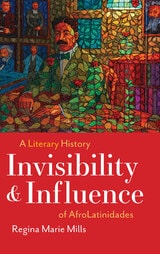
Invisibility and Influence
A Literary History of AfroLatinidadesRegina Marie Mills
University of Texas Press, 2024
2026 Honorable Mention, Latinx Studies Section, Social Sciences Category, Latin American Studies Association (LASA)
A rich literary study of AfroLatinx life writing, this book traces how AfroLatinxs have challenged their erasure in the United States and Latin America over the last century.
Invisibility and Influence demonstrates how a century of AfroLatinx writers in the United States shaped life writing, including memoir, collective autobiography, and other formats, through depictions of a wide range of “Afro-Latinidades.” Using a woman-of-color feminist approach, Regina Marie Mills examines the work of writers and creators often excluded from Latinx literary criticism. She explores the tensions writers experienced in being viewed by others as only either Latinx or Black, rather than as part of their own distinctive communities. Beginning with Arturo (Arthur) Schomburg, who contributed to wider conversations about autobiographical technique, Invisibility and Influence examines a breadth of writers, including Jesús Colón; members of the Young Lords; Piri Thomas; Lukumi santera and scholar Marta Moreno Vega; and Black Mexican American poet Ariana Brown. Mills traces how these writers confront the distorted visions of AfroLatinxs in the United States, Latin America, and the Caribbean, and how they created and expressed AfroLatinx spirituality, politics, and self-identity, often amidst violence. Mapping how AfroLatinx writers create their own literary history, Mills reveals how AfroLatinx life writing shapes and complicates discourses on race and colorism in the Western Hemisphere.
Dialogues in AfroLatinidad Podcast:https://www.youtube.com/watch?v=FIhF-pdeW3A

Itch Like Crazy
Wendy Rose
University of Arizona Press, 2002
In her latest work, Rose returns to these major motifs while exploring a new dimension: using poetry as a tool to delve into the buried secrets of family history—and all of American history as well. Confronting questions of personal history that itch like crazy—the irritations that drive human existence—she acknowledges and pays tribute to her Indian and European ancestors without hiding her anger with American society.
Rose's poems are strong political and social statements that have a distinctly narrative flavor. Here are Europeans who first set foot on America's shores while Taino Indians greeted them as if they were visiting neighbors; Hopi and Miwok "Clan Mothers, grand-daughters, all those the missionaries erased"; and European forebears who as settlers pushed their way relentlessly west. Through her vivid imagery, she speaks to and for these ancestors with a sense of loss and an itching caused by the biases provoked by ethnic chauvinism.
Itch Like Crazy is a finely crafted literary work that is also a manifesto addressing contacts and conflicts in the history of Indian-white relations. By presenting another view of U.S. history and its impact on the Native Americans who are her ancestors, it offers a new appreciation of the issue of "tribal identity" that too often faces Native peoples of the Americas—and is too often misunderstood by Euro-American society.