Results by title
1017 books match the query 'Reference' and 31 start with i
I'll Tell You Mine
Thirty Years of Essays from the Iowa Nonfiction Writing ProgramEdited by Hope Edelman and Robin Hemley
University of Chicago Press, 2015
I’ll Tell You Mine is an extraordinary anthology, a book rooted in Iowa’s successful program that goes beyond mere celebration to present some of the best nonfiction writing of the past thirty years. Eighteen pieces produced by Iowa graduates exemplify the development of both the program and the field of nonfiction writing. Each is accompanied by commentary from the author on a challenging issue presented by the story and the writing process, including drafting, workshopping, revising, and listening to (or sometimes ignoring) advice. The essays are put into broader context by a prologue from Robert Atwan, founding editor of the Best American Essays series, who details the rise of nonfiction as a literary genre since the New Journalism of the 1960s.
Creative nonfiction is the fastest-growing writing concentration in the country, with more than one hundred and fifty programs in the United States. I’ll Tell You Mine shows why Iowa’s leads the way. Its insider’s view of the Iowa program experience and its wealth of groundbreaking nonfiction writing will entertain readers and inspire writers of all kinds.
IGY
Year of DiscoverySydney Chapman
University of Michigan Press, 1959
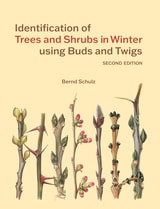
Identification of Trees & Shrubs in Winter Using Buds and Twigs, Second Edition
Bernd Schulz
Royal Botanic Gardens, Kew, 2025
This second edition of the essential reference book for plant identification in winter is updated with new illustrations and fully revised text.
To many plant lovers winter seems like lost time, but a glance at the twigs of trees and shrubs shows that this does not need to be the case. In contrast to other life forms, trees and shrubs do not die above ground but enclose their shoots for the next year in buds, presenting many characters which hardly change over time. Using these bud and twig characters, deciduous trees and shrubs can be classified reliably in winter, which is particularly important during planting time.
Comprehensive and easy to use, Identification of Trees & Shrubs in Winter using Buds and Twigs contains over seven hundred species identifiable via their winter buds and twigs. The illustrated identification keys are easy to use, and a summary set of keys is provided as an appendix. Detailed descriptions are accompanied with 1,900 illustrations.
Illinois Wines and Wineries
The Essential GuideClara Orban
Southern Illinois University Press, 2014
For more than a century, Illinois has been home to a blossoming wine culture, yet winemaking in the state has not received the attention it deserves. Now, Clara Orban has created the ultimate companion to Illinois wines and wineries. This illustrated volume is a comprehensive yet user-friendly guide for both experienced wine lovers and amateur oenophiles.
Orban, a certified sommelier, begins with the history of Illinois wine production and wineries. She then enlightens readers on such wine basics as the most common grapes grown in Illinois, optimal food and wine pairings, the tenets of wine tasting, and provides an overview of the world of labels, bottles, and corks. The fascinating science of wine also is discussed, including the particulars of Illinois soil and climate and their effect on the industry. Orban then provides a guide to all the wineries listed by the Illinois Grape Growers and Vintners’ Association. For each winery, she offers a succinct history, information regarding the variety of grapes used, hours of operation, location, and contact information.
In addition to providing readers with a background of the state’s industry and snapshots of individual wineries, Illinois Wines and Wineries provides a glossary of key wine terms, including those specific to the state of Illinois, as well as color photos and a map to each location visited in the book. This sophisticated yet practical guidebook is an essential resource for connoisseurs and casual enthusiasts alike who are interested in exploring Illinois’s rich winemaking legacy.
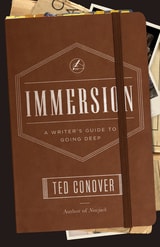
Immersion
A Writer's Guide to Going DeepTed Conover
University of Chicago Press, 2016
In immersion reporting—a literary cousin to ethnography, travel writing, and memoir—the writer fully steps into a new world or culture, participating in its trials, rites, and rituals as a member of the group. The end results of these firsthand experiences are familiar to us from bestsellers such as Nickel and Dimed and Behind the Beautiful Forevers. But in a world of wary strangers, where does one begin?
Conover distills decades of knowledge into an accessible resource aimed at writers of all levels. He covers how to “get into” a community, how to conduct oneself once inside, and how to shape and structure the stories that emerge. Conover is also forthright about the ethics and consequences of immersion reporting, preparing writers for the surprises that often surface when their piece becomes public. Throughout, Conover shares anecdotes from his own experiences as well as from other well-known writers in this genre, including Alex Kotlowitz, Anne Fadiman, and Sebastian Junger. It’s a deep-in-the-trenches book that all aspiring immersion writers should have in hand as they take that first leap into another world.
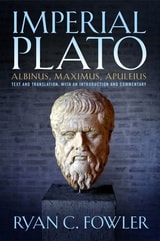
Imperial Plato
Albinus, Maximus, Apuleius: Text and Translation, with an Introduction and CommentaryRyan C. Fowler
Parmenides Publishing, 2016

In Search of Susanna
Suzanne L. Bunkers
University of Iowa Press, 1996
On a summer day in 1980 in Niederfeulen, Luxembourg, Suzanne Bunkers pored over parish records of her maternal ancestors, immigrants to the rural American Midwest in the mid 1800s. Suddenly, chance led her to the name Simmerl and to the missing piece in the genealogical puzzle that had brought her so far: Susanna Simmerl, Bunkers' paternal great-great-grandmother, who had given birth to an illegitimate daughter in 1856 before coming to America. Finding Susanna was the catalyst for Bunkers' intensely personal book, which blends history, memory, and imagination into a drama of two women's lives within their multigenerational family.

Inclusive Play
Magic Commander and Community PracticeJohn Banks
University of Michigan Press, 2027
Magic: The Gathering, considered to be the first collectible trading card game, was conceived by Richard Garfield in 1991 and commercially released by Wizards of the Coast in 1993. Since then, Magic has exerted profound influence on hobbyist board gaming through its distinctive and innovative mechanics and practices of collecting cards from periodic set releases and deckbuilding for competitive play. Originating in the Magic player community, the Commander format became popular for casual play and a more inclusive style of social play. Like games cultures more broadly, Magic has been characterized by oppressions that exclude marginalized people.
Drawing on his research of the player community at his local game store in Brisbane, Australia; interviews with Sheldon Menery and members of the Commander Rules Committee and Advisory Group; and research in the field of game studies, John Banks considers how games like Commander can be approached and played more inclusively. Banks argues that there is an ethical dimension to how players approach inclusion. While not all games or communities embody inclusivity, Commander play has integral practices that exemplify virtuous play: an ethic of play rooted in respect, care, and community. Inclusive Play shows that games such as Commander are culturally significant as they provide opportunity for meaningful inclusive cultural change.
Indexes
A Chapter from "The Chicago Manual of Style," Eighteenth EditionThe University of Chicago Press Editorial Staff
University of Chicago Press, 2024
In this age of searchable text, the need for an index made with human input is sometimes questioned. But a good index can do what a plain search cannot: It gathers all the substantive terms and subjects of the work, sorts them alphabetically, provides cross-references to and from related terms, and includes specific page numbers or other locators or, for electronic formats, direct links to the text. This painstaking intellectual labor serves readers of any longer work, whether it is searchable or not. For searchable texts, an index provides insurance against fruitless queries and unintended results. In a word, a good index makes the text more accessible.
Most book indexes must be assembled swiftly between the time page proofs are issued and the time they are returned to the typesetter—usually about four weeks. An author preparing their own index will have to proofread as well as index the work in that short time span.
This insightful chapter-length booklet will guide both professionals and first-time indexers in assembling an index that will do justice to both the book and the reader.
Indexes
A Chapter from The Chicago Manual of StyleThe University of Chicago Press
University of Chicago Press, 1993
Indexes
A Chapter from The Chicago Manual of Style, 15th EditionUniversity of Chicago Press Staff
University of Chicago Press, 2003
Indexes
A Chapter from The Chicago Manual of Style, 16th ed.University of Chicago Press Staff
University of Chicago Press, 2010
Indexes
A Chapter from The Chicago Manual of Style, Seventeenth EditionThe University of Chicago Press Editorial Staff
University of Chicago Press, 2017
Indexing Books, Second Edition
Nancy C. Mulvany
University of Chicago Press, 2005
Like its predecessor, this edition of Indexing Books offers comprehensive, reliable treatment of indexing principles and practices relevant to authors and indexers alike. In addition to practical advice, the book presents a big-picture perspective on the nature and purpose of indexes and their role in published works. New to this edition are discussions of "information overload" and the role of the index, open-system versus closed-system indexing, electronic submission and display of indexes, and trends in software development, among other topics.
Mulvany is equally comfortable focusing on the nuts and bolts of indexing—how to determine what is indexable, how to decide the depth of an index, and how to work with publisher instructions—and broadly surveying important sources of indexing guidelines such as The Chicago Manual of Style, Sun Microsystems, Oxford University Press, NISO TR03, and ISO 999. Authors will appreciate Mulvany's in-depth consideration of the costs and benefits of preparing one's own index versus hiring a professional, while professional indexers will value Mulvany's insights into computer-aided indexing. Helpful appendixes include resources for indexers, a worksheet for general index specifications, and a bibliography of sources to consult for further information on a range of topics.
Indexing Books is both a practical guide and a manifesto about the vital role of the human-crafted index in the Information Age. As the standard indexing reference, it belongs on the shelves of everyone involved in writing and publishing nonfiction books.
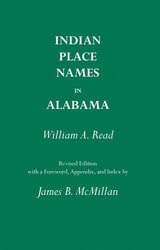
Indian Place Names in Alabama
William A. Read, and revised edition by James B. McMillan
University of Alabama Press, 1984
Learn the Secrets of Alabama’s Fascinating Place Names
In Place Names in Alabama, readers embark on a captivating journey through the linguistic and cultural heritage embedded in the state’s geography. This masterful reference work, compiled by a renowned linguist and historian, unveils the origins and meanings of hundreds of towns, rivers, creeks, and landmarks—many rooted in Native American languages, colonial history, and local folklore. From the bustling streets of Tuscaloosa, whose name means “Black Warrior,” to Mobile, rooted in the name of the indigenous Maubila people, this book reveals the deep cultural and linguistic layers that shape Alabama’s identity. Other fascinating examples are Talladega, which traces its name to a Muscogee word meaning “border town” and Opelika, derived from Creek for “large swamp.”
Indian Place Names in Alabama is scholarly yet accessible, ideal for historians, educators, genealogists, and curious readers. It is richly annotated and includes historical maps, archival citations, and linguistic insights. Its etymologies include place names of Indigenous, French, Spanish, and English origin. Whether you're tracing ancestral roots, exploring regional history, or simply intrigued by the names on a map, Indian Place Names in Alabama offers a treasure trove of discovery.
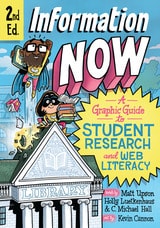
Information Now, Second Edition
A Graphic Guide to Student Research and Web LiteracyMatt Upson, Holly Luetkenhaus, C. Michael Hall, and Kevin Cannon
University of Chicago Press, 2021
This second edition of the popular guide incorporates critical analysis of information systems, asking students to think about the biases and problems in how databases and search engines are designed and used. It also addresses how different populations of people are disproportionately affected by the algorithmic biases built into information systems. And it includes revised critical thinking exercises in every chapter.
Written and revised by library professionals, Information Now is a fun and insightful tool for high school and college students, writers, and anyone wanting to improve their research skills.
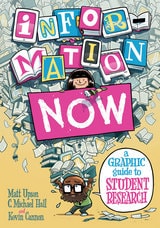
Information Now
A Graphic Guide to Student ResearchMatt Upson, C. Michael Hall, and Kevin Cannon
University of Chicago Press, 2015
Information Now is an innovative approach to information literacy that will reinvent the way college students think about research. Instead of the typical textbook format, it uses illustrations, humor, and reflective exercises to teach students how to become savvy researchers. Students will learn how to evaluate information, to incorporate it into their existing knowledge base, to wield it effectively, and to understand the ethical issues surrounding its use. Written by two library professionals, it incorporates concepts and skills drawn from the Association of College and Research Libraries’ Information Literacy Competency Standards for Higher Education and their Framework for Information Literacy for Higher Education. Thoroughly researched and highly engaging, Information Now offers the tools that students need to become powerful consumers and creators of information.
Whether used by a high school student tackling a big paper, an undergrad facing the newness of a university library, or a writer wanting to go beyond Google, Information Now is a powerful tool for any researcher’s arsenal.
Information Sharing
Reference and Presupposition in Language Generation and InterpretationEdited by Kees van Deemter and Rodger Kibble
CSLI, 2002
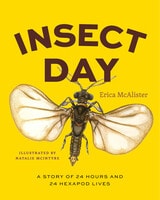
Insect Day
A Story of 24 Hours and 24 Hexapod LivesErica McAlister
University of Chicago Press, 2026
An hourly guide that follows twenty-four insects as they find food, mates, and safety from predators.
In this short book, celebrated scientist and award-winning author Erica McAlister leads readers on a worldwide field trip in search of insects. Each chapter of Insect Day introduces a single insect during a single hour, highlighting how twenty-four different species spend their time.
Early in our day, we meet a cold Arctic bumblebee, basking among poppy flower petals to warm itself. Even when the world around her is very cold, she keeps remarkably warm simply by vibrating. Near midday, there is enough sunlight for the blue-winged helicopter, a damselfly, to navigate the forests for her prey. When our insect spots a spider web, she looks for its creator—one vicious hunter eyeing up another. The giant damselfly reverses away from the web and then launches into an attack, grabbing onto the spider with her forelegs. If successful (many spiders are dropped), she perches while feasting. And then, like the most fastidious of diners, she cleans off any gossamer threads with a good preen. In the dark, the dung beetle also looks to the sky, using the Milky Way to orient itself as it rolls a ball of dung—a future home for its offspring. And, as our day closes, a tiger moth escapes bat hunters by fighting sound with sound—jamming bats’ sonar with ultrasonic clicking noises.
For each chapter, artist Natalie McIntyre has depicted these insects in stunning illustrations, blending traditional scientific drawing methods with fine art techniques. Working together to narrate and illustrate these unique moments in time, McAlister and McIntyre have created an engaging read that is a perfect way to spend an hour or two—and a true gift for readers, amateur naturalists, and all insect lovers.
Insider's Guide to Horseracing
T. A. Landers
Westholme Publishing, 2005
Learn What the Experts Know About the “Sport of Kings”
With its fast pace, beautiful animals, high stakes, and colorful pageantry, horseracing easily captures the attention of even first-time viewers. While recognizing horseracing as a fascinating sport, most fans know little about this billion-dollar business. Every racehorse and jockey goes through years of training, horses have natural cycles of conditioning, and each track offers its own challenges. Understanding what goes on behind the scenes will make every race more enjoyable profitable for those who wager.
Insider’s Guide to Horseracing is a quick and informative tour of the sport from the moment a foal is tapped for training and the kinds of equipment a horse wears to how wagering works and the different types of races. Written by an experienced horse industry professional and fully illustrated, this guide explains what to look for, understanding what you see, making sense of racing columns, and ways to make a trip to the track more memorable, such as visiting the saddling paddock. Here a reader will not find complex or magic formulas for picking winners or dry statistics; instead the Insider’s Guide to Horseracing gives readers exact information from an expert that will add to the excitement of racing and will allow readers to make better informed decisions all.
“An excellent book.”—Horse-Races.net
“Landers drew upon his longtime experience in various phases of the horse industry to produce this fan-oriented book, which he says is intended to ‘educate people on the workings of a racetrack and what goes on behind the scenes.’ It was inspired by the many questions he has been asked over the years.”—N.Y. Thoroughbred Horseman’s Association Newsletter
Contents:
1. A brief history of the sport
2. What to look for in a horse
3. How to read track conditions
4. Understanding distance
5. Types of wagering, races, and handicapping
6. The jockey and trainer
7. Ownership
8. Information on major races and racetracks in North America
Intellectual Mastery of Nature. Theoretical Physics from Ohm to Einstein, Volume 1
The Torch of Mathematics, 1800 to 1870Christa Jungnickel and Russell McCormmach
University of Chicago Press, 1986
Volume 1 opens with an account of physics in Germany at the beginning of the nineteenth century and of German physicists' reception of foreign mathematical and experimental work. Jungnickel and McCormmach follow G. S. Ohm, Wilhelm Weber, Franz Neumann, and others as these scientists work out the new possibilities for physics, introduce student laboratories and instruction in mathematical physics, organize societies and journals, and establish and advance major theories of classical physics. Before the end of the nineteenth century, German physics and its offspring, theoretical physics, had acquired nearly their present organizational forms. The foundations of the classical picture of the physical world had been securely laid, preparing the way for the developments that are the subject of volume 2.
Intellectual Mastery of Nature. Theoretical Physics from Ohm to Einstein, Volume 2
The Now Mighty Theoretical Physics, 1870 to 1925Christa Jungnickel and Russell McCormmach
University of Chicago Press, 1986
"A majestic study of a most important spoch of intellectual
history."—Brian Pippard, Times Literary Supplement
"The authors' use of archival sources hitherto almost
untouched gives their story a startling vividness. These volumes
are among the finest works produced by historians of physics."—Jed
Z. Buchwald, Isis
"The authors painstakingly reconstruct the minutiae of
laboratory budgets, instrument collections, and student numbers;
they disentangle the intrigues of faculty appointments and the
professional values those appointments reflected; they explore
collegial relationships among physicists; and they document the
unending campaign of scientists to wring further support for
physics from often reluctant ministries."—R. Steven Turner, Science
"Superbly written and exhaustively researched."—Peter Harman,
Nature
International Adaptations of the MMPI-2
Research and Clinical ApplicationsJames N. Butcher
University of Minnesota Press, 1996
International Code of Nomenclature for algae, fungi, and plants (Madrid Code)
Editorial Committee of the Madrid Code
University of Chicago Press, 2025
The International Code of Nomenclature for algae, fungi, and plants, known as “the Code,” is the set of internationally agreed rules and recommendations that govern the naming of these organisms. Scientific naming has deep historical roots. Indeed, the system of naming organisms is one of the first truly global scientific standards. This essential reference originates in Alphonse de Candolle’s 1867 Lois de la nomenclature botanique. This 2025 edition of the Code, the Madrid Code, reflects the decisions made at the Twentieth International Botanical Congress, which met in Madrid, Spain, in July 2024. The congress debated 447 proposals to amend the Code and accepted important new rules, including a mechanism for voluntary registration of plant and algal names, clarifications for naming fossil taxa, the option to reject a new name if it is derogatory to a group of people, and the replacement of an epithet that was considered particularly offensive (revising to afra, afrorum, and afrum).
International Organizations and Research Methods
An IntroductionFanny Badache, Leah R. Kimber and Lucile Maertens, Editors
University of Michigan Press, 2023
Scholars have studied international organizations (IOs) in many disciplines, thus generating important theoretical developments. Yet a proper assessment and a broad discussion of the methods used to research these organizations are lacking. Which methods are being used to study IOs and in what ways? Do we need a specific methodology applied to the case of IOs? What are the concrete methodological challenges when doing research on IOs? International Organizations and Research Methods: An Introduction compiles an inventory of the methods developed in the study of IOs under the five headings of Observing, Interviewing, Documenting, Measuring, and Combining. It does not reconcile diverging views on the purpose and meaning of IO scholarship, but creates a space for scholars and students embedded in different academic traditions to reflect on methodological choices and the way they impact knowledge production on IOs.
International Policy Coordination and Exchange Rate Fluctuations
Edited by William H. Branson, Jacob A. Frenkel, and Morris Goldstein
University of Chicago Press, 1990
In these papers and comments, prominent international economists consider past and present interpretations of the meaning of international policy coordination; conditions necessary for coordination to be beneficial both to the direct participants and the global economy; influential factors for the quantitative impact of coordination; obstacles to coordination; the most—and least—effective methods of coordination; and future directions of the coordination process, including processes associated with greater fixity of exchange rates.
These studies will be readily accessible to policymakers, while offering sophisticated analyses to interested scholars of the global economy.
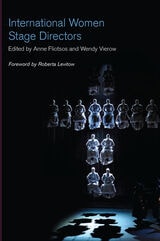
International Women Stage Directors
Edited by Anne Fliotsos and Wendy Vierow
University of Illinois Press, 2013
A fascinating study of women in the arts, International Women Stage Directors is a comprehensive examination of women directors in twenty-four diverse countries. Organized by country, chapters provide historical context and emphasize how social, political, religious, and economic factors have impacted women's rise in the theatre, particularly in terms of gender equity. Contributors tell the stories of their home country's pioneering women directors and profile the most influential women directors practicing today, examining their career paths, artistry, and major achievements.
Contributors are Ileana Azor, Dalia Basiouny, Kate Bredeson, Mirenka Cechová, Marié-Heleen Coetzee, May Farnsworth, Anne Fliotsos, Laura Ginters, Iris Hsin-chun Tuan, Maria Ignatieva, Adam J. Ledger, Roberta Levitow, Jiangyue Li, Lliane Loots, Diana Manole, Karin Maresh, Gordon McCall, Erin B. Mee, Ursula Neuerburg-Denzer, Claire Pamment, Magda Romanska, Avra Sidiropoulou, Margaretta Swigert-Gacheru, Alessandra Vannucci, Wendy Vierow, Vessela S. Warner, and Brenda Werth.
Interpretations of American History
Francis G. Couvares
University of Massachusetts Press, 2025
Without a doubt, the teaching of American history has changed since George Billias and Gerald Grob first issued Interpretations of American History, a comprehensive introduction to the major debates and schools of thought within the field of American history. For this ninth edition, Francis G. Couvares has thoroughly updated the text to include both developments in scholarly debate and changes in the format. He has consolidated two chapters on the revolutionary era into one, and he has also merged formerly separate chapters on profit and commerce in the trading of human beings and the complex and resilient culture that enslaved people sustained. Additionally, he has written a completely new chapter on environmental history and updated the final chapters of the text to include recent scholarship that connects the history of the Civil Rights Movement to the Black Lives Matter Movement; scholarship that discusses intersectionality within feminism, and recent work on political realignment and fragmentation.
In a major revision to the format, Couvares has omitted excerpts of scholarly articles. However, for curious students or research assignments, he includes ample current references. Further, this updated edition anticipates electronic reading of discrete chapters rather than the entire book, and each chapter stands alone well enough to be assigned individually.
Introduction to Metadata
Third EditionMurtha Baca
J. Paul Getty Trust, The, 2016
The third edition of Introduction to Metadata, first published in 1998, provides an overview of metadata, including its types, roles, and characteristics; a discussion of metadata as it relates to Web resources; and a description of methods, tools, standards, and protocols for publishing and disseminating digital collections. This revised edition is an indispensable resource in the field, addressing advances in standards such as Linked Open Data, changes in intellectual property law, and new computing technologies, and offering an expanded glossary of essential terms.
Investigating Interdisciplinary Collaboration
Theory and Practice across DisciplinesFrickel, Scott
Rutgers University Press, 2016
Chapter 10 is available Open Access here (https://www.ncbi.nlm.nih.gov/books/NBK395883)
Iowa's Historic Architects
A Biographical DictionaryWesley I. Shank
University of Iowa Press, 1998
Among the prominent Iowa architects of the late nineteenth and early twentieth centuries were a remarkable few who had little training in architecture; their natural talents and their capacity for hard work made up for their lack of experience. Beginning in 1927, however, an Iowa architect had to meet state requirements of experience and training in order to practice. Shank includes an introduction to the history of the profession in Iowa: the development of professional education and training, the founding of professional societies and their roles, the different personalities and talents of the architects, the demography of architectural offices in the state, and the relative importance of Iowa architects both statewide and nationally.