Results by title
4127 books match the query 'Science' and 154 start with i
IGY
Year of DiscoverySydney Chapman
University of Michigan Press, 1959
ISIS vol 109 num 4
The University of Chicago Press
University of Chicago Press Journals, 2018

Ice Age Forensics
Reconstructing the Death of a Wooly BisonDale Guthrie
University of Chicago Press, 2013

Ice Age Peoples of North America
Robonson Bonnichsen
Oregon State University Press, 1999
Ice Geographies
The Colonial Politics of Race and Indigeneity in the ArcticJen Rose Smith
Duke University Press, 2025
Ice
The Nature, the History, and the Uses of an Astonishing SubstanceMariana Gosnell
University of Chicago Press, 2007
Mariana Gosnell here explores the history and uses of ice in all its complexity, grandeur, and significance. From the freezing of Pleasant Lake in New Hampshire to the breakup of a Vermont river at the onset of spring, from the frozen Antarctic landscape that emperor penguins inhabit to the cold, watery route bowhead whales take between Arctic ice floes, Gosnell examines icebergs, icicles, and frostbite; sea ice and permafrost; ice on Mars and in the rings of Saturn; and several new forms of ice developed in labs. Arecord of the scientific surprises, cultural magnitude, and everyday uses of frozen water, Ice is a sparkling illumination of a substance whose ebbs and flows over time have helped form the world we live in.
“Gosnell travels to the ends of the earth, into the clouds and under the frozen sea to conduct her investigations . . . By the time you finish this remarkable book, you’ll never think about freezing and melting in quite the same way.”—New York Times Book Review
“To read Ice is to discover just how astonishing it is and how necessary.”—San Francisco Chronicle
“A bright, curious, omnidirectional tour that will entrance nature readers.”—Booklist
“An encyclopedic work with surprises on every page . . . . Illustrated with images of ice castles, skaters, and bubble-filled frozen sculpture, Gosnell’s book breathes life into the crystals dubbed ‘glorious spangles’ by Henry David Thoreau.”—Discover
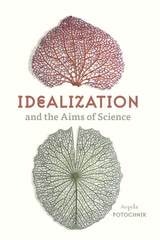
Idealization and the Aims of Science
Angela Potochnik
University of Chicago Press, 2017
Idealization and the Aims of Science shows just how crucial idealization is to science and why it matters. Beginning with the acknowledgment of our status as limited human agents trying to make sense of an exceedingly complex world, Angela Potochnik moves on to explain how science aims to depict and make use of causal patterns—a project that makes essential use of idealization. She offers case studies from a number of branches of science to demonstrate the ubiquity of idealization, shows how causal patterns are used to develop scientific explanations, and describes how the necessarily imperfect connection between science and truth leads to researchers’ values influencing their findings. The resulting book is a tour de force, a synthesis of the study of idealization that also offers countless new insights and avenues for future exploration.

Identification Guide to Grasses and Bamboos in Madagascar
Maria Vorontsova
Royal Botanic Gardens, Kew, 2018

Ignition!
An Informal History of Liquid Rocket PropellantsClark, John D
Rutgers University Press, 1972
A classic work in the history of science, and described as “a good book on rocket stuff…that’s a really fun one” by SpaceX founder Elon Musk, readers will want to get their hands on this influential classic, available for the first time in decades.
This newly reissued debut book in the Rutgers University Press Classics imprint is the story of the search for a rocket propellant which could be trusted to take man into space. This search was a hazardous enterprise carried out by rival labs who worked against the known laws of nature, with no guarantee of success or safety.
Acclaimed scientist and sci-fi author John Drury Clark writes with irreverent and eyewitness immediacy about the development of the explosive fuels strong enough to negate the relentless restraints of gravity. The resulting volume is as much a memoir as a work of history, sharing a behind-the-scenes view of an enterprise which eventually took men to the moon, missiles to the planets, and satellites to outer space.
Ignoring Nature No More
The Case for Compassionate ConservationEdited by Marc Bekoff
University of Chicago Press, 2013
This collection of diverse essays is the first book devoted to compassionate conservation, a growing global movement that translates discussions and concerns about the well-being of individuals, species, populations, and ecosystems into action. Written by leading scholars in a host of disciplines, including biology, psychology, sociology, social work, economics, political science, and philosophy, as well as by locals doing fieldwork in their own countries, the essays combine the most creative aspects of the current science of animal conservation with analyses of important psychological and sociocultural issues that encourage or vex stewardship. The contributors tackle topics including the costs and benefits of conservation, behavioral biology, media coverage of animal welfare, conservation psychology, and scales of conservation from the local to the global. Taken together, the essays make a strong case for why we must replace our habits of domination and exploitation with compassionate conservation if we are to make the world a better place for nonhuman and human animals alike.
Image and Logic
A Material Culture of MicrophysicsPeter Galison
University of Chicago Press, 1997
Image and Logic is the most detailed engagement to date with the impact of modern technology on what it means to "do" physics and to be a physicist. At the beginning of this century, physics was usually done by a lone researcher who put together experimental apparatus on a benchtop. Now experiments frequently are larger than a city block, and experimental physicists live very different lives: programming computers, working with industry, coordinating vast teams of scientists and engineers, and playing politics.
Peter L. Galison probes the material culture of experimental microphysics to reveal how the ever-increasing scale and complexity of apparatus have distanced physicists from the very science that drew them into experimenting, and have fragmented microphysics into different technical traditions much as apparatus have fragmented atoms to get at the fundamental building blocks of matter. At the same time, the necessity for teamwork in operating multimillion-dollar machines has created dynamic "trading zones," where instrument makers, theorists, and experimentalists meet, share knowledge, and coordinate the extraordinarily diverse pieces of the culture of modern microphysics: work, machines, evidence, and argument.
Image and Reality
Kekulé, Kopp, and the Scientific ImaginationAlan J. Rocke
University of Chicago Press, 2010
Nineteenth-century chemists were faced with a particular problem: how to depict the atoms and molecules that are beyond the direct reach of our bodily senses. In visualizing this microworld, these scientists were the first to move beyond high-level philosophical speculations regarding the unseen. In Image and Reality, Alan Rocke focuses on the community of organic chemists in Germany to provide the basis for a fuller understanding of the nature of scientific creativity.
Arguing that visual mental images regularly assisted many of these scientists in thinking through old problems and new possibilities, Rocke uses a variety of sources, including private correspondence, diagrams and illustrations, scientific papers, and public statements, to investigate their ability to not only imagine the invisibly tiny atoms and molecules upon which they operated daily, but to build detailed and empirically based pictures of how all of the atoms in complicated molecules were interconnected. These portrayals of “chemical structures,” both as mental images and as paper tools, gradually became an accepted part of science during these years and are now regarded as one of the central defining features of chemistry. In telling this fascinating story in a manner accessible to the lay reader, Rocke also suggests that imagistic thinking is often at the heart of creative thinking in all fields.
Image and Reality is the first book in the Synthesis series, a series in the history of chemistry, broadly construed, edited by Angela N. H. Creager, John E. Lesch, Stuart W. Leslie, Lawrence M. Principe, Alan Rocke, E.C. Spary, and Audra J. Wolfe, in partnership with the Chemical Heritage Foundation.
Images of Science
Essays on Realism and EmpiricismEdited by Paul M. Churchland and Clifford A. Hooker
University of Chicago Press, 1985
Imagined World
A Story of Scientific DiscoveryJune Goodfield
University of Michigan Press, 1991
Imagining Progress
Science, Faith, and Child Mortality in AmericaKristin Johnson
University of Alabama Press, 2024
Explores the intellectual history of how Americans imagined science, faith, and human improvement through the most wrenching of experiences—the deaths of children.
Offering fascinating examples from the works of diverse writers and thinkers such as Benjamin Franklin, Frederick Douglass, Mark Twain, W. E. B. Du Bois, Elizabeth Cady Stanton, and Harriet Shelton Dover, Kristin Johnson traces the history of Americans’ complicated faith in science and the various triumphs and tragedies that faith has inspired. Imagining Progress reveals many of the complex factors involved in the polarized state of contemporary American attitudes toward science, scientists, public health, medicine, and science policy.
Humankind has always wrestled with the existence of suffering, how to respond to suffering, whom to care for, and in what ways. For two centuries, many American ministers, physicians, and scientists believed that an omnipotent and omniscient God created the world such that people might relieve suffering through ingenuity and learning. Others responded to the new worldview introduced by the scientific revolution as a threat to the divine order. In Imagining Progress, Johnson traces the history of Americans’ evolving relationship with science and religion at “one of its most dramatic places”—the bedsides of dying children. It’s here, in the crucible of parental despair, that she illuminates diverging assumptions about God, nature, and history.
From Cotton Mather’s campaign for smallpox inoculation to battles over teaching evolution in the 1920s, Johnson adroitly weaves an interdisciplinary history of medicine, science, theology, and activism. She follows a wide cast of characters from across theological, scientific, and political spectrums. What emerges is a kaleidoscopic portrait of diverse, often contradictory hopes and anxieties inspired by new theories of nature and human existence. Johnson also discerns a problematic pattern of invoking science both to ameliorate the suffering of some children while ignoring the suffering of others.

Imagining Serengeti
A History of Landscape Memory in Tanzania from Earliest Times to the PresentJan Bender Shetler
Ohio University Press, 2007
Many students come to African history with a host of stereotypes that are not always easy to dislodge. One of the most common is that of Africa as safari grounds—as the land of expansive, unpopulated game reserves untouched by civilization and preserved in their original pristine state by the tireless efforts of contemporary conservationists. With prose that is elegant in its simplicity and analysis that is forceful and compelling, Jan Bender Shetler brings the landscape memory of the Serengeti to life. She demonstrates how the social identities of western Serengeti peoples are embedded in specific spaces and in their collective memories of those spaces. Using a new methodology to analyze precolonial oral traditions, Shetler identifies core spatial images and reevaluates them in their historical context through the use of archaeological, linguistic, ethnographic, ecological, and archival evidence. Imagining Serengeti is a lively environmental history that will ensure that we never look at images of the African landscape in quite the same way.
Imagining Wild America
John Knott
University of Michigan Press, 2002
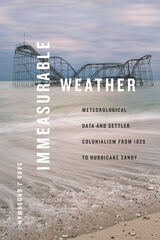
Immeasurable Weather
Meteorological Data and Settler Colonialism from 1820 to Hurricane SandySara J. Grossman
Duke University Press, 2023

Immortal River
The Upper Mississippi in Ancient and Modern TimesCalvin R. Fremling
University of Wisconsin Press, 2005
Like the Mississippi itself, Immortal River often leaves the main channel to explore the river's backwaters, floodplain, and drainage basin. The book's focus is the Upper Mississippi, from Minneapolis, Minnesota, to Cairo, Illinois. But it also includes information about the river's headwaters in northern Minnesota and about the Lower Mississippi from Cairo south to the river's mouth ninety miles below New Orleans. It offers an understanding of the basic geology underlying the river's landscapes, ecology, environmental problems, and grandeur.
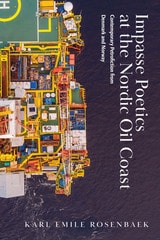
Impasse Poetics at the Nordic Oil Coast
Contemporary Petrofiction from Denmark and NorwayKarl Emil Rosenbaek Reetz
West Virginia University Press, 2026
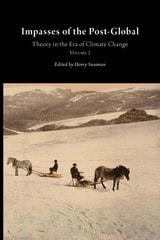
Impasses of the Post-Global
Theory in the Era of Climate ChangeHenry Sussman
Michigan Publishing Services, 2012
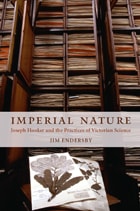
Imperial Nature
Joseph Hooker and the Practices of Victorian ScienceJim Endersby
University of Chicago Press, 2008
By analyzing Hooker’s career, Endersby offers vivid insights into the everyday activities of nineteenth-century naturalists, considering matters as diverse as botanical illustration and microscopy, classification, and specimen transportation and storage, to reveal what they actually did, how they earned a living, and what drove their scientific theories. What emerges is a rare glimpse of Victorian scientific practices in action. By focusing on science’s material practices and one of its foremost practitioners, Endersby ably links concerns about empire, professionalism, and philosophical practices to the forging of a nineteenth-century scientific identity.
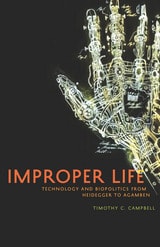
Improper Life
Technology and Biopolitics from Heidegger to AgambenTimothy C. Campbell
University of Minnesota Press, 2011
Has biopolitics actually become thanatopolitics, a field of study obsessed with death? Is there something about the nature of biopolitical thought today that makes it impossible to deploy affirmatively? If this is true, what can life-minded thinkers put forward as the merits of biopolitical reflection? These questions drive Improper Life, Timothy C. Campbell’s dexterous inquiry-as-intervention.
Campbell argues that a “crypto-thanatopolitics” can be teased out of Heidegger’s critique of technology and that some of the leading scholars of biopolitics—including Michel Foucault, Giorgio Agamben, and Peter Sloterdijk—have been substantively influenced by Heidegger’s thought, particularly his reading of proper and improper writing. In fact, Campbell shows how all of these philosophers have pointed toward a tragic, thanatopolitical destination as somehow an inevitable result of technology. But in Improper Life he articulates a corrective biopolitics that can begin with rereadings of Foucault (especially his late work regarding the care and technologies of the self), Freud (notably his writings on the drives and negation), and Gilles Deleuze (particularly in the relation of attention to aesthetics).
Throughout Improper Life, Campbell insists that biopolitics can become more positive and productively asserts an affirmative technē not thought through thanatos but rather practiced through bíos.

Improving Science Education
International PerspectivesEdited by Barry J. Fraser and Herbert J. Walberg
University of Chicago Press, 1995
This volume offers educators and researchers a glimpse at what peers from around the world have done to help science students achieve high levels of success. The introduction is a concise account of worldwide reform movements, from modernizations in the 1950s that dramatically improved the teaching of chemistry and physics to such changes in the 1980s as the emphasis on the learning-to-learn approach and the trend toward using social issues as a vehicle for teaching science.
The nine essays survey topics that include teaching inquiry skills and other techniques to foster a joy of science; creating an understanding of real-world applications of science; managing course instruction with computers; encouraging teachers to adopt new styles of teaching; cross-national comparisons of science achievement; and the differences between boys and girls in attitude, learning, and degree of participation.
Impure Cultures
University Biology and the World of CommerceDaniel Lee Kleinman
University of Wisconsin Press, 2003
How are the worlds of university biology and commerce blurring? Many university leaders see the amalgamation of academic and commercial cultures as crucial to the future vitality of higher education in the United States. In Impure Cultures, Daniel Lee Kleinman questions the effect of this blending on the character of academic science.
Using data he gathered as an ethnographic observer in a plant pathology lab at the University of Wisconsin–Madison, Kleinman examines the infinite and inescapable influence of the commercial world on biology in academia today. Contrary to much of the existing literature and common policy practices, he argues that the direct and explicit relations between university scientists and industrial concerns are not the gravest threat to academic research. Rather, Kleinman points to the less direct, but more deeply-rooted effects of commercial factors on the practice of university biology. He shows that to truly understand research done at universities today, it is first necessary to explore the systematic, pervasive, and indirect effects of the commercial world on contemporary academic practice.
Imre Lakatos and the Guises of Reason
John Kadvany
Duke University Press, 2001
Lakatos escaped Hungary following the failed 1956 Revolution. Before then, he had been an influential Communist intellectual and was imprisoned for years by the Stalinist regime. He also wrote a lost doctoral thesis in the philosophy of science and participated in what was criminal behavior in all but a legal sense. Kadvany argues that this intellectual and political past animates Lakatos’s English-language philosophy, and that, whether intended or not, Lakatos integrated a penetrating vision of Hegelian ideas with rigorous analysis of mathematical proofs and controversial histories of science.
Including new applications of Lakatos’s ideas to the histories of mathematical logic and economics and providing lucid exegesis of many of Hegel’s basic ideas, Imre Lakatos and the Guises of Reason is an exciting reconstruction of ideas and episodes from the history of philosophy, science, mathematics, and modern political history.
In Quest of Great Lakes Ice Age Vertebrates
J. Alan Holman
Michigan State University Press, 2001
The first book of its kind, In Quest of Great Lakes Ice Age Vertebrates details the Ice Age fishes, amphibians, reptiles, birds and mammals in the provinces and states surrounding the Great Lakes. Holman's work begins with definitions of concepts and terms for the general audience and a general discussion of how the last ice age, the Pleistocene Epoch, affected our physical and biological world. Methods employed and tools used in the collection of vertebrate fossils, as well as ethics and protocol in the maintenance of a useful collection follow, coupled with details of each animal's structure, habits, habitats, and ecological importance. The heart of the book is a species-by-species account of the Pleistocene vertebrates of the region, followed by an examination of the compelling problems of the Pleistocene relative to faunal interpretations, including overall ecological makeup of the region's fauna, vertebrate range adjustment that occurred in the region, Pleistocene extinction effects on the animals of the region, the aftermath of the Ice Age, and a look at what the future may hold for the region.

In Search of "Aryan Blood"
Serology in Interwar and National Socialist GermanyRachel E. Boaz
Central European University Press, 2012

In Search of Cell History
The Evolution of Life's Building BlocksFranklin M. Harold
University of Chicago Press, 2014
Written in accessible language and complemented by a glossary for easy reference, this book investigates the full scope of cellular history. Assuming only a basic knowledge of cell biology, Harold examines such pivotal subjects as the relationship between cells and genes; the central role of bioenergetics in the origin of life; the status of the universal tree of life with its three stems and viral outliers; and the controversies surrounding the last universal common ancestor. He also delves deeply into the evolution of cellular organization, the origin of complex cells, and the incorporation of symbiotic organelles, and considers the fossil evidence for the earliest life on earth. In Search of Cell History shows us just how far we have come in understanding cell evolution—and the evolution of life in general—and how far we still have to go.

In Search of Divine Reality
Science as a Source of InspirationLothar Schäfer
University of Arkansas Press, 1997
In Search of Lost Roses
Thomas Christopher
University of Chicago Press, 2002
In Search of Mechanisms
Discoveries across the Life SciencesCarl F. Craver and Lindley Darden
University of Chicago Press, 2013

In Search of Swampland
A Wetland Sourcebook and Field GuideRalph W. Tiner
Rutgers University Press, 2005
In Search of the Amazon
Brazil, the United States, and the Nature of a RegionSeth Garfield
Duke University Press, 2013
In Search of the Rain Forest
Candace Slater, ed.
Duke University Press, 2004
From diverse disciplines—history, archaeology, sociology, literature, law, and cultural anthropology—the contributors provide case studies from Latin America, Asia, and Africa. They point the way toward a search for a rain forest that is both a natural entity and a social history, an inhabited place and a shifting set of ideas. The essayists demonstrate how the single image of a wild and yet fragile forest became fixed in the popular mind in the late twentieth century, thereby influencing the policies of corporations, environmental groups, and governments. Such simplistic conceptions, In Search of the Rain Forest shows, might lead companies to tout their “green” technologies even as they try to downplay the dissenting voices of native populations. Or they might cause a government to create a tiger reserve that displaces peaceful peasants while opening the doors to poachers and bandits. By encouraging a nuanced understanding of distinctive, constantly evolving forests with different social and natural histories, this volume provides an important impetus for protection efforts that take into account the rain forest in all of its complexity.
Contributors. Scott Fedick, Alex Greene, Paul Greenough, Nancy Peluso, Suzana Sawyer, Candace Slater, Charles Zerner

In Service to American Pharmacy
The Professional Life of William Procter Jr.Gregory J. Higby
University of Alabama Press, 1992
The story of the visionary pharmacist who helped build modern American pharmacy.
In Service to American Pharmacy: The Professional Life of William Procter Jr. by Gregory J. Higby is the definitive biography of William Procter Jr., widely recognized as the "Father of American Pharmacy." Through meticulous historical research, Higby chronicles Procter's extraordinary career and demonstrates how one individual's dedication helped transform pharmacy in the United States from a commercial trade into a respected healthcare profession during the nineteenth century.
The book follows Procter's contributions as a practicing pharmacist, pharmaceutical scientist, educator, editor, and organizational leader. It places his accomplishments within the broader evolution of American healthcare, tracing developments from the founding of the Philadelphia College of Pharmacy in 1821 through the emergence of professional standards, drug quality controls, pharmaceutical education, and meaningful pharmacy legislation. Higby shows how Procter's commitment to scientific rigor and public service helped establish many of the principles that continue to guide pharmacy practice today.
This book offers a valuable history of nineteenth-century medicine, science, and professionalization in America. Rich in historical context and scholarly insight, it illustrates the challenges and achievements involved in creating a modern profession dedicated to public health and pharmaceutical excellence. Essential for historians of medicine, pharmacy practitioners, and scholars of American science, this work highlights the enduring legacy of one of the most influential figures in healthcare history.

In Sputnik's Shadow
The President's Science Advisory Committee and Cold War AmericaWang, Zuoyue
Rutgers University Press, 2009
In today’s world of rapid advancements in science and technology, we need to scrutinize more than ever the historical forces that shape our perceptions of what these new possibilities can and cannot do for social progress. In Sputnik’s Shadow provides a lens to do just that, by tracing the rise and fall of the President’s Science Advisory Committee from its ascendance under Eisenhower in the wake of the Soviet launching of Sputnik to its demise during the Nixon years. Members of this committee shared a strong sense of technological skepticism; they were just as inclined to advise the president about what technology couldn’t do—for national security, space exploration, arms control, and environmental protection—as about what it could do.
Zuoyue Wang examines key turning points during the twentieth century, including the beginning of the Cold War, the debates over nuclear weapons, the Sputnik crisis in 1957, the struggle over the Vietnam War, and the eventual end of the Cold War, showing how the involvement of scientists in executive policymaking evolved over time. Bringing new insights to the intellectual, social, and cultural histories of the era, this book not only depicts the drama of Cold War American science, it gives perspective to how we think about technological advancements today.

In the Footsteps of Joseph Dalton Hooker
Seamus O'Brien
Royal Botanic Gardens, Kew, 2018

In the Name of Plants
From Attenborough to Washington, the People behind Plant NamesSandra Knapp
University of Chicago Press, 2022
Shakespeare famously asserted that “a rose by any other name would smell as sweet,” and that’s as true for common garden roses as it is for the Megacorax, a genus of evening primroses. Though it may not sound like it, the Megacorax was actually christened in honor of famed American botanist Peter Raven, its name a play on the Latin words for “great raven.”
In this lush and lively book, celebrated botanist Sandra Knapp explores the people whose names have been immortalized in plant genera, presenting little-known stories about both the featured plants and their eponyms alongside photographs and botanical drawings from the collections of London’s Natural History Museum. Readers will see familiar plants in a new light after learning the tales of heroism, inspiration, and notoriety that led to their naming. Take, for example, nineteenth-century American botanist Alice Eastwood, after whom the yellow aster—Eastwoodia elegans—is named. Eastwood was a pioneering plant collector who also singlehandedly saved irreplaceable specimens from the California Academy of Sciences during the 1906 San Francisco earthquake. Or more recently, the fern genus Gaga, named for the pop star and actress Lady Gaga, whose verdant heart-shaped ensemble at the 2010 Grammy Awards bore a striking resemblance to a giant fern gametophyte. Knapp’s subjects range from Charles Darwin’s grandfather, Erasmus Darwin (Darwinia), and legendary French botanist Pierre Magnol—who lends his name to the magnolia tree—to US founding figures like George Washington (Washingtonia) and Benjamin Franklin (Franklinia). Including granular details on the taxonomy and habitats for thirty plants alongside its vibrant illustrations, this book is sure to entertain and enlighten any plant fan.
In the Rainforest
Report from a Strange, Beautiful, Imperiled WorldCatherine Caufield
University of Chicago Press, 1986
"I recommend In the Rainforest as scientific journalism at its best, and [Caufield's] book as the one to read to become informed about the tropical crisis. Caufield traveled the world, went to the difficult places, sometimes beautiful and often dispiriting, mastered the important ideas, and talked to an impressive number of people on all sides of the issues. . . . There are villains in abundance: corrupt government agents who aid in the destruction of native tribes, greedy caballero landowners, and even the governmental planners who with the best of intentions rush heedlessly toward the environmental degradation of their own countries."—E. O. Wilson, Science
"The whole book is filled with amazing facts. . . . Moving and informative."—Ellen W. Chu, New York Times Book Review

In the Shadow of the Palms
More-Than-Human Becomings in West PapuaSophie Chao
Duke University Press, 2022
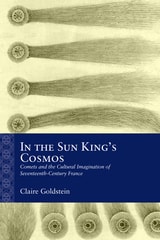
In the Sun King's Cosmos
Comets and the Cultural Imagination of Seventeenth-Century FranceClaire Goldstein
Northwestern University Press, 2025
Offering a new history of a formative cultural and political era through the cosmic phenomena that captured the public’s imagination
In the winters of 1664–65 and 1680–81, the French public was galvanized by two bright comets whose elliptical orbits could not be mapped with contemporary geometry and that thus seemed to appear in random and unpredictable locations. Bookending the period during which Louis XIV’s sun king mythology was created, these comets defied the heliocentric order to which French politics and culture aspired. As Claire Goldstein demonstrates, literary texts, cultural institutions, and architecture inspired by comets offer a different perspective on the relationship between sensory experience, ideology, and artistic form.
In the Sun King’s Cosmos: Comets and the Cultural Imagination of Seventeenth-Century France presents an alternative view of a formative era in cultural and political history, when distinctly modern forms of power and control were established through a regime of the spectacular. Goldstein shows how comets allow us to see the seventeenth century in ways that complicate the narrative of a race toward rationalization, classicism, and modernity, indexing instead a messy period in which the spectacular was sometimes also inscrutable.
In the Wake of Chaos
Unpredictable Order in Dynamical SystemsStephen H. Kellert
University of Chicago Press, 1993

Inclusive Dance
The Story of Touchdown DanceKaty Dymoke
Intellect Books, 2023
Inclusive Dance offers a concise ethnography of disability arts and a historiographic overview of the field in the 1980s when many new disability arts groups emerged in the UK. It focuses in particular on the inclusive teaching modalities of Touchdown Dance, which was the work of dancer Steve Paxton and theater-maker and psychotherapist Anne Kilcoyne. It involved visually impaired and sighted adults in a dyadic movement form called Contact Improvisation. Katy Dymoke took over Touchdown Dance in 1994, and this book draws on archives, participant accounts, and personal experience to detail the work of Touchdown Dance and its effects on its participants since its founding. Three guests from Touchdown Dance contribute eyewitness accounts of the methods and performance projects.
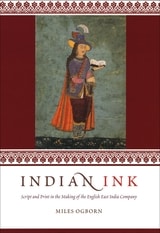
Indian Ink
Script and Print in the Making of the English East India CompanyMiles Ogborn
University of Chicago Press, 2007
A commercial company established in 1600 to monopolize trade between England and the Far East, the East India Company grew to govern an Indian empire. Exploring the relationship between power and knowledge in European engagement with Asia, Indian Ink examines the Company at work and reveals how writing and print shaped authority on a global scale in the seventeenth and eighteenth centuries.
Tracing the history of the Company from its first tentative trading voyages in the early seventeenth century to the foundation of an empire in Bengal in the late eighteenth century, Miles Ogborn takes readers into the scriptoria, ships, offices, print shops, coffeehouses, and palaces to investigate the forms of writing needed to exert power and extract profit in the mercantile and imperial worlds. Interpreting the making and use of a variety of forms of writing in script and print, Ogborn argues that material and political circumstances always undermined attempts at domination through the power of the written word.
Navigating the juncture of imperial history and the history of the book, Indian Ink uncovers the intellectual and political legacies of early modern trade and empire and charts a new understanding of the geography of print culture.

Indian Reservations in the United States
Territory, Sovereignty, and Socioeconomic ChangeKlaus Frantz
University of Chicago Press, 1999
Informed by both historical research and extensive fieldwork, this book pays special attention to the natural resource base and economic outlook of the reservations, as well as the crucial issue of tribal sovereignty. Chapters also cover the demography of American Indian groups and their socioeconomic status (including standard of living, employment, and education). A new afterword treats some of the developments since the book's initial publication in German, such as the effects of the 1988 Indian gaming law that allowed Indian reservations to operate gambling establishments (with mixed success).
"Provides a good overview of the basic questions and problems facing reservation Indians today."—Peter Bolz, Journal of American History (on the German edition)
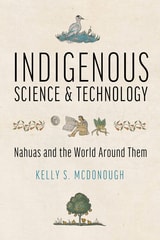
Indigenous Science and Technology
Nahuas and the World Around ThemKelly S. McDonough
University of Arizona Press, 2024
Winner 2025 Bryce Wood Book Award
This is a book about how Nahuas—native speakers of Nahuatl, the common language of the Aztec Empire and of more than 2.5 million Indigenous people today—have explored, understood, and explained the world around them in pre-invasion, colonial, and contemporary time periods. It is a deep dive into Nahua theoretical and practical inquiry related to the environment, as well as the dynamic networks in which Nahuas create, build upon, and share knowledges, practices, tools, and objects to meet social, political, and economic needs.
In this work, author Kelly S. McDonough addresses Nahua understanding of plants and animals, medicine and ways of healing, water and water control, alphabetic writing, and cartography. Interludes between the chapters offer short biographical sketches and interviews with contemporary Nahua scientists, artists, historians, and writers, accompanied by their photos. The book also includes more than twenty full-color images from sources including the Florentine Codex, a sixteenth-century collaboration between Indigenous and Spanish scholars considered the most comprehensive extant source on the pre-Hispanic and early colonial Aztec (Mexica) world.
In Mexico today, the terms “Indigenous” and “science and technology” are rarely paired together. When they are, the latter tend to be framed as unrecoverable or irreparably damaged pre-Hispanic traditions, relics confined to a static past. In Indigenous Science and Technology, McDonough works against such erroneous and racialized discourses with a focus on Nahua environmental engagements and relationalities, systems of communication, and cultural preservation and revitalization. Attention to these overlooked or obscured knowledges provides a better understanding of Nahua culture, past and present, as well as the entangled local and global histories in which they were—and are—vital actors.
Induced Responses to Herbivory
Richard Karban and Ian T. Baldwin
University of Chicago Press, 1997
Over the past fifteen years, research on these induced responses to herbivory has flourished, and here Richard Karban and Ian T. Baldwin present the first comprehensive evaluation and synthesis of this rapidly developing field. They provide state-of-the-discipline reviews and highlight areas where new research will be most productive. Their comprehensive overview will be welcomed by a wide variety of theoretical and applied researchers in ecology, evolutionary biology, plant biology, entomology, and agriculture.
Induction
Socrates to PopperJohn P. McCaskey
University of Chicago Press, 2026
Charts the historical development of induction and challenges contemporary understandings of the concept and its foundations.
The problem of induction continues to vex and beguile. How can we reliably draw universal conclusions from limited observations? In Induction, John P. McCaskey steps back and rethinks long-held assumptions, tracing the ideas of Socrates and Aristotle in ancient Greece to those of Karl Popper in the twentieth century.
This comprehensive account does not look at how people of the past answered the questions we ask today. Instead, it asks: How did they understand the very meaning of the words epagōgē in Greek, inductio in Latin, istiqrāʾ in Arabic, Induktion in German, and induction in English? McCaskey’s careful treatment of texts in their context dispels many long-standing myths, and importantly, he introduces us to a now-unfamiliar way to think about what induction is—a way in which there simply is no “problem of induction.” McCaskey reveals that the problem was one of our own making and that an accurate history may help us recover old ways—and thereby introduce new ways—to think about the whole idea. A must-read for philosophers, historians of ideas, and anyone interested in the scientific method.

Infectious Disease
A Scientific American ReaderEdited by Scientific American
University of Chicago Press, 2008