Results by title
4155 books match the query 'State & Local' and 130 start with i
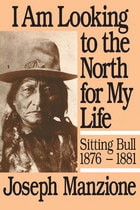
I Am Looking to the North for My Life
Sitting Bull 1876 - 1881Joseph Manzione
University of Utah Press, 1991
What happened to the Sioux after Little Bighorn? In the winter of 1877, many escaped with Sitting Bull to Canada, precipitating an international incident and setting three governments at each other for five years. Resolution came only in 1881 with the demise of the buffalo herds in the Northwest Territories. Faced with starvation, the Sioux returned to the United States.
Relying upon primary source documents in both the United States and Canada, Manzione skillfully illustrates how two countries struggled to control a potentially explosive border situation while steadfastly looking the other way as a valiant culture came to its bitter fate.

I Believe I'll Go Back Home
Roots and Revival in New England Folk MusicThomas S. Curren
University of Massachusetts Press, 2021
Fueled by interviews with key players from the folk music scene, I Believe I'll Go Back Home traces a direct line from Yankee revolutionaries, up-country dancers, and nineteenth-century pacifists to the emergence of blues and rock 'n' roll, ultimately landing at the period of the folk revival. Thomas S. Curren presents the richness and diversity of the New England folk tradition, which continues to provide perspective, inspiration, and healing in the present day.
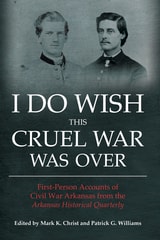
I Do Wish This Cruel War Was Over
First-Person Accounts of Civil War Arkansas from the Arkansas Historical QuarterlyMark K. Christ
University of Arkansas Press, 2014
I'll Take You There
Exploring Nashville's Social Justice SitesAmie Thurber
Vanderbilt University Press, 2021
I'll Take You There is written by and with the people who most intimately know Nashville, foregrounding the struggles and achievements of people's movements toward social justice. The colloquial use of "I'll take you there" has long been a response to the call of a stranger: for recommendations of safe passage through unfamiliar territory, a decent meal and place to lay one's head, or perhaps a watering hole or juke joint.
In this book, more than one hundred Nashvillians "take us there," guiding us to places we might not otherwise encounter. Their collective entries bear witness to the ways that power has been used by social, political, and economic elites to tell or omit certain stories, while celebrating the power of counternarratives as a tool to resist injustice. Indeed, each entry is simultaneously a story about place, power, and the historic and ongoing struggle toward a more just city for all. The result is akin to the experience of asking for directions in an unfamiliar place and receiving a warm offer from a local to lead you on, accompanied by a tale or two.
Iberville's Gulf Journals
Pierre Le Moyne d'Iberville, translated by Richebourg Gaillard McWilliams
University of Alabama Press, 1991
Europe's expansion into the New World during the 16th, 17th, and 18th centuries was a story of power alignment and cultural transmission as well as dramatic individual effort. Spain had her conquistadores, France her coureurs de bois, and England her sea dogs. Isolated from the authority of home governments, tempted by the abundance of gold, fur, and fish in the New World, these adventurers so vital to national policies of expansion developed their own personal creeds of conquest and colonization. Their individual exploits not only represent a humanistic theme essential in Europe's movement westward but heighten the analyses of cultural institutions of the era. It is within such a multidisciplinary light that one can experience the Gulf Coast adventures of Pierre LeMoyne d'Iberville.
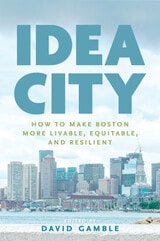
Idea City
How to Make Boston More Livable, Equitable, and ResilientEdited by David Gamble, Foreword by Renée Loth
University of Massachusetts Press, 2023
Racial strife, increased social and economic discrimination, amplified political friction, and growing uncertainty around the impacts of the COVID-19 pandemic and climate change have laid bare many inequalities within the city of Boston. How will these disruptions and inequities influence the city’s future, especially as Boston celebrates its quadricentennial in 2030?
This collection of original essays addresses the many challenges Boston contends with in the twenty-first century and considers ways to improve the city for everyone. Presenting a range of perspectives written by area experts—academics, reflective practitioners, and policymakers—these essays tackle issues of resiliency, mobility, affordable housing, health outcomes, social equity, economic equality, zoning, regionalism, and more. Reflecting the diversity of the city and the challenges and opportunities Boston currently faces, Idea City will help readers think differently about their own areas of expertise and draw conclusions from urban regeneration work in other fields.

If I Can Do It Horseback
A Cow-Country SketchbookBy John Hendrix; illustrated by Malcolm Thurgood
University of Texas Press, 1964
John Hendrix drew upon his own varied experiences for this panoramic view of West Texas ranch life, presented here in an integral compilation of flavorful articles written originally for The Cattleman. Touching upon virtually every facet of the cattle industry, they examine economic influences and technological changes as well as the personal and emotional aspects of range life.
Here are accurate, detailed, fascinating descriptions of the day-to-day life of the cowboy, the chuck-wagon cook, the range boss: narratives rich in human interest, in pathos, comedy, drama. Some tell of the organization and operation of the cow camp: the activities of the men, their duties and their entertainments, the clothes they wore, the food they ate, the horses they rode, the language they spoke. Some compare West Texas cattle-handling techniques with those of other sectors, or contrast early techniques with later practices. Others give biographies of cattlemen and cowboys. Still others study the operation, development, problems, and achievements of typical ranches of various types: the early open-range ranches, the large ranches which successfully made the transition to modem operation, the unsuccessful company-owned ranches of the 1880s, the pioneer cattle-feeding projects. Several articles describe the geography of the West Texas cattle country: the vast, arid expanses; the brown-green hills and Cap Rock; the life-giving springs; and the fickle weather. These are all considered in terms of their physical appearance and emotional impact, their importance as economic factors, and their effect on the duties of the cowboys.
Written in direct language and savoring of the life they describe, these articles capture the beauty of the cattle country—as well as its violence, hardships, drudgery. John Hendrix’s affection for the land, the people, and the life gives his writing a special warmth that his readers are sure to recognize and admire.
Texas artist Malcolm Thurgood has provided delightful illustrations for the text, and Wayne Gard, author of The Chisholm Trail and The Great Buffalo Hunt, has written a valuable introduction.
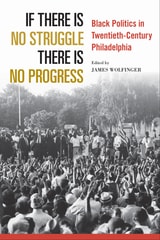
If There Is No Struggle There Is No Progress
Black Politics in Twentieth-Century PhiladelphiaEdited by James Wolfinger
Temple University Press, 2022
Philadelphia has long been a crucial site for the development of Black politics across the nation. If There Is No Struggle There Is No Progress provides an in-depth historical analysis—from the days of the Great Migration to the present—of the people and movements that made the city a center of political activism. The editor and contributors show how Black activists have long protested against police abuse, pushed for education reform, challenged job and housing discrimination, and put presidents in the White House.
If There Is No Struggle There Is No Progress emphasizes the strength of political strategies such as the “Don’t Buy Where You Can’t Work” movement and the Double V campaign. It demonstrates how Black activism helped shift Philadelphia from the Republican machine to Democratic leaders in the 1950s and highlights the election of politicians like Robert N. C. Nix, Sr., the first African American representative from Philadelphia. In addition, it focuses on grassroots movements and the intersection of race, gender, class, and politics in the 1960s, and shows how African Americans from the 1970s to the present challenged Mayor Frank Rizzo and helped elect Mayors Wilson Goode, John Street, and Michael Nutter.
If There Is No Struggle There Is No Progress cogently makes the case that Black activism has long been a powerful force in Philadelphia politics.
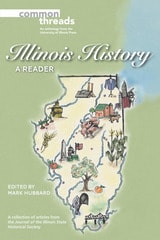
Illinois History
A ReaderEdited by Mark Hubbard: A collection of articles from the Journal of the Illinois State Historical Society
University of Illinois Press, 2018
This Common Threads collection offers important articles from the Journal of the Illinois State Historical Society. Organized as an approachable survey of state history, the book offers chapters that cover the colonial era, early statehood, the Civil War years, the Gilded Age and Progressive eras, World War II, and postwar Illinois. The essays reflect the wide range of experiences lived by Illinoisans engaging in causes like temperance and women's struggle for a shorter workday; facing challenges that range from the rise of street gangs to Decatur's urban decline; and navigating historic issues like the 1822-24 constitutional crisis and the Alton School Case.
Contributors: Roger Biles, Lilia Fernandez, Paul Finkelman, Raymond E. Hauser, Reginald Horsman, Suellen Hoy, Judson Jeffries, Lionel Kimble Jr., Thomas E. Pegram, Shirley Portwood, Robert D. Sampson, Ronald E. Shaw, and Robert M. Sutton.
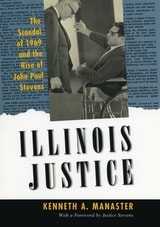
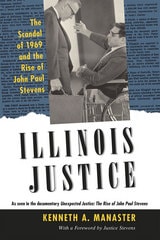
Illinois Justice
The Scandal of 1969 and the Rise of John Paul StevensKenneth A. Manaster
University of Chicago Press, 2001
In 1969, citizen gadfly Sherman Skolnick accused two Illinois Supreme Court justices of accepting valuable bank stock from an influential Chicago lawyer in exchange for deciding an important case in the lawyer’s favor. The resulting feverish media coverage prompted the state supreme court to appoint a special commission to investigate. Within six weeks and on a shoestring budget, the commission mobilized a small volunteer staff to reveal the facts. Stevens, then a relatively unknown Chicago lawyer, served as chief counsel. His work on this investigation would launch him into the public spotlight and onto the bench.
Manaster, who served on the commission, tells the real story of the investigation, detailing the dead ends, tactics, and triumphs. Manaster expertly traces Stevens’s masterful courtroom strategies and vividly portrays the high-profile personalities involved, as well as the subtleties of judicial corruption. A reflective foreword by Justice Stevens himself looks back at the case and how it influenced his career.
Now the subject of the documentary Unexpected Justice: The Rise of John Paul Stevens, Manaster’s book is both a fascinating chapter of political history and a revealing portrait of the early career of a Supreme Court justice.
Illinois Justice
The Scandal of 1969 and the Rise of John Paul StevensKenneth A. Manaster
University of Chicago Press, 2001
In 1969, citizen gadfly Sherman Skolnick accused two Illinois Supreme Court justices of accepting valuable bank stock from an influential Chicago lawyer in exchange for deciding an important case in the lawyer’s favor. The resulting feverish media coverage prompted the state supreme court to appoint a special commission to investigate. Within six weeks and on a shoestring budget, the commission mobilized a small volunteer staff to reveal the facts. Stevens, then a relatively unknown Chicago lawyer, served as chief counsel. His work on this investigation would launch him into the public spotlight and onto the bench.
Manaster, who served on the commission, tells the real story of the investigation, detailing the dead ends, tactics, and triumphs. Manaster expertly traces Stevens’s masterful courtroom strategies and vividly portrays the high-profile personalities involved, as well as the subtleties of judicial corruption. A reflective foreword by Justice Stevens himself looks back at the case and how it influenced his career.
Now the subject of the documentary Unexpected Justice: The Rise of John Paul Stevens, Manaster’s book is both a fascinating chapter of political history and a revealing portrait of the early career of a Supreme Court justice.

Illinois Politics
A Citizen's GuideJames D. Nowlan, Samuel K. Gove, and Richard J. Winkel
University of Illinois Press, 2009
Illinois has produced presidents and leading members of Congress. It also has a long history of political corruption, including, in recent years, the federal indictments of two consecutive governors. The population of the state is exceptionally diverse, with a significant number of new immigrants. Its political allegiance, once firmly Republican, has trended ever more Democratic. Illinois can be divided neatly into three distinct regions: Chicago, the suburban collar surrounding the city, and the ninety-five downstate counties.
Based on the research and experience of respected veterans of Illinois politics, this book shows how the government runs, how politics operates, and what obstacles and opportunities exist for change. It explains how power is exercised and how parties compete for it. For engaged citizens, scholars, and students, Illinois Politics: A Citizen's Guide is a timely and much-needed roadmap for positive change.

Illinois Politics
A Citizen's Guide to Power, Politics, and GovernmentMelissa Mouritsen, Kent D. Redfield, and James D. Nowlan
University of Illinois Press, 2024
Shifting demographics. Downstate versus Chicago. Billionaires and bribery. Even veteran observers need a roadmap to track Illinois’ ever-changing political landscape. Melissa Mouritsen, Kent D. Redfield, and James D. Nowlan provide an up-to-date primer on Prairie State politics, government, and policies. Features include:
- Discussions of recent events like the 2015-2017 budget disaster, the response to COVID-19, and the fall of longtime House Speaker Michael Madigan;
- New chapters on corruption, social policies, and the political rules of the game;
- Perspectives on the nuts-and-bolts of campaign funding, the ways political actors acquire power or influence, and many other topics;
- Close examinations of complex issues like the state’s increased polarization and its ongoing fiscal recovery.
Fully revised and expanded, <i>Illinois Politics</i> blends detailed information with expert analysis to offer an essential resource for citizens, students, and public servants alike.

Illinois Trails & Traces
Portraits and Stories along the State’s Historic RoutesText by Gary Marx and photographs by Daniel Overturf, with a foreword by Dick Durbin
Southern Illinois University Press, 2022
FINALIST, 2023 Society of Midland Authors Award in Adult Nonfiction!
Exploring Illinois history through the paths we travel
Illinois Trails & Traces partners the deft writing of Gary Marx with vivid photography by Daniel Overturf to illuminate ever evolving patterns of travel and settlement. Taking the reader on a journey down early buffalo traces and Native American trails, this book shows how these paths evolved into wagon roads and paved highways. Marx and Overturf explore historic routes ranging from Route 66 to the Underground Railroad, all the way back to post-Ice Age animal migration trails followed by Paleo-Indian people. The authors also examine how rivers, canals, and railroads spurred the rapid rise of Illinois as a modern state.
Marx and Overturf bring history into the present by including over forty photographic portraits and written profiles of individuals who live along these routes today. Many of the people you will meet on these pages work to preserve and honor the history of these passages. Others profiled here embody the spirit of the old roads and provide a vivid link between past and present. Through this journey, we discover that we’ve all been traveling the same road all along.

Illinois
A HistoryRichard J. Jensen
University of Illinois Press, 1978
Richard J. Jensen treats Illinois as a microcosm of the nation, arguing that its history exhibits basic conflicts that had much to do with shaping American society in general. Northern reformers in Illinois were intent on remaking the state in their image: middle-class, egalitarian, urban, and progressive. These values clashed with the patriarchal supremacy and intense loyalty to kin and ken by which the people of southern Illinois, and the South, organized their lives.
When the Civil War broke out, sympathy for the Confederacy ran high in southern Illinois. Although the region officially supported the Union, guerrilla bands terrorized Unionists, and in Charleston a full-scale riot against Federal troops erupted in 1864. The Union victory decisively shifted both the nation and Illinois toward faster modernization. Violence became more bureaucratized, and localism eroded with the onslaught of chain franchises, consolidated schools, and homogenized suburbs. Jensen extends his discussion to the emergence of newer, postmodern conflicts that continue to occupy the people of Illinois.
Without neglecting the high-profile individuals and events that put the Prairie State on the map, Jensen offers an innovative, wide-angle view that expands our perspective on Illinois history.

Illinois
Crossroads of a ContinentLois A. Carrier
University of Illinois Press, 1993
Writing in a fast-paced, down-to-earth style, Lois Carrier introduces a host of innovations and innovators associated with Illinois: Jane Addams and Louis Armstrong, Frank Lloyd Wright and Walt Disney, Cracker Jack and the Ferris wheel. From the Cahokia Mounds to Chicago, Illinois: Crossroads of a Continent provides a panoramic history for students and general readers.
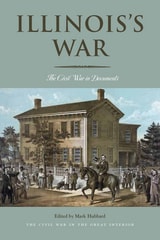
Illinois’s War
The Civil War in DocumentsMark Hubbard
Ohio University Press, 2013
On the eve of the Civil War and after, Illinois was one of the most significant states in the Union. Its history is, in many respects, the history of the Union writ large: its political leaders figured centrally in the war’s origins, progress, and legacies; and its diverse residents made sacrifices and contributions—both on the battlefield and on the home front—that proved essential to Union victory.
The documents in Illinois’s War reveal how the state and its people came to assume such a prominent role in this nation’s greatest conflict. In these crucial decades Illinois experienced its astonishing rise from rural frontier to economic and political powerhouse. But also in these years Illinois was, like the nation itself, a “house divided” over the expansion of slavery, the place of blacks in society, and the policies of the federal government both during and after the Civil War. Illinois’s War illuminates these conflicts in sharp relief, as well as the ways in which Illinoisans united in both saving the Union and transforming their state. Through the firsthand accounts of men and women who experienced these tumultuous decades, Illinois’s War presents the dramatic story of the Prairie State’s pivotal role in the sectional crisis, as well as the many ways in which the Civil War era altered the destiny of Illinois and its citizens.
Illinois’s War is the first book-length history of the state during the Civil War years since Victor Hicken’s Illinois in the Civil War, first published in 1966. Mark Hubbard has compiled a rich collection of letters, editorials, speeches, organizational records, diaries, and memoirs from farmers and workers, men and women, free blacks and runaway slaves, native-born and foreign-born, common soldiers and decorated generals, state and nationally recognized political leaders. The book presents fresh details of Illinois’s history during the Civil War era, and reflects the latest interpretations and evidence on the state’s social and political development.
Illuminating the Particular
Photographs of Milwaukee's Polish South SideChristel T. Maass
Wisconsin Historical Society Press, 2003
While Kwasniewski's camera captured the sights and sounds of Milwaukee at the turn of the century from the perspective of a single ethnic group in a single neighborhood, his photographs resonate far beyond Milwaukee's Polish South Side. They illuminate the particulars of American life during the early decades of the twentieth century. "What we see, reflected in the distant mirror," says John Gurda, "is ourselves."
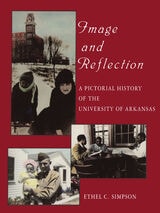
Image and Reflection
A Pictorial History of the University of ArkansasEthel Simpson
University of Arkansas Press, 1990
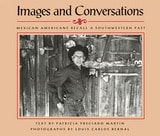
Images and Conversations
Mexican Americans Recall a Southwestern PastText by Patricia Preciado Martin; Photographs by Louis Carlos Bernal
University of Arizona Press, 1983
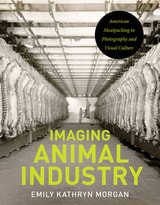
Imaging Animal Industry
American Meatpacking in Photography and Visual CultureEmily Kathryn Morgan
University of Iowa Press, 2024
Drawing on archival collections across the American Midwest, this book relates a history of the meatpacking industry’s use of images in the early to mid-twentieth century. In the process, it reveals the key role that images, particularly photographs, have played in assisting with the rise of industrial meat production.
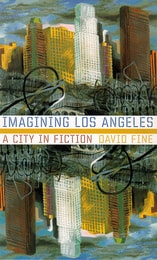
Imagining Los Angeles
A City In FictionDavid Fine
University of Nevada Press, 2004
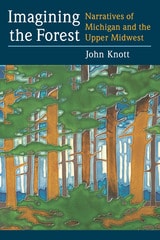
Imagining the Forest
Narratives of Michigan and the Upper MidwestJohn Knott
University of Michigan Press, 2011
Forests have always been more than just their trees. The forests in Michigan (and similar forests in other Great Lakes states such as Wisconsin and Minnesota) played a role in the American cultural imagination from the beginnings of European settlement in the early nineteenth century to the present. Our relationships with those forests have been shaped by the cultural attitudes of the times, and people have invested in them both moral and spiritual meanings.
Author John Knott draws upon such works as Simon Schama's Landscape and Memory and Robert Pogue Harrison's Forests: The Shadow of Civilization in exploring ways in which our
relationships with forests have been shaped, using Michigan---its history of settlement, popular literature, and forest management controversies---as an exemplary case. Knott looks at such well-known figures as William Bradford, James Fenimore Cooper, John Muir, John Burroughs, and Teddy Roosevelt; Ojibwa conceptions of the forest and natural world (including how Longfellow mythologized them); early explorer accounts; and contemporary literature set in the Upper Peninsula, including Jim Harrison's True North and Philip Caputo's Indian Country.
Two competing metaphors evolved over time, Knott shows: the forest as howling wilderness, impeding the progress of civilization and in need of subjugation, and the forest as temple or cathedral, worthy of reverence and protection. Imagining the Forestshows the origin and development of both.
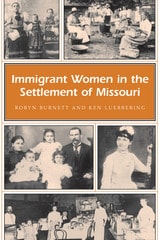
Immigrant Women in the Settlement of Missouri
Robyn Burnett & Ken Luebbering
University of Missouri Press, 2005
Because it examines the lives of women from many social classes and ethnic backgrounds, Immigrant Women in the Settlement of Missouri does much to explain the rich cultural diversity Missouri enjoys today. The photographs and narratives relating to Czech, French, German, Hungarian, Irish, Italian, and Polish life will remind descendants of immigrants that many customs and traditions they grew up practicing have roots in their home countries and will also promote understanding of the customs of other cultures. In addition to the ethnic and class differences that affected these women’s lives, the book also notes the impact of the various eras in which they lived, their education, the circumstances of their migrations, and their destinations across Missouri.
With their engaging and straightforward narrative, Burnett and Luebbering take the reader chronologically through the history of the state from the colonial period to the Civil War and industrialization. Like all Missouri Heritage Readers, this one is presented in an accessible format with abundant illustrations, and it is sure to please both general readers and those engaged in immigrant and women’s studies.
Immigrants in the Far West
Historical Identities and ExperiencesJessie L. Embry
University of Utah Press, 2014
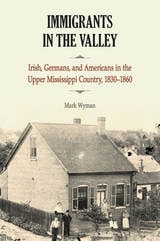
Immigrants in the Valley
Irish, Germans, and Americans in the Upper Mississippi Country, 1830-1860Mark Wyman
Southern Illinois University Press, 1984
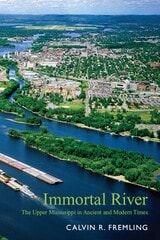
Immortal River
The Upper Mississippi in Ancient and Modern TimesCalvin R. Fremling
University of Wisconsin Press, 2005
Like the Mississippi itself, Immortal River often leaves the main channel to explore the river's backwaters, floodplain, and drainage basin. The book's focus is the Upper Mississippi, from Minneapolis, Minnesota, to Cairo, Illinois. But it also includes information about the river's headwaters in northern Minnesota and about the Lower Mississippi from Cairo south to the river's mouth ninety miles below New Orleans. It offers an understanding of the basic geology underlying the river's landscapes, ecology, environmental problems, and grandeur.
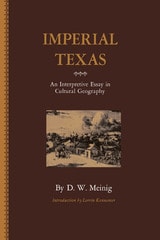
Imperial Texas
An Interpretive Essay in Cultural GeographyBy D. W. Meinig
University of Texas Press, 1969
Imperial Texas examines the development of Texas as a human region, from the simple outline of the Spanish colony to the complex patterns of the modern state. In this study in cultural geography set into a historical framework, D. W. Meinig discusses the "various peoples of Texas, who they are, where they came from, where they settled, and how they are proportioned one to another from place to place." After examining the historical framework, he then presents detailed analyses of the major regions of modem Texas and an over-all characterization of the state and its people. He concludes that, although Texas has never been the empire that it has sometimes been called, "nevertheless... Texas is something more than just one-fourteenth of the American area, one-twentieth of the American people, and one-fiftieth of the American union."

Imposing Order without Law
American Expansion to the Eastern Sierra, 1850–1865Michael J. Makley
University of Nevada Press, 2022
In the 1850s, early Euro-American settlers established two remote outposts on the slopes of the eastern Sierra Nevada, both important way stations on the central emigrant trail. The Carson Valley settlement was located on the western edge of the Utah Territory, while the Honey Lake Valley hamlet, 120 miles north, fell within California’s boundaries but was separated from the rest of the state by the formidable mountain range. Although these were some of the first white communities established in the region, both areas had long been inhabited by Indigenous Americans. Carson Valley had been part of Washoe Indian territory, and Honey Lake Valley was a section of Northern Paiute land.
Michael Makley explores the complexities of this turbulent era, when the pioneers’ actions set the stage for both valleys to become part of national incorporation. With deft writing and meticulously researched portrayals of the individuals involved, including the Washoe and Northern Paiute peoples, Imposing Order Without Law focuses on the haphazard evolution of “frontier justice” in these remote outposts. White settlers often brought with them their own ideas of civil order. Makley’s work contextualizes the extralegal acts undertaken by the settlers to enforce edicts in their attempt to establish American communities.
Makley’s book reveals the use and impact of group violence, both within the settlements and within the Indigenous peoples’ world, where it transformed their lives.
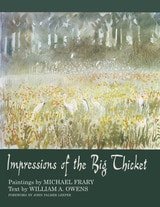
Impressions of the Big Thicket
Michael Frary
University of Texas Press, 1973
Before the establishment of the Big Thicket Nature Preserve, the Big Thicket of Texas became a symbol of nature's last stand against encroaching civilization. Here, in a mingling of ecological zones, come together plants, animals, and birds—many of them rare—the flora and fauna of north and south, east and west. Northern maples and beeches stand not too great a distance from cypresses and Southern magnolias. American hollies grow large and orchids bloom among Northern ferns. Mesquite and tumbleweed, plants of the Western desert, survive where the annual rainfall averages sixty inches. On a major flyway, the Big Thicket is a stopping place for many birds in passage as well as home to a wide variety. Beavers build their dams there, and an occasional coyote yips in the night.
Because of its great beauty and rich natural resources, use of the Big Thicket was the object of a forty-year struggle involving financiers, politicians, conservationists, and countless Thicket lovers. Each group viewed the Thicket from a different perspective and foresaw its future in different terms.
This book records the impressions of two Thicket lovers. Michael Frary's paintings and drawings of woods and water, of birds in flight and strange plants growing close to the moist earth are pictures of a place, a time, a mood caught today—and not the same if left until tomorrow. The qualities of gentleness and violence are constant, but often hidden—there to be brought out by human need or human greed.
William Owens writes of the people who have lived their lives in the Big Thicket, who have stirred its stillness with whoop and holler across the waters, who have taken in its stillness and explosive beauty until they themselves are made up of gentleness and violence.
Together the impressions show what the Big Thicket was and is. What it will be—that is the chief concern of the book.
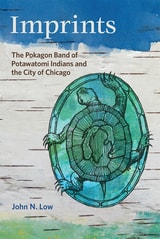
Imprints
The Pokagon Band of Potawatomi Indians and the City of ChicagoJohn N. Low
Michigan State University Press, 2016
Imprints: The Pokagon Band of Potawatomi Indians and the City of Chicago examines the ways some Pokagon Potawatomi tribal members have maintained a distinct Native identity, their rejection of assimilation into the mainstream, and their desire for inclusion in the larger contemporary society without forfeiting their “Indianness.” Mindful that contact is never a one-way street, Low also examines the ways in which experiences in Chicago have influenced the Pokagon Potawatomi. Imprints continues the recent scholarship on the urban Indian experience before as well as after World War II.
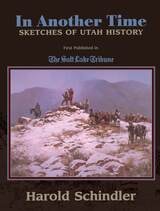
In Another Time
Harold Schindler
Utah State University Press, 1998
An illustrated collection of historical articles originally published in the Salt Lake Tribune from 1993 to 1996, In
Another Time provides both an entertaining introduction to Utah and a distinguished and popular historian's summary views of the state's peculiar history.
Another Time will entertain and inform newcomers seeking an introductory understanding of what has made Utah different, old hands wanting to know more about the rich complexity of the state's past, and anyone who enjoys well-told historical tales.
In Clouds of Glory
American Airmen Who Flew with the British during the Great WarJames J. Hudson
University of Arkansas Press, 1999
In Defense of La Raza
The Los Angeles Mexican Consulate and the Mexican Community, 1929 to 1936Francisco E. Balderrama
University of Arizona Press, 1982
Los Angeles’s consulate was confronted with the country’s largest concentration of Mexican Americans, for whom the consuls often assumed a position of community leadership. Whether helping the unemployed secure repatriation and relief or intervening in labor disputes, consuls uniquely adapted their roles in international diplomacy to the demands of local affairs.
In Lady Liberty's Shadow
The Politics of Race and Immigration in New JerseyRobyn Magalit Rodriguez
Rutgers University Press, 2017
In Lady Liberty’s Shadow examines popular white perceptions of danger represented by immigrants and their children, as well the specter that lurks at the edges of suburbs in the shape of black and Latino urban underclasses and the ever more nebulous hazard of (presumed-Islamic) terrorism that threatening to undermine “life as we know it.” Robyn Magalit Rodriguez explores the impact of anti-immigrant municipal ordinances on a range of immigrant groups living in varied suburban communities, from undocumented Latinos in predominantly white suburbs to long-established Asian immigrants in “majority-minority” suburbs. The “American Dream” that suburban life is supposed to represent is shown to rest on a racialized, segregated social order meant to be enjoyed only by whites. Although it is a case study of New Jersey, In Lady Liberty’s Shadow offers crucial insights that can shed fresh light on the national immigration debate.
For more information, go to: https://www.facebook.com/inlibertysshadow
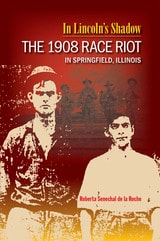
In Lincoln's Shadow
The 1908 Race Riot in Springfield, IllinoisRoberta Senechal de la Roche
Southern Illinois University Press, 2008
Winner of the Gustavus Myers Center Award for the Study of Human Rights in the United States!
Winner of the Illinois State Historical Society Superior Achievement Award!
This detailed case study of the 1908 race riot in Springfield, Illinois, which began only a few blocks from Abraham Lincoln’s family home, explores the social origins of rioting by whites against the city’s African American community after a white woman alleged that a black man had raped her. Over two days rioters wrecked black-owned businesses, burned neighborhoods to the ground, killed two black men, and injured many others.
Author Roberta Senechal de la Roche draws from a wide range of sources to describe the riot, identify the rioters and their victims, and challenge previous interpretations that attribute rioting to interracial competition for jobs, housing, or political influence. Written in a direct and clear style, In Lincoln’s Shadow documents a violent explosion of racial hatred that shocked the nation and reveals the complexity of white racial attitudes in the early twentieth century.
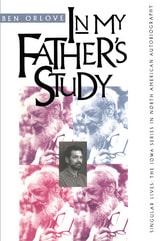
In My Father'S Study
Ben Orlove
University of Iowa Press, 1995
In 1921 Solomon Orlovski, a Russian Jew born in 1904, emigrated to America and transformed himself into Robert Orlove, a pattern maker in two senses of the term: during the day, he worked in the fur trade in New York and Chicago, making patterns for toys and hats; in his private life he became a self-taught artist who created prints, sketches, and collages in his study. More than sixty years later his son Ben—an anthropologist educated at Harvard and Berkeley—walked through the doorway of the deceased Robert's study and began to explore more than a half century of his father's experiences, thoughts, and emotions as well as his own very different life. His wry, sensitive combination of biography, memoir, and autobiography taps a remarkably rich vein of individual and collective experience in our diverse society.
Ben Orlove's dual narrative constitutes a family history of notable breadth and immediacy. By turns passionate and cool, dramatic and analytic, he excavates his father Robert's lifetime accumulation of diaries, letters, clippings, photographs, and artworks to create a convincing, deeply satisfying portrait that link both father and son.
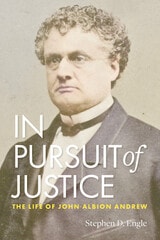
In Pursuit of Justice
The Life of John Albion AndrewStephen D. Engle
University of Massachusetts Press, 2023
Widely known as the “poor man’s lawyer” in antebellum Boston, John Albion Andrew (1818–1867) was involved in nearly every cause and case that advanced social and racial justice in Boston in the years preceding the Civil War. Inspired by the legacies of John Quincy Adams and Ralph Waldo Emerson, and mentored by Charles Sumner, Andrew devoted himself to the battle for equality. By day, he fought to protect those condemned to the death penalty, women seeking divorce, and fugitives ensnared by the Fugitive Slave Law. By night, he coordinated logistics and funding for the Underground Railroad as it ferried enslaved African Americans northward.
In this revealing and accessible biography, Stephen D. Engle traces Andrew’s life and legacy, giving this important, but largely forgotten, figure his due. Rising to national prominence during the Civil War years as the governor of Massachusetts, Andrew raised the African American regiment known as the Glorious 54th and rallied thousands of soldiers to the Union cause. Upon his sudden death in 1867, a correspondent for Harper’s Weekly wrote, “Not since the news came of Abraham Lincoln’s death were so many hearts truly smitten.”
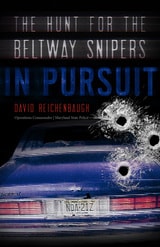
In Pursuit
The Hunt for the Beltway SnipersDavid Reichenbaugh
University Press of New England, 2018
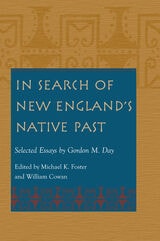
In Search of New England's Native Past
Selected Essays by Gordon M. DayGordon M. Day
University of Massachusetts Press, 1998
This volume highlights the work of the late Gordon M. Day, renowned for his groundbreaking research on the history and culture of the Western Abenakis and their Indian neighbors. Where previous historians had tended to portray northern New England as an area largely devoid of aboriginal peoples, Day established beyond all doubt the presence of Abenaki settlements along the eastern shore of Lake Champlain as well as the upper reaches of the Connecticut and Merrimack rivers.
For nearly three decades, Day focused his work on the community of Saint Francis, or Odanak, in Quebec, to which Abenaki refugees from interior New England had fled, beginning in the mid-seventeenth century and continuing into the nineteenth. Drawing on the methods of several disciplines, including ethnology, linguistics, and ethnohistory, he synthesized data from fragmentary historical records, oral traditions, and place names to reconstruct a world assumed to be lost.
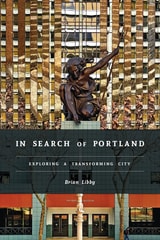
In Search of Portland
Exploring a Transforming CityBrian Libby
Oregon State University Press, 2026
“A good walking tour is not just about individual stops but the total experience of moving along a city’s streets, taking in a variety of neighborhoods, buildings, shops, parks, public art, and bridges: a chance to be the grand marshal in your own parade,” writes Brian Libby in the introduction of In Search of Portland. Starting from his 1997 home, the Empire Apartments at Southwest Eleventh Avenue and Jefferson Street, Libby shares one hundred fascinating points of interest through personal reflection, interviews, and anecdotal history.
The six excursions exploring Portland’s downtown, Old Town, and Pearl District not only focus on the city’s important landmarks and hidden gems but showcase an evolving city’s resilience and heart. Alongside his own experiences, Libby reveals how luminaries like Humphrey Bogart, Mark Rothko, Gus Van Sant, Vera Katz, and Bill Walton appreciated the City of Roses. From Pioneer Courthouse Square to the Crystal Ballroom, each location in the book celebrates the spirit of place in addition to its architecture.
More than a book about buildings, In Search of Portland reveals the stories behind the built landscape, the people, and the history that have created modern Portland.
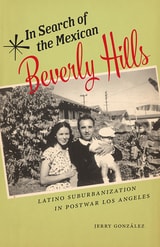
In Search of the Mexican Beverly Hills
Latino Suburbanization in Postwar Los AngelesGonzález, Jerry
Rutgers University Press, 2018
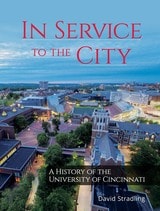
In Service to the City
A History of the University of CincinnatiDavid Stradling
University of Minnesota Press, 2018
In Service to the City: A History of the University of Cincinnati, the first history of the university written in over fifty years, explores the evolving, complex relationship between UC and the city of Cincinnati. In Service to the City casts an unvarnished lens on the details of student demographics, faculty research, curricular changes, and athletic controversy to challenges associated with campus architecture and planning, neighborhood relations, regional and national consequences of urban decline, and the roles of municipal, state, and federal governments within American higher education.
Urban, environmental historian David Stradling traces UC’s story through starts and stops, growth and contraction. In the 1870s the institution began its transformation into a comprehensive, municipal university located in America’s thriving heartland. Expansion continued through mergers with Cincinnati College-Conservatory of Music and Cincinnati Medical College, among others. In 1977, University President Warren Bennis and Governor Jim Rhodes signed papers ending UC’s municipal status while securing its future as part of the state university system of Ohio.
UC maintains its strong relationship with Cincinnati, pioneering countless community and regionally oriented programs, from its expanding co-op education system, the first in the nation, to the Niehoff Urban Studio. Stradling describes the social and political activism of UC students and faculty—front and center in the civil rights and women’s rights movements, as well as the public health and environmental movements. Often they struggled to change the culture within their own institution, which at times appeared conservative or reactionary.
Drawing on archival research, Stradling recounts in lively prose and through dozens of illustrations, two-hundred years of UC history, setting the story in the context of changes within higher education in the United States.
With the cost of higher education on the minds of legislators and the public, questions first posed by Daniel Drake in 1819 upon the founding of Cincinnati College remain relevant. Who should the college serve? What and how should students learn? How can we pay for it? In Service to the City encourages readers to consider how the University of Cincinnati—with a history so entwined with its city—can balance its urban-serving tradition with its aspiration to be a leader global research university.
In Tender Consideration
Women, Families, and the Law in Abraham Lincoln's IllinoisEdited by Daniel W. Stowell
University of Illinois Press, 2002
Drawing on the rich resources of The Law Practice of Abraham Lincoln: Complete Documentary Edition, a DVD version of Lincoln's complete legal papers, In Tender Consideration scans the full range of family woes that antebellum Americans took to the law. Deserted wives, destitute widows, jilted brides with illegitimate children, and slandered women brought their cases before the courts, often receiving a surprising degree of sympathy and support.
Through the stories of dozens of individuals who took legal action to obtain a divorce, contest a will, prosecute a rapist, or assert rights to family property, this volume illuminates the legal status of women and children in Illinois and their experiences with the law in action. Contributors document how the courts viewed children and how they responded to inheritance, custody, and other types of cases involving children or their interests. These cases also highlight Lincoln's life in law, placing him more clearly within the context of the legal culture in which he lived and raising intriguing questions about the influence of his legal life on his subsequent political one.
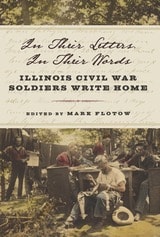
In Their Letters, in Their Words
Illinois Civil War Soldiers Write HomeEdited by Mark Flotow
Southern Illinois University Press, 2019
A vital lifeline to home during the Civil War, the letters of soldiers to their families and friends remain a treasure for those seeking to connect with and understand the most turbulent period of American history. Rather than focus on the experiences of a few witnesses, this impressively researched book documents 165 Illinois Civil War soldiers’ and sailors’ lives through the lens of their personal letters. Editor Mark Flotow chose a variety of letter writers who hailed from counties throughout the state, served in different branches of the military at different ranks, and represented the gamut of social experiences and war outcomes.
Flotow provides extensive quotations from the letters. By allowing the soldiers to speak for themselves, he captures what mattered most to them. Illinois soldiers wrote about their reasons for enlisting; the nature of training and duties; necessities like eating, sleeping, marching, and making the best of often harsh and chaotic circumstances; Southern culture; slavery; their opinions of commanding officers and the president; disease, medicine, and hospitals; their prisoner-of-war experiences; and the ways they left the army. Through letters from afar, many soldiers sought to manage their homes and farms, while some single men attempted to woo their sweethearts.
Flotow includes brief biographies for each soldier quoted in the book, weaves historical context and analysis with the letters, and organizes them by topic. Thus, intimate details cited in individual letters reveal their significance for those who lived and shaped this tumultuous era. The result is not only insightful history but also compelling reading.
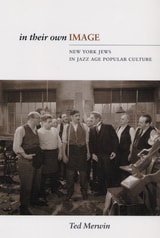
In Their Own Image
New York Jews in Jazz Age Popular CultureMerwin, Ted
Rutgers University Press, 2006
The Jazz Age of the 1920s is an era remembered for illegal liquor, innovative music and dance styles, and burgeoning ideas of social equality. It was also the period during which second-generation Jews began to emerge as a significant demographic in New York City. In TheirOwn Image examines thegrowing cultural visibility of Jewish life amid this vibrant scene.
From the vaudeville routines of Fanny Brice, Eddie Cantor, George Jessel, and Sophie Tucker, to the slew of Broadway comedies about Jewish life and the silent films that showed immigrant families struggling to leave the ghetto, images and representations of Jews became staples of interwar popular culture. Through the performing arts, Jews expressed highly ambivalent feelings about their identification with Jewish and American cultures. Ted Merwin shows how they became American by producing and consuming not images of another group, but images of themselves. As a result, they humanized Jewish stereotypes, softened anti-Semitic attitudes, and laid the groundwork for today’s Jewish comedians.
An entertaining look at the role popular culture plays in promoting the acculturation of an ethnic group, In Their Own Image enhances our understanding of American Jewish history and provides a model for the study of other groups and their integration into mainstream society.
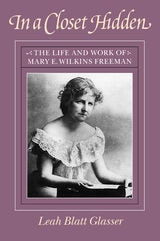
In a Closet Hidden
The Life and Work of Mary E. Wilkins FreemanLeah Blatt Glasser
University of Massachusetts Press, 1996
The first literary biography of a much-neglected American writer, this book explores the multiple tensions at the core of Mary E. Wilkins Freeman's life and work. A prolific short story writer and novelist, Freeman (1852–1930) developed a reputation as a local colorist who depicted the peculiarities of her native New England. Yet as Leah Blatt Glasser shows, Freeman was one of the first American authors to write extensively about the relationships women form outside of marriage and motherhood, the role of work in women's lives, the complexity of women's sexuality, and the interior lives of women who rebel rather than conform to patriarchal strictures.
In a Closet Hidden traces Freeman's evolution as a writer, showing how her own inner conflicts repeatedly found expression in her art. As Glasser demonstrates, Freeman's work examined the competing claims of creativity and convention, self-fulfillment and self-sacrifice, spinsterhood and marriage, lesbianism and heterosexuality.

In a Pickle
A Family Farm StoryJerry Apps
University of Wisconsin Press, 2008
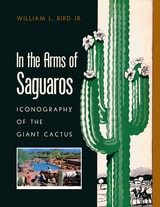
In the Arms of Saguaros
Iconography of the Giant CactusWilliam L. Bird Jr.
University of Arizona Press, 2023
In the Arms of the Saguaros shows how, from the botanical explorers of the nineteenth century to the tourism boosters in our own time, saguaros and their images have fulfilled attention-getting needs and expectations. Through text and lavish images, this work explores the saguaro’s growth into a western icon from the early days of the American railroad to the years bracketing World War II, when Sun Belt boosterism hit its zenith and proponents of tourism succeed in moving the saguaro to the center of the promotional frame.
This book explores how the growth of tourism brought the saguaro to ever-larger audiences through the proliferation of western-themed imagery on the American roadside. The history of the saguaro’s popular and highly imaginative range points to the current moment in which the saguaro touches us as a global icon in art, fashion, and entertainment.
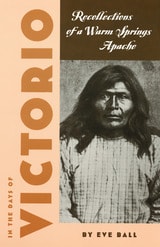
In the Days of Victorio
Recollections of a Warm Springs ApacheEve Ball; Narrated by James Kaywaykla
University of Arizona Press, 1970
"This volume contains a great deal of interesting information."—Journal of the West
"The Apache point of view [is] presented with great clarity."—Books of the Southwest
"A valuable addition to the southwestern frontier shelf and long will be drawn upon and used."—Journal of Arizona History
"A genuine contribution to the story of the Apache wars, and a very readable book as well."—Westerners Brand Book
"Shining through every page is the unquenchable spirit that was the Apache. Inured, indeed trained, to suffering, Apaches stood strong beside Victorio, Nana, and finally Geronimo in a vain attempt to maintain those things they held more dear than life itself—freedom, homeland, dignity as human beings. A warm and vital people, the Apaches had, and have, a great deal to offer."—Arizona and the West