Results by title
2284 books match the query 'Women' and 76 start with i
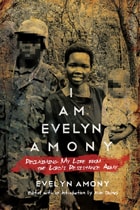
I Am Evelyn Amony
Reclaiming My Life from the Lord's Resistance ArmyEvelyn Amony, Edited with an introduction by Erin Baines
University of Wisconsin Press, 2015
Abducted at the age of eleven, Evelyn Amony spent nearly eleven years inside the Lord’s Resistance Army, becoming a forced wife to Joseph Kony and mother to his children. She takes the reader into the inner circles of LRA commanders and reveals unprecedented personal and domestic details about Joseph Kony. Her account unflinchingly conveys the moral difficulties of choosing survival in a situation fraught with violence, threat, and death.
Amony was freed following her capture by the Ugandan military. Despite the trauma she endured with the LRA, Amony joined a Ugandan peace delegation to the LRA, trying to convince Kony to end the war that had lasted more than two decades. She recounts those experiences, as well as the stigma she and her children faced when she returned home as an adult.
This extraordinary testimony shatters stereotypes of war-affected women, revealing the complex ways that Amony navigated life inside the LRA and her current work as a human rights advocate to make a better life for her children and other women affected by war.
Best books for public & secondary school libraries from university presses, American Library Association
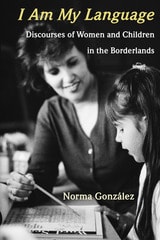
I Am My Language
Discourses of Women and Children in the BorderlandsNorma González
University of Arizona Press, 2001
“I am my language,” says the poet Gloria Anzaldúa, because language is at the heart of who we are. But what happens when a person has more than one language? Is there an overlay of language on identity, and do we shift identities as we shift languages? More important, what identities do children construct for themselves when they use different languages in particular ways?
In this book, Norma González uses language as a window on the multiple levels of identity construction in children—as well as on the complexities of life in the borderlands—to explore language practices and discourse patterns of Mexican-origin mothers and the language socialization of their children. She shows how the unique discourses that result from the interplay of two cultures shape perceptions of self and community, and how they influence the ways in which children learn and families engage with their children’s schools.
González demonstrates that the physical presence of the border profoundly affects the practices and ideologies of Mexican-origin women and children. She then argues that language and cultural background should be used as a basis for building academic competencies, and she demonstrates why the evocative/emotive dimension of language should play a major part in studies of discourse, language socialization, and language ideology.
Drawing on women’s own narratives of their experiences as both mothers and borderland residents, I Am My Language is firmly rooted in the words of common people in their everyday lives. It combines personal odyssey with cutting-edge ethnographic research, allowing us to hear voices that have been muted in the academic and public policy discussions of “what it means to be Latina/o” and showing us new ways to connect language to complex issues of education, political economy, and social identity.
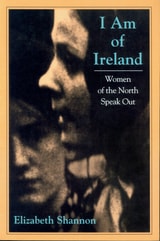
I Am of Ireland
Women of the North Speak OutElizabeth Shannon
University of Massachusetts Press, 1997
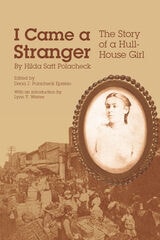
I Came a Stranger
The Story of a Hull-House GirlHilda Satt Polacheck
University of Illinois Press, 1989
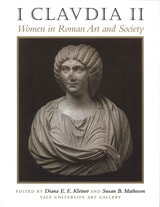
I Claudia II
Women in Roman Art and SocietyEdited by Diana E. E. Kleiner and Susan B. Matheson
University of Texas Press, 2000
I, Claudia: Women in Ancient Rome—an exhibition and catalog produced by the Yale University Art Gallery—provided the first comprehensive study of the lives of Roman women as revealed in Roman art. Responding to the popular success of the exhibit and catalog, Diana E. E. Kleiner and Susan B. Matheson here gather ten additional essays by specialists in art history, history, and papyrology to offer further reflections on women in Roman society based on the material evidence provided by art, archaeology, and ancient literary sources.
In addition to the editors, the contributors are Cornelius C. Vermeule, Rolf Winkes, Mary T. Boatwright, Susan Wood, Eve D'Ambra, Andrew Oliver, Diana Delia, and Ann Ellis Hanson. Their essays, illustrated with black-and-white photos of the art under discussion, treat such themes as mothers and sons, marriage and widowhood, aging, adornment, imperial portraiture, and patronage.
I Don't Cry, But I Remember
A Mexican Immigrant's Story of EnduranceJoyce Lackie
University of Arizona Press, 2012
When Viviana Salguero came to the United States in 1946, she spoke very little English, had never learned to read or write, and had no job skills besides housework or field labor. She worked eighteen-hour days and lived outdoors as often as not. And yet she raised twelve children, shielding them from her abusive husband when she dared, and shared in both the tragedies and accomplishments of her family. Through it all, Viviana never lost her love for Mexico or her gratitude to the United States for what would eventually become a better life. Though her story is unique, Viviana Salguero could be the mother, grandmother, or great-grandmother of immigrants anywhere, struggling with barriers of gender, education, language, and poverty.
In I Don't Cry, But I Remember, Joyce Lackie shares with us an intimate portrait of Viviana's life. Based on hours of recorded conversations, Lackie skillfully translates the interviews into an engaging, revealing narrative that details the migrant experience from a woman's point of view and fills a gap in our history by examining the role of women of color in the American Southwest. The book presents Vivana's life not only as a chronicle of endurance, but as a tale of everyday resistance. What she lacks in social confidence, political strength, and economic stability, she makes up for in dignity, faith, and wisdom.
Like all good oral history, Salguero's accounts and Lackie's analyses contribute to our understanding of the past by exposing the inconsistencies and contradictions in our remembrances. This book will appeal to ethnographers, oral historians, students and scholars of Chicana studies and women's studies, as well as general readers interested in the lives of immigrant women.
I Live in the Country & other dirty poems
Arielle Greenberg
Four Way Books, 2020

I Want to Get Married!
One Wannabe Bride’s Misadventures with Handsome Houdinis, Technicolor Grooms, Morality Police, and Other Mr. Not Quite RightsBy Ghada Abdel Aal
University of Texas Press, 2010
The rules may differ from country to country, but the dating game is a universal constant.
After years of searching for Mr. Right in living-room meetings arranged by family or friends, Ghada Abdel Aal, a young Egyptian professional, decided to take to the blogosphere to share her experiences and vent her frustrations at being young, single, and female in Egypt. Her blog, I Want to Get Married!, quickly became a hit with both men and women in the Arab world. With a keen sense of humor and biting social commentary, Abdel Aal recounts in painful detail her adventures with failed proposals and unacceptable suitors. There's Mr. Precious, who storms out during their first meeting when he feels his favorite athlete has been slighted, and another suitor who robs her in broad daylight, to name just a few of the characters she runs across in her pursuit of wedded bliss.
I Want to Get Married! has since become a best-selling book in Egypt and the inspiration for a television series. This witty look at dating challenges skewed representations of the Middle East and presents a realistic picture of what it means to be a single young woman in the Arab world, where, like elsewhere, a good man can be hard to find.

ICD Connection
Living with an Implantable Cardioverter Defibrillator: A Collection of Stories from Women & MenEdited by Helen McFarland, RN
Michigan Publishing Services, 2014
IN THE PRESENCE OF AUDIENCE
THE SELF IN DIARIES AND FICTIONDeborah Martinson
The Ohio State University Press, 2003
As a diary writer imagines shadow readers rifling diary pages, she tweaks images of the self, creating multiple readings of herself, fixed and unfixed. When the readers and potential readers are husbands and publishers, the writer maneuvers carefully in a world of men who are quick to judge and to take offense. She fills the pages with reflections, anecdotes, codes, stories, biographies, and fictions. The diary acts as a site for the writer’s tension, rebellion, and remaking of herself.
In this book Martinson examines the diaries of Virginia Woolf, Katherine Mansfield, Violet Hunt, and Doris Lessing’s fictional character Anna Wulf, and shows that these diaries (and others like them) are not entirely private writings as has been previously assumed. Rather, their authors wrote them knowing they would be read. In these four cases, the audience is the author’s male lover or husband, and Martinson reveals how knowledge of this audience affects the language and content in each diary. Ultimately, she argues, this audience enforces a certain “male censorship” which changes the shape of the revelations, the shape of the writer herself, making it impossible for the female author to be honest in writing about her true self.
Even sophisticated readers often assume that diaries are primarily private. This study interrogates the myth of authenticity and self-revelation in diaries written under the gaze of particular peekers.
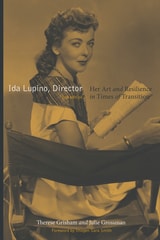
Ida Lupino, Director, 2nd edition
Her Art and Resilience in Times of TransitionTherese Grisham
Rutgers University Press, 2026
The updated edition of Ida Lupino, Director: Her Art and Resilience in Times of Transition, an in-depth exploration of Lupino’s film and television directing work, provides close readings of the films and TV episodes Lupino directed and accounts for the history of Lupino’s reception, continuing into the mid-2020s, in media and film scholarship. The book gives readers a fuller understanding of Lupino’s major contribution to the history of American cinema and media. The revisions update this book, the first on Lupino’s directing, to address recent scholarship on Lupino’s work and reinforce her abiding relevance for cinephiles and film scholars. It incorporates scholarly and popular culture references to Lupino in the last seven years. Updates include a foreword by writer and film critic Imogen Sara Smith, whose work in film scholarship and the public arena has drawn attention to Lupino and the importance of gender to film noir. Authors Therese Grisham and Julie Grossman have added a complete list of the TV episodes Lupino directed in the 1950s and '60s, as well as an updated epilogue.
This new edition addresses how our views of Lupino’s innovative cinema and her prodigious contributions to classic television have been taken up by others, proving that Lupino, whose reputation has waxed and waned since the middle of the twentieth century, is here to stay as a major figure in the history of American media.
Ida Lupino, Director
Her Art and Resilience in Times of TransitionGrisham, Therese
Rutgers University Press, 2017
The first in-depth study devoted to Lupino’s directorial work, this book makes a strong case for her as a trailblazing feminist auteur, a filmmaker with a clear signature style and an abiding interest in depicting the plights of postwar American women. Ida Lupino, Director not only examines her work as a cinematic auteur, but also offers a serious consideration of her diverse and long-ranging career, getting her start in Hollywood as an actress in her teens and twenties, directing her first films in her early thirties, and later working as an acclaimed director of television westerns, sitcoms, and suspense dramas. It also demonstrates how Lupino fused generic elements of film noir and the social problem film to create a distinctive directorial style that was both highly expressionistic and grittily realistic. Ida Lupino, Director thus shines a long-awaited spotlight on one of our greatest filmmakers.

Ideal Beauty
The Life and Times of Greta GarboLois W. Banner
Rutgers University Press, 2023
Ideal Beauty reveals the woman behind the mystique, a woman who overcame an impoverished childhood to become a student at the Swedish Royal Dramatic Academy, an actress in European films, and ultimately a Hollywood star. Chronicling her tough negotiations with Louis B. Mayer at MGM, it shows how Garbo carved out enough power in Hollywood to craft a distinctly new feminist screen presence in films like Queen Christina. Banner draws on over ten years of in-depth archival research in Sweden, Germany, France, and the United States to demonstrate how, away from the camera’s glare, Garbo’s life was even more intriguing. Ideal Beauty takes a fresh look at an icon who helped to define female beauty in the twentieth century and provides answers to much-debated questions about Garbo’s childhood, sexuality, career, illnesses and breakdowns, and spiritual awakening.

If I Die in Juárez
Stella Pope Duarte
University of Arizona Press, 2008
Based on the author’s interviews with relatives of murdered women, If I Die in Juárez is brilliantly crafted to give readers the experience of walking in the shoes of women who daily risk being abducted and murdered in the “capital city of murdered women,” joining thousands of others who for more than a decade have disappeared from Juárez, las desaparecidas, brutally murdered by assassins who have gone unpunished. The agony of one of the darkest tales in human history brings to light a strange hope, illusive yet constant, resisting lies, betrayal, and the desert’s silent sentence of death.
Read an in-depth review of If I Die in Juárez here or click here for a study guide. If I Die in Juárez was also reviewed on KNAU's Southwest Book Review program. Listen here!
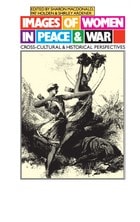
Images of Women in Peace and War
Cross-cultural and Historical PerspectivesSharon Macdonald
University of Wisconsin Press, 1988
As warriors, freedom fighters and victims, as mothers, wives and prostitutes, and as creators and members of peace movements, women are inevitably caught up in the net of war. Yet women’s participation in warfare and peace campaigns has often been underestimated or ignored.
Images of Women in Peace and War explores women’s relationships to war, peace, and revolution, from the Amazons, Inka and Boadicea, to women soldiers in South Africa, Mau Mau freedom fighters and the protestors at Greenham Common. The contributors consider not only the reality of women’s participation but also look at how their actions have been perceived and represented across cultures and through history. They examine how sexual imagery is constructed, how it is used to delineate women’s relation to warfare and how these images have sometimes been subverted in order to challenge the status quo. The book raises important questions about whether women have a special prerogative to promote peace and considers whether the experience of motherhood leads to a distinctive women’s position on war. The authors find that their analyses lead them to deal with arguments on the basic nature of the sexes and to reevaluate our concepts of “peace,” “war,” and “gender.”

Imagination Transformed
The Evolution of the Female Character in Keat's PoetryKarla Alwes
Southern Illinois University Press, 1993
From the mortal maidens of 1817 to the omnipotent goddesses of 1819, Keats uses successive female characters as symbols portraying the salvation and destruction, the passion and fear that the imagination elicits. Karla Alwes traces the change in these female figures—multidimensional and mysteriously protean—and shows that they do more than comprise a symbol of the female as a romantic lover. They are the gauge of Keats’s search for identity. As Keats’s poetry changes with experience, from celebration to denial of the earth, the females change from meek to threatening to a final maternal and conciliatory figure.
Keats consistently maintained a strict dichotomy between the flesh-and-blood women he referred to in his letters and the created females of his poetry, in the same way that he rigorously sought to abandon the real for the ideal in his poetry. In her study of Keats’s poetry, Alwes dramatizes the poet’s struggle to come to terms with his two consummate ideals—women and poetry. She demonstrates how his female characters, serving as lovers, guides, and nemeses to the male heroes of the poems, embody not only the hope but also the disappointment that the poet discovers as he strives to reconcile feminine and masculine creativity. Alwes also shows how the myths of Apollo, which Keats integrated into his poetry as early as February 1815, point up his contradictory need for, yet fear of, the feminine. She argues that Keats’s attempt to overcome this fear, impossible to do by concentrating solely on Apollo as a metaphor for the imagination, resulted in his eventual use of maternal goddesses as poetic symbols.
The goddess Moneta in "The Fall of Hyperion" reclaims the power of the maternal earth to represent the final stage in the development of the female. In combining the wisdom of the Apollonian realm with the compassion of the feminine earth, Moneta is more powerful than Apollo and able to show the poet who does not recognize both realms that he is only a "dreamer," one who "venoms all his days, / Bearing more woe than all his sins deserve."
Because of Moneta’s admonishment, Keats becomes the poet capable of creating "To Autumn." In this final ode, Keats taps the transcendent power inherent in the temporal beauty of the earth. His imagination, once attempting to leave the earth, now goes beyond the Apollonian ideal into the realm of salvation—the human heart—that connects him to the earth. And because of his poetic reconciliation between heaven and earth, Keats is ultimately able to portray an earthly timelessness in which "summer has o’er-brimmed" the bees’ "clammy cells," making for "warm days [that] will never cease."

Imagining Mary Tudor, Queen of France
JoAnn DellaNeva
University of Delaware Press, 2027
This book examines early modern texts that portray Mary Tudor’s girlhood and betrothal to a foreign prince, her brief marriage to the aging king of France, and her untimely widowhood, as well as retrospective accounts that depict her life in France, her relationships with her husband and his heir apparent, and her surreptitious romance and clandestine marriage to an English duke. Here, texts from England are put into conversation with a significant body of work that was written in French, Spanish, Italian, and Latin, culminating in an examination of a novel from North America that passed itself off as a genuine sixteenth-century memoir. Author JoAnn DellaNeva also examines a spectrum of extra-literary texts—such as dialogues, popular songs, letters, speeches, portraiture, tapestries, fashion, jewelry, and book illuminations—for the ways they too helped shape Mary’s image. In so doing, she analyzes the intersection of history and literature, demonstrating how porous the borders between these disciplines can be. Through a series of close readings that are informed by an examination of the cultural context behind these texts, Imagining Mary Tudor, Queen of France seeks to explain how Mary’s fictional biography proved to be so slippery, vacillating between portrayals of her as a virtuous, generally powerless woman and as a wily and wicked minx.
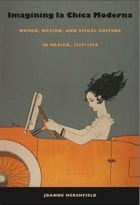
Imagining la Chica Moderna
Women, Nation, and Visual Culture in Mexico, 1917–1936Joanne Hershfield
Duke University Press, 2008
Through her detailed interpretations of visual representations of la chica moderna, Hershfield demonstrates how the images embodied popular ideas and anxieties about sexuality, work, motherhood, and feminine beauty, as well as class and ethnicity. Her analysis takes into account the influence of mexicanidad, the vision of Mexican national identity promoted by successive postrevolutionary administrations, and the fashions that arrived in Mexico from abroad, particularly from Paris, New York, and Hollywood. She considers how ideals of the modern housewife were promoted to Mexican women through visual culture; how working women were represented in illustrated periodicals and in the Mexican cinema; and how images of traditional “types” of Mexican women, such as la china poblana (the rural woman), came to define a “domestic exotic” form of modern femininity. Scrutinizing photographs of Mexican women that accompanied articles in the Mexican press during the 1920s and 1930s, Hershfield reflects on the ways that the real and the imagined came together in the production of la chica moderna.
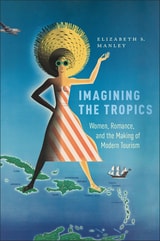
Imagining the Tropics
Women, Romance, and the Making of Modern TourismElizabeth S. Manley
Rutgers University Press, 2025

Imperial Plots
Women, Land, and the Spadework of British Colonialism on the Canadian PrairiesSarah Carter
University of Manitoba Press, 2016

Improper Advances
Rape and Heterosexual Conflict in Ontario, 1880-1929Karen Dubinsky
University of Chicago Press, 1993
Karen Dubinsky relies on criminal case files, a revealing but largely untapped source for social historians, to retell individual stories of sexual danger—crimes such as rape, abortion, seduction, murder, and infanticide. Her research supports many feminist analyses of sexual violence: that crimes are expressions of power, that courts are prejudiced by the victim's background, and that most assaults occur within the victims' homes and communities.
Dubinsky distinguishes herself from most feminist scholars, however, by refusing to view women solely as victims and sex as a tool of oppression. She finds that these women actively sought and took pleasure in sexuality, but they distinguished between wanted and unwanted sexual encounters and attempted to punish coercive sex despite obstacles in the court system and the community.
Confronting a number of key theoretical and historiographic controversies, including recent debates over sexuality in feminist theory and politics, she challenges current thinking on the history of women, gender, and sexuality.
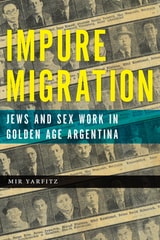
Impure Migration
Jews and Sex Work in Golden Age ArgentinaMir Yarfitz
Rutgers University Press, 2019
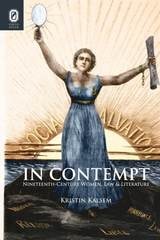
In Contempt
Nineteenth-Century Women, Law, and LiteratureKristin Kalsem
The Ohio State University Press, 2012
In Contempt: Nineteenth-Century Women, Law, and Literature, by Kristin Kalsem, explores the legal advocacy performed by nineteenth-century women writers in publications of nonfiction and fiction, as well as in real-life courtrooms and in the legal forum provided by the novel form.

In Defense of Women
A Bilingual EditionPompeo Colonna
Iter Press, 2024
Pompeo Colonna’s In Defense of Women (1530), presented in this volume in Latin and English translation, is one of several important defenses of women composed in the fifteenth and sixteenth centuries by male advocates of women’s moral and intellectual worth. Known as a cardinal and a warrior, but also as an active participant in sixteenth-century Italian literary circles, Colonna addresses the work to his cousin Vittoria Colonna, the most renowned Italian woman poet of the era, who, he writes, had urged him to undertake it. His Defense not only refutes arguments of women’s inferiority and incapacity but, remarkably, asserts their ability to hold political office and govern. It contains original Latin text and a critical introduction by Franco Minonzio. It also features a foreword by Margaret L. King, as well as a postscript by King, tracing the separate male-authored and female-authored Renaissance defenses of women.
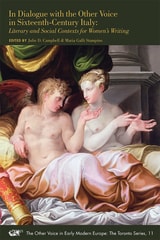
In Dialogue with the Other Voice in Sixteenth-century Italy
Literary and Social Contexts for Women's WritingEdited by Julie D. Campbell and Maria Galli Stampino
Iter Press, 2011
—Elissa Weaver
Professor of Italian, Emerita, University of Chicago
In Idi Amin’s Shadow
Women, Gender, and Militarism in UgandaAlicia C. Decker
Ohio University Press, 2014
Finalist for the 2015 Aidoo-Snyder Prize
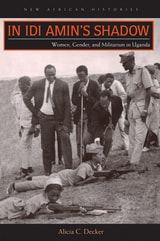
In Idi Amin’s Shadow is a rich social history examining Ugandan women’s complex and sometimes paradoxical relationship to Amin’s military state. Based on more than one hundred interviews with women who survived the regime, as well as a wide range of primary sources, this book reveals how the violence of Amin’s militarism resulted in both opportunities and challenges for women. Some assumed positions of political power or became successful entrepreneurs, while others endured sexual assault or experienced the trauma of watching their brothers, husbands, or sons “disappeared” by the state’s security forces. In Idi Amin’s Shadow considers the crucial ways that gender informed and was informed by the ideology and practice of militarism in this period. By exploring this relationship, Alicia C. Decker offers a nuanced interpretation of Amin’s Uganda and the lives of the women who experienced and survived its violence.
Each chapter begins with the story of one woman whose experience illuminates some larger theme of the book. In this way, it becomes clear that the politics of military rule were highly relevant to women and gender relations, just as the politics of gender were central to militarism. By drawing upon critical security studies, feminist studies, and violence studies, Decker demonstrates that Amin’s dictatorship was far more complex and his rule much more strategic than most observers have ever imagined.

In Love with Jerzy Kosinski
A NovelAgate Nesaule
University of Wisconsin Press, 2009
After fleeing Latvia as a child, Anna Duja escapes Russian confinement in displaced persons camps and eventually arrives in America. Years later, she finds herself in a different kind of captivity on isolated Cloudy Lake, Wisconsin, living with her disarming but manipulative husband, Stanley.
Inspired by the transformation of Polish-Jewish émigré Jerzy Kosinski from persecuted wartime escapee to celebrity author in America, Anna slips away from Stanley and Cloudy Lake in small steps: learning to drive, making friends, moving to Madison, falling in love, and learning to forgive. Readers will applaud the book’s power, the beauty of its prose, and its strong evocation of a woman gradually finding her way in the wake of trauma.
Winner, the Chancellor’s Regional Literary Award, University of Wisconsin-Whitewater

In Pursuit of a Useful Science
The Life of Ellen Swallow RichardsSerenity Sutherland
University of Massachusetts Press, 2027
Recovering the life of a woman who believed science could and should change the world
In May 1921, Marie Curie stood at Carnegie Hall and accepted a prize named for a woman she had never met. Ellen Swallow Richards had been dead for ten years, but her network of college-educated women had raised $2,000 to fund Curie’s research into the medical uses of radium. In Pursuit of a Useful Science offers a richly layered biography of Richards: the first woman to study and teach at MIT—a pioneer of nutrition science, water chemistry, sanitation, and what would now be called science communication.
At the heart of this book is Richards’s defining conviction that science should be useful—applied to the everyday problems of real people, from baking bread to safe drinking water to the management of sewage—and communicated clearly to the public. She tested nutrition science in a public kitchen, researched sewage treatment at a physical water treatment plant, and proved that women could study science without threat to their health at MIT’s Woman’s Laboratory. She published over one hundred works for public audiences, organized exhibits and lectures, and at the end of her life gathered her wide-ranging work into one of the first scientifically informed calls to protect the natural environment.
As Serenity Sutherland shows, Richards grappled with the gap between scientific authority and everyday practice, even as she rarely confronted how her own assumptions shaped the knowledge she advanced. Drawing on extensive archival sources, this study situates Richards within the expanding role of women in science and the rising cultural authority of scientific expertise in American life.

In Search of Susanna
Suzanne L. Bunkers
University of Iowa Press, 1996
On a summer day in 1980 in Niederfeulen, Luxembourg, Suzanne Bunkers pored over parish records of her maternal ancestors, immigrants to the rural American Midwest in the mid 1800s. Suddenly, chance led her to the name Simmerl and to the missing piece in the genealogical puzzle that had brought her so far: Susanna Simmerl, Bunkers' paternal great-great-grandmother, who had given birth to an illegitimate daughter in 1856 before coming to America. Finding Susanna was the catalyst for Bunkers' intensely personal book, which blends history, memory, and imagination into a drama of two women's lives within their multigenerational family.
In Tender Consideration
Women, Families, and the Law in Abraham Lincoln's IllinoisEdited by Daniel W. Stowell
University of Illinois Press, 2002
Drawing on the rich resources of The Law Practice of Abraham Lincoln: Complete Documentary Edition, a DVD version of Lincoln's complete legal papers, In Tender Consideration scans the full range of family woes that antebellum Americans took to the law. Deserted wives, destitute widows, jilted brides with illegitimate children, and slandered women brought their cases before the courts, often receiving a surprising degree of sympathy and support.
Through the stories of dozens of individuals who took legal action to obtain a divorce, contest a will, prosecute a rapist, or assert rights to family property, this volume illuminates the legal status of women and children in Illinois and their experiences with the law in action. Contributors document how the courts viewed children and how they responded to inheritance, custody, and other types of cases involving children or their interests. These cases also highlight Lincoln's life in law, placing him more clearly within the context of the legal culture in which he lived and raising intriguing questions about the influence of his legal life on his subsequent political one.
In an Angry Season
Lisa D. Chávez
University of Arizona Press, 2001
A white woman navigates her fear and uncertainty to learn the ways of the people she called savages, until she begins to dream “in Dakota, syllables sliding / on my tongue like tender pieces of meat.” An African man, on display as a cannibal at the World’s Columbian Exposition in 1893, sees into the future: “humiliations heaped up / as on overfilled plates . . . / . . . a country that casually / consumes its own.” A woman holds the gray-blue barrel of a gun in her mouth, “the taste familiar / as her own blood.”
With an unexcelled command of narrative verse, Lisa Chávez tells the stories of American lives across more than a century. Whether retelling nineteenth-century captivity narratives or depicting contemporary American women confronting addiction and despair, Chávez investigates issues of identity and self-definition in the face of an often harsh and unremitting history.
Her story-poems explore the ways in which people have been made captive—whether to racism or national policy, to bad marriages or alcoholism, to poverty or emotion—from the Inuit woman birthing a son among strangers to the wife now deranged by desire for another man: “He’s the smoky slow-burn of chipotle on the tongue. My golden idol. My gospel revival. He’s hashish sweet and languorous—my body’s one desire.”
In the end, Chávez shows us a New World of promise in which an alchemist’s assistant summons stories from stones by calling their names with “clicks of her tongue, / syllables of silver, turquoise, and jade,” and a Native woman discovers her true power in an Alaskan bar. Passionate and political, In an Angry Season is a work of startling depth and breadth—an American history in poetry—that asks us what it means to be civilized.

In the Charge of a Woman
Harriet Tenney, Michigan’s First Female State LibrarianValerie R. Marvin
Michigan State University Press, 2027
In 1869, at a moment when women were largely barred from public life and professional opportunities, Harriet Tenney stepped into Michigan’s State Capitol and made history. As the first woman to hold a full-time position in the State of Michigan’s government, she spent the next twenty-two years reshaping not only Michigan’s libraries, but the nation’s understanding of what women could achieve in public service.
Appointed and reappointed by seven governors from both political parties, Tenney built one of the country’s most respected state libraries. She dramatically expanded its collections, established professional standards that became models for libraries across the country, and mentored a generation of women librarians who followed in her path. She also founded Michigan’s first state museum, ensuring that historical artifacts, portraits, and documents would be preserved for future generations; today, tens of thousands of people each year visit and study the objects she collected and curated.
Tenney’s impact radiated far beyond the Capitol. Under her leadership, the state librarianship itself became recognized as a “woman’s position”—a remarkable shift in an era when women's work remained largely invisible. In Lansing, she founded the Woman’s Club as well as the Lansing Library and Literary Association, which evolved into the Capital Area District Library system.
In the Charge of a Woman not only tells the story of Tenney’s achievements in expanding the role of women in the workforce; it also illuminates domestic and political life in nineteenth-century Michigan, revealing how one woman navigated, and transformed, a world built to exclude her.
In the Crossfire of History
Women's War Resistance Discourse in the Global SouthLava Asaad
Rutgers University Press, 2022
The transformative mode of these examples expands the definition of heroism and defiance. To prevent these types of heroism from slipping into the abyss of history, this collection brings forth and celebrates women’s fortitude in conflict zones. In the Crossfire of History shines a light onwomen across the globe who are resisting the sociopolitical and economic injustices in their nation-states.

In the Event of Women
Tani Barlow
Duke University Press, 2021
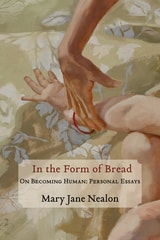
In the Form of Bread
On Becoming HumanMary Jane Nealon
Four Way Books, 2026
In this collection of vignettes—heartbreaking and often humorous—Nealon explores caregiving as both sacred practice and human risk.
She looks back to her relationship with a father devastated by the early death of her brother; to tending men—some with AIDS, some drunk, some sober—living in Bowery flophouses; to confronting racism; to the quiet instruction of a dog who teaches attention by gazing back.
The essays ask what price we pay when we offer ourselves wholeheartedly to one another, and what it means to remain open to being more than human in a fractured world.
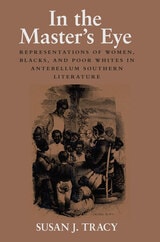
In the Master's Eye
Representations of Women, Blacks, and Poor Whites in Antebellum Southern LiteratureSusan J. Tracy
University of Massachusetts Press, 1995
This book explores the way in which literature can be used to reinforce social power. Through rigorous readings of a series of antebellum plantation novels, Susan J. Tracy shows how the narrative strategies employed by proslavery Southern writers served to justify and perpetuate the oppression of women, blacks, and poor whites.
Tracy focuses on the historical romances of six authors: George Tucker, James Ewell Heath, William Alexander Caruthers, John Pendleton Kennedy, Nathaniel Beverley Tucker, and William Gilmore Simms. Using variations on a recurring plot—in which a young planter/hero rescues a planter's daughter from an “enemy” of her class—each of these novelists reinforced an idealized vision of a Southern civilization based on male superiority, white supremacy, and class inequality. It is a world in which white men are represented as the natural leaders of loyal and dependent women, grateful and docile slaves, and inferior poor whites. According to Tracy, the interweaving of these themes reveals the extent to which the Southern defense of slavery in the years leading up to the Civil War was an argument not only about race relations but about gender and class relations as well.

In the Shadow of Jane Addams
Hull-House and Planning in a Working-Class NeighborhoodAnn Durkin Keating and Rima Lunin Schultz
University of Illinois Press, 2027
The authors focus on five plans proposed between 1889 and 1961 by Hull-House, the US government, the Chicago Plan Commission, residents, and finally the 1961 University of Illinois plan that destroyed the existing neighborhood. Proposals often expected residents to leave while eliminating the diversity of people, industries, and businesses in favor of the homogeneity favored by the middle and upper classes. At the same time, other plans tried but failed to improve the Near West Side’s inadequate housing, environmental conditions, and poor access to social services. Keating and Schultz also show how the definition of urban planning changed over time and how it impacted ideas for the neighborhood.
Detailed and perceptive, In the Shadow of Jane Addams explores how power, policy, and local voices shaped urban neighborhoods in Chicago and across the United States.

In the Solitude of My Soul
The Diary of Genevieve Breton, 1867-1871James Smith Allen
Southern Illinois University Press, 1994
Originally published to glowing reviews and literary prizes in France in 1985, this revealing diary not only recounts the moving and tragic relationship of its author, Geneviève Bréton, with the rising young nineteenth-century artist Henri Regnault, it also serves as a valuable historical document concerning the social, cultural, and political life of the French Second Empire.
The young Geneviève Bréton began her journal in 1867 as a consolation for the death of her eldest brother, Antoine. She met Regnault soon after on a trip to Rome. Throughout the next four years of their relationship, Bréton eloquently describes the personal, cultural, and political turbulence that affected her life. Writing against the backdrop of France’s fateful conflict with Prussia and the hardships and dangers of the siege of Paris and the Commune, Bréton, with innate candor and lyricism, creates a text that beautifully illuminates French art, literature, family life, society, and politics of the time. Her poignant account of her love for and engagement to Regnault reveals special insight into the life and mind of an extraordinary, though little known, literary talent. At Regnault’s death in 1871 during the Franco–Prussian War, the expression of her anguish is as much testimony to the political and cultural disorder of the time as it is to her own personal tragedy.
Following Bréton’s own instructions that she left before her death in 1918, this English version of the diary reincorporates material that was deleted from the French edition. Graced by rare photographs of the Bréton family as well as Regnault’s paintings, the book contains a touching foreword by the author’s granddaughter, Daphné Doublet-Vaudoyer. In its first English translation, it is a book for lovers of French life and culture, as well as students of French history; literature, and art.
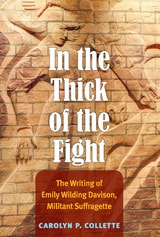
In the Thick of the Fight
The Writing of Emily Wilding Davison, Militant SuffragetteCarolyn P. Collette
University of Michigan Press, 2013
One of the most memorable images of the British women’s suffrage movement occurred on June 4, Derby Day, 1913. As the field of horses approached a turning at Epsom, militant suffragette Emily Wilding Davison ducked out from under the railing and ran onto the track, reaching for the bridle of the King’s horse, and was killed in the collision. While her death transformed her into a heroine, it all but erased her identity. To identify what impelled Davison to suffer multiple imprisonments, to experience the torture of force-feedings and the insults of hostile members of the crowds who came to hear her speak, Carolyn P. Collette explores a largely ignored source—the writing to which Davison dedicated so much time and effort during the years from 1908 to 1913. Davison’s writing is an implicit apologia for why she lived the life of a militant suffragette and where she continually revisits and restates the principles that guided her: that woman suffrage was necessary to improve the lives of men, women, and children; that the freedom and justice women sought was sanctioned by God and unjustly withheld by humans whose opposition constituted a tyranny that had to be opposed; and that the evolution of human progress demanded that women become fully equal citizens of their nation in every respect— politically, economically, and culturally.
In the Thick of the Fight makes available for the first time the archive of published and unpublished writings of Emily Wilding Davison. Collette reorients both scholarly and public attention away from a single, defining event to the complexity of Davison’s contributions to modern feminist discourse, giving the reader a sense of the vibrancy and diversity of Davison’s suffrage writings.
Indicators of Trends in the Status of American Women
Abbott Lamoyne Ferriss
Russell Sage Foundation, 1971

Infinite Variety
The Life and Legend of the Marchesa CasatiScot D. Ryersson
University of Minnesota Press, 2004

Ingrid Jonker
Poet under ApartheidLouise Viljoen
Ohio University Press, 2012
Nelson Mandela brought the poetry of Ingrid Jonker to the attention of South Africa and the wider world when he read her poem “Die kind” (The Child) at the opening of South Africa’s first democratic parliament on May 24, 1994. Though Jonker was already a significant figure in South African literary circles, Mandela’s reference contributed to a revival of interest in Jonker and her work that continues to this day.
Viljoen’s biography illuminates the brief and dramatic life of Jonker, who created a literary oeuvre—as searing in its intensity as it is brief—before taking her own life at the age of thirty-one. Jonker wrote against a background of escalating apartheid laws, violent repression of black political activists, and the banning of the African National Congress and the Pan Africanist Congress. Viljoen tells the story of Ingrid Jonker in the political and cultural context of her time, provides sensitive insights into her poetry, and considers the reasons for the enduring fascination with her life and death.
Her writings, her association with bohemian literary circles, and her identification with the oppressed brought her into conflict with her father, a politician in the white ruling party, and with other authority figures from her Afrikaner background. Her life and work demonstrate the difficulty and importance of artistic endeavor in a place of terrible conflict.
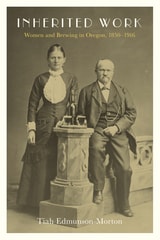
Inherited Work
Women and Brewing in Oregon, 1850–1916Tiah Edmunson-Morton
Oregon State University Press, 2027
Following the stories of twenty women connected to Oregon breweries before Prohibition, Inherited Work recognizes the overlooked contributions of the women who inherited, managed, and navigated Oregon’s brewing industry. At a time when recordkeeping and historical memory obscured their authority, these women were negotiating debt, managing workers, protecting property, arranging sales, supporting family wealth, and making strategic decisions about the future of their businesses.
Drawing on census records, probate files, property records, newspapers, court documents, and oral histories, Tiah Edmunson-Morton traces the legal and economic landscape of the time, demonstrating the conditions and decisions these women faced in managing their personal lives and livelihoods. From widows like Victoria Bauerlin, Johanna Behrens, and Mary Meller—who inherited not only property but also the financial terms that shaped what they could do next—to the matriarch of a brewing dynasty, Louisa Weinhard, Inherited Work reveals how their influence endured.
Today, women can be found throughout the industry as brewers and owners, as well as chemists, restaurant managers, bookkeepers, educators, graphic designers, and hop brokers. While their roles are more visible than they once were, the history of women in brewing remains incomplete. Who were these women? What did it mean to be part of the brewing industry at the turn of the century? And what changes when we bring their stories into the history of brewing?
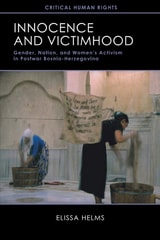
Innocence and Victimhood
Gender, Nation, and Women’s Activism in Postwar Bosnia-HerzegovinaElissa Helms
University of Wisconsin Press, 2013
Innovative Women Poets
An Anthology of Contemporary Poetry and InterviewsElisabeth A. Frost
University of Iowa Press, 2007

Insane Sisters
Or, the Price Paid for Challenging a Company TownGregg Andrews
University of Missouri Press, 2020
Insane Sisters is the extraordinary tale of two sisters, Mary Alice Heinbach and Euphemia B. Koller, and their seventeen- year property dispute against the nation's leading cement corporation—the Atlas Portland Cement Company.
In 1903, Atlas built a plant on the border of the small community of Ilasco, located just outside Hannibal—home of the infamous cave popularized in Mark Twain's most acclaimed novels. The rich and powerful Atlas quickly appointed itself as caretaker of Twain's heritage and sought to take control of Ilasco. However, its authority was challenged in 1910 when Heinbach inherited her husband's tract of land that formed much of the unincorporated town site. On grounds that Heinbach's husband had been in the advanced stages of alcoholism when she married him the year before, some of Ilasco's political leaders and others who had ties to Atlas challenged the will, charging Heinbach with undue influence.
To help fight against the local lawyers and politicians who wanted Atlas to own the land, Heinbach enlisted the help of her shrewd and combative sister, Euphemia Koller, by making her co-owner of the tract. In a complex case that went to the Missouri Supreme Court four times, the sisters fiercely sought to hang on to the tract. However, in 1921 the county probate court imposed a guardianship over Heinbach and a circuit judge ordered a sheriff's sale of the property. After Atlas purchased the tract, Koller waged a lonely battle to overturn the sale and expose the political conspiracies that had led to Ilasco's conversion into a company town. Her efforts ultimately resulted in her court- ordered confinement in 1927 to Missouri's State Hospital Number One for the Insane, where she remained until her death at age sixty-eight.
Insane Sisters traces the dire consequences the sisters suffered and provides a fascinating look at how the intersection of gender, class, and law shaped the history and politics of Ilasco. The book also sheds valuable new light on the wider consolidation of corporate capitalism and the use of guardianships and insanity to punish unconventional women in the early twentieth century.
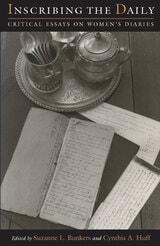
Inscribing the Daily
Critical Essays on Women's DiariesSuzanne L. Bunkers
University of Massachusetts Press, 1996

Inside Agitators
Australian Femocrats and the StateHester Eisenstein
Temple University Press, 1996
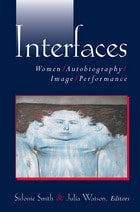
Interfaces
Women, Autobiography, Image, PerformanceSidonie Smith and Julia Watson, Editors
University of Michigan Press, 2002
Editors Sidonie Smith and Julia Watson have been at the vanguard of the study of women's self-representation, and here have collected leading critics' and scholars' thoughts on artistic fusions of the visual and autobiographical. Marianne Hirsch, Linda Hutcheon, Linda Kauffman, Nellie McKay, Marjorie Perloff, Lee Quinby, and the other contributors offer new insights into the work of such artists as Laurie Anderson, Judy Chicago, Frida Kahlo, Orlan, and Cindy Sherman. From a painter's diary to a performance artist's ritualized enactments of kitchen domesticity, the many narratives of the self arising from these artists' negotiations of the visual and textual prove to be goldmines for analysis.
Art historians, artists, critics, literary scholars in women's studies, and anyone interested in the forms and implications of depicting the self will enjoy this richly illustrated collection.
Sidonie Smith is Professor of English, University of Michigan. Julia Watson is Associate Professor of Comparative Studies, The Ohio State University. They also edited Reading Autobiography: A Guide for Interpreting Life Narratives and Women, Autobiography, Theory: A Reader.
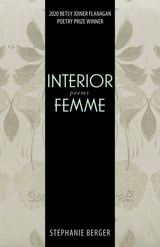
Interior Femme
PoemsStephanie Berger
University of Nevada Press, 2022
The poems offer layered perspectives fused with multiple versions of female representation, as if to underscore the burden of responsibility, inherited shame, and awesome power that comes with the position women have occupied throughout history. Berger reveals a woman critically wounded—representing the totality of the Western feminine imaginary. Lyrically complex, sometimes surreal, and often ekphrastic in style and content, Interior Femme simultaneously offers heartbreak, laughter, comfort, and empowerment.