Results by title
27 books match the query 'Discourses'

Biographies in the Global South
Life Stories Embedded in Figurations and DiscoursesEdited by Gabriele Rosenthal and Artur Bogner
Campus Verlag, 2017
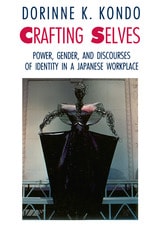
Crafting Selves
Power, Gender, and Discourses of Identity in a Japanese WorkplaceDorinne K. Kondo
University of Chicago Press, 1990
"Kondo's work is significant because she goes beyond disharmony, insisting on complexity. Kondo shows that inequalities are not simply oppressive-they are meaningful ways to establish identities."—Nancy Rosenberger, Journal of Asian Studies

Defining Dominion
The Discourses of Magic and Witchcraft in Early Modern France and GermanyGerhild Scholz Williams
University of Michigan Press, 1999
". . . Williams has done an exemplary job of analyzing the intersection of the discourses of magic (as related to women and witchcraft), discovery, and religious diversity/dissidence to explain how the confluence of these discourses eventually 'determined who occupied society's center and who was forced to move to, or remain at, its margins.' . . . Gerhild Scholz Williams is no dilettante grazing in the greener pastures of other disciplines. She has been laboring assiduously in these neighboring fields for years now, and it is breathtaking to see how all of her disparate projects have come together so elegantly articulated in this one volume." --Susan L. Cocalis, German Studies Review
Gerhild Scholz Williams is Professor of German and Comparative Literature, Washington University, St. Louis.
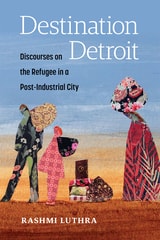
Destination Detroit
Discourses on the Refugee in a Post-Industrial CityRashmi Luthra
University of Michigan Press, 2024
Few U.S. locations provide a more vivid case study of this fight than Metro Detroit, where competing interest groups are waging war over the meaning of the figure of the refugee. This book dives deeply into the discourse on refugees occurring among various institutions in Metro Detroit. The way in which local institutions talk about refugees gives us vital clues as to how they are negotiating competing pressures and how the city overall is negotiating competing imperatives. Indeed, this local discourse gives us a crucial glimpse into how U.S. cities are defining and redefining themselves today. The figure of the refugee becomes a slate on which groups with varied interests write their stories, aspirations, and fears. Consequently, we can figure out from local refugee discourses the ongoing question of what it means to be a Metro Detroiter—and by extension, what it means to be a revitalizing U.S. city in this age.

Dimensions of Property in Reproductive Economies
Practices, Structures, and DiscoursesEdited by Irina Herb, Stefanie Graefe, and Susanne Lettow
Campus Verlag, 2024
Besides reshaping human generativity, reproductive technologies such as IVF, egg donation, and surrogacy give rise to whole new value-creation systems and forms of ownership of the human body. The project is designed as a philosophical and sociological dual project with the aim of exploring discursive, institutional, and subjective processes of doing property in transnational economies of reproduction. It focuses, on the one hand, on bioethical problems surrounding ownership of the human body and, on the other hand, on patterns of interpretation and practices employed by various players in the context of the transnational propertization of human ova in Germany and Spain.
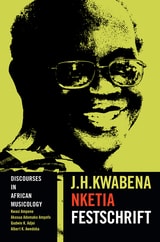
Discourses in African Musicology
J.H. Kwabena Nketia FestschriftKwasi Ampene, Akosua Adomako Ampofo, Godwin K. Adjei, Albert K. Awedoba
Michigan Publishing Services, 2015
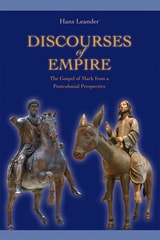
Discourses of Empire
The Gospel of Mark from a Postcolonial PerspectiveHans Leander
SBL Press, 2013
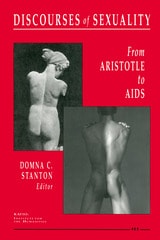
Discourses of Sexuality
From Aristotle to AIDSDonna C. Stanton, Editor
University of Michigan Press, 1993
Discourses of Weakness and Resource Regimes
Trajectories of a New Research ProgramEdited by Iwo Amelung, Hartmut Leppin and Christian A. Müller
Campus Verlag, 2018
Discourses of Weakness in Modern China
Historical Diagnoses of the "Sick Man of East Asia"Edited by Iwo Amelung
Campus Verlag, 2018
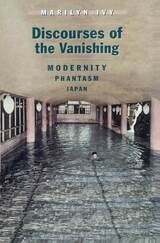
Discourses of the Vanishing
Modernity, Phantasm, JapanMarilyn Ivy
University of Chicago Press, 1995
Ivy shows how a fascination with cultural margins accompanied the emergence of Japan as a modern nation-state. This fascination culminated in the early twentieth-century establishment of Japanese folklore studies and its attempts to record the spectral, sometimes violent, narratives of those margins. She then traces the obsession with the vanishing through a range of contemporary reconfigurations: efforts by remote communities to promote themselves as nostalgic sites of authenticity, storytelling practices as signs of premodern presence, mass travel campaigns, recallings of the dead by blind mediums, and itinerant, kabuki-inspired populist theater.
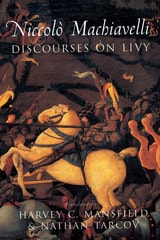
Discourses on Livy
Niccolò Machiavelli
University of Chicago Press, 1998
"[Machiavelli] found in Livy the means to inspire scholars for five centuries. Within the Discourses, often hidden and sometimes unintended by their author, lie the seeds of modern political thought. . . . [Mansfield and Tarcov's] translation is careful and idiomatic."—Peter Stothard, The Times
"Translated with painstaking accuracy—but also great readability."—Weekly Standard
"A model of contemporary scholarship and a brave effort at Machiavelli translation that allows the great Florentine to speak in his own voice."—Choice
Discourses on Livy
Niccolò Machiavelli
University of Chicago Press, 1996
"[Machiavelli] found in Livy the means to inspire scholars for five centuries. Within the Discourses, often hidden and sometimes unintended by their author, lie the seeds of modern political thought. . . . [Mansfield and Tarcov's] translation is careful and idiomatic."—Peter Stothard, The Times
"Translated with painstaking accuracy—but also great readability."—Weekly Standard
"A model of contemporary scholarship and a brave effort at Machiavelli translation that allows the great Florentine to speak in his own voice."—Choice
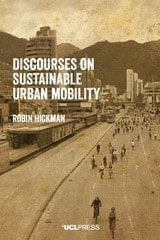
Discourses on Sustainable Urban Mobility
Robin Hickman
University College London, 2025
From reducing car dependency and expanding EVs to promoting public transport, sustainable mobility has been a hot topic in urban planning and the transportation sector. Arriving at this timely moment, Discourses on Sustainable Urban Mobility challenges the dominant discourses of motorization and the ineffective implementation of sustainable mobility. It argues that transport planning history is not merely a record of successful projects but a reflection of how transport has been provided, including who and what has been included or excluded. Using discourse analysis, the book examines physical transport infrastructure against the socially constructed realities in transport planning across a variety of international case studies, including Oxford, Bogotá, Chongqing, Rio de Janeiro, Copenhagen, and Delhi. In each case, the discursive frameworks surrounding transport and urban planning point toward promising pathways for achieving greater sustainability in transportation.

German Literature on the Middle East
Discourses and Practices, 1000-1989Nina Berman
University of Michigan Press, 2013
German Literature on the Middle East explores the dynamic between German-speaking and Middle Eastern states and empires from the time of the Crusades to the end of the Cold War. This insightful study illuminates the complex relationships among literary and other writings on the one hand, and economic, social, and political processes and material dimensions on the other. Focusing on German-language literary and nonfiction writings about the Middle East (including historical documents, religious literature, travel writing, essays, and scholarship), Nina Berman evaluates the multiple layers of meaning contained in these works by emphasizing the importance of culture contact; a wide web of political, economic, and social practices; and material dimensions as indispensible factors for the interpretive process.
This analysis of literary and related writing reveals that German views about the Middle East evolved over the centuries and that various forms of action toward the Middle East differed substantially as well. Ideas about religion, culture, race, humanism, nation, and modernity, which emerged successively but remain operative to this day, have fashioned Germany's changed attitudes toward the Middle East. Exploring the interplay between textual discourses and social, political, and economic practices and materiality, German Literature on the Middle East offers insights that challenge accepted approaches to the study of literature, particularly approaches that insist on the centrality of the linguistic construction of the world. In addition, Berman presents evidence that the German encounter with the Middle East is at once distinct and yet at the same time characterized by patterns shared with other European countries. By addressing the individual nature of the German encounter in the larger European context, this study fills a considerable gap in current scholarship.
The interdisciplinary approach of German Literature on the Middle East will be of interest to the humanities in general, and specifically to scholars of German studies, comparative literature, Middle Eastern studies, and history.
Nina Berman is Professor of Comparative Studies at The Ohio State University.
Jacket image: Map of Europe by Giovanni Magini, from his “Geography.” Venice, [1598]. From the University of Michigan Map Library.
Political Map of the World, April 2008. From the University of Texas Perry-Castañeda Library, Map Collection.
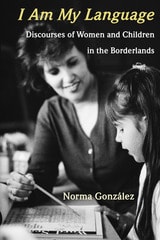
I Am My Language
Discourses of Women and Children in the BorderlandsNorma González
University of Arizona Press, 2001
“I am my language,” says the poet Gloria Anzaldúa, because language is at the heart of who we are. But what happens when a person has more than one language? Is there an overlay of language on identity, and do we shift identities as we shift languages? More important, what identities do children construct for themselves when they use different languages in particular ways?
In this book, Norma González uses language as a window on the multiple levels of identity construction in children—as well as on the complexities of life in the borderlands—to explore language practices and discourse patterns of Mexican-origin mothers and the language socialization of their children. She shows how the unique discourses that result from the interplay of two cultures shape perceptions of self and community, and how they influence the ways in which children learn and families engage with their children’s schools.
González demonstrates that the physical presence of the border profoundly affects the practices and ideologies of Mexican-origin women and children. She then argues that language and cultural background should be used as a basis for building academic competencies, and she demonstrates why the evocative/emotive dimension of language should play a major part in studies of discourse, language socialization, and language ideology.
Drawing on women’s own narratives of their experiences as both mothers and borderland residents, I Am My Language is firmly rooted in the words of common people in their everyday lives. It combines personal odyssey with cutting-edge ethnographic research, allowing us to hear voices that have been muted in the academic and public policy discussions of “what it means to be Latina/o” and showing us new ways to connect language to complex issues of education, political economy, and social identity.

Jazz Among the Discourses
Krin Gabbard
Duke University Press, 1995
Challenging "official jazz histories," the contributors to this volume view jazz through the lenses of comparative literature; African American studies; music, film, and communication theory; English literature; American studies; history; and philosophy. With uncommon rigor and imagination, their essays probe the influence of various discourses—journalism, scholarship, politics, oral history, and entertainment—on writing about jazz. Employing modes of criticism and theory that have transformed study in the humanities, they address questions seldom if ever raised in jazz writing: What are the implications of building jazz history around the medium of the phonograph record? Why did jazz writers first make the claim that jazz is an art? How is an African American aesthetic articulated through the music? What are the consequences of the interaction between the critic and the jazz artist? How does the improvising artist navigate between chaos and discipline?
Along with its companion volume, Representing Jazz, this versatile anthology marks the arrival of jazz studies as a mature, intellectually independent discipline. Its rethinking of conventional jazz discourse will further strengthen the position of jazz studies within the academy.
Contributors. John Corbett, Steven B. Elworth, Krin Gabbard, Bernard Gendron, William Howland Kenney, Eric Lott, Nathaniel Mackey, Burton Peretti, Ronald M. Radano, Jed Rasula, Lorenzo Thomas, Robert Walser

Machiavelli's New Modes and Orders
A Study of the Discourses on LivyHarvey C. Mansfield
University of Chicago Press, 2001
Mansfield's aim is to discern Machiavelli's intention in writing the book: he argues that Machiavelli wanted to introduce new modes and orders in political philosophy in order to make himself the founder of modern politics. Mansfield maintains that Machiavelli deliberately concealed part of his intentions so that only the most perceptive reader could see beneath the surface of the text and understand the whole of his book. Previously out of print, Mansfield's penetrating study brings to light the hidden thoughts lurking in the details of the Discourses on Livy to inform and challenge its readers at every step along the way.
Mediating the South Korean Other
Representations and Discourses of Difference in the Post/Neocolonial Nation-StateDavid C. Oh, Editor
University of Michigan Press, 2022
This collection brings together leading and emerging scholars of multiculturalism in Korean media culture to examine mediated constructions of the “other,” taking into account the nation’s postcolonial and neocolonial relationships and its mediated construction of self. “Anthrocategorism ,” a more nuanced translation of injongchabyeol, is proffered as a new framework for understanding difference in ways that are locally meaningful in a society and media system in which racial or even ethnic differences are not the most salient. The collection points to the construction of racial others that elevates, tolerates, and incorporates difference; the construction of valued and devalued ethnic others, and the ambivalent construction of co-ethnic others as sympathetic victims or marginalized threats.
On the East-West Slope
Globalization, Nationalism, Racism and Discourses on Eastern EuropeAttila Melegh
Central European University Press, 2006
Pronouncing and Persevering
Gender and the Discourses of Disputing in an African Islamic CourtSusan F. Hirsch
University of Chicago Press, 1998
Pronouncing and Persevering focuses closely on the language used in disputes, particularly how men and women narrate their claims and how their speech shapes and is shaped by gender hierarchy in postcolonial Swahili society. Based on field research and court testimony, Hirsch's book debunks the conventional view that women are powerless under Islamic law and challenges the dichotomies through which Islam and gender relations are currently understood.
Rereading the Black Legend
The Discourses of Religious and Racial Difference in the Renaissance EmpiresEdited by Margaret R. Greer, Walter D. Mignolo, and Maureen Quilligan
University of Chicago Press, 2008
A distinguished group of contributors here examine early modern imperialisms including the Ottomans in Eastern Europe, the Portuguese in East India, and the cases of Mughal India and China, to historicize the charge of unique Spanish brutality in encounters with indigenous peoples during the Age of Exploration. The geographic reach and linguistic breadth of this ambitious collection will make it a valuable resource for any discussion of race, national identity, and religious belief in the European Renaissance.

Rewriting the Renaissance
The Discourses of Sexual Difference in Early Modern EuropeEdited by Margaret W. Ferguson, Maureen Quilligan, and Nancy Vickers
University of Chicago Press, 1986
Throughout, the essays focus on the structures of Renaissance patriarchy that organized power relations both in the state and in the family. They explore the major conequences of patriarchy for women—their marginalization and lack of identity and power—and the ways in which individual women or groups of women broke, or in some cases deliberately circumvented, the rules that defined them as a secondary sex. Topics covered include representations of women in literature and art, the actual work done by women both inside and outside of the home, and the writings of women themselves. In analyzing the rhetorical strategies that "marginalized" historical and fictional women, these essays counter scholarly and critical traditions that continue to exhibit patriarchal biases.

Sweet Reason
Rhetoric and the Discourses of ModernitySusan Wells
University of Chicago Press, 1996
Susan Wells is associate professor of English at Temple University.
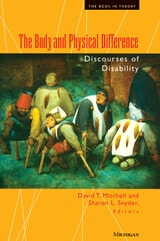
The Body and Physical Difference
Discourses of DisabilityDavid T. Mitchell and Sharon L. Snyder, Editors
University of Michigan Press, 1997
The book provides a provocative range of topics and perspectives: the absence of physical "otherness" in Ancient Greece, the depiction of the female invalid in Victorian literature, the production of tragic innocence in British and American telethons, the reconstruction of Civil War amputees, and disability as the aesthetic basis for definitions of expendable life within the modern eugenics movement. With this new, secure anchoring in the humanities, disability studies now emerges as a significant strain in contemporary theories of identity and social marginality.
Moving beyond the oversimplication that disabled people are marginalized and made invisible by able-ist assumptions and practices, the contributors demonstrate that representation is founded upon the perpetual exhibition of human anomalies. In this sense, all art can be said to migrate toward the "freakish" and the "grotesque." Such a project paradoxically makes disability the exception and the rule of the desire to represent that which has been traditionally out-of-bounds in polite discourse.
The Body and Physical Difference has relevance across a wide range of academic specialties such as cultural studies, the sociology of medicine, history, literature and medicine, the allied health professions, rehabilitation, aesthetics, philosophical discourses of the body, literary and film studies, and narrative theory.
David T. Mitchell is Assistant Professor of English, Northern Michigan University. Sharon L. Snyder teaches film and literature at Northern Michigan University.
The Complete Works
Handbook, Discourses, and FragmentsEpictetus
University of Chicago Press, 2022
“Some things are up to us and some are not.”
Epictetus was born into slavery around the year 50 CE, and, upon being granted his freedom, he set himself up as a philosophy teacher. After being expelled from Rome, he spent the rest of his life living and teaching in Greece. He is now considered the most important exponent of Stoicism, and his surviving work comprises a series of impassioned discourses, delivered live and recorded by his student Arrian, and the Handbook, Arrian’s own take on the heart of Epictetus’s teaching.
In Discourses, Epictetus argues that happiness depends on knowing what is in our power to affect and what is not. Our internal states and our responses to events are up to us, but the events themselves are assigned to us by the benevolent deity, and we should treat them—along with our bodies, possessions, and families—as matters of indifference, simply making the best use of them we can. Together, the Discourses and Handbook constitute a practical guide to moral self-improvement, as Epictetus explains the work and exercises aspirants need to do to enrich and deepen their lives. Edited and translated by renowned scholar Robin Waterfield, this book collects the complete works of Epictetus, bringing to modern readers his insights on how to cope with death, exile, the people around us, the whims of the emperor, fear, illness, and much more.
CUSTOMER NOTE: THE HARDCOVER IS FOR LIBRARIES AND HAS NO JACKET.
The Discourses of Science
Marcello Pera
University of Chicago Press, 1994
Pera begins with an attack of what he calls the "Cartesian syndrome"—the fixation on method common to both defenders of traditional philosophy of science and its detractors. He argues that in assuming the primacy of methodological rules, both sides get it wrong. Scientific knowledge is neither the simple mirror of nature nor a cultural construct imposed by contingent interests, thus we must replace the idea of scientific method with that of scientific rhetoric.
Pera proposes a new dialectics of science to overcome the tension between normative and descriptive philosophies of science by focusing on the rhetoric in the proposition, defense, and argumentation of theories. Examining the uses of rhetoric in debates drawn from Galileo's Dialogues, Darwin's Origins, and the Big Bang-Steady State controversy in cosmology, Pera shows how the conduct of science involves not just nature and the inquiring mind, but nature, the inquiring mind, and a questioning community which, through the process of attack, defense, and dispute, determines what is science. Rhetoric, then, is an essential element in the constitution of science as the practice of persuasive argumentation through which results gain acceptance.