Results by title
22279 books match the query 'Social Science' and 851 start with i
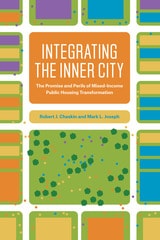
Integrating the Inner City
The Promise and Perils of Mixed-Income Public Housing TransformationRobert J. Chaskin and Mark L. Joseph
University of Chicago Press, 2015
In the most thorough examination of mixed-income public housing redevelopment to date, Robert J. Chaskin and Mark L. Joseph draw on five years of field research, in-depth interviews, and volumes of data to demonstrate that while considerable progress has been made in transforming the complexes physically, the integrationist goals of the policy have not been met. They provide a highly textured investigation into what it takes to design, finance, build, and populate a mixed-income development, and they illuminate the many challenges and limitations of the policy as a solution to urban poverty. Timely and relevant, Chaskin and Joseph’s findings raise concerns about the increased privatization of housing for the poor while providing a wide range of recommendations for a better way forward.

Integrating the Rural World
Economy, Society and Politics in Central and South-Eastern Europe, 1848-1939Sorin Radu
Central European University Press, 2026

Integrative Approaches in Ceramic Petrography
Edited by Mary Ownby, Isabelle Druc, and Maria Masucci
University of Utah Press, 2016
Ceramic petrography, a microscopic examination of the mineral content and structure within ceramic thin sections, reveals the origin and movement of pottery and sheds light on the technology of the artifact. Practiced by archaeologists since the 1930s, ceramic petrography was less commonly practiced until recently. Integrative Approaches in Ceramic Petrography highlights new results from this field and incorporates it prominently within current archaeological work.
Thirteen papers cover a broad spectrum of regional and temporal contexts with case studies that provide practical examples combining petrography with scientific, ethnographic, and experimental methods. The varied uses of ceramic petrography and the insights it has generated, illustrate the significance of this method for understanding past societies and the volume’s conclusion provides an astute overview of the field.

Integrity in Public Life
Vernon White, Claire Foster-Gilbert, and Jane Sinclair
Haus Publishing, 2019

Intellectual Commons and the Law
A Normative Theory for Commons-Based Peer ProductionAntonios Broumas
University of Westminster Press, 2020
‘With clarity and sophistication, Antonios Broumas presents a bold new theory of intellectual commons and powerful arguments for a new body of supportive law. This book not only reveals the misleading logic of intellectual property law in our time; it reveals the rich possibilities for constructive change that legally protected commoning can bring. Highly recommended!’ — David Bollier, Director, Reinventing the Commons Program, Schumacher Center for a New Economics.
‘Liberating the Intellectual Commons from the fetters of capital accumulation and appropriation, would give us a renaissance of creative energies and empowered communities: exactly what the world needs to move away from the social and ecological devastations of our times. This book is a thoughtful and compelling argument for making this possible through the works of the law and the redesign of public domain as a common space.’ — Massimo De Angelis, Professor of Political Economy and Social Change, Co-director of the Centre for Social Justice and Change, University of East London.
‘In this pioneering book, Antonios Broumas argues that philosophically, morally, politically and economically we are in urgent need of a new legal regime that recognizes the intellectual commons, peer production and sharing as the primary practices of intellectual production, distribution and consumption. I cannot imagine a more urgent task today. A legally protected intellectual commons will lead to greater scientific and cultural innovation and creativity and will lead to an urgently needed second Enlightenment. This book should be read by lawyers, critical theorists, economists and the many professionals of science, culture and the academy.’ — Costas Douzinas, Professor of Law, Birkbeck, University of London.
‘Antonios Broumas’ book is an excellent critical analysis of the cultural commons and a must-read for everyone interested in understanding what the commons, the cultural commons, and the digital commons are all about. This work brilliantly outlines the foundations of an empirically grounded critical theory of the commons and the cultural commons in the context of the interactions of law and society.’ — Christian Fuchs, Professor of Media and Communication Studies, author of Communication and Capitalism: A Critical Theory (2020).
‘Broumas takes us on a spellbinding tour of how and why the law could and should change to accommodate the creative multitude, which engages into an emerging mode of production. He tells a vibrant story that makes us shout: “Lawmakers of the world, unite!”’ — Vasilis Kostakis, Professor of P2P Governance, Tallinn University of Technology, Faculty Associate at Harvard Law School.
At the cutting edge of contemporary wealth creation people form self-governed communities of collaborative innovation in conditions of relative equipotency and produce resources with free access to all. The emergent intellectual commons have the potential to commonify intellectual production and distribution, unleash human creativity through collaboration and democratise innovation with wider positive effects for our societies. Contemporary intellectual property laws fail to address this potential. We are, therefore, in pressing need of an institutional alternative beyond the inherent limitations of intellectual property law. This book offers an overall analysis of the moral significance of the intellectual commons and outlines appropriate modes for their regulation. Its principal thesis is that our legal systems are in need of an independent body of law for the protection and promotion of the intellectual commons, in parallel to intellectual property law. In this context, the author of the book proposes the reconstruction of the doctrine of the public domain and the exceptions and limitations of exclusive intellectual property rights into an intellectual commons law, which will underpin a vibrant non-commercial zone of creativity and innovation in intellectual production, distribution and consumption alongside commodity markets enabled by intellectual property law.
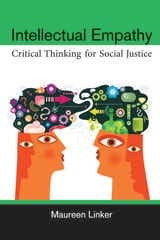
Intellectual Empathy
Critical Thinking for Social JusticeMaureen Linker
University of Michigan Press, 2014
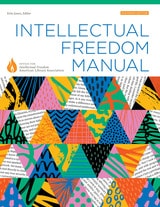
Intellectual Freedom Manual, Eleventh Edition
Erin Office for Intellectual Freedom
American Library Association, 2026
When someone faces a difficult intellectual freedom (IF) issue, they usually don’t have time to wade through dense text to find the answers they need. Designed as a real-world reference, OIF’s Intellectual Freedom Manual provides trusted, comprehensive guidance for every library worker, from the volunteer to the director, in plain language. Whether you’re developing or reviewing policies, on-boarding new staff or trustees, responding to challenges and controversies, or studying librarianship, you’ll find this a vital tool, with features such as
- contributions that center the voices of Black, Indigenous, and other People of Color (BIPOC) and LGBTQIA+ people, who are often targeted by censorship efforts;
- chapters that begin with an overview explaining the big ideas and offering reflection questions;
- an introduction to IF and why it matters, drawing on ALA's core IF documents and supported with adaptable policy worksheets;
- information and best practice guidance on key topics such as access, children and youth, censorship and internet filtering, collection development and management, copyright, meeting rooms and exhibit spaces, library programming, politics and religion, privacy, and visits and requests from law enforcement;
- stories from real people whose lives have been impacted by IF, showing how library policies shape culture, protect staff and users, and affect real people;
- concise breakdowns of IF issues from legal experts, helping you understand the laws and how they apply in real situations;
- practical advice on advocating for IF, getting help when challenges arise, lobbying, and working with your elected officials;
- a thorough index to help you quickly find the information you need; and
- a helpful glossary and selected bibliography of additional resources.

Intellectual Life in America
A HistoryLewis Perry
University of Chicago Press, 1989
Looking at the changing reputation of the intellect itself, Perry examines many forms of anti-intellectualism, showing that some of these were encouraged by intellectuals as surely as by their antagonists. This work is interpretative, critical, and highly provocative, and it provides what is all too often missing in the study of intellectuals—a sense of historical orientation.
Intellectuals and the Articulation of the Nation
Ronald Grigor Suny and Michael D. Kennedy, Editors
University of Michigan Press, 1999
What kinds of intellectual practices are influential in the making and remaking of nations? How do literary texts shape nation-making? When are intellectuals most and least relevant to developing the nation? How do liberal, socialist, and nationalist intellectuals shape national ideologies? One of the principal debates in the study of nations concerns the relative significance of elites, specifically intellectuals, in inventing the nation. Intellectuals and the Articulation of the Nation delimits the capacities of intellectuals for shaping nations, as well as the ways in which the development of nations shapes intellectual practices. The introductory chapter presents the principal debates around nation-making and the identity and practices of intellectuals. Contributors from anthropology, history, literature, political science and sociology then explore the capacities and limits of intellectuals in the formation and restructuring of national identities in general, and in Eastern Europe and the former Soviet Union in particular. Each essay is followed by a brief intellectual autobiography in which the author's own relationship to nations is explored. The editors conclude the volume by developing a general theory of national intellectual practice. The principal focus of this book—the mutual articulation of intellectuals and nations—is a key subject for students and scholars of history, cultural studies, political science, anthropology, and sociology.
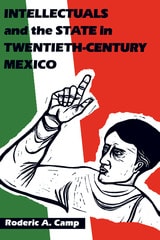
Intellectuals and the State in Twentieth-Century Mexico
By Roderic A. Camp
University of Texas Press, 1986
In developing countries, the extent to which intellectuals disengage themselves in state activities has widespread consequences for the social, political, and economic development of those societies. Roderic Camps’ examination of intellectuals in Mexico is the first study of a Latin American country to detail the structure of intellectual life, rather than merely considering intellectual ideas. Camp has used original sources, including extensive interviews, to provide new data about the evolution of leading Mexican intellectuals and their relationship to politics and politicians since 1920.
Intelligent Action
A History of Artistic Research, Aesthetic Experience, and Artists in AcademiaTimothy Ridlen
Rutgers University Press, 2024
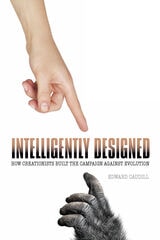
Intelligently Designed
How Creationists Built the Campaign against EvolutionEdward Caudill
University of Illinois Press, 2013

Intensive Care
Medical Ethics and the Medical ProfessionRobert Zussman
University of Chicago Press, 1992
His book is a portrait of the way careful planning is undermined by the unpredictability of illness and the persistence of self-interest, by high principle and curious compromise.
Inter/Nationalism
Decolonizing Native America and PalestineSteven Salaita
University of Minnesota Press, 2016
“The age of transnational humanities has arrived.” According to Steven Salaita, the seemingly disparate fields of Palestinian Studses and American Indian studies have more in common than one may think. In Inter/Nationalism, Salaita argues that American Indian and Indigenous studies must be more central to the scholarship and activism focusing on Palestine.
Salaita offers a fascinating inside account of the Boycott, Divestment, and Sanctions (BDS) movement—which, among other things, aims to end Israel’s occupation of Palestinian land. In doing so, he emphasizes BDS’s significant potential as an organizing entity as well as its importance in the creation of intellectual and political communities that put Natives and other colonized peoples such as Palestinians into conversation. His discussion includes readings of a wide range of Native poetry that invokes Palestine as a theme or symbol; the speeches of U.S. President Andrew Jackson and early Zionist thinker Ze’ev Jabotinsky; and the discourses of “shared values” between the United States and Israel.
Inter/Nationalism seeks to lay conceptual ground between American Indian and Indigenous studies and Palestinian studies through concepts of settler colonialism, indigeneity, and state violence. By establishing Palestine as an indigenous nation under colonial occupation, this book draws crucial connections between the scholarship and activism of Indigenous America and Palestine.
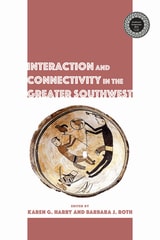
Interaction and Connectivity in the Greater Southwest
Karen Harry
University Press of Colorado, 2018
The book observes social interactions’ role in the diffusion of ideas and material culture; the way different social units, especially households, interacted within and between communities; and the importance of interaction and interconnectivity in understanding the archaeology of the Southwest’s northern periphery. Chapters demonstrate a movement away from strictly economic-driven models of social connectivity and interaction and illustrate that members of social groups lived in dynamic situations that did not always have clear-cut and unwavering boundaries. Social connectivity and interaction were often fluid, changing over time.
Interaction and Connectivity in the Greater Southwest is an impressive collection of established and up-and-coming Southwestern archaeologists collaborating to strengthen the theoretical underpinnings of the discipline. It will be of interest to professional and academic archaeologists, as well as researchers with interests in diffusion, identity, cultural transmission, borders, large-scale interaction, or social organization.
Contributors:
Richard V. N. Ahlstrom, James R. Allison, Jean H. Ballagh, Catherine M. Cameron, Richard Ciolek-Torello, John G. Douglass, Suzanne L. Eckert, Hayward H. Franklin, Patricia A. Gilman, Dennis A. Gilpin, William M. Graves, Kelley A. Hays-Gilpin, Lindsay D. Johansson, Eric Eugene Klucas, Phillip O. Leckman, Myles R. Miller, Barbara J. Mills, Matthew A. Peeples, David A. Phillips Jr., Katie Richards, Heidi Roberts, Thomas R. Rocek, Tammy Stone, Richard K. Talbot, Marc Thompson, David T. Unruh, John A. Ware, Kristina C. Wyckoff
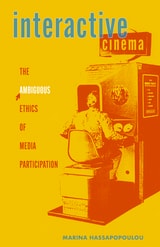
Interactive Cinema
The Ambiguous Ethics of Media ParticipationMarina Hassapopoulou
University of Minnesota Press, 2024
Connecting interactive cinema to media ethics and global citizenship
Interactive Cinema explores various cinematic practices that work to transform what is often seen as a primarily receptive activity into a participatory, multimedia experience. Surveying a multitude of unorthodox approaches throughout the history of motion pictures, Marina Hassapopoulou offers insight into a range of largely ephemeral and site-specific projects that consciously assimilate viewers into their production.
Analyzing examples of early cinema, Hollywood B movies, museum and gallery installations, virtual-reality experiments, and experimental web-based works, Hassapopoulou travels across numerous platforms, highlighting a diverse array of strategies that attempt to unsettle the allegedly passive spectatorship of traditional cinema. Through an exploration of these radically inventive approaches to the medium, many of which emerged out of sociopolitical crises and periods of historical transition, she works to expand notions of interactivity by considering it in both technological and phenomenological terms.
Deliberately revising and expanding Eurocentric scholarship to propose a much broader, transnational scope, the book emphasizes the ethical dimensions of interactive media and their links to larger considerations around community building, citizenship, and democracy. By combining cutting-edge theory with updated conventional film studies methodologies, Interactive Cinema presses at the conceptual limits of cinema and offers an essential road map to the rapidly evolving landscape of contemporary media.
Interactive Journalism
Hackers, Data, and CodeNikki Usher
University of Illinois Press, 2016
Nikki Usher brings together a comprehensive portrait of nothing less than a new journalistic identity. Usher provides a history of the impact of digital technology on reporting, photojournalism, graphics, and other disciplines that define interactive journalism. Her eyewitness study of the field's evolution and accomplishments ranges from the interactive creation of Al Jazeera English to the celebrated data desk at the Guardian to the New York Times' Pulitzer-endowed efforts in the new field. What emerges is an illuminating, richly reported profile of the people coding a revolution that may reverse the decline and fall of traditional journalism.

Intercollegiate Athletics and the American University
A University President's PerspectiveJames J. Duderstadt
University of Michigan Press, 2003
Intercultural Communication
A Practical GuideBy Tracy Novinger
University of Texas Press, 2001
Successfully communicating with people from another culture requires learning more than just their language. While fumbling a word or phrase may cause embarrassment, breaking the unspoken cultural rules that govern personal interactions can spell disaster for businesspeople, travelers, and indeed anyone who communicates across cultural boundaries. To help you avoid such damaging gaffes, Tracy Novinger has compiled this authoritative, practical guide for deciphering and following "the rules" that govern cultures, demonstrating how these rules apply to the communication issues that exist between the United States and Mexico.
Novinger begins by explaining how a major proportion of communication within a culture occurs nonverbally through behavior and manners, shared attitudes, common expectations, and so on. Then, using real-life examples and anecdotes, she pinpoints the commonly occurring obstacles to communication that can arise when cultures differ in their communication techniques. She shows how these obstacles come into play in contacts between the U.S. and Mexico and demonstrates that mastering the unspoken rules of Mexican culture is a key to cementing business and social relationships. Novinger concludes with nine effective, reliable principles for successfully communicating across cultures.
Intercultural Utopias
Public Intellectuals, Cultural Experimentation, and Ethnic Pluralism in ColombiaJoanne Rappaport
Duke University Press, 2005
Intercultural Utopias centers on southwestern Colombia’s Cauca region, a culturally and linguistically heterogeneous area well known for its history of indigenous mobilization and its pluralist approach to ethnic politics. Rappaport interweaves the stories of individuals with an analysis of the history of the Regional Indigenous Council of Cauca and other indigenous organizations. She presents insights into the movement and the intercultural relationships that characterize it from the varying perspectives of regional indigenous activists, nonindigenous urban intellectuals dedicated to the fight for indigenous rights, anthropologists, local teachers, shamans, and native politicians.
Interdisciplining Digital Humanities
Boundary Work in an Emerging FieldJulie Thompson Klein
University of Michigan Press, 2015

Interface Frictions
How Digital Debility Reshapes Our BodiesNeta Alexander
Duke University Press, 2025
Interfaces
Women, Autobiography, Image, PerformanceSidonie Smith and Julia Watson, Editors
University of Michigan Press, 2002
Editors Sidonie Smith and Julia Watson have been at the vanguard of the study of women's self-representation, and here have collected leading critics' and scholars' thoughts on artistic fusions of the visual and autobiographical. Marianne Hirsch, Linda Hutcheon, Linda Kauffman, Nellie McKay, Marjorie Perloff, Lee Quinby, and the other contributors offer new insights into the work of such artists as Laurie Anderson, Judy Chicago, Frida Kahlo, Orlan, and Cindy Sherman. From a painter's diary to a performance artist's ritualized enactments of kitchen domesticity, the many narratives of the self arising from these artists' negotiations of the visual and textual prove to be goldmines for analysis.
Art historians, artists, critics, literary scholars in women's studies, and anyone interested in the forms and implications of depicting the self will enjoy this richly illustrated collection.
Sidonie Smith is Professor of English, University of Michigan. Julia Watson is Associate Professor of Comparative Studies, The Ohio State University. They also edited Reading Autobiography: A Guide for Interpreting Life Narratives and Women, Autobiography, Theory: A Reader.

Interfaith Encounters in America
McCarthy, Kate
Rutgers University Press, 2007
From its most cosmopolitan urban centers to the rural Midwest, the United States is experiencing a rising tide of religious interest. While terrorist attacks keep Americans fixed on an abhorrent vision of militant Islam, popular films such as The Passion of the Christ and The Da Vinci Code make blockbuster material of the origins of Christianity. The 2004 presidential election, we are told, was decided on the basis of religiously driven moral values. A majority of Americans are reported to believe that religious differences are the biggest obstacle to world peace.
Beneath the superficial banter of the media and popular culture, however, are quieter conversations about what it means to be religious in America today—conversations among recent immigrants about how to adapt their practices to life in new land, conversations among young people who are finding new meaning in religions rejected by their parents, conversations among the religiously unaffiliated about eclectic new spiritualities encountered in magazines, book groups, or online. Interfaith Encounters in America takes a compelling look at these seldom acknowledged exchanges, showing how, despite their incompatibilities, Buddhist, Muslim, Christian, Jewish, and Hindu Americans, among others, are using their beliefs to commit to the values of a pluralistic society rather than to widen existing divisions.
Chapters survey the intellectual exchanges among scholars of philosophy, religion, and theology about how to make sense of conflicting claims, as well as the relevance and applicability of these ideas “on the ground” where real people with different religious identities intentionally unite for shared purposes that range from national public policy initiatives to small town community interfaith groups, from couples negotiating interfaith marriages to those exploring religious issues with strangers in online interfaith discussion groups.
Written in engaging and accessible prose, this book provides an important reassessment of the problems, values, and goals of contemporary religion in the United States. It is essential reading for scholars of religion, sociology, and American studies, as well as anyone who is concerned with the purported impossibility of religious pluralism.
Intergroup Dialogue
Deliberative Democracy in School, College, Community, and WorkplaceDavid Schoem and Sylvia Hurtado, Editors
University of Michigan Press, 2001
Intergroup Dialogue is the most comprehensive study of intergroup dialogue to date, showcasing twelve in-depth case studies, offering critical perspectives, and exploring the foundation of such dialogue in democratic theory. The case studies are drawn from leading American organizations offering intergroup dialogue, including the Anti-Defamation League and the National Conference for Community and Justice, as well as several major universities and consultants to corporate America. Each case study presents a particular program's rationale, its details, an account of its successes, and evaluation data.
The pieces collected by David Schoem and Sylvia Hurtado will be of interest to community leaders, teachers, human resources managers, student affairs deans, and intergroup dialogue practitioners in the United States and abroad; particularly as the 2024 presidential election draws near.
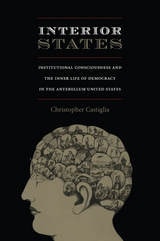
Interior States
Institutional Consciousness and the Inner Life of Democracy in the Antebellum United StatesChristopher Castiglia
Duke University Press, 2008
In the late eighteenth century and early nineteenth, as discourses of interiority gained prominence, so did powerful counter-narratives. Castiglia reveals the flamboyant pages of antebellum popular fiction to be an archive of unruly democratic aspirations. Through close readings of works by Maria Monk and George Lippard, Walt Whitman and Timothy Shay Arthur, Hannah Webster Foster and Hannah Crafts, and Nathaniel Hawthorne and Herman Melville, Castiglia highlights a refusal to be reformed or self-contained. In antebellum authors’ representations of nervousness, desire, appetite, fantasy, and imagination, he finds democratic strivings that refused to disappear. Taking inspiration from those writers and turning to the present, Castiglia advocates a humanism-without-humans that, denied the adjudicative power of interiority, promises to release democracy from its inner life and to return it to the public sphere where U.S. citizens may yet create unprecedented possibilities for social action.
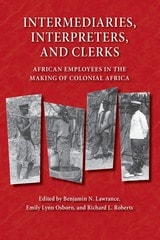
Intermediaries, Interpreters, and Clerks
African Employees in the Making of Colonial AfricaEdited by Benjamin N. Lawrance, Emily Lynn Osborn, and Richard L. Roberts
University of Wisconsin Press, 2006
By uncovering the role of such men (and a few women) in the construction, function, and legal apparatus of colonial states, the essays in this volume highlight a new perspective. They offer important insights on hegemony, collaboration, and resistance, structures and changes in colonial rule, the role of language and education, the production of knowledge and expertise in colonial settings, and the impact of colonization in dividing African societies by gender, race, status, and class.
Intermediate Elites in Pre-Columbian States and Empires
Edited by Christina M. Elson and R. Alan Covey
University of Arizona Press, 2006
This is the first volume to consider how individuals subordinate to imperial rulers helped to shape specific forms of state and imperial organization. Taking a broader scope than previous studies, it is one of the few works to systematically address these issues in both Mesoamerica and the Central Andes. It considers how these individuals influenced the long-term development of the largest civilizations of the ancient Americas, opening a new window on the role of intermediate elites in the rise and fall of ancient states and empires worldwide.
The authors demonstrate how such evidence as settlement patterns, architecture, decorative items, and burial patterns reflect the roles of intermediate elites in their respective societies, arguing that they were influential actors whose interests were highly significant in shaping the specific forms of state and imperial organization. Their emphasis on provincial elites particularly shifts examination of early states away from royal capitals and imperial courts, explaining how local elites and royal bureaucrats had significant impact on the development and organization of premodern states.
Together, these papers demonstrate that intricate networks of intermediate elites bound these ancient societies together—and that competition between individuals and groups contributed to their decline and eventual collapse. By addressing current theoretical concerns with agency, resistance to state domination, and the co-option of local leadership by imperial administrators, it offers valuable new insight into the utility of studying intermediate elites.
Intermediate Horizons
Book History and Digital HumanitiesEdited by Mark Vareschi and Heather Wacha
University of Wisconsin Press, 2024
Integrating intermedial practices and assessments, the editors and contributors explore issues surrounding the access to and materiality of digitized materials, and the challenge of balancing preservation of traditional archival materials with access. They offer an assessment in our present moment of the early visions of book history and DH projects. In revisiting these projects, they ask us to shift our thinking on the promises and perils of archival and creative work in different media. Taken together, this volume reconsiders the historical intersections of book history and DH and charts a path for future scholarship across disciplinary boundaries.

International Exposure
Perspectives on Modern European Pornography, 1800–2000Sigel, Lisa Z.
Rutgers University Press, 2005
International Exposure demonstrates the wealth of desires woven into the fabric of European history: desires about empire and nation, about self and other, about plenty and dearth. By documenting the diverse meanings of pornography, senior scholars from across disciplines show the ways that sexuality became central to the individual, to the nation, and to the transnational character of modern society.
The ten essays in the volume engage a rich array of topics, including obscenity in the German states, censorship in France’s Third Republic, “she-male” internet porn, the rise of incestuous longings in England, the place of the Hungarian video revolution in the global market, and the politics of pornography in Russia. Taken together, the essays illustrate the latest approaches to content, readership, form, and delivery in modern European pornography.
A substantial discussion of the broad history and state of the field complements the ten in-depth case studies that examine a wide range of sources from literature to magazines, video to the internet. By tackling the highbrow and lowdown of the pornographic form, this volume lays the groundwork for the next surge of studies in the field.
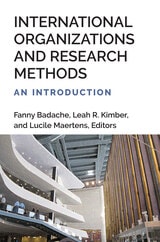
International Organizations and Research Methods
An IntroductionFanny Badache, Leah R. Kimber and Lucile Maertens, Editors
University of Michigan Press, 2023
Scholars have studied international organizations (IOs) in many disciplines, thus generating important theoretical developments. Yet a proper assessment and a broad discussion of the methods used to research these organizations are lacking. Which methods are being used to study IOs and in what ways? Do we need a specific methodology applied to the case of IOs? What are the concrete methodological challenges when doing research on IOs? International Organizations and Research Methods: An Introduction compiles an inventory of the methods developed in the study of IOs under the five headings of Observing, Interviewing, Documenting, Measuring, and Combining. It does not reconcile diverging views on the purpose and meaning of IO scholarship, but creates a space for scholars and students embedded in different academic traditions to reflect on methodological choices and the way they impact knowledge production on IOs.
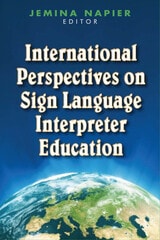
International Perspectives on Sign Language Interpreter Education
Jemina Napier
Gallaudet University Press, 2009
The Fourth Volume in the Interpreter Education Series
From the moment the World Association of Sign Language Interpreters (WASLI) was established in 2005, an overwhelming wave of requests from around the world arrived seeking information and resources for educating and training interpreters. This new collection provides those answers with an international overview on interpreter training from experts in Austria, Australia, Brazil, Canada, Fiji, Finland, Ireland, Japan, Kenya, Kosovo, the Netherlands, New Zealand, Scotland, Sweden, and the United States. Whether from income-rich or income-poor countries, the 31 contributors presented here provide insights on how sign language interpreter training has developed in each nation, and also how trainers have dealt with the difficulties that they encountered.
Many of the contributors relate the movement away from ad hoc short courses sponsored by Deaf communities. They mark the transition from the early struggles of trainers against the stigmatization of sign languages to full-time degree programs in institutions of higher education funded by their governments. Others investigate how culture, religion, politics, and legislation affect the nurturing of professional sign language interpreters, and they address the challenges of extending training opportunities nationally through the use of new technology. Together, these diverse perspectives offer a deeper understanding and comparison of interpreter training issues that could benefit the programs in every nation.
International Perspectives on Sign Language Translator and Interpreter Education
Jemina Napier
Gallaudet University Press, 2024
Each chapter, authored collaboratively by deaf and hearing educators, surveys general interpreter education and training, examines the status of the profession for both deaf and hearing practitioners, and addresses specific challenges faced within the different national frameworks. Contributors also discuss ongoing and future trends, including the impact of the Covid-19 pandemic on educational practices.
This volume disseminates extensive knowledge on sign language translator and interpreter education, covering established programs as well as ad hoc training, and highlighting effective teaching pedagogies and structured classroom strategies. Contributors emphasize a holistic approach to the field, integrating SLTI education, the current profession, future practitioners, and deaf communities. Although the state of the field varies widely around the world depending on the national context, this volume reveals a shared goal of advancing professional standards and improving the provision of service to deaf people worldwide.

International Surrogacy as Disruptive Industry in Southeast Asia
Whittaker, Andrea
Rutgers University Press, 2019
In International Surrogacy as Disruptive Industry in Southeast Asia, Andrea Whittaker traces the development of this industry and its movement across Southeast Asia following a sequence of governmental bans in India, Nepal, Thailand, and Cambodia. Through a case study of the industry in Thailand, the book offers a nuanced and sympathetic examination of the industry from the perspectives of the people involved in it: surrogates, intended parents, and facilitators. The industry offers intended parents the opportunity to form much desired families, but also creates vulnerabilities for all people involved. These vulnerabilities became evident in cases of trafficking, exploitation, and criminality that emerged in southeast Asia, leading to greater scrutiny on the industry as a whole. Yet the trade continues in new flexible hybrid forms, involving the circulation of reproductive gametes, embryos, surrogates, and ova donors across international borders to circumvent regulations. The book demonstrates the need for new forms of regulation to protect those involved in international surrogacy arrangements.

International Women Stage Directors
Edited by Anne Fliotsos and Wendy Vierow
University of Illinois Press, 2013
A fascinating study of women in the arts, International Women Stage Directors is a comprehensive examination of women directors in twenty-four diverse countries. Organized by country, chapters provide historical context and emphasize how social, political, religious, and economic factors have impacted women's rise in the theatre, particularly in terms of gender equity. Contributors tell the stories of their home country's pioneering women directors and profile the most influential women directors practicing today, examining their career paths, artistry, and major achievements.
Contributors are Ileana Azor, Dalia Basiouny, Kate Bredeson, Mirenka Cechová, Marié-Heleen Coetzee, May Farnsworth, Anne Fliotsos, Laura Ginters, Iris Hsin-chun Tuan, Maria Ignatieva, Adam J. Ledger, Roberta Levitow, Jiangyue Li, Lliane Loots, Diana Manole, Karin Maresh, Gordon McCall, Erin B. Mee, Ursula Neuerburg-Denzer, Claire Pamment, Magda Romanska, Avra Sidiropoulou, Margaretta Swigert-Gacheru, Alessandra Vannucci, Wendy Vierow, Vessela S. Warner, and Brenda Werth.
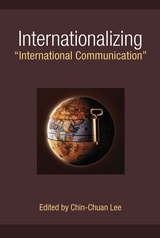
Internationalizing "International Communication"
Chin-Chuan Lee, editor
University of Michigan Press, 2015
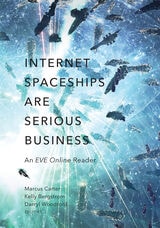
Internet Spaceships Are Serious Business
An EVE Online ReaderMarcus Carter
University of Minnesota Press, 2016
EVE Online is a socially complex, science-fiction-themed universe simulation and massively multiplayer online game (MMOG) first released in 2003. Notorious for its colossal battles and ruthless player culture, it has hundreds of thousands of players today. In this fascinating book, scholars, players, and EVE’s developer (CCP Games) examine the intricate world of EVEOnline--providing authentic accounts of lived experience within a game with more than a decade of history and millions of “real” dollars behind it.
Internet Spaceships Are Serious Business features contributions from outstanding EVE Online players, such as The Mittani, an infamous member of the game’s community, as well as academics from around the globe. They cover a wide range of subjects: the game’s technicalities and its difficulty; its projection of humanity’s future in space; the configuration of its unique, single-server game world; the global nature of warfare in its “nullsec” territory (and how EVE players have formed a global concept of time); stereotypes of Russian players; espionage play; in-game memorials to Vile Rat (aka U.S. State Department official Sean Smith, murdered in the 2012 Benghazi attack); its gendered playing experience; and CCP Games’ relationship with players; and its history and legacy.
Internet Spaceships Are Serious Business is a must for EVE Online players interested in a broad perspective on their all-consuming game. It is also accessible to scholars, game designers seeking to understand and replicate the successful aspects unique to EVE Online, and even those who have never played this notoriously complex game.
Contributors: William Sims Bainbridge, National Science Foundation; Chribba; Jedrzej Czarnota; Kjartan Pierre Emilsson; Dan Erdman; Rebecca Fraimow; Martin R. Gibbs, U of Melbourne; Catherine Goodfellow; Kathryn Gronsbell; Keith Harrison; Kristin MacDonough; Mantou (Zhang Yuzhou); Oskar Milik; The Mittani (Alexander Gianturco); Joji Mori; Richard Page; Christopher Paul, Seattle U; Erica Titkemeyer, U of North Carolina at Chapel Hill; Nick Webber, Birmingham City U.

Interplay of Things
Religion, Art, and Presence TogetherAnthony B. Pinn
Duke University Press, 2021
Interpretation and Social Knowledge
On the Use of Theory in the Human SciencesIsaac Ariail Reed
University of Chicago Press, 2011
Interpreting 2 Peter through African American Women’s Moral Writings
Shively T. J. Smith
SBL Press, 2023
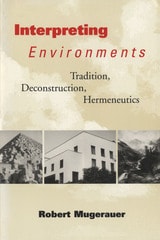
Interpreting Environments
Tradition, Deconstruction, HermeneuticsBy Robert Mugerauer
University of Texas Press, 1995
In this pioneering book, Robert Mugerauer seeks to make deconstruction and hermeneutics accessible to people in the environmental disciplines, including architecture, planning, urban studies, environmental studies, and cultural geography.
Mugerauer demonstrates each methodology through a case study. The first study uses the traditional approach to recover the meaning of Jung's and Wittgenstein's houses by analyzing their historical, intentional contexts. The second case study utilizes deconstruction to explore Egyptian, French neoclassical, and postmodern attempts to use pyramids to constitute a sense of lasting presence. And the third case study employs hermeneutics to reveal how the American understanding of the natural landscape has evolved from religious to secular to ecological since the nineteenth century.
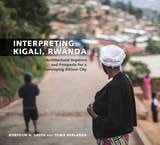
Interpreting Kigali, Rwanda
Architectural Inquiries and Prospects for a Developing African CityKorydon H. Smith
University of Arkansas Press, 2018
Interpreting Kigali, Rwanda explores the pressing challenges and opportunities to be found in planning, designing, and constructing a healthy, equitable, and sustainable city. Asking “what is an authentic-yet-modern, prosperous-yet-feasible African city, Rwandan city?” Smith, Berlanda, and colleagues conducted research on Rwandan activities of daily living and how these routines are connected to space-making practices and the Kinyarwanda terms that describe them.
Through a culturally informed view of urban and rural lifestyles and spaces, Interpreting Kigali, Rwanda presents principles and proposals for neighborhood development in the challenging context of Kigali’s informal settlements. With one billion people living in informal settlements worldwide, a number expected to double by 2030, the lessons learned in Rwanda provide a complex, fascinating, and urgent study for scholars and practitioners across disciplines and around the world.
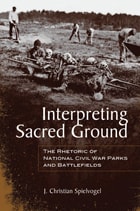
Interpreting Sacred Ground
The Rhetoric of National Civil War Parks and BattlefieldsJ. Christian Spielvogel
University of Alabama Press, 2013
A rhetorical analysis of Civil War battlefields and parks, and the ways various commemorative traditions—and their ideologies of race, reconciliation, emancipation, and masculinity—compete for dominance.
The National Park Service (NPS) is known for its role in the preservation of public sites deemed to have historic, cultural, and natural significance. In Interpreting Sacred Ground, J. Christian Spielvogel studies the NPS’s secondary role as an interpreter or creator of meaning at such sites, specifically Gettysburg National Military Park, Harpers Ferry National Historical Park, and Cold Harbor Visitor Center.
Spielvogel studies in detail the museums, films, publications, tours, signage, and other media at these sites, and he studies and analyzes how they shape the meanings that visitors are invited to construct. Though the NPS began developing interpretive exhibits in the 1990s that highlighted slavery and emancipation as central facets to understanding the war, Spielvogel argues that the NPS in some instances preserves outmoded narratives of white reconciliation and heroic masculinity, obscuring the race-related causes and consequences of the war as well as the war’s savagery.
The challenges the NPS faces in addressing these issues are many, from avoiding unbalanced criticism of either the Union or the Confederacy, to foregrounding race and violence as central issues, preserving clear and accurate renderingsof battlefield movements and strategies, and contending with the various public constituencies with their own interpretive stakes in the battle for public memory.
Spielvogel concludes by arguing for the National Park Service’s crucial role as a critical voice in shaping twentieth-first-century Civil War public memory and highlights the issues the agency faces as it strives to maintain historical integrity while contending with antiquated renderings of the past.

Interpreting and Experiencing Disney
Mediating the MouseEdited by Priscilla Hobbs
Intellect Books, 2022
It would be difficult to go through life without ever encountering a Disney product. Since the first Mickey Mouse cartoon premiered in 1928, Disney has played a central role in shaping American popular culture, and it has expanded to the global market. The company positioned itself as a titan of family entertainment, and many of its offerings, from films to consumable products, have become embedded in the minds of children and adults, woven into many of our life experiences. Fans of Disney build connections with their favorite characters and franchises, fueled by Disney’s marketing practices. Others have developed a near-cult-like relationship with the brand, equating its products with religious icons and theme park visits with pilgrimages.
This edited volume looks beyond the movies and merchandise to peer into the very heart of the Disney phenomenon: how the fan response drives the corporation’s massive marketing machine and how the corporate response, in turn, shapes the fan experience.
Interpreting in Legal Settings
Debra Russell
Gallaudet University Press, 2009
The work of interpreters in legal settings, whether they are spoken or signed language interpreters, is filled with enormous complexity and challenges. This engrossing volume presents six, data-based studies from both signed and spoken language interpreter researchers on a diverse range of topics, theoretical underpinnings, and research methodologies.
In the first chapter, Ruth Morris analyzes the 1987 trial of Ivan (John) Demjanjuk in Jerusalem, and reveals that what might appear to be ethical breaches often were no more than courtroom dynamics, such as noise and overlapping conversation. Waltraud Kolb and Franz Pöchhacker studied 14 asylum appeals in Austria and found that interpreters frequently aligned themselves with the adjudicators. Bente Jacobsen presents a case study of a Danish-English interpreter whose discourse practices expose her attempts to maintain, mitigate, or enhance face among the participants.
In the fourth chapter, Jemina Napier and David Spencer investigate the effectiveness of interpreting in an Australian courtroom to determine if deaf citizens should participate as jurors. Debra Russell analyzed the effectiveness of preparing sign language interpreter teams for trials in Canada and found mixed results. The final chapter presents Zubaidah Ibrahim-Bell’s research on the inadequate legal services in Malaysia due to the fact that only seven sign interpreters are available. Taken together, these studies point to a “coming of age” of the field of legal interpreting as a research discipline, making Interpreting in Legal Settings an invaluable, one-of-a-kind acquisition.
Interpreting the Self
Two Hundred Years of American AutobiographyDiane Bjorklund
University of Chicago Press, 1998
"A refreshingly welcome approach to this intriguing topic. . . . [Bjorklund's] extensive and systematic approach to her source material is impressive and enriches our understanding of this essential subject."—Virginia Quarterly Review
"Bjorklund studies both famous and obscure writers, and her clear prose style and copious quotations provide insight into the many aspects of the changing American self." —Library Journal
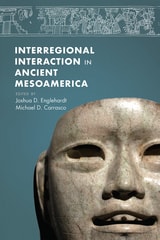
Interregional Interaction in Ancient Mesoamerica
Joshua Englehardt
University Press of Colorado, 2019
Archaeologists have long recognized the crucial role of interregional interaction in the development and cultural dynamics of ancient societies, particularly in terms of the evolution of sociocultural complexity and economic systems. Recent research has further expanded the archaeological, art historical, ethnographic, and epigraphic records in Mesoamerica, permitting a critical reassessment of the complex relationship between interaction and cultural dynamics. This volume builds on and amplifies earlier research to examine sociocultural phenomena—including movement, migration, symbolic exchange, and material interaction—in their role as catalysts for variability in cultural systems.
Interregional cultural exchange in pre-Columbian Mesoamerica played a key role in the creation of systems of shared ideologies, the production of regional or “international” artistic and architectural styles, shifting sociopolitical patterns, and changes in cultural practices and meanings. Interregional Interaction in Ancient Mesoamerica highlights, engages with, and provokes questions pertinent to understanding the complex relationship between interaction, sociocultural processes, and cultural innovation and change in the ancient societies and cultural histories of Mesoamerica and will be of interest to archaeologists, linguists, and art historians.
Contributors: Philip J. Arnold III, Lourdes Budar, José Luis Punzo Diaz, Gary Feinman, David Freidel, Elizabeth Jiménez Garcia, Guy David Hepp, Kerry M. Hull, Timothy J. Knab, Charles L. F. Knight, Blanca E. Maldonado, Joyce Marcus, Jesper Nielsen, John M. D. Pohl, Iván Rivera, D. Bryan Schaeffer, Niklas Schulze
Interrogating Postfeminism
Gender and the Politics of Popular CultureYvonne Tasker and Diane Negra, eds.
Duke University Press, 2007
Essays by feminist film, media, and literature scholars based in the United States and United Kingdom provide an array of perspectives on the social and political implications of post-feminism. Examining magazines, mainstream and independent cinema, popular music, and broadcast genres from primetime drama to reality television, contributors consider how postfeminism informs self-fashioning through makeovers and cosmetic surgery, the “metrosexual” male, the “black chick flick,” and more. Interrogating Postfeminism demonstrates not only the viability of, but also the necessity for, a powerful feminist critique of contemporary popular culture.
Contributors. Sarah Banet-Weiser, Steven Cohan, Lisa Coulthard, Anna Feigenbaum, Suzanne Leonard, Angela McRobbie, Diane Negra, Sarah Projansky, Martin Roberts, Hannah E. Sanders, Kimberly Springer, Yvonne Tasker, Sadie Wearing
Interrogating the Future of Puerto Rican Studies
Aurora Santiago Ortiz and Jorell A. Meléndez-Badillo, editors
Duke University Press, 2026
Contributors. José Atiles, Bárbara Abadía Rexach, Yarimar Bonilla, daniela crespo-miró, Marie Cruz Soto, Yomaira Figueroa-Vásquez, Marcela Guerrero, Gustavo García López, Mónica Jiménez, Lawrence LaFountain Stokes, Marisol LeBrón, Pedro Lebrón Ortiz, Beatriz Llenín Figueroa, Jorell Meléndez-Badillo, Sarah Molinari, Marisel Moreno, Daniel Nevárez Araújo, Aurora Santiago Ortiz, Karrieann Soto Vega, Daniel Vázquez Sanabria, Roberto Vélez-Vélez, Joaquín Villanueva, Jacqueline Villarrubia-Mendoza
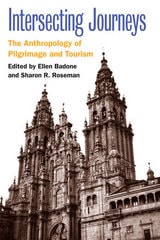
Intersecting Journeys
The Anthropology of Pilgrimage and TourismEdited by Ellen Badone and Sharon R. Roseman
University of Illinois Press, 2004