Results by title
28167 books match the query 'History' and 997 start with i
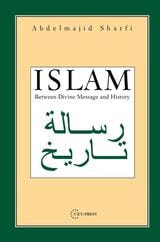
Islam
Between Divine Message and HistoryAbdelmajid Sharfi
Central European University Press, 2005

Islam
Origin and BeliefBy Emory C. Bogle
University of Texas Press, 1998
Islam is the fastest-growing religion in the world today. An understanding of its beliefs and practices has become essential knowledge not only for religious and political leaders but also for ordinary citizens who increasingly interact with Muslims as neighbors, coworkers, and schoolmates.
This book is designed to offer the general public a concise overview of the origins, basic beliefs, and common practices of Islam, as well as the reasons for its dramatic resurgence in recent times. Emory Bogle details the life mission of the prophet Muhammad and describes the spread of Islam after his death. He accounts for the rise and contemporary influence of Shi'i Islam, a topic of particular interest to Western readers. Bogle also explains the basic beliefs ("The Five Pillars") of Islam, as well as the role played by the Qur'an (Islam's scriptures), the hadith (the words and behavior of Muhammad), and the shari'a (Islamic law).
Islamic Africa 1.1
Muhammad Sani Umar
Northwestern University Press, 2010
Islamic Africa promotes interaction between scholars of Islam and Africa across all continents and across historical periods. We welcome papers on any aspect of Islam and Muslim life pertaining to Africa and/or Africans from the humanities and the social sciences, especially those originating from the African continent.
Islamic Africa 1.2
Muhammad Sani Umar
Northwestern University Press, 2010
Islamic Africa promotes interaction between scholars of Islam and Africa across all continents and across historical periods. We welcome papers on any aspect of Islam and Muslim life pertaining to Africa and/or Africans from the humanities and the social sciences, especially those originating from the African continent.
Islamic Africa 2.1
Muhammad S. Umar
Northwestern University Press, 2011
Islamic Africa promotes interaction between scholars of Islam and Africa across all continents and across historical periods. We welcome papers on any aspect of Islam and Muslim life pertaining to Africa and/or Africans from the humanities and the social sciences, especially those originating from the African continent.
Islamic Africa 2.2
Muhammad Sani Umar
Northwestern University Press, 2011
Islamic Africa promotes interaction between scholars of Islam and Africa across all continents and across historical periods. We welcome papers on any aspect of Islam and Muslim life pertaining to Africa and/or Africans from the humanities and the social sciences, especially those originating from the African continent.
Islamic Africa 3.1
Muhammad Sani Umar
Northwestern University Press, 2012
Islamic Africa promotes interaction between scholars of Islam and Africa across all continents and across historical periods. We welcome papers on any aspect of Islam and Muslim life pertaining to Africa and/or Africans from the humanities and the social sciences, especially those originating from the African continent.
Islamic Africa 3.2
Scott Reese
Northwestern University Press, 2012
Islamic Africa promotes interaction between scholars of Islam and Africa across all continents and across historical periods. We welcome papers on any aspect of Islam and Muslim life pertaining to Africa and/or Africans from the humanities and the social sciences, especially those originating from the African continent.
Islamic Africa 4.1
Scott Reese
Northwestern University Press, 2013
Islamic Africa promotes interaction between scholars of Islam and Africa across all continents and across historical periods. We welcome papers on any aspect of Islam and Muslim life pertaining to Africa and/or Africans from the humanities and the social sciences, especially those originating from the African continent.
Islamic Africa Electronic Journal
Volume 4, Issue 1 Spring 2013
Islamic Africa 4.2
Scott Reese
Northwestern University Press, 2013
Islamic Africa promotes interaction between scholars of Islam and Africa across all continents and across historical periods. We welcome papers on any aspect of Islam and Muslim life pertaining to Africa and/or Africans from the humanities and the social sciences, especially those originating from the African continent.
Islamic Legal Orthodoxy
Devin J Stewart
University of Utah Press, 2007
One of the most far-reaching developments in the history of Islam was the rise of the four classic Sunni schools of law between the ninth and eleventh centuries CE. Consolidation of these schools went hand in hand with the establishment of jurists’ dominance over religious discourse and social institutions. Orthodoxy came to be defined as the consensus (ijma’) of the Sunni jurists. Devin Stewart argues that it is to the margins of the emerging system that investigators must look to understand its historical dynamics. The development of Twelve Shi’ite jurisprudence in relation and reaction to the Sunni schools is particularly informative.
In Islamic Legal Orthodoxy, Stewart explores the process by which Shi’ite jurists participated in the mainstream of Islamic jurisprudence and were influenced by Sunni legal doctrines. He identifies three main reactions to Sunni legal definitions of othodoxy and the concept of consensus on which it was based. The Akhbaris rejected Sunni legal consensus and juristic authority for a scripture-based system; many Shi’ite outwardly accepted the ground rules of Sunni legal consensus and joined the Shafi’i school of jurisprudence; a third option was to adopt the concept of consensus to create a “fifth,” Shi’ite, legal system.
The development of the Sunni legal system effectively set the ground rules for the marginal sect’s negotiation of their identity with respect to Islamic legal orthodoxy. Accordingly, Shi’ite jurists developed a legal institution that is structurally similar to the four Sunni madhhabs and even today serves as means to position themselves in the Muslim world. Stewart points to an underlying tension in Shi’ite intellectual history between assimilationist and nativist impulses in the debate over consensus, dissmulation (taqiyyah) and the lives of certain Shi’ite scholars who lived and studies among Sunnis.
Islamic Liberalism
A Critique of Development IdeologiesLeonard Binder
University of Chicago Press, 1988
The Islamic political community presents special problems to the development of an indigenous liberalism. That community is conceived of as divinely ordained, and its notions of the good are to be derived from scriptural revelation, not arrived at through rational discourse. Liberal politics would seem to stand little chance of surviving in such an atmosphere, let alone thriving.
Binder responds to the challenge of Edward Said's critique of Orientalism, of a range of neo-Marxian development theorists, of Sayyid Qutb's fundamentalist vision, of Samir Amin's vision of Egypt's role in the Arab awakening, of Tariq al-Bishri's new populism, of Zaki Najib Mahmud's pragmatism, and the structuralism of Arkoun and Laroui. The deconstruction of these varied texts produces a number of persuasive hermeneutical conclusions that are sequentially woven together in a critical argument that refocuses our attention on the central question of political freedom and democracy. In the course of constructing this argument, Binder reopens the dialogue between Western modernity and Islamic authenticity and reveals the surprising extent to which there is a convergent interest in liberal, democratic, civil society. Finally, in a concluding chapter, he addresses the prospects for liberalism in the three major bourgeois states of Islam—Egypt, Turkey, and Iran.
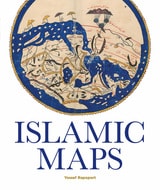
Islamic Maps
Yossef Rapoport
Bodleian Library Publishing, 2019
Islamic Maps examines Islamic visual interpretations of the world in their historical context through the map-makers themselves. What was the purpose of their maps, what choices did they make, and what arguments about the world were they trying to convey? Lavishly illustrated with stunning manuscripts, beautiful instruments, and Qibla charts, this book shows how maps constructed by Muslim map-makers capture the many dimensions of Islamic civilization across the centuries.
Islamic Modernism, Nationalism, and Fundamentalism
Episode and DiscourseMansoor Moaddel
University of Chicago Press, 2005
An ambitious comparative historical analysis of ideological production in the Islamic world from the mid-1800s to the present, Mansoor Moaddel's Islamic Modernism, Nationalism, and Fundamentalism provides a unique perspective for understanding the social conditions of these discourses. Moaddel characterizes these movements in terms of a sequence of cultural episodes characterized by ideological debates and religious disputations, each ending with a revolution or military coup. Understanding how the leaders of these movements formulated their discourses is, for Moaddel, the key to understanding Middle Eastern history. This premise allows him to unlock for readers the historical process that started with Islamic modernism and ended with fundamentalism.
Islamic Reform and Political Change in Northern Nigeria
Roman Loimeier
Northwestern University Press, 2011
Loimeier's careful scholarship combines astute readings of the work of previous scholars--both published and unpublished--with archival material and the findings of his own fieldwork in Nigeria. His work fills a substantial gap in contemporary Nigerian studies. This book provides invaluable and essential reading for serious students of Nigerian politics and of Islamic movements in Africa.
Islamic Spain, 1250 to 1500
L. P. Harvey
University of Chicago Press, 1990
"Harvey not only examines the politics of the Nasrids, but also the Islamic communities in the Christian kingdoms of the peninsula. This innovative approach breaks new ground, enables the reader to appreciate the situation of all Spanish Muslims and is fully vindicated. . . . An absorbing and thoroughly informed narrative."—Richard Hitchcock, Times Higher Education Supplement
"L. P. Harvey has produced a beautifully written account of an enthralling subject."—Peter Linehan, The Observer

Islamic State
Rewriting HistoryMichael Griffin
Pluto Press, 2015
Now, as Islamic State (also known as ISIS) is moving to take over broad swathes of territory throughout the Middle East, Griffin is back once again, ready to offer nuanced insight, analysis, history, and context for readers looking to understand this new and frightening threat.
An experienced journalist, Griffin tells the story of the development of the Islamic State in his usual fast-paced, narrative driven style, helping us to understand the long roots of the Islamic State in Iraq, their quiet involvement in the Arab Spring, and their rapid rise amid the chaos generated by the Syrian war. He clearly and carefully presents the interlocking web of influence, arms, and money from Saudi Arabia, Qatar, Turkey, and Iraq that have fuelled the rise of Islamic State, and highlights the importance of the uprising against Assad in Syria and the West’s relative inability to influence or support it. Ultimately, Griffin offers a portrait of a complicated, multivalent movement, one with roots in numerous real or perceived grievances and historical mistakes and one with the potential to foment unrest and violence throughout the Middle East for some time to come.
Islamic and European Expansion
The Forging of a Global OrderMichael Adas
Temple University Press, 1993
Islamism and Modernism
The Changing Discourse in IranBy Farhang Rajaee
University of Texas Press, 2007
While many previous books have probed the causes of Iran's Islamic Revolution of 1979, few have focused on the power of religion in shaping a national identity over the decades leading up to it. Islamism and Modernism captures the metamorphosis of the Islamic movement in Iran, from encounters with Great Britain and the United States in the 1920s through twenty-first-century struggles between those seeking to reform Islam's role and those who take a hardline defensive stance.
Capturing the views of four generations of Muslim activists, Farhang Rajahee describes how the extremism of the 1960s brought more confidence to concerned Islam-minded Iranians and radicalized the Muslim world while Islamic alternatives to modernity were presented. Subsequent ideologies gave rise to the revolution, which in turn has fed a restructuring of Islam as a faith rather than as an ideology.
Presenting thought-provoking discussions of religious thinkers such as Ha'eri, Burujerdi, Bazargan, and Shari'ati, along with contemporaries such as Kadivar, Soroush, and Shabestari, the author sheds rare light on the voices fueling contemporary Islamic thinking in Iran. A comprehensive study of these interwoven aspects of politics, religion, society, and identity, Islamism and Modernism offers crucial new insight into the aftermath of the Iranian Constitutional Revolution fought one hundred years ago—and its ramifications for the newest generation to face the crossroads of modernity and Islamic discourse in modern Iran today.
Islamism in the Shadow of al-Qaeda
By François Burgat
University of Texas Press, 2008
A renowned authority on Islamic movements, François Burgat lived for eighteen years in the Arab world, including his time as director of the French Center for Archaeology and Social Sciences at Yemen. He also dedicated many months to fieldwork in North Africa. Bringing Burgat's decades of expertise to the complex dialogues that have marked the post-9/11 world, Islamism in the Shadow of al-Qaeda delivers much-needed clarity and historical perspective.
In Burgat's eyes, most of the West's political and media rhetoric has only fueled al-Qaeda's case, revealing a woeful lack of comprehension regarding the violent authoritarianism that divides the Middle East and creates a breeding ground for terrorism. Islamism in the Shadow of al-Qaeda provides a primer of the three eras of political Islam, from the 1928 founding of the Muslim Brothers to the rise of post-colonial dictatorships and the current radicalization of "Generation al-Qaeda." Offering a new roadmap for stability, Burgat bridges the ideologies—political, religious, and cultural—that must be traversed if the deadly sectarianism is to be superseded.
Islamists in a Zionist Coalition
The Political and Religious OriginsUriya Shavit
Rutgers University Press, 2025
Island Folk
The People of Isle RoyalePeter Oikarinen
University of Minnesota Press, 2008
The history of a working fishing community comes alive in this collection of stories from the people who made a life on Isle Royale. In Island Folk, candid photographs illuminate the dramatic and sometimes life-and-death experiences of the unique individuals who chose to live in this beautiful and isolated setting.
In this lively and charming book, find out how moose actually make their way to Isle Royale or what amount of food is necessary to survive a winter. Hear about the ships that sank in the tricky waters surrounding the island and the raw beauty of the landscape from those who know it intimately.
Recalled memories, honestly shared, tell a familiar tale of the ongoing transformation of the island from a quiet working fishing village to a national park haven for tourists who travel by boat or seaplane to experience a vanishing way of life.
Peter Oikarinen is a freelance writer and photographer who lives on Lake Superior on Michigan’s Keeweenaw Peninsula. He is the author of Armour: A Lake Superior Fisherman.
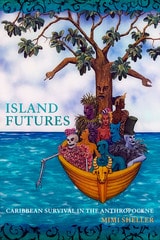
Island Futures
Caribbean Survival in the AnthropoceneMimi Sheller
Duke University Press, 2020
Island Lives
Historical Archaeologies of the CaribbeanEdited by Paul Farnsworth
University of Alabama Press, 2001
Historical archaeology and the making of Caribbean cultures and nations.
Long before the founding of Jamestown in 1607, there were Spanish forts, bustling towns, sugar plantations, and sea trade flourishing in the Caribbean. While richer nations, particularly the United States, may view the Caribbean today as merely a place for sun and fun, the island colonies were at one time far more important and lucrative to their European empire countries than their North American counterparts. From the 15th to the 19th centuries, as competing colonial powers vied with each other for military and economic advantage in the Western Hemisphere, events in the Caribbean directly influenced the American mainland.
This is one rationale for the close study of historical archaeology in the Caribbean. Another is the growing recognition of how archaeological research can support the defining of national identities for the islands, many of them young independent states struggling to establish themselves economically and politically. By looking at cases in the French West Indies, specifically on Guadeloupe, in the Dutch Antilles and Aruba, in the British Bahamas, on Montserrat and St. Eustatius, on Barbados, and the within the U.S. Virgin Islands, the contributors to Island Lives have produced a broad overview of Caribbean historical archaeology.
Island Lives makes clear that historical archaeology in the Caribbean will continue to grow and diversify due to the interest Caribbean peoples have in recording, preserving, and promoting their culture and heritage; the value it adds to their "heritage tourism"; and the connection it has to African American history and archaeology. In addition, the contributors point to the future by suggesting different trajectories that historical archaeology and its practitioners may take in the Caribbean arena. In so doing, they elucidate the problems and issues faced worldwide by researchers working in colonial and post-colonial societies.

Island No. 10
Struggle for the Mississippi ValleyLynn N. Bock
University of Alabama Press, 1996
A definitive study of strategy, river warfare, and Union triumph in the Mississippi Valley.
Island No. 10: Struggle for the Mississippi Valley is a deeply researched, narrative-driven history of the Civil War New Madrid–Island No. 10 campaign in 1862—an episode overshadowed by Fort Donelson and Shiloh yet vital to Union mastery of the Mississippi River. The authors argue that the campaign was far more consequential than its marginalization in traditional Civil War histories suggests, demonstrating that the fall of Island No. 10 consolidated Union control of the upper Mississippi, accelerated the collapse of Confederate fortunes in the West, and highlighted the transformative power of joint Army–Navy operations.
The book’s strengths lie in its rich use of diaries, letters, official military records, and contemporary press accounts, weaving together strategy, engineering, naval innovation, politics, and the lived experience of soldiers. Vivid descriptions of fortification design, the ironclad flotilla, the dramatic night battery runs, and the grueling canal‑cutting operation offer readers a ground‑level and command‑level view of the campaign. Larry J. Daniel, an acclaimed Civil War historian and award‑winning author of Cannoneers in Gray and Soldiering in the Army of Tennessee, together with Lynn N. Bock, a historian, attorney, and longtime steward of New Madrid’s local history, bring scholarly authority and regional expertise to the subject.
This book will captivate readers interested in Civil War military history, riverine warfare, engineering feats, and the Western theater. It is especially valuable for scholars, buffs seeking a fresh perspective on neglected campaigns, students of joint operations, and anyone exploring how geography, logistics, and technology shaped the course of the war.
Island Possessed
Katherine Dunham
University of Chicago Press, 1994
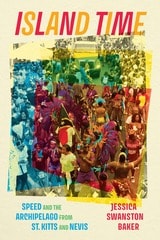
Island Time
Speed and the Archipelago from St. Kitts and NevisJessica Swanston Baker
University of Chicago Press, 2024
In Island Time, ethnomusicologist Jessica Swanston Baker examines wylers, a musical form from St. Kitts and Nevis that is characterized by speed. Baker argues that this speed becomes a useful and highly subjective metric for measuring the relationship between Caribbean aspirations and the promises of economic modernity; women’s bodily autonomy and the nationalist fantasies that would seek to curb that autonomy; and the material realities of Kittitian-Nevisian youth living in the disillusionment following postcolonial independence. She traces the wider Caribbean musical, cultural, and media-based resonances of wylers, posing an alternative model to scholarship on Caribbean music that has tended to privilege the big islands—Trinidad, Jamaica, and Haiti—thus neglecting not only the unique cultural worlds of smaller nations but also the unbounded nature of musical exchange in the region. The archipelago emerges as a useful model for apprehending the relationality across scales that governs the temporal and spatial logics that undergird Caribbean performance. The archipelago and its speeds ultimately emerge as a meaningful medium for postcolonial, postmodern world-making.

Island at the End of the World
The Turbulent History of Easter IslandSteven Roger Fischer
Reaktion Books, 2005
A small canoe with Polynesians brought the first humans to Easter Island in 700 CE, and when boat travel in the South Pacific drastically decreased around 1500, the Easter Islanders were forced to adapt in order to survive their isolation. Adaptation, Fischer asserts, was a continuous thread in the life of Easter Island: the first European visitors, who viewed the awe-inspiring monolithic busts in 1722, set off hundreds of years of violent warfare, trade, and disease—from the smallpox, wars, and Great Death that decimated the island to the late nineteenth-century Catholic missionaries who tried to "save" it to a despotic Frenchman who declared sole claim of the island and was soon killed by the remaining 111 islanders. The rituals, leaders, and religions of the Easter Islanders evolved with all of these events, and Fischer is just as attentive to the island's cultural developments as he is to its foreign invasions.
Bringing his history into the modern era, Fischer examines the colonization and annexation of Easter Island by Chile, including the Rapanui people's push for civil rights in 1964 and 1965, by which they gained full citizenship and freedom of movement on the island. As travel to and interest in the island rapidly expand, Island at the End of the World is an essential history of this mysterious site.
Island of Fogs
Archaeological and Ethnohistorical Investigations of Isla Cedros, Baja CaliforniaMatthew R Des Lauriers
University of Utah Press, 2010
Located off the west coast of the Mexican state of Baja California, Isla Cedros—Island of Fogs—is site to some of the most extensive and remarkable archeological discoveries on the continent. Two sites dated to before 12,000 cal BP have been excavated, as well as portions of two large village sites dated to the last one thousand years. Among the artifacts discovered are the earliest fishhooks found on the continent.
Drawing on ten years of his own historical, ethnographic, and archaeological research, Matthew Des Lauriers uses Isla Cedros to form hypotheses regarding the ecological, economic, and social nature of island societies. Des Lauriers uses a comparative framework in order to examine both the development and evolution of social structures among Pacific coast maritime hunter-gatherers as well as to track patterns of change.
Because it examines the issue of whether human populations can intensively harvest natural resources without causing ecological collapse, Island of Fogs provides a relevant historical counterpart to modern discussions of ecological change and alternative models for sustainable development.
Winner of the Society for American Archaeology Book Award.
Island of Pain, Island of Hope
A Social History of Leprosy in U.S.-Occupied PhilippinesFebe D. Pamonag
University of Illinois Press, 2026
As Pamonag shows, Filipinos responded in many ways to the Segregation Law. Some resisted arrest and confinement. Others negotiated or complied because of family needs, fear, gender, class, and economic pressure. Rare archival documents reconstruct life inside Culion’s communities, where people fought for better food and living conditions, and used the courts to challenge their confinement and assert their rights. Pamonag also highlights previously untapped accounts that reveal how women navigated the stigma of the disease and the gendered restrictions imposed on them.
A new chapter in the history of public health, Island of Pain, Island of Hope shows the courageous and creative ways Filipinos coped with life under colonial rule.
Island of the Doomed
Stig Dagerman
University of Minnesota Press, 2012
In the summer of 1946, while secluded in August Strindberg’s small cabin in the Stockholm archipelago, Stig Dagerman wrote Island of the Doomed. This novel was unlike any other yet seen in Sweden and would establish him as the country’s brightest literary star. To this day it is a singular work of fiction—a haunting tale that oscillates around seven castaways as they await their inevitable death on a desert island populated by blind gulls and hordes of iguanas. At the center of the island is a poisonous lagoon, where a strange fish swims in circles and devours anything in its path. As we are taken into the lives of each castaway, it becomes clear that Dagerman’s true subject is the nature of horror itself.
Island of the Doomed is a chilling profile of terror and guilt and a stunning exploration—written under the shadow of the Nuremberg Trials—of the anxieties of a generation in the postwar nuclear age.
Islanded
Britain, Sri Lanka, and the Bounds of an Indian Ocean ColonySujit Sivasundaram
University of Chicago Press, 2013
How did the modern nation of Sri Lanka come to be? In search of an answer to this question, Islanded returns us to the late eighteenth and early nineteenth centuries and to the advance of the British on the kingdom of Kandy. This advance saw the fall of the last foothold of kingly rule, centered in the highlands of the island. The British undertook a process of “islanding” and “partitioning,” which cast the island, its nature and geography, its religious and ethnic character, and its historical traditions and maritime culture as separate from British domains in mainland India and elsewhere.
Kings had seen themselves as rightful rulers of the whole territory of the island. Now, this right was violently extended by British colonists through the application of a model of crown rule and modern bureaucracy that tied ethnicity to language and religion, employing essentialized but not fully realized patterns that would continue to trouble the modern nation. Picking up a range of unusual themes, from migration, orientalism, and ethnography to botany, medicine, and education, Islanded is a groundbreaking text in Sri Lankan history writing, shaping discussions of the imperial transition in South Asia.
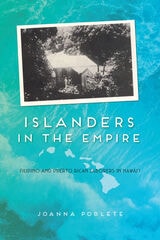
Islanders in the Empire
Filipino and Puerto Rican Laborers in Hawai'iJoAnna Poblete
University of Illinois Press, 2014
JoAnna Poblete's Islanders in the Empire: Filipino and Puerto Rican Laborers in Hawai'i takes an in-depth look at how the two groups fared in a third new colony, Hawai'i. Using plantation documents, missionary records, government documents, and oral histories, Poblete analyzes how the workers interacted with Hawaiian government structures and businesses, how U.S. policies for colonial workers differed from those for citizens or foreigners, and how policies aided corporate and imperial interests.
A rare tandem study of two groups at work on foreign soil, Islanders in the Empire offers a new perspective on American imperialism and labor issues of the era.

Islands and Empires
Western Impact on the Pacific and East AsiaErnest S. Dodge
University of Minnesota Press, 1978
Islands and Empires was first published in 1976. Minnesota Archive Editions uses digital technology to make long-unavailable books once again accessible, and are published unaltered from the original University of Minnesota Press editions.
This is the first one-volume account of the massive impact of Western civilization on the Pacific Islands and the Far East, principally China and Japan. The effects on the two areas were very different since, in the case of the islands, contact was with peoples who were still in the Stone Age, while in the Far East Westerners came up against sophisticated civilizations more ancient and mature than their own. Because of these differences, the book is divided into two sections, the first dealing with the Pacific Islands and the second with the East Asian mainland. Reverse influences—those of the Eastern cultures on the West—are also discussed.
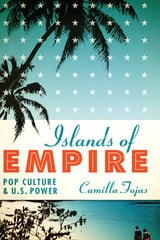
Islands of Empire
Pop Culture and U.S. PowerBy Camilla Fojas
University of Texas Press, 2014
Camilla Fojas explores a broad range of popular culture media—film, television, journalism, advertisements, travel writing, and literature—with an eye toward how the United States as an empire imagined its own military and economic projects. Impressive in its scope, Islands of Empire looks to Cuba, Guam, Hawai‘i, Puerto Rico, and the Philippines, asking how popular narratives about these island outposts expressed the attitudes of the continent throughout the twentieth century. Through deep textual readings of Bataan, Victory at Sea, They Were Expendable, and Back to Bataan (Philippines); No Man Is an Island and Max Havoc: Curse of the Dragon (Guam); Cuba, Havana, and Dirty Dancing: Havana Nights (Cuba); Blue Hawaii, Gidget Goes Hawaiian, and Paradise, Hawaiian Style (Hawai‘i); and West Side Story, Fame, and El Cantante (Puerto Rico), Fojas demonstrates how popular texts are inseparable from U.S. imperialist ideology.
Drawing on an impressive array of archival evidence to provide historical context, Islands of Empire reveals the role of popular culture in creating and maintaining U.S. imperialism. Fojas’s textual readings deftly move from location to location, exploring each island’s relationship to the United States and its complementary role in popular culture. Tracing each outpost’s varied and even contradictory political status, Fojas demonstrates that these works of popular culture mirror each location’s shifting alignment to the U.S. empire, from coveted object to possession to enemy state.
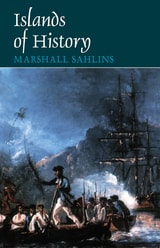
Islands of History
Marshall Sahlins
University of Chicago Press, 1985
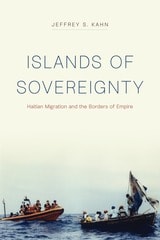
Islands of Sovereignty
Haitian Migration and the Borders of EmpireJeffrey S. Kahn
University of Chicago Press, 2018
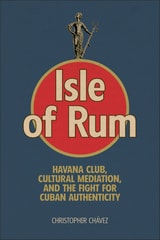
Isle of Rum
Havana Club, Cultural Mediation, and the Fight for Cuban AuthenticityChristopher Chávez
Rutgers University Press, 2024
Rather than laying claim to authentic Cuban culture, Chávez explores which aspects of Cuban culture are deemed most compelling and, therefore, most profitable by corporate marketers. As a joint venture between the Cuban state and Pernod Ricard, a global spirits marketer based in Paris, Havana Club embodies the larger process of economic reform, which was meant to reintegrate Cuba into global markets during Cuba’s Special Period in a Time of Peace.
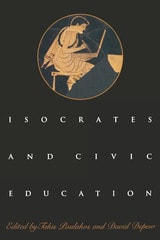
Isocrates and Civic Education
Edited by Takis Poulakos and David Depew
University of Texas Press, 2004
Civic virtue and the type of education that produces publicly minded citizens became a topic of debate in American political discourse of the 1980s, as it once was among the intelligentsia of Classical Athens. Conservatives such as former National Endowment for the Humanities chairman William Bennett and his successor Lynn Cheney held up the Greek philosopher Aristotle as the model of a public-spirited, virtue-centered civic educator. But according to the contributors in this volume, a truer model, both in his own time and for ours, is Isocrates, one of the preeminent intellectual figures in Greece during the fourth century B.C.
In this volume, ten leading scholars of Classics, rhetoric, and philosophy offer a pathfinding interdisciplinary study of Isocrates as a civic educator. Their essays are grouped into sections that investigate Isocrates' program in civic education in general (J. Ober, T. Poulakos) and in comparison to the Sophists (J. Poulakos, E. Haskins), Plato (D. Konstan, K. Morgan), Aristotle (D. Depew, E. Garver), and contemporary views about civic education (R. Hariman, M. Leff). The contributors show that Isocrates' rhetorical innovations carved out a deliberative process that attached moral choices to political questions and addressed ethical concerns as they could be realized concretely. His notions of civic education thus created perspectives that, unlike the elitism of Aristotle, could be used to strengthen democracy.
Isolated Islands in Medieval Nature, Culture and Mind
Gerhard Jaritz
Central European University Press, 2011
The volume contains selected papers from an international workshop in 2005, at the Hungarian Academy in Rome. They aim at investigating the registers of fifteenth-century supplications to the Apostolic Penitentiary of the Holy See and to analyze the multiplicity of issues in which a context of the local needs of Western Christians and the central power of the Pope had been occurring.
The contributions make clear that local and individual factors and practice of Christian faith and religion must not be seen as separated from the global power of the Roman curia. The latter’s influence could become directly important for any individual in any local space, also … et usque ad ultimum terrae (Acts 1:8), in the utmost peripheries of the Christian world. The assistance by the Apostolic Penitentiary was indispensable in a large variety of cases. The occupation with such cases happened in the local and regional space as well as in the globalized centre of the Holy See.
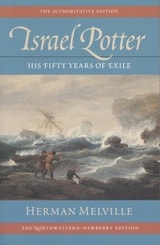
Israel Potter
His Fifty Years of Exile, Volume EightHerman Melville
Northwestern University Press, 1997
This edition is an Approved Text of the Center for Editions of American Authors (Modern Language Association of America).
Israel Potter
His Fifty Years of Exile, Volume Eight, Scholarly EditionHerman Melville
Northwestern University Press, 1982
This edition is an Approved Text of the Center for Editions of American Authors (Modern Language Association of America).
Israel and Palestine
Competing HistoriesGreg Philo and Mike Berry
Pluto Press, 2006
Following on from their acclaimed book Bad News from Israel, Greg Philo and Mike Berry present a concise guide to the Israel-Palestine conflict. This uniquely accessible book will appeal to anyone looking for an approachable introduction. Uniquely, the authors show how there are many different, competing histories. They offer an overview of the wide range of contending viewpoints, and indicate those which are based on the most considered historical research.
The book covers key events in chronological order, in each case examining the varied historical accounts and presenting the beliefs of key thinkers across the ideological spectrum, from Edward Said to Binyamin Netanyahu. Starting the with emergence of the Zionist movement in the nineteenth century, and the figures who shaped it, the authors go on to cover the founding of Israel and its subsequent history, up to and including the 'roadmap for peace', the construction of the wall, the death of Arafat and the withdrawal from Gaza.
Israel and Settler Society
Lorenzo Veracini
Pluto Press, 2006
Veracini challenges two important myths: firstly, that the Israeli-Palestinian dispute is unique and defies comparative approaches; and secondly that the struggle is mainly based in nationality and religion and therefore different to typical colonial conflicts. On the contrary, Veracini shows how Israeli society is organised along apartheid lines -- and that apartheid was not unique to South Africa, but a common feature of colonisation. He examines wars of decolonization, and conflicts where whole native populations were all but eradicated -- as in Australia. Comparing and contrasting these with the more recent history of Israel and Palestine, he offers a critical perspective on colonialism as well as important new insights into patterns of imperialism today.

Israel and the American National Interest
A Critical ExaminationCheryl A. Rubenberg
University of Illinois Press, 1986
Israel and the Assyrians
Deuteronomy, the Succession Treaty of Esarhaddon, and the Nature of SubversC. L. Crouch
SBL Press, 2014
Was Deuteronomy created to be a subversive text based on Assyian treaties?
In this new book Crouch focuses on Deuteronomy’s subversive intent, asking what would be required in order for Deuteronomy to successfully subvert either a specific Assyrian source or Assyrian ideology more generally. The book reconsiders the nature of the relationship between Deuteronomy and Assyria, Deuteronomy’s relationship to ancient Near Eastern and biblical treaty and loyalty oath traditions, and the relevance of Deuteronomy’s treaty affinities to discussions of its date.
Features:
- A thorough investigation of the nature and requirements of subversion
- A focused examination of the context in which Deuteronomy would have functioned
- An appendix focused on redactional questions related to Deuteronoy 13 and 28
Israel in the Middle East
Documents and Readings on Society, Politics, and Foreign Relations, Pre-1948 to the PresentEdited by Itamar Rabinovich and Jehuda Reinharz
Brandeis University Press, 2007
Israel's Dead Soul
Authored by Steven Salaita
Temple University Press, 2011
In his courageous book, Israel's Dead Soul, Steven Salaita explores the failures of Zionism as a political and ethical discourse. He argues that endowing nation-states with souls is a dangerous phenomenon because it privileges institutions and corporations rather than human beings.
Asserting that Zionism has been normalized--rendered "benign" as an ideology of "multicultural conviviality"—Salaita critiques the idea that Zionism, as an exceptional ideology, leads to a lack of critical awareness of the effects of the Israeli occupation in Palestinian territory and to an unquestioning acceptance of Israel as an ethnocentric state.
Salaita's analysis targets the Anti-Defamation League, films such as Munich and Waltz with Bashir, intellectuals including Cornel West and Michael Eric Dyson, gay rights activists, and other public figures who mourn the decline of Israel's "soul." His pointed account shows how liberal notions of Zionism are harmful to various movements for justice.
Israel's Years of Bogus Grandeur
From the Six-Day War to the First IntifadaBy Nissim Rejwan
University of Texas Press, 2006
On the eve of the Six-Day War in 1967, Israel was nineteen years old and as much an adolescent as the average nineteen-year-old person. Issues of identity and transition were the talk among Israeli intellectuals, including the writer Nissim Rejwan. Was Israel a Jewish state or a democratic state? And, most frustratingly, who was a Jew? As Nancy Berg's foreword makes clear, these issues became more critical and complex in the two decades after the war as Israel matured into a regional power. Rejwan, an Iraqi-born Jew whose own fate was tied to the answers, addresses the questions of those days in his letters, essays, and remembrances collected in Israel's Years of Bogus Grandeur.
Israel's overwhelming victory in 1967 brought control of the former Palestinian territories; at the same time, Oriental Jews (i.e., those not from Europe) became a majority in the Israeli population. The nation, already surrounded by hostile, recently humiliated Arab neighbors, now had an Arab majority (Jewish, Muslim, Druze, and Christian) within its borders—yet European Jews continued to run the country as their own. Rejwan wrote tirelessly about the second-class status of Arab Israelis (and especially of Arab Jews), encouraging a more inclusive attitude that might eventually help heal the wounds left by the Six-Day War. His studies in sociology at Tel Aviv University informed his work. For his cause, Rejwan lost his job and many of his friends but never his pen. Through Munich, Entebbe, political scandals, economic crises, and the beginning of the Intifada, Rejwan narrates Israel's growing pains with feisty wit and unwavering honesty.
Israel, Jordan, and Palestine
The Two-State ImperativeAsher Susser
Brandeis University Press, 2011