Results by title
3064 books match the query 'Social conditions' and 138 start with i
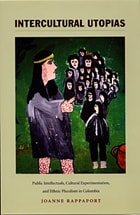
Intercultural Utopias
Public Intellectuals, Cultural Experimentation, and Ethnic Pluralism in ColombiaJoanne Rappaport
Duke University Press, 2005
Intercultural Utopias centers on southwestern Colombia’s Cauca region, a culturally and linguistically heterogeneous area well known for its history of indigenous mobilization and its pluralist approach to ethnic politics. Rappaport interweaves the stories of individuals with an analysis of the history of the Regional Indigenous Council of Cauca and other indigenous organizations. She presents insights into the movement and the intercultural relationships that characterize it from the varying perspectives of regional indigenous activists, nonindigenous urban intellectuals dedicated to the fight for indigenous rights, anthropologists, local teachers, shamans, and native politicians.
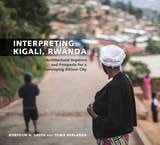
Interpreting Kigali, Rwanda
Architectural Inquiries and Prospects for a Developing African CityKorydon H. Smith
University of Arkansas Press, 2018
Interpreting Kigali, Rwanda explores the pressing challenges and opportunities to be found in planning, designing, and constructing a healthy, equitable, and sustainable city. Asking “what is an authentic-yet-modern, prosperous-yet-feasible African city, Rwandan city?” Smith, Berlanda, and colleagues conducted research on Rwandan activities of daily living and how these routines are connected to space-making practices and the Kinyarwanda terms that describe them.
Through a culturally informed view of urban and rural lifestyles and spaces, Interpreting Kigali, Rwanda presents principles and proposals for neighborhood development in the challenging context of Kigali’s informal settlements. With one billion people living in informal settlements worldwide, a number expected to double by 2030, the lessons learned in Rwanda provide a complex, fascinating, and urgent study for scholars and practitioners across disciplines and around the world.
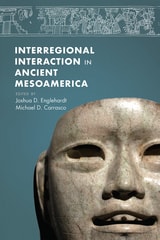
Interregional Interaction in Ancient Mesoamerica
Joshua Englehardt
University Press of Colorado, 2019
Archaeologists have long recognized the crucial role of interregional interaction in the development and cultural dynamics of ancient societies, particularly in terms of the evolution of sociocultural complexity and economic systems. Recent research has further expanded the archaeological, art historical, ethnographic, and epigraphic records in Mesoamerica, permitting a critical reassessment of the complex relationship between interaction and cultural dynamics. This volume builds on and amplifies earlier research to examine sociocultural phenomena—including movement, migration, symbolic exchange, and material interaction—in their role as catalysts for variability in cultural systems.
Interregional cultural exchange in pre-Columbian Mesoamerica played a key role in the creation of systems of shared ideologies, the production of regional or “international” artistic and architectural styles, shifting sociopolitical patterns, and changes in cultural practices and meanings. Interregional Interaction in Ancient Mesoamerica highlights, engages with, and provokes questions pertinent to understanding the complex relationship between interaction, sociocultural processes, and cultural innovation and change in the ancient societies and cultural histories of Mesoamerica and will be of interest to archaeologists, linguists, and art historians.
Contributors: Philip J. Arnold III, Lourdes Budar, José Luis Punzo Diaz, Gary Feinman, David Freidel, Elizabeth Jiménez Garcia, Guy David Hepp, Kerry M. Hull, Timothy J. Knab, Charles L. F. Knight, Blanca E. Maldonado, Joyce Marcus, Jesper Nielsen, John M. D. Pohl, Iván Rivera, D. Bryan Schaeffer, Niklas Schulze

Interrogating Integration
Sport, Celebrity, and Scandal in the Making of New GermanyKate Zambon
University of Michigan Press, 2025
Using touchstones of public memory, including events surrounding men’s World Cup soccer and the record-breaking success of a book blaming Muslims for Germany’s decline, Zambon examines persistent problems in European conceptions of race, where racializing projects take place under an “ideology of racelessness” and the atrocities of historical and transnational racisms are used to deny current local forms of racism.
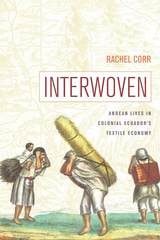
Interwoven
Andean Lives in Colonial Ecuador’s Textile EconomyRachel Corr
University of Arizona Press, 2018
Interwoven is the untold story of indigenous people’s historical experience in colonial Ecuador’s textile economy. It focuses on the lives of Native Andean families in Pelileo, a town dominated by one of Quito’s largest and longest-lasting textile mills. Quito’s textile industry developed as a secondary market to supply cloth to mining centers in the Andes; thus, the experience of indigenous people in Pelileo is linked to the history of mining in Bolivia and Peru.
Although much has been written about colonial Quito’s textile economy, Rachel Corr provides a unique perspective by putting indigenous voices at the center of that history. Telling the stories of Andean families of Pelileo, she traces their varied responses to historical pressures over three hundred years; the responses range from everyday acts to the historical transformation of culture through ethnogenesis. These stories of ordinary Andean men and women provide insight into the lived experience of the people who formed the backbone of Quito’s textile industry.

Intimate Enemies
Landowners, Power, and Violence in ChiapasAaron Bobrow-Strain
Duke University Press, 2007
Weaving together ethnography, archival research, and cultural history, Bobrow-Strain argues that prior to the upheavals of 1994 landowners were already squeezed between increasingly organized indigenous activism and declining political and economic support from the Mexican state. He demonstrates that indigenous mobilizations that began in 1994 challenged not just the economy of estate agriculture but also landowners’ understandings of progress, masculinity, ethnicity, and indigenous docility. By scrutinizing the elites’ responses to land invasions in relation to the cultural politics of race, class, and gender, Bobrow-Strain provides timely insights into policy debates surrounding the recent global resurgence of peasant land reform movements. At the same time, he rethinks key theoretical frameworks that have long guided the study of agrarian politics by engaging political economy and critical human geography’s insights into the production of space. Describing how a carefully defended world of racial privilege, political dominance, and landed monopoly came unglued, Intimate Enemies is a remarkable account of how power works in the countryside.

Intimate Inequalities
Performing Migrant Domestic WorkElla Parry-Davies
Northwestern University Press, 2025
Intimate inequalities exist where the embodied and the everyday rub up against transnational structures of power. Ella Parry-Davies conducted collaborative research with migrant domestic workers from the Philippines living in the UK and Lebanon, where migration is regulated by employer sponsorship systems, to explore how they negotiate the intimacy of the family home and the attendant inequalities of laboring within it. Intimate Inequalities: Performing Migrant Domestic Work brings these conditions into focus while articulating a methodological inquiry into the dynamics of collaborative performance research. Parry-Davies examines site-specific soundwalks, recorded and coedited with domestic workers, which steer the book between church choirs in Beirut and activist gatherings in London, and from urban performances in Lebanon’s 2019 revolution to mutual aid organizing amid COVID-19 in the UK. Breaking with prevalent depictions of migrant domestic workers as voiceless and victimized, Intimate Inequalities mobilizes performance as both an analytic lens and a practical methodology, amplifying its subjects’ expertise while reckoning with the intimate yet unequal dynamics of research itself.

Intimate Outsiders
The Harem in Ottoman and Orientalist Art and Travel LiteratureMary Roberts
Duke University Press, 2007
Roberts draws on a range of sources, including paintings, photographs, and travelogues discovered in archives in Britain, Turkey, Egypt, and Denmark. She rethinks the influential harem works of the realist painter John Frederick Lewis, a British artist living in Cairo during the 1840s, whose works were granted an authoritative status by his British public despite the actual limits of his insider knowledge. Unlike Lewis, British women were able to visit Ottoman harems, and from the mid-nineteenth century on they did so in droves. Writing about their experiences in published travelogues, they undermined the idea that harems were the subject only of male fantasies. The elite Ottoman women who orchestrated these visits often challenged their guests’ misapprehensions about harem life, and a number of them exercised power as patrons, commissioning portraits from European artists. Their roles as art patrons defy the Western idea of the harem woman as passive odalisque.

Intimate Strangers
Shin Issei Women and Contemporary Japanese American Community, 1980-2020Toyota, Tritia
Temple University Press, 2023
Intimate Strangers charts the experiences of shin Issei lives: their existence in Japan prior to migration, their motivations for moving to the United States, their settlement, and their growing awareness of their place in American society. Toyota chronicles how these resilient young women became active agents in circumventing social restrictions to fashion new lives of meaning. The Nikkei community (Americans of Japanese ancestry who were born in the United States) has been transformed by the inclusion of shin Issei, and Toyota describes the tensions around intergroup negotiations over race, identity, and the possibility of common belonging.
Intimate Strangers is a perceptive study of migration and community incorporation enacted around cultural differences and processes.

Inventing the Savage
The Social Construction of Native American CriminalityBy Luana Ross
University of Texas Press, 1998
Luana Ross writes, "Native Americans disappear into Euro-American institutions of confinement at alarming rates. People from my reservation appeared to simply vanish and magically return. [As a child] I did not realize what a 'real' prison was and did not give it any thought. I imagined this as normal; that all families had relatives who went away and then returned."
In this pathfinding study, Ross draws upon the life histories of imprisoned Native American women to demonstrate how race/ethnicity, gender, and class contribute to the criminalizing of various behaviors and subsequent incarceration rates. Drawing on the Native women's own words, she reveals the violence in their lives prior to incarceration, their respective responses to it, and how those responses affect their eventual criminalization and imprisonment. Comparisons with the experiences of white women in the same prison underline the significant role of race in determining women's experiences within the criminal justice system.

Inventing the Thrifty Gene
The Science of Settler ColonialismTravis Hay
University of Manitoba Press, 2021

Invention Of Women
Making An African Sense Of Western Gender DiscoursesOyeronke Oyewumi
University of Minnesota Press, 1997
Oyewumi traces the misapplication of Western, body-oriented concepts of gender through the history of gender discourses in Yoruba studies. Her analysis shows the paradoxical nature of two fundamental assumptions of feminist theory: that gender is socially constructed and that the subordination of women is universal. The Invention of Women demonstrates, to the contrary, that gender was not constructed in old Yoruba society, and that social organization was determined by relative age.
A meticulous historical and epistemological account of an African culture on its own terms, this book makes a persuasive argument for a cultural, context-dependent interpretation of social reality. It calls for a reconception of gender discourse and the categories on which such study relies. More than that, the book lays bare the hidden assumptions in the ways these different cultures think. A truly comparative sociology of an African culture and the Western tradition, it will change the way African studies and gender studies proceed.

Invisibility by Design
Women and Labor in Japan's Digital EconomyGabriella Lukács
Duke University Press, 2020
Invisible Masters
Gender, Race, and the Economy of Service in Early New EnglandElisabeth Ceppi
Dartmouth College Press, 2018
Invisible Men
Mass Incarceration and the Myth of Black ProgressBecky Pettit
Russell Sage Foundation, 2012
Invisible in Austin
Life and Labor in an American CityEdited by Javier Auyero with an afterword by Loïc Wacquant
University of Texas Press, 2015
Austin, Texas, is renowned as a high-tech, fast-growing city for the young and creative, a cool place to live, and the scene of internationally famous events such as SXSW and Formula 1. But as in many American cities, poverty and penury are booming along with wealth and material abundance in contemporary Austin. Rich and poor residents lead increasingly separate lives as growing socioeconomic inequality underscores residential, class, racial, and ethnic segregation.
In Invisible in Austin, the award-winning sociologist Javier Auyero and a team of graduate students explore the lives of those working at the bottom of the social order: house cleaners, office-machine repairers, cab drivers, restaurant cooks and dishwashers, exotic dancers, musicians, and roofers, among others. Recounting their subjects’ life stories with empathy and sociological insight, the authors show us how these lives are driven by a complex mix of individual and social forces. These poignant stories compel us to see how poor people who provide indispensable services for all city residents struggle daily with substandard housing, inadequate public services and schools, and environmental risks. Timely and essential reading, Invisible in Austin makes visible the growing gap between rich and poor that is reconfiguring the cityscape of one of America’s most dynamic places, as low-wage workers are forced to the social and symbolic margins.
Invitations to Love
Literacy, Love Letters, and Social Change in NepalLaura M. Ahearn
University of Michigan Press, 2001
The love-letter correspondences examined by Ahearn also provide a deeper understanding of the social effects of literacy. While the acquisition of literary skills may open up new opportunities for some individuals, such skills can also impose new constraints, expectations, and disappointments. The increase in female literacy rates in Junigau in the 1990s made possible the emergence of new courtship practices and facilitated self-initiated marriages, but it also reinforced certain gender ideologies and undercut some avenues to social power, especially for women.
Scholars, and students in such fields as anthropology, women's studies, linguistics, development studies, and South Asian studies will find this book ethnographically rich and theoretically insightful.
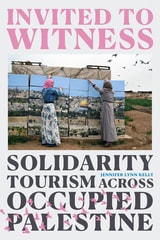
Invited to Witness
Solidarity Tourism across Occupied PalestineJennifer Lynn Kelly
Duke University Press, 2023
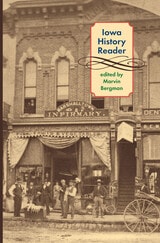
Iowa History Reader
Marvin Bergman
University of Iowa Press, 1996
Marvin Bergman has drawn upon his years of editing the Annals of Iowa to gather contributors who cross disciplines, model the craft of writing a historical essay, cover more than one significant topic, and above all interpret history rather than recite it. In his preface to this new printing, he calls attention to publications that begin to fill the gaps noted in the 1996 edition.
Rather than survey the basic facts, the essayists engage readers in the actual making of Iowa’s history by trying to understand the meaning of its past. By providing comprehensive accounts of topics in Iowa history that embrace the broader historiographical issues in American history, such as the nature of Progressivism and Populism, the debate over whether women’s expanded roles in wartime carried over to postwar periods, and the place of quantification in history, the essayists contribute substantially to debates at the national level at the same time that they interpret Iowa’s distinctive culture.
Iranians in Texas
Migration, Politics, and Ethnic IdentityMohsen Mostafavi MobasherForeword by Nestor Rodriguez
University of Texas Press, 2025
An exploration of the link between politics of migration, prospects of integration, and ethnic identity among Iranian immigrants and their descendants in the United States, spanning from the 1970s to the present day.
Thousands of Iranians fled their homeland when the 1978–1979 revolution ended the fifty-year reign of the Pahlavi dynasty. Some fled to Europe and Canada, while others settled in the United States, where anti-Iranian sentiment flared as the hostage crisis unfolded. For those who chose America, Texas became the fourth-largest settlement area. Iranians in Texas culls data, interviews, and participant observations in Iranian communities in Houston, Dallas, and Austin to reveal the difficult, private world of cultural pride, religious experience, marginality, culture clashes, and other aspects of the lives of these immigrants.
Examining the political nature of immigration between Iran and the United States and social, cultural, and economic life for Iranian immigrants and their American-born children, Mohsen Mostafavi Mobasher incorporates his own experience as a Texas scholar born in Iran. In this revised edition, two new chapters and a new introduction and conclusion provide updates on what has happened in the Obama, Trump, and Biden administrations, including the Iran nuclear deal and resulting controversy, the Muslim ban, and the global protests over the death of twenty-two-year-old Mahsa Amini for not wearing a hijab. Bringing to life a unique immigrant population in the context of global politics, Iranians in Texas overturns stereotypes and echoes diverse voices.

Ireland in the World Order
A History of Uneven DevelopmentMaurice Coakley
Pluto Press, 2012
Ireland in the World Order examines Ireland’s development from the medieval to the modern era, comparing its unique trajectory with that of England, Scotland and Wales.
Maurice Coakley focuses on key elements that contributed to Ireland’s development, examining its bloody and violent incorporation into the British state, its refusal to embrace the Protestant Reformation and failure to industrialise in the 19th century. Coakley considers the crucial question of why Ireland’s national identity has come to rest on a mass movement for independence.
Cutting through many of the myths – imperialist and nationalist – which have obscured the real reasons for Ireland's course of development, Ireland in the World Order provides a new perspective for students and academics of Irish history.
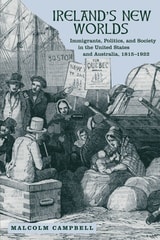
Ireland's New Worlds
Immigrants, Politics, and Society in the United States and Australia, 1815–1922Malcolm Campbell
University of Wisconsin Press, 2007
Ireland’s New Worlds is the first book to compare Irish immigrants in the United States and Australia. In a profound challenge to the national histories that frame most accounts of the Irish diaspora, Malcolm Campbell highlights the ways that economic, social, and cultural conditions shaped distinct experiences for Irish immigrants in each country, and sometimes in different parts of the same country. From differences in the level of hostility that Irish immigrants faced to the contrasting economies of the United States and Australia, Campbell finds that there was much more to the experiences of Irish immigrants than their essential “Irishness.” America’s Irish, for example, were primarily drawn into the population of unskilled laborers congregating in cities, while Australia’s Irish, like their fellow colonialists, were more likely to engage in farming. Campbell shows how local conditions intersected with immigrants’ Irish backgrounds and traditions to create surprisingly varied experiences in Ireland’s new worlds.
“Well conceived and thoroughly researched . . . . This clearly written, thought-provoking work fulfills the considerable ambitions of comparative migration studies.”—Choice

Irish in Michigan
Seamus P. Metress
Michigan State University Press, 2006
Irish immigration to the United States can be divided into five general periods, from 1640 to the present: the colonial, prestarvation, great starvation, post-starvation, and post- independence periods. Immigration to the Great Lakes region and, more specifically, to Michigan was differentially influenced during each of these times. The oppressive historical roots of the Irish in both Ireland and nineteenth century America are important to understand in gaining an appreciation for their concern with socioeconomic status.
The Irish first entered the Great Lakes by way of the Ohio River and Appalachian passes, spreading north along the expanding frontier. After the War of 1812, the Irish were heavily represented in frontier military garrisons. Many Irish moved into the Detroit metropolitan area as well as to farming areas throughout Michigan. In the 1840s, a number of Irish began fishing in the waters off Beaver Island, Mackinac Island, Bay City, Saginaw, and Alpena. From 1853 to 1854, Irish emigrants from the Great Starvation dug the Ste. Marie Canal while others dug canals in Grand Rapids and Saginaw.
Irish nationalism in both Michigan and the United States has been closely linked with the labor movement in which Irish Americans were among the earliest organizers and leaders. Irish American nationalism forced the Irish regardless of their local Irish origins to assume a larger Irish identity. Irish Americans have a long history of involvement in the struggle for Irish Freedom dating from the 1840s.
As Patrick Ford, editor of Irish World has said, America led the Irish from the "littleness of countyism into a broad feeling of nationalism."
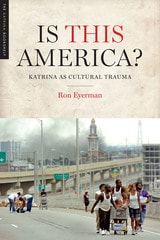
Is This America?
Katrina as Cultural TraumaBy Ron Eyerman
University of Texas Press, 2015
From police on the street, to the mayor of New Orleans and FEMA administrators, government officials monumentally failed to protect the most vulnerable residents of New Orleans and the Gulf Coast during the Katrina disaster. This violation of the social contract undermined the foundational narratives and myths of the American nation and spawned a profound, often contentious public debate over the meaning of Katrina’s devastation. A wide range of voices and images attempted to clarify what happened, name those responsible, identify the victims, and decide what should be done. This debate took place in forums ranging from mass media and the political arena to the arts and popular culture, as various narratives emerged and competed to tell the story of Katrina.
Is This America? explores how Katrina has been constructed as a cultural trauma in print media, the arts and popular culture, and television coverage. Using stories told by the New York Times, New Orleans Times-Picayune, Time, Newsweek, NBC, and CNN, as well as the works of artists, writers, musicians, filmmakers, and graphic designers, Ron Eyerman analyzes how these narratives publicly articulated collective pain and loss. He demonstrates that, by exposing a foundational racial cleavage in American society, these expressions of cultural trauma turned individual experiences of suffering during Katrina into a national debate about the failure of the white majority in the United States to care about the black minority.
Islam In Urban America
Sunni Muslims In ChicagoGarbi Schmidt
Temple University Press, 2004
Island Paradox
Puerto Rico in the 1990sFrancisco Rivera-Batiz
Russell Sage Foundation, 1996
Island of Fogs
Archaeological and Ethnohistorical Investigations of Isla Cedros, Baja CaliforniaMatthew R Des Lauriers
University of Utah Press, 2010
Located off the west coast of the Mexican state of Baja California, Isla Cedros—Island of Fogs—is site to some of the most extensive and remarkable archeological discoveries on the continent. Two sites dated to before 12,000 cal BP have been excavated, as well as portions of two large village sites dated to the last one thousand years. Among the artifacts discovered are the earliest fishhooks found on the continent.
Drawing on ten years of his own historical, ethnographic, and archaeological research, Matthew Des Lauriers uses Isla Cedros to form hypotheses regarding the ecological, economic, and social nature of island societies. Des Lauriers uses a comparative framework in order to examine both the development and evolution of social structures among Pacific coast maritime hunter-gatherers as well as to track patterns of change.
Because it examines the issue of whether human populations can intensively harvest natural resources without causing ecological collapse, Island of Fogs provides a relevant historical counterpart to modern discussions of ecological change and alternative models for sustainable development.
Winner of the Society for American Archaeology Book Award.
Israel's Dead Soul
Authored by Steven Salaita
Temple University Press, 2011
In his courageous book, Israel's Dead Soul, Steven Salaita explores the failures of Zionism as a political and ethical discourse. He argues that endowing nation-states with souls is a dangerous phenomenon because it privileges institutions and corporations rather than human beings.
Asserting that Zionism has been normalized--rendered "benign" as an ideology of "multicultural conviviality"—Salaita critiques the idea that Zionism, as an exceptional ideology, leads to a lack of critical awareness of the effects of the Israeli occupation in Palestinian territory and to an unquestioning acceptance of Israel as an ethnocentric state.
Salaita's analysis targets the Anti-Defamation League, films such as Munich and Waltz with Bashir, intellectuals including Cornel West and Michael Eric Dyson, gay rights activists, and other public figures who mourn the decline of Israel's "soul." His pointed account shows how liberal notions of Zionism are harmful to various movements for justice.
Israel/Palestine and the Queer International
Sarah Schulman
Duke University Press, 2012
As Schulman learns more, she questions the contradiction between Israel's investment in presenting itself as gay friendly—financially sponsoring gay film festivals and parades—and its denial of the rights of Palestinians. At the same time, she talks with straight Palestinian activists about their position in relation to homosexuality and gay rights in Palestine and internationally. Back in the United States, Schulman draws on her extensive activist experience to organize a speaking tour for some of the Palestinian queer leaders whom she had met and trusted. Dubbed "Al-Tour," it takes the activists to LGBT community centers, conferences, and universities throughout the United States. Its success solidifies her commitment to working to end Israel's occupation of Palestine, and it kindles her larger hope that a new "queer international" will emerge and join other movements demanding human rights across the globe.
Israeli Society in the Twenty-First Century
Immigration, Inequality, and Religious ConflictCalvin Goldscheider
Brandeis University Press, 2015

Israeli Women's Studies
A ReaderEdited by Esther Fuchs
Rutgers University Press, 2005
Israeli women do not enjoy the equality, status, and power often attributed to them by the media and popular culture. Despite significant achievements and progress, as a whole they continue to earn less than their male counterparts, are less visible and influential in the political arena, do not share equal responsibilities or privileges in the military, have unequal rights and freedoms in family life and law, and are less influential in shaping the nation's self image and cultural orientation.
Bringing together classic essays by leading scholars of Israeli culture, this reader exposes the hidden causes of ongoing discrimination and links the restrictions that Israeli women experience to deeply entrenched structures, including colonial legacies, religious traditions, capitalism, nationalism, and ongoing political conflict. In contrast, the essays also explore how women act creatively to affect social change and shape public discourse in less ostensible ways.
Providing balanced perspectives from the social sciences and the humanities, this comprehensive reader reflects both an emerging consensus and exciting diversity in the field. It is the definitive text for courses in Israeli women's studies.
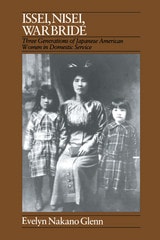
Issei, Nisei, War Bride
Three Generations of Japanese American Women in Domestic ServiceEvelyn Nakano Glenn
Temple University Press, 1988
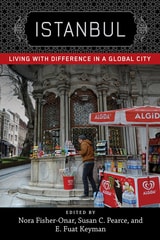
Istanbul
Living with Difference in a Global CityFisher-Onar, Nora
Rutgers University Press, 2018
Rather than exploring Istanbul as one place at one time, the contributors to this volume focus on the city’s experience of migration and globalization over the last two centuries. Asking what Istanbul teaches us about living with people whose hopes jostle with one’s own, contributors explore the rise, collapse, and fragile rebirth of cosmopolitan conviviality in a once and future world city. The result is a cogent, interdisciplinary exchange about an urban space that is microcosmic of dilemmas of diversity across time and space.
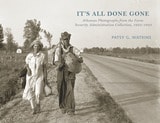
It's All Done Gone
Arkansas Photographs from the Farm Security Administration Collection, 1935-1943Patsy Watkins
University of Arkansas Press, 2018
Of the roughly one thousand FSA photographs taken in Arkansas, approximately two hundred have been selected for inclusion in this volume. Portraying workers picking cotton for five cents an hour, families evicted from homes for their connection with the Southern Tenant Farmers Union, and the effects of flood and drought that cruelly exacerbated the impact of economic disaster, these remarkable black-and-white images from Ben Shahn, Arthur Rothstein, Dorothea Lange, Walker Evans, Russell Lee, and other acclaimed photographers illustrate the extreme hardships that so many Arkansans endured throughout this era.
These powerful photographs continue to resonate, providing a glimpse of life in Arkansas that will captivate readers as they connect to a shared past.
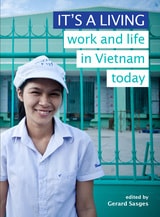
It's a Living
Work and Life in Vietnam TodayEdited by Gerard Sasges
National University of Singapore Press, 2013
Based on frank and freewheeling interviews conducted by students, the book engages a broad range of Vietnamese, both living in Vietnam and abroad, on their feelings about work, life and getting ahead. By providing a ground-level view of the texture of daily working life in the midst of rapid and unsettling change, the book reveals Vietnam today as a place where ordinary people are leveraging whatever assets they have, not just to survive, but to make a better life for themselves.
Italians Then, Mexicans Now
Immigrant Origins and the Second-Generation Progress, 1890-2000Joel Perlmann
Russell Sage Foundation, 2005

Italians in Michigan
Russell M. Magnaghi
Michigan State University Press, 2001
For more than 350 years, Italian immigrants have played important roles in the opening and development of the land that is now Michigan, from their participation in the French fur trade up to the present day. Through an emphasis on the family as the essential institution in ethnic group success, Russell M. Magnaghi celebrates the accomplishments of Michigan's famous and not-so-famous Italian sons and daughters as he documents their struggles and achievements. Through the tenacity and hard work of the immigrants and their descendants, Italians in Michigan have progressed from unskilled laborers to some of the highest positions in business, politics, culture, and education.

iChina
The Rise of the Individual in Modern Chinese SocietyEdited by Mette Halskov Hansen and Rune Svarverud
National University of Singapore Press, 2010