Results by title
18284 books match the query 'United States' and 636 start with i

Implementing for Results
Your Strategic Plan in ActionSandra Nelson
American Library Association, 2009

Implementing the Endangered Species Act on the Platte Basin Water Commons
David M. Freeman
University Press of Colorado, 2010
Implementing the Endangered Species Act on the Platte Basin Water Commons tells of the negotiations among the U.S. Department of the Interior, the environmental community, and the states of Wyoming, Colorado, and Nebraska that took place from the mid-1970s to 2006. Ambitious talks among rival water users, environmentalists, state authorities, and the Department of the Interior finally resulted in the Platte River Habitat Recovery Program.
Documenting how organizational interests found remedies within the conditions set by the Endangered Species Act, describing how these interests addressed habitat restoration, and advancing sociological propositions under which water providers transcended self-interest and produced an agreement benefiting the environment, this book details the messy process that took place over more than thirty years. Presenting important implications for the future of water management in arid and semi-arid environments, this book will be of interest to anyone involved in water management, as well as academics interested in the social organization of common property.

Imposing Order without Law
American Expansion to the Eastern Sierra, 1850–1865Michael J. Makley
University of Nevada Press, 2022
In the 1850s, early Euro-American settlers established two remote outposts on the slopes of the eastern Sierra Nevada, both important way stations on the central emigrant trail. The Carson Valley settlement was located on the western edge of the Utah Territory, while the Honey Lake Valley hamlet, 120 miles north, fell within California’s boundaries but was separated from the rest of the state by the formidable mountain range. Although these were some of the first white communities established in the region, both areas had long been inhabited by Indigenous Americans. Carson Valley had been part of Washoe Indian territory, and Honey Lake Valley was a section of Northern Paiute land.
Michael Makley explores the complexities of this turbulent era, when the pioneers’ actions set the stage for both valleys to become part of national incorporation. With deft writing and meticulously researched portrayals of the individuals involved, including the Washoe and Northern Paiute peoples, Imposing Order Without Law focuses on the haphazard evolution of “frontier justice” in these remote outposts. White settlers often brought with them their own ideas of civil order. Makley’s work contextualizes the extralegal acts undertaken by the settlers to enforce edicts in their attempt to establish American communities.
Makley’s book reveals the use and impact of group violence, both within the settlements and within the Indigenous peoples’ world, where it transformed their lives.

Impossible Appetites
James Fetler
University of Iowa Press, 1980
The collection of nine stories which won the 1980 Iowa Short Fiction Award is woven in a pattern so subtle that reading it is like writing your own nine-part novel. The author allows brief glimpses into the tormented journals of Joseph Quaile, a man of acute compassions and consuming hungers, then juxtaposes them with the fiction Quaile writes to scourge his demons and come to terms with himself and the people he loves. This is a dispassionate intelligence in passionate pursuit of freedom and reconciliation.
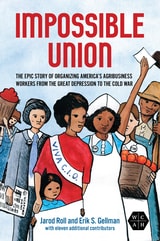
Impossible Union
The Epic Story of Organizing America’s Agribusiness Workers from the Great Depression to the Cold WarJarod Roll and Erik S. Gellman
University of Illinois Press, 2027
Workers of many racial, ethnic, and social identities united under the UCAPAWA-FTA banner. Their grassroots activism and bold national leadership fueled the union’s success despite opposition from employers, the government, and other labor groups. The union’s common sense anti-fascist ideology empowered workers to forge solidarities across their vast differences and linked workers’ rights to campaigns against racism and inequality. UCAPAWA-FTA advocated for an inclusive American democracy that can inform today’s struggles for dignity and security. This unique volume includes a special collection of essays by affiliated scholars that explore specific aspects of the union’s larger history.
Expansive and monumental, Impossible Union chronicles the labor organization that brought personhood and power to America’s marginal yet essential workers.
Additional contributors: Benjamin Makani Fortun, Dorothy Fujita-Rony, Robert Korstad, Bernadette Pérez, Michael Pierce, Charles Romney, Vicki L. Ruiz, Dan Sidorick, Dwana Waugh, John Weber, and Lane Windham
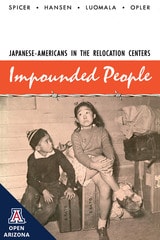
Impounded People
Japanese-Americans in the Relocation CentersEdward H. Spicer, Asael T. Hansen, Katherine Luomala, and Marvin K. Opler
University of Arizona Press, 1969
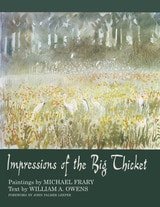
Impressions of the Big Thicket
Michael Frary
University of Texas Press, 1973
Before the establishment of the Big Thicket Nature Preserve, the Big Thicket of Texas became a symbol of nature's last stand against encroaching civilization. Here, in a mingling of ecological zones, come together plants, animals, and birds—many of them rare—the flora and fauna of north and south, east and west. Northern maples and beeches stand not too great a distance from cypresses and Southern magnolias. American hollies grow large and orchids bloom among Northern ferns. Mesquite and tumbleweed, plants of the Western desert, survive where the annual rainfall averages sixty inches. On a major flyway, the Big Thicket is a stopping place for many birds in passage as well as home to a wide variety. Beavers build their dams there, and an occasional coyote yips in the night.
Because of its great beauty and rich natural resources, use of the Big Thicket was the object of a forty-year struggle involving financiers, politicians, conservationists, and countless Thicket lovers. Each group viewed the Thicket from a different perspective and foresaw its future in different terms.
This book records the impressions of two Thicket lovers. Michael Frary's paintings and drawings of woods and water, of birds in flight and strange plants growing close to the moist earth are pictures of a place, a time, a mood caught today—and not the same if left until tomorrow. The qualities of gentleness and violence are constant, but often hidden—there to be brought out by human need or human greed.
William Owens writes of the people who have lived their lives in the Big Thicket, who have stirred its stillness with whoop and holler across the waters, who have taken in its stillness and explosive beauty until they themselves are made up of gentleness and violence.
Together the impressions show what the Big Thicket was and is. What it will be—that is the chief concern of the book.
Imprints
The Pokagon Band of Potawatomi Indians and the City of ChicagoJohn N. Low
Michigan State University Press, 2016
Imprints: The Pokagon Band of Potawatomi Indians and the City of Chicago examines the ways some Pokagon Potawatomi tribal members have maintained a distinct Native identity, their rejection of assimilation into the mainstream, and their desire for inclusion in the larger contemporary society without forfeiting their “Indianness.” Mindful that contact is never a one-way street, Low also examines the ways in which experiences in Chicago have influenced the Pokagon Potawatomi. Imprints continues the recent scholarship on the urban Indian experience before as well as after World War II.
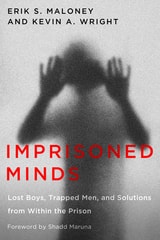
Imprisoned Minds
Lost Boys, Trapped Men, and Solutions from Within the PrisonErik S. Maloney
Rutgers University Press, 2025
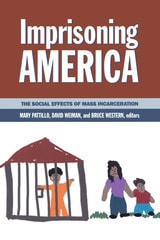
Imprisoning America
The Social Effects of Mass IncarcerationMary Pattillo
Russell Sage Foundation, 2004

Imprisonment in America
Choosing the FutureMichael Sherman and Gordon J. Hawkins
University of Chicago Press, 1983
"This is a serious and enlightened and concerned attempt to fuse liberal and conservative attitudes and values to achieve a breakthrough in American penal policy."—Congressional Staff Journal

Improbable Patriot
The Secret History of Monsieur de Beaumarchais, the French Playwright Who Saved the American RevolutionHarlow Giles Unger
Brandeis University Press, 2026
In 1776, the playwright and inventor Pierre-Augustin Caron de Beaumarchais (1732–99) conceived an audacious plan to send aid to the American rebels. What’s more, he convinced King Louis XVI to bankroll the project and single-handedly carried it out. By war’s end, he had supplied Washington’s army with most of its weapons and powder, though he was never paid or acknowledged by the United States. To some, he was a dashing hero, a towering intellect who saved the American Revolution. To others, he was a pure rogue, a double-dealing adventurer who stopped at nothing to advance his fame and fortune. In fact, he was both, and more: an advisor to kings, an arms dealer, and an author of some of the most enduring works of the stage, including The Marriage of Figaro and The Barber of Seville. Now in paperback, Improbable Patriot introduces readers to an unrecognized power player in the Revolutionary War.
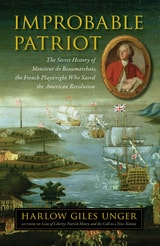
Improbable Patriot
The Secret History of Monsieur de Beaumarchais, the French Playwright Who Saved the American RevolutionHarlow Giles Unger
University Press of New England, 2011

Improper Influence
Campaign Finance Law, Political Interest Groups, and the Problem of EqualityThomas Gais
University of Michigan Press, 1998
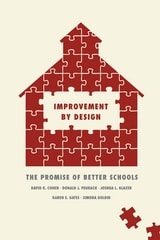
Improvement by Design
The Promise of Better SchoolsDavid K. Cohen, Donald J. Peurach, Joshua L. Glazer, Karen E. Gates, and Simona Goldin
University of Chicago Press, 2013
The authors identify four critical puzzles that the successful programs were able to solve: design, implementation, improvement, and sustainability. Pinpointing the specific solutions that clearly improved instruction, they identify the key elements that all successful reform programs share. Offering urgently needed guidance for state and local school systems as they attempt to respond to future reform proposals, Improvement by Design gets America one step closer to truly successful education systems.
Improving Learning and Mental Health in the College Classroom
Robert Eaton
West Virginia University Press, 2023
How teachers can help combat higher education’s mental health crisis.
Mental health challenges on college campuses were a huge problem before COVID-19, and now they are even more pronounced. But while much has been written about higher education’s mental health crisis, very little research focuses on the role played by those on campus whose influence on student well-being may well be greatest: teachers. Drawing from interviews with students and the scholarship of teaching and learning, this book helps correct the oversight, examining how faculty can—instead of adding to their own significant workloads or duplicating counselors’ efforts—combat student stress through adjustments to the work they already do as teachers.
Improving Learning and Mental Health in the College Classroom provides practical tips that reduce unnecessary discouragement. It demonstrates how small improvements in teaching can have great impacts in the lives of students with mental health challenges, while simultaneously boosting learning for all students.

Improving Library Services in Support of International Students and English as a Second Language Learners
Leila June Rod-Welch
Assoc of College & Research Libraries, 2019

Improving School-to-Work Transitions
David Neumark
Russell Sage Foundation, 2007

Improvised Adolescence
Somali Bantu Teenage Refugees in AmericaSandra Grady
University of Wisconsin Press, 2015
Improvised Adolescence explores how teenagers from southern Somalia, who spent much of their childhood in East African refugee camps, are adapting to resettlement in the American Midwest. The collapse of the Somali state in 1991, and subsequent chaos in the Horn of Africa, disrupted the lives of these young people educationally, culturally, and developmentally. Folklorist Sandra Grady has intermittently observed the lifeworld of these teens—their homes, their entertainment choices, their interaction with classmates and teachers at school, and their plans for the future—for more than seven years to understand the cultural tools they’ve used in their journey from this disrupted childhood. They negotiate two sets of cultural expectations: in the resettled Somali Bantu community, traditional rites of passage continue to mark the change from child to adult; in the surrounding U.S. culture, an unfamiliar in-between category—“adolescent”—delays adulthood. Offering analysis that is both engaging and theoretically grounded, Grady tracks the emergence in this immigrant community of an improvised adolescence.
Best books for public & secondary school libraries from university presses, American Library Association

In Africa's Forest and Jungle
Six Years Among the YorubasRichard Henry Stone, edited by Betty Finklea Florey
University of Alabama Press, 2009
Stone served in Africa with his wife and successfully learned the Yoruba language. He was an intelligent, self-reflective, and reliable observer, making his works important sources of information on Yoruba society before the intervention of European colonialism. In Africa's Forest and Jungle is a rare account of West African culture, made all the more complete by the additional journal entries, letters, and photographs collected in this edition.
In Another Time
Harold Schindler
Utah State University Press, 1998
An illustrated collection of historical articles originally published in the Salt Lake Tribune from 1993 to 1996, In
Another Time provides both an entertaining introduction to Utah and a distinguished and popular historian's summary views of the state's peculiar history.
Another Time will entertain and inform newcomers seeking an introductory understanding of what has made Utah different, old hands wanting to know more about the rich complexity of the state's past, and anyone who enjoys well-told historical tales.

In Babel's Shadow
Multilingual Literatures, Monolingual StatesBrian Lennon
University of Minnesota Press, 2010

In Changing Times
Gay Men and Lesbians Encounter HIV/AIDSEdited by Martin P. Levine, Peter M. Nardi, and John H. Gagnon
University of Chicago Press, 1997
The distinguished contributors to this volume discuss the ways HIV/AIDS has changed collective and individual identities, as well as lives, of gay men and lesbians, and how these alterations have changed our perceptions of the epidemic. They cover such topics as the impact of the epidemic on small towns, cultural barriers to AIDS prevention, gay youth and intergenerational relations, and the roles of lesbians in AIDS organizations. This collection provides compelling insights into the new communities among gay men and lesbians and the new kinds of identities and relationships that are emerging from the social and cultural ferment engendered by HIV/AIDS.
Contributors include Barry D. Adam, Lourdes Arguelles, Rafael Miguel Diaz, John H. Gagnon, Gilbert Herdt, Gregory M. Herek, Nan D. Hunter, Peter M. Nardi, John L. Peterson, Anne Rivero, Gayle S. Rubin, Beth E. Schneider, and Nancy E. Stoller.
In Clouds of Glory
American Airmen Who Flew with the British during the Great WarJames J. Hudson
University of Arkansas Press, 1999

In Common Cause
The “Conservative” Frances Trollope and the “Radical” Frances WrightSusan S. Kissel
University of Wisconsin Press, 1993
In Contagion's Wake
Black Writers and the Development of Modern Outbreak NarrativesKelly L. Bezio
University of Massachusetts Press, 2026
An examination of early American literature that highlights how racial divides exacerbated—and were exacerbated by—the spread of infection
In April of 1721, the HMS Seahorse arrived in Boston from the West Indies, causing a smallpox epidemic that would plague the city for the next year. Of its 12,000 inhabitants, nearly fifty percent were infected, and 900 people died. Like the coronavirus pandemic that began in 2020, the outbreak also brought to the surface deep divides in the social fabric of colonial New England and laid the groundwork for racialized political inequities that we continue to grapple with today.
In Contagion’s Wake examines a range of American outbreak narratives, both historical and fictional, written between the early 1700s and the early 1900s—from the rise of inoculation through the advent of germ theory. Author Kelly L. Bezio argues that during this period, literature about communicable disease was dominated by white authors, such as Cotton Mather and Edgar Allen Poe, who tended to privilege white suffering and survival while obscuring Black suffering and vulnerability. Black authors, however, such as Olaudah Equiano and Frances E.W. Harper, developed variations on plot structures, metaphors, and imagery that drew upon contagion to represent racial injustice and further the cause of Black liberation.
The diverse texts Bezio analyzes vary extensively in genre and geographical location, and in the illnesses that feature in their pages. Significant disorders from the era, including yellow fever, smallpox, consumption, and cholera, make frequent appearances, as do less culturally dominant diseases such as St. Anthony’s Fire. In Contagion’s Wake contends that representations of communicable disease should not be understood only as within their own historical moment; rather, they function more like a DNA code for our present time.
In Contempt
Defending Free Speech, Defeating HUACEd Yellin and Jean Fagan Yellin
University of Michigan Press, 2022
So began a decade of hardship for Ed and Jean Yellin and their three young children as the repressive weight of the U.S. government, caught up in the throes of McCarthyism, crashed down upon their careers, their daily household budget, and their relationships to colleagues, neighbors, and their country. In Contempt is a faithful, factual testament to the enduring quality of patriotic dissent in our evolving democracy—and a loving reconstruction of what it meant to be labeled “unAmerican” for defending the Constitution.
In Defense of American Liberties, Second Edition
A History of the ACLUSamuel Walker
Southern Illinois University Press, 1999
This updated comprehensive history of the American Civil Liberties Union recounts the ACLU's stormy history since its founding in 1920 to fight for free speech and explores its involvement in some of the most famous causes in American history, including the Scopes "monkey trial," the internment of Japanese Americans during World War II, the Cold War anti-Communist witch hunts, and the civil rights movement. The new introduction covers the history of the organization and developments in civil liberties in the 1990s, including the U.S. Supreme Court's declaration of the Communications Decency Act as unconstitutional in ACLU v. Reno.

In Defense of Free Speech in Universities
A Study of Three JurisdictionsAmy Lai
University of Michigan Press, 2023
In this book, Amy Lai examines the current free speech crisis in Western universities. She studies the origin, history, and importance of freedom of speech in the university setting, and addresses the relevance and pitfalls of political correctness and microaggressions on campuses, where laws on harassment, discrimination, and hate speech are already in place, along with other concepts that have gained currency in the free speech debate, including deplatforming, trigger warning, and safe space. Looking at numerous free speech disputes in the United Kingdom, the United States, and Canada, the book argues for the equal application of the free speech principle to all expressions to facilitate respectful debates. All in all, it affirms that the right to free expression is a natural right essential to the pursuit of truth, democratic governance, and self-development, and this right is nowhere more important than in the university.

In Defense of Justice
Joseph Kurihara and the Japanese American Struggle for EqualityEileen H. Tamura
University of Illinois Press, 2013
In Defense of La Raza
The Los Angeles Mexican Consulate and the Mexican Community, 1929 to 1936Francisco E. Balderrama
University of Arizona Press, 1982
Los Angeles’s consulate was confronted with the country’s largest concentration of Mexican Americans, for whom the consuls often assumed a position of community leadership. Whether helping the unemployed secure repatriation and relief or intervening in labor disputes, consuls uniquely adapted their roles in international diplomacy to the demands of local affairs.

In Defense of Negativity
Attack Ads in Presidential CampaignsJohn G. Geer
University of Chicago Press, 2006
In Defense of Negativity, Geer’s study of negative advertising in presidential campaigns from 1960 to 2004, asserts that the proliferating attack ads are far more likely than positive ads to focus on salient political issues, rather than politicians’ personal characteristics. Accordingly, the ads enrich the democratic process, providing voters with relevant and substantial information before they head to the polls.
An important and timely contribution to American political discourse, In Defense of Negativity concludes that if we want campaigns to grapple with relevant issues and address real problems, negative ads just might be the solution.
In Defense of Public Lands
The Case against Privatization and TransferSteven Davis
Temple University Press, 2018
Debates continue to rage over the merits or flaws of public land and whether or not it should be privatized—or at least, radically reconfigured in some way. In Defense of Public Lands offers a comprehensive refutation of the market-oriented arguments. Steven Davis passionately advocates that public land ought to remain firmly in the public’s hands. He reviews empirical data and theoretical arguments from biological, economic, and political perspectives in order to build a case for why our public lands are an invaluable and irreplaceable asset for the American people.
In Defense of Public Lands briefly lays out the history and characteristics of public lands at the local, state, and federal levels while examining the numerous policy prescriptions for their privatization or, in the case of federal lands, transfer. He considers the dimensions of environmental health; markets and valuation of public land, the tensions between collective values and individual preferences, the nature and performance of bureaucratic management, and the legitimacy of interest groups and community decision-making. Offering a fair, good faith overview of the privatizers’ best arguments before refuting them, this timely book contemplates both the immediate and long-term future of our public lands.
In Defense of Youth
A Study of the Role of Counsel in American Juvenile CourtsWilliam Vaughn Stapleton
Russell Sage Foundation, 1972

In Essentials, Unity
An Economic History of the Grange MovementJenny Bourne
Ohio University Press, 2017
The Patrons of Husbandry—or the Grange—is the longest-lived US agricultural society and, since its founding shortly after the Civil War, has had immeasurable influence on social change as enacted by ordinary Americans. The Grange sought to relieve the struggles of small farmers by encouraging collaboration. Pathbreaking for its inclusion of women, the Grange is also well known for its association with Gilded Age laws aimed at curbing the monopoly power of railroads.
In Essentials, Unity takes as its focus Grange founder Oliver Kelley and his home organization in Minnesota. Jenny Bourne draws upon numerous historical records to present a lively picture of a fraternal organization devoted to improving the lot of farmers but whose legacies extend far beyond agriculture. From struggles over minimum wage, birth control, and environmental regulation to the conflicts surrounding the Affordable Care Act, and from lunch-counter sit-ins to Occupy Wall Street, the Grange has shaped the very notion of collective action and how it is deployed even today. As this compact book so effectively illustrates, the history of the Patrons of Husbandry exposes the classic tension between the desires for achieving overall economic success and determining how the spoils are split.
In Her Own Words
Conversations with Composers in the United StatesJennifer Kelly
University of Illinois Press, 2014
In Hock
Pawning in America from Independence through the Great DepressionWendy A. Woloson
University of Chicago Press, 2009

In Hostile Skies
An American B-24 Pilot in World War IIJames M. Davis
University of North Texas Press, 2006

In Hush to Harbor
Black Sanctuary from Slavery to Trump's AmericaLa-Toya L. Scott
Rutgers University Press, 2026
Black communities in America have a long history of constructing sanctuaries amid oppression, from the secret hush harbors of slavery to the digital refuges created in response to the resurgence of white supremacist violence in the Trump era. These havens have offered places to grieve and to gather, to imagine freedom when the world denied it, and to practice care and resistance in the face of constant danger. They remind us that even in the darkest moments, Black people have made space to grieve, rest, heal, strategize, and imagine new futures.
In Hush to Harbor traces this enduring sanctuary-making through both historical memory and contemporary expression from the legacy of Freedmen’s Towns and Green Books for Motorists in the Jim Crow era as testaments to Black mobility and mutual protection to present-day digital activism and grassroots organizing that reimagine safety in the public sphere.
Blending literary criticism, cultural history, and ethnography, Scott demonstrates that sanctuary is not merely a place of retreat but a political and spiritual practice that calls forth a collective act of making space when none is offered. In Hush to Harbor offers not just a chronicle of survival but a blueprint for sustaining Black refuge in a time of urgent need, redefining what it means to be safe in a nation that has never guaranteed safety for Black life.

In It for the Long Run
A Musical OdysseyJim Rooney
University of Illinois Press, 2014
Inspired by the Hank Williams and Leadbelly recordings he heard as a teenager growing up outside of Boston, Jim Rooney began a musical journey that intersected with some of the biggest names in American music including Bob Dylan, James Taylor, Bill Monroe, Muddy Waters, and Alison Krauss. In It for the Long Run: A Musical Odyssey is Rooney's kaleidoscopic first-hand account of more than five decades of success as a performer, concert promoter, songwriter, music publisher, engineer, and record producer.
As witness to and participant in over a half century of music history, Rooney provides a sophisticated window into American vernacular music. Following his stint as a "Hayloft Jamboree" hillbilly singer in the mid-1950s, Rooney managed Cambridge's Club 47, a catalyst of the ‘60’s folk music boom. He soon moved to the Newport Folk Festival as talent coordinator and director where he had a front row seat to Dylan "going electric."
In the 1970s Rooney's odyssey continued in Nashville where he began engineering and producing records. His work helped alternative country music gain a foothold in Music City and culminated in Grammy nominations for singer-songwriters John Prine, Iris Dement, and Nanci Griffith. Later in his career he was a key link connecting Nashville to Ireland's folk music scene.
Writing songs or writing his memoir, Jim Rooney is the consummate storyteller. In It for the Long Run: A Musical Odyssey is his singular chronicle from the heart of Americana.

In Julia's Kitchen
Practical and Convivial Kitchen Design Inspired by Julia ChildPamela Heyne and Jim Scherer
University Press of New England, 2016
In Lady Liberty's Shadow
The Politics of Race and Immigration in New JerseyRobyn Magalit Rodriguez
Rutgers University Press, 2017
In Lady Liberty’s Shadow examines popular white perceptions of danger represented by immigrants and their children, as well the specter that lurks at the edges of suburbs in the shape of black and Latino urban underclasses and the ever more nebulous hazard of (presumed-Islamic) terrorism that threatening to undermine “life as we know it.” Robyn Magalit Rodriguez explores the impact of anti-immigrant municipal ordinances on a range of immigrant groups living in varied suburban communities, from undocumented Latinos in predominantly white suburbs to long-established Asian immigrants in “majority-minority” suburbs. The “American Dream” that suburban life is supposed to represent is shown to rest on a racialized, segregated social order meant to be enjoyed only by whites. Although it is a case study of New Jersey, In Lady Liberty’s Shadow offers crucial insights that can shed fresh light on the national immigration debate.
For more information, go to: https://www.facebook.com/inlibertysshadow
In Levittown’s Shadow
Poverty in America's Wealthiest Postwar SuburbTim Keogh
University of Chicago Press, 2023
Highlights how low-wage residents have struggled to live and work in a place usually thought of as affluent: suburbia.
There is a familiar narrative about American suburbs: after 1945, white residents left cities for leafy, affluent subdivisions and the prosperity they seemed to embody. In Levittown’s Shadow tells us there’s more to this story, offering an eye-opening account of diverse, poor residents living and working in those same neighborhoods. Tim Keogh shows how public policies produced both suburban plenty and deprivation—and why ignoring suburban poverty doomed efforts to reduce inequality.
Keogh focuses on the suburbs of Long Island, home to Levittown, often considered the archetypal suburb. Here military contracts subsidized well-paid employment welding airplanes or filing paperwork, while weak labor laws impoverished suburbanites who mowed lawns, built houses, scrubbed kitchen floors, and stocked supermarket shelves. Federal mortgage programs helped some families buy orderly single-family homes and enter the middle class but also underwrote landlord efforts to cram poor families into suburban attics, basements, and sheds. Keogh explores how policymakers ignored suburban inequality, addressing housing segregation between cities and suburbs rather than suburbanites’ demands for decent jobs, housing, and schools.
By turning our attention to the suburban poor, Keogh reveals poverty wasn’t just an urban problem but a suburban one, too. In Levittown’s Shadow deepens our understanding of suburbia’s history—and points us toward more effective ways to combat poverty today.
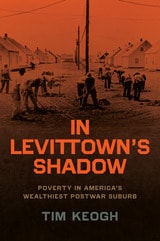
In Levittown’s Shadow
Poverty in America’s Wealthiest Postwar SuburbTim Keogh
University of Chicago Press, 2023
There is a familiar narrative about American suburbs: after 1945, white residents left cities for leafy, affluent subdivisions and the prosperity they seemed to embody. In Levittown’s Shadow tells us there’s more to this story, offering an eye-opening account of diverse, poor residents living and working in those same neighborhoods. Tim Keogh shows how public policies produced both suburban plenty and deprivation—and why ignoring suburban poverty doomed efforts to reduce inequality.
Keogh focuses on the suburbs of Long Island, home to Levittown, often considered the archetypal suburb. Here military contracts subsidized well-paid employment welding airplanes or filing paperwork, while weak labor laws impoverished suburbanites who mowed lawns, built houses, scrubbed kitchen floors, and stocked supermarket shelves. Federal mortgage programs helped some families buy orderly single-family homes and enter the middle class but also underwrote landlord efforts to cram poor families into suburban attics, basements, and sheds. Keogh explores how policymakers ignored suburban inequality, addressing housing segregation between cities and suburbs rather than suburbanites’ demands for decent jobs, housing, and schools.
By turning our attention to the suburban poor, Keogh reveals poverty wasn’t just an urban problem but a suburban one, too. In Levittown’s Shadow deepens our understanding of suburbia’s history—and points us toward more effective ways to combat poverty today.
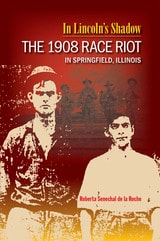
In Lincoln's Shadow
The 1908 Race Riot in Springfield, IllinoisRoberta Senechal de la Roche
Southern Illinois University Press, 2008
Winner of the Gustavus Myers Center Award for the Study of Human Rights in the United States!
Winner of the Illinois State Historical Society Superior Achievement Award!
This detailed case study of the 1908 race riot in Springfield, Illinois, which began only a few blocks from Abraham Lincoln’s family home, explores the social origins of rioting by whites against the city’s African American community after a white woman alleged that a black man had raped her. Over two days rioters wrecked black-owned businesses, burned neighborhoods to the ground, killed two black men, and injured many others.
Author Roberta Senechal de la Roche draws from a wide range of sources to describe the riot, identify the rioters and their victims, and challenge previous interpretations that attribute rioting to interracial competition for jobs, housing, or political influence. Written in a direct and clear style, In Lincoln’s Shadow documents a violent explosion of racial hatred that shocked the nation and reveals the complexity of white racial attitudes in the early twentieth century.

In Love with Jerzy Kosinski
A NovelAgate Nesaule
University of Wisconsin Press, 2009
After fleeing Latvia as a child, Anna Duja escapes Russian confinement in displaced persons camps and eventually arrives in America. Years later, she finds herself in a different kind of captivity on isolated Cloudy Lake, Wisconsin, living with her disarming but manipulative husband, Stanley.
Inspired by the transformation of Polish-Jewish émigré Jerzy Kosinski from persecuted wartime escapee to celebrity author in America, Anna slips away from Stanley and Cloudy Lake in small steps: learning to drive, making friends, moving to Madison, falling in love, and learning to forgive. Readers will applaud the book’s power, the beauty of its prose, and its strong evocation of a woman gradually finding her way in the wake of trauma.
Winner, the Chancellor’s Regional Literary Award, University of Wisconsin-Whitewater
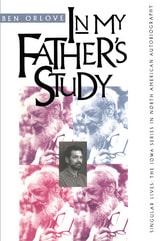
In My Father'S Study
Ben Orlove
University of Iowa Press, 1995
In 1921 Solomon Orlovski, a Russian Jew born in 1904, emigrated to America and transformed himself into Robert Orlove, a pattern maker in two senses of the term: during the day, he worked in the fur trade in New York and Chicago, making patterns for toys and hats; in his private life he became a self-taught artist who created prints, sketches, and collages in his study. More than sixty years later his son Ben—an anthropologist educated at Harvard and Berkeley—walked through the doorway of the deceased Robert's study and began to explore more than a half century of his father's experiences, thoughts, and emotions as well as his own very different life. His wry, sensitive combination of biography, memoir, and autobiography taps a remarkably rich vein of individual and collective experience in our diverse society.
Ben Orlove's dual narrative constitutes a family history of notable breadth and immediacy. By turns passionate and cool, dramatic and analytic, he excavates his father Robert's lifetime accumulation of diaries, letters, clippings, photographs, and artworks to create a convincing, deeply satisfying portrait that link both father and son.
In Our Hands
Educating Healthcare InterpretersLaurie Swabey
Gallaudet University Press, 2012
Deaf Americans have identified healthcare as the most difficult setting in which to obtain a qualified interpreter. Yet, relatively little attention has been given to developing evidence-based resources and a standardized body of knowledge to educate healthcare interpreters. In Our Hands: Educating Healthcare Interpreters addresses these concerns by delineating the best practices for preparing interpreters to facilitate full access for deaf people in healthcare settings.
The first section of this volume begins with developing domains and competencies toward a teaching methodology for medical and mental health interpreters. The next chapter describes a discourse approach that relies on analyzing actual transcripts and recordings to train healthcare interpreters. Other chapters feature a model mental health interpreter training program in Alabama; using a Demand-Control Schema for experiential learning; the risk of vicarious trauma to interpreters; online educational opportunities; and interpreting for deaf health care professionals. The second section offers four perspectives on education, including healthcare literacy of the clients; the education of Deaf interpreters; the development of standards for spoken-language healthcare interpreters; and the perspectives of healthcare interpreter educators in Europe. The range and depth of In Our Hands takes significant strides in presenting educational opportunities that can enhance the critical services provided by healthcare interpreters to deaf clients.
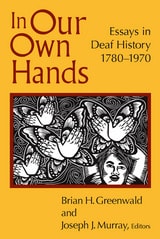
In Our Own Hands
Essays in Deaf History, 1780–1970Brian H. Greenwald
Gallaudet University Press, 2016
These essays reveal how deaf people used their agency to engage in vigorous debates about issues that constantly tested the values of deaf people as Americans. The debates overlapped with social trends and spilled out into particular physical and social spaces such as clubs and churches, as well as within families. These previously unexplored areas in Deaf history intersect with important subthemes in American history, such as Southern history, religious history, and Western history.
The contributors demonstrate that as deaf people pushed for their rights as citizens, they met with resistance from hearing people, and the results of their efforts were decidedly mixed. These works reinforce the Deaf community’s longstanding desire to be part of the nation. In Our Own Hands contributes to an increased understanding of the struggle for citizenship and expands our current understanding of race, gender, religion, and other trends in Deaf history.
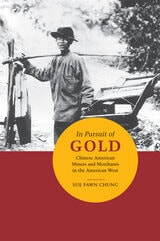
In Pursuit of Gold
Chinese American Miners and Merchants in the American WestSue Fawn Chung
University of Illinois Press, 2011
Both a history of an overlooked community and a well-rounded reassessment of prevailing assumptions about Chinese miners in the American West, In Pursuit of Gold brings to life in rich detail the world of turn-of-the-century mining towns in the Northwest. Sue Fawn Chung meticulously recreates the lives of Chinese immigrants, miners, merchants, and others who populated these towns and interacted amicably with their white and Native American neighbors, defying the common perception of nineteenth-century Chinese communities as insular enclaves subject to increasing prejudice and violence.
While most research has focused on Chinese miners in California, this book is the first extensive study of Chinese experiences in the towns of John Day in Oregon and Tuscarora, Island Mountain, and Gold Creek in Nevada. Chung illustrates the relationships between miners and merchants within the communities and in the larger context of immigration, arguing that the leaders of the Chinese and non-Chinese communities worked together to create economic interdependence and to short-circuit many of the hostilities and tensions that plagued other mining towns.
Peppered with fascinating details about these communities from the intricacies of Chinese gambling games to the techniques of hydraulic mining, In Pursuit of Gold draws on a wealth of historical materials, including immigration records, census manuscripts, legal documents, newspapers, memoirs, and manuscript collections. Chung supplements this historical research with invaluable first-hand observations of artifacts that she experienced in archaeological digs and restoration efforts at several of the sites of the former booming mining towns.
In clear, analytical prose, Chung expertly characterizes the movement of Chinese miners into Oregon and Nevada, the heyday of their mining efforts in the region, and the decline of the communities due to changes in the mining industry. Highlighting the positive experiences and friendships many of the immigrants had in these relatively isolated mining communities, In Pursuit of Gold also suggests comparisons with the Chinese diaspora in other locations such as British Columbia and South Africa.