Results by title
3258 books match the query 'Art' and 16 start with j
Jack Goldstein
All Day Night SkyAlexander Dumbadze
University of Chicago Press, 2025
A defining figure of the 1970s–80s New York art world, Jack Goldstein’s wide-ranging body of work, which included immaculate color films and radiant paintings of appropriated images composed by assistants, is both seductive and interpretively elusive. Goldstein’s legacy has been complicated by the mythology of his later years. Consumed by drug addiction, he dropped out of the art world in the 1990s, lived alone in an East Los Angeles trailer park, and resurfaced in a wave of critical fanfare at the turn of the millennium, before taking his own life in 2003.
Employing his signature blend of biography, theoretical reflection, and archival research, Alexander Dumbadze examines Goldstein’s life and career, homing in on the artist’s refusal to distinguish between mental and actual images. Progressing chronologically through key moments in Goldstein’s artistic and intellectual formation, the book offers a deeply complex portrait of this significant artist, along with a nuanced meditation on the nature of images, the meaning of artistic subjectivity, and the consequences of holding unwavering faith in art.
Jackie Ormes
The First African American Woman CartoonistNancy Goldstein
University of Michigan Press, 2008
At a time of few opportunities for women in general and even fewer for African American women, Jackie Ormes (1911–85) blazed a trail as a popular cartoonist with the major black newspapers of the day. Her cartoon characters (including Torchy Brown, Candy, Patty-Jo, and Ginger) delighted readers and spawned other products, including an elegant doll with a stylish wardrobe and “Torchy Togs” paper dolls. Ormes was a member of Chicago’s black elite, with a social circle that included the leading political figures and entertainers of the day. Her cartoons and comic strips provide an invaluable glimpse into American culture and history, with topics that include racial segregation, U.S. foreign policy, educational equality, the atom bomb, and environmental pollution, among other pressing issues of the times—and of today’s world as well. This celebrated biography features a large sampling of Ormes’s cartoons and comic strips, and a new preface.
Jacques Louis David, la traite négrière et l’esclavage
Son séjour à Nantes, mars-avril 1790Philippe Bordes
Diaphanes, 2023
Japan and American Children's Books
A JourneySybille Jagusch
Rutgers University Press, 2021
For generations, children’s books provided American readers with their first impressions of Japan. Seemingly authoritative, and full of fascinating details about daily life in a distant land, these publications often presented a mixture of facts, stereotypes, and complete fabrications.
This volume takes readers on a journey through nearly 200 years of American children’s books depicting Japanese culture, starting with the illustrated journal of a boy who accompanied Commodore Matthew Perry on his historic voyage in the 1850s. Along the way, it traces the important role that representations of Japan played in the evolution of children’s literature, including the early works of Edward Stratemeyer, who went on to create such iconic characters as Nancy Drew. It also considers how American children’s books about Japan have gradually become more realistic with more Japanese-American authors entering the field, and with texts grappling with such serious subjects as internment camps and the bombing of Hiroshima and Nagasaki.
Drawing from the Library of Congress’s massive collection, Sybille A. Jagusch presents long passages from many different types of Japanese-themed children’s books and periodicals—including travelogues, histories, rare picture books, folktale collections, and boys’ adventure stories—to give readers a fascinating look at these striking texts.
Published by Rutgers University Press, in association with the Library of Congress.
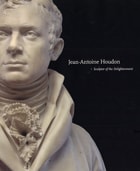
Jean-Antoine Houdon
Sculptor of the EnlightenmentAnne L. Poulet
University of Chicago Press, 2003
This lavish exhibition catalogue will immediately take its rightful place as the definitive work on Houdon. With more than one hundred color plates and two hundred black and white halftones, Jean-Antoine Houdon: Sculptor of the Enlightenment illustrates every stage of the sculptor's fascinating career, from his early portrayals of Louis XVI and Marie Antoinette to his stunning portraits of American patriots such as George Washington, the Marquis de Lafayette, John Paul Jones, Benjamin Franklin, and Thomas Jefferson. Indeed the images we hold dear of legendary Enlightenment figures like Diderot, Rousseau, d'Alembert, and Voltaire are based on works by Houdon. More than mere representations, these sculptures provide us fascinating, intimate glimpses into the very core of who these figures were. Houdon's genius animated even his less illustrious subjects, like his portraits of his family and friends, and filled his sculptures of children with delicacy and freshness. Accompanying the images of Houdon's masterworks are four insightful essays that discuss Houdon's views on art (based in part on a newly discovered manuscript written by the artist) as well as his prominence in the highly varied cultures of eighteenth-century France, Germany, and Russia.
From aristocrats to revolutionaries, actors to philosophers, Houdon's amazingly vivid portraits constitute the visual record of the Enlightenment and capture the true spirit of a remarkable age. Jean-Antoine Houdon finally gives these gorgeous works their due.
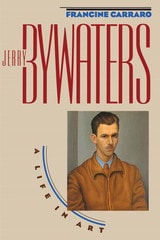
Jerry Bywaters
A Life in ArtBy Francine Carraro
University of Texas Press, 1994
As an artist, art critic, museum director, and art educator, Jerry Bywaters reshaped the Texas art world and attracted national recognition for Texas artists. This first full-scale biography explores his life and work in the context of twentieth-century American art, revealing Bywaters' important role in the development of regionalist painting.
Francine Carraro delves into all aspects of Bywaters' career. As an artist, Bywaters became a central figure and spokesman for a group of young, energetic painters known as the Dallas Nine (Alexandre Hogue, Everett Spruce, Otis Dozier, William Lester, and others) who broke out of the limitations of provincialism and attained national recognition beginning in the 1930s.
As director of the Dallas Museum of Fine Arts, art critic for the Dallas Morning News, and professor of art and art history at Southern Methodist University, Bywaters became a champion of the arts in Texas. Carraro traces his strong supporting role in professionalizing art institutions in Texas and defendlng the right to display art considered "subversive" in the McCarthy era.
From these discussions emerges a finely drawn portrait of an artist who used a vocabulary of regional images to explore universal themes. It will be of interest to all students of American studies, national and regional art history, and twentieth-century biography.
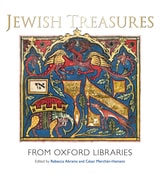
Jewish Treasures from Oxford Libraries
Edited by Rebecca Abrams & César Merchán-Hamann
Bodleian Library Publishing, 2020
Saved for posterity by religious scholarship, intellectual rivalry, and political ambition, these extraordinary collections also detail the consumption and circulation of knowledge across the centuries, forming a social and cultural history of objects moved across borders from person to person. Together, they offer a fascinating journey through Jewish intellectual and social history.
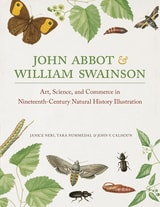
John Abbot and William Swainson
Art, Science, and Commerce in Nineteenth-Century Natural History IllustrationJanice Neri, Tara Nummedal, and John V. Calhoun
University of Alabama Press, 2019
During his lifetime (1751–ca. 1840), English-born naturalist and artist John Abbot rendered more than 4,000 natural history illustrations and profoundly influenced North American entomology, as he documented many species in the New World long before they were scientifically described. For sixty-five years, Abbot worked in Georgia to advance knowledge of the flora and fauna of the American South by sending superbly mounted specimens and exquisitely detailed illustrations of insects, birds, butterflies, and moths, on commission, to collectors and scientists all over the world.
Between 1816 and 1818, Abbot completed 104 drawings of insects on their native plants for English naturalist and patron William Swainson (1789–1855). Both Abbot and Swainson were artists, naturalists, and collectors during a time when natural history and the sciences flourished. Separated by nearly forty years in age, Abbot and Swainson were members of the same international communities and correspondence networks upon which the study of nature was based during this period.
The relationship between these two men—who never met in person—is explored in John Abbot and William Swainson: Art, Science, and Commerce in Nineteenth-Century Natural History Illustration. This volume also showcases, for the first time, the complete set of original, full-color illustrations discovered in 1977 in the Alexander Turnbull Library in Wellington, New Zealand. Originally intended as a companion to an earlier survey of insects from Georgia, the newly rediscovered Turnbull manuscript presents beetles, grasshoppers, butterflies, moths, and a wasp. Most of the insects are pictured with the flowering plants upon which Abbot thought them to feed. Abbot’s journal annotations about the habits and biology of each species are also included, as are nomenclature updates for the insect taxa.
Today, the Turnbull drawings illuminate the complex array of personal and professional concerns that informed the field of natural history in the eighteenth and nineteenth centuries. These illustrations are also treasured artifacts from times past, their far-flung travels revealing a world being reshaped by the forces of global commerce and information exchange even then. The shared project of John Abbot and William Swainson is now brought to completion, signaling the beginning of a new phase of its significance for modern readers and scholars.
John Heartfield and the Agitated Image
Photography, Persuasion, and the Rise of Avant-Garde PhotomontageAndrés Mario Zervigón
University of Chicago Press, 2012
John Van Alstine
Sculpture, 1971–2018John Van Alstine
The Artist Book Foundation, 2019
For nearly fifty years, John Van Alstine has created abstract sculptures forged from steel and stone. In John Van Alstine: Sculpture, 1971–2018, three notable essayists explore the sculptor's abstract landscapes that reveal the complex synergy between natural foces and man-made elements; by grappling with the challenges of balancing stone and steel, Van Alstine's indoor, outdoor, and site-specific sculptures are measured and calculated, yet simultaneously poetic; their swooping angular lines create expansive spaces beyond the limits of their stone-and-steel frames to unveil our collective history and imagination, illuminating a deft interplay of natural energies and the human experience.
The artist weaves into his works elements of mythology, celestial navigation, implements, human figures, movement, urban forms, and found objects, while using motion, balance, and intertia to incorporate the eternal forces of gravity, tension, and erosion. In an essay on his drawings, Van Alstine details the critical role they play in the initiation and planning of his projects, offering the reader a firsthand perspective on the artist's creative process. The Artist Book Foundation is gratified to publish this lavishly illustrated monograph on an esteemed and prolific contemporary artist.
Josef Albers, Late Modernism, and Pedagogic Form
Jeffrey Saletnik
University of Chicago Press, 2022
An extraordinary teacher whose influence continues today, Josef Albers helped shape the Bauhaus school in Germany and established the art and design programs at Black Mountain College in North Carolina and Yale University. His books about color theory have informed generations, and his artworks are included in the canon of high-modernist non-representational art. The pedagogy Albers developed was a dynamic approach to teaching that transcended the modernist agendas and cultivated a material way of thinking among his students.
With this book, Jeffrey Saletnik explores the origins of Albers’s teaching practices and their significance in conveying attitudes about form, material, and sensory understanding to artists Eva Hesse and Richard Serra. He demonstrates how pedagogy is a framework that establishes the possibility for artistic discourse and how the methods through which artists learn are manifested in their individual practices. Tracing through lines from Albers’s training in German educational traditions to his influence on American postwar art, Josef Albers, Late Modernism, and Pedagogic Form positions Albers’s pedagogy as central to the life of modernism.
Josephine Baker in Art and Life
THE ICON AND THE IMAGEBennetta Jules-Rosette
University of Illinois Press, 2006
Josephine Baker (1906-1975) was a dancer, singer, actress, author, politician, militant, and philanthropist, whose images and cultural legacy have survived beyond the hundredth anniversary of her birth. Neither an exercise in postmodern deconstruction nor simple biography, Josephine Baker in Art and Life presents a critical cultural study of the life and art of the Franco-American performer whose appearances as the savage dancer Fatou shocked the world.
Although the study remains firmly anchored in Josephine Baker’s life and times, presenting and challenging carefully researched biographical facts, it also offers in-depth analyses of the images that she constructed and advanced. Bennetta Jules-Rosette explores Baker’s far-ranging and dynamic career from a sociological and cultural perspective, using the tools of sociosemiotics to excavate the narratives, images, and representations that trace the story of her life and fit together as a cultural production.
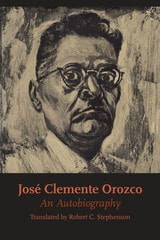
José Clemente Orozco
An AutobiographyBy José Clemente Orozco; Translated by Robert C. Stephenson; Introduction by John Palmer Leeper
University of Texas Press, 1962
The artistic eminence of José Clemente Orozco (1883–1949) is such that he has been called “the greatest painter the Americas have produced.” In his Autobiography he also attains literary distinction. He is a writer who recounts the history of his period from a personal point of view and yet scarcely mentions himself. He is an observer who writes about the history of his country and of his country’s art, yet makes his own character implicit in the narrative.
The character that emerges is charming. It is that of a man strong but retiring, sharply critical of what he disapproves yet generous in praise of what he admires, decided in his views but modest in his assumptions and given to understatement in describing his own activities, averse to war and political struggle yet eager for conflict of ideas, always dedicated to the welfare of humanity.
Through the details of day-by-day living, he presents the panorama of the Mexican Revolution and of events in other parts of the world to which he traveled. His is a personal story of the Revolution, giving his reactions (as those of any common man) to the barbarities of war: “Insolent leaders, inflamed with alcohol, taking whatever they wanted at pistol point. . . . By night in dark streets the sound of gunplay, followed by screams, blasphemies, and vile insults. Breaking windows, sharp blows, cries of pain, and shots again.”
Orozco’s ability, as a painter, to see the details and to sense the mood of a place is apparent in his word pictures of the places he visited: “After six in the evening Paris is an immense brothel.” “London was like the seat of a noble family which had been exceedingly rich but had lost its fortune.” “Old, old Montmartre [is] a moldering cadaver . . .”
Orozco also makes some penetrating observations on art itself. Although he emphasizes individuality and freedom from tradition in art, he abhors unschooled art, especially such extremes as primitive Impressionism and other groups that lack instruction in the general principles of art, in technique, in theory of color, in perspective. He says ironically of the artistically uneducated: “Blessed are the ignorant and the imbecile, for theirs is the supreme glory of art! Blessed are the idiots and the cretins, for masterpieces of painting shall issue from their hands!” Orozco believes in education, not only for the artists but for their public. Taste in art can come only through understanding of the purpose and the techniques of art—through knowledge. Without training, public taste “mostly likes sugar, honey, and candy. Diabetic art. The greater the amount of sugar, the greater the—commercial—success.”
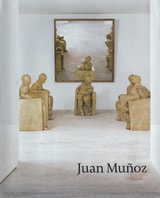
Juan Munoz
Neal Benezra and Olga M. Viso
University of Chicago Press, 2001
Muñoz's early work focused on architectural objects that implied a transitory human presence. Then, defying the trend among progressive artists, he began to introduce figures into his work. Casting his figures in papier-mâché, resin, and eventually bronze, Muñoz limited their size and descriptive details to heighten their psychological impact. In the 1990s, Muñoz created his signature "conversation pieces," large ensembles of figures installed in indoor or outdoor settings. Calling upon a wide range of sources in literature, music, film, as well as painting and sculpture, Muñoz's work explores the nature of psychological interaction and engages the viewer on a variety of perceptual levels.
Juan Muñoz includes essays by Neal Benezra, art critic Michael Brenson, and Olga Viso, as well as an interview with the artist by Paul Shimmel. Also featuring highlights from a 2001 installation commissioned by London's Tate Modern, Juan Muñoz is the most comprehensive overview of this challenging and exciting artist's work.
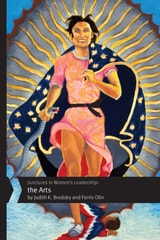
Junctures in Women's Leadership
The ArtsBrodsky, Judith K
Rutgers University Press, 2018
Amongst the women discussed are Bertha Honoré Palmer, Louise Noun, Samella Lewis, Julia Miles, Miriam Colón, Jaune Quick-To-See Smith, Bernice Steinbaum, Anne d’Harnoncourt, Martha Wilson, Jawole Willa Jo Zollar, Kim Berman, Gilane Tawadros, Joanna Smith, and Veomanee Douangdala.
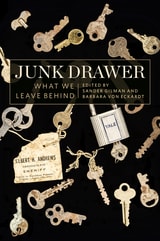
Junk Drawer
What We Leave BehindSander Gilman
University of Delaware Press, 2026
Junk Drawer: What We Leave Behind explores the personal objects that were once treasured by their owners yet were ultimately consigned to online “junk drawer” sales. Photographer and coeditor Barbara Von Eckardt acquired these random assortments from estate remnants on eBay and has documented their contents through evocative, sepia-toned images. In doing so, she has breathed new life into items that the world had deemed valueless, but that hint at the stories and identities of those who once owned them.
In addition to the photographs, Von Eckardt and coeditor Sander L. Gilman have gathered essays by scholars across disciplines, each offering a unique perspective on how such everyday objects can carry profound meaning. The result is a “junk drawer” of reflections, as varied and thought-provoking as the artifacts themselves. It is a moving testament to the emotional and cultural resonance of ordinary things—and an invitation to look more deeply at the objects surrounding us.