Results by title
662 books match the query 'China' and 4 start with j
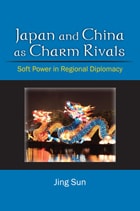
Japan and China as Charm Rivals
Soft Power in Regional DiplomacyJing Sun
University of Michigan Press, 2013
In international relations today, influence is as essential as military and economic might. Consequently, leaders promote favorable images of the state in order to attract allies and win support for their policies. Jing Sun, an expert on international relations and a former journalist, refers to such soft power campaigns as "charm offensives."
Sun focuses on the competition between China and Japan for the allegiance of South Korea, Taiwan, and other states in the region. He finds that, instead of adopting a one-size-fits-all approach, the Chinese and the Japanese deploy customized charm campaigns for each target state, taking into consideration the target's culture, international position, and political values. He then evaluates the effectiveness of individual campaigns from the perspective of the target state, on the basis of public opinion polls, media coverage, and the response from state leaders.
A deep, comparative study, Japan and China as Charm Rivalsenriches our understanding of soft power by revealing deliberate image campaign efforts and offering a method for assessing the effectiveness of such charm offensives.

Jesuit Letters From China, 1583-84
M. Howard Rienstra, EditorTranslated by M. Howard Rienstra
University of Minnesota Press, 1986
Jesuit Letters From China, 1583–84 was first published in 1986. Minnesota Archive Editions uses digital technology to make long-unavailable books once again accessible, and are published unaltered from the original University of Minnesota Press editions.
The first eight letters from Jesuit missionaries on mainland China were written in 1583–84 and published in Europe in 1586. M Howard Rienstra's translated marks their first appearance in English. The letters chronicle the patient efforts of Michele Ruggieri and the famed Matteo Ricci to learn Chinese, to gain acceptance in Chinese society, and to explain Christianity to a highly sophisticated non-Christian culture. They also described the China of the late Ming dynasty (1368–1644), a country whose immense size and population had excited the imagination of Europeans for generations.
It was Francis Xavier's dream that this mighty kingdom and civilization be opened to the Christian gospel. His dream was at least tentatively fulfilled when Michele Ruggieri was granted residence first in Canton and then in Chao-ch'ing in 1583. Accompanied first by Francesco Pasio and later by Matteo Ricci, Ruggieri initiated the Christian mission in China. Their letters, published initially as an appendix to a volume of Jesuit letters from Japan, were abbreviated and censored by their European editor. In edited form, the letters appeared in 1586 in one French, on German, and three Italian editions.
The China of Ruggieri and Matteo Ricci had remained, however, both suspicious of, and closed to, foreigners - a fact which the original letters do not gloss over. Rienstra was carefully compared the abbreviated and censored versions of these letters in their originals, still preserved in the Jesuit archives in Rome. The letters in general indicate how tenuous the Jesuits' situation was and note candidly that only two baptisms had been performed on the mainland during their stay. These results stand in marked contracts to the reports from Japan of tens of thousands of baptisms and to the reports from Portuguese Macao, where Chinese converts were compelled to wear European cloths and to take European names.
Such Europeanization was thought to be inappropriate to a successful Christian mission in China. Though criticized at the time by their colleagues in Macao, Ruggieri, Pasio, and Ricci committed themselves to a program of cultural respect and accommodation. They learned both written and spoken Chinese, ingratiated themselves with the ruling classes by exhibiting their learning and courtesy, and appeared to have become Chinese themselves. When Matteo Ricci became Ruggieri's successor and his name became synonymous with the success of the Jesuit mission in China, it was to these methods that its success was owed. Unfortunately, the prevailing European ethnocentrism could not accept the concept of cultural accommodation. The editors thus censored the letters to convey the impression of a triumphant and culturally superior Christian mission in China.
Jesuit Letters From China is a publication of the James Ford Bell Library at the University of Minnesota.

Jia Zhangke on Jia Zhangke
Michael Berry
Duke University Press, 2022
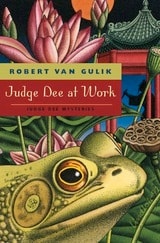
Judge Dee at Work
Eight Chinese Detective StoriesRobert van Gulik
University of Chicago Press, 1992
The eight short stories in Judge Dee at Work cover a decade during which the judge served in four different provinces of the T’ang Empire. From the suspected treason of a general in the Chinese army to the murder of a lonely poet in his garden pavilion, the cases here are among the most memorable in the Judge Dee series.