1566 books match the query 'Christianity' and 39 start with j
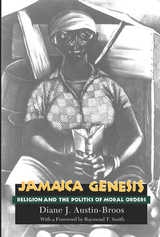
cover of Jamaica Genesis: Religion and the Politics of Moral Orders

Jamaica Genesis

Religion and the Politics of Moral Orders

Diane J. Austin-Broos

University of Chicago Press, 1997
How has Pentecostalism, a decidedly American form of Christian revivalism, managed to achieve such phenomenal religious ascendancy in a former British colony among people of predominately African descent? According to Diane J. Austin-Broos, Pentecostalism has flourished because it successfully mediates between two historically central yet often oppositional themes in Jamaican religious life—the characteristically African striving for personal freedom and happiness, and the Protestant struggle for atonement and salvation through rigorous ethical piety. With its emphasis on the individual experience of grace and on the ritual efficacy of spiritual healing, and with its vibrantly expressive worship, Jamaican Pentecostalism has become a powerful and compelling vehicle for the negotiation of such fundamental issues as gender, sexuality, race, and class. Jamaica Genesis is a work of signal importance to all those concerned not simply with Caribbean studies but with the ongoing transformation of religion andculture.
[more]
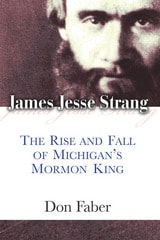
cover of James Jesse Strang: The Rise and Fall of Michigan's Mormon King

James Jesse Strang

The Rise and Fall of Michigan's Mormon King

Don Faber

University of Michigan Press, 2016

Few lives experience a meteoric rise and fall like that of James Jesse Strang’s. An unsuccessful lawyer from upstate New York, he converted to Mormonism in 1844 and quickly entered the inner circle of the controversial new faith’s founder, Joseph Smith Jr. Upon Smith’s assassination, Strang sought to be named his successor as leader of the Mormons. Instead, Strang was excommunicated in 1850, though not before gathering a group of followers, who settled with him on remote Beaver Island in northern Lake Michigan and ordained Strang king of the small enclave. King Strang elicited both ire and stubborn admiration from an ever-growing list of opponents, his actions closely monitored by President Millard Fillmore himself. In 1866, Strang was assassinated, seemingly with the assistance of federal authorities.

This captivating new biography by Don Faber recounts the fascinating story of Strang’s path from impoverished New York farm boy to one of the most colorful and contentious personalities in Michigan history. Avoiding the nonsense, misinformation, and twisted facts so prevalent about the man, readers meet the historical Strang stripped of myth, demonization, and popular fancy—a true celebrity of the mid-nineteenth century who both shaped and was shaped by the colorful times in which he lived. This book will appeal to readers interested in the history of Michigan, the nineteenth century, and the Second Great Awakening.
[more]
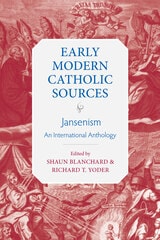
cover of Jansenism: An International Anthology

Jansenism

An International Anthology

Shaun Blanchard

Catholic University of America Press, 2024
Jansenism: An International Anthology is the first comprehensive anthology of Jansenist texts in English translation. Covering the full sweep of the Jansenist movement from the 1630s until the early nineteenth century, this anthology is a major asset to historians of early modernity, theologians, advanced and beginner students, and interested non-specialists. Readers of English can now directly hear the voices of the women and men, nuns and priests, and politicians and pamphleteers embroiled in some of the most dynamic controversies of early modern Christianity. While giving due attention to France, the anthology showcases the geographic breadth of Jansenism, from Portugal to Lebanon. Consequently, a team of translators have provided texts translated not just from French and Latin; selections from German, Spanish, Portuguese, Italian, and Arabic also appear here. Blanchard and Yoder present a diverse range of texts, including letters, tracts, periodical excerpts, books, treatises, and synodal documents. These readings cover the controversies over divine grace and penance for which Jansenism is infamous, but they also show the widening scope of Jansenists’ reformist concerns as the movement developed and changed. They address issues such as liturgical reform, devotion to Mary and the saints, politics, religious toleration, prayer, gender and the role of women in the Church, polemics, and ecclesiastical reform. The whole volume is introduced by an essay introducing Jansenism, exposing the important themes, summarizing the relevant scholarship, and contextualizing the content that will follow. Jansenism: An International Anthology provides the first port-of-call for the study of Jansenism in English. The anthology presents a diverse and rich selection of primary source texts and draws on the best recent research into the fascinating and controversial transnational phenomena called “Jansenism.”
[more]
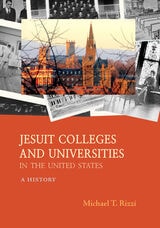
cover of Jesuit Colleges and Universities in the United States: A History

Jesuit Colleges and Universities in the United States

A History

Michael T. Rizzi

Catholic University of America Press, 2022
Jesuit Colleges and Universities in the United States provides a comprehensive history of Jesuit higher education in the United States, weaving together the stories of the fifty-four colleges and universities that the Jesuits have operated (successfully and unsuccessfully) since 1789. It emphasizes the connections among the institutions, exploring how certain Jesuit schools like Georgetown University gave birth to others like Boston College by sharing faculty, financial resources, accreditation, and even presidents throughout their history. The book also explores how the colleges responded to common challenges – including anti-Catholic prejudice in the United States, the push from government authorities to modernize their shared curriculum, and the pull from Roman authorities to remain loyal to Catholic tradition. The story is comprehensive, covering the colonial era to the present, and takes a fresh look at themes like the rise of the research university in the 1880s and the administrative reforms of the 1960s. It also provides a modern and timely perspective on the role of Jesuit colleges in racial justice, women’s education, and other civil rights issues, drawing attention to underappreciated Jesuit contributions in these areas. It draws from both published and archival sources on the history of each institution to construct a single narrative, identifying common themes, challenges, and trends. Through the eyes of Jesuit colleges, it traces the evolution of American higher education and the role of Catholics in the United States over more than two centuries.
[more]
cover of Jesus and Mary Reimagined in Early Christian Literature

Jesus and Mary Reimagined in Early Christian Literature

Vernon K. Robbins

SBL Press, 2015

Explore the diverse character of emerging Christian narratives

This book presents essays that show how prophetic and priestly emphases in Luke and Acts, and emphasis on Jesus’s existence prior to creation in the Gospel of John, are reworked in some second- and third-century Christian literature. Early Christians interpreted and expressed the storylines of Jesus, Mary, and other important figures in ways that created new images and stories. Contributors show the effect of including rhetography, the rhetoric of a text that prompts images and pictures in the mind of a hearer or reader, in interpretation of texts.

Features:

  • Readings that attempt to account for the development of richly creative and complicated early Christian traditions
  • Essays bridging New Testament studies and interpretation of Early Christian literature
  • Interpretations that integrate social and rhetorical interpretations
[more]
cover of Jesus the Mediator

Jesus the Mediator

William Brownsberger

Catholic University of America Press, 2013
In Jesus the Mediator, William L. Brownsberger offers an account of the human psychology assumed by the Second Person of the Trinity in light of its salvific significance
[more]
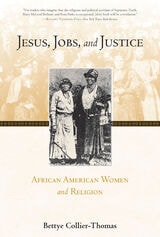
cover of Jesus, Jobs, and Justice: African American Women and Religion

Jesus, Jobs, and Justice

African American Women and Religion

Bettye Collier-Thomas

Temple University Press, 2013
Bettye Collier-Thomas’s groundbreaking book, Jesus, Jobs, and Justice—now available for the first time in paperback—provides a remarkable account of the religious faith, social and political activism, and extraordinary resilience of black women during the centuries of American growth and change. As co-creators of churches, women were a central factor in their development. However, women often had to cope with sexism in black churches, as well as racism in mostly white denominations.
 
Collier-Thomas skillfully shows how black church women created national organizations such as the National Association of Colored Women, the National League of Colored Republican Women, and the National Council of Negro Women to fight for civil rights and combat discrimination. She also examines how black women missionaries sacrificed their lives in service to their African sisters whose destiny they believed was tied to theirs.
 
While religion has been a guiding force in the lives of most African Americans, for black women it has been essential. Jesus, Jobs, and Justice restores black women to their rightful place in American and black history and demonstrates their faith in themselves, their race, and their God.
[more]
cover of Jewish Allegory in Eighteenth-Century Christian Imagination

Jewish Allegory in Eighteenth-Century Christian Imagination

Rebecca K. Esterson

SBL Press, 2023

Rebecca K. Esterson explores how Christian methods of biblical interpretation shifted during the eighteenth century, producing a rhetorical rejection of allegory while embracing literalism. Under the influence of Enlightenment concepts of human reason and advances in the experimental sciences, Christian interpreters began casting Jewish biblical interpretation as allegorical, while presenting Christian interpretation as literal. This shift in self-understanding allowed Christians to portray their own interpretations as scientifically, philosophically, and historically superior, resulting in a new way of othering the Jewish people. This study of biblical exegesis, theology, philosophy, and the arts in English, Swedish, and German contexts is an essential resource for scholars interested in biblical reception history and the history of Jewish-Christian relations.
[more]
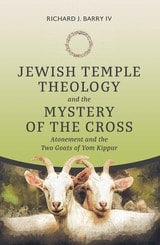
cover of Jewish Temple Theology and the Mystery of the Cross: Atonement and the Two Goats of Yom Kippur

Jewish Temple Theology and the Mystery of the Cross

Atonement and the Two Goats of Yom Kippur

Richard J. Barry IV

Catholic University of America Press, 2023
On the Day of Atonement, two goats were brought before the high priest at the temple. One was chosen as the goat for the Lord, a spotless sacrifice, and the other was set aside for Azazel, doomed to bear sins into the wilderness. Jewish Temple Theology and the Mystery of the Cross shows how a theological appreciation for the two movements of Yom Kippur makes it possible to identify the paradox at the heart of Christian soteriology: in his single atoning act, Jesus Christ fulfills the work of both goats, without confusion, without division. Appreciation for this paradox helps illuminate many of the doctrinal debates in the history of Christian soteriology and offers a compelling way forward. Jewish Temple Theology and the Mystery of the Cross begins with a survey of biblical geography: first, a rich theological pilgrimage to Mount Zion, the home of beauty, goodness, and truth, and then to the surrounding desert, the wilderness of sin and sorrow. To appreciate the Yom Kippur liturgy, and to understand the priestly word “atonement,” one must be oriented by this cosmic stage. Drawing on the best modern historical-critical scholarship, this volume reveals the wonders hidden in Leviticus and shows how a sophisticated theological interpretation of this book leads to breakthroughs in our understanding of Christ’s saving work. Seeing the mystery of the cross from the perspective of the ancient Jewish scriptures has surprising results. For example, Richard Barry shows how Hans Urs von Balthasar’s controversial theology of Holy Saturday is a compelling development of Azazel-goat soteriology; it is not only biblically licit but is in some ways mandated by the logic of Yom Kippur. At the same time, David Bentley Hart is celebrated for the way he powerfully advances modern YHWH-goat soteriology, yet obedience to the logic of Yom Kippur also necessitates a nuanced biblical critique of his muscular universalism. How can Christ fulfill the seemingly contradictory movements of both goats in a single saving work? Grappling with that question, Jewish Temple Theology and the Mystery of the Cross seeks to draw nearer to the heart of the mystery of salvation.
[more]
cover of Jewish-Catholic Engagements on Israel: Holy Land, Political Territory, or Theological Promise?

Jewish-Catholic Engagements on Israel

Holy Land, Political Territory, or Theological Promise?

Gavin D'Costa

Catholic University of America Press, 2025
This is the first volume of its kind, bringing together a group of international Jewish and Catholic scholars in creative conversation addressing the question of the status of the land called Israel. Is Israel best viewed as political territory, the ‘Holy Land’, or part of the biblical promise? If committing to one of these options, what are the theological and political consequences? The book is divided into sections that take the reader through several related questions that bear upon this topic. There is a preface with an overview of how far Catholic Jewish conversations have gone since Nostra Aetate, and how these conversations have now begun to address the land. Then there is an attempt to advance positive theological cases by Catholics and Jews affirming the people in the land as theologically significant, not without difficulties regarding the state itself. The next section deals with the bible/Tanakh as the basis of such claims and addresses the different reading strategies by each community. One of the central questions is then addressed: what of the Palestinian people, do the biblical promise to the Jewish people spell disaster for the Palestinians? Can revelation mean dispossession? The following essays address a stumbling block for both groups: do Jewish and Christian theologies underwrite a nation state? Isn’t this option perilously close to God underwriting nationalism? The book ends with subtle critiques of the entire venture undertaken in this volume. Essential reading for Catholic Jewish relations and one that addresses one of the most pressing contemporary questions for both religions.
[more]
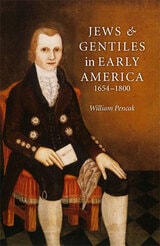
cover of Jews and Gentiles in Early America: 1654-1800

Jews and Gentiles in Early America

1654-1800

William Pencak

University of Michigan Press, 2005
"Jews and Gentiles in Early America is the best account I have seen about Jews in America in this era. William Pencak's research is extensive and the informative depth with which he addresses important political issues is unsurpassed. His analysis is unfailingly sophisticated and virtually unchallengeable. He paints with a broad stroke, putting his narrative and interpretations not only in a wide American context, but also in an international scope. . . . [A]n exceptional contribution to American Jewish history and colonial history in general." -Frederic Cople Jaher, University of Illinois at Champaign-Urbana "Bill Pencak is no stranger either to novel topics or unconventional ideas. In this eminently readable and substantive contribution to the history of Jews in early America, Pencak has once again pushed the boundaries of debate in original and constructive ways." ---Edith Gelles, Stanford University "William Pencak has produced a learned and informative volume on the nature of Jewish-Gentile relations in colonial America. The book's reconstruction of Jewish life in colonial New York, Newport, Charleston, Savannah, and Philadelphia is based on a broad array of primary and secondary source materials that persuasively demonstrate the fact that, despite a truly remarkable level of social acceptance, colonial Jews simultaneously encountered bouts of rejection. Scholars and general readers alike will be indebted to Dr. Pencak for deepening our understanding of the complex and often contradictory ways in which non-Jews related to their Jewish neighbors during this formative period in the nation's history." ---Dr. Gary P. Zola, Executive Director of The Jacob Rader Marcus Center of the American Jewish Archives and Associate Professor of the American Jewish Experience at Hebrew Union College-Jewish Institute of Religion Jews and Gentiles in Early America offers a uniquely detailed picture of Jewish life from the mid-seventeenth century through the opening decades of the new republic. Though the first national census in 1790 counted barely three thousand Jews, the Jewish community was nevertheless far more important in the history of early America than their numbers suggest, author William Pencak reveals in this fascinating chronicle of an often-overlooked aspect of American Jewish history. Pencak approaches his topic from the perspective of early American, rather than strictly Jewish, history. Rich in colorful narrative and animated with scenes of early American life, Jews and Gentiles in Early America tells the story of the five communities-New York, Newport, Charleston, Savannah, and Philadelphia-where most of colonial America's small Jewish population lived. How did these communities rise and fall? How did they interact with the larger gentile population? Pencak's exploration of popular anti-semitism in the pre-Revolutionary era describes the persistence of prejudices derived from traditional European society, and his abundantly detailed community studies explore the forms these prejudices took in colonial America, some of which continue to this day.
[more]
cover of Jews, Christians, and the Abode of Islam: Modern Scholarship, Medieval Realities

Jews, Christians, and the Abode of Islam

Modern Scholarship, Medieval Realities

Jacob Lassner

University of Chicago Press, 2012
In Jews, Christians, and the Abode of Islam, Jacob Lassner examines the triangular relationship that during the Middle Ages defined—and continues to define today—the political and cultural interaction among the three Abrahamic faiths. Lassner looks closely at the debates occasioned by modern Western scholarship on Islam to throw new light on the social and political status of medieval Jews and Christians in various Islamic lands from the seventh to the thirteenth century. Utilizing a vast array of primary sources, Lassner balances the rhetoric of literary and legal texts from the Middle Ages with other, newly discovered medieval sources that describe life as it was actually lived among the three faith communities. Lassner shows just what medieval Muslims meant when they spoke of tolerance, and how that abstract concept played out at different times and places in the real world of Christian and Jewish communities under Islamic rule. Finally, he considers what a more informed picture of the relationship among the Abrahamic faiths in the medieval Islamic world might mean for modern scholarship on medieval Islamic civilization and, not the least, for the highly contentious global environment of today.
[more]
cover of John A. Widtsoe: Scientist and Theologian, 1872-1952

John A. Widtsoe

Scientist and Theologian, 1872-1952

Alexander, Thomas G.

Signature Books, 2023

Born in Norway, John A. Widtsoe (1872–1952), was renowned for his expertise in irrigation and dry farming. His pioneering work pushed the boundaries of and contributed significantly to advancements in agricultural practices. Moreover, his forays into the field of biochemistry exemplified his relentless pursuit of scientific understanding.

Widtsoe’s journey came with challenges especially after he was called as an apostle in the Church of Jesus Christ of Latter-day Saints. As president of both Utah State Agricultural College (1907–16) and the University of Utah (1916–21), he faced controversies and obstacles head-on. Additionally, he played a significant role in overseeing the expansion of the LDS gospel in both Europe and the United States. He was highly esteemed within his church due to his ability to provide thorough and insightful explanations of various aspects of church doctrine and reconcile them with scientific truths. Throughout the early-to-mid-twentieth century, he symbolized to many members the successful integration of religious faith with secular knowledge, inspiring countless individuals to embrace both realms in harmony.
[more]
cover of John Chrysostom, Theologian of the Eucharist

John Chrysostom, Theologian of the Eucharist

Kenneth J. Howell

Catholic University of America Press, 2024
Despite the fact that John Chrysostom wrote more on the Eucharist than any other Greek Church Father, there has never been a full treatment of his doctrine in English. In this book, Kenneth Howell brings together a wide array of sources from which he develops a many-sided portrait of Chrysostom’s eucharistic thought. While the Antiochene preacher assumed the real presence and the sacrificial nature of the Eucharist, he focused more on the moral and spiritual implications of communion. At the root of his theology lies the conviction that the Eucharist with its home in the liturgy is the extension of Christ’s incarnate life through space and time. All that Christ accomplished in his life, death, and resurrection is present and available to the communing Christian who stands in union with the angelic hosts in the liturgy of the church. John’s preaching at times reaches encomiastic proportions as he never tires of praising the benefits and power of the Eucharist and he deftly applies the sacrament to the struggle of virtue and vice as he explores both the invitation and the obstacles to communion. Among the moral implications of the Eucharist, John seems to distinguish well between sins arising from human weakness versus malicious dispositions freely chosen. He is especially keen to exhort his hearers to lay aside the remembrance of evil (mnesikakia) done to them in their past lives. Humility and forbearance are two essential virtues in arriving at forgiveness of past injuries. And lack of forgiveness is like greed in that both constitute a turn in on oneself. The Eucharist demands love of neighbor and active ministry to the less fortunate of the world. For John, God is interested in golden souls more than golden chalices.
[more]
cover of John Doyle Lee

John Doyle Lee

Juanita Brooks

Utah State University Press, 1992

John D. Lee is most often remembered as the only man executed for his role in the infamous 1857 massacre by Mormons of a California-bound emigrant train at Mountain Meadows in southern Utah. This classic biography examines the circumstances and events which brought Lee to that end. It also, however, looks at the other dimensions of his active life, showing that he was a far more important and complex man than subsequent generations, eager for a dark symbol, have acknowledged. He was a leader in the Mormon colonization of southern Utah and northern Arizona. With the title Indian Farmer, he became his church's emissary to Indians in the area. During and prior to the Mormon migration west, he participated in and kept detailed accounts of the conflicts and other events in Missouri, Illinois, and along the trail. An early practitioner, and recorder, of the custom of plural marriage, he was the adopted son of Brigham Young and a close associate of other Mormon leaders. His occupations included builder, farmer, missionary, ferry operator, town founder, and faith leader.

Using Lee's extensive diaries, bolstered by numerous supporting accounts, Juanita Brooks has not only written a thorough and objective portrait of one man's life, a life which would be worthy of study even if it were not controversial, she also has provided numerous insights into early Mormon society and culture. Anyone interested in Mormon polygamy, family life, leadership, relations with Indians, or other aspects of their frontier existence will find this a storehouse of information.

This classic biography is now in its fourth Utah State University Press printing. It is unparalleled in providing a thorough and accurate account of John D. Lee's involvement in the tragic 1857 Mountain Meadows Massacre. 

[more]
cover of John Henry Livingston and the Dutch Reformed Tradition in the Early American Nation

John Henry Livingston and the Dutch Reformed Tradition in the Early American Nation

John W. Coakley

Rutgers University Press, 2027

John Henry Livingston (1746-1825) was from a prominent New York family of merchants, lawyers and statesmen but chose to become a minister in the Dutch Reformed Church. In his twenties he studied in the Netherlands, absorbing ideas that upheld simultaneously the authority of the individual conscience and the traditional Reformed beliefs rooted in the authority of a state-supported church. Returning to New York City he served as a pastor, as his denomination’s professor charged with educating students for ministry, and eventually, president of the American Dutch church’s college, then called Queens (but later called Rutgers). Throughout his career he articulated, and defended what he saw as the harmony between the traditional body of Reformed belief and the ideals of the American state.
[more]
cover of John Henry Newman and Joseph Ratzinger: A Theological Encounter

John Henry Newman and Joseph Ratzinger

A Theological Encounter

Emery de Gaal

Catholic University of America Press, 2024
This book brings the thought of John Henry Newman into conversation with that of Joseph Ratzinger/Benedict XVI on a number of crucial theological themes. The book begins with a programmatic essay by Tracey Rowland connecting Newman’s approach with that of Ratzinger’s doktorvater Gottlieb Söhngen, along seven instructive paths. The book then delves into central themes of both Newman’s and Ratzinger’s thought, with essays that treat dogmatic development, the relationship of faith and reason, biblical inspiration, mystery, conscience, attentiveness to the “signs of the times,” interculturality and revelation, the Church as the Mystical Body, ecclesial authority, the relationship of faith and natural science, and deification. The essays in the volume come from many of the world’s leading Newman and Ratzinger scholars, with Ratzinger being represented by such experts as Rowland, Emery de Gaál, Aaron Pidel, SJ, Jacob Phillips, Matthew Ramage, and Jeremy Pilch; and Newman by such experts as Frederick D. Aquino, Andrew Meszaros, Marial Corona, Ryan Marr, and Elizabeth A. Huddleston. The Introduction briefly sets the scene for the encounter by describing the German reception of Newman during Ratzinger’s youth in comparison with the much less robust situation in German Newman scholarship today. It is the hope of the editors that this theological encounter will serve to promote and advance both Newman studies and Ratzinger studies in English- and German-speaking lands today.
[more]
cover of John Henry Newman and the Development of Doctrine: Encountering Change, Looking for Continuity

John Henry Newman and the Development of Doctrine

Encountering Change, Looking for Continuity

Stephen Morgan

Catholic University of America Press, 2022
John Henry Newman and the Development of Doctrine provides an analysis of the attempts by John Henry Newman to account for the historical reality of doctrinal change within Christianity in the light of his lasting conviction that the idea of Christianity is fixed by reference to the dogmatic content of the deposit of faith. It argues that Newman proposed a series of hypotheses to account for the apparent contradiction between change and continuity, that this series begins much earlier than is generally recognized and that the final hypothesis he was to propose, contained in An Essay on the Development of Christian Doctrine, provides a methodology of lasting theological value and contemporary relevance. Stephen Morgan establishes the centrality of the problem of change and continuity in theology, to Newman's theological work as an Anglican, its part in his conversion to Catholicism and its contemporary relevance to Catholic theology. It also surveys the major secondary literature relating to the question, with particular reference to those works published within the last fifty years. Additionally, Morgan considers the legacy of the Essay as a tool in Newman’s theology and in the work of later theologians, finally suggesting that it may offer a useful methodological contribution to the contemporary Catholic debate about hermeneutical approaches to the Second Vatican Council and post-conciliar developments in doctrine.
[more]
cover of John Tracey Ellis: An American Church Reformer

John Tracey Ellis

An American Church Reformer

Thomas J. Shelley

Catholic University of America Press, 2023
For several decades prior to his death in October1992, Monsignor John Tracy Ellis was the most prominent historian of American Catholicism. His bibliography lists 395 published works, including seventeen books, most famously, American Catholics and the Intellectual Life, a scathing indictment of the mediocrity of Catholic higher education and a clarion call for American Catholics to make a greater contribution to American intellectual life. Ellis’s ecumenically-minded scholarship led to his election in 1969 as the President of both the American Catholic Historical Association and the predominantly Protestant American Society of Church History. As a professor at the Catholic University of America, Ellis trained numerous graduate students, who made their own contributions to American Catholic history, and he also furthered the careers of several talented young church historians. Especially in his later years, during the polarized atmosphere that followed Vatican II, Ellis became an outspoken but balanced advocate of reform in the Church, urging greater transparency and honesty, collegiality on the diocesan level, a role for the laity in the selection of bishops, reassessment of church teaching on birth control, decentralization to provide an enhanced role for the local churches, and an eloquent defense of religious freedom and the American Catholic commitment to separation of church and state. His fellow church historian, Jay P. Dolan, remarked that Ellis “used history as an instrument to promote changes he believed necessary for American Catholicism. . . .No other historian of American Catholicism matched Ellis in this regard.”
[more]
cover of John and Judaism: A Contested Relationship in Context

John and Judaism

A Contested Relationship in Context

R. Alan Culpepper

SBL Press, 2017

A window into early Judaism and Christianity

The Gospel of John was written during the period of the emergence of Christianity and its separation from Judaism and bears witness to their contested relationship. This volume contains eighteen cutting-edge essays written by an international group of scholars who interpret for students and general readers what the book tells us about first-century Judaism, the separation of the church from Judaism, and how John's anti-Jewish references are being interpreted today.

Features:

  • A debate over the process that led to the separation of the church from Judaism, and John's place in that process
  • A review of recent interpretations of John's anti-Jewish references
  • An assessment of the current status of Jewish Christian relations
[more]
cover of John of St. Thomas [Poinsot] on Sacred Science: Cursus Theologicus I, Question 1, Disputation 2

John of St. Thomas [Poinsot] on Sacred Science

Cursus Theologicus I, Question 1, Disputation 2

John Of St. Thomas

St. Augustine's Press, 2012

This volume offers an English translation of John of St. Thomas’s Cursus theologicus I, question I, disputation 2. In this particular text, the Dominican master raises questions concerning the scientific status and nature of theology. At issue, here, are a number of factors: namely, Christianity’s continual coming to terms with the “Third Entry” of Aristotelian thought into Western Christian intellectual culture – specifically the Aristotelian notion of ‘science’ and sacra doctrina’s satisfaction of those requirements – the Thomistic-commentary tradition, and the larger backdrop of the Iberian Peninsula’s flourishing “Second Scholasticism.” 
    In this latter context, John of St. Thomas applies the theological principles of Thomas Aquinas to the Scholastic disputes preoccupying Thomist, Franciscan, and Jesuit theologians, such as Cajetan, Bañez, Luis de Molina, Vazquez, Suárez – to name only a few – in a tour de force of theological thinking throughout the entire period of Scholasticism. In the process – and not insignificantly – the status quaestionis of theology’s scientific character is clearly framed and answered according to John’s satisfaction. 
    Key to John of St. Thomas’s resolution of the question is his understanding of the continuity of the     power of human reason with the super-intelligibility of divine revelation spelled out in terms of what he calls “virtual revelation.” This text presented in this volume is a quintessential example of the deep and abiding harmony that flourished between faith and reason as well as grace and nature within the golden era of Baroque Scholasticism.
[more]
cover of Jonathan Edwards and the Gospel of Love

Jonathan Edwards and the Gospel of Love

Ronald Story

University of Massachusetts Press, 2012

Jonathan Edwards has long epitomized the Puritan preacher as fiery scold, fixated on the inner struggle of the soul and the eternal flames of hell. In this book, Ronald Story offers a fundamentally different view of Edwards, revealing a profoundly social minister who preached a gospel of charity and community bound by love.

The first chapters trace Edwards's life and impact, examine his reputation as an intellectual, Calvinist, and revivalist, and highlight the importance for him of the gentler, more compassionate concepts of light, harmony, beauty, and sweetness. Story then explains what Edwards means by the “Gospel of Love”—a Christian faith that is less individual than interpersonal, and whose central feature is the practice of charity to the poor and the quest for loving community in this world, the chief signs of true salvation. As Edwards preached in his sermon “Heaven Is a World of Love,” the afterlife itself is social in nature because love is social.

Drawing on Edwards's own sermons and notebooks, Story reveals the minister's belief that divine love expressed in the human family should take us beyond tribalism, sectarianism, provincialism, and nationality. Edwards offers hope, in the manner of Walter Rauschenbusch, Karl Barth, Martin Luther King Jr., and other great “improvers,” for the coming of a world without want and war. Gracefully and compellingly written, this book represents a new departure in Edwards studies, revising the long-standing yet misleading stereotype of a man whose lessons of charity, community, and love we need now more than ever.
[more]
cover of Joseph Fielding Smith: A Mormon Theologian

Joseph Fielding Smith

A Mormon Theologian

Matthew Bowman

University of Illinois Press, 2024

In the early and mid-twentieth century, Joseph Fielding Smith’s (1876–1972) life as a public historian and theologian shaped the religious worldview of generations of Latter-day Saints. Matthew Bowman examines Smith’s ideas and his place in American religious history. Smith achieved position and influence at a young age, while his theories about the age of the earth and the falseness of evolutionary theory brought fame and controversy. As Bowman shows, Smith’s strong identity as a Saint influenced how he blended Protestant fundamentalist thought into his distinctly LDS theological views. Bowman also goes beyond Smith’s well-known conservatism to reveal him as an important thinker engaged with the major religious questions of his time.

Incisive and illuminating, Joseph Fielding Smith examines the worldview and development of an influential theologian and his place in American religious and intellectual history.
[more]
cover of Joseph Morris: and the Saga of the Morrisites Revisited

Joseph Morris

and the Saga of the Morrisites Revisited

C. Leroy Anderson

Utah State University Press, 2010

LeRoy Anderson in 1981 first published, under the title For Christ Will Come Tomorrow, his definitive study of a charismatic, millenarian prophet and the Church of Jesus Christ of the Most High. He told there of a Mormon posse’s 1862 attack on the Morrisite compound, killing Joseph Morris, and of the continuing Morrisite movement, which survived into the mid-twentieth century. In this newly revised edition, Anderson revisits his subject by referring to more recently discovered documents, considering other scholars’ continuing work on Morris’s sect and related subjects, and examining a 1980s messianic sect that claimed a direct connection to the Morrisites.

New documentary sources include a holograph “History of George Morris,” written by Joseph Morris’s brother, which Anderson quotes at length. What was once a little-studied subject has since received attention from a number of scholars. Anderson references such current work on Mormon schismatic movements and broader subjects, much of which drew on his work. Perhaps the book’s most interesting and unintended influence was on that obscure 1980s messianic sect, in Montana, which learned of Morris through Joseph Morris and the Saga of the Morrisites.
[more]
cover of Joseph Smith III: PRAGMATIC PROPHET

Joseph Smith III

PRAGMATIC PROPHET

Roger D. Launius

University of Illinois Press, 1999
This masterful study charts the extensive common ground and telling differences between two widely separated coal-mining communities: Lanarkshire, in the Clyde Valley of southwest Scotland, and the northern Illinois coalfield that became a prime destination for skilled Scottish migrant miners in the mid-nineteenth century.   Challenging the prevailing exceptionalist paradigm of labor history, John Laslett examines the social, economic, and political context of each of these communities in generous detail. He traces the progressive heightening of class consciousness as the coal industry evolved from skilled hand labor to an increasingly mechanized extraction process and the escalating hostility between miners and mineowners as their interests split along class lines. Examining the rise of militant industrial unionism in both areas, Laslett provides a sophisticated explanation of the American and Scottish miners' divergent approaches to collectivist solutions.   Based on a profound knowledge of both communities, Colliers across the Sea tells a compelling story of industrial transformation's human costs, of conflict and greed, and of democratic aspirations and community.
[more]
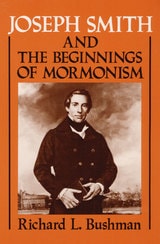
cover of Joseph Smith and the Beginnings of Mormonism

Joseph Smith and the Beginnings of Mormonism

Richard L. Bushman

University of Illinois Press, 1984

Winner of the David Woolley Evans and Beatrice Evans Biography Award and a History Book Club selection, 1985.

The core of Mormon belief was a conviction about actual events. The test of faith was not adherence to a certain confession of faith but belief that Christ was resurrected, that Joseph Smith saw God, that the Book of Mormon was true history, and that Peter, James, and John restored the apostleship. Mormonism was history, not philosophy.

It is as history that Richard L. Bushman analyzes the emergence of Mormonism in the early nineteenth century. Bushman, however, brings to his study a unique set of credentials--he is both a prize-winning historian and a faithful member of the Latter-day Saints church. For Mormons and non-Mormons alike, his book provides a very special perspective on an endlessly fascinating subject.

Building upon previous accounts and incorporating recently discovered contemporary sources, Bushman focuses on the first twenty-five years of Joseph Smith's life--up to his move to Kirtland, Ohio, in 1831. Bushman shows how the rural Yankee culture of New England and New York--especially evangelical revivalism, Christian rationalism, and folk magic--both influenced and hindered the formation of Smith's new religion.

Mormonism, Bushman argues, must be seen not only as the product of this culture, but also as an independent creation based on the revelations of its charismatic leader. In the final analysis, it was Smith's ability to breathe new life into the ancient sacred stories and to make a sacred story out of his own life which accounted for his own extraordinary influence. By presenting Smith and his revelations as they were viewed by the early Mormons themselves, Bushman leads us to a deeper understanding of their faith.
[more]
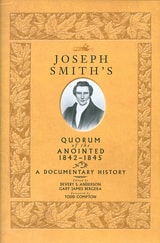
cover of Joseph Smith's Quorum of the Anointed, 1842-1845: A Documentary History

Joseph Smith's Quorum of the Anointed, 1842-1845

A Documentary History

Devery S. Anderson

Signature Books, 2005

 “Joseph Smith’s Quorum of the Anointed” The first Latter-day Saint temple ceremonies were performed, not in Kirtland, Ohio, but on the second floor of Joseph Smith’s Red Brick Store in Nauvoo, Illinois. For nearly four years beginning in 1842, the prophet’s modest mercantile functioned as the de facto temple?the site of the first washings, anointings, endowments, and sealings. In contrast, the grand edifice known as the Nauvoo Temple was in operation for only two months before the Saints left Illinois for the West.

Preparations to initiate the first members of Joseph Smith’s Quorum of the Anointed, or Holy Order, as it was also known, were made on May 3, 1842. The walls of the second level of the Red Brick Store were painted with garden-themed murals, the rooms fitted with carpets, potted plants, and a veil hung from the ceiling. All the while, the ground level continued to operate as Joseph Smith’s general mercantile.

In this companion volume to The Nauvoo Endowment Companies and The Development of LDS Temple Worship, 1846-2000: A Documentary History, the editors have assembled all available primary references to the Anointed Quorum and its regular gatherings, both in the Red Brick Store and elsewhere (women were initially washed and anointed in Emma Smith’s bedroom and then escorted to the store) prior to the opening of the Nauvoo Temple. The sources include excerpts from the diaries of William Clayton, Joseph Fielding, Zina D. H. Jacobs, Heber C. Kimball, John Taylor, Willard Richards, George A. Smith, Joseph Smith, Wilford Woodruff, and Brigham Young; autobiographies and reminiscences by Joseph C. Kingsbury, George Miller, and Mercy Fielding Thompson; letters from Vilate Kimball and Lucius N. Scoville; the Manuscript History of Brigham Young; General Record of the Seventies, Book B; Bathsheba W. Smith’s unedited testimony from the 1892 Temple Lot Case; other manuscripts such as the Historian’s Office Journal and “Meetings of Anointed Quorum”; and published records such as the History of the Church, Latter Day Saints’ Messenger and Advocate and Times and Seasons.
from the jacket flap:

Despite the secrecy imposed upon members of the Anointed Quorum, word of the gatherings above Joseph Smith’s store soon spread. In one instance, housekeeper Maria Jane Johnston helped prepare the special ceremonial clothing for John Smith to wear at the group’s meetings. In another, Ebenezer Robinson innocently opened the upstairs door at the mercantile and was startled to see church apostle John Taylor in a long white robe and “turban,” carrying a sword. Only Nauvoo’s elite were invited to participate in these new ceremonies?never more than ninety individuals and even fewer during Joseph Smith’s lifetime?and, as the editors of the current volume write, only those who had been introduced to the prophet’s doctrine of plural marriage.

An unusual aspect of the Quorum of the Anointed, compared to the membership in the Nauvoo Masonic Lodge, was that women were initiated as regular members. However, the women effectively disappear after Brigham Young’s assumption of leadership in 1844, following Joseph Smith’s death, and remain virtually absent until the Nauvoo Temple is completed nearly a year and a half later. Readers will also note some of the differences in protocol between what Smith instigated and what Young eventually settled on, for instance that members could be washed and anointed repeatedly but were “endowed” only once. There were not yet proxy ordinances.

Among Latter-day Saints today, temple worship is a sensitive topic; but the editors of this volume do not reveal anything that would be considered invasive or indelicate. In fact, the accounts, which come almost exclusively from the early LDS leadership itself, manifest discretion about what to report.

Never before have these primary, authoritative sources been correlated by date for comparison and fuller understanding of the gradual development of the temple ceremonies. Readers may find an added benefit in discovering some of their own ancestors’ names included in these records; but in fact, anyone interested in LDS temple worship will find this compilation of primary documents to be invaluable.
[more]
cover of Joseph Smith: History, Methods, and Memory

Joseph Smith

History, Methods, and Memory

Ronald O. Barney

University of Utah Press, 2020

The study of Joseph Smith and his writings have long been shaped by the polemical atmosphere that surrounds Smith’s claims to divine authorship. Even after a half-century of serious scholarship devoted to Smith, fundamental questions remain about how to best interpret features of his life and writing. Smith’s own History of Joseph Smith (edited and revised at the beginning of the twentieth century by B. H. Roberts) created an enduring image that influenced Mormon theology, doctrine, and polity for generations. With new historical documents now available, however, a reappraisal of Smith and the origins of Mormonism is necessary.

Ronald O. Barney, a former editor of the Joseph Smith Papers, applies new interpretations to Smith in history and memory, re-examining both his writings and contemporary accounts of him. The book explores the best methodologies for appraising the historical record, including a review of Smith’s world and its contextual background, an analysis of his foundational experiences, and a characterization of Smith as a man and prophet. Though the premise of re-evaluation may be unsettling to traditionalists, a modern reconsideration of the historical record’s entire range of sources is necessary to fashion a strategy for evaluating Smith and his enduring but complex legacy.
[more]
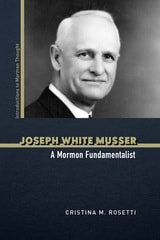
cover of Joseph White Musser: A Mormon Fundamentalist

Joseph White Musser

A Mormon Fundamentalist

Cristina M. Rosetti

University of Illinois Press, 2024

In 1921, the Church of Jesus Christ of Latter-day Saints excommunicated Joseph White Musser for his refusal to give up plural marriage. Cristina M. Rosetti tells the story of how a Church leader followed his beliefs into exile and applied the religious thought he began to develop in the mainline faith to become a foundational theologian of Mormon fundamentalism.

Musser’s devotion to Joseph Smith’s vision and the faith’s foundational texts reflected a widespread uneasiness with, and reaction against, changes taking place across society. Rosetti analyzes how Musser’s writing and thought knit a disparate group of outcast LDS believers into a movement. She also places Musser’s eventful life against the backdrop of a difficult period in LDS history, when the Church strained to disentangle itself from plural marriage and leaders like Musser emerged to help dissident members make sense of their lives outside the mainstream.

The first book-length account of the Mormon thinker, Joseph White Musser reveals the figure whose teachings helped mold a movement.
[more]
cover of Joseph: An Epic

Joseph

An Epic

Zachary McLeod Hutchins

University of Illinois Press, 2025
A quintessentially American saga, the life of Joseph Smith offers believers and non-believers alike an epic narrative that inhabits both grounded history and a heavenly sphere of action. Zachary McLeod Hutchins renders Smith’s early life as a poetic narrative in two parts. The first introduces a very human Joseph and his youthful encounter with demonic powers seeking to prevent any communication with heaven. Following his First Vision, the teenaged prophet is charged by the angel Moroni to retrieve and translate a sacred record inscribed on gold plates. The second part picks up the story four years later, as Joseph marries Emma Hale and undertakes the plates’ translation. Hutchins supplies a fictionalized excerpt from that translation, The Book of Lehi, and details Joseph’s efforts to organize his growing band of followers, concluding on a note of contentment at odds with the tumultuous times to come in Smith’s final years. An innovative perspective on Smith’s early exploits, Joseph: An Epic reinterprets the origin story of a religious seeker and the faith he created.
[more]
cover of Joseph’s Temples: The Dynamic Relationship between Freemasonry and Mormonism

Joseph’s Temples

The Dynamic Relationship between Freemasonry and Mormonism

Michael W. Homer

University of Utah Press, 2014

The apparent parallels between Mormon ritual and doctrine and those of Freemasonry have long been recognized. That Joseph Smith, Brigham Young, and other early church leaders were, at least for a time, Masons, is common knowledge. Yet while early historians of the LDS Church openly acknowledged this connection, the question of influence was later dismissed and almost became taboo among faithful church members. Just as Mormons have tried to downplay any ties to Freemasonry, Masons have sought to distance themselves from Mormonism. In Joseph’s Temples, Michael Homer reveals how deeply the currents of Freemasonry and Mormonism entwined in the early nineteenth century. He goes on to lay out the later declining course of relations between the two movements, until a détente in recent years.
 
There are indications that Freemasonry was a pervasive foundational element in Mormonism and that its rituals and origin legends influenced not just the secret ceremonies of the LDS temples but also such important matters as the organization of the Mormon priesthood, the foundation of the women’s Relief Society, the introduction and concealment of polygamy, and the church’s position on African Americans’ full membership. Freemasonry was also an important facet of Mormons’ relations with broader American society.
 
The two movements intertwined within a historical context of early American intellectual, social, and religious ferment, which influenced each of them and in varying times and situations placed them either in the current or against the flow of mainstream American culture and politics. Joseph’s Temples provides a comprehensive examination of a dynamic relationship and makes a significant contribution to the history of Mormonism, Freemasonry, and their places in American history. 

Recipient of the Meritorious Book Award from the Utah Division of State History
[more]
cover of Journey of Five Capuchin Nuns

Journey of Five Capuchin Nuns

Madre María Rosa

Iter Press, 2009

Journey of Five Capuchin Nuns contains all the elements of a riveting adventure story. Through the eyes of the Mother Abbess, María Rosa, the reader is taken along on this journey through wars, pirates, disease, travel on the high seas, and treacherous mountain passes in the Andes. Five nuns set out in the early 1700s from their cloistered convent in Madrid, Spain, to travel halfway around the world to Lima, Peru. The journey lasted three years—an odyssey not all of them would complete. Yet, this unique historical document is so much more than a typical travel narrative. It illuminates the eighteenth-century way of life of religious women on both sides of the Atlantic basin. María Rosa’s lively prose attests to the literary connection among women religious writers of Spain and Latin America. This annotated edition and first-ever English translation of the manuscript will be of interest to scholars, students and anyone who wants to learn more about women’s history.
[more]
cover of Journeys from a Desert Road

Journeys from a Desert Road

Mary Clyde

Signature Books, 2024

When a sheer, brilliant light erupts in the desert night, Jack recognizes it as the awesome and destructive power of an atomic bomb. But in another world, far removed from Jack’s mind, his family sit by his side after a traumatic car accident has rendered him comatose. Jack, relying on fantasies he and his sister fabricated as teenagers, struggles to lead the people he loves out of radiation-contaminated Phoenix as his family keep vigil in his hospital room, marshaling their reserves of patience and determination.

Yet even as Jack and his family experience these different realities, events from one world drift into the other, reshaping and influencing one another  as they move toward a climactic union. Whether fleeing nuclear disaster or pacing by a sickbed, these flawed and stressed individuals behave with fierce loyalty and an equally fierce love that forces an ascension of hope and survival.

 
[more]
cover of Journeys in Church History Volume 2: Essays from the <i>Catholic Historical Review</i>

Journeys in Church History Volume 2

Essays from the <i>Catholic Historical Review</i>

Nelson H. Minnich

Catholic University of America Press, 2025
Journeys in Church History, Volume 2 offers further reflections from leading contemporary church historians, who describe in their own words how they have come to practice their craft. They trace their family and educational backgrounds, the themes that attracted their attention, the challenges they encountered in researching them, the new methodologies they adopted to answer questions, and the reception given to their findings. They also tell of their experiences in the classroom, both as students and teachers, the difficulties they encountered in their careers due to prejudices based on gender or religion, and how the discipline of church history has changed over their lifetimes. Their often entertaining accounts will serve to inform and inspire fellow historians, both young and old. Featured in this collection are essays from scholars who study the church across the centuries. Dame Avril Cameron focused her work on religion in the Byzantine Empire. John Van Engen has been interested in lay religion in the Middle Ages and has studied the rise of the Modern Devotion with its Imitation of Christ and experiments in communal religious life. Robert Bireley, SJ, specialized on Jesuit confessors to Catholic rulers during the Thirty Years War and laid out how both the Catholic and Protestant churches tried to adjust to a changing world in the early modern period. Asuncion Lavrin has studied the role of women in the religious life of colonial Latin America. Hugh Mc Leod used sociological data to map how various Christian denominations fared in the industrialized world of modern Europe. And Leslie Tentler has traced the changes in American Catholicism, especially those related to the Second Vatican Council and the Church’s teaching on women and sex. Each scholar shares the difficulties he or she encountered in doing their research and how their findings were initially received. This collection of essays is taken from the pages of The Catholic Historical Review, the official organ of the American Catholic Historical Association and the only scholarly journal under Catholic auspices in the English-speaking world devoted to the history of the Universal Church.
[more]
cover of Journeys of a Mystic Soul in Poetry and Prose

Journeys of a Mystic Soul in Poetry and Prose

Cecilia del Nacimiento

Iter Press, 2012

This edition, which offers a bilingual selection of poetry and selected prose translated into English by the nun-author Cecilia del Nacimiento (1570–1646), increases contemporary scholars’ access to, and therefore understanding of, the Spanish early modern religious and intellectual milieu. A significant, rarely-studied mystic and poet, and member of the Discalced Carmelite Order in the years after St. Teresa of Avila’s death, Cecilia del Nacimiento exemplifies the range of possibilities used by women writers who worked within the conventions of hegemonic discourses, while creating a unique literary voice.
—Stacey Schlau
Professor, Department of Languages and Culture and the Women’s Studies Program
West Chester University, Pennsylvania
[more]
cover of Judaism Despite Christianity: The 1916 Wartime Correspondence Between Eugen Rosenstock-Huessy and Franz Rosenzweig

Judaism Despite Christianity

The 1916 Wartime Correspondence Between Eugen Rosenstock-Huessy and Franz Rosenzweig

Edited by Eugen Rosenstock-Huessy

University of Chicago Press, 2011
Before they were both internationally renowned philosophers, Eugen Rosenstock-Huessy and Franz Rosenzweig were young German soldiers fighting in World War I corresponding by letter and forming the foundation of their deep intellectual friendship. Collected here, this correspondence provides an intimate portrait of their views on history, philosophy, rhetoric, and religion as well as on their writings and professors. Most centrally, Rosenstock-Huessy and Rosenzweig discuss, frankly but respectfully, the differences between Judaism and Chiristianity and the reasons they have chosen their respective faiths.
 
This edition includes a new foreword by Paul Mendes-Flohr, a new preface by Harold Stahmer along with his original introduction, and essays by Dorothy Emmet and Alexander Altmann, who calls this correspondence “one of the most important religious documents of our age” and “the most perfect example of a human approach to the Jewish-Christian problem.”
[more]
cover of Judaism and Christianity in the Age of Constantine: History, Messiah, Israel, and the Initial Confrontation

Judaism and Christianity in the Age of Constantine

History, Messiah, Israel, and the Initial Confrontation

Jacob Neusner

University of Chicago Press, 1987

With the conversion of Constantine in 312, Christianity began a period of political and cultural dominance that it would enjoy until the twentieth century. Jacob Neusner contradicts the prevailing view that following Christianity's ascendancy, Judaism continued to evolve in isolation. He argues that because of the political need to defend its claims to religious authenticity, Judaism was forced to review itself in the context of a triumphant Christianity. The definition of issues long discussed in Judaism—the meaning of history, the coming of the Messiah, and the political identity of Israel—became of immediate and urgent concern to both parties. What emerged was a polemical dialogue between Christian and Jewish teachers that was unprecedented.

In a close analysis of texts by the Christian theologians Eusebius, Aphrahat, and Chrysostom on one hand, and of the central Jewish works the Talmud of the Land of Israel, the Genesis Rabbah, and the Leviticus Rabbah on the other, Neusner finds that both religious groups turned to the same corpus of Hebrew scripture to examine the same fundamental issues. Eusebius and Genesis Rabbah both address the issue of history, Chrysostom and the Talmud the issue of the Messiah, and Aphrahat and Leviticus Rabbah the issue of Israel. As Neusner demonstrates, the conclusions drawn shaped the dialogue between the two religions for the rest of their shared history in the West.
[more]
cover of Junius And Joseph: Presidential Politics and the Assassination of the First Mormon Prophet

Junius And Joseph

Presidential Politics and the Assassination of the First Mormon Prophet

Robert S. Wicks & Fred R. Foister

Utah State University Press, 2005
"Junius and Joseph examines Joseph Smith's nearly forgotten [1844] presidential bid, the events leading up to his assassination on June 27, 1844, and the tangled aftermath of the tragic incident. It... establishes that Joseph Smith's murder, rather than being the deadly outcome of a spontaneous mob uprising, was in fact a carefully planned military-style execution. It is now possible to identify many of the key individuals engaged in planning his assassination as well as those who took part in the assault on Carthage jail. And furthermore, this study presents incontrovertible evidence that the effort to remove the Mormon leader from power and influence extended well beyond Hancock County [Illinois] (and included prominent Whig politicians as well as the Democratic governor of the state), thereby transforming his death from an impulsive act by local vigilantes into a political assassination sanctioned by some of the most powerful men in Illinois. The circumstances surrounding Joseph Smith's death also serve to highlight the often unrecognized truth that a full understanding of early Mormon history can be gained only when considered in the context of events taking place in American society as a whole."
[more]
cover of Justice After War: <i>Jus Post Bellum</i> in the 21st Century

Justice After War

<i>Jus Post Bellum</i> in the 21st Century

David Chiwon Kwon

Catholic University of America Press, 2023

Justice After War is aimed especially to both undergraduate and graduate students, as well as the general audience who want to understand the significance of a recent development within the just war tradition, namely, the increasing attention given to the category of jus post bellum (postwar justice and peace). While examining the interrelated challenges of moral and social norms in both political and legal domains, as well as church practices, this work proposes an innovative methodology for linking theology, ethics, and social science so that the ideal and the real can inform each other in the ethics of war and peacebuilding. The main task of this project, then, is to identify what the author views as three key themes of jus post bellum, and three practices that are essential to implementing jus post bellum immediately after a war: just policing, just punishment, and just political participation. David Kwon endeavors to challenge the view of those who suggest that reconciliation, mainly political reconciliation, is the foremost ambition of jus post bellum. Instead, he attempts to justify the proposition that achieving just policing, just punishment, and just political participation are essential to building a just peace, a peace in which the fundamental characteristic must be human security. It thus demonstrates that human security is an oft-neglected theme in the recent discourse of moral theologians and that a more balanced understanding of jus post bellum will direct attention to the elements composing human security in a postwar context.
[more]