Results by title
3388 books match the query 'Fiction' and 28 start with j

J. M. Coetzee and the Idea of the Public Intellectual
Jane Poyner
Ohio University Press, 2006
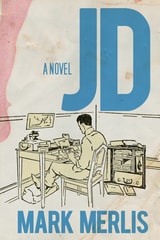
JD
A NovelMark Merlis
University of Wisconsin Press, 2015
When a would-be biographer approaches Ascher’s widow Martha, she delves for the first time into her husband’s papers and all the secrets that come tumbling out of them. She finds journals that begin as a wisecracking chronicle of life at the fringes of the New York literary scene, then recount Ascher’s sexual adventures in the pre-Stonewall gay underground and the social upheavals that led to his famous book “JD.” As Martha reads on, she finds herself in a long-distance conversation with her dead husband, fighting with him again about their rocky marriage and learning about the unseen tragedy in her own apartment that ended with the destruction of their son, Mickey. Mickey comes to life in the space between Jonathan and Martha’s conflicting portraits of him, while Martha and the biographer tangle over the continued relevance of Jonathan’s politics and his unfulfilled vision of a nation remade. Martha learns about herself, finally, through her confrontation with a man who will not let her go, even in death.
Mark Merlis’s JD is a brilliant and harrowing view of a half century of the American experiment, acted out on a small stage by three people who cannot find a way—neither sex nor touch nor words—to speak their love for one another.
Best Books of 2015: Fiction, Open Letters Monthly
Finalist, Gay Fiction, Lambda Literary Award
Finalist, Ferro-Grumley Award for LGBT Fiction, Publishing Triangle
Best books for public & secondary school libraries from university presses, American Library Association
“Many years after a ’60s New York writer's death, his widow confronts their tumultuous marriage and private identities through his journals. . . . JD’s most masterful element is its treatment of these two characters, both of whom spent their lives groping for contentment like one trying to find a light switch in a darkened room. A great writer offers not just tight prose but also insight, a series of probing questions that extend from the fictional world into the real one. JD asks who its characters were, and in doing so, forces the reader to confront the intricate and fascinating politics of identity.”—Shelf Awareness for Readers, *starred review
“A truly impressive work of literary fiction, JD documents author Mark Merlis as an extraordinary novelist able to deftly craft a complex plot and populate it with a roster of inherently fascinating characters and memorable events. The result is an entertaining and engaging read that will linger in the mind long after the book is finished. Very highly recommended for both community and academic library literary fiction collections.”—Midwest Book Review/Reviewer’s Bookwatch
“The fantastic JD (U. of Wisconsin), by acclaimed gay writer Mark Merlis (American Studies), is the writer's first novel in a dozen years. It's told in two voices. The first is that of the late gay writer Jonathan Ascher, and we hear from him through his journals. The second belongs to his widow Martha, who learns more about Jonathan than she ever imagined while reading the journals after agreeing to help a biographer of her late husband.”—Gregg Shapiro, Bay Area Reporter
Jackson State
Derek Green
Carnegie Mellon University Press, 2025
The characters in Jackson State live in a land of contradictions—where wealth and poverty, beauty and decay, hope and despair exist side by side. In this striking collection, Derek Green brings the American Midwest to life, tracing the tensions of class and race through intimate, unforgettable stories.
A father’s protective instinct threatens to unravel his family. A single mother must confront the dangers lurking outside her door. Two siblings navigate the fallout of their father’s militia ties. On the shores of Lake Michigan, a prodigal daughter’s return forces a reckoning with the past. With sharp prose and stark realism, Green captures the struggles and complexities of contemporary American life, establishing Green as a storyteller in the tradition of Carver, Updike, and Cheever.
Jacob's Well
A NovelBy Stephen Harrigan
University of Texas Press, 2014

Jaguar
A Story of Africans in AmericaPaul Stoller
University of Chicago Press, 1999
Faced with economic hardship in Africa, Issa has left his home in Niger and his new wife, Khadija, to seek his fortune in America. Devout Muslims, the couple has entered into a "modern" marriage: Khadija is permitted to run her own business, and Issa has agreed not to take additional wives. Issa quickly adapts to his new surroundings, however, and soon attracts several girlfriends. Aided by a network of immigrants, he easily slips through gaps in the "system" and extends his stay in America indefinitely. Following a circuit of African-American cultural festivals across America, he marvels at African-Americans' attitudes toward Africa, and wonders if he'll ever return to Niger. Meanwhile, Khadija also struggles to make it—to become a "Jaguar"—as she combats loneliness, hostile in-laws, and a traditional, male-dominated society. The eventual success of her dry goods shop and her growing affection for a helpful Arab merchant make her wonder if she'll ever join Issa in America.
Drawing on his own decades of experience among Africans both in Niger and in New York, Paul Stoller offers enormous insight into the complexities of contemporary Africa. Alive with detail, Jaguar is a story of triumph and disappointment, of dislocation and longing, and of life lived in a world that no longer recognizes boundaries.
Jaguars' Tomb
Angélica Gorodischer
Vanderbilt University Press, 2021
Jaguars' Tomb is a novel in three parts, written by three interconnected characters. Part one, "Hidden Variables" by María Celina Igarzábal, is narrated by Bruno Seguer. Seguer in turn is the author of the second part, "Recounting from Zero" ("Contar desde zero"), in which Evelynne Harrington, author of the third, is a central character. Harrington, finally, is the author of "Uncertainty" ("La incertidumbre"), whose protagonist is the dying Igarzábal. Each of the three parts revolves around the octagonal room that is alternately the jaguars' tomb, the central space of the torture center, and the heart of an abandoned house that hides an adulterous affair.
The novel, by Argentine author Angélica Gorodischer, is both an intriguing puzzle and a meditation on how to write about, or through, violence, injustice, and loss. Among Gorodischer's many novels, Jaguars' Tomb most directly addresses the abductions and disappearances that occurred under the Argentine military dictatorship of 1976–83. This is the fourth of Gorodischer's books translated into English. The first, Kalpa Imperial—translated by Ursula Le Guin—was selected for the New York Times summer reading list in 2003.
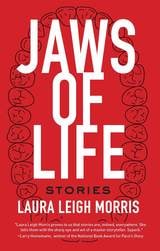
Jaws of Life
StoriesLaura Leigh Morris
West Virginia University Press, 2018
In the hills of north central West Virginia, there lives a cast of characters who face all manner of problems. From the people who are incarcerated in West Virginia’s prisons, to a woman who is learning how to lose her sight with grace, to another who sorely regrets selling her land to a fracking company, Jaws of Life portrays the diverse concerns the people of this region face every day—poverty, mental illness, drug abuse, the loss of coal mines, and the rise of new extractive industries that exert their own toll.
While these larger concerns exist on the edges of their realities, these characters must still deal with quotidian difficulties: how to coexist with ex-spouses, how to care for sick family members, and how to live with friends who always seem to have more.
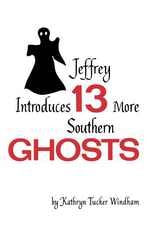
Jeffrey Introduces Thirteen More Southern Ghosts
Commemorative EditionKathryn Tucker Windham
University of Alabama Press, 2015
A commemorative edition of the beloved and best-selling second book in famed folklorist Kathryn Tucker Windham’s southern ghosts series.
Jeffrey was the resident apparition in the Selma, Alabama, home of nationally-known folklorist Kathryn Tucker Windham and the inspiration for Windham’s best-selling collection of macabre tales that reveal two hundred years of Alabama’s ghostly secrets, Thirteen Alabama Ghosts and Jeffrey. One of the most popular books ever published in the state, generations of Alabama children and students have been thrilled and chilled by Windham’s spectral legends.
Following the overwhelming success of Thirteen Alabama Ghosts and Jeffrey, Windham and Jeffrey began to journey across the South assembling a second collection of ghastly tales that repeat Windham’s winning combination of traditional folklore, Southern history and culture, and family-friendly story-telling. In Jeffrey Introduces Thirteen More Southern Ghosts, Windham’s disembodied friend roams the states of Kentucky, Tennessee, Georgia, Mississippi, Louisiana, and Florida to recall thirteen more timeless, spine-tingling tales of baneful and melancholy spirits that spook the most stoic heart.
Opening this volume is “The Girl Nobody Knew.” One midsummer night in the genteel Kentucky mineral spring resort of Harrodsburg, a beautiful lady arrived at the town’s grand hotel. The belle danced late into the night with the town’s smitten gallants only to expire suddenly with the notes of the last quadrille. The spooked residents of Harrodsburg guard a grave you can see to this day. Readers then visit the world-famous Bell Witch of Robinson County, Tennessee. Jeffrey also makes his first trip to old New Orleans to reveal a revenant in residence on Royal Street before continuing his ghostly progress across Dixie.
This new edition returns Jeffrey Introduces Thirteen More Southern Ghosts to its original format in jacketed cloth full of original, black-and-white illustrations in a handsome keepsake edition perfect for gift-giving and for families, folklorists of all ages, and libraries.
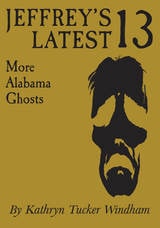
Jeffrey's Latest Thirteen
More Alabama Ghosts, Commemorative EditionKathryn Tucker Windham
University of Alabama Press, 2016
A deluxe, commemorative edition of a beloved collection of ghostly stories from famed southern author and folklorist Kathryn Tucker Windham’s home state of Alabama.
Accompanied by her faithful companion, Jeffrey, a friendly spirit who resided in her home in Selma, Alabama, Kathryn Tucker Windham traveled the South, visiting the sites of spectral legends in Mississippi, Georgia, and Tennessee, among other places. In Jeffrey’s Latest Thirteen: More Alabama Ghosts, a sequel to her landmark Thirteen Alabama Ghosts and Jeffrey, Windham introduces readers to thirteen more of Jeffrey's ghostly acquaintances, each with the charm and universal appeal that has created hundreds of thousands of Jeffrey fans.
Among the other hair-raising tales in this collection, Windham spotlights the apparitions of academia. From the three Yankee soldiers who haunt the University of Alabama’s Civil War–era Little Round House to the Confederate soldier who resides in the University Chapel at Auburn University, Alabama’s institutions of higher learning seem to have more than a few paranormal pupils.
Photographs of the sites about which Windham writes are one of the best-loved features of her series of “Jeffrey the Ghost” books. Jeffrey’s Latest Thirteen features the image of a beautiful child who, though not photographed in life, reappeared long enough to be photographed with his bereaved father's borrowed camera. Bewitched readers will find the startling photograph of the child in the next-to-last chapter, just pages before he book’s photograph of Windham’s own spectral muse, Jeffrey.
This commemorative edition returns Windham’s thrilling classic to its original 1982 keepsake quality and includes a new afterword by the author’s children.
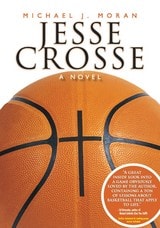
Jesse Crosse
a novelMichael J. Moran
Parkhurst Brothers, Inc., 2011
Mike Moran first attended Little Rock Catholic High School for Boys-all four years. On the basketball team, he was a point guard. Then, as "Mr. Moran," he taught English for forty years, also at Little Rock Catholic High School for Boys. Recently retired, Moran wrote the boys a novel. The tale revolves around a struggling small-town basketball team with a nerdy manager and a Walter Mittyesque coach. Presented with too few players to scrimmage in practice, the manager takes it upon himself to spread the word throughout the school: "We need you on the team." Three young students appear, diminutive in stature and with scrawny chests, unimpressive at first sight. But with the trio, and their fleet leader Jesse Crosse, the team first experiences shock, then inspiration and constant surprises. The team bonds, leading to stories that will be retold a very long time in a small, out-of-the-way town. It's not a long novel; like one's high school years, it goes by before you know it. Only the message is eternal.
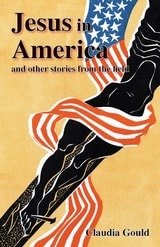
Jesus in America and Other Stories from the Field
Claudia Gould
Utah State University Press, 2009
Drawing on ethnographic field work she conducted among Christians in her home state of North Carolina, Claudia Gould crafts stories that lay open the human heart and social complications of fundamentalist belief. These stories and the compelling characters who inhabit them draw us into the complex essence of religious experience among southern American Christians.
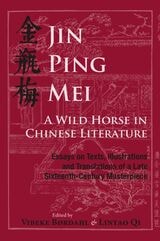
Jin Ping Mei – A Wild Horse in Chinese Literature
Essays on Texts, Illustrations and Translations of a Late Sixteenth-Century MasterpieceEdited by Vibeke Børdahl and Lintao Qi
National University of Singapore Press, 2022
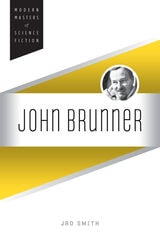
John Brunner
Jad Smith
University of Illinois Press, 2012
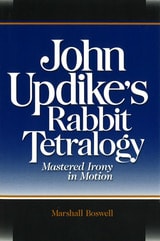
John Updike's Rabbit Tetralogy
Mastered Irony in MotionMarshall Boswell
University of Missouri Press, 2001
Early in his career, John Updike announced his affinity with the Christian existentialism of Soren Kierkegaard, Paul Tillich, Karl Barth, and others. Because of this, many of Updike's critics have interpreted his work from within a Christian existentialist context. Yet Kierkegaard and Barth provide Updike with much more than a mere context, for their dialectical thinking serves as the springboard for Updike's own unique dialectical vision, a complex matrix of ethical precepts, theological beliefs, and aesthetic principles that governs nearly all of his literary output. Nowhere else in his immense corpus is this vision more clearly and thoroughly expressed than in his four Rabbit novels, which were gathered into the single volume Rabbit Angstrom in 1995. However, because Updike's critics have chosen to read the Rabbit novels as discrete, freestanding texts, they have by and large failed to extract the precepts of this private vision.
In John Updike's Rabbit Tetralogy, Marshall Boswell redresses this imbalance by treating the Rabbit tetralogy as a single, unified "mega-novel." He demonstrates that, taken together as a single work, the four discrete sections of the tetralogy not only provide a coherent and complete articulation of Updike's unique existential vision but also compose a unified work of remarkable formal complexity. Boswell brings to Updike's work the concept of "mastered irony," a term coined by Kierkegaard to describe the presentation of two legitimate but contradictory sides of an issue. In the Rabbit novels, these issues range from adultery to drug addiction, from race to redemption, with each issue examined through the refracting lens of Updike's own ironic method. Boswell shows that although each of the four individual Rabbit novels confirms this dialectical strategy in a unique way, the completed tetralogy comprises an additional series of dialectical pairs that sustain, rather than resolve, thematic and formal tension. Ultimately, the structure of the finished "mega-novel" echoes the work's thematic rationale.
To help readers who are interested in a particular Rabbit novel, Boswell devotes a chapter to each individual section of the tetralogy. At the same time, he treats each novel as an integral part of the more comprehensive whole. Honoring the full complexity of Updike's provocative thinking without losing sight of the tetralogy's popular appeal, John Updike's Rabbit Tetralogy makes a valuable addition to the study of Updike's work.
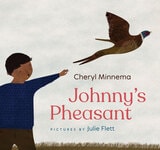
Johnny's Pheasant
Cheryl Minnema
University of Minnesota Press, 2019
An encounter with a pheasant (which may or may not be sleeping) takes a surprising turn in this sweetly serious and funny story of a Native American boy and his grandma
"Pull over, Grandma! Hurry!” Johnny says. Grandma does, and Johnny runs to show her what he spotted near the ditch: a sleeping pheasant. What Grandma sees is a small feathery hump. When Johnny wants to take it home, Grandma tries to tell him that the pheasant might have been hit by a car. But maybe she could use the feathers for her craftwork? So home with Grandma and Johnny the pheasant goes . . .
It’s hard to say who is most surprised by what happens next—Grandma, Johnny, or the pheasant. But no one will be more delighted than the reader at this lesson about patience and kindness and respect for nature, imparted by Grandma’s gentle humor, Johnny’s happy hooting, and all the quiet wisdom found in Cheryl Minnema’s stories of Native life and Julie Flett’s remarkably evocative and beautiful illustrations.
Joiner
James Whitehead
University of Arkansas Press, 1991

José María Arguedas
Reconsiderations for Latin American StudiesCiro A. Sandoval
Ohio University Press, 1997
José María Arguedas (1911–1969) is one of the most important authors to speak to issues of the survival of native cultures. José María Arguedas: Reconsiderations for Latin American Cultural Studies presents his views from multiple perspectives for English-speaking audiences for the first time.
The life and works of José María Arguedas reflect in a seminal way the drama of acculturation and transculturation suffered not only by what we think of as the indigenous and mestizo cultures of Peru, but by other Latin American societies as well. Intricately reflecting his pluricultural and bilingual life experience, Arguedas’s illuminating poetic visions of Andean culture cross multidisciplinary borders to transfigure pedagogical and social practices.
Few texts convey the complexity and contradictions of an Andean cosmopolitanism with the intense accuracy of Arguedas’s anthropological, ethnographic essays and literary writings. The ramifications of Arguedas’s cultural critiques have yet to be assessed, particularly as a response to the disruptive forces of modernity, acculturation, and essential identity.
José María Arguedas was a Peruvian ethnographer, anthropologist, folklorist, poet, and novelist. He based his novels and stories on the life and outlook of the Quechua-speaking Indians and was a pioneer of modern Quechua poetry.
The present anthology brings his work to the attention of broader audiences by pulling together diverse scholarly views on Arguedas’s aesthetic and multicultural contributions to the contemporary and political archipelago. It is a synthesis of his views on cultural change as it impinges upon considerations and theories of Latin American cultural studies.
Journey to the West, Volume 1
Translated by Anthony C. Yu
University of Chicago Press, 1977
Journey to the West, Volume 2
Translated by Anthony C. Yu
University of Chicago Press, 1978
Journey to the West, Volume 3
Translated by Anthony C. Yu
University of Chicago Press, 1980
Journey to the West, Volume 4
Translated by Anthony C. Yu
University of Chicago Press, 1983
Journeys from a Desert Road
Mary Clyde
Signature Books, 2024
When a sheer, brilliant light erupts in the desert night, Jack recognizes it as the awesome and destructive power of an atomic bomb. But in another world, far removed from Jack’s mind, his family sit by his side after a traumatic car accident has rendered him comatose. Jack, relying on fantasies he and his sister fabricated as teenagers, struggles to lead the people he loves out of radiation-contaminated Phoenix as his family keep vigil in his hospital room, marshaling their reserves of patience and determination.
Yet even as Jack and his family experience these different realities, events from one world drift into the other, reshaping and influencing one another as they move toward a climactic union. Whether fleeing nuclear disaster or pacing by a sickbed, these flawed and stressed individuals behave with fierce loyalty and an equally fierce love that forces an ascension of hope and survival.
Joyriders
StoriesGreg Schutz
University of Massachusetts Press, 2025
Shortlisted for the New Harmony Book Award & Residency
In this collection of stories set across the Midwest and rural Appalachia, lonely people travel half-haunted landscapes and discover moments of light.
In this debut collection, tangled bonds of love and family collide with a natural world both fragile and ferocious. Upended by grief, a widowed veterinarian seeks solace by fostering a litter of orphaned opossums. A young lawyer embarks on an affair, only to fall into a deeper, stranger entrancement with her lover’s nine-year-old daughter during a weekend on the Lake Huron coast. In the depths of a Wisconsin winter, a recovering alcoholic risks everything to plot a careening course toward atonement. And in the title story, two teenagers steal a car, discover a loaded rifle in the backseat, and set off consequences both devastating and tender for a series of strangers they’ll never meet.
Set across the Midwest and rural Appalachia, the stories in Joyriders offer a resonant vision of rural and small-town life: lonely, half-haunted landscapes are pierced with moments of light, and even the most taciturn faces conceal inner worlds both rich and strange. Comfort and heartache abound—entangled, inseparable. “What was Kevin suggesting,” wonders Valerie, after struggling for years to steer her innocent, angry, mysteriously afflicted son through the world, “that she loved him less because of his troubles? Oh, preposterous. More, she wanted to tell him, more.” Characters’ paths repeatedly bend in unforeseen directions, and the shape of each story surprises—illuminating, in this way, the surprising contours of entire lives.
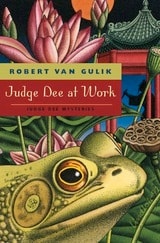
Judge Dee at Work
Eight Chinese Detective StoriesRobert van Gulik
University of Chicago Press, 1992
The eight short stories in Judge Dee at Work cover a decade during which the judge served in four different provinces of the T’ang Empire. From the suspected treason of a general in the Chinese army to the murder of a lonely poet in his garden pavilion, the cases here are among the most memorable in the Judge Dee series.
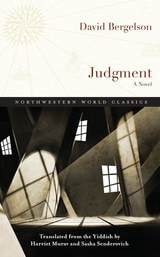
Judgment
A NovelDavid Bergelson, Translated from the Yiddish by Harriet Murav and Sasha Senderovich
Northwestern University Press, 2017
Originally published in 1929 and set in 1920 during the Russian civil war, Judgment traces the death of the shtetl and the birth of the “new, harsher world” created by the 1917 revolution. Jews and non-Jews smuggle people, goods, and anti-Bolshevik literature back and forth across the new political border. Filipov acts as the arbiter of "judgment" to prisoners in a Bolshevik outpost, who include Spivak, a counterrevolutionary; Lemberger, a pious and wealthy Jew; a seductive woman referred to as "the blonde"; and a memorable cast of smugglers and criminals.
Ordinary people, depicted in a grotesque and modernist style—comparable to Isaac Babel’s Red Cavalry—confront the overwhelming forces of history, whose ultimate outcome remains unknown.
Jule
George Wylie Henderson
University of Alabama Press, 1989
This novel is about a young man, Jule, who grew up in rural Alabama in the 1930s. He experienced a peaceful farm life filled with hard work in the hot sun followed by socializing by moonlight in the cooling hours of the night. His mother, Ollie Miss, raised him “to be somebody,” as she said, and he always knew that he would follow her advice. As he grew, he developed a close friendship with the white storekeeper’s son, Rollo, and an earthly love for Berta Mae, a neighbor girl. This quiet life changed abruptly for the young Negro boy when he fled Alabama and arrived in Harlem, there to gain a foothold in that world center of black social and economic power. Although a novel, Jule is strongly autobiographical and gives insight into a vanished Harlem, a glittering community that produced a rich outpouring of distinctively American literary works. J. Lee Greene’s introduction places the novel in the context of the time and links this work with Henderson’s earlier novel – Ollie Miss, also available from the University of Alabama Press – establishing its rightful place in Afro-American literature.
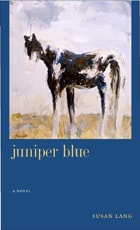
Juniper Blue
(A Novel)Susan Lang
University of Nevada Press, 2006
This engrossing new novel by acclaimed author Susan Lang continues the saga of Ruth Farley, the fiercely independent young woman who was the protagonist of Small Rocks Rising, published by the University of Nevada Press in 2002. Ruth is still on her homestead at the end of a rugged canyon in California’s Mojave Desert, still struggling to survive on her own and to recover from a brutal rape and the murder of her lover. Now she must also face the responsibility of motherhood. The ensuing story expands Ruth’s world to encompass the panorama of Depression-era Southern California—miners and ranchers hanging on until times are better; Indians trying to preserve their ancient culture and identity; Okies, vagrants, and breadlines; the wealth and glitter of the movie industry; and narrow-minded small-town gossips. Ruth’s life also expands as she adjusts to motherhood, trying to maintain her autonomy and isolation and trying to preserve the tenuous web that links her to the seductive ruthlessness of the desert and to its ancient people and their wisdom. Ruth is one of the most engaging characters in recent fiction, complex and contradictory, stubborn and vulnerable, passionately in love with her austere desert home. Lang tells her story, the saga of a fully modern woman seeking her own identity and destiny against the turbulent, colorful setting of the rapidly changing twentieth-century West.

just sitting around here GRUESOMELY now
Friederike Mayröcker
Seagull Books, 2021
It is summer in this book, even if nature often does not hold to summer. The flowers either have tiny buds or have long since withered. It is summer in the book, asserts Mayröcker’s work, because the summer light is switched on: sometimes blazingly bright, sometimes darkened with thunderclouds. At the same time, there is a magical light in this writing. In these stream-of-conscious prose poem meditations, Mayröcker formulates a poetics of simultaneity of all that is not: “not the scenes I remember, rather, it is the sensations accompanying those scenes.”
Strictly composed in form and language while luxuriantly proliferated in daydreams and nightmares, just sitting around here GRUESOMELY now is a significant volume in the radical late work of the great Viennese poet.