Results by title
1441 books match the query 'Great Britain' and 24 start with j

J. K. Rowling and the Anti-Trans Panic
Gina Gwenffrewi
The Ohio State University Press, 2026
In J. K. Rowling and the Anti-Trans Panic, Gina Gwenffrewi weaves her own experience as a trans woman living in Edinburgh, Scotland, with analysis of political and pop cultural discourses and artifacts to deliver a trenchant study of how fellow Edinburgh resident J. K. Rowling’s emergence as a major anti-trans campaigner and the years-long entrenchment of existing anti-trans forces have converged. Analyzing Rowling’s output since 2020, a series of anti-trans events at the University of Edinburgh, the transphobic comedy of Ricky Gervais within the British media landscape, YouTube commentaries, and more, Gwenffrewi creates a potent taxonomy of the rhetorical devices and foundational assumptions of anti-trans discourse. While the 2020s UK has proved fertile ground for “gender-critical” feminism, she argues, it has also provided the foundation for sites of resistance and for bolstering transgender voices worldwide. In celebrating trans activism and trans joy amid adversity, Gwenffrewi beautifully captures the light and dark of being out as trans in the city that—if it can fairly be called ground zero for anti-trans fervor—also embodies liberatory possibilities for trans people worldwide.
James Boswell
Murray Pittock
Aberdeen University Press, 2007
Jane Austen's Cults and Cultures
Claudia L. Johnson
University of Chicago Press, 2012
Jane Austen completed only six novels, but enduring passion for the author and her works has driven fans to read these books repeatedly, in book clubs or solo, while also inspiring countless film adaptations, sequels, and even spoofs involving zombies and sea monsters. Austen’s lasting appeal to both popular and elite audiences has lifted her to legendary status. In Jane Austen’s Cults and Cultures, Claudia L. Johnson shows how Jane Austen became “Jane Austen,” a figure intensely—sometimes even wildly—venerated, and often for markedly different reasons.
Jane Austen's Names
Riddles, Persons, PlacesMargaret Doody
University of Chicago Press, 2015
In Jane Austen’s Names, Margaret Doody offers a fascinating and comprehensive study of all the names of people and places—real and imaginary—in Austen’s fiction. Austen’s creative choice of names reveals not only her virtuosic talent for riddles and puns. Her names also pick up deep stories from English history, especially the various civil wars, and the blood-tinged differences that played out in the reign of Henry VIII, a period to which she often returns. Considering the major novels alongside unfinished works and juvenilia, Doody shows how Austen’s names signal class tensions as well as regional, ethnic, and religious differences. We gain a new understanding of Austen’s technique of creative anachronism, which plays with and against her skillfully deployed realism—in her books, the conflicts of the past swirl into the tensions of the present, transporting readers beyond the Regency.
Full of insight and surprises for even the most devoted Janeite, Jane Austen’s Names will revolutionize how we read Austen’s fiction.
Jane Austen
Women, Politics, and the NovelClaudia L. Johnson
University of Chicago Press, 1990
"By looking at the ways in which Austen domesticates the gothic in Northanger Abbey, examines the conventions of male inheritance and its negative impact on attempts to define the family as a site of care and generosity in Sense and Sensibility, makes claims for the desirability of 'personal happiness as a liberating moral category' in Pride and Prejudice, validates the rights of female authority in Emma, and stresses the benefits of female independence in Persuasion, Johnson offers an original and persuasive reassessment of Jane Austen's thought."—Kate Fullbrook, Times Higher Education Supplement
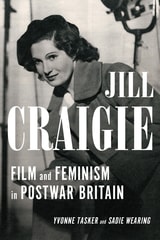
Jill Craigie
Film and Feminism in Postwar BritainYvonne Tasker and Sadie Wearing
University of Illinois Press, 2026
Tasker and Wearing reconsider Craigie’s place and reputation in the history of British Cinema. Craigie created work that showed a strong critical voice and at the same time challenged contemporary modes of filmmaking with both documentary and drama. Tasker and Wearing examine her feminist and working-class influences and also emphasize the democratic impulse that drove Craigie to include her subjects’ participation, and her commitment to representing them on screen. Throughout, Tasker and Wearing analyze Craigie’s work against the backdrop of postwar concerns and preoccupations.
Distinctive and nuanced, Jill Craigie reconsiders the career of a groundbreaking woman director.
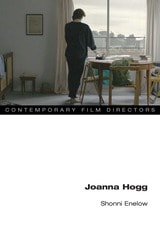
Joanna Hogg
Shonni Enelow
University of Illinois Press, 2024
Films like The Eternal Daughter and the diptych The Souvenir and The Souvenir Part II have cemented Joanna Hogg’s reputation as an original voice in contemporary cinema. Her rigorous and quiet style draws on the histories of film and art to tell stories that weave autobiography with studies in human opacity.
Shonni Enelow analyzes Hogg’s six feature films around the concepts of turning away, the reality effect, and the impossible encounter. Throughout, Enelow explores the tension between absorption, in which characters are immersed in a diegetic fiction, and self-reflexivity, as the filmmaker comments on her techniques of representation. An in-depth interview with Hogg delves into the director’s process, approach to creating character, and use of artistic and literary references.
Sophisticated and innovative, Joanna Hogg illuminates the work of one of today’s most original filmmakers.

Joaquim Nabuco, British Abolitionists, and the End of Slavery in Brazil
Correspondence 1880-1905Edited by Leslie Bethell and Murilo De Carvalho
University of London Press, 2009
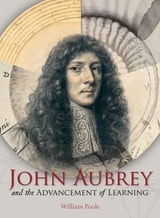
John Aubrey and the Advancement of Learning
William Poole
Bodleian Library Publishing, 2010
John Aubrey (1626–97) was one of the best-connected scholars and antiquaries in the great decades of the British scientific revolution. He is remembered as a pioneer historian and the father of English life-writing, whose Brief Lives remains a lasting portrait of a generation of eminent thinkers and nobles. But Aubrey’s intellectual interests were much broader. He was one of the first Fellows of the Royal Society, and he was acquainted with leading scientists of the generation of Robert Hooke and Isaac Newton. Aubrey championed Hooke’s geological theories, radical for the time, that proposed the organic origin of fossils. In addition, Aubrey was a keen mathematician and an early donor to the Ashmolean Museum of Art and Archaeology and the Bodleian Library. Extensively illustrated, John Aubrey and the Advancement of Learning presents all of Aubrey’s varied interests and pursuits in their intellectual milieu. Published to celebrate the 350th anniversary of the Royal Society, this is the first accessible and illustrated guide to Aubrey’s many diverse achievements as a biographer, natural philosopher and scientist, and antiquary.
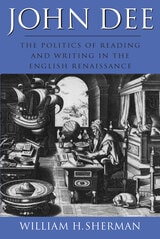
John Dee
The Politics of Reading and Writing in the English RenaissanceWilliam H. Sherman
University of Massachusetts Press, 1995

John Dygon's Proportiones practicabiles secundum Gaffurium
New Critical Text, Translation, Annotations, and Indices by Theodor Dumitrescu
University of Illinois Press, 2006
A rare example of musical scholarship from the Tudor period, in translation and fully annotated
John Dygon was the prior of St. Augustine’s monastery in Canterbury when Henry VIII boldly dissolved the English Catholic Church during the 1530s and reorganized it under royal control. Only a single copy of Dygon’s manuscript on music theory has survived, held by Trinity College, Cambridge. This volume will be the first publication of these two treatises, providing both a scholarly transcription and English translation.
Dygon’s treatise provides a rare and important example of musical scholarship from the early Tudor period, demonstrating the status of music education at the time, the affiliations of English scholarship with music study in Europe, and the music that was actually performed in England. The treatises address questions of musical notation, especially regarding rhythmic proportions, as well as practical issues about performance. Theodor Dumitrescu’s introduction situates Dygon’s treatises within the larger history of European music, paying close attention to its borrowings from and adaptations of prior treatises.
John Fuller and the Sycamore Press
A Bibliographic HistoryRyan Roberts
Bodleian Library Publishing, 2010
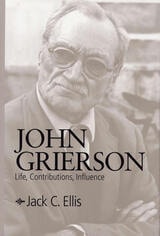
John Grierson
Life, Contributions, InfluenceJack C. Ellis
Southern Illinois University Press, 2000
More than any other person, Jack C. Ellis notes, John Grierson, a Scot, was responsible for the documentary film as it has developed in English-speaking countries.
While in the United States in the 1920s, Grierson first applied the term documentary to Robert Flaherty's Moana. In 1927, Grierson returned to Britain, where he was hired to promote the marketing of products of the British Empire. The first practical application of Grierson’s theory of documentary film was Drifters, a 1929 short feature about herring fishing in the North Sea. That success led Grierson to establish the Empire Marketing Board Film Unit (later the General Post Office Film Unit).
In 1939, Grierson moved to Canada, leaving behind a legacy of some sixty British filmmakers who spread his ideas and techniques to other countries. In Canada, he progressed beyond national concerns to global problems. The National Film Board of Canada stands as the largest and most impressive monument to Grierson's concepts and actions in regard to the use of film by governments in communicating with citizens.
Ellis examines Grierson's accomplishments in detail, probing the complexities of Grierson's motivations and personality. His subject, a true titan in the world of documentary film, was the first filmmaker to use public and private institutional sponsorship—not the box office—to pay for his films. He also employed nontraditional distribution techniques, going outside the movie theaters to reach audiences in schools and factories, union halls, and church basements. Essentially, Grierson created documentary film and established an audience for it.
John Leland
De uiris illustribus / On Famous MenJohn Leland
Bodleian Library Publishing, 2010
John Logie Baird
Television pioneerRussell W. Burns
The Institution of Engineering and Technology, 2000
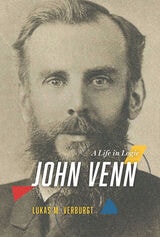
John Venn
A Life in LogicLukas M. Verburgt
University of Chicago Press, 2022
John Venn (1834–1923) is remembered today as the inventor of the famous Venn diagram. The postmortem fame of the diagram has until now eclipsed Venn’s own status as one of the most accomplished logicians of his day. Praised by John Stuart Mill as a “highly successful thinker” with much “power of original thought,” Venn had a profound influence on nineteenth-century scientists and philosophers, ranging from Mill and Francis Galton to Lewis Carroll and Charles Sanders Peirce. Venn was heir to a clerical Evangelical dynasty, but religious doubts led him to resign Holy Orders and instead focus on an academic career. He wrote influential textbooks on probability theory and logic, became a fellow of the Royal Society, and advocated alongside Henry Sidgwick for educational reform, including that of women’s higher education. Moreover, through his students, a direct line can be traced from Venn to the early analytic philosophy of G. E. Moore and Bertrand Russell, and family ties connect him to the famous Bloomsbury group.
This essential book takes readers on Venn’s journey from Evangelical son to Cambridge don to explore his life and work in context. Drawing on Venn’s key writings and correspondence, published and unpublished, Lukas M. Verburgt unearths the legacy of the logician’s wide-ranging thinking while offering perspective on broader themes in religion, science, and the university in Victorian Britain. The rich picture that emerges of Venn, the person, is of a man with many sympathies—sometimes mutually reinforcing and at other times outwardly and inwardly contradictory.
John le Carré’s Post–Cold War Fiction
Robert Lance Snyder
University of Missouri Press, 2017
This is an analysis of the first 10 post—Cold War novels of one of the most significant ethicists in contemporary fiction.
This book challenges distinctions between “popular” and “serious” literature by recognizing le Carré as one of the most significant ethicists in contemporary fiction, contributing to an overdue reassessment of his literary stature. Le Carré’s ten post–Cold War novels constitute a distinctive subset of his espionage fiction in their response to the momentous changes in geopolitics that began in the 1990s. Through a close reading of these novels, Snyder traces how—amid the “War on Terror” and transnationalism—le Carré weighs what is at stake in this conflict of deeply invested ideologies.
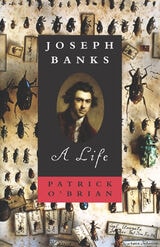
Joseph Banks
A LifePatrick O'Brian
University of Chicago Press, 1997
"It is in his description of that arduous three-year voyage [on the ship Endeavor] that Mr. O'Brian is at his most brilliant. . . . He makes us understand what life within this wooden world was like, with its 94 male souls, two dogs, a cat and a goat."—Linda Colley, New York Times
"An absorbing, finely written overview, meant for the general reader, of a major figure in the history of natural science."—Frank Stewart, Los Angeles Times
"[This book is] the definitive biography of an extraordinary subject."—Robert Taylor, Boston Globe
"His skill at narrative and his extensive knowledge of the maritime history . . . give him a definite leg up in telling this . . . story."—Tom Clark, San Francisco Chronicle
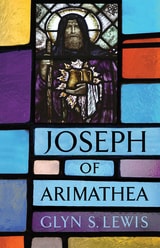
Joseph of Arimathea
Glyn S. Lewis
Westholme Publishing, 2017
“This author testifieth Joseph of Arimathea to be the first preacher of the word of God within our realms. Long after that, when Austin came from Rome, this our realm had bishops and priests there-in, as is well known to the learned of our realm.”—Elizabeth I, in a 1559 letter to Roman Catholic bishops on the precedence of the Church of England
The name Joseph of Arimathea is generally well known, either from the accounts in each of the New Testament Gospels that tell of his providing a tomb for the burial of Jesus; from his depictions in medieval and Renaissance art; from his associations with the Holy Grail that later found greater expression in medieval Arthurian stories; and even from the story that has endured in western Britain that as a trader in tin, copper, and lead, he had traveled often to the region—and with him came the Christian religion. These stories are strongly rooted, despite the lack of impeccable source material—so much so that Elizabeth I used Joseph of Arimathea as proof that the Church of England predated the Catholic church in her country. In Joseph of Arimathea Glyn S. Lewis brings these fragments together in order to provide as fully as is possible what we can infer about this first-century apostle.
The author first discusses Arimathea, a town that has yet to be positively identified. He then reviews the accounts of Joseph’s entombment of Jesus that appear in each of the four Gospels. From these earliest references, the author next consults the literary and oral tradition evidence of Joseph’s passage by ship to the south of France among a group of fugitives escaping persecution for being Christians, and his early visits to Britain as a trader in precious ores. These voyages are said to have brought him to the area around Glastonbury, which became a flourishing monastery in the Middle Ages. Whether or not Joseph of Arimathea visited Britain, his story remains an enthralling and fascinating mystery.
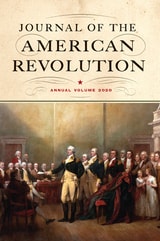
Journal of the American Revolution 2020
Annual VolumeDon N. Hagist
Westholme Publishing, 2020
The Journal of the American Revolution, Annual Volume 2020, presents the journal’s best historical research and writing over the past calendar year. The volume is designed for institutions, scholars, and enthusiasts to provide a convenient overview of the latest research and scholarship in American Revolution and Founding Era studies. The thirty-six articles in the 2020 edition include:
Bernard E. Griffiths: Trumpeter Barney of the Queen’s Rangers, Chelsea Pensioner—and Freed Slave by Todd W. Braisted
The Declaration of Independence: Did John Hancock Really Say that about his Signature?—and Other Signing Stories by J. L. Bell
Les Habitants: Collaboration and Pro-American Violence in Canada, 1774–1776 by Sebastian van Bastelaer
Misadventures in the Countryside: Escape from a British Prison Ship by Katie Turner Getty
The Revolutionary Memories of New York Loyalists: Thomas Jones and William Smith, Jr. by Cho-Chien Feng
The East India Company and Parliament’s “Fateful Decision” of 1767 by Steven Neill
Massachusetts Privateers During the Siege of Boston by Alexander Cain
The Constitution Counted Free Women and Children—And It Mattered by Andrew M. Schocket, with Kinzey M. McLaren-Czerr and Colin J. Spicer
How Magna Carta Influenced the American Revolution by Jason Yonce
Putting a Price on Loyalty: Mary Loring’s List of Losses by John Knight
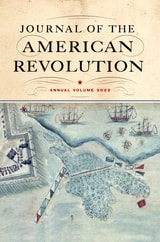
Journal of the American Revolution 2022
Annual VolumeDon N. Hagist
Westholme Publishing, 2022
The year’s best articles from the leading on-line source of new research on the Revolution and Founding eras
The Journal of the American Revolution, Annual Volume 2022, presents the journal’s best historical research and writing over the past calendar year. The volume is designed for institutions, scholars, and enthusiasts to provide a convenient overview of the latest research and scholarship in American Revolution and Founding Era studies. This year's articles are:
Massachusettensis and Novanglus: The Last Great Debate Prior to the War by James M. Smith
Wampum Belts to Canada: Stockbridge Indian Ambassadors’ Dangerous 1775 Peace Mission by Mark R. Anderson
Ethan Allen’s “Motley Parcel of Soldiery” at Montreal by Mark R. Anderson
The Devil at the Helm: A Quote That Went Astray by Don N. Hagist
Thomas Knowlton’s Revolution by David Price
Major Robert Rogers and the American Revolution by Scott M. Smith
La Petite Guerre and Indian Irregular Manner of War: Siblings, But Not Twins by Brian Gerring
George Washington and the First Mandatory Immunization by Richard J. Werther
French Adventurers, Patriots, and Pretentious Imposters in the Fight for American Independence by Arthur S. Lefkowitz
The Cherokee-American War from the Cherokee Perspective by Jordan Baker
The Numerical Strength of George Washington’s Army During the 1777 Philadelphia Campaign by Gary Ecelbarger and Michael C. Harris
A Reconsideration of Continental Army Numerical Strength at Valley Forge by Gary Ecelbarger and Michael C. Harris
American Indians at Valley Forge by Joseph Lee Boyle
The Discovery of a Letter from a Soldier of the First Rhode Island Regiment by Christian McBurney
“The Predicament We Are In”: How Paperwork Saved the Continental Army by Mike Matheny
Sir Henry Clinton’s Generalship by John Ferling
The Varick Transcripts and the Preservation of the War by Justin McHenry
“A Mere Youth”: James Monroe’s Revolutionary War by John A. Ruddima
Haitian Soldiers at the Siege of Savannah by Robert S. Davis
George Washington’s Culper Spy Ring: Separating Fact from Fiction by Bill Bleyer
Texas, Cattle, Cowboys, Ranchers, Indian Raids, and the American Revolution by George Kotlik
The Odyssey of Loyalist Colonel Samuel Bryan by Douglas R. Dorney, Jr.
“She Had Gone to the Army . . . to Her Husband”: Judith Lines’s Unremarked Life by John U. Rees
The Yorktown Tragedy: George Washington’s Slave Roundup by Gregory J. W. Urwin
Such as are Absolutely Free: Benjamin Thompson’s Black Troopers by Todd W. Braisted
The King of Sweden: Friendly Foe of the United States by Richard Werther
Shifting Indian Policy of the Articles of Confederation by John DeLee
Justice, Mercy, and Treason: John Marshall’s and Mercy Otis Warren’s Treatments of Benedict Arnold by Ray Mirante
A Chance Amiss: George Washington and the Fiasco of Spain’s Gift Diplomacy by Elisa Vargas
The Constitutional Convention Debates the Electoral College by Jason Yonce
Respected Citizen of Washington City: The Mystery of Will Costin, Freed Mount Vernon Slave by David O. Stewart
The Impeachment of Senator William Blount by Andrew A. Zellers-Frederick
Instinctive Temporary Unity: Examining Public Opinion During the Whiskey Rebellion by Jonathan Curran
“Good and Sufficient Testimony”: The Development of the Revolutionary War Pension Plan by Michael Barbieri
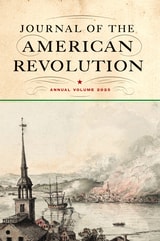
Journal of the American Revolution 2025
Annual VolumeDon N. Hagist
Westholme Publishing, 2025
The year’s best articles from the leading on-line source of new research on the Revolution and Founding eras
The Journal of the American Revolution, Annual Volume 2025, presents the journal’s best historical research and writing over the past calendar year. The volume of thirty-five articles is designed for institutions, scholars, and enthusiasts to provide a convenient overview of the latest research and scholarship in American Revolution and Founding Era studies.
Judges and Unjust Laws
Common Law Constitutionalism and the Foundations of Judicial ReviewDouglas E. Edlin
University of Michigan Press, 2010
"With keen insight into the common law mind, Edlin argues that there are rich resources within the law for judges to ground their opposition to morally outrageous laws, and a legal obligation on them to overturn it, consequent on the general common law obligation to develop the law. Thus, seriously unjust laws pose for common law judges a dilemma within the law, not just a moral challenge to the law, a conflict of obligations, not just a crisis of conscience. While rooted firmly in the history of common law jurisprudence, Edlin offers an entirely fresh perspective on an age-old jurisprudential conundrum. Edlin's case for his thesis is compelling."
---Gerald J. Postema, Cary C. Boshamer Professor of Philosophy and Professor of Law, University of North Carolina at Chapel Hill, and author of Bentham and the Common Law Tradition
"Douglas Edlin builds a powerful historical, conceptual, and moral case for the proposition that judges on common law grounds should refuse to enforce unjust legislation. This is sure to be controversial in an age in which critics already excoriate judges for excessive activism when conducting constitutional judicial review. Edlin's challenge to conventional views is bold and compelling."
---Brian Z. Tamanaha, Chief Judge Benjamin N. Cardozo Professor of Law, St. John's University, and author of Law as a Means to an End: Threat to the Rule of Law
"Professor Edlin's fascinating and well-researched distinction between constitutional review and common law review should influence substantially both scholarship on the history of judicial power in the United States and contemporary jurisprudential debates on the appropriate use of that power."
---Mark Graber, Professor of Law and Government, University of Maryland, and author of Dred Scott and the Problem of Constitutional Evil
Is a judge legally obligated to enforce an unjust law?
In Judges and Unjust Laws, Douglas E. Edlin uses case law analysis, legal theory, constitutional history, and political philosophy to examine the power of judicial review in the common law tradition. He finds that common law tradition gives judges a dual mandate: to apply the law and to develop it. There is no conflict between their official duty and their moral responsibility. Consequently, judges have the authority---perhaps even the obligation---to refuse to enforce laws that they determine unjust. As Edlin demonstrates, exploring the problems posed by unjust laws helps to illuminate the institutional role and responsibilities of common law judges.
Douglas E. Edlin is Associate Professor of Political Science at Dickinson College.
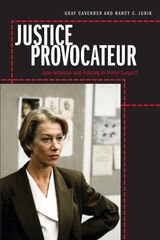
Justice Provocateur
Jane Tennison and Policing in Prime SuspectGray Cavender and Nancy C. Jurik
University of Illinois Press, 2012