Results by title
1787 books match the query 'Literary Collections' and 19 start with j
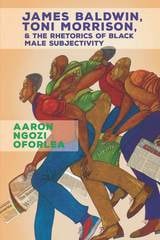
James Baldwin, Toni Morrison, and the Rhetorics of Black Male Subjectivity
Aaron Ngozi Oforlea
The Ohio State University Press, 2017
Oforlea’s book offers new analyses of the character dynamics in Baldwin’s Go Tell It on the Mountain, Tell Me How Long the Train’s Been Gone, and If Beale Street Could Talkand Morrison’s Beloved, Song of Solomon, and Tar Baby. The black male characters in these novels encounter the discursive divide, or a cultural dissonance, when they encounter dominant representations of black male identities. They use these opportunities to construct a counter-discourse about black male subjectivity. Ultimately, Oforlea argues, these characters are strategic about when and how they want to appropriate and subvert dominant ideologies. Their awareness that post-racial discourses perpetuate racial inequality serves as a gateway toward participation in collective struggles for racial justice.
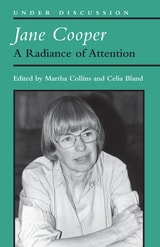
Jane Cooper
A Radiance of AttentionMartha Collins and Celia Bland, editors
University of Michigan Press, 2019
Martha Collins and Celia Bland bring together several decades’ worth of essential writing on Cooper’s poetry. While some pieces offer close examination of Cooper’s process or thoughtful consideration of the craft of a single poem, the volume also features reviews of her collections, including a previously unpublished piece on her first book, The Weather of Six Mornings (1969), by James Wright, a lifelong champion of her work. Marie Howe, Jan Heller Levi, and Thomas Lux, among others, share personal remembrances of Cooper as a teacher, colleague, and inspiration. L. R. Berger’s moving tribute to Cooper’s final days closes the volume. This book has much to offer for both readers who already love Cooper’s work and new readers, especially among younger poets, just discovering her enduring poems.
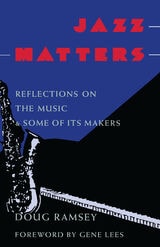
Jazz Matters
Reflections on the Music & Some of Its MakersDoug Ramsey
University of Arkansas Press, 1989
Rich in anecdote and insight, Jazz Matters is a collection of essays, profiles, and reviews by Doug Ramsey, and observer and chronicler of jazz and its musicians for more than thirty years. It stirs the reader to discover or rediscover the music and performers Ramsey describes. His accounts of recording sessions and live performances enhance this excellent review of the history, variety, and artistic depth that make jazz so profound an element in modern culture.
Jazz Matters gives the reader a basis for understanding jazz improvisation Ramsey’s sensitive, straightforward, and entertaining pieces promote appreciation of the accomplishment of artists from Louis Armstrong to John Coltrane and Ornette Coleman.
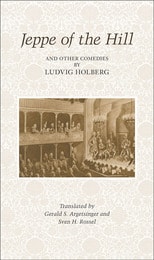
Jeppe of the Hill and Other Comedies by Ludvig Holberg
Translated by Gerald S. Argetsinger and Sven H. Rossel
Southern Illinois University Press, 1990
These eight comedies comprise the most extensive collection of Ludvig Holberg plays ever offered in the English language.
The translators’ general introductions establish a cultural context for the comedies and break new ground in understanding the importance of Holberg’s comic aesthetic. Argetsinger’s extensive experience in theatre and Rossel’s preeminence as a Scandinavian Studies scholar assure that the translations are not only accurate but stage-worthy.
The collection opens with The Political Tinker, the first Danish play to be produced in the new Danish Theatre, and ends with The Burial of Danish Comedy, literally the funeral service for the bankrupt theatre. Three more of Holberg’s renowned character comedies follow, Jean de France, Jeppe of the Hill, and Erasmus Montanus, along with his literary satire Ulysses von Ithacia. The final two plays demonstrate his ability to write shorter comic works, The Christmas Party, a scathing comedy of manners, and Pernille’s Brief Experience as a Lady, a situation comedy that satirizes the practice of baby-switching.
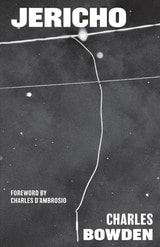
Jericho
By Charles Bowden, Foreword by Charles D'Ambrosio
University of Texas Press, 2020
When Charles Bowden died in 2014, he left behind an archive of unpublished manuscripts. Jericho marks the fifth installment in his venerable “Unnatural History of America” sextet. In it he invokes the cycles of destruction and rebirth that have defined the ancient biblical city over millennia. From the ruins of Jericho’s walls Bowden reflects on the continuum of war and violence—the many conquests of the Americas; the US-Mexican War; the Vietnam War; and the ongoing militarization of our southern border—to argue against the false promise of security that is offered when men “build that wall.” Walls—both real and imagined—will always come tumbling down.
Along the way, Bowden tells stories of loss and violence, like that of David Hartley, who mysteriously vanishes on Falcon Lake; of murdered drug runners and their cartel bosses; and of a haunted sicario, or hitman, who is running from his past and compulsively confesses his sins as he searches for an absolution that will never come. Set against these scenes of trauma and violence are Bowden’s gorgeous meditations on nature: dancing cranes, soaring eagles, winding paths that traverse mountains, lakes, and deserts. And threaded throughout are the heroic narratives of men like Martin Luther King Jr., who defied the boundaries that surrounded him and was able to reshape the arc of history. Jericho is a remarkable affirmation of our shared humanity and a timely rejection of violence and nationalism by one of our most prophetic writers working at the height of his powers.
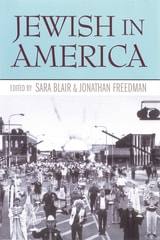
Jewish in America
Sara Blair and Jonathan Freedman, Editors
University of Michigan Press, 2004
-From the Introduction
This rare and original work of cultural studies offers uncommon and engaging perspectives-as well as provocative and humorous insights-on what it means to be Jewish in America.
Jewish in America features poetry, art, essays, and stories from an impressive and respected list of contributors, including among others Stephen Greenblatt, Richard Kostelanetz, Jacqueline Osherow, Robert Pinsky, Sharon Pomerantz, Nancy Reisman, Grace Schulman, Louis Simpson, Alisa Solomon, and Stephen J. Whitfield.
In addition to pieces by some of the country's leading writers, the book features a stunning gallery of original photographs that transport the viewer from the crowded Coney Island beaches of the 1940s to the landscapes of Oaxaca, Mexico in the 1990s.
Jin Ping Mei – A Wild Horse in Chinese Literature
Essays on Texts, Illustrations and Translations of a Late Sixteenth-Century MasterpieceEdited by Vibeke Børdahl and Lintao Qi
National University of Singapore Press, 2022
John Dewey's Essays in Experimental Logic
John Dewey. Edited by D. Micah Hester, and Robert B. Talisse. Introduction by Tom Burke
Southern Illinois University Press, 2007
Offering a new edition of Dewey’s 1916 collection of essays
This critical edition of John Dewey’s 1916 collection of writings on logic, Essays in Experimental Logic—in which Dewey presents his concept of logic as the theory of inquiry and his unique and innovative development of the relationship of inquiry to experience—is the first scholarly reprint of the work in one volume since 1954. Essays in Experimental Logic, edited by D. Micah Hester and Robert B. Talisse, uses the authoritative texts from the Collected Works of John Dewey, 1882–1953 (published by Southern Illinois University Press) and includes as well articles from leading journals representing various contemporary schools of philosophy that criticized Dewey’s experimentalism.
Culling materials from six volumes of the chronologically arranged Collected Works, this single-volume edition of Essays marks a crucial point in Dewey’s intellectual development: one in which Dewey critically engages idealistic and intuitionist theorists and lays the groundwork for his mature theory of inquiry. The text includes a new introduction by renowned Dewey scholar Tom Burke that places Essays in philosophical and historical context. In addition to the original essays, Essays in Experimental Logic also features five critical essays by Dewey’s contemporaries, including Bertrand Russell, Wendell T. Bush, R. F. Alfred Hoernlé, H. T. Costello, and C. S. Peirce.
John Reed and the Writing of Revolution
Daniel W. Lehman
Ohio University Press, 2002
John Reed (1887-1920) is best known as the author of Ten Days That Shook the World and as champion of the communist movement in the United States. Still, Reed remains a writer almost systematically ignored by the literary critical establishment, even if alternately vilified and lionized by historians and by films like Warren Beatty’s Reds.
John Reed and the Writing of Revolution examines Reed’s writing from a different critical perspective—one informed by a theoretical and practical understanding of literary nonfiction. In both politics and writing, John Reed defied fashion. In his short career, Reed transcended the traditional creative arts of fiction, poetry, and drama in favor of deeply researched histories composed with the cadence of fiction and the power of fact. Reed thereby alienated literary critics who had idealized timeless artistry against the rough-and-tumble world of historical details and political implications.
Working from a close investigation of rare articles, manuscripts, and the Reed papers at Harvard as well as from Reed’s published work, Daniel W. Lehman offers the first detailed literary study of the man who followed Pancho Villa into battle; wrote literary profiles of such characters as Henry Ford, William Jennings Bryan, and Billy Sunday; explicated the Byzantine factionalism of Eastern Europe; and witnessed the storming of the Winter Palace and the birth of Soviet Russia.
José Martí's Our America
From National to Hemispheric Cultural StudiesJeffrey Belnap and Raúl Fernández, eds.
Duke University Press, 1998
A Cuban exile from 1881 to 1895, Martí was a correspondent writing in New York for various Latin American newspapers. Grasping the significance of rising U.S. imperial power, he came to understand the Americas as a complex system of kindred—but not equal—national formations whose cultural and political integrity was threatened by the overbearing aggressiveness of the United States. This collection explores how in his journalistic work Martí critiques U.S. racism, imperialism, and capitalism; warns Latin America of impending U.S. geographical, cultural, and economic annexation; and calls for recognition of the diversity of America’s cultural voices. Reinforcing Martí’s hemispheric vision with essays by a wide range of scholars who investigate his analysis of the United States, his significance as a Latino outsider, and his analyses of Latin American cultural politics, this volume explores the affinities between Martí’s thought and current reexaminations of what it means to study America.
José Martí’s Our America offers a new understanding of Martí’s ambiguous and problematic relation with the United States and will engage scholars and students in American, Latin American, and Latino studies as well as those interested in cultural, postcolonial, gender, and ethnic studies.
Contributors. Jeffrey Belnap, Raúl Fernández, Ada Ferrer, Susan Gillman, George Lipsitz, Oscar Martí, David Noble, Donald E. Pease, Beatrice Pita, Brenda Gayle Plummer, Susana Rotker, José David Saldívar, Rosaura Sánchez, Enrico Mario Santí, Doris Sommer, Brook Thomas
Journal of the Fictive Life
Howard Nemerov
University of Chicago Press, 1981
"He often shows bravery and shrewdness; the book is full of fine criticism and psychological insight. As always, his prose has that ease and transparency that make one forget one is reading; one seems simply to hear a voice speaking. Nemerov's improvised self-analysis has weaknesses, but few that he himself doesn't eventually recognize."—New York Times Book Review
"In an age of explicitness, Nemerov's Journal of the Fictive Life is explicitly without vulgarity; in an age of revelation, it reveals only what counts. More then a book about creativity, it is a beautiful creation."—Richard G. Stern
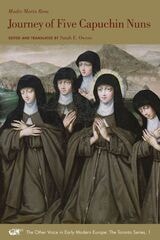
Journey of Five Capuchin Nuns
Madre María Rosa
Iter Press, 2009
Journey of Five Capuchin Nuns contains all the elements of a riveting adventure story. Through the eyes of the Mother Abbess, María Rosa, the reader is taken along on this journey through wars, pirates, disease, travel on the high seas, and treacherous mountain passes in the Andes. Five nuns set out in the early 1700s from their cloistered convent in Madrid, Spain, to travel halfway around the world to Lima, Peru. The journey lasted three years—an odyssey not all of them would complete. Yet, this unique historical document is so much more than a typical travel narrative. It illuminates the eighteenth-century way of life of religious women on both sides of the Atlantic basin. María Rosa’s lively prose attests to the literary connection among women religious writers of Spain and Latin America. This annotated edition and first-ever English translation of the manuscript will be of interest to scholars, students and anyone who wants to learn more about women’s history.
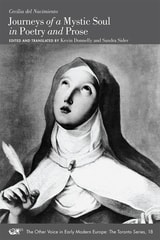
Journeys of a Mystic Soul in Poetry and Prose
Cecilia del Nacimiento
Iter Press, 2012
—Stacey Schlau
Professor, Department of Languages and Culture and the Women’s Studies Program
West Chester University, Pennsylvania
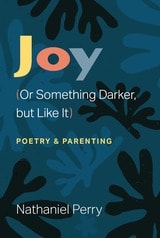
Joy (Or Something Darker, but Like It)
poetry & parentingNathaniel Perry
University of Michigan Press, 2024
Each of the twelve essays considers a different poet—Edward Thomas, Henry W. Longfellow, George Scarbrough, Elizabeth Bishop, Geoffrey Hill, Primus St. John, Robert Hayden, Elizabeth Coatsworth, Gwendolyn Brooks, Robert Frost, E.A. Robinson, and Belle Randall—and, alongside them, different concerns of parenting and living. Organized in chronological order, they track the growth of Nathaniel Perry’s own children who pop up from time to time in a believable way. Essays consider the idea of devotion and belief, the idea of imperfection, the small details we can focus on as parents, and the conceptions of the world we pass along to our children. Together these essays not only represent the author's personal canon of poets who have been important to him in his life and work, but also present a diverse slice of American poetry, in voice, form, identity, origin, and time period.
Judaism Despite Christianity
The 1916 Wartime Correspondence Between Eugen Rosenstock-Huessy and Franz RosenzweigEdited by Eugen Rosenstock-Huessy
University of Chicago Press, 2011
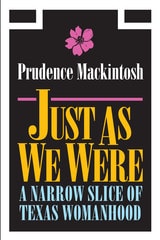
Just As We Were
A Narrow Slice of Texas WomanhoodBy Prudence Mackintosh
University of Texas Press, 1996
When a Texas debutante bows her forehead to the floor in the famous "Texas dip," society columnists all across the country speculate interminably over what it is that sets Texas women apart. But really, how could they know? Even women born and bred in Texas can't always answer that question.
Prudence Mackintosh comes very close to an answer, though, in this endlessly entertaining book. Writing with both a wry sense of humor and an insider's compassion, she offers us a fascinating look into the world of privileged, educated, well-married, well-connected, and mostly wealthy white Texas women.
What really sets these women apart, Ms. Mackintosh tells us, is the comfortable yet demanding path they follow from their idyllic girlhoods to prominent positions in society. In thirteen essays, some of which originally appeared in Texas Monthly magazine, she charts the way stations that mark this path: summer camps in the Texas Hill Country, exclusive private schools like Dallas' Hockaday, sorority membership, and acceptance into the Junior League.
Prudence Mackintosh has been both an outsider and an insider in this privileged world, and her observations are shot through with wit and real insight. Just As We Were may not be the final word on elite Texas women, but no other book has described their world with greater irony or accuracy.
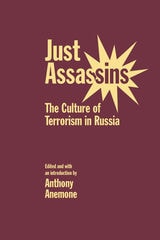
Just Assassins
The Culture of Terrorism in RussiaEdited and with an introduction by Anthony Anemone
Northwestern University Press, 2010
Just Assassins examines terrorism as it’s manifested in Russian culture past and present, with essays devoted to Russian literature, film, and theater; historical narrative; and even amateur memoir, songs, and poetry posted on the Internet. Along with editor Anthony Anemone’s introduction, these essays chart the evolution of modern political terrorism in Russia, from the Decembrist uprising to the horrific school siege in Beslan in 2004, showing how Russia’s cultural engagement with its legacy of terrorism speaks to the wider world.
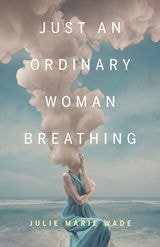
Just an Ordinary Woman Breathing
Julie Marie Wade
The Ohio State University Press, 2020
Finalist for the Publishing Triangle's Judy Grahn Award for Lesbian Nonfiction
You have a history, and a body. You are a history, and a body. Your body has (is) a history, too. As a girl, Julie Marie Wade was uninterested in makeup, boy-watching, and other trappings of conventional girlhood, much to her mother’s disappointment. Grace Kelly and Marilyn Monroe—movie stars immortalized as feminine ideals, even as they both died tragically and young—were lodestars that threw Wade’s own definition of beauty into relief as she stumbled into adulthood.
Now, in Just an Ordinary Woman Breathing, Wade traces the intimate story of coming of age in one particular body (as a lesbian, an only child, a Protestant attending Catholic school). She uses the language and tenets of music, math, religion, fairy tales, poetry, and art to reckon with the many facets of embodiment, sexuality, and love in our contemporary world. The diet industry, popular culture, and her own family all provide rich material for what is ultimately a lyrical and unflinching investigation into the questions that prickle deep within the human heart.
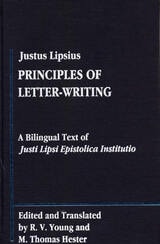
Justus Lipsius
Principles of Letter-Writing: A Bilingal Text of Justi Lipsi Epistolica InstitutioJustus Lipsius. Edited and translated by R. V. Young and M. Thomas Hester
Southern Illinois University Press, 1996
As part of the sixteenth century’s intellectual "triumvirate," which included Joseph Scaliger and Isaac Casaubon, Justus Lipsius formulated a humanist scholarship aimed ultimately at practical application in both public and personal affairs.
Justus Lipsius distinguished himself as a student of the classics, first at the Jesuit college at Cologne and then at the university in Leuven (Louvain). In 1569, soon after completing his studies, he published a precocious volume of Varia Lectiones, a collection of philological observations on classical texts. This initial work had significant and lasting effects on his career, the most immediate being an appointment as Latin secretary to Cardinal Granvelle, chief minister of Philip II in the Low Countries, who took the young man to Rome, where he was introduced to international power politics as well as to the treasures of Italian libraries, including the Vatican’s. After two years in Rome, Lipsius began his uneasy roaming, traveling from Vienna to Jena to Cologne, serving in a variety of posts. In 1579, he accepted a position at Leiden University in Holland, where he found a haven from his home province for nearly thirteen years. It was there that he delivered the lectures on letter-writing that later became Epistolica Institutio. In 1591, when Leiden University became too stridently Calvinist for Lipsius, he returned to Leuven as professor of Latin and was once again reconciled with the Catholic Church. There he remained for the rest of his life, resisting numerous appeals from foreign courts and especially from Italian churchmen.
As a particularly suitable commentator on the letter, Lipsius, like so many humanist scholars, was a prolific correspondent and published many of his own letters. In the manner typical of his age, he used the published letter as a kind of forerunner to the scholarly article. Yet his chief distinction as an epistolary theorist lies in his view of the letter as a means of personal expression. His purpose was to recover the classical Roman view of the letter as written conversation, a conception lost during the Middle Ages and only imperfectly restored during the earlier Renaissance. Hence, the Epistolica Institutio assumes an important position in the Lipsius canon: as an effort to restore the authentic features of the classical genre, it bespeaks the humanist scholar; in marking out a space for individual self-definition during a period of increasingly powerful and alienating social and religious pressures, it anticipates the ideological preoccupations of the contemporary world.