Results by title
1947 books match the query 'Music' and 44 start with j

J. S. Bach's Clavier-Ubung III
The Making of a Print, with a Companion Study of the Canonic Variations on Von Himmel hoch BWV 769Gregory G. Butler
Duke University Press, 1990
The need to examine early printed copies of music is being recognized as an important tool which can reveal as much as the study of early manuscripts. Composers themselves frequently took a major role in the preparation of the engraving.
Clavier-Ubung III—arguably the most carefully planned, intellectually conceived, and challenging volume of organ music ever published—is a particularly useful example of Bach’s printed works known chiefly from the print itself. The print is richer in information than any of the other original prints of Bach’s music, making it a distinctly suitable repertory for the author’s innovative treatment. Butler reveals fascinating new information on the genesis and history of the collection’s composition, finding, in part, that sections of the work were composed considerably earlier than previously was believed.
Jade Visions
The Life and Music of Scott LaFaroHelene LaFaro-Fernandez
University of North Texas Press, 2009
Jammin' at the Margins
Jazz and the American CinemaKrin Gabbard
University of Chicago Press, 1996
Gabbard's close look at jazz film biographies, from The Jazz Singer to Bird, reveals Hollywood's reluctance to acknowledge black subjectivity. Black and even white jazz artists have become vehicles for familiar Hollywood conceptions of race, gender, and sexuality. Even Scorsese's New York, New York and Spike Lee's Mo' Better Blues have failed to disentangle themselves from entrenched stereotypes and conventions.
Gabbard also examines Hollywood's confrontation with jazz as an elite art form, and the role of the jazz trumpet as a crucial signifier of masculinity. Finally, he considers the acting careers of Louis Armstrong, Nat King Cole, and Hoagy Carmichael; Duke Ellington's extraordinary work in films from 1929 until the late 1960s; and the forgotten career of Kay Kyser, star of nine Hollywood films and leader of a popular swing band.
This insightful look at the marriage of jazz and film is a major contribution to film, jazz, and cultural studies.
Jamming the Classroom
Musical Improvisation and Pedagogical PracticeAjay Heble and Jesse Stewart
University of Michigan Press, 2023
Jane Froman
Missouri's First Lady of SongIlene Stone
University of Missouri Press, 2003
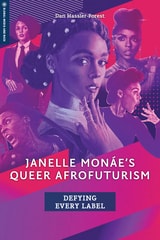
Janelle Monáe's Queer Afrofuturism
Defying Every LabelDan Hassler-Forest
Rutgers University Press, 2022
Janelle Monáe is all these things and more, making her one of the most fascinating artists to emerge in the twenty-first century. This provocative new study explores how Monáe’s work has connected different media platforms to strengthen and enhance new movements in art, theory, and politics. It considers not only Monáe’s groundbreaking albums The ArchAndroid, The Electric Lady, and Dirty Computer, but also Monáe’s work as an actress in such films as Hidden Figures and Antebellum, as well as her soundtrack appearances in socially-engaged projects ranging from I May Destroy You to Us. Examining Monáe as a cultural icon whose work is profoundly intersectional, this book maps how she is actively reshaping discourses around race, gender, sexuality, and capitalism. Tracing Monáe’s performances of joy, desire, pain, and hope across a wide range of media forms, it shows how she imagines Afrofuturist, posthumanist, and postcapitalist utopias, while remaining grounded in the realities of being a Black woman in a white-dominated industry. This is an exciting introduction to an audacious innovator whose work offers us fresh ways to talk about identity, desire, and power.
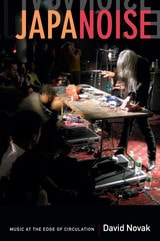
Japanoise
Music at the Edge of CirculationDavid Novak
Duke University Press, 2013
For its scattered listeners, Noise always seems to be new and to come from somewhere else: in North America, it was called "Japanoise." But does Noise really belong to Japan? Is it even music at all? And why has Noise become such a compelling metaphor for the complexities of globalization and participatory media at the turn of the millennium?
In Japanoise, David Novak draws on more than a decade of research in Japan and the United States to trace the "cultural feedback" that generates and sustains Noise. He provides a rich ethnographic account of live performances, the circulation of recordings, and the lives and creative practices of musicians and listeners. He explores the technologies of Noise and the productive distortions of its networks. Capturing the textures of feedback—its sonic and cultural layers and vibrations—Novak describes musical circulation through sound and listening, recording and performance, international exchange, and the social interpretations of media.
Jazz Among the Discourses
Krin Gabbard
Duke University Press, 1995
Challenging "official jazz histories," the contributors to this volume view jazz through the lenses of comparative literature; African American studies; music, film, and communication theory; English literature; American studies; history; and philosophy. With uncommon rigor and imagination, their essays probe the influence of various discourses—journalism, scholarship, politics, oral history, and entertainment—on writing about jazz. Employing modes of criticism and theory that have transformed study in the humanities, they address questions seldom if ever raised in jazz writing: What are the implications of building jazz history around the medium of the phonograph record? Why did jazz writers first make the claim that jazz is an art? How is an African American aesthetic articulated through the music? What are the consequences of the interaction between the critic and the jazz artist? How does the improvising artist navigate between chaos and discipline?
Along with its companion volume, Representing Jazz, this versatile anthology marks the arrival of jazz studies as a mature, intellectually independent discipline. Its rethinking of conventional jazz discourse will further strengthen the position of jazz studies within the academy.
Contributors. John Corbett, Steven B. Elworth, Krin Gabbard, Bernard Gendron, William Howland Kenney, Eric Lott, Nathaniel Mackey, Burton Peretti, Ronald M. Radano, Jed Rasula, Lorenzo Thomas, Robert Walser
Jazz Composition and Orchestration
William Russo
University of Chicago Press, 1968

Jazz Composition and Orchestration
William Russo
University of Chicago Press, 1968
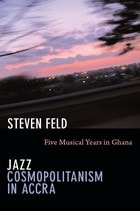
Jazz Cosmopolitanism in Accra
Five Musical Years in GhanaSteven Feld
Duke University Press, 2012
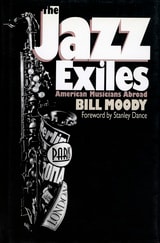
Jazz Exiles
Bill Moody
University of Nevada Press, 2000
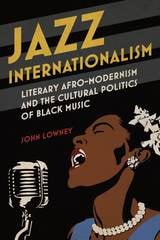
Jazz Internationalism
Literary Afro-Modernism and the Cultural Politics of Black MusicJohn Lowney
University of Illinois Press, 2017
Jazz Internationalism offers a bold reconsideration of jazz's influence in Afro-modernist literature. Ranging from the New Negro Renaissance through the social movements of the 1960s, John Lowney articulates nothing less than a new history of Afro-modernist jazz writing. Jazz added immeasurably to the vocabulary for discussing radical internationalism and black modernism in leftist African American literature. Lowney examines how Claude McKay, Ann Petry, Langston Hughes, and many other writers employed jazz as both a critical social discourse and mode of artistic expression to explore the possibilities—and challenges—of black internationalism. The result is an expansive understanding of jazz writing sure to spur new debates.
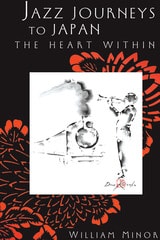
Jazz Journeys to Japan
The Heart WithinWilliam Minor
University of Michigan Press, 2004
Part music history, part cultural meditation, part travel narrative, Jazz Journeys to Japan is the first book to address the experiences of individual players -- Japanese jazz greats such as Toshiko Akiyoshi, Masahiko Satoh, Makoto Ozone, and Yosuke Yamashita.
William Minor navigates the converging streams of Western music and Eastern tradition, revealing through interviews with musicians, critics, and producers the unique synthesis that results from this convergence. And, turning conventional wisdom on its ear, he disproves the widely held notion that Japanese jazz artists don't "swing." Along the way, we experience Minor's growing appreciation of Japanese culture, which mirrors his subjects' discovery of American jazz.
William Minor's previous books include Unzipped Souls: A Jazz Journey through the Soviet Union, and Monterey Jazz Festival: Forty Legendary Years. He has written for Downbeat, Jazz Times, Jazz Notes, Coda, and Swing Journal.
Jazz Matters
Reflections on the Music & Some of Its MakersDoug Ramsey
University of Arkansas Press, 1989
Rich in anecdote and insight, Jazz Matters is a collection of essays, profiles, and reviews by Doug Ramsey, and observer and chronicler of jazz and its musicians for more than thirty years. It stirs the reader to discover or rediscover the music and performers Ramsey describes. His accounts of recording sessions and live performances enhance this excellent review of the history, variety, and artistic depth that make jazz so profound an element in modern culture.
Jazz Matters gives the reader a basis for understanding jazz improvisation Ramsey’s sensitive, straightforward, and entertaining pieces promote appreciation of the accomplishment of artists from Louis Armstrong to John Coltrane and Ornette Coleman.
Jazz Mavericks of the Lone Star State
By Dave Oliphant
University of Texas Press, 2007
Jazz is one of America's greatest gifts to the arts, and native Texas musicians have played a major role in the development of jazz from its birth in ragtime, blues, and boogie-woogie to its most contemporary manifestation in free jazz. Dave Oliphant began the fascinating story of Texans and jazz in his acclaimed book Texan Jazz, published in 1996. Continuing his riff on this intriguing musical theme, Oliphant uncovers in this new volume more of the prolific connections between Texas musicians and jazz.
Jazz Mavericks of the Lone Star State presents sixteen published and previously unpublished essays on Texans and jazz. Oliphant celebrates the contributions of such vital figures as Eddie Durham, Kenny Dorham, Leo Wright, and Ornette Coleman. He also takes a fuller look at Western Swing through Milton Brown and his Musical Brownies and a review of Duncan McLean's Lone Star Swing. In addition, he traces the relationship between British jazz criticism and Texas jazz and defends the reputation of Texas folklorist Alan Lomax as the first biographer of legendary jazz pianist-composer Jelly Roll Morton. In other essays, Oliphant examines the links between jazz and literature, including fiction and poetry by Texas writers, and reveals the seemingly unlikely connection between Texas and Wisconsin in jazz annals. All the essays in this book underscore the important parts played by Texas musicians in jazz history and the significance of Texas to jazz, as also demonstrated by Oliphant's reviews of the Ken Burns PBS series on jazz and Alfred Appel Jr.'s Jazz Modernism.
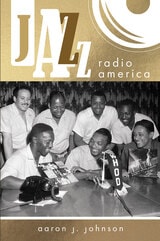
Jazz Radio America
Aaron J. Johnson
University of Illinois Press, 2024
An interwoven story of a music and a medium, Jazz Radio America answers perennial questions about why certain kinds of jazz get played and why even that music is played in so few places.
Jazz Worlds/World Jazz
Edited by Philip V. Bohlman and Goffredo Plastino
University of Chicago Press, 2016
Monumental in scope, this book explores the relationship between jazz and culture and how they influence each other across a range of themes and settings. Contributors offer an analysis of the social meaning of jazz in Iran, a look at the genesis of Ethiopian jazz and at Indian fusion, and chapters on jazz diplomacy, Balkan swing, and that French export par excellence: Django Reinhardt. Altogether the contributors approach jazz—in these global iterations—through the themes that have always characterized it at home: place, history, mobility, media, and race. The result is a first-of-its-kind map of jazz around the globe that pays tribute to the players who have given the form its seemingly infinite possibilities.
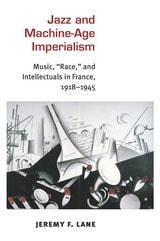
Jazz and Machine-Age Imperialism
Music, "Race," and Intellectuals in France, 1918-1945Jeremy F. Lane
University of Michigan Press, 2014
Jeremy F. Lane’s Jazz and Machine-Age Imperialism is a bold challenge to the existing homogenous picture of the reception of American jazz in world-war era France. Lane’s book closely examines the reception of jazz among French-speaking intellectuals between 1918 and 1945 and is the first study to consider the relationships, sometimes symbiotic, sometimes antagonistic, between early white French jazz critics and those French-speaking intellectuals of color whose first encounters with the music in those years played a catalytic role in their emerging black or Creole consciousness. Jazz’s first arrival in France in 1918 coincided with a series of profound shocks to received notions of French national identity and cultural and moral superiority. These shocks, characteristic of the era of machine-age imperialism, had been provoked by the first total mechanized war, the accelerated introduction of Taylorist and Fordist production techniques into European factories, and the more frequent encounters with primitive “Others” in the imperial metropolis engendered by interwar imperialism. Through close readings of the work of early white French jazz critics, alongside the essays and poems of intellectuals of color such as the Nardal sisters, Léon-Gontran Damas, Léopold Sédar Senghor, and René Ménil, Jazz and Machine-Age Imperialism highlights the ways in which the French reception of jazz was bound up with a series of urgent contemporary debates about primitivism, imperialism, anti-imperialism, black and Creole consciousness, and the effects of American machine-age technologies on the minds and bodies of French citizens.
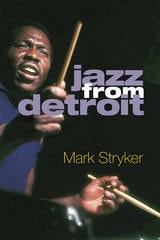
Jazz from Detroit
Mark Stryker
University of Michigan Press, 2019
Stryker’s story starts in the 1940s and ’50s, when the auto industry created a thriving black working and middle class in Detroit that supported a vibrant nightlife, and exceptional public school music programs and mentors in the community like pianist Barry Harris transformed the city into a jazz juggernaut. This golden age nurtured many legendary musicians—Hank, Thad, and Elvin Jones, Gerald Wilson, Milt Jackson, Yusef Lateef, Donald Byrd, Tommy Flanagan, Kenny Burrell, Ron Carter, Joe Henderson, and others. As the city’s fortunes change, Stryker turns his spotlight toward often overlooked but prescient musician-run cooperatives and self-determination groups of the 1960s and ’70s, such as the Strata Corporation and Tribe. In more recent decades, the city’s culture of mentorship, embodied by trumpeter and teacher Marcus Belgrave, ensured that Detroit continued to incubate world-class talent; Belgrave protégés like Geri Allen, Kenny Garrett, Robert Hurst, Regina Carter, Gerald Cleaver, and Karriem Riggins helped define contemporary jazz. The resilience of Detroit’s jazz tradition provides a powerful symbol of the city’s lasting cultural influence.
Stryker’s 21 years as an arts reporter and critic at the Detroit Free Press are evident in his vivid storytelling and insightful criticism. Stryker has fully updated the paperback since the publication of the hardcover. This award-winning book will appeal to jazz aficionados, casual fans, and anyone interested in the vibrant and complex history of cultural life in Detroit.
Jazz from the Beginning
Garvin Bushell
University of Michigan Press, 1990
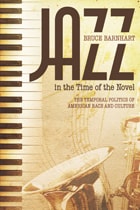
Jazz in the Time of the Novel
The Temporal Politics of American Race and CultureBruce Evan Barnhart
University of Alabama Press, 2013
WINNER OF THE ELIZABETH AGEE PRIZE IN AMERICAN LITERATURE
Jazz in the Time of the Novel argues that a culture’s understanding of the concept of time plays a central role in its economic, social, and aesthetic affairs and that a culture arrives at its conception of time through its artistic practices.
Bruce Barnhart, in Jazz in the Time of the Novel, shows that American culture of the first three decades of the twentieth century was shaped by the kindred rhythms and movements of two particular art forms: jazz and fiction. At the beginning of the twentieth century, widespread changes in America’s social, demographic, and economic norms threatened longstanding faith in a unified and inevitable movement towards a better future. As Barnhart shows both jazz and novels of the period address these temporal uncertainties, inserting themselves into arguments about the proper unfolding of an affirmative American future. Barnhart proposes that these two aesthetic forms can be viewed as co-participants in an ongoing discussion about the way in which the future should be imagined and experienced—a discussion symptomatic of the broader exchanges taking place within the many trajectories comprising early twentieth-century American culture.
This book includes in-depth approaches to numerous examples of jazz and the novel, including performances by James P. Johnson, Louis Armstrong, Bessie Smith, Duke Ellington, and Ethel Waters, and novels by James Weldon Johnson, F. Scott Fitzgerald, Ernest Hemingway, Gertrude Stein, and Nella Larsen, among others. In addition to the details of specific musical and literary works, Jazz in the Time of the Novel offers careful consideration as to how these works impact their social context.
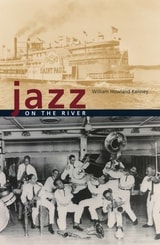
Jazz on the River
William Howland Kenney
University of Chicago Press, 2005
Simply put, when jazz went upstream, it went mainstream, and in Jazz on the River, William Howland Kenney brings to life the vibrant history of this music and its seduction of the men and women along America's inland waterways. Here for the first time readers can learn about the lives and music of the levee roustabouts promoting riverboat jazz and their relationships with such great early jazz adventurers as Louis Armstrong, Fate Marable, Warren "Baby" Dodds, and Jess Stacy. Kenney follows the boats from Memphis to St. Louis, where new styles of jazz were soon produced, all the way up the Ohio River, where the music captivated audiences in Cincinnati and Pittsburgh alike.
Jazz on the River concludes with the story of the decline of the old paddle wheelers-and thus riverboat jazz-on the inland waterways after World War II. The enduring silence of our rivers, Kenney argues, reminds us of the loss of such a distinctive musical tradition. But riverboat jazz still lives on in myriad permutations, each one in tune with our own times.
Jazzing
New York City's Unseen SceneThomas H. Greenland
University of Illinois Press, 2016
Jewish Musical Modernism, Old and New
Edited by Philip V. Bohlman
University of Chicago Press, 2009
Tackling the myriad issues raised by Sander Gilman’s provocative opening salvo—”Are Jews Musical?”—this volume’s distinguished contributors present a series of essays that trace the intersections of Jewish history and music from the late nineteenth century to the present.
Covering the sacred and the secular, the European and the non-European, and all the arenas where these realms converge, these essays recast the established history of Jewish culture and its influences on modernity. Mitchell Ash explores the relationship of Jewish scientists to modernist artists and musicians, while Edwin Seroussi looks at the creation of Jewish sacred music in nineteenth-century Vienna. Discussing Jewish musicologists in Austria and Germany, Pamela Potter details their contributions to the “science of music” as a modern phenomenon. Kay Kaufman Shelemay investigates European influence in the music of an Ethiopian Jewish community, and Michael P. Steinberg traces the life and works of Charlotte Salomon, whose paintings staged the destruction of the Holocaust. Bolstered by Philip V. Bohlman’s wide-ranging introduction and epilogue, and featuring lush color illustrations and a complementary CD of the period’s music, this volume is a lavish tribute to Jewish contributions to modernity.

Johann Scheibe
Organ Builder in Leipzig at the Time of BachLynn Edwards Butler
University of Illinois Press, 2022
Drawing on extensive research and previously untapped archival materials, Lynn Edwards Butler explores Scheibe's professional relationships and the full range of his projects. These assignments included the three-manual organ for St. Paul’s Church, renovations of the organs in the important churches of St. Thomas and St. Nicholas, and the lone surviving example of Scheibe's craft, a small organ in the nearby village of Zschortau. Viewing Scheibe within the context of the era, Butler illuminates the music scene of Bach's time as she follows the life of a gifted craftsman and his essential work on an instrument that anchored religious musical practice and community.

Johanna Beyer
Amy C. Beal
University of Illinois Press, 2015
Amy C. Beal chronicles Beyer's life from her early participation in New York's contemporary music scene through her performances at the Federal Music Project's Composers' Forum-Laboratory concerts to her unfortunate early death in 1944. This book is a portrait of a passionate and creative woman underestimated by her music community even as she tirelessly applied her gifts with compositional rigor.
The first book-length study of the composer's life and music, Johanna Beyer reclaims a uniquely innovative artist and body of work for a new generation.
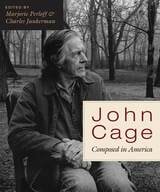
John Cage
Composed in AmericaEdited by Marjorie Perloff and Charles Junkerman
University of Chicago Press, 1994
John Cage: Composed in America is the first book-length work to address the "other" John Cage, a revisionist treatment of the way Cage himself has composed and been "composed" in America. Cage, as these original essays testify, is a contradictory figure. A disciple of Duchamp and Schoenberg, Satie and Joyce, he created compositions that undercut some of these artists' central principles and then attributed his own compositional theories to their "tradition." An American in the Emerson-Thoreau mold, he paradoxically won his biggest audience in Europe. A freewheeling, Californian artist, Cage was committed to a severe work ethic and a firm discipline, especially the discipline of Zen Buddhism.
Following the text of Cage's lecture-poem "Overpopulation and Art," delivered at Stanford shortly before his death and published here for the first time, ten critics respond to the challenge of the complexity and contradiction exhibited in his varied work. In keeping with Cage's own interdisciplinarity, the critics approach that work from a variety of disciplines: philosophy (Daniel Herwitz, Gerald L. Bruns), biography and cultural history (Thomas S. Hines), game and chaos theory (N. Katherine Hayles), music culture (Jann Pasler), opera history (Herbert Lindenberger), literary and art criticism (Marjorie Perloff), cultural poetics (Gordana P. Crnkovic, Charles Junkerman), and poetic practice (Joan Retallack). But such labels are themselves confining: each of the essays sets up boundaries only to cross them at key points. The book thus represents, to use Cage's own phrase, a much needed "beginning with ideas."
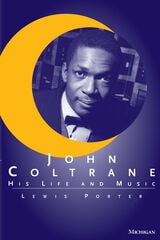
John Coltrane
His Life and MusicLewis Porter
University of Michigan Press, 1998
“One of the great biographies of anyone ever written.”—Steve O’Keefe, Counterpunch.org
Coltrane’s saxophonist son Ravi writes: “…[T]he most compelling and meticulously documented history of John Coltrane…This is a beautiful book.”
In honor of John Coltrane's Centennial, 1926-2026: Lewis Porter's Classic Biography Is Available for the First Time in Digital Format!
John Coltrane was a key figure in jazz, a pioneer in world music, and an intensely emotional force whose following continues to grow. This biography, the first by a professional jazz scholar and performer, presents a huge amount of never-before-published material, including interviews with Coltrane, photos, genealogical documents, and innovative musical analysis that offers a fresh view of Coltrane's genius. Compiled from scratch with the assistance of dozens of Coltrane's colleagues, friends, and family, John Coltrane: His Life and Music corrects numerous errors from previous biographies. The significant people in Coltrane's life were reinterviewed, yielding new insights; some were interviewed for the first time ever. The musical analysis, which is accessible to the nonspecialist, makes its own revelations--for example, that some of Coltrane's well-known pieces are based on previously unrecognized sources. The Appendix is the most detailed chronology of Coltrane's performing career ever compiled, listing scores of previously unknown performances from the 1940s and early 1950s. Coltrane has become a musical inspiration for thousands of fans and musicians and a personal inspiration to as many more. For all of these, Porter's book will become the definitive resource--a reliable guide to the events of Coltrane's life and an insightful look into his musical practices. With illustrations and previously unseen photographs!

John Dygon's Proportiones practicabiles secundum Gaffurium
New Critical Text, Translation, Annotations, and Indices by Theodor Dumitrescu
University of Illinois Press, 2006
A rare example of musical scholarship from the Tudor period, in translation and fully annotated
John Dygon was the prior of St. Augustine’s monastery in Canterbury when Henry VIII boldly dissolved the English Catholic Church during the 1530s and reorganized it under royal control. Only a single copy of Dygon’s manuscript on music theory has survived, held by Trinity College, Cambridge. This volume will be the first publication of these two treatises, providing both a scholarly transcription and English translation.
Dygon’s treatise provides a rare and important example of musical scholarship from the early Tudor period, demonstrating the status of music education at the time, the affiliations of English scholarship with music study in Europe, and the music that was actually performed in England. The treatises address questions of musical notation, especially regarding rhythmic proportions, as well as practical issues about performance. Theodor Dumitrescu’s introduction situates Dygon’s treatises within the larger history of European music, paying close attention to its borrowings from and adaptations of prior treatises.
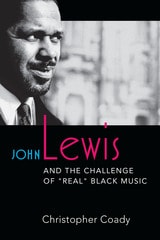
John Lewis and the Challenge of "Real" Black Music
Christopher Coady
University of Michigan Press, 2016
For critics and listeners, the reception of the 1950s jazz-classical hybrid Third Stream music has long been fraught. In John Lewis and the Challenge of “Real” Black Music, Christopher Coady explores the work of one of the form’s most vital practitioners, following Lewis from his role as an arranger for Miles Davis’s Birth of the Cool sessions to his leadership of the Modern Jazz Quartet, his tours of Europe, and his stewardship of the Lenox School of Jazz.
Along the way Coady shows how Lewis’s fusion works helped shore up a failing jazz industry in the wake of the 1940s big band decline, forging a new sound grounded in middle-class African American musical traditions. By taking into account the sociocultural milieu of the 1950s, Coady provides a wider context for understanding the music Lewis wrote for the Modern Jazz Quartet and sets up new ways of thinking about Cool Jazz and Third Stream music more broadly.
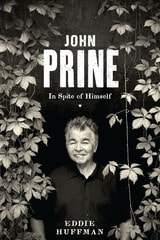
John Prine
In Spite of HimselfBy Eddie Huffman
University of Texas Press, 2015
With a range that spans the lyrical, heartfelt songs “Angel from Montgomery,” “Sam Stone,” and “Paradise” to the classic country music parody “You Never Even Called Me by My Name,” John Prine is a songwriter’s songwriter. Across five decades, Prine has created critically acclaimed albums—John Prine (one of Rolling Stone’s 500 Greatest Albums of All Time), Bruised Orange, and The Missing Years—and earned many honors, including two Grammy Awards, a Lifetime Achievement Award for Songwriting from the Americana Music Association, and induction into the Nashville Songwriters Hall of Fame. His songs have been covered by scores of artists, from Johnny Cash and Miranda Lambert to Bette Midler and 10,000 Maniacs, and have influenced everyone from Roger McGuinn to Kacey Musgraves. Hailed in his early years as the “new Dylan,” Prine still counts Bob Dylan among his most enthusiastic fans.
In John Prine, Eddie Huffman traces the long arc of Prine’s musical career, beginning with his early, seemingly effortless successes, which led paradoxically not to stardom but to a rich and varied career writing songs that other people have made famous. He recounts the stories, many of them humorous, behind Prine’s best-known songs and discusses all of Prine’s albums as he explores the brilliant records and the ill-advised side trips, the underappreciated gems and the hard-earned comebacks that led Prine to found his own successful record label, Oh Boy Records. This thorough, entertaining treatment gives John Prine his due as one of the most influential songwriters of his generation.
John Prine
In Spite of HimselfEddie Huffman
University of Texas Press, 2022
With a range that spans the lyrical, heartfelt songs “Angel from Montgomery,” “Sam Stone,” and “Paradise” to the classic country music parody “You Never Even Called Me by My Name,” John Prine is a songwriter’s songwriter. Across five decades, Prine has created critically acclaimed albums—John Prine (one of Rolling Stone’s 500 Greatest Albums of All Time), Bruised Orange, and The Missing Years—and earned many honors, including two Grammy Awards, a Lifetime Achievement Award for Songwriting from the Americana Music Association, and induction into the Nashville Songwriters Hall of Fame. His songs have been covered by scores of artists, from Johnny Cash and Miranda Lambert to Bette Midler and 10,000 Maniacs, and have influenced everyone from Roger McGuinn to Kacey Musgraves. Hailed in his early years as the “new Dylan,” Prine still counts Bob Dylan among his most enthusiastic fans.
In John Prine, Eddie Huffman traces the long arc of Prine’s musical career, beginning with his early, seemingly effortless successes, which led paradoxically not to stardom but to a rich and varied career writing songs that other people have made famous. He recounts the stories, many of them humorous, behind Prine’s best-known songs and discusses all of Prine’s albums as he explores the brilliant records and the ill-advised side trips, the underappreciated gems and the hard-earned comebacks that led Prine to found his own successful record label, Oh Boy Records. This thorough, entertaining treatment gives John Prine his due as one of the most influential songwriters of his generation.
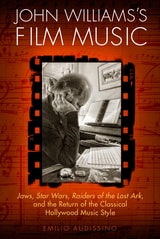
John Williams's Film Music
<i>Jaws</i>, <i>Star Wars</i>, <i>Raiders of the Lost Ark</i>, and the Return of the Classical Hollywood Music StyleEmilio Audissino
University of Wisconsin Press, 2014
Combining accessible writing with thorough scholarship, and rigorous historical accounts with insightful readings, John Williams’s Film Music explores why Williams is so important to the history of film music. Beginning with an overview of music from Hollywood’s Golden Age (1933–58), Emilio Audissino traces the turning points of Williams’s career and articulates how he revived the classical Hollywood musical style. This book charts each landmark of this musical restoration, with special attention to the scores for Jaws and Star Wars, Williams’s work as conductor of the Boston Pops Orchestra, and a full film/music analysis of Raiders of the Lost Ark. The result is a precise, enlightening definition of Williams’s “neoclassicism” and a grounded demonstration of his lasting importance, for both his compositions and his historical role in restoring part of the Hollywood tradition.
Best Special Interest Books, selected by the American Association of School Librarians
Best Books for General Audiences, selected by the Public Library Reviewers
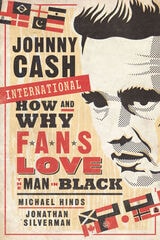
Johnny Cash International
How and Why Fans Love the Man in BlackMichael Hinds and Jonathan Silverman
University of Iowa Press, 2020
2023 Peggy O'Brien Book Prize, winner
Across all imaginable borders, Johnny Cash fans show the appeal of a thoroughly American performer who simultaneously inspires people worldwide. A young Norwegian shows off his Johnny Cash tattoo. A Canadian vlogger sings “I Walk the Line” to camel herders in Egypt’s White Desert. A shopkeeper in Northern Ireland plays Cash as his constant soundtrack. A Dutchwoman coordinates the activities of Cash fans worldwide and is subsequently offered the privilege of sleeping in Johnny’s bedroom. And on a more global scale, millions of people watch Cash’s videos online, then express themselves through commentary and debate.
In Johnny Cash International, Hinds and Silverman examine digital and real-world fan communities and the individuals who comprise them, profiling their relationships to Cash and each other. Studying Johnny Cash’s international fans and their love for the man reveals new insights about music, fandom, and the United States.

Joint Enterprises
Collaborative Drama and the Institutionalization of the English Renaissance TheaterHeather Anne Hirschfeld
University of Massachusetts Press, 2004
Drawing on a range of documentary and literary sources as well as recent methodological advances in theater history, the book presents a sequence of case studies designed to accommodate both the larger cultural setting of the early modern theater and the localized, idiosyncratic factors influencing discrete literary productions. Each chapter chronicles the professional setting of a particular joint work and then investigates its rhetorical or linguistic traces in the resultant text. This approach allows Hirschfeld to locate specific links between modes of collaborative production and forms of dramatic representation and then explicate the literary and political implications of these connections.
Hirschfeld's case studies provide a fresh account of the institutionalization—the steady growth, organization, and incorporation—of the professional drama in sixteenth- and seventeenth-century English cultural life. By attending to the changing shapes and stakes of joint enterprises, she shows that dramatists did not unconsciously absorb the practice of collaborative writing from general social discourses, but rather were aware of the material and symbolic significances of their work, meanings structured by the traditions of the developing professional theater and by the cultural pressures and anxieties attendant upon a new and often fragile institution.
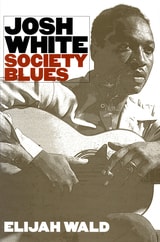
Josh White
Society BluesElijah Wald
University of Massachusetts Press, 2000
In this compelling biography, Elijah Wald traces White's journey from a childhood leading blind singers on the streets of Greenville, South Carolina, to the heights of Manhattan cafe society. He explores the complexities of White's music, his struggles with discrimination and stereotypes, his political involvements, and his sometimes raucous personal life.
White was always drawn to music and made his first recordings at age fourteen. By the 1930s he had become a recording star, with equally strong careers in blues and gospel. In the 1940s he was discovered by white audiences and regularly appeared in New York cabarets alongside such artists as Billie Holiday. He also became an outspoken proponent of civil rights and frequently appeared at rallies and benefits, as well as at the Roosevelt White House, becoming known as "the Presidential Minstrel." He was one of the few black figures to star on Broadway and appear in Hollywood films, the only black solo performer to have his own national tour, and a daring sex symbol with adoring fans on both sides of the color line.
In the 1950s, White won acclaim in Europe, then saw his achievements collapse in the polarized political ferment of the McCarthy era. Attempting to strike a balance that would keep his career afloat, he instead ended up alienating both political camps. Although still a star in England, he became the forgotten man at home until his resurrection during the folk revival.

Journey of an American Pianist
Johannesen, Grant
University of Utah Press, 2007
Journey of an American Pianist presents an extensive examination of Johannesen’s artistic commitment and the importance of certain kinds of training and experience, framed in large part as advice to the young pianist seeking a concert career. At the same time, it has plenty of everyday-living experience, showing what pianists do and think about when they are not actually playing or performing.
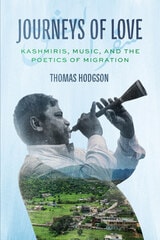
Journeys of Love
Kashmiris, Music, and the Poetics of MigrationThomas Hodgson
University of Chicago Press, 2025
In Journeys of Love, ethnomusicologist Thomas Hodgson offers a sensitive corrective to harmful portrayals of immigrants—specifically, Pakistanis living in England—as a self-segregating group prohibited from making music, a stereotype that has often resulted in violent Islamophobia. He argues that, in practice, these migrants—many of whom come from the Mirpur area of Azad Kashmir—occupy rich musical worlds, full of poetic metaphors, that are central to surviving migration and its attendant losses.
Hodgson shows how Mirpuris in England, as well as those who remain in Pakistan, carry on traditions of reciting a collection of poetry by the nineteenth-century Sufi saint Mian Muhammad Bakhsh, translated by Hodgson here as Journeys of Love. With its themes of remaining true to one’s home, the oppressed being saved, having patience, and keeping faith in God, this work has become the story of movement and displacement in its narrative arc, as well as through the way it provides spiritual and ethical frameworks for settling in new lands. These hidden poetics of migration transform across generations as young Mirpuris develop new expressions of the connections across continents. These poetics reveal the connections between Kashmir’s rural village life and urban centers abroad, offering a sensitive and illuminating portrait of migration and multiculturalism in Britain and beyond.
Jubilation of the Heart
Monastic Song and Mystical PoeticsKris J. Trujillo
University of Chicago Press, 0
A history of the jubilus—the complex vocal run on the last syllable of the Alleluia chant in medieval Christian liturgy.
In liturgical Christian worship, the Alleluia chant during the Mass involves extensive melismas—vocal embellishments on a single syllable sung over a complex melodic line. The melisma on the final “a” of the word “alleluia” is known as the jubilus—a climactic, musical eruption of joy. In Jubilation of the Heart, Kris J. Trujillo shows how the performance of this single syllable grew in significance during the European Middle Ages until it became a core element in Christian mystical traditions and beyond.
In various incarnations of the jubilus—from spontaneous sounds of joy to recitations of the Psalms, from meditations on the name of Jesus to glossolalia—Trujillo discovers a range of affective, embodied, and erotic modes of medieval Christian devotion with lasting influence on modern ideas about discourse, the subject, and ecstasy. Trujillo illuminates the raptures of joy expressed by theologians including Augustine, John Cassian, and Bernard of Clairvaux; thirteenth-century holy women like Hadewijch, Mechthild of Magdeburg, and Christina the Astonishing; psychoanalytic thinkers Michel de Certeau and Jacques Lacan; popular vocalists Edith Piaf, Linda Ronstadt, and Whitney Houston; and even a diverse set of queer theorists. The result is an enchanting and wide-ranging history of premodern joy and its contemporary afterlives.
Judaism Musical and Unmusical
Michael P. Steinberg
University of Chicago Press, 2008
Engaging the work of such figures as Sigmund Freud, Walter Benjamin, Hannah Arendt, Charlotte Salomon, Arnaldo Momigliano, Leonard Bernstein, and Daniel Libeskind, Michael Steinberg shows how modern Jews advanced cosmopolitanism and multiplicity by helping to loosen—whether by choice or by necessity—the ties that bind any culture to accounts of its origins. In the process, Steinberg composes a mosaic of texts and events, often distant from one another in time and place, that speak to his theme of musicality. As both a literal value and a metaphorical one, musicality opens the possibility of a fusion of aesthetics and analysis—a coupling analogous to European modernity’s twin concerns of art and politics.
Juju
A Social History and Ethnography of an African Popular MusicChristopher Alan Waterman
University of Chicago Press, 1990
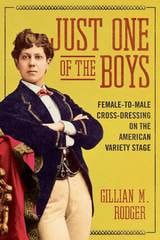
Just One of the Boys
Female-to-Male Cross-Dressing on the American Variety StageGillian Rodger
University of Illinois Press, 2018
Gillian M. Rodger uses the development of male impersonation from the early nineteenth century to the early twentieth century to illuminate the history of the variety show. Exploding notions of high- and lowbrow entertainment, Rodger looks at how both performers and forms consistently expanded upward toward respectable—and richer—audiences. At the same time, she illuminates a lost theatrical world where women made fun of middle-class restrictions even as they bumped up against rules imposed in part by audiences. Onstage, the actresses' changing performance styles reflected gender construction in the working class and shifts in class affiliation by parts of the audiences. Rodger observes how restrictive standards of femininity increasingly bound male impersonators as new gender constructions allowed women greater access to public space while tolerating less independent behavior from them.
Just Vibrations
The Purpose of Sounding GoodWilliam Cheng
University of Michigan Press, 2016
Modern academic criticism bursts with what Eve Kosofsky Sedgwick once termed paranoid readings—interpretative feats that aim to prove a point, persuade an audience, and subtly denigrate anyone who disagrees. Driven by strategies of negation and suspicion, such rhetoric tends to drown out softer-spoken reparative efforts, which forego forceful argument in favor of ruminations on pleasure, love, sentiment, reform, care, and accessibility.
Just Vibrations: The Purpose of Sounding Good calls for a time-out in our serious games of critical exchange. Charting the divergent paths of paranoid and reparative affects through illness narratives, academic work, queer life, noise pollution, sonic torture, and other touchy subjects, William Cheng exposes a host of stubborn norms in our daily orientations toward scholarship, self, and sound. How we choose to think about the perpetration and tolerance of critical and acoustic offenses may ultimately lead us down avenues of ethical ruin—or, if we choose, repair. With recourse to experimental rhetoric, interdisciplinary discretion, and the playful wisdoms of childhood, Cheng contends that reparative attitudes toward music and musicology can serve as barometers of better worlds.