Results by title
3064 books match the query 'Social conditions' and 25 start with j
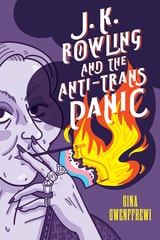
J. K. Rowling and the Anti-Trans Panic
Gina Gwenffrewi
The Ohio State University Press, 2026
In J. K. Rowling and the Anti-Trans Panic, Gina Gwenffrewi weaves her own experience as a trans woman living in Edinburgh, Scotland, with analysis of political and pop cultural discourses and artifacts to deliver a trenchant study of how fellow Edinburgh resident J. K. Rowling’s emergence as a major anti-trans campaigner and the years-long entrenchment of existing anti-trans forces have converged. Analyzing Rowling’s output since 2020, a series of anti-trans events at the University of Edinburgh, the transphobic comedy of Ricky Gervais within the British media landscape, YouTube commentaries, and more, Gwenffrewi creates a potent taxonomy of the rhetorical devices and foundational assumptions of anti-trans discourse. While the 2020s UK has proved fertile ground for “gender-critical” feminism, she argues, it has also provided the foundation for sites of resistance and for bolstering transgender voices worldwide. In celebrating trans activism and trans joy amid adversity, Gwenffrewi beautifully captures the light and dark of being out as trans in the city that—if it can fairly be called ground zero for anti-trans fervor—also embodies liberatory possibilities for trans people worldwide.
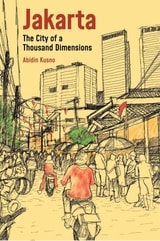
Jakarta
City of a Thousand DimensionsAbidin Kusno
National University of Singapore Press, 2023
Indonesian writer Seno Gumira Ajidarma has called Jakarta a city of a thousand dimensions. A megacity of 30 million under threat from rising sea levels and temperatures, Jakarta and its resilient residents improvise and thrive. This book teases out some of the dimensions that have given shape to contemporary Jakarta, including the city’s expanded flexibility in accommodating capital and labor, and the consistent lack of planning that can be understood as a result of both politics and the poetics of governing in the region. Jakarta is essential reading for those seeking to understand one of Asia's most dynamic cities.
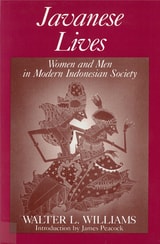
Javanese Lives
Women and Men in Modern Indonesian SocietyWilliams, Walter L.
Rutgers University Press, 1991
Java is the most populous island of Indonesia, the fifth largest nation in the world. Yet despite its importance, outsiders know little about the country or its people. With the help of Indonesian students and scholars, Walter L. Williams has collected and translated the life histories of twenty-seven Javanese women and men. The people interviewed tell how they have coped with rapid social and economic change, and the transformation of their traditions. Williams has carefully selected the individuals he includes to represent a wide diversity of Java's people. We hear from fascinating men and women of various religions, from the rich and the poor, and from different ethnic backgrounds. Diversity is a constant theme, as evidenced by a poor pedicab driver who can barely scrape along, by a rich businesswoman who explains how she balances her professional and domestic roles, by an educated and respected homosexual school principal, and by an illiterate mother of fourteen children. All of them present in their lives a unique Javanese approach to living.
These oral histories were derived from elderly people, who have a larger perspective on the changes they have seen in their lifetimes. The focus of the first section of the book is the way people have adapted in their daily lives to massive social and economic changes. In the middle section, we hear from the Javanese who represent traditional values in the midst of change. Finally, we hear from educators and parents who tell us of their concerns for Indonesian youth and the future of Indonesia.
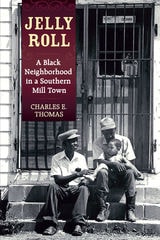
Jelly Roll
A Black Neighborhood in a Southern Mill TownCharles Thomas
University of Arkansas Press, 2012
Jesus, Jobs, and Justice
African American Women and ReligionBettye Collier-Thomas
Temple University Press, 2013
Jewish Identities in the American West
Relational PerspectivesEdited by Ellen Eisenberg
Brandeis University Press, 2022
Since the onset of New Western History in the 1980s, the complexity of race and ethnicity as it developed in the American West has increasingly been recognized by scholars and the wider public alike. Ethnic studies scholars have developed new perspectives on racial formation in the West that complicate older notions that often relied on binary descriptions, such as Black/white racialization. In the past few decades, these studies have relied on relational approaches that focus on how race is constructed, by both examining interactions with the white dominant group, and by exploring the multiple connections with other racial/ethnic groups in society. Historians are discovering new stories of racial construction, and revising older accounts, to integrate these new perspectives into the formation of racial and ethnic identities. This collection of essays on Jews in the American West advances this field in multiple ways. With essays that cover the period from the mid-nineteenth century to the present, these authors present a collective portrait of change over time that allows us to view the shifting nature of Jewish identity in the West, as well as the evolving frameworks for racial construction. Thorough and thought-provoking, Jewish Identities in the American West takes readers on a journey of racial and ethnic identity in the American West.
Jewish Life in Austria and Germany Since 1945
Identity and Communal ReconstructionSusanne Cohen-Weisz
Central European University Press, 2016
Jewish Lives under Communism
New PerspectivesKaterina Capková
Rutgers University Press, 2022
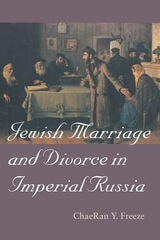
Jewish Marriage and Divorce in Imperial Russia
ChaeRan Y. Freeze
Brandeis University Press, 2001
Jewish Peoplehood
An American InnovationPianko, Noam
Rutgers University Press, 2015
Although fewer American Jews today describe themselves as religious, they overwhelmingly report a strong sense of belonging to the Jewish people. Indeed, Jewish peoplehood has eclipsed religion—as well as ethnicity and nationality—as the essence of what binds Jews around the globe to one another. In Jewish Peoplehood, Noam Pianko highlights the current significance and future relevance of “peoplehood” by tracing the rise, transformation, and return of this novel term.
Jewish Renaissance and Revival in America
Edited by Eitan P. Fishbane and Jonathan D. Sarna
Brandeis University Press, 2011

Jewish Women in Fin de Siècle Vienna
By Alison Rose
University of Texas Press, 2008
Despite much study of Viennese culture and Judaism between 1890 and 1914, little research has been done to examine the role of Jewish women in this milieu. Rescuing a lost legacy, Jewish Women in Fin de Siècle Vienna explores the myriad ways in which Jewish women contributed to the development of Viennese culture and participated widely in politics and cultural spheres.
Areas of exploration include the education and family lives of Viennese Jewish girls and varying degrees of involvement of Jewish women in philanthropy and prayer, university life, Zionism, psychoanalysis and medicine, literature, and culture. Incorporating general studies of Austrian women during this period, Alison Rose also presents significant findings regarding stereotypes of Jewish gender and sexuality and the politics of anti-Semitism, as well as the impact of German culture, feminist dialogues, and bourgeois self-images.
As members of two minority groups, Viennese Jewish women nonetheless used their involvement in various movements to come to terms with their dual identity during this period of profound social turmoil. Breaking new ground in the study of perceptions and realities within a pivotal segment of the Viennese population, Jewish Women in Fin de Siècle Vienna applies the lens of gender in important new ways.
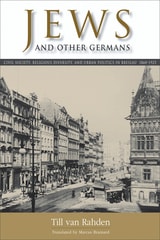
Jews and Other Germans
Civil Society, Religious Diversity, and Urban Politics in Breslau, 1860–1925Till van Rahden
University of Wisconsin Press, 2008
Closely analyzing the political, social, and cultural life in a major German city, van Rahden shows that Jews were a part of a broad urban community that encompassed diversity within unity, at once offering them a large measure of equality while permitting them to remain meaningfully Jewish. Jews and Other Germans also substantially revises the chronology of anti-Semitism in Germany, showing that Jews only began to experience exclusion from Breslau’s social world during World War I.
Yet van Rahden not only illuminates Breslau’s multicultural fabric; he also tells the story of this remarkable city as one of cultural and religious conflict and coexistence. Recounting the experiences of Jews, Protestants, and Catholics within a single narrative, he offers a critical intervention into scholarship on liberalism and civil society in nineteenth- and early twentieth-century Europe.
Jews and Race
Writings on Identity and Difference, 1880–1940Edited by Mitchell B. Hart
Brandeis University Press, 2011
Jews, Christian Society, and Royal Power in Medieval Barcelona
Elka Klein
University of Michigan Press, 2006
Jews, Christian Society, and Royal Power in Medieval Barcelona traces the development of the Jewish community of Barcelona from 1050 to 1300. Elka Klein challenges the common perception that medieval Jews lived in relative isolation from the surrounding society, argues for the existence of significant cultural common ground between Jews and Christians, and proposes a new model for understanding Jewish communal autonomy and the relationship between Jews and their rulers.
Klein traces the development of the Jewish community of Barcelona in two contexts: the parallel development of the city of Barcelona and the changing relationship of the king to urban communities, Jewish and Christian. Until the later twelfth century, the Jewish community, like the Christian city of Barcelona, was left mostly to its own devices by the counts of Barcelona, who had neither the interest nor the power to interfere in internal affairs. Klein draws on both Hebrew and Latin sources to offer a picture of a communal elite whose power, mostly informal, derived from their influence within the community. This system changed in the later twelfth century as a result of the expansion of comitial-royal administration. Four Jewish families used their positions as bailiffs, accountants, and secretaries to consolidate power within their community. The rule of this courtier elite was short lived; two episodes of communal conflict in the early thirteenth century and increased royal activism led to the institution of a new regime of elected officials in 1241. The book concludes with an examination of the new elite and the implications of increased royal interference in internal affairs.
A central argument of Jews, Christian Society, and Royal Power in Medieval Barcelona is that it is necessary to distinguish between autonomy by default, resulting from the indifference of the ruler, who leaves a community to govern itself; and autonomy by design, guaranteed by selective royal interference. Against the view that royal interference undercut Jewish autonomy, Klein argues that autonomy by default left the community with insufficient power to enforce its decisions; because Catalan kings generally interfered in support of existing structures, autonomy by design in fact strengthened the community.
This book contributes to ongoing debates about the relationship between the cultures of the three religions in the Iberian peninsula. It joins a body of recent scholarship arguing that medieval European Jews and Christians shared considerable cultural common ground.
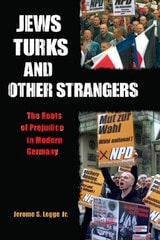
Jews, Turks, and Other Strangers
Roots of Prejudice in Modern GermanyJerome S. Legge, Jr.
University of Wisconsin Press, 2003
Scholarly, objective, insightful, and analytical, Jews, Turks, and Other Strangers studies the causes of prejudice against Jews, foreign workers, refugees, and emigrant Germans in contemporary Germany. Using survey material and quantitative analyses, Legge convincingly challenges the notion that German xenophobia is rooted in economic causes. Instead, he sees a more complex foundation for German prejudice, particularly in a reunified Germany where perceptions of the "other" sometimes vary widely between east and west, a product of a traditional racism rooted in the German past. By clarifying the foundations of xenophobia in a new German state, Legge offers a clear and disturbing picture of a conflicted country and a prejudice that not only affects Jews but also fuels a larger, anti-foreign sentiment.
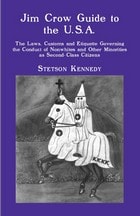
Jim Crow Guide to the U.S.A.
The Laws, Customs and Etiquette Governing the Conduct of Nonwhites and Other Minorities as Second-Class CitizensStetson Kennedy
University of Alabama Press, 2011
“A history of the United States that is almost incredible.” —Jean-Paul Sartre, Les Temps Modernes
Jim Crow Guide to the U.S.A. by Stetson Kennedy is a bold exposé of America’s institutionalized racism, originally published in 1959 and hailed as a landmark in civil rights literature. With unflinching clarity, Kennedy documents the laws, customs, and social codes that relegated nonwhite citizens to second-class status under the Jim Crow system. From the mistreatment of Native Americans to the exclusionary immigration policies targeting Asians and Africans, the book maps the presence of race-based politics across every facet of American life—housing, education, employment, and even burial.
What makes this work especially influential is its international resonance. The famed French existentialist Jean-Paul Sartre championed the book’s publication in Europe, recognizing its power to illuminate the contradictions between American democratic ideals and racial realities. Sartre’s endorsement helped position the book as a global indictment of racial injustice, aligning it with anti-colonial and human rights movements worldwide. Provocative, meticulously researched, and deeply human, Jim Crow Guide to the U.S.A. remains a vital historical document and a call to conscience. It is not merely a guide—it is a mirror held up to a nation, reflecting truths that later generations were called on to address.
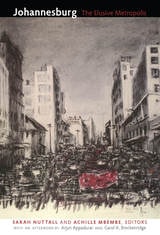
Johannesburg
The Elusive MetropolisSarah Nuttall and Achille Mbembe, eds.
Duke University Press, 2008
The volume’s essays include an investigation of representation and self-stylization in the city, an ethnographic examination of friction zones and practices of social reproduction in inner-city Johannesburg, and a discussion of the economic and literary relationship between Johannesburg and Maputo, Mozambique’s capital. One contributor considers how Johannesburg’s cosmopolitan sociability enabled the anticolonial projects of Mohandas Ghandi and Nelson Mandela. Journalists, artists, architects, writers, and scholars bring contemporary Johannesburg to life in ten short pieces, including reflections on music and megamalls, nightlife, built spaces, and life for foreigners in the city.
Contributors: Arjun Appadurai, Carol A. Breckenridge, Lindsay Bremner, David Bunn, Fred de Vries, Nsizwa Dlamini, Mark Gevisser, Stefan Helgesson, Julia Hornberger, Jonathan Hyslop, Grace Khunou, Frédéric Le Marcis, Xavier Livermon, John Matshikiza, Achille Mbembe, Robert Muponde, Sarah Nuttall, Tom Odhiambo, Achal Prabhala, AbdouMaliq Simone
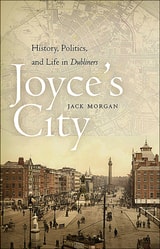
Joyce's City
History, Politics, and Life in DUBLINERSJack Morgan
University of Missouri Press, 2014
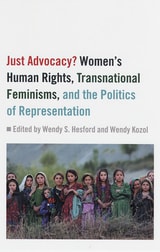
Just Advocacy?
Women's Human Rights, Transnational Feminism, and the Politics of RepresentationHesford, Wendy S
Rutgers University Press, 2005
In humanitarian and political debates about the topic, women and children are frequently considered first. Since the 1990s, human rights have become the most legitimate and legitimizing juridical and cultural claim made on a woman's behalf. But what are the consequences of equating women's rights with human rights? As the eleven essays in this volume show, the impact is often contradictory.
Bringing together some of the most respected scholars in the field, including Inderpal Grewal, Leela Fernandes, Leigh Gilmore, Susan Koshy, Patrice McDermott, and Sidonie Smith, Just Advocacy? sheds light on the often overlooked ways that women and children are further subjugated when political or humanitarian groups represent them solely as victims and portray the individuals that are helping them as paternal saviors.
Drawn from a variety of disciplinary perspectives in the humanities, arts, and social sciences, Just Advocacy? promises to advance a more nuanced and politically responsible understanding of human rights for both scholars and activists.
Just Assassins
The Culture of Terrorism in RussiaEdited and with an introduction by Anthony Anemone
Northwestern University Press, 2010
Just Assassins examines terrorism as it’s manifested in Russian culture past and present, with essays devoted to Russian literature, film, and theater; historical narrative; and even amateur memoir, songs, and poetry posted on the Internet. Along with editor Anthony Anemone’s introduction, these essays chart the evolution of modern political terrorism in Russia, from the Decembrist uprising to the horrific school siege in Beslan in 2004, showing how Russia’s cultural engagement with its legacy of terrorism speaks to the wider world.
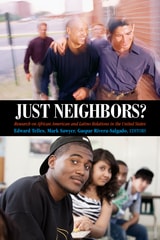
Just Neighbors?
Research on African American and Latino Relations in the United StatesEdward Telles
Russell Sage Foundation, 2012
Just Work?
Migrant Workers' Struggle TodayEdited by Aziz Choudry and Mondli Hlatshwayo
Pluto Press, 2015
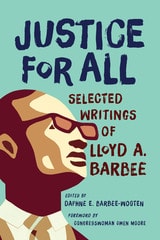
Justice for All
Selected Writings of Lloyd A. BarbeeLloyd A Barbee
Wisconsin Historical Society Press, 2017
Civil rights leader and legislator Lloyd A. Barbee frequently signed his correspondence with "Justice for All," a phrase that embodied his life’s work of fighting for equality and fairness. An attorney most remembered for the landmark case that desegregated Milwaukee Public Schools in 1972, Barbee stood up for justice throughout his career, from defending University of Wisconsin students who were expelled after pushing the school to offer black history courses, to representing a famous comedian who was arrested after stepping out of a line at a protest march. As the only African American in the Wisconsin legislature from 1965 to 1977, Barbee advocated for fair housing, criminal justice reform, equal employment opportunities, women’s rights, and access to quality education for all, as well as being an early advocate for gay rights and abortion access.
This collection features Barbee’s writings from the front lines of the civil rights movement, along with his reflections from later in life on the challenges of legislating as a minority, the logistics of coalition building, and the value of moving the needle on issues that would outlast him. Edited by his daughter, civil rights lawyer Daphne E. Barbee-Wooten, these documents are both a record of a significant period of conflict and progress, as well as a resource on issues that continue to be relevant to activists, lawmakers, and educators.
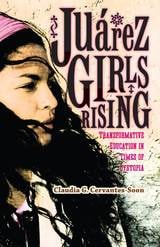
Juárez Girls Rising
Transformative Education in Times of DystopiaClaudia G. Cervantes-Soon
University of Minnesota Press, 2017
Working-class girls in Ciudad Juárez grow up in a context marked by violence against women, the devastating effects of drug cartel wars, unresponsive and abusive authorities, and predatory U.S. capitalism: under constantly precarious conditions, these girls are often struggling to shape their lives and realize their aspirations. Juárez native Claudia G. Cervantes-Soon explores the vital role that transformative secondary education can play in promoting self-empowerment and a spirit of resistance to the violence and social injustice these girls encounter.
Bringing together the voices of ten female students at Preparatoria Altavista, an innovative urban high school founded in 1968 on social justice principles, Cervantes-Soon offers a nuanced analysis of how students and their teachers together enact a transformative educational philosophy that promotes learning, self-authorship, and hope. Altavista’s curriculum is guided by the concept of autogestión, a holistic and dialectical approach to individual and collective identity formation rooted in the students’ experiences and a critical understanding of their social realities. Through its sensitive ethnography, this book shows how female students actively construct their own meaning of autogestión by making choices that they consider liberating and empowering.
Juárez Girls Rising provides an alternative narrative to popular and often simplistic, sensationalizing, and stigmatizing discourses about those living in this urban borderland. By merging the story of Preparatoria Altavista with the voices of its students, this singular book provides a window into the possibilities and complexities of coming of age during a dystopic era in which youth hold on to their critical hope and cultivate their wisdom even as the options for the future appear to crumble before their eyes.