Results by title
18284 books match the query 'United States' and 274 start with j
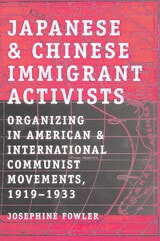
Japanese and Chinese Immigrant Activists
Organizing in American and International Communist Movements, 1919–1933Fowler, Josephine
Rutgers University Press, 2007
Japanese and Chinese immigrants in the United States have traditionally been characterized as hard workers who are hesitant to involve themselves in labor disputes or radical activism. How then does one explain the labor and Communist organizations in the Asian immigrant communities that existed from coast to coast between 1919 and 1933? Their organizers and members have been, until now, largely absent from the history of the American Communist movement. In Japanese and Chinese Immigrant Activists, Josephine Fowler brings us the first in-depth account of Japanese and Chinese immigrant radicalism inside the United States and across the Pacific.
Drawing on multilingual correspondence between left-wing and party members and other primary sources, such as records from branches of the Japanese Workers Association and the Chinese Nationalist Party, Fowler shows how pressures from the Comintern for various sub-groups of the party to unite as an “American” working class were met with resistance. The book also challenges longstanding stereotypes about the relationships among the Communist Party in the United States, the Comintern, and the Soviet Party.
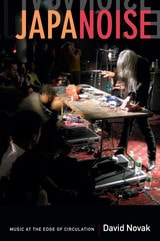
Japanoise
Music at the Edge of CirculationDavid Novak
Duke University Press, 2013
For its scattered listeners, Noise always seems to be new and to come from somewhere else: in North America, it was called "Japanoise." But does Noise really belong to Japan? Is it even music at all? And why has Noise become such a compelling metaphor for the complexities of globalization and participatory media at the turn of the millennium?
In Japanoise, David Novak draws on more than a decade of research in Japan and the United States to trace the "cultural feedback" that generates and sustains Noise. He provides a rich ethnographic account of live performances, the circulation of recordings, and the lives and creative practices of musicians and listeners. He explores the technologies of Noise and the productive distortions of its networks. Capturing the textures of feedback—its sonic and cultural layers and vibrations—Novak describes musical circulation through sound and listening, recording and performance, international exchange, and the social interpretations of media.
Jazz Exiles
Bill Moody
University of Nevada Press, 2000
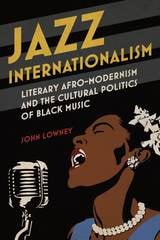
Jazz Internationalism
Literary Afro-Modernism and the Cultural Politics of Black MusicJohn Lowney
University of Illinois Press, 2017
Jazz Internationalism offers a bold reconsideration of jazz's influence in Afro-modernist literature. Ranging from the New Negro Renaissance through the social movements of the 1960s, John Lowney articulates nothing less than a new history of Afro-modernist jazz writing. Jazz added immeasurably to the vocabulary for discussing radical internationalism and black modernism in leftist African American literature. Lowney examines how Claude McKay, Ann Petry, Langston Hughes, and many other writers employed jazz as both a critical social discourse and mode of artistic expression to explore the possibilities—and challenges—of black internationalism. The result is an expansive understanding of jazz writing sure to spur new debates.
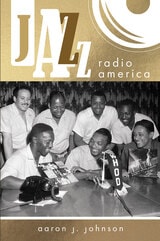
Jazz Radio America
Aaron J. Johnson
University of Illinois Press, 2024
An interwoven story of a music and a medium, Jazz Radio America answers perennial questions about why certain kinds of jazz get played and why even that music is played in so few places.
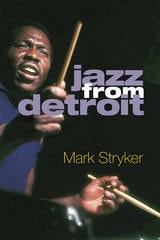
Jazz from Detroit
Mark Stryker
University of Michigan Press, 2019
Stryker’s story starts in the 1940s and ’50s, when the auto industry created a thriving black working and middle class in Detroit that supported a vibrant nightlife, and exceptional public school music programs and mentors in the community like pianist Barry Harris transformed the city into a jazz juggernaut. This golden age nurtured many legendary musicians—Hank, Thad, and Elvin Jones, Gerald Wilson, Milt Jackson, Yusef Lateef, Donald Byrd, Tommy Flanagan, Kenny Burrell, Ron Carter, Joe Henderson, and others. As the city’s fortunes change, Stryker turns his spotlight toward often overlooked but prescient musician-run cooperatives and self-determination groups of the 1960s and ’70s, such as the Strata Corporation and Tribe. In more recent decades, the city’s culture of mentorship, embodied by trumpeter and teacher Marcus Belgrave, ensured that Detroit continued to incubate world-class talent; Belgrave protégés like Geri Allen, Kenny Garrett, Robert Hurst, Regina Carter, Gerald Cleaver, and Karriem Riggins helped define contemporary jazz. The resilience of Detroit’s jazz tradition provides a powerful symbol of the city’s lasting cultural influence.
Stryker’s 21 years as an arts reporter and critic at the Detroit Free Press are evident in his vivid storytelling and insightful criticism. Stryker has fully updated the paperback since the publication of the hardcover. This award-winning book will appeal to jazz aficionados, casual fans, and anyone interested in the vibrant and complex history of cultural life in Detroit.
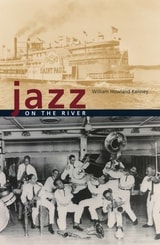
Jazz on the River
William Howland Kenney
University of Chicago Press, 2005
Simply put, when jazz went upstream, it went mainstream, and in Jazz on the River, William Howland Kenney brings to life the vibrant history of this music and its seduction of the men and women along America's inland waterways. Here for the first time readers can learn about the lives and music of the levee roustabouts promoting riverboat jazz and their relationships with such great early jazz adventurers as Louis Armstrong, Fate Marable, Warren "Baby" Dodds, and Jess Stacy. Kenney follows the boats from Memphis to St. Louis, where new styles of jazz were soon produced, all the way up the Ohio River, where the music captivated audiences in Cincinnati and Pittsburgh alike.
Jazz on the River concludes with the story of the decline of the old paddle wheelers-and thus riverboat jazz-on the inland waterways after World War II. The enduring silence of our rivers, Kenney argues, reminds us of the loss of such a distinctive musical tradition. But riverboat jazz still lives on in myriad permutations, each one in tune with our own times.
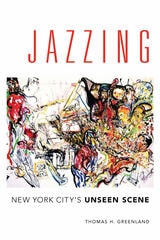
Jazzing
New York City's Unseen SceneThomas H. Greenland
University of Illinois Press, 2016
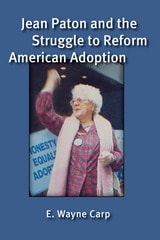
Jean Paton and the Struggle to Reform American Adoption
E. Wayne Carp
University of Michigan Press, 2013
Jean Paton (1908–2002) fought tirelessly to reform American adoption and to overcome prejudice against adult adoptees and women who give birth out of wedlock. Paton wrote widely and passionately about the adoption experience, corresponded with policymakers as well as individual adoptees, promoted the psychological well-being of adoptees, and facilitated reunions between adoptees and their birth parents. E. Wayne Carp's masterful biography brings to light the accomplishments of this neglected civil-rights pioneer, who paved the way for the explosive emergence of the adoption reform movement in the 1970s. Her unflagging efforts over five decades helped reverse harmful policies, practices, and laws concerning adoption and closed records, struggles that continue to this day.
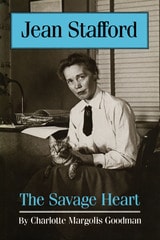
Jean Stafford
The Savage HeartBy Charlotte Margolis Goodman
University of Texas Press, 1990
One of America's best short story writers and author of three fine novels, Boston Adventure (1944), The Mountain Lion (1947), and The Catherine Wheel (1952), Jean Stafford has been rediscovered by another generation of readers and scholars. Although her novels and her Pulitzer Prize–winning short stories were widely read in the 1940s and 1950s, her fiction has received less critical attention than that of other distinguished contemporary American women writers such as Carson McCullers, Flannery O'Connor, and Eudora Welty. In this literary biography, Charlotte M. Goodman traces the life of the brilliant yet troubled Jean Stafford and reassesses her importance.
Drawing on a wealth of original material, Goodman describes the vital connections between Stafford's life and her fiction. She discusses Stafford's difficult family relationships, her tempestuous first marriage to the poet Robert Lowell, her unresolved conflicts about gender roles, her alcoholism and bouts with depression—and her amazing ability to transform the chaotic details of her life into elegant works of fiction. These wonderfully crafted works offer insightful portraits of alienated and isolated characters, most of whom exemplify not only human estrangement in the modern world, but also the special difficulties of girls and women who refuse to play traditional roles.
Goodman locates Jean Stafford within the literary world of the 1940s and 1950s. In her own right, and through her marriages to Robert Lowell, Life magazine editor Oliver Jensen, and journalist A. J. Liebling, Stafford associated with many of the major literary figures of her day, including the Southern Fugitives, the New York intellectual coterie, and writers for the New Yorker, to which she regularly contributed short stories. Goodman also describes Stafford's sustaining friendships with other women writers, such as Evelyn Scott and Caroline Gordon, and with her New Yorker editor, Katharine S. White.
This highly readable biography will appeal to a wide audience interested in twentieth-century literature and the writing of women's lives.
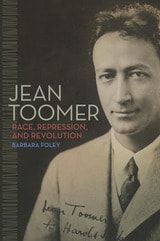
Jean Toomer
Race, Repression, and RevolutionBarbara Foley
University of Illinois Press, 2019
The 1923 publication of Cane established Jean Toomer as a modernist master and one of the key literary figures of the emerging Harlem Renaissance. Though critics and biographers alike have praised his artistic experimentation and unflinching eyewitness portraits of Jim Crow violence, few seem to recognize how much Toomer's interest in class struggle, catalyzed by the Russian Revolution and the post–World War One radical upsurge, situate his masterwork in its immediate historical context. In Jean Toomer: Race, Repression, and Revolution, Barbara Foley explores Toomer's political and intellectual connections with socialism, the New Negro movement, and the project of Young America. Examining his rarely scrutinized early creative and journalistic writings, as well as unpublished versions of his autobiography, she recreates the complex and contradictory consciousness that produced Cane. Foley's discussion of political repression runs parallel with a portrait of repression on a personal level. Examining family secrets heretofore unexplored in Toomer scholarship, she traces their sporadic surfacing in Cane. Toomer's text, she argues, exhibits a political unconscious that is at once public and private.
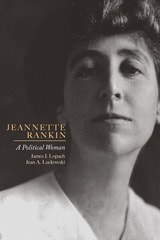
Jeannette Rankin
A Political WomanJames J. Lopach
University Press of Colorado, 2015
—Jeannette Rankin (1880-1973)
Jeannette Rankin, the first woman elected to Congress, stands tall among American icons. The representative from Montana won her seat at a time when women didn't have the right to vote in most states. Her firm stances inspired both admiration and fury across party lines, and she gained nearly canonical status among feminists and pacifists. In Jeannette Rankin: A Political Woman, James Lopach and Jean Luckowski demythologize Rankin, showing her to be a talented, driven, and deeply divided woman.
Until now, no biography has explored Rankin's inconsistencies. The authors extensively consulted the correspondence of her family members and contemporaries, uncovering ties between her politics and her familial and personal relationships. They reveal how she succeeded through her wealthy brother's influence as well as her own extraordinary efforts; how she drew inspiration not from her rural roots but from the radical hotbed of Greenwich Village; and how she championed an independent, woman-centered life while deferring to family.
Revealing her complexities along with her accomplishments, Jeannette Rankin: A Political Woman will be the definitive biography of this path-breaking politician for years to come.

Jefferson Davis, Unconquerable Heart
Felicity Allen
University of Missouri Press, 2000
Preeminent Civil War historian Frank Vandiver always longed to see an interpretive biography of Jefferson Davis. Finally, more than twenty years after Vandiver expressed that wish, publication of Jefferson Davis, Unconquerable Heart makes such an interpretive biography available.
Felicity Allen begins this monumental work with Davis's political imprisonment at the end of the Civil War and masterfully flashes back to his earlier life, interweaving Davis's private life as a schoolboy, a Mississippi planter, a husband, a father, and a political leader. She follows him from West Point through army service on the frontier, his election to the U.S. House of Representatives, his regimental command in the Mexican War, his service as U.S. secretary of war and senator, and his term as president of the Confederate States of America.
Although Davis's family is the nexus of this biography, friends and enemies also play major roles. Among his friends intimately met in this book are such stellar figures as Andrew Jackson, John C. Calhoun, Zachary Taylor, Franklin Pierce, Albert Sidney Johnston, and Robert E. Lee.
With the use of contemporary accounts and Davis's own correspondence, Jefferson Davis, Unconquerable Heart casts new light upon this remarkable man, thawing the icy image of Davis in many previous accounts. Felicity Allen shows a strong, yet gentle man; a stern soldier who loved horses, guns, poetry, and children; a master of the English language, with a dry wit; a man of powerful feelings who held them in such tight control that he was considered cold; and a home-loving Mississippian who was drawn into a vortex of national events and eventual catastrophe. At all times, "duty, honor, country" ruled his mind. Davis's Christian view of life runs like a thread throughout the book, binding together his devotion to God, his family, and the land.
Jefferson Davis, Unconquerable Heart brings Davis to life in a way that has never been done before. The variety of his experience, the breadth of his learning, and the consistency of his beliefs make this historical figure eminently worth knowing.
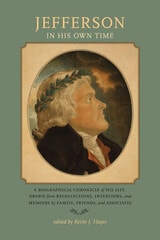
Jefferson in His Own Time
A Biographical Chronicle of His Life, Drawn from Recollections, Interviews, and Memoirs by Family, Friends, and AssociatesKevin J. Hayes
University of Iowa Press, 2012
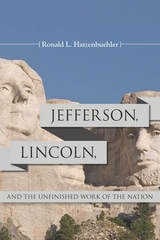
Jefferson, Lincoln, and the Unfinished Work of the Nation
Ronald L. Hatzenbuehler
Southern Illinois University Press, 2016
In this groundbreaking new study—the first extended examination of the ideas of Lincoln and Jefferson—Hatzenbuehler provides readers with a succinct guide to their opinions, comparing and contrasting their reasoned judgments on America’s republican form of government. Each chapter is devoted to one key area of common interest: race and slavery, the pros and cons of political parties, state rights versus federal authority, religion and the presidency, presidential powers under the Constitution, or the proper political economy for a republic. Relying on the pair’s own words in their letters, writings, and speeches, Hatzenbuehler explores similarities and differences between the two men on contentious issues. Both, for instance, wrote that they were antislavery, but Jefferson never acted on this belief, while Lincoln moved toward a constitutional amendment banning slavery. The book’s title, taken from the Gettysburg Address, builds on both presidents’ expectations that Americans should dedicate themselves to the unfinished work of returning the nation to its founding principles.
Jefferson and Lincoln wrestled with many of the same issues and ideas that intrigue and divide Americans today. In his thought-provoking work, Hatzenbuehler details how the two presidents addressed these issues and ideas, which are essential to understanding not only America’s history but also the continuing influence of the past on the present.
Jeffrey Introduces Thirteen More Southern Ghosts
Commemorative EditionKathryn Tucker Windham
University of Alabama Press, 2015
A commemorative edition of the beloved and best-selling second book in famed folklorist Kathryn Tucker Windham’s southern ghosts series.
Jeffrey was the resident apparition in the Selma, Alabama, home of nationally-known folklorist Kathryn Tucker Windham and the inspiration for Windham’s best-selling collection of macabre tales that reveal two hundred years of Alabama’s ghostly secrets, Thirteen Alabama Ghosts and Jeffrey. One of the most popular books ever published in the state, generations of Alabama children and students have been thrilled and chilled by Windham’s spectral legends.
Following the overwhelming success of Thirteen Alabama Ghosts and Jeffrey, Windham and Jeffrey began to journey across the South assembling a second collection of ghastly tales that repeat Windham’s winning combination of traditional folklore, Southern history and culture, and family-friendly story-telling. In Jeffrey Introduces Thirteen More Southern Ghosts, Windham’s disembodied friend roams the states of Kentucky, Tennessee, Georgia, Mississippi, Louisiana, and Florida to recall thirteen more timeless, spine-tingling tales of baneful and melancholy spirits that spook the most stoic heart.
Opening this volume is “The Girl Nobody Knew.” One midsummer night in the genteel Kentucky mineral spring resort of Harrodsburg, a beautiful lady arrived at the town’s grand hotel. The belle danced late into the night with the town’s smitten gallants only to expire suddenly with the notes of the last quadrille. The spooked residents of Harrodsburg guard a grave you can see to this day. Readers then visit the world-famous Bell Witch of Robinson County, Tennessee. Jeffrey also makes his first trip to old New Orleans to reveal a revenant in residence on Royal Street before continuing his ghostly progress across Dixie.
This new edition returns Jeffrey Introduces Thirteen More Southern Ghosts to its original format in jacketed cloth full of original, black-and-white illustrations in a handsome keepsake edition perfect for gift-giving and for families, folklorists of all ages, and libraries.
Jeffrey's Latest Thirteen
More Alabama Ghosts, Commemorative EditionKathryn Tucker Windham
University of Alabama Press, 2016
A deluxe, commemorative edition of a beloved collection of ghostly stories from famed southern author and folklorist Kathryn Tucker Windham’s home state of Alabama.
Accompanied by her faithful companion, Jeffrey, a friendly spirit who resided in her home in Selma, Alabama, Kathryn Tucker Windham traveled the South, visiting the sites of spectral legends in Mississippi, Georgia, and Tennessee, among other places. In Jeffrey’s Latest Thirteen: More Alabama Ghosts, a sequel to her landmark Thirteen Alabama Ghosts and Jeffrey, Windham introduces readers to thirteen more of Jeffrey's ghostly acquaintances, each with the charm and universal appeal that has created hundreds of thousands of Jeffrey fans.
Among the other hair-raising tales in this collection, Windham spotlights the apparitions of academia. From the three Yankee soldiers who haunt the University of Alabama’s Civil War–era Little Round House to the Confederate soldier who resides in the University Chapel at Auburn University, Alabama’s institutions of higher learning seem to have more than a few paranormal pupils.
Photographs of the sites about which Windham writes are one of the best-loved features of her series of “Jeffrey the Ghost” books. Jeffrey’s Latest Thirteen features the image of a beautiful child who, though not photographed in life, reappeared long enough to be photographed with his bereaved father's borrowed camera. Bewitched readers will find the startling photograph of the child in the next-to-last chapter, just pages before he book’s photograph of Windham’s own spectral muse, Jeffrey.
This commemorative edition returns Windham’s thrilling classic to its original 1982 keepsake quality and includes a new afterword by the author’s children.

Jelliffe
American Psychoanalyst and Physician and His Correspondence with Sigmund Freud and C. G. JungJohn C. Burnham
University of Chicago Press, 1983
Jelliffe's colorful and versatile career led him from botany and neurology (he was coauthor of a neurology text that remained standard for some forty years) to psychiatry, psychoanalysis (of which he was a founding father in the United States), and psychosomatic medicine (in which he also pioneered). Jelliffe also made outstanding contributions to medical journalism. With William Alanson White he founded the Psychoanalytic Review, and his work as editor of the Journal of Nervous and Mental Disease from 1902 to 1944 may have set a record for editorial longevity. Jelliffe was a charismatic speaker and teacher who in all his roles induced physicians and other thinkers to explore new ideas and ways of thinking.
Jelliffe's correspondence with Jung and Freud illuminates the personal and professional lives of the three men. The letters help to clarify concepts in both the Jungian and Freudian schools. The shifting emphasis of Jelliffe's relationships with the two masters of psychoanalysis—first when the two were colleagues, then for the greater span of time when they were rivals and adversaries—is revealing of Jenlliffe's own flexible views.
Jelliffe, furthermore, provides insights into the history of medicine and medical institutions and customs through Jelliffe's frank accounts of the developing medical profession in America. Jelliffe describes, for example, what it was like for a young M.D. to set up an economically viable practice in the 1890s. In addition, Burnham explores the problem of measuring the influence of a man like Jelliffe upon the history of ideas and institutions.
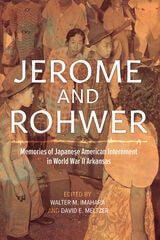
Jerome and Rohwer
Memories of Japanese American Internment in World War II ArkansasWalter M. Imahara
University of Arkansas Press, 2022
This book is a collection of brief memoirs written by former internees of Jerome and Rohwer and their close family members. Here dozens of individuals, almost all of whom are now in their eighties or nineties, share their personal accounts as well as photographs and other illustrations related to their life-changing experiences. The collection, likely to be one of the last of its kind, is the only work composed solely of autobiographical remembrances of life in Jerome and Rohwer, and one of the very few that gathers in a single volume the experiences of internees in their own words.
What emerges is a vivid portrait of lives lived behind barbed wire, where inalienable rights were flouted and American values suspended to bring a misguided sense of security to a race-obsessed nation at war. However, in the barracks and the fields, the mess halls and the makeshift gathering places, values of perseverance, tolerance, and dignity—the gaman the internees shared—gave significance to a transformative experience that changed forever what it means to call oneself an American.
Jersey Genesis
The Story of the Mullica RiverBeck, Henry
Rutgers University Press, 1983
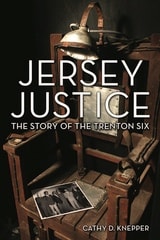
Jersey Justice
The Story of the Trenton SixCathy D. Knepper
Rutgers University Press, 2011
The case of the Trenton Six attracted international attention in its time (1948–1952) and was once known as the “northern Scottsboro Boys case.” Yet, there is no memory of it. The shame of racism evident in the case has been nearly erased from the public record. Now, historian Cathy D. Knepper takes us back to the courtroom to make us aware of this shocking chapter in American history.
Jersey Justice: The Story of the Trenton Six begins in 1948 when William Horner, an elderly junk dealer, was murdered in his downtown Trenton shop. Over a two-week period, six local African American men were arrested and charged with collectively killing Horner. Violating every rule in the book, the Trenton police held the six men in incommunicado detention, without warrants, and threatened them until they confessed. At the end of the trial the all-white jury sentenced the six men to die in the electric chair.
That might have been the end of the story were it not for the tireless efforts of Bessie Mitchell, the sister of one of the accused men. Undaunted by the refusal of the NAACP and the ACLU to help appeal the conviction of the Trenton Six, Mitchell enlisted the aid of the Civil Rights Congress, ultimately taking the case as far as the New Jersey Supreme Court. Along the way, the Trenton Six garnered the attention and involvement of many prominent activists, politicians, and artists, including Paul Robeson, Thurgood Marshall, Eleanor Roosevelt, Pete Seeger, Arthur Miller, and Albert Einstein. Jersey Justice brings to light a shameful moment in our nation’s history, but it also tells the story of a personal battle for social justice that changed America.

Jersey Troopers
A Fifty Year History of the New Jersey State PoliceLeo J. Coakley
Rutgers University Press, 1971
Jerseyana
The Underside of New Jersey HistoryMappen, Marc
Rutgers University Press, 1992
Readers of the New Jersey section of the Sunday New York Times eagerly look forward to Marc Mappen's astonishing tales of New Jersey history. Jerseyana is his first collection of these popular monthly columns. Here you will meet villains like Dutch Schultz, the mobster gunned down in a Newark gangland rubout, and heroes like Minerva Miller, a black woman who fought segregation at the turn of the century. There are famous events, like the explosion of Hindenburg, and obscure ones, like the assassination of the king of Italy by an anarchist from Paterson. There are amusing stories, like a buried treasure hoax in Morristown after the Revolutionary War, bizarre stories like the fact that the discoverer of New Jersey was allegedly devoured by cannibals, and dramatic stories, like the Jersey woman who survived Indian captivity.
Arranged chronologically, these columns constitute a lively New Jersey perspective on American history. Individual essays deal with major themes in American history and how they affected New Jersey: the colonial era, the Revolution, Civil War and Reconstruction, the Gilded Age, the Progressive Era, World War I, the '20s and '30s, World War II, McCarthyism, women's history, and black history.
Each of the fifty-four columns in this book stands as a colorful exploration in history. Together they constitute a sweeping survey of our state's rich heritage.
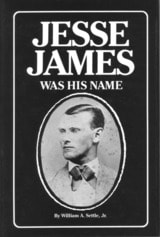
Jesse James Was His Name
William A. Settle, Jr.
University of Missouri Press, 1966
William A. Settle, Jr. has, for a number of years, trailed the James brothers through the columns of old newspapers and the records of county courts. In his search for the facts concerning these men--heroes to some, criminals to others--he has critically examined the contemporary accounts of their activities and has interviewed men and women who could give eyewitness or close hearsay evidence of them. Employing the techniques of scholarly research, Professor Settle has winnowed the fact from the fiction to produce this study of these most notorious American bandits.
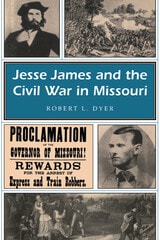
Jesse James and the Civil War in Missouri
Robert L. Dyer
University of Missouri Press, 1994
The Civil War in Missouri was a time of great confusion, violence, and destruction. Although several major battles were fought in the state between Confederate and Union forces, much of the fighting in Missouri was an ugly form of terrorism carried out by loose bands of Missouri guerrillas, by Kansas "Jayhawkers," or by marauding patrols of Union soldiers. This irregular warfare provided a training ground for people like Jesse and Frank James who, after the war, used their newly learned skills to form an outlaw band that ultimately became known all over the world.
Jesse James and the Civil War in Missouri discusses the underlying causes of the Civil War as they relate to Missouri and reveals how the war helped create both the legend and the reality of Jesse James and his gang. Written in an accessible style, this valuable little book will be welcomed by anyone with an interest in the Civil War, the legend of Jesse James, or Missouri history.
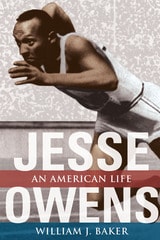
Jesse Owens
An American LifeWilliam J. Baker
University of Illinois Press, 2006
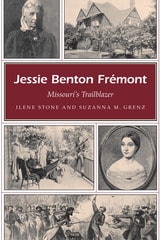
Jessie Benton Frémont
Missouri's TrailblazerIlene Stone & Suzanna M. Grenz
University of Missouri Press, 2005
Jesuit Colleges and Universities in the United States
A HistoryMichael T. Rizzi
Catholic University of America Press, 2022
Jesus, Jobs, and Justice
African American Women and ReligionBettye Collier-Thomas
Temple University Press, 2013
Jewhooing the Sixties
American Celebrity and Jewish Identity—Sandy Koufax, Lenny Bruce, Bob Dylan, and Barbra StreisandDavid E. Kaufman
Brandeis University Press, 2012
Jewish Continuity in America
Creative Survival in a Free SocietyAbraham J. Karp
University of Alabama Press, 1998
Presents an overview of a life's work by a preeminent scholar and brings new insight to the challenge of American Jewish continuity
Jews have historically lived within a paradox of faith and fear: faith that they are an eternal people and fear that their generation may be the last. In the United States, the Jewish community has faced to a heightened degree the enduring question of identity and assimilation: How does the Jewish community in this free, open, pluralistic society discover or create factors-both ideological and existential-that make group survival beneficial to the larger society and rewarding to the individual Jew?
Abraham J. Karp's Jewish Continuity in America focuses on the three major sources of American Judaism's continuing vitality: the synagogue, the rabbinate, and Jewish religious pluralism. Particularly illuminating is Karp's examination of the coexistence and unity-in-diversity of American religious Jewry's three divisions-Orthodox, Reform, and Conservative-and of how this Jewish religious pluralism fits into the larger picture of American religious pluralism.
Informing the larger enterprise through sharp and full delineation of discrete endeavors, the essays collected in Jewish Continuity in America-some already acknowledged as classics, some appearing here for the first time-describe creative individual and communal responses to the challenge of Jewish survival. As the title suggests, this book argues that continuity in a free and open society demands a high order of creativity, a creativity that, to be viable, must be anchored in institutions wholly pledged to continuity.

Jewish Gangsters of Modern Literature
Rachel Rubin
University of Illinois Press, 2000
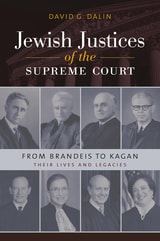
Jewish Justices of the Supreme Court
From Brandeis to KaganDavid G. Dalin
Brandeis University Press, 2017
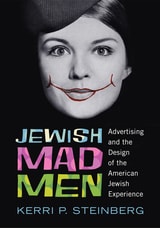
Jewish Mad Men
Advertising and the Design of the American Jewish ExperienceSteinberg, Kerri P
Rutgers University Press, 2015
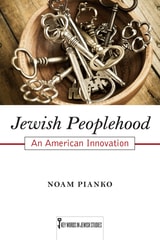
Jewish Peoplehood
An American InnovationPianko, Noam
Rutgers University Press, 2015
Although fewer American Jews today describe themselves as religious, they overwhelmingly report a strong sense of belonging to the Jewish people. Indeed, Jewish peoplehood has eclipsed religion—as well as ethnicity and nationality—as the essence of what binds Jews around the globe to one another. In Jewish Peoplehood, Noam Pianko highlights the current significance and future relevance of “peoplehood” by tracing the rise, transformation, and return of this novel term.
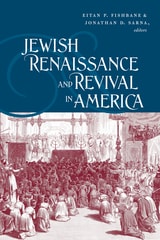
Jewish Renaissance and Revival in America
Edited by Eitan P. Fishbane and Jonathan D. Sarna
Brandeis University Press, 2011
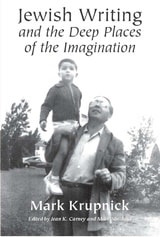
Jewish Writing and the Deep Places of the Imagination
Mark Krupnick
University of Wisconsin Press, 2005
When he learned he had ALS and roughly two years to live, literary critic Mark Krupnick returned to the writers who had been his lifelong conversation partners and asked with renewed intensity: how do you live as a Jew, when, mostly, you live in your head? The evocative and sinuous essays collected here are the products of this inquiry. In his search for durable principles, Krupnick follows Lionel Trilling, Cynthia Ozick, Geoffrey Hartman, Philip Roth, Saul Bellow, and others into the elemental matters of life and death, sex and gender, power and vulnerability.
The editors—Krupnick’s wife, Jean K. Carney, and literary critic Mark Shechner—have also included earlier essays and introductions that link Krupnick’s work with the “deep places” of his own imagination.
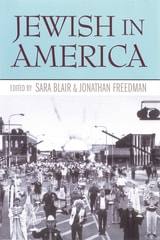
Jewish in America
Sara Blair and Jonathan Freedman, Editors
University of Michigan Press, 2004
-From the Introduction
This rare and original work of cultural studies offers uncommon and engaging perspectives-as well as provocative and humorous insights-on what it means to be Jewish in America.
Jewish in America features poetry, art, essays, and stories from an impressive and respected list of contributors, including among others Stephen Greenblatt, Richard Kostelanetz, Jacqueline Osherow, Robert Pinsky, Sharon Pomerantz, Nancy Reisman, Grace Schulman, Louis Simpson, Alisa Solomon, and Stephen J. Whitfield.
In addition to pieces by some of the country's leading writers, the book features a stunning gallery of original photographs that transport the viewer from the crowded Coney Island beaches of the 1940s to the landscapes of Oaxaca, Mexico in the 1990s.
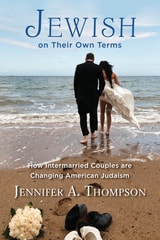
Jewish on Their Own Terms
How Intermarried Couples are Changing American JudaismThompson, Jennifer A
Rutgers University Press, 0
Over half of all American Jewish children are being raised by intermarried parents. This demographic group will have a tremendous impact on American Judaism as it is lived and practiced in the coming decades. To date, however, in both academic studies about Judaism and in the popular imagination, such children and their parents remain marginal.
Jennifer A. Thompson takes a different approach. In Jewish on Their Own Terms, she tells the stories of intermarried couples, the rabbis and other Jewish educators who work with them, and the conflicting public conversations about intermarriage among American Jews. Thompson notes that in the dominant Jewish cultural narrative, intermarriage symbolizes individualism and assimilation. Talking about intermarriage allows American Jews to discuss their anxieties about remaining distinctively Jewish despite their success in assimilating into American culture.
In contrast, Thompson uses ethnography to describe the compelling concerns of all of these parties and places their anxieties firmly within the context of American religious culture and morality. She explains how American and traditional Jewish gender roles converge to put non-Jewish women in charge of raising Jewish children. Interfaith couples are like other Americans in often harboring contradictory notions of individual autonomy, universal religious truths, and obligations to family and history.
Focusing on the lived experiences of these families, Jewish on Their OwnTerms provides a complex and insightful portrait of intermarried couples and the new forms of American Judaism that they are constructing.
Jewish-American Artists and the Holocaust
Baigell, Matthew
Rutgers University Press, 1997
Jewish themes in American art were not very visible until the last two decades, although many famous twentieth-century artists and critics were and are Jewish. Few artists responded openly to the Holocaust until the 1960s, when it finally began to act as a galvanizing force, allowing Jewish-American artists to express their Jewish identity in their work. Baigell describes how artists initially deflected their responses into abstract forms or by invoking biblical and traditional figures and then in more recent decades confronted directly Holocaust imagery and memory. He traces the development of artistic work from the late 1930s to the present in a moving study of a long overlooked topic in the history of American art.
Jews Against Zionism
The American Council for Judaism, 1942-1948Thomas A. Kolsky
Temple University Press, 1992
This is the first full-scale history of the only organized American Jewish opposition to Zionism during the 1940s. Despite extensive literature on the Zionist movement, the Jewish opposition to Zionism has received only marginal and usually negative attention. In this impartial study, Thomas A. Kolsky examines the neglected phenomenon of Jewish anti-Zionism, its roots, and its results.
In 1942, a number of dissident Reform rabbis founded the American Council for Judaism, the first and only Jewish organization created to fight against Zionism and the establishment of a Jewish state. Emphasizing the purely religious nature of Judaism and unequivocally rejecting Jewish nationalism, the Council supported free Jewish immigration and equal rights for Jews throughout the world. For Palestine, specifically, it advocated establishment of a democratic state wherein all citizens, regardless of their religion, would enjoy equal political rights.
Summarizing both the history of Zionism and the history of American Jews, Kolsky traces the effects of the Holocaust on the Zionist movement and the personalities that shaped the leadership of the Council. Its position toward Zionism has particular contemporary relevance in understanding the historical relationship between Israel and the Palestinians.
Jews and Diaspora Nationalism
Writings on Jewish Peoplehood in Europe and the United StatesEdited by Simon Rabinovitch
Brandeis University Press, 2012
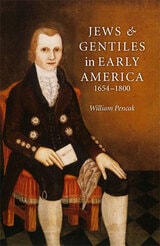
Jews and Gentiles in Early America
1654-1800William Pencak
University of Michigan Press, 2005
Jews and Other Differences
The New Jewish Cultural StudiesJonathan Boyarin
University of Minnesota Press, 1997
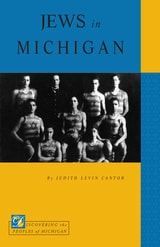
Jews in Michigan
Judith Levin Cantor
Michigan State University Press, 2001
Since the earliest days of the British fur trade, Jewish pioneers have made Michigan their home. Judith Levin Cantor's Jews in Michigan captures the struggles and triumphs of Michigan's Jews as they worked to establish farms, businesses and synagogues, sparking commercial and residential development throughout the state, and even into the far reaches of the Upper Peninsula. Cantor celebrates both urban and rural immigrants, who supplied essential goods and services to those in lumbering, mining, and automobile manufacturing. She also deals honestly with questions of anti-Semitism and prejudice. Cantor's book shows how, in the quest to build strong communities, Jewish residents also helped create the foundations of the Michigan we know today.
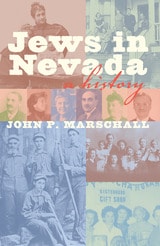
Jews in Nevada
A HistoryJohn P. Marschall
University of Nevada Press, 2011
Jews have always been one of Nevada’s most active and influential ethnic minorities. They were among the state’s earliest Euro-American settlers, and from the beginning they have been involved in every area of the state’s life as businessmen, agrarians, scholars, educators, artists, politicians, and civic, professional, and religious leaders. Jews in Nevada is an engaging, multilayered chronicle of their lives and contributions to the state. Here are absorbing accounts of individuals and families who helped to settle and develop the state, as well as thoughtful analyses of larger issues, such as the reasons Jews came to Nevada in the first place, how they created homes and interacted with non-Jews, and how they preserved their religious and cultural traditions as a small minority in a sparsely populated region.
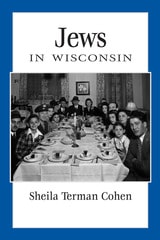
Jews in Wisconsin
Sheila Terman Cohen
Wisconsin Historical Society Press, 2016
Unlike the other cultural groups covered in the People of Wisconsin series, the Jews who have made their home in Wisconsin are united not by a single country of origin, but by a shared history and set of religious beliefs. This diverse group found their way to America’s heartland over several centuries from Germany, Russia, and beyond, some fleeing violence and persecution, others searching for new opportunities, but all making important contributions to the fabric of this state’s history. Through detailed historical information and personal accounts, Sheila Terman Cohen brings to life the stories of their various trials and triumphs. Jews in Wisconsin details their battles against anti-Semitism, their efforts to participate in the communities they joined, and their successes at holding onto their own cultural identities.
In addition to excerpts of Cohen’s many interviews with Wisconsin Jews, Jews in Wisconsin also features the compelling journals of German immigrant Louis Heller, a tradesman who established himself in Milwaukee, and Russian immigrant Azriel Kanter, who details the perilous journey his family embarked on to escape anti-Semitism in his home country and make a new life in Wisconsin.
Jews in the Center
Conservative Synagogues and Their MembersWertheimer, Jack
Rutgers University Press, 2000
Why do well-educated, highly Americanized, and financially secure Jews join a synagogue and participate in its religious life? This study of Conservative Jews examines the largest movement of synagogue-affiliated Jews in the United States, a group that outnumbers the combined membership of Reform and Orthodox congregations and a population that adheres to a centrist version of Judaism. The scholars who contribute to this study ask a series of provocative questions: How do these Jews negotiate the tensions between the traditional values of their religion and modern sensibilities? What meaning do they find in synagogue participation? How crucial are rabbis in the "success" of congregations?
Written by a team of scholars employing the tools of demography, ethnography, sociology, history, and comparative religious studies, Jews in the Center offers the most comprehensive view of any religious movement within American Judaism----and indeed, one of the most detailed studies of any denomination in American religious life.
Jews in the Center seeks to understand how synagogues function as congregations and to what extent they allow for individual self-expression. By focusing on a mainstream population, this book sheds light on religious people who generally receive the least attention----the broad center who neither retreat from society nor blur all boundaries between their religion and modern American culture.

Jill Johnston in Motion
Dance, Writing, and Lesbian LifeClare Croft
Duke University Press, 2024
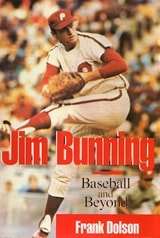
Jim Bunning
Frank Dolson
Temple University Press, 1998
He was the second pitcher in major league history to win 100 games in each league. The first was CY Young. He was the second pitcher to strike out 1000 in each league; again, only Cy Young beat hims to it. When Bunning retired at the end of the 1971 season, only one man -- Walter Johnson -- had more career strikeouts.
A proud, intensely competitive man, Bunning relished his duels with Ted Williams, Micky Mantle, and other slugging superstars of the day. What he didn't relish was dealing with sportswriter who didn't do their homework and with baseball leaders whose mismanagement, Bunning felt, jeopardized the game's place in the nation's heart. He waged battles with the likes of former commissioner Peter Ueberroth and club-owner-turned-interim-commissioner Bud Selig.
But Bunning did more than play baseball. He was a driving force in the early years of the Players Association, one of the men responsible for choosing Marvin Miller as head of the union. Bunning also was a manager in the minor leagues and in Puerto Rico and the Dominican Republic and was even a player's agent for a time. His baseball career behind him, he began a second career in politics. With a huge assist from his wife, Mary, the mother of their nine children, he waged an unsuccessful gubernational campaign in Kentucky and then became a six-term congressman. Bunning is currently running for the U.S. Senate seat in Kentucky.