Results by title
5159 books match the query 'Biography' and 164 start with j
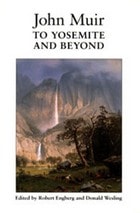
John Muir To Yosemite And Beyond
Robert Engberg
University of Utah Press, 1999
When John Muir died in 1914, the pre-eminent American naturalist, explorer, and conservationist had not yet written the second volume of his autobiography, in which he planned to cover his Yosemite years. Editors Robert Engberg and Donald Wesling have here provided a remedy.
Their account begins in 1863, the year Muir left the University of Wisconsin for what he termed the "University of the Wilderness." Following an accident in 1867 that nearly left him blind, he vowed to turn from machines and continue to study nature. That led, in 1868, to his first visit to Yosemite Valley, where he began his glacier studies. Muir spent much time exploring the Yosemite region, Tuolumne, and both the southern and northern Sierras, publishing articles, and keeping extensive journals through 1875, when he began to write for the San Francisco Bulletin and expanded his travels to areas throughout the west.
Mining a rich vein of sources—Muir’s letters, journals, articles, and unpublished manuscripts, as well as selections drawn from biographical pieces written about Muir by people who met him in Yosemite in the early 1870s—Engberg and Wesling have assembled what they term a "composite autobiography," providing brief interpretive and transitional passages throughout the book. This work is especially valuable because it documents Muir’s formative years, when he is maturing away from "conventional cultural paradigms of work and materialism toward new ways of thinking about nature and its impact on human development."
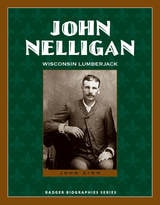
John Nelligan
Wisconsin LumberjackJohn Zimm
Wisconsin Historical Society Press, 2015
Born in 1852, Nelligan rose through the lumberjack ranks, starting out as a humble laborer and working his way up to foreman. He worked and lived in Maine, Pennsylvania, and even Canada before coming to Wisconsin in 1871. Learn what surviving and sawing wood for a living was like many years ago—from the story of one Wisconsin man who lived it!
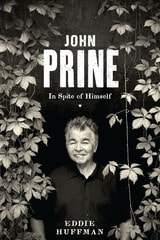
John Prine
In Spite of HimselfBy Eddie Huffman
University of Texas Press, 2015
With a range that spans the lyrical, heartfelt songs “Angel from Montgomery,” “Sam Stone,” and “Paradise” to the classic country music parody “You Never Even Called Me by My Name,” John Prine is a songwriter’s songwriter. Across five decades, Prine has created critically acclaimed albums—John Prine (one of Rolling Stone’s 500 Greatest Albums of All Time), Bruised Orange, and The Missing Years—and earned many honors, including two Grammy Awards, a Lifetime Achievement Award for Songwriting from the Americana Music Association, and induction into the Nashville Songwriters Hall of Fame. His songs have been covered by scores of artists, from Johnny Cash and Miranda Lambert to Bette Midler and 10,000 Maniacs, and have influenced everyone from Roger McGuinn to Kacey Musgraves. Hailed in his early years as the “new Dylan,” Prine still counts Bob Dylan among his most enthusiastic fans.
In John Prine, Eddie Huffman traces the long arc of Prine’s musical career, beginning with his early, seemingly effortless successes, which led paradoxically not to stardom but to a rich and varied career writing songs that other people have made famous. He recounts the stories, many of them humorous, behind Prine’s best-known songs and discusses all of Prine’s albums as he explores the brilliant records and the ill-advised side trips, the underappreciated gems and the hard-earned comebacks that led Prine to found his own successful record label, Oh Boy Records. This thorough, entertaining treatment gives John Prine his due as one of the most influential songwriters of his generation.
John Prine
In Spite of HimselfEddie Huffman
University of Texas Press, 2022
With a range that spans the lyrical, heartfelt songs “Angel from Montgomery,” “Sam Stone,” and “Paradise” to the classic country music parody “You Never Even Called Me by My Name,” John Prine is a songwriter’s songwriter. Across five decades, Prine has created critically acclaimed albums—John Prine (one of Rolling Stone’s 500 Greatest Albums of All Time), Bruised Orange, and The Missing Years—and earned many honors, including two Grammy Awards, a Lifetime Achievement Award for Songwriting from the Americana Music Association, and induction into the Nashville Songwriters Hall of Fame. His songs have been covered by scores of artists, from Johnny Cash and Miranda Lambert to Bette Midler and 10,000 Maniacs, and have influenced everyone from Roger McGuinn to Kacey Musgraves. Hailed in his early years as the “new Dylan,” Prine still counts Bob Dylan among his most enthusiastic fans.
In John Prine, Eddie Huffman traces the long arc of Prine’s musical career, beginning with his early, seemingly effortless successes, which led paradoxically not to stardom but to a rich and varied career writing songs that other people have made famous. He recounts the stories, many of them humorous, behind Prine’s best-known songs and discusses all of Prine’s albums as he explores the brilliant records and the ill-advised side trips, the underappreciated gems and the hard-earned comebacks that led Prine to found his own successful record label, Oh Boy Records. This thorough, entertaining treatment gives John Prine his due as one of the most influential songwriters of his generation.
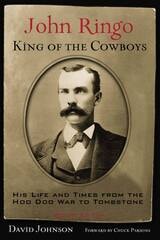
John Ringo, King of the Cowboys
His Life and Times from the Hoo Doo War to Tombstone, Second EditionDavid Johnson
University of North Texas Press, 2008
The Mason County “Hoo Doo” War in Texas began as a war over range rights, but it swiftly deteriorated into blood vengeance and spiraled out of control as the body count rose. In this charnel house Ringo gained a reputation as a dangerous gunfighter and man killer. He was proclaimed throughout the state as a daring leader, a desperate man, and a champion of the feud. Following incarceration for his role in the feud, Ringo was elected as a lawman in Mason County, the epicenter of the feud’s origin.
The reputation he earned in Texas, further inflated by his willingness to shoot it out with Victorio’s raiders during a deadly confrontation in New Mexico, preceded him to Tombstone in territorial Arizona. Ringo became immersed in the area’s partisan politics and factionalized violence. A champion of the largely Democratic ranchers, Ringo would become known as a leader of one of these elements, the Cowboys. He ran at bloody, tragic odds with the Earp brothers and Doc Holliday, finally being part of the posse that hounded these fugitives from Arizona. In the end, Ringo died mysteriously in the Arizona desert, his death welcomed by some, mourned by others, wrongly claimed by a few. Initially published in 1996, John Ringo has been updated to a second edition with much new information researched and uncovered by David Johnson and other Ringo researchers.
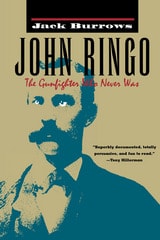
John Ringo
The Gunfighter Who Never WasJack Burrows
University of Arizona Press, 1987
John Robert Shaw
An Autobiography of Thirty Years, 1777–1807Oressa M. Teagarden
Ohio University Press, 1992
In the summer of 1807 more than a thousand subscribers from New England to Tennessee paid for the initial printing of The Life and Travels of John Robert Shaw: A Narrative of the Life and Travels of the Well-Digger, now resident of Lexington, Kentucky, Written by Himself. Shaw had come to Rhode Island as a British redcoat to put down the colonial rebellion. Through various quirks of fate, including being taken a prisoner of war, he ended up fighting with the Americans. Shaw was an exuberant spirit whose rowdy drinking bouts and related predicaments alternated with periods of wholehearted efforts at reform. His autobiography, written while he recuperated from injuries from one of several explosions (an occupational hazard for the frontier well-digger), is an articulate and entertaining record of the Revolutionary War era.
A 1930 printing of Shaw’s autobiography was rescued from the trash by an alert librarian in Kentucky in 1950. She passed the tattered copy on to journalist Oressa M. Teagarden, who became intrigued with Shaw’s story and spent much of her free time over the next two decades finding out more about the ebullient American. On Teagarden’s death, co-editor Jeanne Crabtree assumed the task of making Shaw’s authentic and colorful view of early America available to a new generation of readers.

John Steinbeck - American Writers 94
University of Minnesota Pamphlets on American WritersJames Gray
University of Minnesota Press, 1971
John Steinbeck - American Writers 94 was first published in 1971. Minnesota Archive Editions uses digital technology to make long-unavailable books once again accessible, and are published unaltered from the original University of Minnesota Press editions.

John Tracey Ellis
An American Church ReformerThomas J. Shelley
Catholic University of America Press, 2023
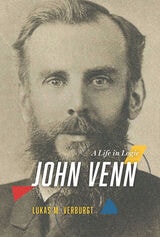
John Venn
A Life in LogicLukas M. Verburgt
University of Chicago Press, 2022
John Venn (1834–1923) is remembered today as the inventor of the famous Venn diagram. The postmortem fame of the diagram has until now eclipsed Venn’s own status as one of the most accomplished logicians of his day. Praised by John Stuart Mill as a “highly successful thinker” with much “power of original thought,” Venn had a profound influence on nineteenth-century scientists and philosophers, ranging from Mill and Francis Galton to Lewis Carroll and Charles Sanders Peirce. Venn was heir to a clerical Evangelical dynasty, but religious doubts led him to resign Holy Orders and instead focus on an academic career. He wrote influential textbooks on probability theory and logic, became a fellow of the Royal Society, and advocated alongside Henry Sidgwick for educational reform, including that of women’s higher education. Moreover, through his students, a direct line can be traced from Venn to the early analytic philosophy of G. E. Moore and Bertrand Russell, and family ties connect him to the famous Bloomsbury group.
This essential book takes readers on Venn’s journey from Evangelical son to Cambridge don to explore his life and work in context. Drawing on Venn’s key writings and correspondence, published and unpublished, Lukas M. Verburgt unearths the legacy of the logician’s wide-ranging thinking while offering perspective on broader themes in religion, science, and the university in Victorian Britain. The rich picture that emerges of Venn, the person, is of a man with many sympathies—sometimes mutually reinforcing and at other times outwardly and inwardly contradictory.
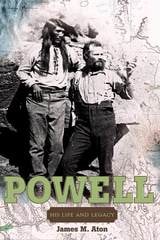
John Wesley Powell
His Life and LegacyJames M Aton
University of Utah Press, 2010
“John Wesley Powell: explorer, writer, geologist, anthropologist, land planner, bureaucrat. Which one do we focus on?” This is the question author James M. Aton poses at the beginning of his biography of Powell, though he soon decides that it is impossible to ignore any facet of Powell’s life. Powell was a polymath, one whose “divergent interests resemble one of those braided streambeds in his beloved canyon country, branching out in many directions, but ultimately beginning and ending in the same stream."
Aton beautifully tells the multidimensional stories of Powell’s childhood, his military and teaching careers, his famous and exciting explorations of the Colorado River, and the battles he waged from his influential positions within the Smithsonian’s Bureau of Ethnology and the United States Geological Survey. This new edition of John Wesley Powell: His Life and Legacy, first printed as an issue of the Boise State University Western Writers Series, includes the original biography, but also features Aton’s new interpretations of Powell’s writings on exploration, land-planning, anthropology, and irrigation, and incorporates the author’s distinguished faculty lecture on Powell and cash-register dams in the Colorado River Basin.

Johnny Depp Starts Here
Pomerance, Murray
Rutgers University Press, 2005
The actor's image is studied in terms of its ambiguities and its many strange nuances: Depp's ethnicity, his smoking, his tranquility, his unceasing motion, his links to the Gothic, the Beats, Simone de Beauvoir, the history of rationality, Impressionist painting, and more. In a series of treatments of his key roles, including Rafael in The Brave, Bon Bon in Before Night Falls, Jack Kerouac in The Source, and the long list of acclaimed performances from Gilbert Grape to Cap'n Jack Sparrow, we learn of Johnny onscreen in terms of male sexuality, space travel, optical experience, nineteenth-century American capitalism, Orientalism, the vulnerability of performance, the perils of sleep, comedy, the myth of the West, Scrooge McDuck, Frantois Truffaut, and more.
Johnny's face, Johnny's gaze, Johnny's aging, and Johnny's understatement are shown to be inextricably linked to our own desperate need to plumb performance, style, and screen for a grounding of reality in this ever-accelerating world of fragmentation and insecurity. Both deeply intriguing and perpetually elusive, Depp is revealed as the central screen performer of the contemporary age, the symbol of performance itself.
No thinker has meditated on Johnny Depp this way before-and surely not in a manner worthy of the object of scrutiny.
Jonathan Fisher of Blue Hill, Maine
Commerce, Culture, and Community on the Eastern FrontierKevin D. Murphy
University of Massachusetts Press, 2010
Murphy shows how Fisher, as pastor of the Congregational church in Blue Hill from 1796 to 1837, helped spearhead the transformation of a frontier settlement on the eastern shores of the Penobscot Bay into a thriving port community; how he used his skills as an architect, decorative painter, surveyor, and furniture maker not only to support himself and his family, but to promote the economic growth of his village; and how the fluid professional identity that enabled Fisher to prosper on the eastern frontier could only have existed in early America where economic relations were far less rigidly defined than in Europe.
Among the most important artifacts of Jonathan Fisher's life is the house he designed and built in Blue Hill. The Jonathan Fisher Memorial, as it is now known, serves as a point of departure for an examination of social, religious, and cultural life in a newly established village at the turn of the nineteenth century. Fisher's house provided a variety of spaces for agricultural and domestic work, teaching, socializing, artmaking, and more.
Through the eyes of Jonathan Fisher, we see his family grow and face the challenges of the new century, responding to religious, social, and economic change—sometimes succeeding and sometimes failing. We appreciate how an extraordinarily energetic man was able to capitalize on the wide array of opportunities offered by the frontier to give shape to his personal vision of community.

Jonathan Odell
The Loyalist Poet of the American RevolutionCynthia Dubin Edelberg
Duke University Press, 1987
One of the best-educated of the colonialists, Odell, a physician turned Anglican minister and then writer, lived the gamut of experience: powerful friends sustained him and the British commanders-in-chief Sir William Howe, Henry Clinton, and Sir Guy Carleton employed him; nevertheless, during the war he was a lonely exile ("Tory hunters" forced him from his home in 1775), and, at the end of the war, when his hope for reconciliation between the Loyalists and the Americans came to nothing, he reluctantly emigrated to Canada.
Here is a voice, all but silenced for over two hundred years, that must now be heard if we are to better understand the American Revolution.

Josef Frank
Life and WorkChristopher Long
University of Chicago Press, 2002
Educated in Vienna just after the turn of the century, Frank became the leader of the younger generation of architects in Austria after the First World War. But Frank fell from grace when he emerged as a forceful critic of the extremes of modern architecture and design during the early 1930s. Dismissing the demands for a unified modern style, Frank insisted that it was pluralism, not uniformity, that most characterized life in the new machine age. He called instead for a more humane modernism, one that responded to people's everyday needs and left room for sentimentality and historical influences. He was able to put these ideas into practice when, in 1933, he was forced to leave Vienna for Sweden. There his work came to define Swedish (or Scandinavian) modern design. For more than thirty years he was the chief designer for the Stockholm furnishings firm Svenskt Tenn, producing colorful, cozy, and eclectic designs that provided a refreshing alternative to the architectural mainstream of the day and presaged the coming revolt against modernism in the 1960s.
In this sensitive study of one of the twentieth century's seminal architects and thinkers, Christopher Long offers new insight into Josef Frank's work and ideas and provides an important contribution to the understanding of modernist culture and its history.
Joseph Banks
A LifePatrick O'Brian
University of Chicago Press, 1997
"It is in his description of that arduous three-year voyage [on the ship Endeavor] that Mr. O'Brian is at his most brilliant. . . . He makes us understand what life within this wooden world was like, with its 94 male souls, two dogs, a cat and a goat."—Linda Colley, New York Times
"An absorbing, finely written overview, meant for the general reader, of a major figure in the history of natural science."—Frank Stewart, Los Angeles Times
"[This book is] the definitive biography of an extraordinary subject."—Robert Taylor, Boston Globe
"His skill at narrative and his extensive knowledge of the maritime history . . . give him a definite leg up in telling this . . . story."—Tom Clark, San Francisco Chronicle

Joseph Carter Corbin
Educator Extraordinaire and Founder of the University of Arkansas at Pine BluffGladys Turner Finney
Butler Center for Arkansas Studies, 2017
Having operated now for more than 140 years, the University of Arkansas at Pine Bluff (UAPB) was founded in 1875 as Branch Normal College by Joseph Carter Corbin, a native of Ohio and the son of former slaves. Corbin, who had a classical education, was the first African American superintendent of public education in Arkansas and literally built the school from the ground up. There was a desperate need for teachers in Arkansas, as there was a great desire for education by former slaves who had been prohibited from learning to read and write.
Corbin himself cleared the land that would soon house the college and then set about to create a school that would produce the first African American teachers following the Reconstruction years. For almost three decades, he worked tirelessly on behalf of Arkansas’s black community to meet the need for educators.
In the early days, Corbin worked both as the president and the janitor so that he could control costs and keep the school going. He often waived matriculation fees and other expenses to allow impoverished students the opportunity to graduate and become qualified to teach throughout Arkansas.
Although he might not have realized it at the time, Corbin was a member of the so-called aristocrats of color, the African American elite of national prominence and a group that included such luminaries as Booker T. Washington. Corbin was a true giant in the history of education in Arkansas. His story, told by a former UAPB student, is monumental for the scope of what one man was able to accomplish.

Joseph Conrad
Martin Ray
University of Iowa Press, 1990
Joseph Fielding Smith
A Mormon TheologianMatthew Bowman
University of Illinois Press, 2024
Incisive and illuminating, Joseph Fielding Smith examines the worldview and development of an influential theologian and his place in American religious and intellectual history.
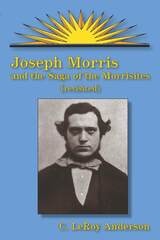
Joseph Morris
and the Saga of the Morrisites RevisitedC. Leroy Anderson
Utah State University Press, 2010
LeRoy Anderson in 1981 first published, under the title For Christ Will Come Tomorrow, his definitive study of a charismatic, millenarian prophet and the Church of Jesus Christ of the Most High. He told there of a Mormon posse’s 1862 attack on the Morrisite compound, killing Joseph Morris, and of the continuing Morrisite movement, which survived into the mid-twentieth century. In this newly revised edition, Anderson revisits his subject by referring to more recently discovered documents, considering other scholars’ continuing work on Morris’s sect and related subjects, and examining a 1980s messianic sect that claimed a direct connection to the Morrisites.
New documentary sources include a holograph “History of George Morris,” written by Joseph Morris’s brother, which Anderson quotes at length. What was once a little-studied subject has since received attention from a number of scholars. Anderson references such current work on Mormon schismatic movements and broader subjects, much of which drew on his work. Perhaps the book’s most interesting and unintended influence was on that obscure 1980s messianic sect, in Montana, which learned of Morris through Joseph Morris and the Saga of the Morrisites.
Joseph Smith
History, Methods, and MemoryRonald O. Barney
University of Utah Press, 2020
Ronald O. Barney, a former editor of the Joseph Smith Papers, applies new interpretations to Smith in history and memory, re-examining both his writings and contemporary accounts of him. The book explores the best methodologies for appraising the historical record, including a review of Smith’s world and its contextual background, an analysis of his foundational experiences, and a characterization of Smith as a man and prophet. Though the premise of re-evaluation may be unsettling to traditionalists, a modern reconsideration of the historical record’s entire range of sources is necessary to fashion a strategy for evaluating Smith and his enduring but complex legacy.
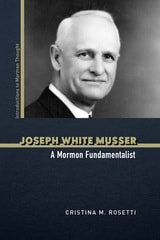
Joseph White Musser
A Mormon FundamentalistCristina M. Rosetti
University of Illinois Press, 2024
Musser’s devotion to Joseph Smith’s vision and the faith’s foundational texts reflected a widespread uneasiness with, and reaction against, changes taking place across society. Rosetti analyzes how Musser’s writing and thought knit a disparate group of outcast LDS believers into a movement. She also places Musser’s eventful life against the backdrop of a difficult period in LDS history, when the Church strained to disentangle itself from plural marriage and leaders like Musser emerged to help dissident members make sense of their lives outside the mainstream.
The first book-length account of the Mormon thinker, Joseph White Musser reveals the figure whose teachings helped mold a movement.
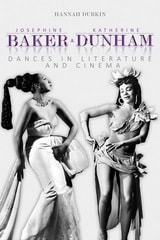
Josephine Baker and Katherine Dunham
Dances in Literature and CinemaHannah Durkin
University of Illinois Press, 2019
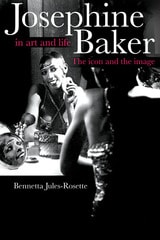
Josephine Baker in Art and Life
THE ICON AND THE IMAGEBennetta Jules-Rosette
University of Illinois Press, 2006
Josephine Baker (1906-1975) was a dancer, singer, actress, author, politician, militant, and philanthropist, whose images and cultural legacy have survived beyond the hundredth anniversary of her birth. Neither an exercise in postmodern deconstruction nor simple biography, Josephine Baker in Art and Life presents a critical cultural study of the life and art of the Franco-American performer whose appearances as the savage dancer Fatou shocked the world.
Although the study remains firmly anchored in Josephine Baker’s life and times, presenting and challenging carefully researched biographical facts, it also offers in-depth analyses of the images that she constructed and advanced. Bennetta Jules-Rosette explores Baker’s far-ranging and dynamic career from a sociological and cultural perspective, using the tools of sociosemiotics to excavate the narratives, images, and representations that trace the story of her life and fit together as a cultural production.
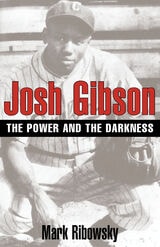
Josh Gibson
The Power and the DarknessMark Ribowsky
University of Illinois Press, 1996
Though Gibson is best remembered as "the black Babe Ruth," Ruth became a beloved symbol of the national pastime, while Gibson lived a life veiled in the darkness that came both from the shadow world of the Negro leagues and from within his own tortured soul.
Mark Ribowsky, the widely acclaimed biographer of Satchel Paige, pulls no punches in his portrait of this magnificent, troubled athlete. This is the most complete, thorough, and authoritative account of the life of black ball's greatest hitter, and one of its most important stars.
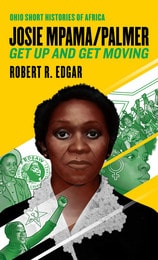
Josie Mpama/Palmer
Get Up and Get MovingRobert R. Edgar
Ohio University Press, 2020
While African National Congress narratives dominate much of the scholarship on South Africa’s freedom struggle, Josie Mpama/Palmer’s political life offers a different perspective. Highly critical of the patriarchal attitudes that hindered black women from actively participating in politics, Mpama/Palmer was an outspoken advocate for women’s social equality and encouraged black women to become more involved in national conversations. The first black woman to join the Communist Party of South Africa and an antiapartheid activist, Josie Mpama/Palmer remained involved in critical issues all her life, especially protests against Bantu Education and other forms of racial and sexist discrimination. She was an integral figure in establishing the Federation of South African Women, an organization open to women of all races. Mpama/Palmer’s activism and political legacy would become an inspiring example for women in South Africa and around the world to get up and get moving.
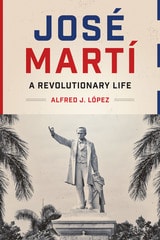
José Martí
A Revolutionary LifeBy Alfred J. López
University of Texas Press, 2014
José Martí (1853–1895) was the founding hero of Cuban independence. In all of modern Latin American history, arguably only the “Great Liberator” Simón Bolívar rivals Martí in stature and legacy. Beyond his accomplishments as a revolutionary and political thinker, Martí was a giant of Latin American letters, whose poetry, essays, and journalism still rank among the most important works of the region. Today he is revered by both the Castro regime and the Cuban exile community, whose shared veneration of the “apostle” of freedom has led to his virtual apotheosis as a national saint.
In José Martí: A Revolutionary Life, Alfred J. López presents the definitive biography of the Cuban patriot and martyr. Writing from a nonpartisan perspective and drawing on years of research using original Cuban and U.S. sources, including materials never before used in a Martí biography, López strips away generations of mythmaking and portrays Martí as Cuba’s greatest founding father and one of Latin America’s literary and political giants, without suppressing his public missteps and personal flaws. In a lively account that engrosses like a novel, López traces the full arc of Martí’s eventful life, from his childhood and adolescence in Cuba, to his first exile and subsequent life in Spain, Mexico City, and Guatemala, through his mature revolutionary period in New York City and much-mythologized death in Cuba on the battlefield at Dos Ríos. The first major biography of Martí in over half a century and the first ever in English, José Martí is the most substantial examination of Martí’s life and work ever published.
Journal II, 1957-1969
Mircea Eliade
University of Chicago Press, 1989
Journal of the Fictive Life
Howard Nemerov
University of Chicago Press, 1981
"He often shows bravery and shrewdness; the book is full of fine criticism and psychological insight. As always, his prose has that ease and transparency that make one forget one is reading; one seems simply to hear a voice speaking. Nemerov's improvised self-analysis has weaknesses, but few that he himself doesn't eventually recognize."—New York Times Book Review
"In an age of explicitness, Nemerov's Journal of the Fictive Life is explicitly without vulgarity; in an age of revelation, it reveals only what counts. More then a book about creativity, it is a beautiful creation."—Richard G. Stern
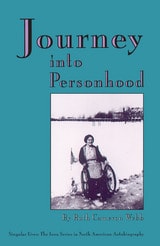
Journey Into Personhood
Ruth Cameron Webb
University of Iowa Press, 1994
In Journey into Personhood Ruth Webb tells the story of an individual born with severe cerebral palsy who struggles to become a person in her own eyes as well as in the opinion of those around her. By developing both the inner ability to learn, live, and work independently and the outer ability to convince others to give her the freedom to do so—physically and emotionally—Webb earned her Ph.D. in counseling and guidance. With that validation of her intelligence and competence, she entered upon a fulfilling career working with mentally retarded people and other people with disabilities.
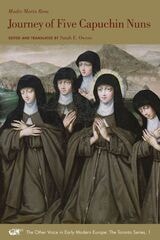
Journey of Five Capuchin Nuns
Madre María Rosa
Iter Press, 2009
Journey of Five Capuchin Nuns contains all the elements of a riveting adventure story. Through the eyes of the Mother Abbess, María Rosa, the reader is taken along on this journey through wars, pirates, disease, travel on the high seas, and treacherous mountain passes in the Andes. Five nuns set out in the early 1700s from their cloistered convent in Madrid, Spain, to travel halfway around the world to Lima, Peru. The journey lasted three years—an odyssey not all of them would complete. Yet, this unique historical document is so much more than a typical travel narrative. It illuminates the eighteenth-century way of life of religious women on both sides of the Atlantic basin. María Rosa’s lively prose attests to the literary connection among women religious writers of Spain and Latin America. This annotated edition and first-ever English translation of the manuscript will be of interest to scholars, students and anyone who wants to learn more about women’s history.
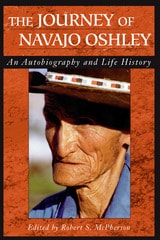
Journey of Navajo Oshley
An Autobiography and Life HistoryRobert McPherson
Utah State University Press, 2000
Ak'é Nýdzin, or Navajo Oshley, was born sometime between 1879 and 1893. His oral memoir is set on the northern frontier of Navajo land, principally the San Juan River basin in southeastern Utah, and tells the story of his early life near Dennehetso and his travels, before there were roads or many towns, from Monument Valley north along Comb Ridge to Blue Mountain. During the late 19th and early 20th centuries, Anglos and Navajos expanded their use and settlement of lands north of the San Juan. Grazing lands and the Anglo wage economy drew many Navajos across the river. Oshley, a sheepherder, was among the first to settle there. He cared for the herds of his extended family, while also taking supplemental jobs with the growing livestock industry in the area.
His narrative is woven with vivid and detailed portraits of Navajo culture: clan relationships, marriages and children, domestic life, the importance of livestock, complex relations with the natural world, ceremonies, trading, and hand trembling.
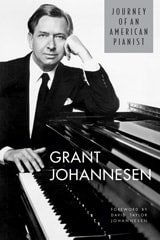
Journey of an American Pianist
Johannesen, Grant
University of Utah Press, 2007
Journey of an American Pianist presents an extensive examination of Johannesen’s artistic commitment and the importance of certain kinds of training and experience, framed in large part as advice to the young pianist seeking a concert career. At the same time, it has plenty of everyday-living experience, showing what pianists do and think about when they are not actually playing or performing.
Journeys in New Worlds
Early American Women's NarrativesWilliam L. Andrews
University of Wisconsin Press, 1990
Four early American women tell their own stories: Mary Rowlandson on her capture by Indians in 1676, Boston businesswoman Sarah Kemble Knight on her travels in New England, Elizabeth Ashbridge on her personal odyssey from indentured servant to Quaker preacher, and Elizabeth House Trist, correspondent of Thomas Jefferson, on her travels from Philadelphia to Natchez. Accompanied by introductions and extensive notes.
"The writings of four hearty women who braved considerable privation and suffering in a wild, uncultivated 17th- and 18th-century America. Although confined by Old World patriarchy, these women, through their narratives, have endowed the frontier experience with a feminine identity that is generally absent from early American literature."—Publishers Weekly
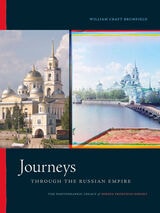
Journeys through the Russian Empire
The Photographic Legacy of Sergey Prokudin-GorskyWilliam Craft Brumfield
Duke University Press, 2020
In 1918 Prokudin-Gorsky escaped an increasingly chaotic, violent Russia and regained nearly 2,000 of his bulky glass negatives. His subsequent peripatetic existence before settling in Paris makes his collection's survival all the more miraculous. The U.S. Library of Congress acquired Prokudin-Gorsky's collection in 1948, and since then it has become a touchstone for understanding pre-revolutionary Russia. Now digitized and publicly available, his images are a sensation in Russia, where people visit websites dedicated to them.
William Craft Brumfield—photographer, scholar, and the leading authority on Russian architecture in the West—began working with Prokudin-Gorsky's photographs in 1985. He curated the first public exhibition of them in the United States and has annotated the entire collection. In Journeys through the Russian Empire, Brumfield—who has spent decades traversing Russia and photographing buildings and landscapes in their various stages of disintegration or restoration—juxtaposes Prokudin-Gorsky's images against those he took of the same buildings and areas. In examining the intersections between his own photography and that of Prokudin-Gorsky, Brumfield assesses the state of preservation of Russia's architectural heritage and calls into question the nostalgic assumptions of those who see Prokudin-Gorsky's images as the recovery of the lost past of an idyllic, pre-Soviet Russia.
This lavishly illustrated volume—which features some 400 stunning full-color images of ancient churches and mosques, railways and monasteries, towns and remote natural landscapes—is a testament to two brilliant photographers whose work prompts and illuminates, monument by monument, questions of conservation, restoration, and cultural identity and memory.
Journeys to War and Peace
A Congressional MemoirStephen J. Solarz
Brandeis University Press, 2011
Journeys to the Edge
In the Footsteps of an AnthropologistPeter M. Gardner
University of Missouri Press, 2013
Because Gardner’s primary research since 1962 has been with hunter-gatherers, much of his story transpires either in the equatorial jungle of south India or more than one hundred miles beyond the end of the road in Canada’s Northwest Territories. Other ventures transport readers to Japan and back to India, allowing them to savor ancient sights and sounds. Gardner closes the book with a journey of quite another sort, as he takes us into the world of nature, Taoist philosophy, and the experimental treatment of advanced cancer.
Throughout this fast-moving book, Gardner deftly describes the goals and techniques of his research, as well as his growing understanding of the cultures to which he was exposed. Few personal accounts of fieldwork describe enough of the research to give a complete sense of the experience in the way this book does. Anyone with an interest in travel and adventure, including the student of anthropology as well as the general reader, will be totally intrigued by Gardner’s story, one of a daily existence so very different from our own.

Journeys with Flies
Edwin N. Wilmsen
University of Chicago Press, 1999
Combining biography, poetry, and anthropology, Wilmsen vividly portrays the intense realities of life in the Kalahari and carries the reader across space and time as events in the present trigger emotions and memories. Images of apartheid, for example, evoke memories of Wilmsen's childhood in the segregated South. Poems, journal entries, and moving accounts of deepening personal relationships all intertwine as Wilmsen conveys the experiences he shares with his "subjects" in spite of vast differences in their backgrounds—extreme thirst under the desert sun, grief over the death of a child, and the constant irritation of ubiquitous flies.
"Our understanding of other peoples," he writes, "lies not in themselves or in anything that they do but in our experience of them. Experience that is lived partly in their world and partly in a shell of our world that we wear when we meet them."
Sophisticated, lyrical, and passionately written, Journeys with Flies will inspire all those who travel to places far from home.
Joyce Westerman
Baseball HeroBob Kann
Wisconsin Historical Society Press, 2012
Joyce Westerman grew up on a farm in Pleasant Prairie, Wisconsin. As a kid, she cleaned the barn, picked vegetables, and helped her father cut down trees. But what she really loved to do was play baseball. Joyce played ball at recess and with friends whenever she could. She even joined her aunt’s adult softball team when she was only twelve.
As Joyce got older, she went to work at a factory in Kenosha. But when World War II broke out, she got a chance to try out for the All American Girls Professional Baseball League. Women from all over the country signed up to show off their skills. Only a few were good enough, and Joyce was one of them. For eight years, Joyce travelled around the United Stated playing ball, winning the league championship in her last season.
This addition to the Badger Biographies series for young readers tells the story of a woman who lived her dream of becoming a professional athlete. In a time when women had few opportunities for careers, and next to none in professional sports, Joyce and her teammates showed that women have what it takes.
Juan Bautista de Anza
Basque Explorer in the New World, 1693-1740Donald T. Garate
University of Nevada Press, 2005
The first biography of an eighteenth-century Basque immigrant who became a silver miner, a cattle rancher, and commander of the cavalry in Sonora, Mexico. The name of Juan Bautista de Anza the younger is a fairly familiar one in the contemporary Southwest because of the various streets, schools, and other places that bear his name. Few people, however, are familiar with his father, the elder Juan Bautista de Anza, whose activities were crucial to the survival of the tenuous and far-flung settlements of Spain’s northernmost colonial frontier. For this first comprehensive biography of the elder Anza, Donald T. Garate spent more than ten years researching archives in Spain and the Americas. The result is a lively picture of the Spanish borderlands and the hardy, ambitious colonists who peopled them.
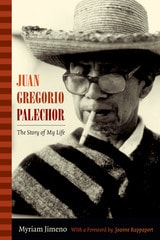
Juan Gregorio Palechor
The Story of My LifeMyriam Jimeno Translated by Andy Klatt
Duke University Press, 2014
Palechor's lively memoir is complemented by Jimeno's reflections on autobiography as an anthropological tool and on the oppressive social and political conditions faced by Colombia's indigenous peoples. A faithful and fluent transcription of Palechor's life story, this work is a uniquely valuable resource for understanding the contemporary indigenous rights movements in Colombia.
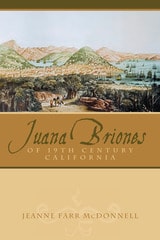
Juana Briones of Nineteenth-Century California
Jeanne Farr McDonnell
University of Arizona Press, 2008
Juana Briones was born in 1802 and spent her early youth in Santa Cruz, a community of retired soldiers who had helped found Spanish California, Native Americans, and settlers from Mexico. In 1820, she married a cavalryman at the San Francisco Presidio, Apolinario Miranda. She raised her seven surviving sons and daughters and adopted an orphaned Native American girl. Drawing on knowledge she gained about herbal medicine and other cures from her family and Native Americans, she became a highly respected curandera, or healer.
Juana set up a second home and dairy at the base of then Loma Alta, now Telegraph Hill, the first house in that area. After gaining a church-sanctioned separation from her abusive husband, she expanded her farming and cattle business in 1844 by purchasing a 4,400-acre ranch, where she built her house, located in the present city of Palo Alto. She successfully managed her extensive business interests until her death in 1889. Juana Briones witnessed extraordinary changes during her lifetime. In this fascinating book, readers will see California’s history in a new and revelatory light.
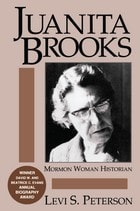
Juanita Brooks
Mormon woman historianLevi S. Peterson
University of Utah Press, 1988
Judaism and Story
The Evidence of The Fathers According to Rabbi NathanJacob Neusner
University of Chicago Press, 1992
Judaism and Story documents a chapter of rabbinic tradition that explored the possibility of historical orientation by means of stories. As Neusner demonstrates, this experiment with narrative went beyond the borders of rabbinic preoccupation with rhetorical argumentation focused on the explication of the Torah. The sage story moved in the direction of biography, but without allowing biography to emerge. This development, in Neusner's account, parallels the movement from epistle to Gospel in early Christianity and thus has broad implications for the history of religions.
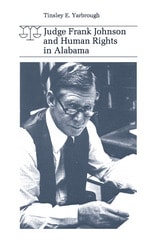
Judge Frank Johnson and Human Rights in Alabama
Tinsley E. Yarbrough
University of Alabama Press, 1981
Where courage meets the gavel: One judge’s relentless fight for justice and human rights in Alabama.
Judge Frank M. Johnson, Jr., Chief Judge of the United States District Court for the Middle District of Alabama until his elevation to the Court of Appeals for the Fifth Circuit in 1979, was perhaps President Dwight D. Eisenhower’s most significant appointment to a lower court. His selection to the bench in 1955 followed by only a few months the Supreme Court’s historic decision in Brown vs. Board of Education.
During Judge Johnson’s tenure, his court invalidated segregation and other forms of racial discrimination in Alabama’s transportation facilities, voter registration processes, school and colleges, administrative agencies, system of jury selection, prisons, mental institutions, political parties, and government grant programs. In fact, most of the state’s major racial crises were resolved in his courtroom. However, his impact on human rights policy in Alabama was not confined to a racial context. Among other significant developments, the Middle District Court ordered reapportionment of the state’s governing bodies and invalidated its grossly inequitable property tax systems.
Judge Johnson’s decisions made him one of the most widely respected and controversial trial judges in the country. Until recently, however, his name was anathema to many white Alabamians, and he and his family were subject to ostracism, threats, violence, and verbal abuse.
Yarbrough examines Judge Johnson’s life through the end of the Wallace era and the Judge’s appointment to the Fifth Circuit Court. More broadly, the book is a history of modern human rights reform in Alabama, cast in the biographical idiom. For, in a real sense, the history of the reform and of Judge Johnson’s judicial career have been synonymous.
Julia de Burgos
La creación de un ícono puertorriqueñoVanessa Pérez-Rosario. Traducido por Isabel Zapata, en colaboración con la autora
University of Illinois Press, 2021
Disponible por primera vez en español, Julia de Burgos cuenta la destacada historia de la poeta y activista puertorriqueña.
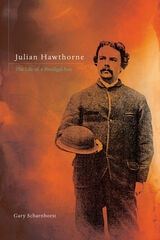
Julian Hawthorne
The Life of a Prodigal SonGary Scharnhorst
University of Illinois Press, 2014
Julian Hawthorne (1846-1934), Nathaniel Hawthorne's only son, lived a long and influential life marked by bad circumstances and worse choices. Raised among luminaries such as Thoreau, Emerson, and the Beecher family, Julian became a promising novelist in his twenties, but his writing soon devolved into mediocrity.
What talent the young Hawthorne had was spent chasing across the changing literary and publishing landscapes of the period in search of a paycheck, writing everything from potboilers to ad copy. Julian was consistently short of funds because--as biographer Gary Scharnhorst is the first to reveal--he was supporting two households: his wife in one and a longtime mistress in the other.
The younger Hawthorne's name and work ethic gave him influence in spite of his haphazard writing. Julian helped to found Cosmopolitan and Collier's Weekly. As a Hearst stringer, he covered some of the era's most important events: McKinley's assassination, the Galveston hurricane, and the Spanish-American War, among others.
When Julian died at age 87, he had written millions of words and more than 3,000 pieces, out-publishing his father by a ratio of twenty to one. Gary Scharnhorst, after his own long career including works on Mark Twain, Oscar Wilde, and other famous writers, became fascinated by the leaps and falls of Julian Hawthorne. This biography shows why.
Julian Steward and the Great Basin
The Making of an AnthropologistRichard O Clemmer
University of Utah Press, 1999
Julian Steward and the Great Basin is a critical assessment of Steward’s work, the factors that influenced him, and his deep effect on American anthropology. Steward (1902–1972) was one of the foremost American exponents of cultural ecology, the idea that societies evolve in adaptation to their human and natural environments. He was also central in shaping basic anthropological constructs such as "hunter-gatherer" and "adaptation." But his fieldwork took place almost entirely in the Great Basin.
In one sense, the phases of Steward’s career epitomize the successive schools of anthropological theory and practice. Each chapter explores a different aspect of his work ranging from early efforts at documenting trait distributions to his later role in the development of social transformation theory, area studies, and applied anthropology.
Julian Steward and the Great Basin also corrects long-standing misperceptions that originated with Steward about lifeways of the Indians living between the Great Plains and California. It charts new directions for research, demanding a more exacting study of environmental conditions, material adaptations, and organizational responses, as well as an appreciation of the ideological and humanistic dimensions of Basin Life.
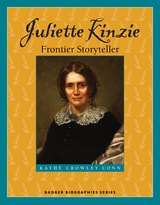
Juliette Kinzie
Frontier StorytellerKathe Crowley Conn
Wisconsin Historical Society Press, 2015
This new biography in the Badger Biographies Series turns the lens on the writer herself, detailing her life as she detailed the lives of those she encountered in the 1830s and 1840s. Juliette Kinzie: Frontier Storyteller details war, hunger, and the rapidly changing times Juliette witnessed on the Midwestern frontier, following the pioneering woman through her own changes from socialite to pioneer to famous writer and even to the work of her granddaughter, Juliette Gordon Low, who founded the Girl Scouts of the USA in 1912.
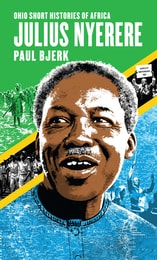
Julius Nyerere
Paul Bjerk
Ohio University Press, 2017
With vision, hard-nosed judgment, and biting humor, Julius Nyerere confronted the challenges of nation building in modern Africa. Constructing Tanzania out of a controversial Cold War union between Tanganyika and Zanzibar, Nyerere emerged as one of independent Africa’s most influential leaders. He pursued his own brand of African socialism, called Ujamaa, with unquestioned integrity, and saw it profoundly influence movements to end white minority rule in Southern Africa. Yet his efforts to build a peaceful nation created a police state, economic crisis, and a war with Idi Amin’s Uganda. Eventually—unlike most of his contemporaries—Nyerere retired voluntarily from power, paving the way for peaceful electoral transitions in Tanzania that continue today.
Based on multinational archival research, extensive reading, and interviews with Nyerere’s family and colleagues, as well as some who suffered under his rule, Paul Bjerk provides an incisive and accessible biography of this African leader of global importance. Recognizing Nyerere’s commitment to participatory government and social equality while also confronting his authoritarian turns and policy failures, Bjerk offers a portrait of principled leadership under the difficult circumstances of postcolonial Africa.