Results by title
5550 books match the query 'Biography & Autobiography' and 204 start with j
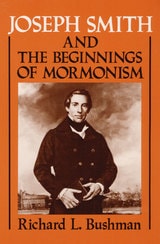
Joseph Smith and the Beginnings of Mormonism
Richard L. Bushman
University of Illinois Press, 1984
Winner of the David Woolley Evans and Beatrice Evans Biography Award and a History Book Club selection, 1985.
The core of Mormon belief was a conviction about actual events. The test of faith was not adherence to a certain confession of faith but belief that Christ was resurrected, that Joseph Smith saw God, that the Book of Mormon was true history, and that Peter, James, and John restored the apostleship. Mormonism was history, not philosophy.
It is as history that Richard L. Bushman analyzes the emergence of Mormonism in the early nineteenth century. Bushman, however, brings to his study a unique set of credentials--he is both a prize-winning historian and a faithful member of the Latter-day Saints church. For Mormons and non-Mormons alike, his book provides a very special perspective on an endlessly fascinating subject.
Building upon previous accounts and incorporating recently discovered contemporary sources, Bushman focuses on the first twenty-five years of Joseph Smith's life--up to his move to Kirtland, Ohio, in 1831. Bushman shows how the rural Yankee culture of New England and New York--especially evangelical revivalism, Christian rationalism, and folk magic--both influenced and hindered the formation of Smith's new religion.
Mormonism, Bushman argues, must be seen not only as the product of this culture, but also as an independent creation based on the revelations of its charismatic leader. In the final analysis, it was Smith's ability to breathe new life into the ancient sacred stories and to make a sacred story out of his own life which accounted for his own extraordinary influence. By presenting Smith and his revelations as they were viewed by the early Mormons themselves, Bushman leads us to a deeper understanding of their faith.
Joseph Smith
History, Methods, and MemoryRonald O. Barney
University of Utah Press, 2020
Ronald O. Barney, a former editor of the Joseph Smith Papers, applies new interpretations to Smith in history and memory, re-examining both his writings and contemporary accounts of him. The book explores the best methodologies for appraising the historical record, including a review of Smith’s world and its contextual background, an analysis of his foundational experiences, and a characterization of Smith as a man and prophet. Though the premise of re-evaluation may be unsettling to traditionalists, a modern reconsideration of the historical record’s entire range of sources is necessary to fashion a strategy for evaluating Smith and his enduring but complex legacy.
Joseph Smith
The Making of a ProphetDan Vogel
Signature Books, 2004
Vogel weaves together strands of evidence into a complete fabric including, among other aspects of Smith’s environment, the content of his daily dictation of scriputre and revelation—all contributing to a nearly complete view of what occurred on any given day in Smith’s lfie. The result is as much intellectual history as traditional biography. Readers will feel engaged in the dramatic, formative events in the prophet’s life against a backdrop of theology, local and national politics, Smith family dynamics, organizational issues, and interpersonal relations. One can form a mental picture, and many will find themselves carrying on an internal dialogue about the issues raised.
Vogel addresses the following broad themes:
1. The home that Joseph Smith was raised in was religiously divided. His mother’s family was orthodox and partly mystical; his father’s family tended toward rationalism and skepticism. Joseph’s maternal grandfather published an account of seeing a heavenly light and hearing Jesus’ voice. Joseph’s paternal grandfather promoted Thomas Paine’s skeptical critique of the Bible, The Age of Reason.
2. When Andrew Jackson was elected U.S. president in 1828, it was a key transitional period in American history. Jackson was a Mason and an advocate of secularism, which alarmed evangelical Protestants.
3. The Smith family experienced a series of financial setbacks and lost their farm in 1825. Joseph felt disinherited and saw no way of escape—no chance for his family to regain its former standing in the community.
4. Joseph found solace in religion. In the early 1820s, he had a powerful conversion experience and felt that Jesus had forgiven him of his sins. This inspired him to share the gospel message with others, particularly with his own family. About the same time, Smith found a talent for preaching and delivered “passable” Methodist sermons at a nearby revival.
5. Over time, Joseph became aware that people trusted him and that he could be an influence for good or ill, that even through nefarious means, God worked through him when his heart was right. He realized this when he led groups in search of Spanish treasure in New York and Pennsylvania. Although no treasure was found, the men sincerely believed that Smith had a spiritual gift and could see where casks of gold were hidden in the earth. This training ground in spiritual leadership was invaluable because the prophet learned how to create an environment for belief—one in which people could exercise faith and be converted to Christ through the sensible influence of the Spirit, all prior to the overarching work of restoring primitive Christianity.
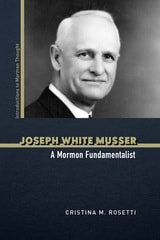
Joseph White Musser
A Mormon FundamentalistCristina M. Rosetti
University of Illinois Press, 2024
Musser’s devotion to Joseph Smith’s vision and the faith’s foundational texts reflected a widespread uneasiness with, and reaction against, changes taking place across society. Rosetti analyzes how Musser’s writing and thought knit a disparate group of outcast LDS believers into a movement. She also places Musser’s eventful life against the backdrop of a difficult period in LDS history, when the Church strained to disentangle itself from plural marriage and leaders like Musser emerged to help dissident members make sense of their lives outside the mainstream.
The first book-length account of the Mormon thinker, Joseph White Musser reveals the figure whose teachings helped mold a movement.
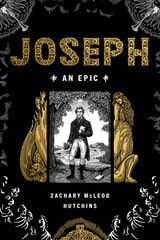
Joseph
An EpicZachary McLeod Hutchins
University of Illinois Press, 2025
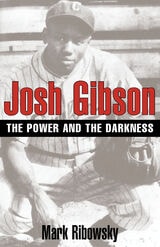
Josh Gibson
The Power and the DarknessMark Ribowsky
University of Illinois Press, 1996
Though Gibson is best remembered as "the black Babe Ruth," Ruth became a beloved symbol of the national pastime, while Gibson lived a life veiled in the darkness that came both from the shadow world of the Negro leagues and from within his own tortured soul.
Mark Ribowsky, the widely acclaimed biographer of Satchel Paige, pulls no punches in his portrait of this magnificent, troubled athlete. This is the most complete, thorough, and authoritative account of the life of black ball's greatest hitter, and one of its most important stars.
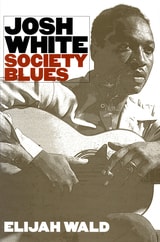
Josh White
Society BluesElijah Wald
University of Massachusetts Press, 2000
In this compelling biography, Elijah Wald traces White's journey from a childhood leading blind singers on the streets of Greenville, South Carolina, to the heights of Manhattan cafe society. He explores the complexities of White's music, his struggles with discrimination and stereotypes, his political involvements, and his sometimes raucous personal life.
White was always drawn to music and made his first recordings at age fourteen. By the 1930s he had become a recording star, with equally strong careers in blues and gospel. In the 1940s he was discovered by white audiences and regularly appeared in New York cabarets alongside such artists as Billie Holiday. He also became an outspoken proponent of civil rights and frequently appeared at rallies and benefits, as well as at the Roosevelt White House, becoming known as "the Presidential Minstrel." He was one of the few black figures to star on Broadway and appear in Hollywood films, the only black solo performer to have his own national tour, and a daring sex symbol with adoring fans on both sides of the color line.
In the 1950s, White won acclaim in Europe, then saw his achievements collapse in the polarized political ferment of the McCarthy era. Attempting to strike a balance that would keep his career afloat, he instead ended up alienating both political camps. Although still a star in England, he became the forgotten man at home until his resurrection during the folk revival.
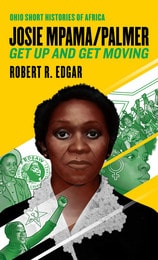
Josie Mpama/Palmer
Get Up and Get MovingRobert R. Edgar
Ohio University Press, 2020
While African National Congress narratives dominate much of the scholarship on South Africa’s freedom struggle, Josie Mpama/Palmer’s political life offers a different perspective. Highly critical of the patriarchal attitudes that hindered black women from actively participating in politics, Mpama/Palmer was an outspoken advocate for women’s social equality and encouraged black women to become more involved in national conversations. The first black woman to join the Communist Party of South Africa and an antiapartheid activist, Josie Mpama/Palmer remained involved in critical issues all her life, especially protests against Bantu Education and other forms of racial and sexist discrimination. She was an integral figure in establishing the Federation of South African Women, an organization open to women of all races. Mpama/Palmer’s activism and political legacy would become an inspiring example for women in South Africa and around the world to get up and get moving.
José Clemente Orozco
An AutobiographyBy José Clemente Orozco; Translated by Robert C. Stephenson; Introduction by John Palmer Leeper
University of Texas Press, 1962
The artistic eminence of José Clemente Orozco (1883–1949) is such that he has been called “the greatest painter the Americas have produced.” In his Autobiography he also attains literary distinction. He is a writer who recounts the history of his period from a personal point of view and yet scarcely mentions himself. He is an observer who writes about the history of his country and of his country’s art, yet makes his own character implicit in the narrative.
The character that emerges is charming. It is that of a man strong but retiring, sharply critical of what he disapproves yet generous in praise of what he admires, decided in his views but modest in his assumptions and given to understatement in describing his own activities, averse to war and political struggle yet eager for conflict of ideas, always dedicated to the welfare of humanity.
Through the details of day-by-day living, he presents the panorama of the Mexican Revolution and of events in other parts of the world to which he traveled. His is a personal story of the Revolution, giving his reactions (as those of any common man) to the barbarities of war: “Insolent leaders, inflamed with alcohol, taking whatever they wanted at pistol point. . . . By night in dark streets the sound of gunplay, followed by screams, blasphemies, and vile insults. Breaking windows, sharp blows, cries of pain, and shots again.”
Orozco’s ability, as a painter, to see the details and to sense the mood of a place is apparent in his word pictures of the places he visited: “After six in the evening Paris is an immense brothel.” “London was like the seat of a noble family which had been exceedingly rich but had lost its fortune.” “Old, old Montmartre [is] a moldering cadaver . . .”
Orozco also makes some penetrating observations on art itself. Although he emphasizes individuality and freedom from tradition in art, he abhors unschooled art, especially such extremes as primitive Impressionism and other groups that lack instruction in the general principles of art, in technique, in theory of color, in perspective. He says ironically of the artistically uneducated: “Blessed are the ignorant and the imbecile, for theirs is the supreme glory of art! Blessed are the idiots and the cretins, for masterpieces of painting shall issue from their hands!” Orozco believes in education, not only for the artists but for their public. Taste in art can come only through understanding of the purpose and the techniques of art—through knowledge. Without training, public taste “mostly likes sugar, honey, and candy. Diabetic art. The greater the amount of sugar, the greater the—commercial—success.”
José Martí
A Revolutionary LifeBy Alfred J. López
University of Texas Press, 2014
José Martí (1853–1895) was the founding hero of Cuban independence. In all of modern Latin American history, arguably only the “Great Liberator” Simón Bolívar rivals Martí in stature and legacy. Beyond his accomplishments as a revolutionary and political thinker, Martí was a giant of Latin American letters, whose poetry, essays, and journalism still rank among the most important works of the region. Today he is revered by both the Castro regime and the Cuban exile community, whose shared veneration of the “apostle” of freedom has led to his virtual apotheosis as a national saint.
In José Martí: A Revolutionary Life, Alfred J. López presents the definitive biography of the Cuban patriot and martyr. Writing from a nonpartisan perspective and drawing on years of research using original Cuban and U.S. sources, including materials never before used in a Martí biography, López strips away generations of mythmaking and portrays Martí as Cuba’s greatest founding father and one of Latin America’s literary and political giants, without suppressing his public missteps and personal flaws. In a lively account that engrosses like a novel, López traces the full arc of Martí’s eventful life, from his childhood and adolescence in Cuba, to his first exile and subsequent life in Spain, Mexico City, and Guatemala, through his mature revolutionary period in New York City and much-mythologized death in Cuba on the battlefield at Dos Ríos. The first major biography of Martí in over half a century and the first ever in English, José Martí is the most substantial examination of Martí’s life and work ever published.
José de Bustamante and Central American Independence
Colonial Administration in an Age of Imperial CrisisTimothy Hawkins
University of Alabama Press, 2004
Reassessing the colonial official at the center of Central America's turbulent path to independence.
Latin American independence histories of the last 150 years have tended to stereotype Captain General Bustamante, governor of the Spanish colony of Guatemala from 1811 to 1818, as a tyrannical arch-villain who personified colonial oppression. Timothy Hawkins, in contrast, examines Bustamante and his administration within the context of preservation of empire, the effort by colonial officials and partisans to maintain the integrity of the Spanish empire in spite of internal and external unrest.
Based on extensive primary research in the archives of Guatemala, Mexico, and Spain, Hawkins’s approach links the Central American experience to that of areas such as Peru, Venezuela, and Mexico, that also responded equivocally and haphazardly to rebellious uprisings against colonial rule. While conceding that Bustamante’s role in the suppression of unrest turned him into one of the more controversial figures in Latin American history, Hawkins argues that the Bustamante administration should not be seen as an isolated and perverse case of Spanish repression but as an example of a relatively successful, if short lived, campaign by Spain to preserve its empire.
Journal I, 1945-1955
Mircea Eliade
University of Chicago Press, 1990
During the lean years in Paris Eliade lived and worked in small, cold rooms; prepared meals on a Primus stove; pawned his valuables; and asked friends for loans. Eventually he secured a research stipend from the Bollingen Foundation. His ten years in Paris were among his most productive; the books he wrote during this period brought him worldwide acclaim as a historian of religions. He records his first meetings with Carl Jung, Pierre Teilhard de Chardin, Gershom Scholem, Georges Bataille, André Breton, Raffaele Pettazzoni, and many other scholars and writers.
Eliade also continued to write literary works. Numerous entries describe his five-year struggle with his novel The Forbidden Forest. Spanning the twelve fateful years from 1936 to 1948, it expresses within a fictional framework the central themes of Eliade's work on religions. Writing the novel was a Herculean task in which Eliade summarized and memorialized his old Romanian life.
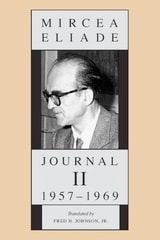
Journal II, 1957-1969
Mircea Eliade
University of Chicago Press, 1989

Journal III, 1970-1978
Mircea Eliade
University of Chicago Press, 1989
Quite apart from the personal, biographical interest the journal holds, it is a document of cultural and intellectual significance. Eliade remarks on such colleagues and friends as Jung, Dumézil, Ricoeur, Bellow, and Ionesco. Moreover, the period covered encompasses Eliade's most active years as a teacher, and the journal beautifully reflects his developing views on religion, history, and the nature of academic culture. Bits and pieces of Eliade's past life are juxtaposed with thoughts about ongoing projects and work yet to be undertaken as well as with anecdotes of his travels and comments on world events.
A genuine treat for Eliade readers and those interested in history of religions, Journal III provides new perspectives on many of Eliade's other works—the History of Religious Ideas, Ordeal by Labyrinth, the Autobiography. At the same time the journal is a mature scholar's record of the aftermath of the 1960s, a turbulent period that profoundly affected American university life. As such, these writings hold valuable insights into not only the life and work of one man but also the cultural history of an entire era.
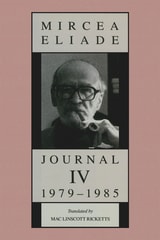
Journal IV, 1979-1985
Mircea Eliade
University of Chicago Press, 1989
Running like a fault line through the peak of his success, however, is Eliade's painful awareness of his physical decline—failing vision, arthritic hands, and continual fatigue. Again and again he repeats how little time he has to finish the projects he is working on—his autobiography, the third and fourth volumes of his History of Religious Ideas, and the duties associated with his editorship of the Encyclopedia of Religion. He poignantly recounts the sharpest blow: the disorganization and eventual destruction by fire of his personal library.
Within the scope of Journal IV Eliade and his world go to ruin. What does not decline is the vivid and persistent voice of Eliade the writer, an unbreaking voice that—with death only months away—plans a reply to critics, plots out an article, and ruminates on characters to people another novella.

Journal of Rehearsals
A Memoir by Wallace FowlieWallace Fowlie
Duke University Press, 0
Journal of the Fictive Life
Howard Nemerov
University of Chicago Press, 1981
"He often shows bravery and shrewdness; the book is full of fine criticism and psychological insight. As always, his prose has that ease and transparency that make one forget one is reading; one seems simply to hear a voice speaking. Nemerov's improvised self-analysis has weaknesses, but few that he himself doesn't eventually recognize."—New York Times Book Review
"In an age of explicitness, Nemerov's Journal of the Fictive Life is explicitly without vulgarity; in an age of revelation, it reveals only what counts. More then a book about creativity, it is a beautiful creation."—Richard G. Stern
Journals
Volume FifteenHerman Melville
Northwestern University Press, 1989
The editors supply full annotations of Melville's allusions and terse entries and an exhaustive index makes available the range of his acquaintance with people, places, and works of art. Also included are related documents, illustrations, maps, and many pages and passages reproduced from the journals. This scholarly edition aims to present a text as close to the author's intention as his difficult handwriting permits. It is an Approved Text of the Center for Editions of American Authors (Modern Language Association of America).
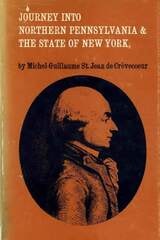
Journey into Northern Pennsylvania and the State of New York
Michel-Guillaume St. Jean de Crèvecoeur
University of Michigan Press, 1964
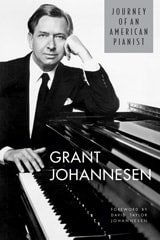
Journey of an American Pianist
Johannesen, Grant
University of Utah Press, 2007
Journey of an American Pianist presents an extensive examination of Johannesen’s artistic commitment and the importance of certain kinds of training and experience, framed in large part as advice to the young pianist seeking a concert career. At the same time, it has plenty of everyday-living experience, showing what pianists do and think about when they are not actually playing or performing.
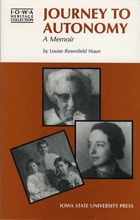
Journey to Autonomy
A MemoirLouise Rosenfield Noun
University of Iowa Press, 1996
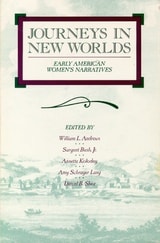
Journeys in New Worlds
Early American Women's NarrativesWilliam L. Andrews
University of Wisconsin Press, 1990
Four early American women tell their own stories: Mary Rowlandson on her capture by Indians in 1676, Boston businesswoman Sarah Kemble Knight on her travels in New England, Elizabeth Ashbridge on her personal odyssey from indentured servant to Quaker preacher, and Elizabeth House Trist, correspondent of Thomas Jefferson, on her travels from Philadelphia to Natchez. Accompanied by introductions and extensive notes.
"The writings of four hearty women who braved considerable privation and suffering in a wild, uncultivated 17th- and 18th-century America. Although confined by Old World patriarchy, these women, through their narratives, have endowed the frontier experience with a feminine identity that is generally absent from early American literature."—Publishers Weekly
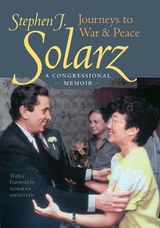
Journeys to War and Peace
A Congressional MemoirStephen J. Solarz
Brandeis University Press, 2011
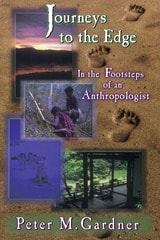
Journeys to the Edge
In the Footsteps of an AnthropologistPeter M. Gardner
University of Missouri Press, 2013
Because Gardner’s primary research since 1962 has been with hunter-gatherers, much of his story transpires either in the equatorial jungle of south India or more than one hundred miles beyond the end of the road in Canada’s Northwest Territories. Other ventures transport readers to Japan and back to India, allowing them to savor ancient sights and sounds. Gardner closes the book with a journey of quite another sort, as he takes us into the world of nature, Taoist philosophy, and the experimental treatment of advanced cancer.
Throughout this fast-moving book, Gardner deftly describes the goals and techniques of his research, as well as his growing understanding of the cultures to which he was exposed. Few personal accounts of fieldwork describe enough of the research to give a complete sense of the experience in the way this book does. Anyone with an interest in travel and adventure, including the student of anthropology as well as the general reader, will be totally intrigued by Gardner’s story, one of a daily existence so very different from our own.
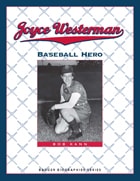
Joyce Westerman
Baseball HeroBob Kann
Wisconsin Historical Society Press, 2012
Joyce Westerman grew up on a farm in Pleasant Prairie, Wisconsin. As a kid, she cleaned the barn, picked vegetables, and helped her father cut down trees. But what she really loved to do was play baseball. Joyce played ball at recess and with friends whenever she could. She even joined her aunt’s adult softball team when she was only twelve.
As Joyce got older, she went to work at a factory in Kenosha. But when World War II broke out, she got a chance to try out for the All American Girls Professional Baseball League. Women from all over the country signed up to show off their skills. Only a few were good enough, and Joyce was one of them. For eight years, Joyce travelled around the United Stated playing ball, winning the league championship in her last season.
This addition to the Badger Biographies series for young readers tells the story of a woman who lived her dream of becoming a professional athlete. In a time when women had few opportunities for careers, and next to none in professional sports, Joyce and her teammates showed that women have what it takes.
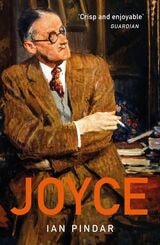
Joyce
Second EditionIan Pindar
Haus Publishing, 2025
James Joyce (1882–1941) is hailed as one of the greatest writers of the twentieth century. Rejecting his homeland and its religion as a young man, Joyce went on to reinvent the Dublin of his youth in his fiction. His masterpiece, Ulysses—once banned in Britain and the United States—redefined the modern novel and has become a canonical classic. Finnegans Wake, written as Joyce’s eyesight deteriorated, cemented his legacy as one of the founding figures of modernist literature.
In a revised edition of this lucid and compelling biography, containing a new foreword from the author, crucial events in Joyce’s life, from his self-imposed exile to his creative triumphs, are explored vividly. Ian Pindar reveals how Joyce’s work carefully blends the abstract and the mundane, capturing the great human comedy of which we are all part.
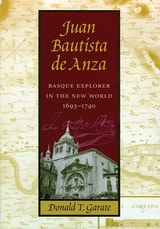
Juan Bautista de Anza
Basque Explorer in the New World, 1693-1740Donald T. Garate
University of Nevada Press, 2005
The first biography of an eighteenth-century Basque immigrant who became a silver miner, a cattle rancher, and commander of the cavalry in Sonora, Mexico. The name of Juan Bautista de Anza the younger is a fairly familiar one in the contemporary Southwest because of the various streets, schools, and other places that bear his name. Few people, however, are familiar with his father, the elder Juan Bautista de Anza, whose activities were crucial to the survival of the tenuous and far-flung settlements of Spain’s northernmost colonial frontier. For this first comprehensive biography of the elder Anza, Donald T. Garate spent more than ten years researching archives in Spain and the Americas. The result is a lively picture of the Spanish borderlands and the hardy, ambitious colonists who peopled them.
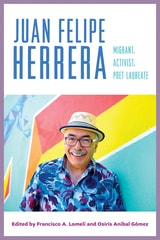
Juan Felipe Herrera
Migrant, Activist, Poet LaureateEdited by Francisco A. Lomelí and Osiris Aníbal Gómez
University of Arizona Press, 2023
For the first time, this book presents the distinguished, prolific, and highly experimental writer Juan Felipe Herrera. This wide-ranging collection of essays by leading experts offers critical approaches on Herrera, who transcends ethnic and mainstream poetics. It expertly demonstrates Herrera’s versatility, resourcefulness, innovations, and infinite creativity.
As a poet Herrera has had an enormous impact within and beyond Chicano poetics. He embodies much of the advancements and innovations found in American and Latin American poetry from the early l970s to the present. His writings have no limits or boundaries, indulging in the quotidian as well as the overarching topics of his era at different periods of his life. Both Herrera and his work are far from being unidimensional. His poetics are eclectic, incessantly diverse, transnational, unorthodox, and distinctive.
Reading Herrera is an act of having to rearrange your perceptions about things, events, historical or intra-historical happenings, and people. The essays in this work delve deeply into Juan Felipe Herrera’s oeuvre and provide critical perspectives on his body of work. They include discussion of Chicanx indigeneity, social justice, environmental imaginaries, Herrera’s knack for challenging theory and poetics, transborder experiences, transgeneric constructions, and children’s and young adult literature.
This book includes an extensive interview with the poet and a voluminous bibliography on everything by, about, and on the author. The chapters in this book offer a deep dive into the life and work of an internationally beloved poet who, along with serving as the poet laureate of California and the U.S. poet laureate, creates work that fosters a deep understanding of and appreciation for people’s humanity.
Contributors
Trevor Boffone
Marina Bernardo-Flórez
Manuel de Jesús Hernández-G.
Whitney DeVos
Michael Dowdy
Osiris Aníbal Gómez
Carmen González Ramos
Cristina Herrera
María Herrera-Sobek
Francisco A. Lomelí
Tom Lutz
Manuel M. Martín-Rodríguez
Marzia Milazzo
Maria Antònia Oliver-Rotger
Rafael Pérez-Torres
Renato Rosaldo
Donaldo W. Urioste
Luis Alberto Urrea
Santiago Vaquera-Vásquez
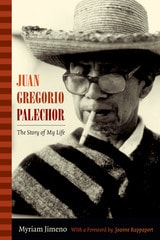
Juan Gregorio Palechor
The Story of My LifeMyriam Jimeno Translated by Andy Klatt
Duke University Press, 2014
Palechor's lively memoir is complemented by Jimeno's reflections on autobiography as an anthropological tool and on the oppressive social and political conditions faced by Colombia's indigenous peoples. A faithful and fluent transcription of Palechor's life story, this work is a uniquely valuable resource for understanding the contemporary indigenous rights movements in Colombia.
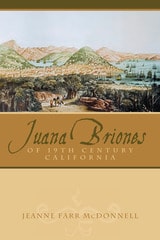
Juana Briones of Nineteenth-Century California
Jeanne Farr McDonnell
University of Arizona Press, 2008
Juana Briones was born in 1802 and spent her early youth in Santa Cruz, a community of retired soldiers who had helped found Spanish California, Native Americans, and settlers from Mexico. In 1820, she married a cavalryman at the San Francisco Presidio, Apolinario Miranda. She raised her seven surviving sons and daughters and adopted an orphaned Native American girl. Drawing on knowledge she gained about herbal medicine and other cures from her family and Native Americans, she became a highly respected curandera, or healer.
Juana set up a second home and dairy at the base of then Loma Alta, now Telegraph Hill, the first house in that area. After gaining a church-sanctioned separation from her abusive husband, she expanded her farming and cattle business in 1844 by purchasing a 4,400-acre ranch, where she built her house, located in the present city of Palo Alto. She successfully managed her extensive business interests until her death in 1889. Juana Briones witnessed extraordinary changes during her lifetime. In this fascinating book, readers will see California’s history in a new and revelatory light.
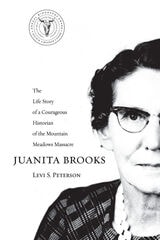
Juanita Brooks
The Life Story of a Courageous Historian of the Mountain Meadows MassacreLevi S Peterson
University of Utah Press, 2011
Born in 1898 in Bunkerville, Nevada, Juanita Brooks led an early life similar to that of many who grew up in isolated, tightly knit, rural Mormon communities. An early marriage suggested her future would follow a predictable course, but the death of her husband, the need to raise a young son, and a passion for knowledge led her along a different path, when at mid-life she became a well-known author after publishing The Mountain Meadows Massacre. In this book she exposed the killing of some 100 California-bound emigrants traveling through southern Utah in 1856 as an atrocity carried out by a Mormon militia with Indian allies and not solely as an Indian massacre, as it had been for so long portrayed.
Juanita Brooks was a faithful and active member of the Mormon Church, and her courage to tell the truth about this dark moment in Mormon history established her reputation as a respected historian. While there was no official church condemnation of the book, there was unofficial disapproval and Brooks was shunned by many in her community. She nevertheless doggedly pursued church authorities to revise their stand on the incidents at Mountain Meadows. The desire to tell the truth as she saw it became her hallmark, and Brooks’s life as wife, mother, teacher, community member, and undaunted historian became an uncommon story of personal stamina and intellectual courage.
Winner of the Evans Biography Award and the Mormon History Association Best Book Award.
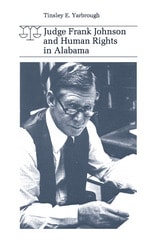
Judge Frank Johnson and Human Rights in Alabama
Tinsley E. Yarbrough
University of Alabama Press, 1981
Where courage meets the gavel: One judge’s relentless fight for justice and human rights in Alabama.
Judge Frank M. Johnson, Jr., Chief Judge of the United States District Court for the Middle District of Alabama until his elevation to the Court of Appeals for the Fifth Circuit in 1979, was perhaps President Dwight D. Eisenhower’s most significant appointment to a lower court. His selection to the bench in 1955 followed by only a few months the Supreme Court’s historic decision in Brown vs. Board of Education.
During Judge Johnson’s tenure, his court invalidated segregation and other forms of racial discrimination in Alabama’s transportation facilities, voter registration processes, school and colleges, administrative agencies, system of jury selection, prisons, mental institutions, political parties, and government grant programs. In fact, most of the state’s major racial crises were resolved in his courtroom. However, his impact on human rights policy in Alabama was not confined to a racial context. Among other significant developments, the Middle District Court ordered reapportionment of the state’s governing bodies and invalidated its grossly inequitable property tax systems.
Judge Johnson’s decisions made him one of the most widely respected and controversial trial judges in the country. Until recently, however, his name was anathema to many white Alabamians, and he and his family were subject to ostracism, threats, violence, and verbal abuse.
Yarbrough examines Judge Johnson’s life through the end of the Wallace era and the Judge’s appointment to the Fifth Circuit Court. More broadly, the book is a history of modern human rights reform in Alabama, cast in the biographical idiom. For, in a real sense, the history of the reform and of Judge Johnson’s judicial career have been synonymous.
Judging Lincoln
Frank J. Williams. Foreword by Harold Holzer. Epilogue by John Y. Simon
Southern Illinois University Press, 2007

Judith Resnik
Unsung AstronautMarlene Targ Brill
Ohio University Press, 0
Judith Resnik didn’t grow up dreaming of space, but when NASA opened its doors to women astronauts in the late 1970s, she stepped forward—and soared. One of the first six women ever accepted into NASA’s space shuttle astronaut-training program, Resnik brought her sharp mind, determination, and creativity to a field that had long been closed to women. Although she wasn’t the first American woman in space, she became one of the most accomplished astronauts of her time.
Resnik’s journey wasn’t easy. She faced challenges at home and in school, but she never let obstacles stop her. A gifted student, she excelled in math, science, and music—she even considered becoming a concert pianist before choosing a career in engineering. Her hard work paid off: She earned multiple degrees and helped design improvements for the space shuttle itself. She proved that astronauts aren’t just pilots—they’re problem solvers, inventors, and explorers.
In 1984, Resnik launched into space for the first time aboard the shuttle Discovery. Two years later, she joined the crew of Challenger. Tragically, that mission ended in disaster, cutting her life short. While the world focused on the loss of teacher Christa McAuliffe, who was a passenger on that flight, Resnik’s story was often overlooked. Yet her contributions to science and space exploration live on through programs, schools, and scholarships that bear her name.
This inspiring biography brings Resnik’s remarkable life to light. Readers will discover how a girl from Ohio became a trailblazer in space and how her courage and brilliance continue to inspire new generations. Her story reminds us that even if you’re not first, you can still make history—and that reaching for the stars starts with believing in yourself.
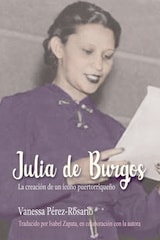
Julia de Burgos
La creación de un ícono puertorriqueñoVanessa Pérez-Rosario. Traducido por Isabel Zapata, en colaboración con la autora
University of Illinois Press, 2021
Disponible por primera vez en español, Julia de Burgos cuenta la destacada historia de la poeta y activista puertorriqueña.
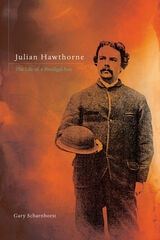
Julian Hawthorne
The Life of a Prodigal SonGary Scharnhorst
University of Illinois Press, 2014
Julian Hawthorne (1846-1934), Nathaniel Hawthorne's only son, lived a long and influential life marked by bad circumstances and worse choices. Raised among luminaries such as Thoreau, Emerson, and the Beecher family, Julian became a promising novelist in his twenties, but his writing soon devolved into mediocrity.
What talent the young Hawthorne had was spent chasing across the changing literary and publishing landscapes of the period in search of a paycheck, writing everything from potboilers to ad copy. Julian was consistently short of funds because--as biographer Gary Scharnhorst is the first to reveal--he was supporting two households: his wife in one and a longtime mistress in the other.
The younger Hawthorne's name and work ethic gave him influence in spite of his haphazard writing. Julian helped to found Cosmopolitan and Collier's Weekly. As a Hearst stringer, he covered some of the era's most important events: McKinley's assassination, the Galveston hurricane, and the Spanish-American War, among others.
When Julian died at age 87, he had written millions of words and more than 3,000 pieces, out-publishing his father by a ratio of twenty to one. Gary Scharnhorst, after his own long career including works on Mark Twain, Oscar Wilde, and other famous writers, became fascinated by the leaps and falls of Julian Hawthorne. This biography shows why.
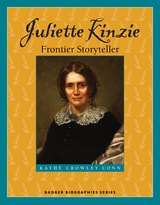
Juliette Kinzie
Frontier StorytellerKathe Crowley Conn
Wisconsin Historical Society Press, 2015
This new biography in the Badger Biographies Series turns the lens on the writer herself, detailing her life as she detailed the lives of those she encountered in the 1830s and 1840s. Juliette Kinzie: Frontier Storyteller details war, hunger, and the rapidly changing times Juliette witnessed on the Midwestern frontier, following the pioneering woman through her own changes from socialite to pioneer to famous writer and even to the work of her granddaughter, Juliette Gordon Low, who founded the Girl Scouts of the USA in 1912.
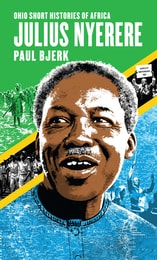
Julius Nyerere
Paul Bjerk
Ohio University Press, 2017
With vision, hard-nosed judgment, and biting humor, Julius Nyerere confronted the challenges of nation building in modern Africa. Constructing Tanzania out of a controversial Cold War union between Tanganyika and Zanzibar, Nyerere emerged as one of independent Africa’s most influential leaders. He pursued his own brand of African socialism, called Ujamaa, with unquestioned integrity, and saw it profoundly influence movements to end white minority rule in Southern Africa. Yet his efforts to build a peaceful nation created a police state, economic crisis, and a war with Idi Amin’s Uganda. Eventually—unlike most of his contemporaries—Nyerere retired voluntarily from power, paving the way for peaceful electoral transitions in Tanzania that continue today.
Based on multinational archival research, extensive reading, and interviews with Nyerere’s family and colleagues, as well as some who suffered under his rule, Paul Bjerk provides an incisive and accessible biography of this African leader of global importance. Recognizing Nyerere’s commitment to participatory government and social equality while also confronting his authoritarian turns and policy failures, Bjerk offers a portrait of principled leadership under the difficult circumstances of postcolonial Africa.
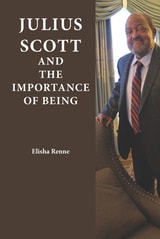
Julius Scott and the Importance of Being
Elisha P. Renne
Michigan Publishing Services, 2024
This biography of Julius Scott is based on primary and secondary sources and focuses on aspects of Julius’s life in order to underscore the personal connection between scholarly achievement, his experiences of living the United States as an African American, and the relentless consequences of having type 1 diabetes. The book, Julius Scott and the Importance of Being, also underscores the importance of documenting the continuing significance of race and religion in political life in the US and the Caribbean.
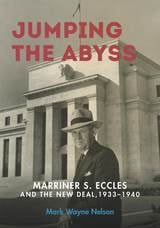
Jumping the Abyss
Marriner S. Eccles and the New Deal, 1933–1940Mark Wayne Nelson
University of Utah Press, 2017
Mark Wayne Nelson details the efforts of one of America’s most underappreciated public servants. In 1934, Franklin D. Roosevelt invited Marriner S. Eccles, a Mormon from Utah, to join his administration. As a Republican businessman, Eccles seemed an unlikely candidate for the role of leading crusader for a fairer and more economically sound distribution of the nation’s wealth. From his first position in the Treasury Department, though, he emerged as the central mover in revolutionizing the mortgage structure of the private home market in the United States.
After FDR appointed him to head the Federal Reserve, Eccles drafted legislation that restructured that institution as well. Throughout the remainder of the New Deal, he was the most powerful advocate of what came to be called “Keynesian Policy,” which involved direct federal stimulus of the economy. Presenting the first comprehensive and independent analysis of Eccles’s influential career, Jumping the Abyss wrestles with economic issues that remain relevant today.
Finalist for the Utah State Historical Society Best Book Award.
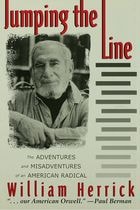
Jumping the Line
The Adventures and Misadventures of an American RadicalWilliam Herrick
University of Wisconsin Press, 1998
An eye-opening account of time served in the great battles of our century— for workers’ rights, against Fascism, Communism, and racism—Jumping the Line is the life story of an American original. William Herrick chronicles his adventures and misadventures on the front lines of the Spanish Civil War, in (and very much out of) the Communist Party, driving a tractor on a communal farm in Michigan, jumping the line as a hobo, organizing African American sharecroppers in Georgia, at work with Orson Welles, and immersed in his own writing.
Herrick chronicles a life of great conviction and great disillusion. He went to Spain in 1936 to fight against the Fascists and there witnessed the horrifying acts that Fascists and Communists alike committed, before he was felled by a near-fatal wound. Here he tells about the life that led him, a working-class Jewish kid from New York, into the idealism and then the murky politics of this internecine conflict. From the bloody fight in Spain he takes us to the battlefields of the Communist movement in the U.S., where he found himself parading up and down the garment district of Manhattan, denouncing his former comrades.
When Paul Berman interviewed Herrick in the Village Voice in 1986, for the fiftieth anniversary of the Spanish Civil War, Herrick’s remarks so incensed other veterans of the Abraham Lincoln battalion that they picketed the paper. What William Herrick has to say doesn’t always go down easily. But for those who like the truth, with a dash of wit and a healthy dose of history, it can be exhilarating.
Junctures in Women's Leadership
Social MovementsTrigg, Mary K
Rutgers University Press, 2016
From Eleanor Roosevelt to feminist icon Gloria Steinem to HIV/AIDS activist Dazon Dixon Diallo, women have assumed leadership roles in struggles for social justice. How did these remarkable women ascend to positions of influence? And once in power, what leadership strategies did they use to deal with various challenges?
Junctures in Women’s Leadership
PoliticsJulie Des Jardins
Rutgers University Press, 2027
This collection profiles women in American politics who have demonstrated true leadership over the past 150 years—though this leadership has not always been recognized as such. These women have defied stereotypical caricatures and modeled effective ways to lead, even when they have not enjoyed formal access to voting or party politics, lost campaigns, or suffered scrutiny and harassment as public figures. Many of them have championed people and causes that their male counterparts have neglected, lending their lived experiences as women to fight for political action for underrepresented groups, and showing time and again that the personal really is political. Here we assess their political careers, not in terms of wins and losses, but rather in their ability to negotiate identity politics and shift conventional rules about how politicians lead.
This collection profiles such varied women as Jeannette Rankin, Shirley Chrisholm, Nancy Pelosi, Kamala Harris, Stacy Abrams, and Alexandria Ocasio-Cortez, among others. Whether they have recast gendered meanings around political ambition, broadened access to the political process, privileged principles over party loyalty, or prioritized issues over incumbency, each woman profiled here has wisdom to impart to new generations of American women who aspire to run for office or be involved in American politics.
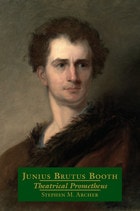
Junius Brutus Booth
Theatrical PrometheusStephen M. Archer
Southern Illinois University Press, 1992
In this, the first thoroughly researched scholarly biography of British actor Junius Brutus Booth, Stephen M. Archer reveals Booth to have been an artist of considerable range and a man of sensitivity and intellect. Archer provides a clear account of Booth’s professional and personal life and places him in relationship to his contemporaries, particularly Edmund Kean and William Charles Macready.
The worldwide fame assured for the Booth family of actors by John Wilkes Booth’s bone-shattering leap from the President’s box had eluded Junius Brutus Booth throughout his lifelong exile in America. But from that event until today, no American family of actors has stimulated such scrutiny as the Booths.
Eight years of research, pursuing Booth from Amsterdam to San Francisco, has resulted in an accurate, fascinating narrative that both records and illuminates the actor’s life.
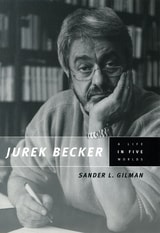
Jurek Becker
A Life in Five WorldsSander L. Gilman
University of Chicago Press, 2003
In the first biography of this fascinating figure, Sander Gilman tells the story of Becker's life in five worlds: the Polish-Jewish middle-class neighborhood where Becker was born; the Warsaw ghetto and the concentration camps where Becker spent his childhood; the socialist order of the GDR, which Becker idealized, resisted, and finally was forced to leave; the isolated world of West Berlin, where he settled down to continue his writing; and the new, reunified Germany, for which Becker served as both conscience and inspiration.
Gilman was close friends with Becker for nearly thirty years, and his biography is based on unprecedented access to both the man and his papers. As Gilman reveals, Becker's story encapsulates the fractured experience of life in twentieth-century Europe, a time and place in which political systems and national borders were constantly in flux. The life of Becker, we learn, was one of great literary achievement and notoriety, but it was also one of profound cultural dislocation. An important theme in the book is Becker's struggle with his Jewishness, an identity he repressed in socialist East Germany, but embraced after reunification, when he found himself at the center of Jewish culture and literature.
Sander Gilman's story of Jurek Becker is biography of the highest order, a portrait of an extraordinarily gifted artist whose hope and courage are manifested in his legacy as one of the greatest German writers of the past century.
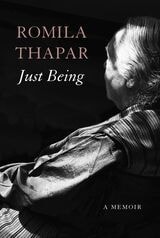
Just Being
A MemoirRomila Thapar
Seagull Books, 2026
In Just Being, historian Romila Thapar invites us into her illustrious world—a rich, extensive memoir from a scholar who has profoundly shaped our understanding of India’s past and present.
From her childhood growing up in British India, through her years of education in London, her extensive travels to archaeological sites across Asia and beyond, and her trailblazing role in shaping the Centre for Historical Studies at Jawaharlal Nehru University, Thapar reflects on a life lived in the service of inquiry and education. Composed over the past few years, Just Being is a testimony to Thapar’s ability to view herself within the larger flow of history, and to illumine it with a scholar’s depth and a storyteller’s sensitivity. It reveals not only an extraordinary, boundary-defying life but a profound conviction that understanding our past in the light of irrefutable evidence is essential to an insight into the present and to shaping a more thoughtful future.
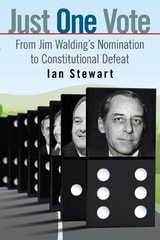
Just One Vote
From Jim Walding's Nomination to Constitutional DefeatIan Stewart
University of Manitoba Press, 2009
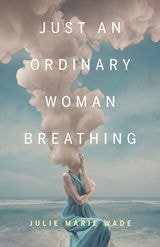
Just an Ordinary Woman Breathing
Julie Marie Wade
The Ohio State University Press, 2020
Finalist for the Publishing Triangle's Judy Grahn Award for Lesbian Nonfiction
You have a history, and a body. You are a history, and a body. Your body has (is) a history, too. As a girl, Julie Marie Wade was uninterested in makeup, boy-watching, and other trappings of conventional girlhood, much to her mother’s disappointment. Grace Kelly and Marilyn Monroe—movie stars immortalized as feminine ideals, even as they both died tragically and young—were lodestars that threw Wade’s own definition of beauty into relief as she stumbled into adulthood.
Now, in Just an Ordinary Woman Breathing, Wade traces the intimate story of coming of age in one particular body (as a lesbian, an only child, a Protestant attending Catholic school). She uses the language and tenets of music, math, religion, fairy tales, poetry, and art to reckon with the many facets of embodiment, sexuality, and love in our contemporary world. The diet industry, popular culture, and her own family all provide rich material for what is ultimately a lyrical and unflinching investigation into the questions that prickle deep within the human heart.
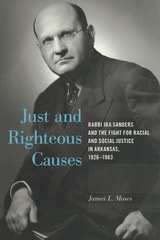
Just and Righteous Causes
Rabbi Ira Sanders and the Fight for Racial and Social Justice in Arkansas, 1926-1963James L. Moses
University of Arkansas Press, 2018
Winner, 2019 Booker Worthen Prize from the Central Arkansas Library System.
A dedicated advocate for social justice long before the term entered everyday usage, Rabbi Ira Sanders began striving against the Jim Crow system soon after he arrived in Little Rock from New York in 1926. Sanders, who led Little Rock’s Temple B’nai Israel for nearly forty years, was a trained social worker as well as a rabbi and his career as a dynamic religious and community leader in Little Rock spanned the traumas of the Great Depression, World War II and the Holocaust, and the social and racial struggles of the 1950s and 1960s.
Just and Righteous Causes—a full biographical study of this bold social-activist rabbi—examines how Sanders expertly navigated the intersections of race, religion, and gender to advocate for a more just society. It joins a growing body of literature about the lives and histories of Southern rabbis, deftly balancing scholarly and narrative tones to provide a personal look into the complicated position of the Southern rabbi and the Jewish community throughout the political struggles of the twentieth-century South.
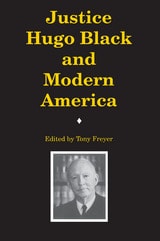
Justice Hugo Black and Modern America
Tony Freyer
University of Alabama Press, 1990
Reexamining the Justice Who Helped Shape Modern Constitutional America.
The struggle to accommodate both individual freedom and community welfare shaped modern America. American have disagreed about whether federal protection of national welfare could be reconciled with defense of individual rights; however, no public figure worked longer or more consistently to meet this challenge than Alabama’s Hugo L. Black
This collection of essays, reprints of the spring 1985 and winter 1987 issues of the Alabama Law Review with a new introduction and minor revisions, suggests that Black’s constitutional principles and personal values provided a means to achieve a balance between majority will and individual freedom. Black’s life and career are reexamined here by leading scholars and jurors in the first major study in twenty years, tracing his relationship to the South, to the development of American liberalism, and to the constitutional revolution in individual rights.