Results by title
336 books match the query 'Age' and 2 start with k
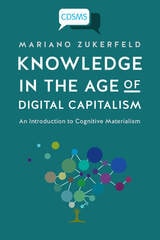
Knowledge in the Age of Digital Capitalism
An Introduction to Cognitive MaterialismMariano Zukerfeld
University of Westminster Press, 2017
Author Mariano Zukerfeld was awarded the best book prize by The Association ESOCITE (Asociación Latinamericana de Estudios Sociales de la Cience y la Tecnología).
“the book is a refreshing, dynamic approach leading back into discussions which have been neglected during the last 20 years.” -https://www.triple-c.at/index.php/tripleC/article/view/971
Knowledge in the Age of Digital Capitalism proposes a new critical theory concerning the functioning of capitalism and how we consider knowledge and information. This ambitious book systematically and lucidly introduces contemporary phenomena into the framework of cognitive materialism to address some of the great themes of the social sciences: knowledge, exploitation and social class in an account of capitalism's totality in the present day. Author Mariano Zukerfeld reinvigorates materialist study of communications, presenting a typology of knowledge to explain the underlying material forms of information, intellectual property and cognitive work in contemporary societies. Using current examples the book also examines concerns such as free labour and the pivotal role of intellectual property. The book offers nothing less than an introduction to the theory of cognitive materialism and an account of the entirety of the digital (or knowledge) capitalism of our time.
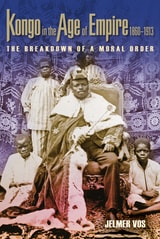
Kongo in the Age of Empire, 1860–1913
The Breakdown of a Moral OrderJelmer Vos
University of Wisconsin Press, 2015
Vos underlines that Kongo's incorporation in the European state system also had tragic consequences, including the undermining of local African structures of authority—on which the colonial system actually depended. Kongo in the Age of Empire carefully documents the involvement of Kongo's royal court in the exercise of Portuguese rule in northern Angola and the ways that Kongo citizens experienced colonial rule as an increasingly illegitimate extension of royal power.