501 books match the query 'Catholic Church' and 3 start with k
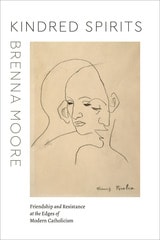
cover of Kindred Spirits: Friendship and Resistance at the Edges of Modern Catholicism

Kindred Spirits

Friendship and Resistance at the Edges of Modern Catholicism

Brenna Moore

University of Chicago Press, 2021

Kindred Spirits takes us inside a remarkable network of Catholic historians, theologians, poets, and activists who pushed against both the far-right surge in interwar Europe and the secularizing tendencies of the leftist movements active in the early to mid-twentieth century. With meticulous attention to the complexity of real lives, Brenna Moore explores how this group sought a middle way anchored in “spiritual friendship”—religiously meaningful friendship understood as uniquely capable of facing social and political challenges.

For this group, spiritual friendship was inseparable from resistance to European xenophobia and nationalism, anti-racist activism in the United States, and solidarity with Muslims during the Algerian War. Friendship, they believed, was a key to both divine and human realms, a means of accessing the transcendent while also engaging with our social and political existence. Some of the figures are still well known—philosopher Jacques Maritain, Nobel Prize laureate Gabriela Mistral, influential Islamicist Louis Massignon, poet of the Harlem renaissance Claude McKay—while others have unjustly faded from memory. Much more than an idealized portrait of a remarkable group of Catholic intellectuals from the past, Kindred Spirits is a compelling exploration of both the beauty and flaws of a vibrant social network worth remembering.
[more]
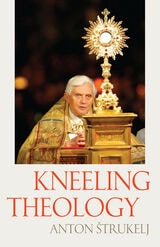
cover of Kneeling Theology

Kneeling Theology

Anton Strukelj

Catholic University of America Press, 2022
Anton Štrukelj, in this English edition of his book Kneeling Theology, which was published in German, Italian, Polish, Russian and Slovenian, based his theme on the concept first developed by Hans Urs von Balthasar. This Swiss intellectual is considered one of the most important theologians of the 20th century. Štrukelj sees as his task, through a synthetic survey of questions, to seek from his subjects a holistic perspective regarding the role of the theologian, without doing a critical analysis of all their work. Kneeling Theology analyzes the process and its consequences that gave rise to the religious and cultural developments of the past and the present. It is his thesis that the essence of theology should flow from holiness. He relies for his evidence on the life and work of Hans Urs von Balthasar (which included the insights of Adrienne von Speyr, physician and mystic), Cardinal Joseph Ratzinger (Pope Benedict XVI), the Slovenian theologian Anton Strle (now servant of God) and Anton Vovk, former Archbishop of Ljubljana, fearless witness of Christ and his Church, also servant of God. Štrukelj's purpose with this book is to point out that Catholic theology is best served, not only by competent research and a thorough knowledge of Church tradition, but by theologians who approach their work prayerfully and on their knees. The rich theological and pastoral heritage that has been bequeathed to us by a small group of special people in this book has come about because of their scholarship and their holiness. They have, each in their own way, demonstrated what it means to do theology on their knees, and they have shared their scholarship and insights with us.
[more]
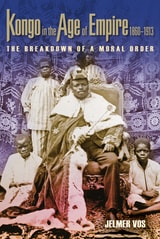
cover of Kongo in the Age of Empire, 1860–1913: The Breakdown of a Moral Order

Kongo in the Age of Empire, 1860–1913

The Breakdown of a Moral Order

Jelmer Vos

University of Wisconsin Press, 2015

This richly documented account of the arrival of rubber traders, new Christian missionaries, and the Portuguese colonial state in the Kongo realm is told from the perspective of the kingdom's inhabitants. Jelmer Vos shows that both Africans and Europeans were able to forward differing social, political, and economic agendas as Kongo's sacred city of São Salvador became a vital site for the expansion of European imperialism in Central Africa. Kongo people, he argues, built on the kingdom's long familiarity with Atlantic commerce and cultures to become avid intermediaries in a new system of colonial trade and mission schools.

Vos underlines that Kongo's incorporation in the European state system also had tragic consequences, including the undermining of local African structures of authority—on which the colonial system actually depended. Kongo in the Age of Empire carefully documents the involvement of Kongo's royal court in the exercise of Portuguese rule in northern Angola and the ways that Kongo citizens experienced colonial rule as an increasingly illegitimate extension of royal power.

[more]