Results by title
8 books match the query 'Commodities'
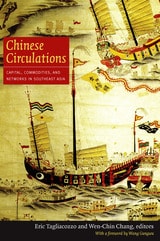
Chinese Circulations
Capital, Commodities, and Networks in Southeast AsiaEric Tagliacozzo and Wen-Chin Chang, eds.
Duke University Press, 2011
Contributors. Leonard Blussé, Wen-Chin Chang, Lucille Chia, Bien Chiang, Nola Cooke, Jean DeBernardi, C. Patterson Giersch, Takeshi Hamashita, Kwee Hui Kian, Li Tana, Lin Man-houng, Masuda Erika, Adam McKeown, Anthony Reid , Sun Laichen, Heather Sutherland, Eric Tagliacozzo, Carl A. Trocki, Wang Gungwu, Kevin Woods, Wu Xiao

Commodities of Care
The Business of HIV Testing in ChinaElsa L. Fan
University of Minnesota Press, 2021
How global health practices can end up reorganizing practices of care for the people and communities they seek to serve
Commodities of Care examines the unanticipated effects of global health interventions, ideas, and practices as they unfold in communities of men who have sex with men (MSM) in China. Targeted for the scaling-up of HIV testing, Elsa L. Fan examines how the impact of this initiative has transformed these men from subjects of care into commodities of care: through the use of performance-based financing tied to HIV testing, MSM have become a source of economic and political capital.
In ethnographic detail, Fan shows how this particular program, ushered in by global health donors, became the prevailing strategy to control the epidemic in China in the late 2000s. Fan examines the implementation of MSM testing and its effects among these men, arguing that the intervention produced new markets of men, driven by the push to meet testing metrics.
Fan shows how men who have sex with men in China came to see themselves as part of a global “MSM” category, adopting new selfhoods and socialities inextricably tied to HIV and to testing. Wider trends in global health programming have shaped national public health responses in China and, this book reveals, have radically altered the ways health, disease, and care are addressed.
Gifts and Commodities
C. A. Gregory
HAU, 2015
Christopher A. Gregory’s Gifts and Commodities is one of the undisputed classics of economic anthropology. On its publication in 1982, it spurred intense, ongoing debates about gifts and gifting, value, exchange, and the place of political economy in anthropology.
Gifts and Commodities is, at once, a critique of neoclassical economics and development theory, a critical history of colonial Papua New Guinea, and a comparative ethnography of exchange in Melanesian societies. This new edition includes a foreword by anthropologist Marilyn Strathern and a new preface by the author that discusses the ongoing response to the book and the debates it has engendered, debates that have become more salient in our evermore neoliberal and globalized era.
How to Think about Information
Dan Schiller
University of Illinois Press, 2006
It is common wisdom that the U.S. economy has adapted to losses in its manufacturing base because of the booming information sector, with high-paying jobs for everything from wireless networks to video games. We are told we live in the Information Age, in which communications networks and media and information services drive the larger economy. While the Information Age may have looked sunny in the beginning, as it has developed it looks increasingly ominous: its economy and benefits grow more and more centralized--and in the United States, it has become less and less subject to democratic oversight.
Corporations around the world have identified the value of information and are now seeking to control its production, transmission, and consumption. In How to Think about Information, Dan Schiller explores the ways information has been increasingly commodified as a result and how it both resembles and differs from other commodities. Through a linked series of theoretical, historical, and contemporary studies, Schiller reveals this commodification as both dynamic and expansionary, but also deeply conflicted and uncertain. He examines the transformative political and economic changes occurring throughout the informational realm and analyzes key dimensions of the process, including the buildup of new technological platforms, the growth of a transnationalizing culture industry, and the role played by China as it reinserts itself into an informationalized capitalism.
Organic Coffee
Sustainable Development by Mayan FarmersMaria Elena Martinez-Torres
Ohio University Press, 2006
Maria Elena Martinez-Torres explains how Mayan farmers have built upon their ethnic networks to make a crucial change in their approach to agriculture. Taking us inside Chiapas, Mexico's poorest state and scene of the 1994 Zapatista uprising, she examines the anatomy of the ongoing organic coffee boom and the fair-trade movement. The organic coffee boom arose as very poor farmers formed cooperatives, revalued their ethnic identity, and improved their land through organic farming. The result has been significant economic benefits for their families and ecological benefits for the future sustainability of agriculture in the region.
Organic Coffee refutes the myth that organic farming is less productive than chemical-based agriculture and gives us reasons to be hopeful for indigenous peoples and peasant farmers
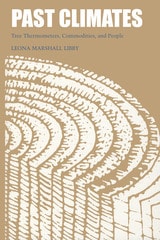
Past Climates
Tree Thermometers, Commodities, and PeopleBy Leona Marshall Libby
University of Texas Press, 1983
Leona Marshall Libby was a pioneer in modern climatic research, a field that gained great impetus in the late twentieth century because of the promise it holds for predicting future climatic trends. Libby’s work led to remarkable new procedures for investigating long-term changes in precipitation and temperature and thereby greatly expanding our knowledge of past climates.
As Professor Rainer Berger writes in his foreword:
“In recent years, tree ring–based temperature data have been collected which go far beyond the records available to historians. These data can be analyzed by Fourier transforms which identify certain periodicities. . . . Climatic changes detected by tree rings have been checked against historic records. . . . The correspondence is astonishing. . . .
“At present weather forecasting is becoming more accurate for periods on the order of days, weeks, and months. Climatic prognoses have also been attempted for very long times of tens of thousands of years. But the intermediate range in the decades and centuries has so far been an enigma. It is here where tree ring thermometry plays its trump cards.
“. . . Its potential is enormous in assessing worldwide crop yields, water inventory, heating requirements, stockpiling policies, and construction planning as well as political and military prospects.”
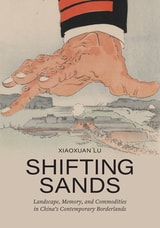
Shifting Sands
Landscape, Memory, and Commodities in China's Contemporary BorderlandsXiaoxuan Lu
University of Texas Press, 2023
How China’s borderlands transformed politically and culturally throughout the twentieth and twenty-first centuries.
China’s land borders, shared with fourteen other nations, are the world’s longest. Like all borders, they are not just lines on a map but also spaces whose histories and futures are defined by their frontier status. An ambitious appraisal of China’s borderlands, Shifting Sands addresses the full scope and importance of these regions, illustrating their transformation from imperial backwaters to hotbeds of resource exploitation and human development in the age of neoliberal globalization.
Xiaoxuan Lu brings to bear an original combination of archival research, fieldwork, cartography, and landscape analysis, broadening our understanding of the political economy and cultural changes in China’s borderlands in the twentieth and twenty-first centuries. While conventional wisdom looks to the era of Deng Xiaoping for China’s “opening,” Lu shows the integration of China’s borderlands into national and international networks from Sun Yat-sen onward. Yet, while the state has left a firm imprint on the borderlands, they were hardly created by China alone. As the Chinese case demonstrates, all borderlands are transnational, their physical and socioeconomic landscapes shaped by multidirectional flows of materials, ideas, and people.

Territories, Commodities and Knowledges
Latin American Environmental Histories in the Nineteenth and Twentieth CenturiesEdited by Christian Brannstrom
University of London Press, 2004
Contributors include Stephen Bell (UCLA, USA), Reinaldo Funes Monzote (Fundacion Antonio Nunez Jimenez de la Naturaleza y el Hombre, Cuba), Stefania Gallini (Universidad Nacional, Colombia), Nikolas Kozloff (CUNY Brooklyn College, USA), Karl Offen (University of Oklahoma, USA), John Soluri (Carnegie-Mellon University, USA), Alejandro Tortolero Villasenor (Universidad Autonoma Metropolitana-Iztapalapa, Mexico), and Robert W. Wilcox (Northern Kentucky University, USA).