Results by title
3745 books match the query 'Europe' and 19 start with k
Kabbalistic Revolution
Reimagining Judaism in Medieval SpainLachter, Hartley
Rutgers University Press, 2014
Kafka's Prague
Klaus Wagenbach
Haus Publishing, 2020
Drawing from a range of documents and historical materials, this is the first book specifically dedicated to the relationship between Kafka and Prague. Klaus Wagenbach’s account of Kafka’s life in the city is a meticulously researched insight into the author’s family background, his education and employment, his attitude toward the town of his birth, his literary influences, and his relationships with women. The result is a fascinating portrait of the twentieth century’s most enigmatic writer and the city that provided him with so much inspiration. W. G. Sebald recognized that “literary and life experience overlap” in Kafka’s works, and the same is true of this book.
Karl Renner
AustriaJamie Bulloch
Haus Publishing, 2009
Karolyi & Bethlen
HungaryBryan Cartledge
Haus Publishing, 2009
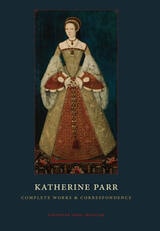
Katherine Parr
Complete Works and CorrespondenceKatherine Parr
University of Chicago Press, 2011
To the extent that she is popularly known, Katherine Parr (1512–48) is the woman who survived King Henry VIII as his sixth and last wife. She merits far greater recognition, however, on several other fronts. Fluent in French, Italian, and Latin, Parr also began, out of necessity, to learn Spanish when she ascended to the throne in 1543. As Henry’s wife and queen of England, she was a noted patron of the arts and music and took a personal interest in the education of her stepchildren, Princesses Mary and Elizabeth and Prince Edward. Above all, Parr commands interest for her literary labors: she was the first woman to publish under her own name in English in England.
For this new edition, Janel Mueller has assembled the four publications attributed to Parr—Psalms or Prayers, Prayers or Meditations, The Lamentation of a Sinner, and a compilation of prayers and Biblical excerpts written in her hand—as well as her extensive correspondence, which is collected here for the first time. Mueller brings to this volume a wealth of knowledge of sixteenth-century English culture. She marshals the impeccable skills of a textual scholar in rendering Parr’s sixteenth-century English for modern readers and provides useful background on the circumstances of and references in Parr’s letters and compositions. Given its scope and ambition, Katherine Parr: Complete Works and Correspondence will be an event for the English publishing world and will make an immediate contribution to the fields of sixteenth-century literature, reformation studies, women’s writing, and Tudor politics.
Key Concepts of Romanian History
Alternative Approaches to Socio-Political LanguagesVictor Neumann
Central European University Press, 2013
Khaki and Blue
Military and Police in British Colonial AfricaAnthony Clayton
Ohio University Press, 1989
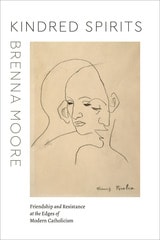
Kindred Spirits
Friendship and Resistance at the Edges of Modern CatholicismBrenna Moore
University of Chicago Press, 2021
Kindred Spirits takes us inside a remarkable network of Catholic historians, theologians, poets, and activists who pushed against both the far-right surge in interwar Europe and the secularizing tendencies of the leftist movements active in the early to mid-twentieth century. With meticulous attention to the complexity of real lives, Brenna Moore explores how this group sought a middle way anchored in “spiritual friendship”—religiously meaningful friendship understood as uniquely capable of facing social and political challenges.
For this group, spiritual friendship was inseparable from resistance to European xenophobia and nationalism, anti-racist activism in the United States, and solidarity with Muslims during the Algerian War. Friendship, they believed, was a key to both divine and human realms, a means of accessing the transcendent while also engaging with our social and political existence. Some of the figures are still well known—philosopher Jacques Maritain, Nobel Prize laureate Gabriela Mistral, influential Islamicist Louis Massignon, poet of the Harlem renaissance Claude McKay—while others have unjustly faded from memory. Much more than an idealized portrait of a remarkable group of Catholic intellectuals from the past, Kindred Spirits is a compelling exploration of both the beauty and flaws of a vibrant social network worth remembering.
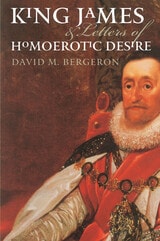
King James and Letters of Homoerotic Desire
David M. Bergeron
University of Iowa Press, 1999
What can we know of the private lives of early British sovereigns? Through the unusually large number of letters that survive from King James VI of Scotland/James I of England (1566-1625), we can know a great deal. Using original letters, primarily from the British Library and the National Library of Scotland, David Bergeron creatively argues that James' correspondence with certain men in his court constitutes a gospel of homoerotic desire. Bergeron grounds his provocative study on an examination of the tradition of letter writing during the Renaissance and draws a connection between homosexual desire and letter writing during that historical period.
King James, commissioner of the Bible translation that bears his name, corresponded with three principal male favorites—Esmé Stuart (Lennox), Robert Carr (Somerset), and George Villiers (Buckingham). Esmé Stuart, James' older French cousin, arrived in Scotland in 1579 and became an intimate adviser and friend to the adolescent king. Though Esmé was eventually forced into exile by Scottish nobles, his letters to James survive, as does James' hauntingly allegorical poem Phoenix. The king's close relationship with Carr began in 1607. James' letters to Carr reveal remarkable outbursts of sexual frustration and passion.
A large collection of letters exchanged between James and Buckingham in the 1620s provides the clearest evidence for James' homoerotic desires. During a protracted separation in 1623, letters between the two raced back and forth. These artful, self-conscious letters explore themes of absence, the pleasure of letters, and a preoccupation with the body. Familial and sexual terms become wonderfully intertwined, as when James greets Buckingham as "my sweet child and wife."
King James and Letters of Homoerotic Desire presents a modern-spelling edition of seventy-five letters exchanged between Buckingham and James. Across the centuries, commentators have condemned the letters as indecent or repulsive. Bergeron argues that on the contrary they reveal an inward desire of king and subject in a mutual exchange of love.
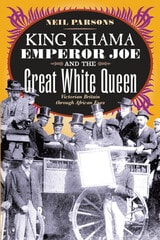
King Khama, Emperor Joe, and the Great White Queen
Victorian Britain through African EyesNeil Parsons
University of Chicago Press, 1997
The chiefs initially went to England to persuade Queen Victoria not to give their lands to ruthless Rhodes and his British South Africa Company. Abandoned by the Secretary of State for the Colonies, Joseph Chamberlain, and denied an audience with the queen, the three rulers decided to tour the British Isles to plead their case to the populace. Appealing to the middle-class morality of Victorian society, the chiefs were remarkably successful in gaining support, eventually swaying Chamberlain into drafting the agreement that secured their territories against the encroachment of Rhodesia.
Historian Neil Parsons has reconstructed this journey with the help of African archival materials and news clippings from British papers, garnered from the clippings service the chiefs had the foresight to employ. In equal parts narrative of pilgrimage, voyage of discovery, and colonial resistance, King Khama, Emperor Joe, and the Great White Queen provides a view from the other side of colonialism and imperialism. It demonstrates the nuances of cultural and religious interaction between Africans and Europeans, and it does so with the richness and depth of a fully realized novel.
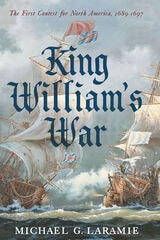
King William's War
The First Contest for North America, 1689–1697Michael Laramie
Westholme Publishing, 2027
Fought in New York, New England, and Canada, the Conflict that Began the Long French and English Struggle for the New World
While much has been written on the French and Indian War of 1754–1763, the colonial conflicts that preceded it have received comparatively little attention. Yet in King William’s War, the first clash between England and France for control of North America, the patterns of conflict for the next seventy years were laid, as were the goals and objectives of both sides, as well as the realization that the colonies of the two nations could not coexist.
King William’s War actually encompassed several proxy wars being fought by the English and the French through their native allies. The Beaver Wars was a long running feud between the Iroquois Confederacy, New France, and New France’s native allies over control of the lucrative fur trade. Fueled by English guns and money, the Iroquois attempted to divert the French fur trade towards their English trading partners in Albany, and in the process gain control over other Indian tribes. To the east the pro-French Wabanaki of Maine, Nova Scotia, and New Brunswick had earlier fought a war with New England, but English expansion and French urgings, aided by foolish moves and political blunders on the part of New England, erupted into a second Wabanaki War on the eve of King William’s War. Thus, these two conflicts officially became one with the arrival of news of a declaration of war between France and England in 1689. The next nine years saw coordinated attacks, including French assaults on Schenectady, New York, and Massachusetts, and English attacks around Montreal and on Nova Scotia. The war ended diplomatically, but started again five years later in Queen Anne’s War.
A riveting history full of memorable characters and events, and supported by extensive primary source material, King William’s War: The First Contest for North America, 1689–1697 by Michael G. Laramie is the first book-length treatment of a war that proved crucial to the future of North America.
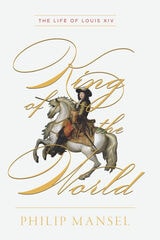
King of the World
The Life of Louis XIVPhilip Mansel
University of Chicago Press, 2020
Philip Mansel’s King of the World is the most comprehensive and up-to-date biography in English of this hypnotic, flawed figure who continues to captivate our attention. This lively work takes Louis outside Versailles and shows the true extent of his global ambitions, with stops in London, Madrid, Constantinople, Bangkok, and beyond. We witness the importance of his alliance with the Spanish crown and his success in securing Spain for his descendants, his enmity with England, and his relations with the rest of Europe, as well as Asia, Africa, and the Americas. We also see the king’s effect on the two great global diasporas of Huguenots and Jacobites, and their influence on him as he failed in his brutal attempts to stop Protestants from leaving France. Along the way, we are enveloped in the splendor of Louis’s court and the fascinating cast of characters who prostrated and plotted within it.
King of the World is exceptionally researched, drawing on international archives and incorporating sources who knew the king intimately, including the newly released correspondence of Louis’s second wife, Madame de Maintenon. Mansel’s narrative flair is a perfect match for this grand figure, and he brings the Sun King’s world to vivid life.
This is a global biography of a global king, whose power was extensive but also limited by laws and circumstances, and whose interests and ambitions stretched far beyond his homeland. Through it all, we watch Louis XIV progressively turn from a dazzling, attractive young king to a belligerent reactionary who sets France on the path to 1789. It is a convincing and compelling portrait of a man who, three hundred years after his death, still epitomizes the idea of le grand monarque.
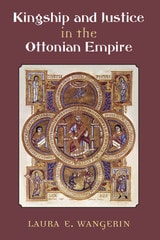
Kingship and Justice in the Ottonian Empire
Laura E. Wangerin
University of Michigan Press, 2019
Scholars have recognized the importance of ritual and symbolic behaviors in the Ottonian political sphere, while puzzling over the apparent lack of administrative organization, a contradiction between what we know about the Ottonians as successful rulers and their traditional characterization as rulers of a disorganized polity. Trying to account for the apparent disparity between their political and military achievements, cultural and artistic efflorescence, and relative dynastic stability, which seemingly accompanied a disinterest in writing law or creating a centralized hierarchical administration, is a tension that persists in the scholarship. This book argues that far from being accidental successes or employing primitive methods of governance, the Ottonians were shrewd rulers and administrators who exploited traditional methods of conflict resolution and delegated jurisdictional authority to keep control over their vast empire. Thus, one of the important things that this book aims to accomplish is to challenge our preconceived notions of what successful government looks like.
Kiss My Relics
Hermaphroditic Fictions of the Middle AgesDavid Rollo
University of Chicago Press, 2011
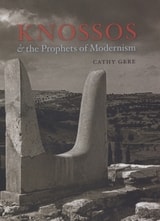
Knossos and the Prophets of Modernism
Cathy Gere
University of Chicago Press, 2009
In the spring of 1900, British archaeologist Arthur Evans began to excavate the palace of Knossos on Crete, bringing ancient Greek legends to life just as a new century dawned amid far-reaching questions about human history, art, and culture. With Knossos and the Prophets of Modernism, Cathy Gere relates the fascinating story of Evans’s excavation and its long-term effects on Western culture. After the World War I left the Enlightenment dream in tatters, the lost paradise that Evans offered in the concrete labyrinth—pacifist and matriarchal, pagan and cosmic—seemed to offer a new way forward for writers, artists, and thinkers such as Sigmund Freud, James Joyce, Giorgio de Chirico, Robert Graves, and Hilda Doolittle.
Assembling a brilliant, talented, and eccentric cast at a moment of tremendous intellectual vitality and wrenching change, Cathy Gere paints an unforgettable portrait of the age of concrete and the birth of modernism.
Knots, or the Violence of Desire in Renaissance Florence
Emanuele Lugli
University of Chicago Press, 2023
In this innovative cultural history, hair is the portal through which Emanuele Lugli accesses the cultural production of Lorenzo il Magnifico’s Florence. Lugli reflects on the ways writers, doctors, and artists expressed religious prejudices, health beliefs, and gender and class subjugation through alluring works of art, in medical and political writings, and in poetry. He considers what may have compelled Sandro Botticelli, the young Leonardo da Vinci, and dozens of their contemporaries to obsess over braids, knots, and hairdos by examining their engagement with scientific, philosophical, and theological practices.
By studying hundreds of fifteenth-century documents that engage with hair, Lugli foregrounds hair’s association to death and gathers insights about human life at a time when Renaissance thinkers redefined what it meant to be human and to be alive. Lugli uncovers overlooked perceptions of hair when it came to be identified as a potential vector for liberating culture, and he corrects a centuries-old prejudice that sees hair as a trivial subject, relegated to passing fashion or the decorative. He shows hair, instead, to be at the heart of Florentine culture, whose inherent violence Lugli reveals by prompting questions about the entanglement of politics and desire.
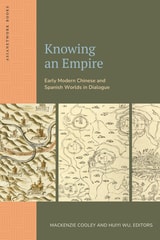
Knowing an Empire
Early Modern Chinese and Spanish Worlds in DialogueEdited by Mackenzie Cooley and Huiyi Wu
Lever Press, 2025
Knowing an Empire does not see the conveyance of information across an empire as a top-down process with an active center as a knowledge-maker. Instead, it amplifies a blend of voices that speak as much to imperial bureaucracy as to the rich local and Indigenous cultures, revealing these two early modern empires as diverse polities whose equilibria were constantly rebalanced among local powers. Comprised of 18 chapters, this edited collection reflects on the historical evolution and inner structures of the imperial epistemologies, as well as the many ways historians today read difangzhi and relaciones geográficas to understand the spatial, natural, and social order in both the Chinese and the Spanish empires. At once a comparative and a connected history, it places Chinese and Spanish imperial knowledge in the globalizing early modern world, highlighting the migration of people, goods, and ideas and revealing how these wide-ranging influences are reflected—or not—in the difangzhi and the relaciones. The book concludes by broadening our scope beyond China and Spain to reflect how other early modern empires, such as the Portuguese, failed to develop such systematized imperial genres.
With contributions from leading scholars across Latin American and Asian Studies, this book synthesizes political, environmental, and socio-economic history with historical anthropology to highlight parallel governance and knowledge structures. The contributors challenge conventional binaries of Western versus Eastern, and colonial versus non-colonial, presenting a nuanced perspective of early modern empires as dynamic, interconnected entities through the shared challenges of scale, diversity, and increasing globalization. Through these dialogues, Knowing an Empire illuminates the complex entanglement of ruling and understanding. This groundbreaking collection offers a highly innovative and dialogic approach to comparative studies of empires, with major implications for Asian, European, Latin American, transnational, and global history.
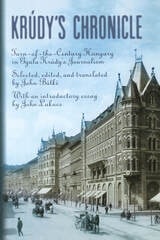
Krúdy's Chronicles
Turn-of-the-Century Hungary in Gyula Krudy's JournalismJohn Batki
Central European University Press, 2000
Written during the 1910s '20s and '30s, these articles offer a wistful and nostalgic image of the waning years of the Austro-Hungarian empire, with portraits of the Habsburgs, culminating in first-hand reports in 1916, from Vienna on the funeral of Emperor Francis Joseph I, and from Budapest on the coronation of Charles IV, the last king of Hungary. Krúdy's reports follow the bloodless democratic revolution of 1918, the Károlyi government and the short-lived Soviet Republic, and present cameos of the leading political figures of the day such as Ferenc Kossuth, Mihály Károlyi and Béla Kun.
In his lively, casual pieces Krúdy displays his intimate knowledge of Hungarian society with a special emphasis on literature and publishing.

Kurt Schwitters
Space, Image, ExileMegan R. Luke
University of Chicago Press, 2014