Results by title
5448 books match the query 'History and criticism' and 27 start with k

Kafka Goes to the Movies
Hanns Zischler
University of Chicago Press, 2002
Since many of Kafka's visits to the cinema occurred during bachelor trips with Max Brod, Zischler's research took him not only to Kafka's native Prague but to film archives in Munich, Milan, and Paris. Matching Kafka's cinematic references to reviews and stills from daily papers, Zischler hunted down rare films in collections all across Europe. A labor of love, then, by a true man of the cinema, Kafka Goes to the Movies brims with discoveries about the pioneering years of European film. With a wealth of illustrations, including reproductions of movie posters and other rare materials, Zischler opens a fascinating window onto movies that have been long forgotten or assumed lost.
But the real highlights of the book are those about Kafka himself. Long considered one of the most enigmatic figures in literature, the Kafka that emerges in this work is strikingly human. Kafka Goes to the Movies offers an absorbing look at a witty, passionate, and indulgently curious writer, one who discovered and used the cinema as a place of enjoyment and escape, as a medium for the ambivalent encounter with modern life, and as a filter for the changing world around him.
Kafka’s Blues
Figurations of Racial Blackness in the Construction of an AestheticMark Christian Thompson
Northwestern University Press, 2016
Kaija Saariaho
Pirkko Moisala
University of Illinois Press, 2008
Kaqchikel Chronicles
The Definitive EditionWith translation and exegesis by Judith M. Maxwell and Robert M. Hill II
University of Texas Press, 2006
The collection of documents known as the Kaqchikel Chronicles consists of rare highland Maya texts, which trace Kaqchikel Maya history from their legendary departure from Tollan/Tula through their migrations, wars, the Spanish invasion, and the first century of Spanish colonial rule. The texts represent a variety of genres, including formal narrative, continuous year-count annals, contribution records, genealogies, and land disputes.
While the Kaqchikel Chronicles have been known to scholars for many years, this volume is the first and only translation of the texts in their entirety. The book includes two collections of documents, one known as the Annals of the Kaqchikels and the other as the Xpantzay Cartulary. The translation has been prepared by leading Mesoamericanists in collaboration with Kaqchikel-speaking linguistic scholars. It features interlinear glossing, which allows readers to follow the translators in the process of rendering colonial Kaqchikel into modern English. Extensive footnoting within the text restores the depth and texture of cultural context to the Chronicles. To put the translations in context, Judith Maxwell and Robert Hill have written a full scholarly introduction that provides the first modern linguistic discussion of the phonological, morphological, syntactic, and pragmatic structure of sixteenth-century Kaqchikel. The translators also tell a lively story of how these texts, which derive from pre-contact indigenous pictographic and cartographic histories, came to be converted into their present form.
Karawitan
Source Readings in Javanese Gamelan and Vocal Music, Volume 1Edited by Judith Becker with assistance from Alan H. Feinstein
University of Michigan Press, 1984
Karawitan
Source Readings in Javanese Gamelan and Vocal Music, Volume 2Edited by Judith Becker with assistance from Alan H. Feinstein
University of Michigan Press, 1987
Katherine Anne Porter's Ship of Fools
New Interpretations and Transatlantic ContextsThomas Austenfeld
University of North Texas Press, 2015
Keats's Odes
A Lover's DiscourseAnahid Nersessian
University of Chicago Press, 2021
In 1819, the poet John Keats wrote six poems that would become known as the Great Odes. Some of them—“Ode to a Nightingale,” “To Autumn”—are among the most celebrated poems in the English language. Anahid Nersessian here collects and elucidates each of the odes and offers a meditative, personal essay in response to each, revealing why these poems still have so much to say to us, especially in a time of ongoing political crisis. Her Keats is an unflinching antagonist of modern life—of capitalism, of the British Empire, of the destruction of the planet—as well as a passionate idealist for whom every poem is a love poem.
The book emerges from Nersessian’s lifelong attachment to Keats’s poetry; but more, it “is a love story: between me and Keats, and not just Keats.” Drawing on experiences from her own life, Nersessian celebrates Keats even as she grieves him and counts her own losses—and Nersessian, like Keats, has a passionate awareness of the reality of human suffering, but also a willingness to explore the possibility that the world, at least, could still be saved. Intimate and speculative, this brilliant mix of the poetic and the personal will find its home among the numerous fans of Keats’s enduring work.
Keats's Reading of the Romantic Poets
Beth Lau
University of Michigan Press, 1991
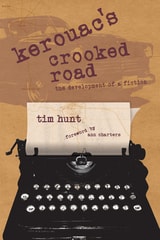
Kerouac's Crooked Road
The Development of a FictionTim Hunt
Southern Illinois University Press, 1996
Now a classic, Kerouac’s Crooked Road was one of the first critical works on the legendary Beat writer to analyze his work as serious literary art, placing it in the broader American literary tradition with canonical writers like Herman Melville and Mark Twain. Author Tim Hunt explores Kerouac’s creative process and puts his work in conversation with classic American literature and with critical theory.
This edition includes a new preface by the author, which takes a discerning look at the implications of the 2007 publication of the original typewriter scroll version of On the Road for the understanding of Kerouac and his novel. Although some critics see the scroll version of the novel as embodying Kerouac’s true artistic vision and the 1957 Viking edition as a commercialized compromise of that vision, Hunt argues that the two versions should not be viewed as antithetical but rather as discrete perspectives of a writer deeply immersed in writing as both performance and evolving process.
Hunt moves beyond the mythos surrounding the “spontaneous creation” of On the Road, which upholds Kerouac’s reputation as a cultural icon, to look more closely at an innovative writer who wanted to bridge the gap between the luscious, talk-filled world of real life and the sterilized version of that world circumscribed by overly intellectualized, literary texts, through the use of written language driven by effusive passion rather than sober reflection. With close, erudite readings of Kerouac’s major and minor works, from On the Road to Visions of Cody,Hunt draws on Kerouac’s letters, novels, poetry, and experimental drafts to position Kerouac in both historical and literary contexts, emphasizing the influence of writers such as Emerson, Melville, Wolfe, and Hemingway on his provocative work.
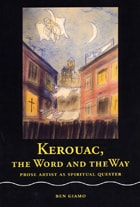
Kerouac, the Word and the Way
Prose Artist as Spiritual QuesterBen Giamo
Southern Illinois University Press, 2000
Kerouac was primarily a religious writer bent on testing and celebrating the profane depths and transcendent heights of experience and reporting both truly. Baptized and buried a Catholic, he was also heavily influenced by Buddhism, especially from 1954 until 1957 when he integrated traditional Eastern belief into several novels. Catholicism remained an essential force in his writing, but his study of Buddhism was serious and not solely in the service of his literary art. As he wrote to Malcolm Cowley in 1954, "Since I saw you I took up the study of Buddhism and for me it’s the word and the way I was looking for."
Giamo also seeks IT—"a vital force in the experience of living that takes one by surprise, suspending for the moment belief in the ‘real’ concrete grey everyday of facts of self and selfhood . . . its various meanings, paths, and oscillations: from romantic lyricism to ‘the ragged and ecstatic joy of pure being and from the void-pit of the Great World Snake to the joyous pain of amorous love, and, finally, from Catholic/Buddhist serenity to the onset of penitential martyrhood."
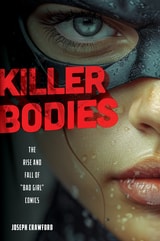
Killer Bodies
The Rise and Fall of "Bad Girl" ComicsJoseph Crawford
Rutgers University Press, 2026
Killer Bodies offers a history of the single most critically derided subgenre in American superhero comics: the “bad girl” comics of the 1990s, which chronicled the blood-soaked adventures of barely dressed and improbably proportioned action heroines for an audience of adolescent boys. While not in any way attempting to rehabilitate the genre, which for the most part amply deserved its reputation as sexist and borderline pornographic, this book situates it within its original cultural context, as the result of a matrix of influences that included third-wave feminism, neopaganism, “girl power,” the rise of the internet, the growing popularity of manga, supermodel beauty ideals, and the mainstreaming of pornography. It explores why and how the figure of the antiheroic, physically aggressive, sexually objectified heroine arose within American comics culture, and the commercial and ideological factors that led to the genre’s rapid rise and equally rapid decline amidst the crisis-racked comics industry of the mid-1990s.
Killer Books
Writing, Violence, and Ethics in Modern Spanish American NarrativeBy Aníbal González
University of Texas Press, 2002
Writing and violence have been inextricably linked in Spanish America from the Conquest onward. Spanish authorities used written edicts, laws, permits, regulations, logbooks, and account books to control indigenous peoples whose cultures were predominantly oral, giving rise to a mingled awe and mistrust of the power of the written word that persists in Spanish American culture to the present day.
In this masterful study, Aníbal González traces and describes how Spanish American writers have reflected ethically in their works about writing's relation to violence and about their own relation to writing. Using an approach that owes much to the recent "turn to ethics" in deconstruction and to the works of Jacques Derrida and Emmanuel Levinas, he examines selected short stories and novels by major Spanish American authors from the late nineteenth through the twentieth centuries: Manuel Gutiérrez Nájera, Manuel Zeno Gandía, Teresa de la Parra, Jorge Luis Borges, Alejo Carpentier, Gabriel García Márquez, and Julio Cortázar. He shows how these authors frequently display an attitude he calls "graphophobia," an intense awareness of the potential dangers of the written word.
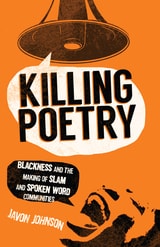
Killing Poetry
Blackness and the Making of Slam and Spoken Word CommunitiesJohnson, Javon
Rutgers University Press, 2017
Co-winner of the 2018 Ethnography Division’s Best Book from the NCA
In recent decades, poetry slams and the spoken word artists who compete in them have sparked a resurgent fascination with the world of poetry. However, there is little critical dialogue that fully engages with the cultural complexities present in slam and spoken word poetry communities, as well as their ramifications.
In Killing Poetry, renowned slam poet, Javon Johnson unpacks some of the complicated issues that comprise performance poetry spaces. He argues that the truly radical potential in slam and spoken word communities lies not just in proving literary worth, speaking back to power, or even in altering power structures, but instead in imagining and working towards altogether different social relationships. His illuminating ethnography provides a critical history of the slam, contextualizes contemporary black poets in larger black literary traditions, and does away with the notion that poetry slams are inherently radically democratic and utopic.
Killing Poetry—at times autobiographical, poetic, and journalistic—analyzes the masculine posturing in the Southern California community in particular, the sexual assault in the national community, and the ways in which related social media inadvertently replicate many of the same white supremacist, patriarchal, and mainstream logics so many spoken word poets seem to be working against. Throughout, Johnson examines the promises and problems within slam and spoken word, while illustrating how community is made and remade in hopes of eventually creating the radical spaces so many of these poets strive to achieve.
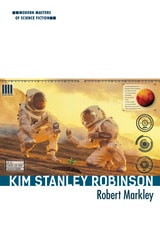
Kim Stanley Robinson
Robert Markley
University of Illinois Press, 2019
Kin of Another Kind
Transracial Adoption in American LiteratureCynthia Callahan
University of Michigan Press, 2010
"The study of transracial adoption has long been dominated by historians, legal scholars, and social scientists, but with the growth of the lively field of humanistic adoption studies comes a growing understanding of the importance of cultural representations to the social meanings and even the practices of adoption itself . . . This book makes a valuable contribution in showing how important the theme of adoption has been throughout the twentieth century in representations of race relations, and in showing that the adoption theme has served to challenge racial norms as well as uphold them."
---Margaret Homans, Yale University
The subject of transracial adoption seems to be enjoying unprecedented media attention of late, particularly as white celebrities have made headlines by adopting children of color from overseas. But interest in transracial adoption is nothing new---it has long occupied a space in the public imagination, a space disproportionate with the number of people actually adopted across racial lines.
Even before World War II, when transracial adoption was neither legally nor socially sanctioned, American authors wrote about it, often depicting it as an "accident"---the result of racial ambiguity that prevented adopters from knowing who is white or black. After World War II, as the real-world practice of transracial and international adoption increased, American literary representations of it became an index not only of the changing cultural attitudes toward adoption as a way of creating families but also of the social issues that informed it and made it, at times, controversial.
Kin of Another Kind examines the appearance of transracial adoption in American literature at certain key moments from the turn of the twentieth century to the turn of the twenty-first to help understand its literary and social significance to authors and readers alike. In juxtaposing representations of African American, American Indian, and Korean and Chinese adoptions across racial (and national) lines, Kin of Another Kind traces the metaphorical significance of adoption when it appears in fiction. At the same time, aligning these groups calls attention to their unique and divergent cultural histories with adoption, which serve as important contexts for the fiction discussed in this study.
The book explores the fiction of canonical authors such as William Faulkner and Toni Morrison and places it alongside lesser-known works by Robert E. Boles, Dallas Chief Eagle (Lakota), and Sui Sin Far that, when reconsidered, can advance our understanding both of adoption in literature and of twentieth-century American literature in general.
Kin of Another Kind will appeal to students and scholars in adoption in literature, American literature, and comparative multiethnic literatures. It adds to the growing body of work on adoption in literature, which focuses on orphancy and adoption in the nineteenth and early twentieth centuries.
Cynthia Callahan is Assistant Professor in the Department of English at Ohio State University, Mansfield.
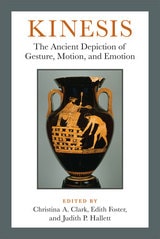
Kinesis
The Ancient Depiction of Gesture, Motion, and EmotionChristina A. Clark, Edith Foster, and Judith P. Hallett, editors
University of Michigan Press, 2015

Kinflix
Adoption and Assisted Reproductive Technologies in FilmMarina Fedosik
The Ohio State University Press, 2025
Resisting simple ideological readings of film genres, Fedosik unsettles cultural scripts around adoption and reproduction and scrutinizes moments where formulaic genre logic may be troubled by representations of lived experience that transcend common tropes of family formation. She argues that adoption as a reproductive technology is uniquely situated to expose cultural tensions around nontraditional methods of reproduction that are rapidly developing in the post-IVF biocultural landscape. Rapidly changing reproductive technologies, Fedosik asserts, demand a cultural response—and require more expansive reflection on reproductive futurities.
Kinship with the Land
Regionalist Thought In Iowa, 1894-1942E. Bradford Burns
University of Iowa Press, 1996
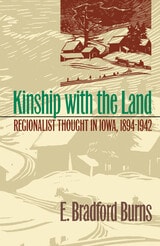
Pioneers moving into Iowa in the nineteenth century created a distinctly rural culture: family, farm, church, and school were its dominant institutions. After decades of settlement, however, several lively and perceptive generations interpreted their political, economic, and cultural environment—their Iowa—much more imaginatively; they offered such abundant insight, understanding, meaning, and mission that they mentally and spiritually recreates Iowa. In Kinship with the Land historian Brad Burns celebrates this intense period of intellectual and cultural development.
Through their novels, short stories, poems, essays, drawings, and paintings, Iowa's regionalists expressed a rich abstraction of people and place. They conferred meaning, imparted understanding, defined the soil and the folk, conveyed a sense of place. Grant Wood in his overalls—the quintessential symbol of sophisticated talent and rural values—clearly represented regionalism's spiritual solidarity with the land and the people who worked it. Burns lets these Iowans speak for themselves, then interprets their distinctive voices to present a cogent case for and an understanding of the rural in an overwhelming urban America.
Kinship with the Land emphasizes the importance of Iowa's intellectual and cultural history and reaffirms the state's identity at the very moment that standardization threatened to eradicate it. By endowing Iowa with vibrant, independent art and literature, regionalists made refreshing sense of their environment. Readers from every state will appreciate their generous legacy.

Kiosk Literature of Silver Age Spain
Modernity and Mass CultureEdited by Jeffrey Zamostny and Susan Larson
Intellect Books, 2017
Kiss My Relics
Hermaphroditic Fictions of the Middle AgesDavid Rollo
University of Chicago Press, 2011
Kiss the Blood Off My Hands
On Classic Film NoirEdited by Robert Miklitsch
University of Illinois Press, 2014
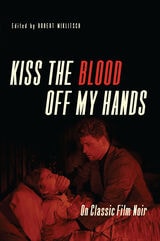
But a new generation of writers is pushing aside the fog of cigarette smoke surrounding classic noir scholarship. In Kiss the Blood Off My Hands: On Classic Film Noir, Robert Miklitsch curates a bold collection of essays that reassesses the genre's iconic style, history, and themes. Contributors analyze the oft-overlooked female detective and little-examined aspects of filmmaking like love songs and radio aesthetics, discuss the significance of the producer and women's pulp fiction, and investigate topics as disparate as Disney noir and the Fifties heist film, B-movie back projection and blacklisted British directors. At the same time the writers' collective reconsideration shows the impact of race and gender, history and sexuality, technology and transnationality on the genre.
As bracing as a stiff drink, Kiss the Blood Off My Hands writes the future of noir scholarship in lipstick and chalk lines for film fans and scholars alike.
Contributors: Krin Gabbard, Philippa Gates, Julie Grossman, Robert Miklitsch, Robert Murphy, Mark Osteen, Vivian Sobchack, Andrew Spicer, J. P. Telotte, and Neil Verma.
Kitchen Economics
Women’s Regionalist Fiction and Political EconomyThomas Strychacz
University of Alabama Press, 2020
WINNER OF THE ELIZABETH AGEE PRIZE IN AMERICAN LITERATURE
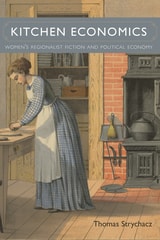
Readers of late nineteenth-century female American authors are familiar with plots, characters, and households that make a virtue of economizing. Scholars often interpret these scenarios in terms of a mythos of parsimony, frequently accompanied by a sort of elegiac republicanism whereby self-sufficiency and autonomy are put to the service of the greater good—a counterworld to the actual economic conditions of the period.
In Kitchen Economics: Women’s Regionalist Fiction and Political Economy, Thomas Strychacz takes a new approach to the question of how female regionalist fictions represent “the economic” by situating them within traditions of classical political economic thought. Offering case studies of key works by Sarah Orne Jewett, Mary Wilkins Freeman, Harriet Beecher Stowe, Rose Terry Cooke, and Alice Dunbar-Nelson, this study focuses on three complex cultural fables—the island commonwealth, stadialism (or stage theory), and feeding the body politic—which found formal expression in political economic thought, made their way into endless public debates about the economic turmoil of the late nineteenth century, and informed female authors. These works represent counterparts, not counterworlds, to modernity; and their characteristic stance is captured in the complex trope of feminaeconomica.
This approach ultimately leads us to reconsider what we mean by the term “economic,” for the emphasis of contemporary neoclassical economics on economic agents given over to infinite wants and complete self-interest has caused the “sufficiency” and “common good” models of female regionalist authors to be misinterpreted and misvalued. These fictions are nowhere more pertinent to modernity than in their alliance with today’s important alternative economic discourses.
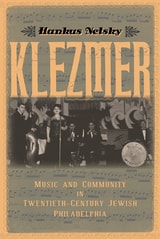
Klezmer
Music and Community in Twentieth-Century Jewish PhiladelphiaHankus Netsky
Temple University Press, 2017
Netsky defines what klezmer music is, how it helped define Jewish immigrant culture in Philadelphia, and how its current revival has changed klezmer’s meaning historically. Klezmer also addresses the place of musicians and celebratory music in Jewish society, the nature of klezmer culture, the tensions between sacred and secular in Jewish music, and the development of Philadelphia's distinctive “Russian Sher” medley, a unique and masterfully crafted composition.
Including a significant amount of musical transcriptions, Klezmer chronicles this special musical genre from its heyday in the immigrant era, through the mid-century period of its decline through its revitalization from the 1980s to today.
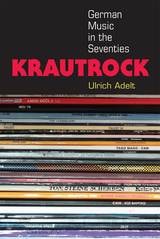
Krautrock
German Music in the SeventiesUlrich Adelt
University of Michigan Press, 2016
Among other topics, individual chapters of the book focus on the redefinition of German identity in the music of Kraftwerk, Can, and Neu!; on community and conflict in the music of Amon Düül, Faust, and Ton Steine Scherben; on “cosmic music” and New Age; and on Donna Summer’s and David Bowie’s connections to Germany. Rather than providing a purely musicological or historical account, Krautrock discusses the music as being constructed through performance and articulated through various forms of expressive culture, including communal living, spirituality, and sound.

Kujibizana
Questions of Language and Power in Nineteenth- and Twentieth-Century Poetry in KishwahiliAnn Biersteker
Michigan State University Press, 1996
The author argues that reading poetry in Kiswahili provides important insights into questions of language and power, as well as into discussions of socialist practice in East Africa and East African resistance to colonialism and neo-colonialism. Includes the text of numerous poems and footnotes.
Kurt Kren
Structural FilmsEdited by Nicky Hamlyn, Simon Payne, and A. L. Rees
Intellect Books, 2016