Results by title
732 books match the query 'Indigenous' and 8 start with k
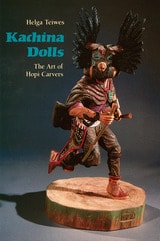
Kachina Dolls
The Art of Hopi CarversHelga Teiwes
University of Arizona Press, 1991
Teiwes explains the role of the Katsina spirit in Hopi religion and that of the kachina doll—the carved representation of a Katsina—in the ritual and economic life of the Hopis. In tracing the history of the kachina doll in Hopi culture, she shows how these wooden figures have changed since carvers came to be influenced by their marketability among Anglos and how their carving has been characterized by increasingly refined techniques. Unique to this book are Teiwes's description of the most recent trends in kachina doll carving and her profiles of twenty-seven modern carvers, including such nationally known artists as Alvin James Makya and Cecil Calnimptewa. Enhancing the text are more than one hundred photographs, including twenty-five breathtaking color plates that bring to life the latest examples of this popular art form.
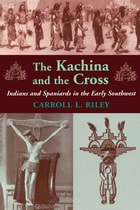
Kachina and the Cross
Carroll L Riley
University of Utah Press, 1999
In The Kachina and the Cross, Carroll Riley weaves elements of archaeology, anthropology, and history to tell a dramatic story of conflict between the Pueblo Indians and Franciscan missionaries in the seventeenth-century Spanish colony of New Mexico.
Until now, histories of the early Southwest have tended to concentrate on the Spanish presence, with little mention of Indian resistance or the decade-long war that eventually erupted. In The Kachina and the Cross Riley completes the picture by utilizing archaeological and anthropological research from the past forty years, fleshing out the story of the first century of sustained Spanish-Pueblo relations.
Keewaydinoquay, Stories from My Youth
Keewaydinoquay Peschel
University of Michigan Press, 2006
Michael Blake's Dances with Wolves transformed denigrating Indian sterotypes and created widespread interest in Native American culture. The subsequent popularity of books on this topic underscores the power of a tale well told. While Blake's story relates the early chapters of Native Americans' survival struggles, later accounts of this struggle remain untold.
The Indians of Hungry Hollow authentically presents these later chapters. The days of Hungry Hollow have long passed, but the opportunity to capture its lessons of community, strong values, and an urge to thrive in matters of the heart and soul are still very much with us.
These are stories of survival, community, sharing, and caring. The situations are often dire: winter in the middle of the Depression; an Indian settlement illegally taken from its inhabitants and set on fire; boaters stranded by bad weather and threatened with death. But if the situations are extreme, the telling of the stories is consistently optimistic yet completely without self-pity or sentimentality, and the characters always find a way through the darkness.
Dunlop's unique style of storytelling is compelling and informative, and these historically significant stories help to elucidate the transition of the American Indian culture from post-tribal days to the present.
Bill Dunlop is a respected Ottawa elder and storyteller. Marcia Fountain-Blacklidge is a professional writer, counselor, and consultant.
Kemtzij
Reciprocal Indigenous Ontologies in Kaqchikel Maya ArtsEdited by Joyce N. Bennett and Tiffany D. Creegan Miller
Amherst College Press, 2027
Kemtzij: Weaving Reciprocal Indigenous Ontologies in Kaqchikel Maya Arts focuses on the artistic contributions of contemporary Kaqchikel Mayas in Guatemala and their diasporas. Rather than representing Kaqchikel Mayas as exclusively existing in their pre-Hispanic past, the contributors to this edited volume—Kaqchikel and non-Kaqchikel scholars—demonstrate the distinct interdisciplinary ways that contemporary Kaqchikels engage with present-day Maya aesthetics and artistic initiatives in Guatemala and abroad. With a focus on the key concepts of reciprocity and duality, the chapters in this book consider the myriad ways in which Kaqchikel Mayas express their identities, through poetry, textiles, community street art, and digital photo collages. Kemtzij is unique in being published bilingually in Kaqchikel and English, making it one of few texts to consider Kaqchikel lives and artistic production—and the ontological implications of that work—in and through the Kaqchikel language.
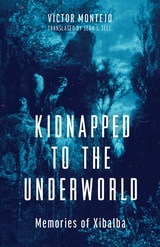
Kidnapped to the Underworld
Memories of XibalbaVíctor Montejo; Translated by Sean S. Sell
University of Arizona Press, 2024
Narrated from Antonio’s perspective, the reader follows along on a journey to the Maya underworld of Xibalba, accompanied by two spirit guides. Antonio traverses Xibalba’s levels of heaven and hell, encountering instructive scenes of punishment and reward: in one chapter, conquistadors are perpetually submerged in a pool of their victims’ blood; in another, the souls of animal abusers are forever unable to cross a crocodile-infested river. Infused with memory, the author illustrates Guatemala’s unique religious syncretism, exploring conceptions of heaven and hell shared between Catholicism and Indigenous Maya spirituality. In the tradition of both the Popol Vuh and the Divine Comedy, Montejo’s narrative challenges easy categorization—this is a work of family history, religious testimony, political allegory, and sacred literature.
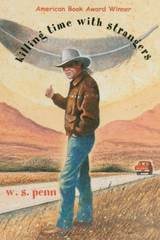
Killing Time with Strangers
W. S. Penn
University of Arizona Press, 2000
Young Pal needs help with his dreaming.
Palimony Blue Larue, a mixblood growing up in a small California town, suffers from a painful shyness and wants more than anything to be liked. That's why Mary Blue, his Nez Perce mother, has dreamed the weyekin, the spirit guide, to help her bring into the world the one lasting love her son needs to overcome the diffidence that runs so deep in his blood. The magical (and not totally competent) weyekin pops in and out of Pal's life at the most unexpected times—and in the most unlikely guises—but seems to have difficulty setting him on the right path. Is there any hope for Palimony Blue?
Don't ask his father, La Vent Larue; La Vent is past hope, past help, a city zoning planner and a pawn in the mayor's development plans who ends up crazy and in jail after he shoots the mayor in the—well, never mind. Better to ask Pal's mother, who summons the weyekin when she isn't working on a cradle board for Pal and his inevitable bride. And while you're at it, ask the women in Pal's life: Sally the preacher's daughter, Brandy the waitressing flautist, Tara the spoiled socialite. And be sure to ask Amanda, if you can catch her. If you can dream her.
Using comic vision to address serious concerns of living, Penn has written a freewheeling novel that will surpass most readers' expectations of "ethnic fiction." Instead of the usual polemics, it's marked by a sense of humor and a playfulness of language that springs directly from Native American oral tradition.
What more can be said about a book that has to be read to the end in order to get to the beginning? That Killing Time with Strangers is unlike any novel you have read before? Or perhaps that it is agonizingly familiar, giving us glimpses of a young man finding his precarious way in life? But when the power of dreaming is unleashed, time becomes negotiable and life's joys and sorrows go up for grabs. And as sure as yellow butterflies will morph into Post-It notes, you will know you have experienced a new and utterly captivating way of looking at the world.
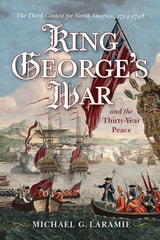
King George's War and the Thirty Year Peace
The Third Contest for North AmericaMichael G. Laramie
Westholme Publishing, 2027
King George’s War and the Thirty-Year Peace continues the contest for North America from the end of Queen Anne’s War in 1713, marking the beginning of the Thirty-Year Peace, through the start of King George’s War in 1744, to its conclusion with the signing of Treaty of Aix-la-Chapelle four years later. While there would be little fighting between the French, Spanish, and British colonies in North America during the Thirty-Year Peace—the Franco-Spanish conflict of 1719 being an exception—for the French and British internally it did not prove to be peaceful. Conflicts with former Indigenous allies erupted, including with the Three Years War, the Yamassee War, and the Natchez and Chickasaw Wars. In the south the peace was ruptured by the opening of the War of Jenkin’s Ear in 1739, which led to an attempt by South Carolina and the new colony of Georgia to seize Spanish St. Augustine, and a counter-attack by St. Augustine and Cuba aimed at the destruction of the two British colonies. While this Anglo-Spanish conflict would shift farther south into the Caribbean, to the north, news of another war between France and Britain would arrive in 1744. King George’s War, the North American component of Europe’s War of Austrian Succession, would start in Nova Scotia with French attacks on the weakly held British colony. This provocation inspired a response in the form of one of the boldest expeditions of the colonial period—Massachusetts Governor William Shirley’s successful campaign against Louisbourg on Cape Breton Island. With the French fortress in British hands and the cry of delenda est Canadaechoing through the American colonial assemblies, Shirley turned to the conquest of French Canada and convinced London to dispatch a fleet to assist in the capture of Montreal and Quebec. In Paris, news of Louisbourg’s surrender elicited an unexpected reaction in the form of one of the largest French naval expeditions ever sent to North America, with explicit orders to retake Cape Breton and expel the British from Nova Scotia. Thus, by the summer of 1746, both British and French sentries scanned the eastern horizon daily for a fleet that would determine the destiny of the conflict, but neither would be happy with what they found.
The final volume in Michael G. Laramie’s acclaimed histories of the European struggle for North America that set the stage for the French and Indian War, King George’s War and the Thirty-Year Peace: The Third Contest for North America, 1714–1748, takes the reader along with the combatants into the field and waterways, including Native American, French, Spanish, Provincial, and British. Based on a rich variety of primary sources and fully illustrated with original maps, this volume joins the author’s King William’s War and Queen Anne’s War as the modern history of these lesser-known—but enormously important—conflicts that shaped the political story of North America.
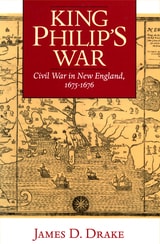
King Philip's War
Civil War in New England, 1675-1676James D. Drake
University of Massachusetts Press, 1999
Sometimes described as “America's deadliest war,” King Philip's War proved a critical turning point in the history of New England, leaving English colonists decisively in command of the region at the expense of native peoples. Although traditionally understood as an inevitable clash of cultures or as a classic example of conflict on the frontier between Indians and whites, in the view of James D. Drake it was neither. Instead, he argues, King Philip's War was a civil war, whose divisions cut across ethnic lines and tore apart a society composed of English colonizers and Native Americans alike. According to Drake, the interdependence that developed between English and Indian in the years leading up to the war helps explain its notorious brutality. Believing they were dealing with an internal rebellion and therefore with an act of treason, the colonists and their native allies often meted out harsh punishments. The end result was nothing less than the decimation of New England's indigenous peoples and the consequent social, political, and cultural reorganization of the region. In short, by waging war among themselves, the English and Indians of New England destroyed the world they had constructed together. In its place a new society emerged, one in which native peoples were marginalized and the culture of the New England Way receded into the past.