Results by title
1031 books match the query 'Intellectual life' and 7 start with k
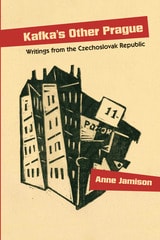
Kafka’s Other Prague
Writings from the Czechoslovak RepublicAnne Jamison
Northwestern University Press, 2018
Franz Kafka was born in Prague, a bilingual city in the Habsburg Empire. He died a citizen of Czechoslovakia. Yet Kafka was not Czech in any way he himself would have understood. He could speak Czech, but, like many Prague Jews, he was raised and educated and wrote in German. Kafka critics to date have had little to say about the majority language of his native city or its “minor literature,” as he referred to it in a 1913 journal entry. Kafka’s Other Prague explains why Kafka’s later experience of Czech language and culture matters.
Bringing to light newly available archival material, Anne Jamison’s innovative study demonstrates how Czechoslovakia’s founding and Kafka’s own dramatic political, professional, and personal upheavals altered his relationship to this “other Prague.” It destabilized Kafka’s understanding of nationality, language, gender, and sex—and how all these issues related to his own writing.
Kafka’s Other Prague juxtaposes Kafka’s German-language work with Czechoslovak Prague’s language politics, intellectual currents, and print culture—including the influence of his lover and translator, the journalist Milena Jesenská—and shows how this changed cultural and linguistic landscape transformed one of the great literary minds of the last century.
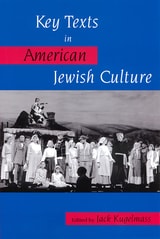
Key Texts in American Jewish Culture
Kugelmass, Jack
Rutgers University Press, 2003
Contributors come from a variety of disciplines, including American studies, anthropology, comparative literature, history, music, religious studies, and women's studies. Each provides an analysis of a specific text in art, music, television, literature, homily, liturgy, or history. Some of the works discussed, such as Philip Roth's novel Counterlife, the musical Fiddler on the Roof, and Irving Howe's World of Our Fathers, are already widely acknowledged components of the American Jewish studies canon. Others-such as Bridget Loves Bernie, infamous for the hostile reception it received among American Jews+ may be considered "key texts" because of the controversy they provoked. Still others, such as Joshua Liebman's Piece of Mind and the radio and TV sitcom The Goldbergs, demonstrate the extent to which American Jewish culture and mainstream American culture intermingle with and borrow from each other.
Kindly Inquisitors
The New Attacks on Free ThoughtJonathan Rauch
University of Chicago Press, 1993
"Fiercely argued. . . . What sets his study apart is his attempt to situate recent developments in a long-range historical perspective and to defend the system of free intellectual inquiry as a socially productive method of channeling prejudice."—Michiko Kakutani, New York Times
"Like no other, this book restates the core of our freedom and demonstrates how great, and disregarded, the peril to that freedom has become."—Joseph Coates, Chicago Tribune
"The philosophical defense of free speech and free thought that seems to have been forgotten. . . . A powerful argument."—Diane Ravitch, Wall Street Journal
Kindly Inquisitors
The New Attacks on Free Thought, Expanded EditionJonathan Rauch
University of Chicago Press, 2014
In this expanded edition of Kindly Inquisitors, a new foreword by George F. Will strikingly shows the book’s continued relevance, while a substantial new afterword by Rauch elaborates upon his original argument and brings it fully up to date. Two decades after the book’s initial publication, while some progress has been made, the regulation of hate speech has grown domestically—especially in American universities—and has spread even more internationally, where there is no First Amendment to serve as a meaningful check. But the answer to bias and prejudice, Rauch argues, is pluralism—not purism. Rather than attempting to legislate bias and prejudice out of existence or to drive them underground, we must pit them against one another to foster a more vigorous and fruitful discussion. It is this process that has been responsible for the growing acceptance of the moral acceptability of homosexuality over the last twenty years. And it is this process, Rauch argues, that will enable us as a society to replace hate with knowledge, both ethical and empirical.
“It is a melancholy fact that this elegant book, which is slender and sharp as a stiletto, is needed, now even more than two decades ago. Armed with it, readers can slice through the pernicious ideas that are producing the still-thickening thicket of rules, codes, and regulations restricting freedom of thought and expression.”—George F. Will, from the foreword
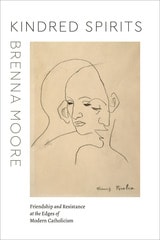
Kindred Spirits
Friendship and Resistance at the Edges of Modern CatholicismBrenna Moore
University of Chicago Press, 2021
Kindred Spirits takes us inside a remarkable network of Catholic historians, theologians, poets, and activists who pushed against both the far-right surge in interwar Europe and the secularizing tendencies of the leftist movements active in the early to mid-twentieth century. With meticulous attention to the complexity of real lives, Brenna Moore explores how this group sought a middle way anchored in “spiritual friendship”—religiously meaningful friendship understood as uniquely capable of facing social and political challenges.
For this group, spiritual friendship was inseparable from resistance to European xenophobia and nationalism, anti-racist activism in the United States, and solidarity with Muslims during the Algerian War. Friendship, they believed, was a key to both divine and human realms, a means of accessing the transcendent while also engaging with our social and political existence. Some of the figures are still well known—philosopher Jacques Maritain, Nobel Prize laureate Gabriela Mistral, influential Islamicist Louis Massignon, poet of the Harlem renaissance Claude McKay—while others have unjustly faded from memory. Much more than an idealized portrait of a remarkable group of Catholic intellectuals from the past, Kindred Spirits is a compelling exploration of both the beauty and flaws of a vibrant social network worth remembering.
Kinship with the Land
Regionalist Thought In Iowa, 1894-1942E. Bradford Burns
University of Iowa Press, 1996
Pioneers moving into Iowa in the nineteenth century created a distinctly rural culture: family, farm, church, and school were its dominant institutions. After decades of settlement, however, several lively and perceptive generations interpreted their political, economic, and cultural environment—their Iowa—much more imaginatively; they offered such abundant insight, understanding, meaning, and mission that they mentally and spiritually recreates Iowa. In Kinship with the Land historian Brad Burns celebrates this intense period of intellectual and cultural development.
Through their novels, short stories, poems, essays, drawings, and paintings, Iowa's regionalists expressed a rich abstraction of people and place. They conferred meaning, imparted understanding, defined the soil and the folk, conveyed a sense of place. Grant Wood in his overalls—the quintessential symbol of sophisticated talent and rural values—clearly represented regionalism's spiritual solidarity with the land and the people who worked it. Burns lets these Iowans speak for themselves, then interprets their distinctive voices to present a cogent case for and an understanding of the rural in an overwhelming urban America.
Kinship with the Land emphasizes the importance of Iowa's intellectual and cultural history and reaffirms the state's identity at the very moment that standardization threatened to eradicate it. By endowing Iowa with vibrant, independent art and literature, regionalists made refreshing sense of their environment. Readers from every state will appreciate their generous legacy.
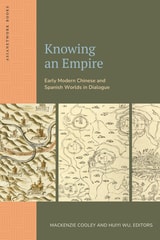
Knowing an Empire
Early Modern Chinese and Spanish Worlds in DialogueEdited by Mackenzie Cooley and Huiyi Wu
Lever Press, 2025
Knowing an Empire does not see the conveyance of information across an empire as a top-down process with an active center as a knowledge-maker. Instead, it amplifies a blend of voices that speak as much to imperial bureaucracy as to the rich local and Indigenous cultures, revealing these two early modern empires as diverse polities whose equilibria were constantly rebalanced among local powers. Comprised of 18 chapters, this edited collection reflects on the historical evolution and inner structures of the imperial epistemologies, as well as the many ways historians today read difangzhi and relaciones geográficas to understand the spatial, natural, and social order in both the Chinese and the Spanish empires. At once a comparative and a connected history, it places Chinese and Spanish imperial knowledge in the globalizing early modern world, highlighting the migration of people, goods, and ideas and revealing how these wide-ranging influences are reflected—or not—in the difangzhi and the relaciones. The book concludes by broadening our scope beyond China and Spain to reflect how other early modern empires, such as the Portuguese, failed to develop such systematized imperial genres.
With contributions from leading scholars across Latin American and Asian Studies, this book synthesizes political, environmental, and socio-economic history with historical anthropology to highlight parallel governance and knowledge structures. The contributors challenge conventional binaries of Western versus Eastern, and colonial versus non-colonial, presenting a nuanced perspective of early modern empires as dynamic, interconnected entities through the shared challenges of scale, diversity, and increasing globalization. Through these dialogues, Knowing an Empire illuminates the complex entanglement of ruling and understanding. This groundbreaking collection offers a highly innovative and dialogic approach to comparative studies of empires, with major implications for Asian, European, Latin American, transnational, and global history.