Results by title
4038 books match the query 'Social aspects' and 30 start with k

K-Pop Fandom
Performing Deokhu from the 1990s to TodayAreum Jeong
University of Michigan Press, 2026
Through an autoethnography of becoming a K-pop deokhu, Jeong connects their experiences to generations of K-pop fans, showing simultaneously how fandom practices have shifted over time and the intricacies of fan labor participation. This personal connection paved the way for participant-observation and co-performer witnessing methodologies in the study, which crucially allowed for collaborating with fans whose communal pursuits have been stigmatized by dominant discourses that denigrate their activities as solely addictive, uncritical, and wasteful. Jeong’s genre-spanning corpus of fan activities and analyzing its contexts and contents represents an important contribution to the making of a fan archive that is also an archive of affective labor.
Kachina Dolls
The Art of Hopi CarversHelga Teiwes
University of Arizona Press, 1991
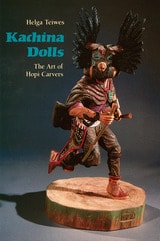
Teiwes explains the role of the Katsina spirit in Hopi religion and that of the kachina doll—the carved representation of a Katsina—in the ritual and economic life of the Hopis. In tracing the history of the kachina doll in Hopi culture, she shows how these wooden figures have changed since carvers came to be influenced by their marketability among Anglos and how their carving has been characterized by increasingly refined techniques. Unique to this book are Teiwes's description of the most recent trends in kachina doll carving and her profiles of twenty-seven modern carvers, including such nationally known artists as Alvin James Makya and Cecil Calnimptewa. Enhancing the text are more than one hundred photographs, including twenty-five breathtaking color plates that bring to life the latest examples of this popular art form.
Kansas City vs. Oakland
The Bitter Sports Rivalry That Defined an EraMatthew C. Ehrlich
University of Illinois Press, 2019
Kaskaskia
The Lost Capital of IllinoisDavid MacDonald and Raine Waters
Southern Illinois University Press, 2019
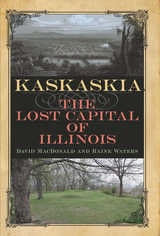
At the outset the Kaskaskia tribe, along with Jesuit missionaries and French traders, settled near the confluence of the Kaskaskia and Mississippi rivers, about sixty miles south of modern-day St. Louis. The town quickly became the largest French town and most prosperous settlement in the Illinois Country. After French control ended, Kaskaskia suffered under corrupt British and then inept American rule. In the 1790s the town revived and became the territorial capital, and in 1818 it became the first state capital. Along the way Kaskaskia was beset by disasters: crop failures, earthquakes, tornadoes, floods, epidemics, and the loss of the capital-city title to Vandalia. Likewise, human activity and industry eroded the river’s banks, causing the river to change course and eventually wash away the settlement. All that remains of the state’s first capital today is a village several miles from the original site.
MacDonald and Waters focus on the town’s growth, struggles, prosperity, decline, and obliteration, providing an overview of its domestic architecture to reveal how its residents lived. Debunking the notion of a folklore tradition about a curse on the town, the authors instead trace those stories to late nineteenth-century journalistic inventions. The result is a vibrant, heavily illustrated, and highly readable history of Kaskaskia that sheds light on the entire early history of Illinois.

Katrina's Imprint
Race and Vulnerability in AmericaWailoo, Keith
Rutgers University Press, 2010
Keepers of the Flame
NFL Films and the Rise of Sports MediaTravis Vogan
University of Illinois Press, 2014
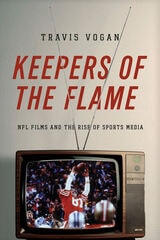
Drawing on research at the NFL Films Archive and the Pro Football Hall of Fame and interviews with media pioneer Steve Sabol and others, Travis Vogan shows how NFL Films has constructed a consistent, romanticized, and remarkably visible mythology for the National Football League. The company packages football as a visceral and dramatic sequence of violent, beautiful, graceful, and heroic gridiron battles. Historically proven formulas for presentation--such as the dramatic voiceovers once provided by John Facenda's baritone, the soaring scores of Sam Spence's rousing background music, and the epic poetry found in Steve Sabol's scripts--are still used today.
From the Vincent Price-narrated Strange but True Football Stories to the currently running series Hard Knocks, NFL Films distinguishes the NFL from other sports organizations and from other media and entertainment. Vogan tells the larger story of the company's relationship with and vast influence on our culture's representations of sport, the expansion of sports television beyond live game broadcasts, and the emergence of cable television and Internet sports media.
Keepers of the Flame: NFL Films and the Rise of Sports Media presents sports media as an integral facet of American popular culture and NFL Films as key to the transformation of professional football into the national obsession commonly known as America's Game.
Keeping Hold of Justice
Encounters between Law and ColonialismJennifer Balint, Julie Evans, Mark McMillan, and Nesam McMillan
University of Michigan Press, 2020
Keeping Hold of Justice focuses on a select range of encounters between law and colonialism from the early nineteenth century to the present. It emphasizes the nature of colonialism as a distinctively structural injustice, one which becomes entrenched in the social, political, legal, and discursive structures of societies and thereby continues to affect people’s lives in the present. It charts, in particular, the role of law in both enabling and sustaining colonial injustice and in recognizing and redressing it. In so doing, the book seeks to demonstrate the possibilities for structural justice that still exist despite the enduring legacies and harms of colonialism. It puts forward that these possibilities can be found through collaborative methodologies and practices, such as those informing this book, that actively bring together different disciplines, peoples, temporalities, laws and ways of knowing. They reveal law not only as a source of colonial harm but also as a potential means of keeping hold of justice.
Kicking
Jules Boykoff
Duke University Press, 2026

Kicking Center
Gender and the Selling of Women's Professional SoccerAllison, Rachel
Rutgers University Press, 2018
Girls and young women participate in soccer at record levels and the Women’s National Team regularly draws media, corporate, and popular attention. Yet despite increased representation and visibility, gender disparities in opportunity, compensation, training resources, and media airtime persist in soccer, and two professional leagues for women have failed since 2000.
In Kicking Center, Rachel Allison investigates a women’s soccer league seeking to break into the male-dominated center of U.S. professional sport. Through an examination of the challenges and opportunities identified by those working for and with this league, she demonstrates how gender inequality is both constructed and contested in professional sport. Allison details the complex constructions of race, class, gender, and sexuality in the selling and marketing of women’s soccer in a half-changed sports landscape characterized by both progress and backlash, and where professional sports are still understood to be men’s territory.

Killer Apps
War, Media, MachineJeremy Packer and Joshua Reeves
Duke University Press, 2020
Killer Books
Writing, Violence, and Ethics in Modern Spanish American NarrativeBy Aníbal González
University of Texas Press, 2002
Writing and violence have been inextricably linked in Spanish America from the Conquest onward. Spanish authorities used written edicts, laws, permits, regulations, logbooks, and account books to control indigenous peoples whose cultures were predominantly oral, giving rise to a mingled awe and mistrust of the power of the written word that persists in Spanish American culture to the present day.
In this masterful study, Aníbal González traces and describes how Spanish American writers have reflected ethically in their works about writing's relation to violence and about their own relation to writing. Using an approach that owes much to the recent "turn to ethics" in deconstruction and to the works of Jacques Derrida and Emmanuel Levinas, he examines selected short stories and novels by major Spanish American authors from the late nineteenth through the twentieth centuries: Manuel Gutiérrez Nájera, Manuel Zeno Gandía, Teresa de la Parra, Jorge Luis Borges, Alejo Carpentier, Gabriel García Márquez, and Julio Cortázar. He shows how these authors frequently display an attitude he calls "graphophobia," an intense awareness of the potential dangers of the written word.
Killer Fat
Media, Medicine, and Morals in the American "Obesity Epidemic”Boero, Natalie
Rutgers University Press, 2013
In the past decade, obesity has emerged as a major public health concern in the United States and abroad. At the federal, state, and local level, policy makers have begun drafting a range of policies to fight a war against fat, including body-mass index (BMI) report cards, “snack taxes,” and laws to control how fast food companies market to children. As an epidemic, obesity threatens to weaken the health, economy, and might of the most powerful nation in the world.
In Killer Fat, Natalie Boero examines how and why obesity emerged as a major public health concern and national obsession in recent years. Using primary sources and in-depth interviews, Boero enters the world of bariatric surgeries, Weight Watchers, and Overeaters Anonymous to show how common expectations of what bodies are supposed to look like help to determine what sorts of interventions and policies are considered urgent in containing this new kind of disease.
Boero argues that obesity, like the traditional epidemics of biological contagion and mass death, now incites panic, a doomsday scenario that must be confronted in a struggle for social stability. The “war” on obesity, she concludes, is a form of social control. Killer Fat ultimately offers an alternate framing of the nation’s obesity problem based on the insights of the “Health at Every Size” movement.

Killer on the Road
Violence and the American InterstateBy Ginger Strand
University of Texas Press, 2012
Starting in the 1950s, Americans eagerly built the planet’s largest public work: the 42,795-mile National System of Interstate and Defense Highways. Before the concrete was dry on the new roads, however, a specter began haunting them—the highway killer. He went by many names: the “Hitcher,” the “Freeway Killer,” the “Killer on the Road,” the “I-5 Strangler,” and the “Beltway Sniper.” Some of these criminals were imagined, but many were real. The nation’s murder rate shot up as its expressways were built. America became more violent and more mobile at the same time.
Killer on the Road tells the entwined stories of America’s highways and its highway killers. There’s the hot-rodding juvenile delinquent who led the National Guard on a multistate manhunt; the wannabe highway patrolman who murdered hitchhiking coeds; the record promoter who preyed on “ghetto kids” in a city reshaped by freeways; the nondescript married man who stalked the interstates seeking women with car trouble; and the trucker who delivered death with his cargo. Thudding away behind these grisly crime sprees is the story of the interstates—how they were sold, how they were built, how they reshaped the nation, and how we came to equate them with violence.
Through the stories of highway killers, we see how the “killer on the road,” like the train robber, the gangster, and the mobster, entered the cast of American outlaws, and how the freeway—conceived as a road to utopia—came to be feared as a highway to hell.
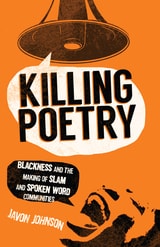
Killing Poetry
Blackness and the Making of Slam and Spoken Word CommunitiesJohnson, Javon
Rutgers University Press, 2017
Co-winner of the 2018 Ethnography Division’s Best Book from the NCA
In recent decades, poetry slams and the spoken word artists who compete in them have sparked a resurgent fascination with the world of poetry. However, there is little critical dialogue that fully engages with the cultural complexities present in slam and spoken word poetry communities, as well as their ramifications.
In Killing Poetry, renowned slam poet, Javon Johnson unpacks some of the complicated issues that comprise performance poetry spaces. He argues that the truly radical potential in slam and spoken word communities lies not just in proving literary worth, speaking back to power, or even in altering power structures, but instead in imagining and working towards altogether different social relationships. His illuminating ethnography provides a critical history of the slam, contextualizes contemporary black poets in larger black literary traditions, and does away with the notion that poetry slams are inherently radically democratic and utopic.
Killing Poetry—at times autobiographical, poetic, and journalistic—analyzes the masculine posturing in the Southern California community in particular, the sexual assault in the national community, and the ways in which related social media inadvertently replicate many of the same white supremacist, patriarchal, and mainstream logics so many spoken word poets seem to be working against. Throughout, Johnson examines the promises and problems within slam and spoken word, while illustrating how community is made and remade in hopes of eventually creating the radical spaces so many of these poets strive to achieve.
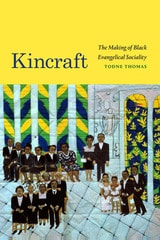
Kincraft
The Making of Black Evangelical SocialityTodne Thomas
Duke University Press, 2021
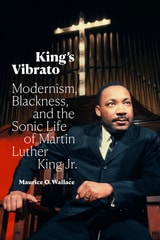
King's Vibrato
Modernism, Blackness, and the Sonic Life of Martin Luther King Jr.Maurice O. Wallace
Duke University Press, 2022
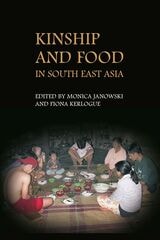
Kinship and Food in South East Asia
Edited by Monica Janowski and Fiona G. Kerlogue
National University of Singapore Press, 2007
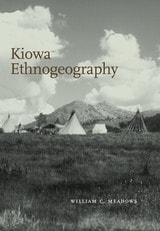
Kiowa Ethnogeography
By William C. Meadows
University of Texas Press, 2008
Examining the place names, geographical knowledge, and cultural associations of the Kiowa from the earliest recorded sources to the present, Kiowa Ethnogeography is the most in-depth study of its kind in the realm of Plains Indian tribal analysis. Linking geography to political and social changes, William Meadows applies a chronological approach that demonstrates a cultural evolution within the Kiowa community.
Preserved in both linguistic and cartographic forms, the concepts of place, homeland, intertribal sharing of land, religious practice, and other aspects of Kiowa life are clarified in detail. Native religious relationships to land (termed "geosacred" by the author) are carefully documented as well. Meadows also provides analysis of the only known extant Kiowa map of Black Goose, its unique pictographic place labels, and its relationship to reservation-era land policies. Additional coverage of rivers, lakes, and military forts makes this a remarkably comprehensive and illuminating guide.

Kiss Of Death
Joseph Bastien
University of Utah Press, 1998

Kiss of Death
Contagion, Contamination, and FolkloreAndrea Kitta
Utah State University Press, 2019
Using ethnographic, media, and narrative analysis, this book explores the vernacular explanatory models used in decisions concerning contagion to better understand the real fears, risks, concerns, and doubts of the public. Kitta explores immigration and patient zero, zombies and vampires, Slender Man, HPV, and the kiss of death legend, as well as systematic racism, homophobia, and misogyny in North American culture, to examine the nature of contagion and contamination.
Conversations about health and risk cannot take place without considering positionality and intersectionality. In The Kiss of Death, Kitta isolates areas that require better communication and greater cultural sensitivity in the handling of infectious disease, public health, and other health-related disciplines and industries.
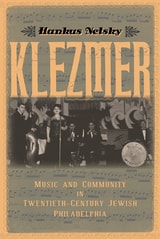
Klezmer
Music and Community in Twentieth-Century Jewish PhiladelphiaHankus Netsky
Temple University Press, 2017
Netsky defines what klezmer music is, how it helped define Jewish immigrant culture in Philadelphia, and how its current revival has changed klezmer’s meaning historically. Klezmer also addresses the place of musicians and celebratory music in Jewish society, the nature of klezmer culture, the tensions between sacred and secular in Jewish music, and the development of Philadelphia's distinctive “Russian Sher” medley, a unique and masterfully crafted composition.
Including a significant amount of musical transcriptions, Klezmer chronicles this special musical genre from its heyday in the immigrant era, through the mid-century period of its decline through its revitalization from the 1980s to today.
Knots, or the Violence of Desire in Renaissance Florence
Emanuele Lugli
University of Chicago Press, 2023
In this innovative cultural history, hair is the portal through which Emanuele Lugli accesses the cultural production of Lorenzo il Magnifico’s Florence. Lugli reflects on the ways writers, doctors, and artists expressed religious prejudices, health beliefs, and gender and class subjugation through alluring works of art, in medical and political writings, and in poetry. He considers what may have compelled Sandro Botticelli, the young Leonardo da Vinci, and dozens of their contemporaries to obsess over braids, knots, and hairdos by examining their engagement with scientific, philosophical, and theological practices.
By studying hundreds of fifteenth-century documents that engage with hair, Lugli foregrounds hair’s association to death and gathers insights about human life at a time when Renaissance thinkers redefined what it meant to be human and to be alive. Lugli uncovers overlooked perceptions of hair when it came to be identified as a potential vector for liberating culture, and he corrects a centuries-old prejudice that sees hair as a trivial subject, relegated to passing fashion or the decorative. He shows hair, instead, to be at the heart of Florentine culture, whose inherent violence Lugli reveals by prompting questions about the entanglement of politics and desire.
Knowing Nukes
The Politics and Culture of the AtomWilliam Chaloupka
University of Minnesota Press, 1992
Countering critics who charge that postmodern positions on language, authority, and power cannot inform effective political responses, this compelling analysis employs these same methods to examine antinuclear politics. Star Wars (the movie and the antimissile system), the Freeze movement, Reaganism, and “lifestyle” politics all receive new treatments.

Knowledge LTD
Toward a Social Logic of the DerivativeRandy Martin
Temple University Press, 2015
In Knowledge LTD, Martin explores how both the limits of knowledge and the social constructions of culture reflect the way we organize social life in the face of disasters and their aftermath. He examines this crisis of knowledge as well as the social movements that rose up in its wake. Martin not only treats derivatives as financial contracts for pricing risk, but also shows how the derivative works in economic terms, where the very unity of the economy is undone.
Knowledge LTD ultimately points to a more comprehensive reordering of the once separate spheres of economy, polity, and culture. Martin provides a new way of understanding the social significance of the all-pervasive derivative logic.
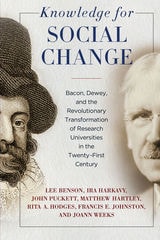
Knowledge for Social Change
Bacon, Dewey, and the Revolutionary Transformation of Research Universities in the Twenty-First CenturyLee Benson, Ira Harkavy, Matthew Hartley
Temple University Press, 2017
Employing history, social theory, and a detailed contemporary case study, Knowledge for Social Change argues for fundamentally reshaping research universities to function as democratic, civic, and community-engaged institutions dedicated to advancing learning and knowledge for social change. The authors focus on significant contributions to learning made by Francis Bacon, Benjamin Franklin, Seth Low, Jane Addams, William Rainey Harper, and John Dewey—as well as their own work at Penn’s Netter Center for Community Partnerships—to help create and sustain democratically-engaged colleges and universities for the public good.
Knowledge for Social Change highlights university-assisted community schools to effect a thoroughgoing change of research universities that will contribute to more democratic schools, communities, and societies. The authors also call on democratic-minded academics to create and sustain a global movement dedicated to advancing learning for the “relief of man’s estate”—an iconic phrase by Francis Bacon that emphasized the continued betterment of the human condition—and to realize Dewey’s vision of an organic “Great Community” composed of participatory, democratic, collaborative, and interdependent societies.
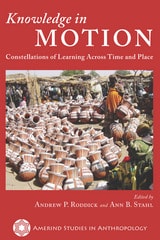
Knowledge in Motion
Constellations of Learning Across Time and PlaceEdited by Andrew P. Roddick and Ann B. Stahl
University of Arizona Press, 2019
In the last twenty-five years, scholars from a number of disciplines have explored “situated learning,” specifically investigating how learning relates to social reproduction and daily life. In Knowledge in Motion, contributors focus on learning through time and at a variety of scales, particularly as they relate to power and politics, with implications for emergent communities and constellations of practice.
This volume brings together archaeologists, historians, and cultural anthropologists to examine communities engaged in a range of learning practices around the globe, from Africa to the Americas. Contributors draw on the growing interdisciplinary scholarship on situated learning to explore those processes in relation to power and broader forces that shape knowledge during times of turbulent change.
Enriching the diversity of regions and disciplines, Knowledge in Motion focuses on how learning, knowledge transmission, and the emergent qualities of communities and constellations of practice are shaped by changing spheres of interaction or other unstable events and influences. The contributions forge productive theories and methodologies for exploring situated learning and its broad-ranging outcomes.

Knowledge, Normativity and Power in Academia
Critical InterventionsEdited by Aisha-Nusrat Ahmad, Maik Fielitz, Johanna Leinius and Gianna Magdalena Schlichte
Campus Verlag, 2018
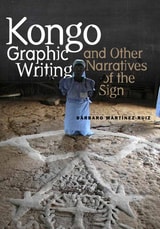
Kongo Graphic Writing and Other Narratives of the Sign
Barbaro Martinez-Ruiz
Temple University Press, 2013
Author Bárbaro Martínez-Ruiz, a practitioner of the Palo Monte devotional arts, illustrates with graphics and rock art how the Bakongo’s ideographic and pictographic signs are used to organize daily life, enable interactions between humans and the natural and spiritual worlds, and preserve and transmit cosmological and cosmogonical belief systems.
Exploring cultural diffusion and exchange, collective memory and identity, Kongo Graphic Writing and Other Narratives of the Sign artfully brings together analyses of the complex interconnections among Kongo traditions of religion, philosophy and visual/gestural communication on both sides of the African Atlantic world.
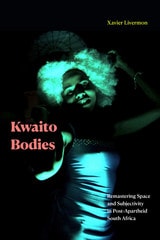
Kwaito Bodies
Remastering Space and Subjectivity in Post-Apartheid South AfricaXavier Livermon
Duke University Press, 2020

Kwaito's Promise
Music and the Aesthetics of Freedom in South AfricaGavin Steingo
University of Chicago Press, 2016
Politicians and cultural critics have long criticized kwaito for failing to provide any meaningful contribution to a society that desperately needs direction. As Steingo shows, however, these criticisms are built on problematic assumptions about the political function of music. Interacting with kwaito artists and fans, he shows that youth aren’t escaping their social condition through kwaito but rather using it to expand their sensory realities and generate new possibilities. Resisting the truism that “music is always political,” Steingo elucidates a music that thrives on its radically ambiguous relationship with politics, power, and the state.