Results by title
370 books match the query 'Spain' and 3 start with k
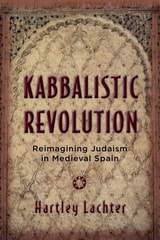
Kabbalistic Revolution
Reimagining Judaism in Medieval SpainLachter, Hartley
Rutgers University Press, 2014
The set of Jewish mystical teachings known as Kabbalah are often imagined as timeless texts, teachings that have been passed down through the millennia. Yet, as this groundbreaking new study shows, Kabbalah flourished in a specific time and place, emerging in response to the social prejudices that Jews faced.
Hartley Lachter, a scholar of religion studies, transports us to medieval Spain, a place where anti-Semitic propaganda was on the rise and Jewish political power was on the wane. Kabbalistic Revolution proposes that, given this context, Kabbalah must be understood as a radically empowering political discourse. While the era’s Christian preachers claimed that Jews were blind to the true meaning of scripture and had been abandoned by God, the Kabbalists countered with a doctrine that granted Jews a uniquely privileged relationship with God. Lachter demonstrates how Kabbalah envisioned this increasingly marginalized group at the center of the universe, their mystical practices serving to maintain the harmony of the divine world.
For students of Jewish mysticism, Kabbalistic Revolution provides a new approach to the development of medieval Kabbalah. Yet the book’s central questions should appeal to anyone with an interest in the relationships between religious discourses, political struggles, and ethnic pride.
[more]

Kiosk Literature of Silver Age Spain
Modernity and Mass CultureEdited by Jeffrey Zamostny and Susan Larson
Intellect Books, 2017
The so-called “Silver Age” of Spain ran from 1898 to the rise of Franco in 1939 and was characterized by intense urbanization, widespread class struggle and mobility, and a boom in mass culture. This book offers a close look at one manifestation of that mass culture: weekly collections of short, often pocket-sized books sold in urban kiosks at low prices. These series published a wide range of literature in a variety of genres and formats, but their role as disseminators of erotic and anarchist fiction led them to be censored by the Franco dictatorship. This book offers the most detailed scholarly analysis of kiosk literature to date, examining the kiosk phenomenon through the lens of contemporary interdisciplinary theories of urban space, visuality, celebrity, gender and sexuality, and the digital humanities.
[more]
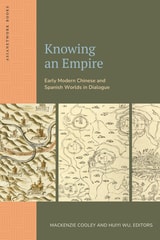
Knowing an Empire
Early Modern Chinese and Spanish Worlds in DialogueEdited by Mackenzie Cooley and Huiyi Wu
Lever Press, 2025
Knowing an Empire: Early Modern Chinese and Spanish Worlds in Dialogue unveils how these two vast empires, separated by thousands of miles, developed comparable systems to gather, order, and wield knowledge about their local worlds in the process of empire-building. From the sixteenth to the eighteenth centuries, officials in both empires compiled large quantities of structured data on the climate, topography, natural products, languages, religions, and more of their locales, creating a vision of their empires as diverse yet unified. Through a new methodology of “juxtapositional comparison,” the book reads the difangzhi 地方志 (local gazetteers) of China and the relaciones geográficas of the Spanish world in parallel.
Knowing an Empire does not see the conveyance of information across an empire as a top-down process with an active center as a knowledge-maker. Instead, it amplifies a blend of voices that speak as much to imperial bureaucracy as to the rich local and Indigenous cultures, revealing these two early modern empires as diverse polities whose equilibria were constantly rebalanced among local powers. Comprised of 18 chapters, this edited collection reflects on the historical evolution and inner structures of the imperial epistemologies, as well as the many ways historians today read difangzhi and relaciones geográficas to understand the spatial, natural, and social order in both the Chinese and the Spanish empires. At once a comparative and a connected history, it places Chinese and Spanish imperial knowledge in the globalizing early modern world, highlighting the migration of people, goods, and ideas and revealing how these wide-ranging influences are reflected—or not—in the difangzhi and the relaciones. The book concludes by broadening our scope beyond China and Spain to reflect how other early modern empires, such as the Portuguese, failed to develop such systematized imperial genres.
With contributions from leading scholars across Latin American and Asian Studies, this book synthesizes political, environmental, and socio-economic history with historical anthropology to highlight parallel governance and knowledge structures. The contributors challenge conventional binaries of Western versus Eastern, and colonial versus non-colonial, presenting a nuanced perspective of early modern empires as dynamic, interconnected entities through the shared challenges of scale, diversity, and increasing globalization. Through these dialogues, Knowing an Empire illuminates the complex entanglement of ruling and understanding. This groundbreaking collection offers a highly innovative and dialogic approach to comparative studies of empires, with major implications for Asian, European, Latin American, transnational, and global history.
[more]