Results by title
428 books match the query 'Authorship' and 11 start with l

Lamps at High Noon
Jack S. Balch
University of Illinois Press, 1941
Charlie Gest, the wide-eyed and well-intentioned protagonist of the novel, confronts firsthand the project's sometimes underhanded efforts to monitor the political views of its writers. Named assistant director of the project in Monroe (a fictional St. Louis), Gest is vaguely aware that the program's good intentions do not always overshadow the abuses it tolerates, which include shielding corporate interests and avoiding hiring highly qualified black writers. Gest is hounded by a nagging suspicion that, like lamps that burn in broad daylight, the issues at stake in the work stoppage are not the ones that most need addressing.
Part radical socialist commentary, part absurdist theater, Balch's novel offers a peerless critical engagement of the economic constraints and political exigencies surrounding debates over the federal funding of art since the New Deal.
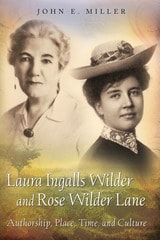
Laura Ingalls Wilder and Rose Wilder Lane
Authorship, Place, Time, and CultureJohn E. Miller
University of Missouri Press, 2008
Interpreting these writers in their larger historical and cultural contexts, Miller reconsiders their formidable artistic, political, and literary contributions to American cultural life in the 1930s. He looks at what was happening in 1932—from depression conditions and politics to chain stores and celebrity culture—to shed light on Wilder’s life, and he shows how actual “little houses” established ideas of home that resonated emotionally for both writers.
In considering each woman’s ties to history, Miller compares Wilder with Frederick Jackson Turner as a frontier mythmaker and examines Lane’s unpublished history of Missouri in the context of a contemporaneous project, Thomas Hart Benton’s famous Jefferson City mural. He also looks at Wilder’s Missouri Ruralist columns to assess her pre–Little House values and writing skills, and he readdresses her literary treatment of Native Americans. A final chapter shows how Wilder’s and Lane’s conservative political views found expression in their work, separating Lane’s more libertarian bent from Wilder’s focus on writing moralist children’s fiction.
These nine thoughtful essays expand the critical discussion on Wilder and Lane beyond the Little House. Miller portrays them as impassioned and dedicated writers who were deeply involved in the historical changes and political challenges of their times—and contends that questions over the books’ authorship do not do justice to either woman’s creative investment in the series. Miller demystifies the aura of nostalgia that often prevents modern readers from seeing Wilder as a real-life woman, and he depicts Lane as a kindred artistic spirit, helping readers better understand mother and daughter as both women and authors.
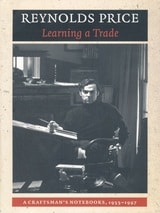
Learning a Trade
A Craftsman's Notebooks: 1955-1997Reynolds Price
Duke University Press, 1998
Whether Price is reflecting on the rhythm of his day-to-day writing process or ruminating about the central character in what would become, for instance, Kate Vaiden—should she be a woman, what would be her name, why would the story be told in the first person?—he envelops the reader in the task at hand, in the trade being practiced. Instead of personal memoir or a collection of literary fragments, Learning a Trade presents what Price has called the “ongoing minutes” of his effort to learn his craft. Equally enlightening as an overview of a career of developing prominence or as a perspective on the building of individual literary works, this volume not only allows the reader to hear the author’s internal dialogue on the hundreds of questions that must be turned and mulled during the planning and writing of a novel but, in an unplanned way, creates its own compelling narrative.
These notebooks begin in “that distant summer in dazed Eisenhower America,” a month after Price’s graduation from Duke University, and conclude in “the raucous millennial present” with plans for his most recent novel, Roxanna Slade. Revealing the genesis and resolution of such works as The Surface of Earth, The Source of Light, Kate Vaiden, Clear Pictures, and Blue Calhoun, Learning a Trade offers a rich reward to those seeking to enter the guild of writers, as well as those intrigued by the process of the literary life or captured by the work of Reynolds Price.
Legacy
A Step-By-Step Guide To Writing Personal HistoryLinda Spence
Ohio University Press, 1997
When Linda Spence asked her aging mother to write her life story, her mother stared at a blank sheet of paper and asked—“How? Where do I begin?” In this practical guide to capturing those memories that have been stored away, Linda Spence provides the questions that are the keys to unlocking the memories that make up a life.
Beyond the vital statistics are the personal stories that tell what it was like, what we did, and why we did it, how we feel about our choices, and what our circumstances were. Through encouraging coaching, shared memories, and open-ended questions, the process of producing a personal history becomes intriguing and engaging.
With Legacy the possibilities expand: a personal record is preserved—with its myths, traditions, joys, pains, gains, and losses; a family opens a potential dialogue that will last for generations; the writer has an opportunity for insight and resolution; the culture of a time and place is noted; the tradition of personal story is revitalized, and our present and future find nourishment and knowledge in the past.
Either as a gift that can act as a shared experience as the memories are recounted or as a personal way to take account of one’s experiences, often long since forgotten, Legacy is indeed a way to get one’s story down.
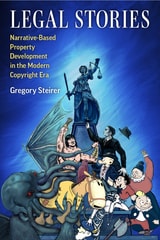
Legal Stories
Narrative-Based Property Development in the Modern Copyright EraGregory Steirer
University of Michigan Press, 2024
Steirer’s expansive view of intellectual property law encompasses not only statutes and judicial opinions, but also the everyday practices and productions of authors, editors, fans, and other legal laypersons. The result is a history of the law as improvisatory and accident-prone, taking place as often outside the courtroom as inside, and shaped as much by laypersons as lawyers. Through the examination of influential legal disputes involving early properties such as Dashiell Hammett’s Sam Spade, H. P. Lovecraft’s Cthulhu Mythos, and Robert E. Howard’s Conan the Barbarian, Steirer provides a ground’s eye view of how copyright law has operated and evolved in practice.
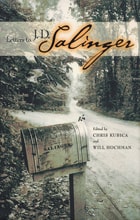
Letters to J. D. Salinger
Edited by Chris Kubica and Will Hochman
University of Wisconsin Press, 2014
Salinger continues to maintain his silence, but Holden Caulfield, Franny and Zooey, and Seymour Glass—the unforgettable characters of his novel and short stories—continue to speak to generations of readers and writers. Letters to Salinger includes more than 150 personal letters addressed to Salinger from well-known writers, editors, critics, journalists, and other luminaries, as well as from students, teachers, and readers around the world, some of whom have just discovered Salinger for the first time. Their voices testify to the lasting impressions Salinger’s ideas and emotions have made on so many diverse lives.
Contributors include Marvin Bell, Frederick Busch, Stephen Collins, Nicholas Delbanco, Warren French, Herbert Gold, W. P. Kinsella, Molly McQuade, Stewart O’Nan, Robert O’Connor, Ellis Paul, Molly Peacock, Sanford Pinsker, George Plimpton, Gerald Rosen, Sid Salinger, David Shields, Joseph Skibell, Melanie Rae Thon, Alma Luz Villanueva, Katharine Weber, and many others
Lit from Within
Contemporary Masters on the Art and Craft of WritingKevin Haworth; Dinty W. Moore
Ohio University Press, 2011
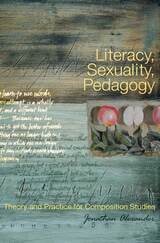
Literacy, Sexuality, Pedagogy
Theory and Practice for Composition StudiesJonathan Alexander
Utah State University Press, 2008
In Literacy, Sexuality, Pedagogy, Jonathan Alexander argues for the development of students' "sexual literacy." Such a literacy is not just concerned with developing fluency with sexuality as a "hot" topic, but with understanding the intimate interconnectedness of sexuality and literacy in Western culture. Using the work of scholars in queer theory, sexuality studies, and the New Literacy Studies, Alexander unpacks what he sees as a crucial--if often overlooked--dimension of literacy: the fundamental ways in which sexuality has become a key component of contemporary literate practice, of the stories we tell about ourselves, our communities, and our political investments.
Alexander then demonstrates through a series of composition exercises and writing assignments how we might develop students' understanding of sexual literacy. Examining discourses of gender, heterosexuality, and marriage allows students (and instructors) a critical opportunity to see how the languages we use to describe ourselves and our communities are saturated with ideologies of sexuality. Understanding how sexuality is constructed and deployed as a way to "make meaning" in our culture gives us a critical tool both to understand some of the fundamental ways in which we know ourselves and to challenge some of the norms that govern our lives. In the process, we become more fluent with the stories that we tell about ourselves and discover how normative notions of sexuality enable (and constrain) narrations of identity, culture, and politics. Such develops not only our understanding of sexuality, but of literacy, as we explore how sexuality is a vital, if vexing, part of the story of who we are.
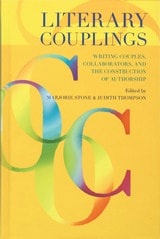
Literary Couplings
Writing Couples, Collaborators, and the Construction of AuthorshipEdited by Marjorie Stone and Judith Thompson
University of Wisconsin Press, 2007
This innovative collection challenges the traditional focus on solitary genius by examining the rich diversity of literary couplings and collaborations from the early modern to the postmodern period. Literary Couplings explores some of the best-known literary partnerships—from the Sidneys to Boswell and Johnson to Sylvia Plath and Ted Hughes—and also includes lesser-known collaborators such as Daphne Marlatt and Betsy Warland. The essays place famous authors such as Samuel Coleridge, Oscar Wilde, and William Butler Yeats in new contexts; reassess overlooked members of writing partnerships; and throw new light on texts that have been marginalized due to their collaborative nature. By integrating historical studies with authorship theory, Literary Couplings goes beyond static notions of the writing "couple" to explore literary couplings created by readers, critics, historians, and publishers as well as by writers themselves, thus expanding our understanding of authorship.
Lost in the Customhouse
Authorship in the American RenaissanceJerome Loving
University of Iowa Press, 1993
Lucchesi and The Whale
Frank Lentricchia
Duke University Press, 2001
Having become “a mad Ahab of reading,” who is driven to dissect the “artificial body of Melville’s behemothian book” to grasp its truth, Lucchesi allows his thoughts to wander and loop from theory to dream to reality to questionable memory. But his black humor-tinged musings are often as profoundly moving as they are intellectual, such as the section in which he ponders the life and philosophy of Ludwig Wittgenstein in relation to the significance of a name—and then attempts to share these thoughts with a sexy, middle-aged flight attendant—or another in which he describes a chance meeting with a similarly-named mafia don.
Despite apparent spiritual emptiness, Lucchesi in the end does find “a secret meaning” to Moby-Dick. And Lentricchia’s creations—both Lucchesi and The Whale and its main character—reveal this meaning through a series of ingeniously self-reflective metaphors, in much the way that Melville himself did in and through Moby-Dick. Vivid, humorous, and of unparalleled originality, this new work from Frank Lentricchia will inspire and console all who love and ponder both great literature and those who would write it.