Results by title
277 books match the query 'Biology' and 10 start with l
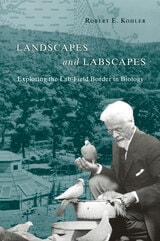
Landscapes and Labscapes
Exploring the Lab-Field Border in BiologyRobert E. Kohler
University of Chicago Press, 2002
In Landscapes and Labscapes, Robert E. Kohler explores the people, places, and practices of field biology in the United States from the 1890s to the 1950s. He takes readers into the fields and forests where field biologists learned to count and measure nature and to read the imperfect records of "nature's experiments." He shows how field researchers use nature's particularities to develop "practices of place" that achieve in nature what laboratory researchers can only do with simplified experiments. Using historical frontiers as models, Kohler shows how biologists created vigorous new border sciences of ecology and evolutionary biology.

Lebanese Amber
The Oldest Insect Ecosystem in Fossilized ResinGeorge Poinar Jr.
Oregon State University Press, 2001

Life Out of Balance
Homeostasis and Adaptation in a Darwinian WorldJoel B. Hagen
University of Alabama Press, 2021
Exploring how scientists came to understand life's balance between stability and adaptation.
Life Out of Balance focuses on a period in history when new ideas of self-regulation, adaptation, and fitness became central to a variety of biological disciplines. During the decades surrounding World War II, these ideas developed in several quite different contexts and led to greater debates about the merits of such models as applied to larger systems, including society at large. Particularly in its later cybernetic form, homeostasis seemed to provide new ways of discussing balance and regulation that avoided discredited approaches of earlier champions of vitalism and mechanism. It provided a common perspective and terminology for discussing self-regulating “systems,” whether biological, mechanical, or social. Although enormously fruitful and influential, homeostatic perspectives also generated numerous controversies when critics questioned the degree to which biological systems are characterized by balance and self-regulation. Resolving these controversies continues to be a challenge in modern biology.
If natural selection constitutes the first law of biology, scientists who champion homeostasis as a theoretical model claim that it is a second law, equally important and closely related to the first. Such claims notwithstanding, homeostasis has generated a series of controversies since it was formalized by Walter Cannon in the late 1920s. Critics contended that Cannon took a too-optimistic view of life, not only ignoring pathological deviations from normality but also failing to adequately explain the ability of living things to respond adaptively to environmental challenges.
Underlying these controversies was the unresolved problem of integrating physiology and other areas of functional biology with the emerging evolutionary synthesis of Mendelian genetics and Darwinian natural selection. The physiological idea of homeostasis as the adaptive “fit” between the organism and its environment and the Darwinian idea of adaptation and fitness in terms of reproductive success might seem to be complementary in an unproblematic way, but historically they have had an uneasy relationship.
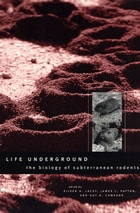
Life Underground
The Biology of Subterranean RodentsEdited by Eileen A. Lacey, James L. Patton, and Guy N. Cameron
University of Chicago Press, 2000
Life Underground provides the first comprehensive review of the biology of subterranean rodents. Arranged by topic rather than by taxon to facilitate cross-species comparisons, chapters cover such subjects as morphology, physiology, social behavior, genetic variation, and evolutionary diversification. Two main questions run throughout the book. First, to what extent has subterranean life shaped the biology of these animals, leading to similar adaptations among otherwise dissimilar species? Second, how have the distinct evolutionary histories of these groups led to different solutions to the challenges posed by life underground?
Life and Research
A Survival Guide for Early-Career Biomedical ScientistsParis H. Grey and David G. Oppenheimer
University of Chicago Press, 2022
Building and maintaining a mentoring network, practicing self-care and having a life outside of the lab, understanding that what works perfectly for a labmate might not work for you—these are just a few of the strategies that lab manager and molecular biologist Paris H. Grey and PI and geneticist David G. Oppenheimer wished they had implemented far sooner in their careers. They also offer practical advice on managing research projects, sharing your work on social media, and attending conferences. Above all, they coach early-career scientists to avoid burnout and make the most of every lab experience to grow and learn.
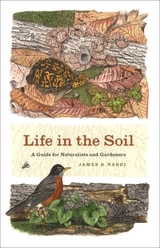
Life in the Soil
A Guide for Naturalists and GardenersJames B. Nardi
University of Chicago Press, 2007
Leonardo da Vinci once mused that “we know more about the movement of celestial bodies than about the soil underfoot,” an observation that is as apt today as it was five hundred years ago. The biological world under our toes is often unexplored and unappreciated, yet it teems with life. In one square meter of earth, there lives trillions of bacteria, millions of nematodes, hundreds of thousands of mites, thousands of insects and worms, and hundreds of snails and slugs. But because of their location and size, many of these creatures are as unfamiliar and bizarre to us as anything found at the bottom of the ocean.
Lavishly illustrated with nearly three hundred color illustrations and masterfully-rendered black and white drawings throughout, Life in the Soil invites naturalists and gardeners alike to dig in and discover the diverse community of creatures living in the dirt below us. Biologist and acclaimed natural history artist James B. Nardibegins with an introduction to soil ecosystems, revealing the unseen labors of underground organisms maintaining the rich fertility of the earth as they recycle nutrients between the living and mineral worlds. He then introduces readers to a dazzling array of creatures: wolf spiders with glowing red eyes, snails with 120 rows of teeth, and 10,000-year-old fungi, among others. Organized by taxon, Life in the Soil covers everything from slime molds and roundworms to woodlice and dung beetles, as well as vertebrates from salamanders to shrews. The book ultimately explores the crucial role of soil ecosystems in conserving the worlds above and below ground.
A unique and illustrative introduction to the many unheralded creatures that inhabit our soils and shape our environment aboveground, Life in the Soil will inform and enrich the naturalist in all of us.
Life's Splendid Drama
Evolutionary Biology and the Reconstruction of Life's Ancestry, 1860-1940Peter J. Bowler
University of Chicago Press, 1996
"Intriguing and insightful."—William Kimler, American Scientist
"[A] volume of impressive scholarship and extensive references."—Library Journal
"One of Bowler's best."—Kevin Padian, Nature
"[Bowler's] comprehensive review of the various debates and ideas in taxonomy, morphology, and vertebrate evolution . . . deserves the attention of biologists and other scholars interested in the history of ideas."—Choice
"The persistence of pre-Darwinian modes of thought in contemporary biology underlines the importance of Bowler's book. Its value is not only in the history it provides, but also in the way it illumines the present."—Peter J. Causton, Boston Book Review
Listening to Beauty
Rhetorics of Science in Sea and SoundMegan Poole
University of Chicago Press, 2025
Our attempts to understand the world are always more than simply rational. Our bodies learn through lived experience, our natural environments challenge what we think we know, and we take lessons from our nonhuman kin. Even scientists, often considered paragons of rationality, frequently describe their findings in the language of beauty. For rhetorician Megan Poole, beauty is integral to how scientific research works.
Drawing on interviews with leading biologists, Poole explores what happens when scientists set aside objectivity and listen for beauty around them. The wonder we feel at the plumage of birds, the melodies of whales, or the caretaking of elephants may not help us (on its own) to isolate a given fact, but such encounters may teach us to open ourselves to a different way of knowing entirely. Through stories about researchers’ encounters with wonder, Listening to Beauty reveals how scientific discovery happens sometimes unsystematically, sometimes incoherently, often beautifully.
Long-Shadowed Forest
Helen Hoover
University of Minnesota Press, 1998
Longevity, Senescence, and the Genome
Caleb E. Finch
University of Chicago Press, 1990
To enhance gerontology's focus on human age-related dysfunctions, Caleb E. Finch provides a comparative review of all the phyla of organisms, broadening gerontology to intersect with behavioral, developmental, evolutionary, and molecular biology. By comparing species that have different developmental and life spans, Finch proposes an original typology of senescence from rapid to gradual to negligible, and he provides the first multiphyletic calculations of mortality rate constants.