Results by title
379 books match the query 'Botany' and 6 start with l
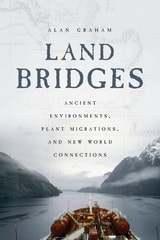
Land Bridges
Ancient Environments, Plant Migrations, and New World ConnectionsAlan Graham
University of Chicago Press, 2018
In this book, paleobotanist Alan Graham traces the formation and disruption of key New World land bridges and describes the biotic, climatic, and biogeographic ramifications of these land masses’ changing formations over time. Looking at five land bridges, he explores their present geographic setting and climate, modern vegetation, indigenous peoples (with special attention to their impact on past and present vegetation), and geologic history. From the great Panamanian isthmus to the boreal connections across the North Atlantic and North Pacific Oceans that allowed exchange of organisms between North America, Europe, and Asia, Graham’s sweeping, one-hundred-million-year history offers new insight into the forces that shaped the life and land of the New World.
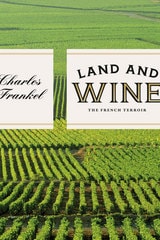
Land and Wine
The French TerroirCharles Frankel
University of Chicago Press, 2014
For centuries, France has long been the world’s greatest wine-producing country. Its wines are the global gold standard, prized by collectors, and its winemaking regions each offer unique tasting experiences, from the spice of Bordeaux to the berry notes of the Loire Valley. Although grape variety, climate, and the skill of the winemaker are essential in making good wine, the foundation of a wine’s character is the soil in which its grapes are grown. Who could better guide us through the relationship between the French land and the wine than a geologist, someone who deeply understands the science behind the soil? Enter scientist Charles Frankel.
In Land and Wine, Frankel takes readers on a tour of the French winemaking regions to illustrate how the soil, underlying bedrock, relief, and microclimate shape the personality of a wine. The book’s twelve chapters each focus in-depth on a different region, including the Loire Valley, Alsace, Burgundy, Champagne, Provence, the Rhône valley, and Bordeaux, to explore the full meaning of terroir. In this approachable guide, Frankel describes how Cabernet Franc takes on a completely different character depending on whether it is grown on gravel or limestone; how Sauvignon yields three different products in the hills of Sancerre when rooted in limestone, marl, or flint; how Pinot Noir will give radically different wines on a single hill in Burgundy as the vines progress upslope; and how the soil of each château in Bordeaux has a say in the blend ratios of Merlot and Cabernet-Sauvignon. Land and Wine provides a detailed understanding of the variety of French wine as well as a look at the geological history of France, complete with volcanic eruptions, a parade of dinosaurs, and a menagerie of evolution that has left its fossils flavoring the vineyards.
Both the uninitiated wine drinker and the confirmed oenophile will find much to savor in this fun guide that Frankel has spiked with anecdotes about winemakers and historic wine enthusiasts—revealing which kings, poets, and philosophers liked which wines best—while offering travel tips and itineraries for visiting the wineries today.
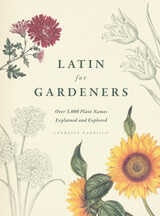
Latin for Gardeners
Over 3,000 Plant Names Explained and ExploredLorraine Harrison
University of Chicago Press, 2012
Since Latin became the standard language for plant naming in the eighteenth century, it has been intrinsically linked with botany. And while mastery of the classical language may not be a prerequisite for tending perennials, all gardeners stand to benefit from learning a bit of Latin and its conventions in the field. Without it, they might buy a Hellebores foetidus and be unprepared for its fetid smell, or a Potentilla reptans with the expectation that it will stand straight as a sentinel rather than creep along the ground.
An essential addition to the gardener’s library, this colorful, fully illustrated book details the history of naming plants, provides an overview of Latin naming conventions, and offers guidelines for pronunciation. Readers will learn to identify Latin terms that indicate the provenance of a given plant and provide clues to its color, shape, fragrance, taste, behavior, functions, and more.
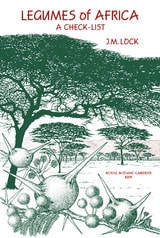
Legumes of Africa
a checklistJ. M. Lock
Royal Botanic Gardens, Kew, 2000
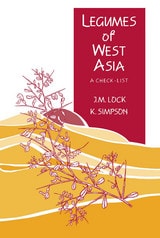
Legumes of West Asia
a checklistJ. M. Lock and K. Simpson
Royal Botanic Gardens, Kew, 2000
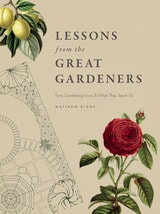
Lessons from the Great Gardeners
Forty Gardening Icons and What They Teach UsMatthew Biggs
University of Chicago Press, 2016
Entries for each gardening great highlight their iconic plants and garden designs, revealing both the gardeners’ own influences and the seeds—sometimes literal—that they sowed for gardens yet to sprout. From André Le Nôtre in seventeenth-century France, who drew on his training as an architect and hydraulic engineer to bring the topiary form to Vaux-le-Vicomte and Versailles, to the work of High Line and Lurie Garden designer Piet Oudolf, and Thomas Jefferson’s advice on creating protected garden microclimates for help growing early crops and tender fruit like figs (with peas, a Jefferson favorite), Lessons from the Great Gardeners is a resource as rich as the soil from which it springs.
Featuring lush illustrations harvested from the archives of the Royal Horticultural Society, as well as sections on a dozen international gardens that showcase the lessons of the greats, this homage to the love of good, clean dirt is sure to inspire readers to get out in the sun and dig.