Results by title
718 books match the query 'Civil rights' and 33 start with l
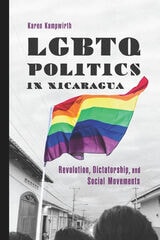
LGBTQ Politics in Nicaragua
Revolution, Dictatorship, and Social MovementsKaren Kampwirth
University of Arizona Press, 2022
Karen Kampwirth is a renowned scholar of the Nicaraguan Revolution, who has been writing at the intersection of gender and politics for decades. In this chronological telling of the last fifty years of political history in Nicaragua, Kampwirth deploys a critical new lens: understanding politics from the perspective of the country’s LGBTQ community. Kampwirth details the gay and lesbian guerrillas in the 1960s and 1970s, Nicaragua’s first openly gay television wizard in the 1980s, and the attempts by LGBTQ revolutionaries to create a civil rights movement and the subsequent squashing of that movement by the ruling Sandinista party. She analyzes the shifting political alliances, the rise of strong feminist and LGBTQ movements in Nicaragua, and the attempts by the administration of Daniel Ortega to co-opt and control these movements.
Ultimately, this is a story of struggle and defeat, progress and joy. This timely book provides a well-documented review of LGBTQ politics in modern Nicaragua, helping us to see the Sandinista Revolution and its ongoing aftermath in a new light.
LULAC
The Evolution of a Mexican American Political OrganizationBy Benjamin Márquez
University of Texas Press, 1993
The League of United Latin American Citizens (LULAC) is one of the best-known and active national organizations that represent Mexican Americans and their political interests. Since its founding in Corpus Christi, Texas, in 1929, it has served as a vehicle through which Mexican Americans can strive for equal rights and economic assimilation into Anglo American society.
This study is the first comprehensive political history of LULAC from its founding through the 1980s. Márquez explores the group’s evolution from an activist, grassroots organization in the pre– and post–World War II periods to its current status as an institutionalized bureaucracy that relies heavily on outside funding to further its politically conservative goals. His information is based in part on many primary source materials from the LULAC archives at the University of Texas at Austin, the Houston Public Library, and the University LULAC publications, as well as interviews with present and past LULAC activists.
Márquez places this history within the larger theoretical framework of incentive theory to show how changing, and sometimes declining, membership rewards have influenced people’s participation in LULAC and other interest groups over time. Ironically, as of 1988, LULAC could claim fewer than 5,000 dues-paying members, yet a dedicated and skillful leadership secured sufficient government and corporate monies to make LULAC one of the most visible and active groups in Mexican American politics.
Given the increasing number of interest groups and political action committees involved in national politics in the United States, this case study of a political organization’s evolution will be of interest to a wide audience in the political and social sciences, as well as to students of Mexican American and ethnic studies.
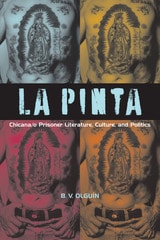
La Pinta
Chicana/o Prisoner Literature, Culture, and PoliticsBy B. V. Olguín
University of Texas Press, 2009
In this groundbreaking study based on archival research about Chicana and Chicano prisoners—known as Pintas and Pintos—as well as fresh interpretations of works by renowned Pinta and Pinto authors and activists, B. V. Olguín provides crucial insights into the central roles that incarceration and the incarcerated have played in the evolution of Chicana/o history, cultural paradigms, and oppositional political praxis.
This is the first text on prisoners in general, and Chicana/o and Latina/o prisoners in particular, that provides a range of case studies from the nineteenth century to the present. Olguín places multiple approaches in dialogue through the pairing of representational figures in the history of Chicana/o incarceration with specific themes and topics. Case studies on the first nineteenth-century Chicana prisoner in San Quentin State Prison, Modesta Avila; renowned late-twentieth-century Chicano poets Raúl Salinas, Ricardo Sánchez, and Jimmy Santiago Baca; lesser-known Chicana pinta and author Judy Lucero; and infamous Chicano drug baron and social bandit Fred Gómez Carrasco are aligned with themes from popular culture such as prisoner tattoo art and handkerchief art, Hollywood Chicana/o gangxploitation and the prisoner film American Me, and prisoner education projects.
Olguín provides a refreshing critical interrogation of Chicana/o subaltern agency, which too often is celebrated as unambiguously resistant and oppositional. As such, this study challenges long-held presumptions about Chicana/o cultures of resistance and proposes important explorations of the complex and contradictory relationship between Chicana/o agency and ideology.
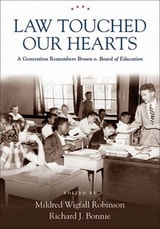
Law Touched Our Hearts
A Generation Remembers Brown v. Board of EducationMildred Wigfall Robinson
Vanderbilt University Press, 2008
What Brown did was to elevate race from the country's dirty secret to its most urgent topic of conversation. This book stands alone in presenting, in one source, stories of black and white Americans, men and women, from all parts of the nation, who were public school students during the years immediately after Brown. All shared an epiphany. Some became aware of race and the burden of racial separation. Others dared to hope that the yoke of racial oppression would at last be lifted.
The editors surveyed 4750 law professors born between 1936 and 1954, received 1000 responses, and derived these forty essays from those willing to write personal accounts of their childhood experiences in the classroom and in their communities. Their moving stories of how Brown affected them say much about race relations then and now. They also provide a picture of how social change can shape the careers of an entire generation in one profession.
Contributors provide accounts from across the nation. Represented are
-de jure states, those segregated by law at the time of Brown, including Alabama, Florida, Georgia, Louisiana, Maryland, Mississippi, North Carolina, South Carolina, Tennessee, Virginia, as well as the District of Columbia
-de facto states, those where segregation was illegal but a common practice, including California, Illinois, Kansas, Massachusetts, Missouri, New Jersey, New York, Ohio, Washington, and Wisconsin.
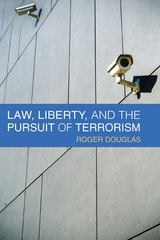
Law, Liberty, and the Pursuit of Terrorism
Roger Douglas
University of Michigan Press, 2014
Roger Douglas compares responses to terrorism by five liberal democracies—the United States, the United Kingdom, Canada, Australia, and New Zealand—over the past 15 years. He examines each nation’s development and implementation of counterterrorism law, specifically in the areas of information-gathering, the definition of terrorist offenses, due process for the accused, detention, and torture and other forms of coercive questioning.
Douglas finds that terrorist attacks elicit pressures for quick responses, often allowing national governments to accrue additional powers. But emergencies are neither a necessary nor a sufficient condition for such laws, which may persist even after fears have eased. He argues that responses are influenced by both institutional interests and prior beliefs, and complicated when the exigencies of office and beliefs point in different directions. He also argues that citizens are wary of government’s impingement on civil liberties and that courts exercise their capacity to restrain the legislative and executive branches. Douglas concludes that the worst antiterror excesses have taken place outside of the law rather than within, and that the legacy of 9/11 includes both laws that expand government powers and judicial decisions that limit those very powers.
Lawyers Beyond Borders
Advancing International Human Rights Through Local Laws and CourtsMaria Armoudian
University of Michigan Press, 2021
Despite international conventions and human rights declarations, millions of people have suffered and continue to suffer torture, slavery, or violent deaths, with no remedy or recourse. They have fallen, in essence, “below the law,” outside of law’s protection. Often violated by their own governments, sometimes with support from transnational corporations, or nations benefiting from human rights violations, how can these victims find justice? Lawyers Beyond Borders reveals the inner workings of the advances and retreats in the quest for redress and restoration of human rights for those whom international legal-political systems have failed. The process of justice begins in the US, with a handful of human rights lawyers steeped in the American tradition of advancing civil rights through civil litigation. As the civil rights movement gained traction and an ample supply of lawyers, this small cadre turned their attention toward advancing international human rights, via the US legal system. They sought to build another piece of the rights revolution, this time for survivors of egregious human rights violations in faraway lands. These cases were among the most unlikely to be slated for victory: The abuses occurred abroad; the victims are aliens, usually with few, if any, resources; the perpetrators are politically powerful, resourced, and well connected, often members of governments, militaries, or multinational corporations. The legal and political systems’ structures are mostly stacked against these survivors, many who bear the scars of trauma and terror.
Lawyers Beyond Borders is about agency. It is about how, in the face of powerful interests and seemingly insurmountable obstacles—political, psychological, economic, geographical, and physical—a small group of lawyers and survivors navigated a terrain of daunting barriers to begin building, case-by-case, new pathways to justice for those who otherwise would have none.
Lawyers of the Right
Professionalizing the Conservative CoalitionAnn Southworth
University of Chicago Press, 2008
Drawing on in-depth interviews with more than seventy lawyers who represent conservative and libertarian nonprofit organizations, Ann Southworth explores their values and identities and traces the implications of their shared interest in promoting political strategies that give lawyers leading roles. She goes on to illuminate the function of mediator organizations—such as the Heritage Foundation and the Federalist Society for Law and Public Policy—that have succeeded in promoting cooperation among different factions of conservative lawyers. Such cooperation, she finds, has aided efforts to drive law and the legal profession politically rightward and to give lawyers greater prominence in the conservative movement. Southworth concludes, though, that tensions between the conservative law movement’s elite and populist elements may ultimately lead to its undoing.
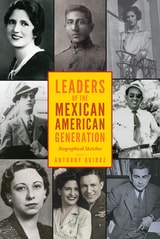
Leaders of the Mexican American Generation
Biographical EssaysAnthony Quiroz
University Press of Colorado, 2016
Leaders of the Mexican American Generation explores the lives of a wide range of influential members of the US Mexican American community between 1920 and 1965 who paved the way for major changes in their social, political, and economic status within the United States.
Including feminist Alice Dickerson Montemayor, to San Antonio attorney Gus García, and labor activist and scholar Ernesto Galarza, the subjects of these biographies include some of the most prominent idealists and actors of the time. Whether debating in a court of law, writing for a major newspaper, producing reports for governmental agencies, organizing workers, holding public office, or otherwise shaping space for the Mexican American identity in the United States, these subjects embody the core values and diversity of their generation.
More than a chronicle of personalities who left their mark on Mexican American history, Leaders of the Mexican American Generation cements these individuals as major players in the history of activism and civil rights in the United States. It is a rich collection of historical biographies that will enlighten and enliven our understanding of Mexican American history.
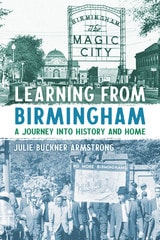
Learning from Birmingham
A Journey into History and HomeJulie Buckner Armstrong
University of Alabama Press, 2023
A steel town daughter’s search for truth and beauty in Birmingham, Alabama
“As Birmingham goes, so goes the nation,” Fred Shuttlesworth observed when he invited Martin Luther King Jr. to the city for the transformative protests of 1963. From the height of the Civil Rights Movement through its long aftermath, images of police dogs, fire hoses and four girls murdered when Ku Klux Klan members bombed the Sixteenth Street Baptist Church have served as an uncomfortable racial mirror for the nation. Like many white people who came of age in the Civil Rights Movement’s wake, Julie Buckner Armstrong knew little about this history. Only after moving away and discovering writers like Toni Morrison and Alice Walker did she realize how her hometown and family were part of a larger, ongoing story of struggle and injustice.
When Armstrong returned to Birmingham decades later to care for her aging mother, Shuttlesworth’s admonition rang in her mind. By then an accomplished scholar and civil rights educator, Armstrong found herself pondering the lessons Birmingham holds for a twenty-first century America. Those lessons extended far beyond what a 2014 Teaching Tolerance report describes as the common distillation of the Civil Rights Movement into “two names and four words: Martin Luther King Jr, Rosa Parks, and ‘I have a dream.’” Seeking to better understand a more complex local history, its connection to broader stories of oppression and resistance, and her own place in relation to it, Armstrong embarked on a journey to unravel the standard Birmingham narrative to see what she would find.
Beginning at the center, with her family’s 1947 arrival to a housing project near the color line, within earshot of what would become known as Dynamite Hill, Armstrong works her way over time and across the map. Weaving in stories of her white working-class family, classmates, and others not traditionally associated with Birmingham’s civil rights history, including members of the city’s LGBTQ community, she forges connections between the familiar and lesser-known. The result is a nuanced portrait of Birmingham--as seen in public housing, at old plantations, in segregated neighborhoods, across contested boundary lines, over mountains, along increasingly polluted waterways, beneath airport runways, on highways cutting through town, and under the gaze of the iconic statue of Vulcan.
In her search for truth and beauty in Birmingham, Armstrong draws on the powers of place and storytelling to dig into the cracks, complicating easy narratives of civil rights progress. Among the discoveries she finds in America’s racial mirror is a nation that has failed to recognize itself in the horrific images from Birmingham’s past and to acknowledge the continuing inequalities that make up the Civil Right’s Movement’s unfinished business. Learning from Birmingham reminds us that stories of civil rights, structural oppression, privilege, abuse, race and gender bias, and inequity are difficult and complicated, but their telling, especially from multiple stakeholder perspectives, is absolutely necessary.
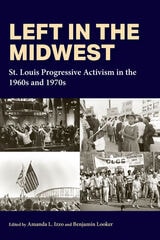
Left in the Midwest
St. Louis Progressive Activism in the 1960s and 1970sAmanda L. Izzo
University of Missouri Press, 2023
Despite St. Louis’s mid-twentieth-century reputation as a conservative and sleepy midwestern metropolis, the city and its surrounding region have long played host to dynamic forms of social-movement organizing. This was especially the case during the 1960s and 1970s, when a new generation of local activists lent their energies to the ongoing struggles for Black freedom, lesbian and gay liberation, feminist social transformations, environmental protection, an end to the Vietnam War, and more. This volume, the first of its kind, offers fifteen scholarly contributions that together bring into focus the exceptional range of progressive activist projects that took shape in a single midwestern city during these tumultuous decades.
In contrast to scholarship that seeks to interpret the era’s social-movement initiatives in a primarily national context, the works presented in this expansive collection emphasize the importance of locality, neighborhood, community institutions, and rooted social networks. Documenting wrenching forces of metropolitan change as well as grassroots resilience, Left in the Midwest shows us how place powerfully shaped agendas, worldviews, and opportunities for the disparate groups that dedicated themselves to progressive visions for their city. By revising our sense of the region’s past, this volume also expands our sense of the possibilities that the future may hold for activist movements seeking change in St. Louis and beyond.
Legacy and Legitimacy
Black Americans and the Supreme CourtRosalee A. Clawson and Eric N. Waltenburg
Temple University Press, 2008
Thoroughly grounded in the latest scholarly literature, theoretical sources, and experimental results, Legacy and Legitimacy substantially advances understanding of Black Americans’ attitudes toward the Supreme Court, the Court’s ability to influence Blacks’ opinions about the legitimacy of public institutions and policies, and the role of media in shaping Blacks’ judgments.
Drawing on legitimacy theory—which explains the acceptance of or tolerance for controversial policies—the authors begin by reexamining the significance of “diffuse support” in establishing legitimacy. They provide a useful overview of the literature on legitimacy and a concise history of the special relationship between Blacks and the Court. They investigate the influences of group attitudes and media “framing.” And they employ data from large-scale surveys to show that Blacks with greater levels of diffuse support for the Court are more likely to adopt positions consistent with Court rulings.
With its broad scope and inclusion of new experimental findings, Legacy and Legitimacy will interest students and scholars of judicial politics, racial politics, media and politics, black studies and public opinion.
Legal Rights, 6th Ed.
The Guide for Deaf and Hard of Hearing PeopleGallaudet University Press, 2015
The new Legal Rights also explains the significant amendments to these laws, including the ADA Amendments Act (ADAAA) and new regulations to its Title II concerning public entities and Title III pertaining to public accommodations and commercial facilities. The reauthorization of IDEA expanded the No Child Left Behind Act requirement for highly qualified teachers to all students with disabilities. This new edition also tracks the trend of passing a Deaf and Hard of Hearing Children’s Bill of Rights in a growing number of state legislatures.
This completely new resource also delineates new legislation such as the Twenty-First Century Communications Video and Accessibility Act, which ensures access to the newest communications technology for deaf and hard of hearing people. Legal Rights also includes information on the use of interpreters in the legal system, securing its position as the most comprehensive reference of legal information for deaf and hard of hearing people now available.
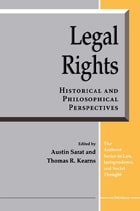
Legal Rights
Historical and Philosophical PerspectivesAustin Sarat and Thomas R. Kearns, Editors
University of Michigan Press, 1997
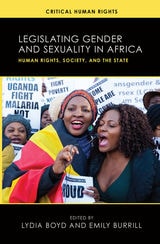
Legislating Gender and Sexuality in Africa
Human Rights, Society, and the StateEdited by Lydia Boyd and Emily Burrill
University of Wisconsin Press, 2020
Legislating Gender and Sexuality in Africa details how legal efforts in the continent can often be moralizing enterprises, illuminating how these processes are closely tied to notions of ethics, personhood, and citizenship. The contributors provide new appraisals of recent events, with fresh arguments about the relationships between local and global fights for rights. This interdisciplinary approach will appeal to scholars in African studies, anthropology, history, and gender studies.

Leon Trotsky
Writings in ExileLeon Trotsky
Pluto Press, 2012
Leon Trotsky was a key political figure of the twentieth century – a leader of the Russian Revolution, founder of the Red Army, author of books on literature, history, morality and politics.
Leon Trotsky: Writings in Exile contains some of his most insightful and penetrating works. Exiled and isolated by Stalin, Trotsky used the only weapon he had left – words. In these writings he defends the 1917 revolution, warns prophetically of fascism and analyses anti-colonial movements in the global south.
This collection gives a sense of the real Trotsky – passionate, humanist, Marxist. It will introduce the writings of one of history's great revolutionaries to a new generation.
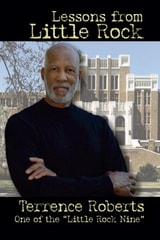
Lessons from Little Rock
Terrance Roberts
Butler Center for Arkansas Studies, 2009
Liberal Democracy and the Limits of Tolerance
Essays in Honor and Memory of Yitzhak RabinRaphael Cohen-Almagor, Editor
University of Michigan Press, 2000
Liberal Suppression
Section 501(c)(3) and the Taxation of SpeechPhilip Hamburger
University of Chicago Press, 2018
Tracing the history of American liberalism, including theological liberalism and its expression in nativism, Hamburger shows the centrality of turbulent popular anxieties about the Catholic Church and other potentially orthodox institutions. He argues persuasively that such theopolitical fears about the political speech of churches and related organizations underlay the adoption, in 1934 and 1954, of section 501(c)(3)’s speech limits. He thereby shows that the speech restrictions have been part of a broad majority assault on minority rights and that they are grossly unconstitutional.
Along the way, Hamburger explores the role of the Ku Klux Klan and other nativist organizations, the development of American theology, and the cultural foundations of liberal “democratic” political theory. He also traces important legal developments such as the specialization of speech rights and the use of law to homogenize beliefs. Ultimately, he examines a wide range of contemporary speech restrictions and the growing shallowness of public life in America.
His account is an unflinching look at the complex history of American liberalism and at the implications for speech, the diversity of belief, and the nation’s future.
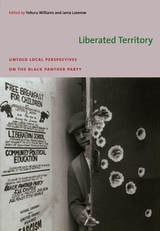
Liberated Territory
Untold Local Perspectives on the Black Panther PartyYohuru Williams and Jama Lazerow, eds.
Duke University Press, 2008
The histories and character of the party branches vary as widely as their locations. The Cape Verdeans of New Bedford, Massachusetts, were initially viewed as a particular challenge for the local Panthers but later became the mainstay of the Boston-area party. In the early 1970s, the Winston-Salem, North Carolina, chapter excelled at implementing the national Black Panther Party’s strategic shift from revolutionary confrontation to mainstream electoral politics. In Detroit, the Panthers were defined by a complex relationship between their above-ground activities and an underground wing dedicated to armed struggle. While the Milwaukee chapter was born out of a rising tide of black militancy, it ultimately proved more committed to promoting literacy and health care and redressing hunger than to violence. The Alabama Black Liberation Front did not have the official imprimatur of the national party, but it drew heavily on the Panthers’ ideas and organizing strategies, and its activism demonstrates the broad resonance of many of the concerns articulated by the national party: the need for jobs, for decent food and housing, for black self-determination, and for sustained opposition to police brutality against black people. Liberated Territory reveals how the Black Panther Party’s ideologies, goals, and strategies were taken up and adapted throughout the United States.
Contributors: Devin Fergus, Jama Lazerow, Ahmad A. Rahman, Robert W. Widell Jr., Yohuru Williams

Liberty, Equality, and Justice
Civil Rights, Women’s Rights, and the Regulation of Business, 1865–1932Ross Evans Paulson
Duke University Press, 1997
Surveying a crucial period in the formation of the modern state and society, Paulson examines the prevailing conflicts of the time and the limitations of various attempts to institute reform, radical change, or ritualistic renewal of American society. His reading of existing scholarship highlights contested social constructs, clashing priorities, changing meanings of key terms, and shifting institutional dynamics in light of their contributions to a complex tragedy in which all parties fell short of the demands for democratic mutuality. Along with discussions of the movements and manipulations of presidential, congressional, and judicial politics, he integrates the experiences of diverse populations—including African Americans, women, Asian immigrants, Native Americans, and working people—and offers a new interpretation of the ways in which social change and political events interact to reframe the many possibilities of American society.
Life in Language
Mission Feminists and the Emergence of a New Protestant SubjectIngie Hovland
University of Chicago Press, 2025
The language of the Bible is a powerful lens through which many Protestants understand themselves and their world, and its prohibitions on women’s speech pose complicated challenges to women. Nevertheless, women frequently serve as vocal leaders in Protestant organizations, including the early twentieth-century Norwegian Mission Society. In Life in Language, Ingie Hovland offers a unique biography of Henny Dons, a leader of the society’s so-called mission feminists, that grapples with ways Protestant women crafted innovative, expansive self-understandings through Christian language. More than their male peers, the mission feminists turned to religious speech to express material, as well as heavenly, desires for paid work, voting rights, and more, and Hovland argues that these experiments in women speaking, reading, writing, and listening paved the way for a new way of being in the world.
Lifting the Shadow
Reshaping Memory, Race, and Slavery in U.S. MuseumsAmy Sodaro
Rutgers University Press, 2025
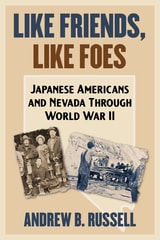
Like Friends, Like Foes
Japanese Americans and Nevada through World War IIAndrew B. Russell
University of Nevada Press, 2026
Like Friends, Like Foes offers a comprehensive analysis of how Nevada residents responded and reacted to the “Japanese Question” during World War II. Both before and during the war, the experience of Japanese American residents of Nevada varied widely. Once the war started, Japanese immigrants experienced an unusual case of mass internment from the mining towns of Ruth and McGill, Nevada, while Japanese American railroad workers and their families, scattered across the state, faced sudden layoffs and evictions. At the same time, most of the Japanese Americans living in Nevada fared much better than their counterparts who resided in the surrounding states.
Andrew Russell’s study examines how variations in local history and local circumstances generated starkly different perspectives and responses to the supposed “Japanese problems” confronting Nevada’s small communities, the state, and the larger region. While Russell’s interpretive history spotlights some highly unusual developments, it nevertheless offers fresh evidence of how individuals or small groups can play significant roles in combating the abuse of civil rights during times of fear and uncertainty.
Like a Loaded Weapon
The Rehnquist Court, Indian Rights, and the Legal History of Racism in AmericaRobert Williams Jr.
University of Minnesota Press, 2005
Beginning with Chief Justice John Marshall’s foundational opinions in the early nineteenth century and continuing today in the judgments of the Rehnquist Court, Williams shows how undeniably racist language and precedent are still used in Indian law to justify the denial of important rights of property, self-government, and cultural survival to Indians. Building on the insights of Malcolm X, Thurgood Marshall, and Frantz Fanon, Williams argues that racist language has been employed by the courts to legalize a uniquely American form of racial dictatorship over Indian tribes by the U.S. government.
Williams concludes with a revolutionary proposal for reimagining the rights of American Indians in international law, as well as strategies for compelling the current Supreme Court to confront the racist origins of Indian law and for challenging bigoted ways of talking, thinking, and writing about American Indians.
Robert A. Williams Jr. is professor of law and American Indian studies at the James E. Rogers College of Law, University of Arizona. A member of the Lumbee Indian Tribe, he is author of The American Indian in Western Legal Thought: The Discourses of Conquest and coauthor of Federal Indian Law.
Limits of Citizenship
Migrants and Postnational Membership in EuropeYasemin Nuhoglu Soysal
University of Chicago Press, 1994
Soysal focuses on postwar international migration, paying particular attention to "guestworkers." Taking an in-depth look at France, Germany, the Netherlands, Sweden, Switzerland, and the United Kingdom, she identifies three major patterns that reflect the varying emphasis particular states place on individual versus corporate groups as the basis for incorporation. She finds that the global expansion and intensification of human rights discourse puts nation-states under increasing outside pressure to extend membership rights to aliens, resulting in an increasingly blurred line between citizen and noncitizen. Finally, she suggests a possible accommodation to these shifts: specifically, a model of post-national membership that derives its legitimacy from universal personhood, rather than national belonging.
This fresh approach to the study of citizenship, rights, and immigration will be invaluable to anyone involved in issues of human rights, international migration, and transnational cultural interactions, as well as to those who study the contemporary transformation of the nation-state, nationalism, and globalization.
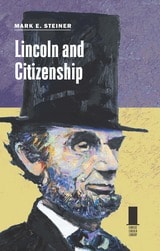
Lincoln and Citizenship
Mark E. Steiner
Southern Illinois University Press, 2021
At its most basic level, citizenship is about who belongs to a political community, and for Abraham Lincoln in nineteenth-century America, the answer was in flux. The concept of “fellow citizens,” for Lincoln, encompassed different groups at different times. In this first book focused on the topic, Mark E. Steiner analyzes and contextualizes Lincoln’s evolving views about citizenship over the course of his political career.
As an Illinois state legislator, Lincoln subscribed to the by-then-outmoded belief that suffrage must be limited to those who met certain obligations to the state. He rejected the adherence to universal white male suffrage that had existed in Illinois since statehood. In 1836 Lincoln called for voting rights to be limited to white people who had served in the militia or paid taxes. Surprisingly, Lincoln did not exclude women, though later he did not advocate giving women the right to vote and did not take women seriously as citizens. The women at his rallies, he believed, served as decoration.
For years Lincoln presumed that only white men belonged in the political and civic community, and he saw immigration through this lens. Because Lincoln believed that white male European immigrants had a right to be part of the body politic, he opposed measures to lengthen the time they would have to wait to become a citizen or to be able to vote. Unlike many in the antebellum north, Lincoln rejected xenophobia and nativism. He opposed black citizenship, however, as he made clear in his debates with Stephen Douglas. Lincoln supported Illinois’s draconian Black Laws, which prohibited free black men from voting and serving on juries or in the militia. Further, Lincoln supported sending free black Americans to Africa—the ultimate repudiation and an antithesis of citizenship.
Yet, as president, Lincoln came to embrace a broader vision of citizenship for African Americans. Steiner establishes how Lincoln’s meetings at the White House with Frederick Douglass and other black leaders influenced his beliefs about colonization, which he ultimately disavowed, and citizenship for African Americans, which he began to consider. Further, the battlefield success of black Union soldiers revealed to Lincoln that black men were worthy of citizenship. Lincoln publicly called for limited suffrage among black men, including military veterans, in his speech about Reconstruction on April 11, 1865. Ahead of most others of his era, Lincoln showed just before his assassination that he supported rights of citizenship for at least some African Americans.
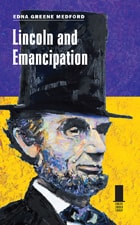
Lincoln and Emancipation
Edna Greene Medford
Southern Illinois University Press, 2015
In this succinct study, Edna Greene Medford examines the ideas and events that shaped President Lincoln’s responses to slavery, following the arc of his ideological development from the beginning of the Civil War, when he aimed to pursue a course of noninterference, to his championing of slavery’s destruction before the conflict ended. Throughout, Medford juxtaposes the president’s motivations for advocating freedom with the aspirations of African Americans themselves, restoring African Americans to the center of the story about the struggle for their own liberation.
Lincoln and African Americans, Medford argues, approached emancipation differently, with the president moving slowly and cautiously in order to save the Union while the enslaved and their supporters pressed more urgently for an end to slavery. Despite the differences, an undeclared partnership existed between the president and slaves that led to both preservation of the Union and freedom for those in bondage. Medford chronicles Lincoln’s transition from advocating gradual abolition to campaigning for immediate emancipation for the majority of the enslaved, a change effected by the military and by the efforts of African Americans. The author argues that many players—including the abolitionists and Radical Republicans, War Democrats, and black men and women—participated in the drama through agitation, military support of the Union, and destruction of the institution from within. Medford also addresses differences in the interpretation of freedom: Lincoln and most Americans defined it as the destruction of slavery, but African Americans understood the term to involve equality and full inclusion into American society. An epilogue considers Lincoln’s death, African American efforts to honor him, and the president’s legacy at home and abroad.
Both enslaved and free black people, Medford demonstrates, were fervent participants in the emancipation effort, showing an eagerness to get on with the business of freedom long before the president or the North did. By including African American voices in the emancipation narrative, this insightful volume offers a fresh and welcome perspective on Lincoln’s America.
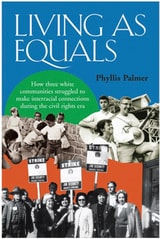
Living as Equals
How Three White Communities Struggled to Make Interracial Connections During the Civil Rights EraPhyllis Palmer
Vanderbilt University Press, 2008
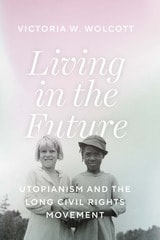
Living in the Future
Utopianism and the Long Civil Rights MovementVictoria W. Wolcott
University of Chicago Press, 2022
Utopian thinking is often dismissed as unrealistic, overly idealized, and flat-out impractical—in short, wholly divorced from the urgent conditions of daily life. This is perhaps especially true when the utopian ideal in question is reforming and repairing the United States’ bitter history of racial injustice. But as Victoria W. Wolcott provocatively argues, utopianism is actually the foundation of a rich and visionary worldview, one that specifically inspired the major figures of the Civil Rights Movement in ways that haven’t yet been fully understood or appreciated.
Wolcott makes clear that the idealism and pragmatism of the Civil Rights Movement were grounded in nothing less than an intensely utopian yearning. Key figures of the time, from Martin Luther King Jr. and Pauli Murray to Father Divine and Howard Thurman, all shared a belief in a radical pacificism that was both specifically utopian and deeply engaged in changing the current conditions of the existing world. Living in the Future recasts the various strains of mid-twentieth-century civil rights activism in a utopian light, revealing the power of dreaming in a profound and concrete fashion, one that can be emulated in other times that are desperate for change, like today.
Living in the Future
Utopianism and the Long Civil Rights MovementVictoria W. Wolcott
University of Chicago Press, 2022
This is an auto-narrated audiobook edition of this book.
Living in the Future reveals the unexplored impact of utopian thought on the major figures of the Civil Rights Movement.
Utopian thinking is often dismissed as unrealistic, overly idealized, and flat-out impractical—in short, wholly divorced from the urgent conditions of daily life. This is perhaps especially true when the utopian ideal in question is reforming and repairing the United States’ bitter history of racial injustice. But as Victoria W. Wolcott provocatively argues, utopianism is actually the foundation of a rich and visionary worldview, one that specifically inspired the major figures of the Civil Rights Movement in ways that haven’t yet been fully understood or appreciated.
Wolcott makes clear that the idealism and pragmatism of the Civil Rights Movement were grounded in nothing less than an intensely utopian yearning. Key figures of the time, from Martin Luther King Jr. and Pauli Murray to Father Divine and Howard Thurman, all shared a belief in a radical pacificism that was both specifically utopian and deeply engaged in changing the current conditions of the existing world. Living in the Future recasts the various strains of mid-twentieth-century civil rights activism in a utopian light, revealing the power of dreaming in a profound and concrete fashion, one that can be emulated in other times that are desperate for change, like today.
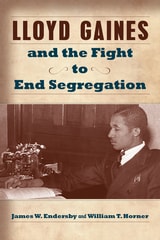
Lloyd Gaines and the Fight to End Segregation
James W. Endersby and William T. Horner
University of Missouri Press, 2016
Winner, 2017 Missouri Conference on History Book Award
In 1936, Lloyd Gaines’s application to the University of Missouri law school was denied based on his race. Gaines and the NAACP challenged the university’s decision. Missouri ex rel. Gaines v. Canada (1938) was the first in a long line of decisions by the U.S. Supreme Court regarding race, higher education, and equal opportunity. The court case drew national headlines, and the NAACP moved Gaines to Chicago after he received death threats. Before he could attend law school, he vanished.
This is the first book to focus entirely on the Gaines case and the vital role played by the NAACP and its lawyers—including Charles Houston, known as “the man who killed Jim Crow”—who advanced a concerted strategy to produce political change. Horner and Endersby also discuss the African American newspaper journalists and editors who mobilized popular support for the NAACP’s strategy. This book uncovers an important step toward the broad acceptance of racial segregation as inherently unequal.
This is the inaugural volume in the series Studies in Constitutional Democracy, edited by Justin Dyer and Jeffrey Pasley of the Kinder Institute on Constitutional Democracy.
Long Is the Way and Hard
One Hundred Years of the NAACPKevern Verney
University of Arkansas Press, 2009
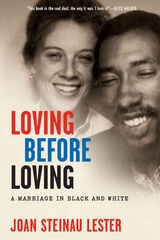
Loving Before Loving
A Marriage in Black and WhiteJoan Steinau Lester
University of Wisconsin Press, 2026
Braiding intellectual, personal, and political history, Lester tells the story of a writer and activist fighting for love and justice before, during, and after the Supreme Court’s 1967 decision striking down bans on interracial marriage in Loving v. Virginia. She describes her own shifts in consciousness, from an activist climbing police barricades by day and reading and writing late into the night to a woman navigating the coming-out process in midlife, before finding the publishing success she had dreamed of. Speaking candidly about every facet of her life, Lester illuminates her journey to fulfillment and healing.