Results by title
324 books match the query 'Comparative literature' and 10 start with l
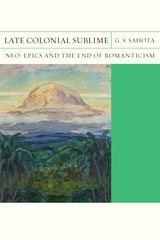
Late Colonial Sublime
Neo-Epics and the End of RomanticismG. S. Sahota
Northwestern University Press, 2018
By bringing together distinct literary canons—both metropolitan and colonial, hegemonic and subaltern, Western and Eastern, all of which took shape upon the common realities of imperial capitalism—Late Colonial Sublime takes an original dialectical approach. It experiments with fragments, parallaxes, and constellational form to explore the aporias of modernity as well as the possible futures they may signal in our midst. A bold intervention into contemporary debates that synthesizes a wealth of sources, this book will interest readers and scholars in world literature, critical theory, postcolonial criticism, and South Asian studies.
Latin American Literature at the Millennium
Local Lives, Global SpacesCecily Raynor
Bucknell University Press, 2021
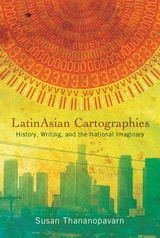
LatinAsian Cartographies
History, Writing, and the National ImaginaryThananopavarn, Susan
Rutgers University Press, 2018
Thananopavarn creates a new “LatinAsian” view of the United States that emphasizes previously suppressed aspects of national history, including imperialism, domestic racism during World War II, Cold War operations in Latin America and Asia, and the politics of borders in an age of globalization. LatinAsian Cartographies ultimately reimagines national narratives in a way that transforms dominant ideas of what it means to be American.
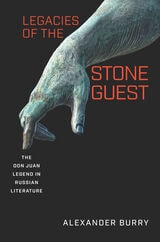
Legacies of the Stone Guest
The Don Juan Legend in Russian LiteratureAlexander Burry
University of Wisconsin Press, 2023
The story of Don Juan first appeared in writing in seventeenth-century Spain, reaching Russia about a century later. Its real impact, however, was delayed until Russia’s most famous poet, Alexander Pushkin, put his own, unique, and uniquely inspirational, spin on the tale. Published in 1830, TheStone Guest is now recognized, with other Pushkin masterpieces, as part of the Russian literary canon. Alexander Burry traces the influence of Pushkin’s brilliant innovations to the legend, which he shows have proven repeatedly fruitful through successive ages of Russian literature, from the Realist to the Silver Age, Soviet, and contemporary periods. Burry shows that, rather than creating a simple retelling of an originally religious tale about a sinful, consummate seducer, Pushkin offered open-ended scenes, re-envisioned and complicated characters, and new motifs that became recursive and productive parts of Russian literature, in ways that even Pushkin himself could never have predicted.
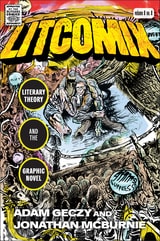
Litcomix
Literary Theory and the Graphic NovelAdam Geczy
Rutgers University Press, 2023
Using the methodology of Georg Lukács and his detailed defense of literary realism as a socially embedded practice, Litcomix tackles difficult questions about reading graphic novels as literature. What critical standards should we use to measure the quality of a graphic novel? How does the genre contribute to our understanding of ourselves and the world? What qualities distinguish it from other forms of literature?
LitComix hones its theoretical approach through case studies taken from across the diverse world of comics, from Yoshihiro Tatsumi’s groundbreaking manga to the Hernandez Brothers’ influential alt-comix. Whether looking at graphic novel adaptations of Proust or considering how Jack Kirby’s use of intertextuality makes him the Balzac of comics, this study offers fresh perspectives on how we might appreciate graphic novels as literature.
Literary Translation in Latin America in the Twenty-First Century
Bridging Experiences, Theories and CulturesEdited by Dirce Waltrick do Amarante and Letícia Maria Vieira de Souza Goellner
University College London, 2026
Encompassing hegemonic, nonhegemonic, and pidgin languages, this compilation explores the state of literary translation studies in Latin America.
Literary Translation in Latin America in the Twenty-First Century provides an in-depth exploration of the current landscape of literary translation studies and translation practices across Latin America. The unparalleled linguistic diversity of Latin America, with nearly five hundred languages spoken, makes translation a vital aspect of daily life. This volume aims to contribute to the analysis from a Latin American perspective, presenting a fresh reading of translation theories that originate in Latin America, as well as theoretical reflections and practical examples of literary translation by poets and artists situated in the continent.
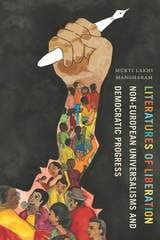
Literatures of Liberation
Non-European Universalisms and Democratic ProgressMukti Lakhi Mangharam
The Ohio State University Press, 2017
In this way, she posits that these universalisms reconceptualize democratic ideals not as Western imports into precolonial societies but as regional phenomena tied to local relations of power and resistance. In charting these alternative democratic trajectories, Mangharam examines oft-overlooked regional and vernacular literary forms and provides a fresh approach to current theorizations of postcolonial and world literatures.
Living On After Failure
Affective Structures of Modern LifeIrving Goh
Duke University Press, 2025
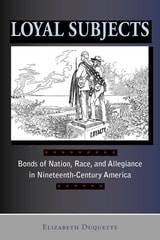
Loyal Subjects
Bonds of Nation, Race, and Allegiance in Nineteenth-Century AmericaDuquette, Elizabeth
Rutgers University Press, 2010
Loyal Subjects considers how the Civil War complicated the cultural value of emotion, especially the ideal of sympathy. Through an analysis of literary works written during and after the conflict-from Nathaniel Hawthorne's "Chiefly About War Matters" through Henry James's The Bostonians and Charles Chestnutt's "The Wife of His Youth," to the Pledge of Allegiance and W.E.B. Du Bois's John Brown, among many others-Duquette reveals that although American literary criticism has tended to dismiss the Civil War's impact, postwar literature was profoundly shaped by loyalty.
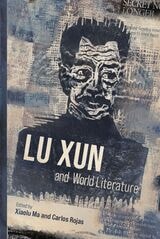
Lu Xun and World Literature
Edited by Xiaolu Ma and Carlos Rojas
Hong Kong University Press, 2025
In Lu Xun and World Literature, the contributors examine various aspects of Lu Xun, who is known as the father of modern Chinese literature. Essays in this book focus on Lu Xun’s works in relation to the notions of world literature and processes of literary worlding. They offer detailed analyses of Lu Xun’s own literary oeuvre and of foreign works that engage with his writings. This volume also focuses on many facets of the publication and dissemination of Lu Xun’s works, from printing and binding to the discussions and debates that followed their release in China and abroad. This book not only makes an important contribution to the field of Lu Xun studies, but also proposes a reexamination of the category of world literature.