Results by title
851 books match the query 'Congresses' and 41 start with l
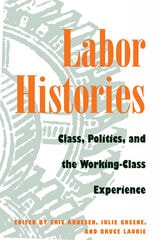
Labor Histories
Class, Politics, and the Working-Class ExperienceEdited by Eric Arnesen, Julie Greene, and Bruce Laurie
University of Illinois Press, 1998

Labor Markets and Firm Benefit Policies in Japan and the United States
Edited by Seiritsu Ogura, Toshiaki Tachibanaki, and David A. Wise
University of Chicago Press, 2003
After an opening chapter assessing the recent ascendance of the U.S. economy, papers diverge to tackle a range of specific issues. Focusing less on international comparison than on the assembly of high-quality research, contributors hone in on a variety of individual topics. Chapters delve into issues of youth employment, participatory employment, information sharing, fringe benefits, and drug coverage in Japan, as well as the dynamics of medical savings accounts, private insurance coverage, and benefit options in the U.S.
Like previous volumes stemming from NBER/JCER collaboration, this book represents a valuable mass of empirical data on some of the most notable employment and benefits issues in each nation, information that will both anchor and provoke scholarly analysis of these topics well into the future.
Labor Statistics Measurement Issues
Edited by John Haltiwanger, Marilyn E. Manser, and Robert H. Topel
University of Chicago Press, 1998
Some of the chapters in this volume explore the conceptual issues of what is needed, what is known, or what can be learned from existing data, and what needs have not been met by available data sources. Others make innovative uses of existing data to analyze these topics. Also included are papers examining how answers to important questions are affected by alternative measures used and how these can be reconciled. This important and useful book will find a large audience among labor economists and consumers of labor statistics.
Labor in the New Economy
Edited by Katharine G. Abraham, James R. Spletzer, and Michael Harper
University of Chicago Press, 2010
As the structure of the economy has changed over the past few decades, researchers and policy makers have been increasingly concerned with how these changes affect workers. In this book, leading economists examine a variety of important trends in the new economy, including inequality of earnings and other forms of compensation, job security, employer reliance on temporary and contract workers, hours of work, and workplace safety and health.
In order to better understand these vital issues, scholars must be able to accurately measure labor market activity. Thus, Labor in the New Economy also addresses a host of measurement issues: from the treatment of outliers, imputation methods, and weighting in the context of specific surveys to evaluating the strengths and weaknesses of data from different sources. At a time when employment is a central concern for individuals, businesses, and the government, this volume provides important insight into the recent past and will be a useful tool for researchers in the future.
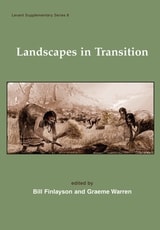
Landscapes in Transition
B. Finlayson
Council for British Research in the Levant, 2010
Language and Sexuality
Contesting Meaning in Theory and PracticeEdited by Kathryn Campbell-Kibler, Robert J. Podesva, Sarah Roberts, and Andrew
CSLI, 2001
Language and the Creative Mind
Edited by Michael Borkent, Barbara Dancygier, and Jennifer Hinnell
CSLI, 2013
Latin American Macroeconomic Reforms
The Second StageEdited by José Antonio González, Vittorio Corbo, Anne O. Krueger, and Aaron Tornell
University of Chicago Press, 2003
Contributors also work to identify future concerns and erect clear signposts for future reforms. For instance, now that inflation rates have been stabilized, one suggested "second stage" monetary reform would be to focus on reducing rates from high to low single digits. Financial sector reforms, it is suggested, should center on improving regulation and supervision. And, contributors argue, since fiscal stability has already been achieved in most countries, new fiscal reforms need to concentrate on institutionalizing fiscal discipline, improving the efficiency and equity of tax collection, and modifying institutional arrangements to deal with increasingly decentralized federal systems.
The analysis and commentary in this volume-authored not only by academic observers but by key Latin American policymakers with decades of firsthand experience-will prove important to anyone with an interest in the future of Latin American's continuing economic development and reform.
Contributors to this volume:
José Antonio González, Stanford University
Anne O. Krueger, International Monetary Fund
Vittorio Corbo, Pontifical Catholic University, Chile
Klaus Schmidt-Hebbel, Central Bank of Chile
Alejandro Werner, Bank of Mexico
Márcio G. P. Garcia, Pontifical Catholic University, Rio
Tatiana Didier, World Bank
Gustavo H. B. Franco, former president, Central Bank of Brazil
Francisco Gil Díaz, Minister of the Treasury, Mexico
Roberto Zahler, former governor, Central Bank of Chile
Ricardo J. Caballero, Massachusetts Institute of Technology
Philip L. Brock, University of Washington
Stephen Haber, Stanford University
Pablo E. Guidotti, Universidad Torcuato Di Tella, Buenos Aires
Vito Tanzi, International Monetary Fund
Enrique Dávila, Ministry of Finance, Mexico
Santiago Levy, Mexican Social Security Institute
Ricardo Fenochietto, private consultant, Buenos Aires
Rogério L. F. Werneck, Pontifical Catholic University, Rio
Carola Pessino, Universidad Torcuato di Tella, Buenos Aires
Michael Michaely, Hebrew University of Jerusalem
Law and Democracy in the Empire of Force
H. Jefferson Powell and James Boyd White, editors
University of Michigan Press, 2009
James Boyd White is Hart Wright Professor of Law emeritus and Professor of English emeritus, at the University of Michigan. His latest book is Living Speech: Resisting the Empire of Force.
"An extraordinary collection of provocative, insightful, and inspiring essays on the future of law and democracy in the twenty-first century."
---Geoffrey R. Stone, Edward H. Levi Distinguished Service Professor of Law, University of Chicago
"These thoughtful essays diagnose democracy's perilous present, and---more importantly---they explore avenues to democracy's rescue through humanization of law."
---Kenneth L. Karst, David G. Price and Dallas P. Price Professor of Law Emeritus, UCLA
Contributors
Martin Böhmer, Universidad de San Andres, Buenos Aires, Argentina
M. Cathleen Kaveny, University of Notre Dame
Howard Lesnick, University of Pennsylvania
The Honorable John T. Noonan Jr., Ninth Circuit Court of Appeals
H. Jefferson Powell, Duke University
Jedediah Purdy, Duke University
Jed Rubenfeld, Yale University
A.W. Brian Simpson, University of Michigan
Barry Sullivan, Jenner and Block LLP, Chicago
Joseph Vining, University of Michigan
Robin West, Georgetown University
James Boyd White, University of Michigan
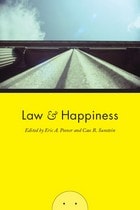
Law and Happiness
Edited by Eric A. Posner and Cass R. Sunstein
University of Chicago Press, 2010
Since the earliest days of philosophy, thinkers have debated the meaning of the term happiness and the nature of the good life. But it is only in recent years that the study of happiness—or “hedonics”—has developed into a formal field of inquiry, cutting across a broad range of disciplines and offering insights into a variety of crucial questions of law and public policy.
Law and Happinessbrings together the best and most influential thinkers in the field to explore the question of what makes up happiness—and what factors can be demonstrated to increase or decrease it. Martha Nussbaum offers an account of the way that hedonics can productively be applied to psychology, Cass R. Sunstein considers the unexpected relationship between happiness and health problems, Matthew Adler and Eric A. Posner view hedonics through the lens of cost-benefit analysis, David A. Weisbach considers the relationship between happiness and taxation, and Mark A. Cohen examines the role crime—and fear of crime—can play in people’s assessment of their happiness, and much more.
The result is a kaleidoscopic overview of this increasingly prominent field, offering surprising new perspectives and incisive analyses that will have profound implications on public policy.
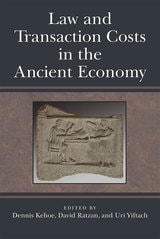
Law and Transaction Costs in the Ancient Economy
Dennis P. Kehoe, David M. Ratzan, and Uri Yiftach, editors
University of Michigan Press, 2015

Leadership
Beyond Establishment ViewsEdited by James G. Hunt, Uma Sekaran, and Chester A. Schriesheim
Southern Illinois University Press, 1981
Volume 6 of the Leadership Symposia—sponsored by the Department of Administrative Sciences and College of Business Administration at Southern Illinois University, Carbondale—charts the state of the field of leadership through a judicious mixture of established and emerging scholars.
The text is broken into four parts, with each part containing an Introduction by the editors. Part 1 consists of “Leadership and Managerial Behavior as Loosely Coupled Systems for Moving Beyond Establishment Views,” by the editors; “The Relevance of Some Studies of Managerial Work and Behavior to Leadership Research,” Rosemary Stewart; “Unstructured, Nonparticipant Observation and the Study of Leaders’ Interpersonal Contacts,” Robert S. Bussom, Lars L. Larson, and William M. Vicars; “Leaders on Line,” Michael M. Lombardo and Morgan W. McCall, Jr.; and “Various Paths Beyond Establishment Views,” Bernard Wilpert.
Part 2 contains “Multiplexed Supervision and Leadership,” Fred Dansereau, Jr., Joseph A. Alutto, Steven E. Markham, and MacDonald Dumas; “A Theory of Leadership Categorization,” Robert G. Lord, Roseanne J. Foti, and James S. Phillips; “Leadership Activation Theory,” John E. Sheridan, Jeffrey L. Kerr, and Michael A. Abelson; and “Intensity of Relation, Dyadic-Group Considerations, Cognitive Categorization, and Transformational Leadership,” Bernard M. Bass; “Strategies for Dealing with Different Processes in Different Contexts,” Ian Morley, “A Multiplexed Response to Bass and Morley,” Fred Dansereau, Jr., Joseph A. Alutto, Steven E. Markham, and MacDonald Dumas; and “Properly Categorizing the Commentary,” Roseanne J. Foti, Robert G. Lord, and James S. Phillips.
Part 3 contains “SYMLOG and Leadership Theory,” Robert F. Bales and Daniel J. Isenberg; “Toward a Macro-Oriented Model of Leadership: An Odyssey,” James G. Hunt and Richard N. Osborn; and “Toward a Paradigm Shift in the Study of Leadership,” Henry J. Tosi, Jr.
Essays in part 4 are “If You’re Not Serving Bill and Barbara, Then You’re Not Serving Leadership,” Henry Mintzberg; “Beyond Establishment Leadership Views: An Epilog,” by the editors; “Leadership Research and the European Connection: An Epilog,” Dian-Marie Hosking and James G. Hunt; and “Conclusion: The Leadership-Management Controversy Revisited,” Schriesheim, Hunt, and Sekaran.
Leading Edges in Social and Behavioral Science
R. Duncan Luce
Russell Sage Foundation, 1990
Leading the Way
Student Engagement and Nationally Competitive AwardsSuzanne McCray
University of Arkansas Press, 2009
Learning by Doing in Markets, Firms, and Countries
Edited by Naomi R. Lamoreaux, Daniel M. G. Raff, and Peter Temin
University of Chicago Press, 1998
The first three essays in this volume explore techniques firms have used to both manage information to create valuable asymmetries and to otherwise suppress unwelcome competition. The next three focus on the ways in which firms have built special capabilities over time, capabilities that have been both sources of competitive advantage and resistance to new opportunities. The last two extend the notion of learning from the level of firms to that of nations. The collection as a whole builds on the previous two volumes to make the connection between information structure and product market outcomes in business history.
Learning from Shenzhen
China’s Post-Mao Experiment from Special Zone to Model CityEdited by Mary Ann O'Donnell, Winnie Wong, and Jonathan Bach
University of Chicago Press, 2017
Bringing China studies into dialogue with urban studies, the contributors explore how the post-Mao Chinese appropriation of capitalist logic led to a dramatic remodeling of the Chinese city and collective life in China today. These essays show how urban villages and informal institutions enabled social transformation through cases of public health, labor, architecture, gender, politics, education, and more. Offering scholars and general readers alike an unprecedented look at one of the world’s most dynamic metropolises, this collective history uses the urban case study to explore critical problems and possibilities relevant for modern-day China and beyond.
Legitimacy of Philanthropic Foundations
United States and European PerspectivesKenneth Prewitt
Russell Sage Foundation, 2006
Lessons and Legacies II
Teaching the Holocaust in a Changing WorldDonald G. Schilling
Northwestern University Press, 1998
Lessons and Legacies II focuses on matters unique to Holocaust education. Consisting of selected papers delivered at the second Lessons and Legacies conference in 1992, the volume is organized in three sections: Issues, Resources, and Applications. Taken individually, the essays speak directly to specific concerns surrounding Holocaust education: the growing maturity of the Holocaust as a field of study; the difficult issue of explaining the perpetrators' behavior; the process of decision-making within Jewish communities during the Holocaust; issues of gender and family; the scope and content of survivor literature; and the structure of courses and the implications of being an educator in the field. Taken as a whole, the volume speaks to the reciprocal and mutually reinforcing relationship between teaching and scholarship in this important field.
Lessons and Legacies III
Memory, Memorialization, and DenialPeter Hayes
Northwestern University Press, 1999
A collection of nineteen essays, this book is organized into four sections: the first focuses on how various fields of study can open new perspectives on the Holocaust and sharpen old ones; the second examines culture and politics in Germany before and after 1933; the third addresses the problems associated with the memorialization of those years; and the final section examines the shocking denials of the Holocaust.
Lessons and Legacies IX
Memory, History, and Responsibility: Reassessments of the Holocaust, Implications for the FutureJonathan Petropoulos
Northwestern University Press, 2010
Memory, History, and Responsibility: Reassessments of the Holocaust, Implications for the Future contains the highlights from the ninth "Lessons and Legacies" conference. The conference, held during the height of the genocide in Darfur, sought to reexamine how the darkness of the Holocaust continues to shadow human existence more than sixty years after World War II left the Third Reich in ruins.
The collection opens with Saul Friedländer’s call for interdisciplinary approaches to Holocaust research. The essays that follow draw on the latest methodologies in the fields of history, literature, philosophy, religion, film, and gender studies, among others. Together both the leading scholars of the Holocaust and the next generation of scholars engage the difficult reality—as raised by editors Petropoulos, Rapaport, and Roth in their introduction—that the legacies of the Holocaust have not proved sufficient in intervening against human-made mass death, let alone preventing or eliminating it.
Lessons and Legacies VI
New Currents in Holocaust ResearchJeffry Diefendorf
Northwestern University Press, 2004
Several of the essays-such as one on nonarmed "amidah" or resistance and others on the role of gender in the behavior of perpetrators and victims-provide innovative and potentially significant interpretive frameworks for the field of Holocaust studies. Others; for instance, the rounding up of Jews in Italy, Nazi food policy in Eastern Europe, and Nazi anti-Jewish scholarship, emphasize the importance of new sources for reconstructing the historical record. Still others, including essays on the 1964 Frankfurt trial of Auschwitz guards and on the response of the Catholic Church to the question of German guilt, bring a new depth and sophistication to highly charged, sharply politicized topics. Together these essays will inform the future of the Holocaust in scholarly research and in popular understanding.
Lessons and Legacies VII
The Holocaust in International PerspectiveDagmar Herzog
Northwestern University Press, 2006
A thorough, thoughtful, and insightful introduction clarifies the volume's themes and concisely places them within the larger context of Holocaust scholarship; and an introductory essay by Omer Bartov brings into focus the numerous paradoxes structuring early twenty-first-century retrospective thinking about the significance of the Holocaust as a central theme of the twentieth century.
Lessons and Legacies VIII
From Generation to GenerationDoris L. Bergen
Northwestern University Press, 2008
Primo Levi opened his memoir Survival in Auschwitz with a call to remember, reflect upon, and teach about the Holocaust—or to face the rejection of subsequent generations. The transmittal of this urgent knowledge between generations was the theme of the eighth Lessons and Legacies Conference on the Holocaust, and it is the focus of this volume. The circular formulation—from generation to generation—points backward and forward: where do we locate the roots of the Holocaust, and how do its repercussions manifest themselves? The contributors address these questions from various perspectives—history, cultural studies, psychiatry, literature, and sociology. They also bring to bear the personal aspect of associated issues such as continuity and rupture. What has the generation of the Shoah passed on to its descendants? What have subsequent generations taken from these legacies? Contributions by scholars, some of whom are survivors and children of survivors, remind us that the Holocaust does—and must—remain present from generation to generation.
Lessons and Legacies X
Back to the Sources: Reexamining Perpetrators, Victims, and BystandersSara R Horowitz
Northwestern University Press, 2012
Lessons and Legacies XI
Expanding Perspectives on the Holocaust in a Changing WorldEdited and with an introduction by Hilary Earl and Karl A. Schleunes
Northwestern University Press, 2015
Lessons and Legacies XII
New Directions in Holocaust Research and EducationEdited and with an introduction by Wendy Lower and Lauren Faulkner Rossi
Northwestern University Press, 2017
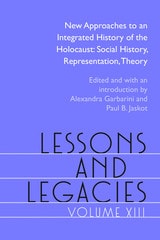
Lessons and Legacies XIII
New Approaches to an Integrated History of the Holocaust: Social History, Representation, TheoryEdited and with an introduction by Alexandra Garbarini and Paul B. Jaskot
Northwestern University Press, 2018
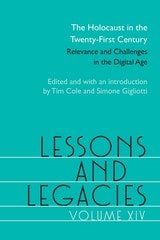
Lessons and Legacies XIV
The Holocaust in the Twenty-First Century; Relevance and Challenges in the Digital AgeEdited and with an introduction by Tim Cole and Simone Gigliotti
Northwestern University Press, 2021
The Holocaust in the Twenty-First Century: Relevance and Challenges in the Digital Age challenges a number of key themes in Holocaust studies with new research. Essays in the section “Tropes Reconsidered” reevaluate foundational concepts such as Primo Levi’s gray zone and idea of the muselmann. The chapters in “Survival Strategies and Obstructions” use digital methodologies to examine mobility and space and their relationship to hiding, resistance, and emigration. Contributors to the final section, “Digital Methods, Digital Memory,” offer critical reflections on the utility of digital methods in scholarly, pedagogic, and public engagement with the Holocaust.
Although the chapters differ markedly in their embrace or eschewal of digital methods, they share several themes: a preoccupation with the experiences of persecution, escape, and resistance at different scales (individual, group, and systemic); methodological innovation through the adoption and tracking of micro- and mezzohistories of movement and displacement; varied approaches to the practice of Saul Friedländer’s “integrated history”; the mainstreaming of oral history; and the robust application of micro- and macrolevel approaches to the geographies of the Holocaust. Taken together, these chapters incorporate gender analysis, spatial thinking, and victim agency into Holocaust studies. In so doing, they move beyond existing notions of perpetrators, victims, and bystanders to portray the Holocaust as a complex and multilayered event.
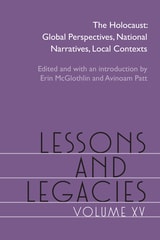
Lessons and Legacies, Volume XV
The Holocaust: Global Perspectives, National Narratives, Local ContextsErin McGlothlin; Avinoam Patt
Northwestern University Press, 2024
The contributions to this volume not only indicate the intellectual vibrancy and diversity of cutting-edge research in Holocaust studies but also reflect multiple approaches to the necessary work of expanding the canon of research in the field and of adopting varied disciplinary perspectives, engaging with global perspectives as well as local studies.
This collection’s chapters manifest three broad categories: history, literature, and memory; at the same time, however, as the interdisciplinary nature of these chapters indicate, these categories should not be regarded as mutually exclusive or discrete. On the contrary, they overlap and intersect in compelling ways, demonstrating the dynamic character of contemporary Holocaust studies, which views history, narrative representation, and commemoration as mutually informative. Further, the contributors continue the recent trend in Holocaust studies whereby specific regional and national narratives are integrated into a more global approach to the event: Newer studies have continued to incorporate what was once termed the periphery into a more global examination of the experiences of Jewish refugees in flight to Latin America, Africa, and the Soviet Union. At the same time, very specific local studies deepen our knowledge of the mechanics of genocide, along with the experiences of refugees in flight, and the subsequent dimensions of Holocaust memory and representation.

Lewis Nordan
Humor, Heartbreak, and HopeEdited by Barbara A. Baker
University of Alabama Press, 2012
A vibrant tribute to Lewis Nordan’s unforgettable blend of Southern surrealism, dark humor, and deep humanity.
Lewis Nordan: Humor, Heartbreak, and Hope is a rich collection of essays that examines the life and work of one of the South’s most distinctive literary voices. Edited by Barbara A. Baker, this volume brings together scholars and writers who explore Nordan’s use of magical realism, dark humor, and emotional vulnerability to portray the complexities of life in the Mississippi Delta. Through themes of race, poverty, family, and resilience, the contributors illuminate how Nordan’s fiction captures both the pain and beauty of the Southern experience. This book is essential reading for fans of Southern literature, cultural studies, and American fiction.
Written by scholars and fiction writers who represent a fascinating range of experience—from a Shakespearean scholar to English professors to a former student of Nordan’s—this is a rich array of essays, poems, and visual arts in tribute to this increasingly important writer. The collection deepens the base of scholarship on Nordan, and contextualizes his work in relation to other important southern writers such as William Faulkner and Eudora Welty.
Nordan was born and raised in Mississippi before moving to Alabama to pursue his Ph.D. at Auburn University. He taught for several years at the University of Arkansas in Fayetteville and retired from the University of Pittsburgh, where he was a professor of English. Nordan has written four novels, three collections of short stories, and a memoir entitled Boy with Loaded Gun. His second novel, Wolf Whistle, won the Southern Book Award, and his subsequent novel, The Sharpshooter Blues, won the Notable Book Award from the American Library Association and the Fiction Award from the Mississippi Institute of Arts and Letters. Nordan is renowned for his distinctive comic writing style, even while addressing more serious personal and cultural issues such as heartbreak, loss, violence, and racism. He transforms tragic characters and events into moments of artistic transcendence, illuminating what he calls the “history of all human beings.”

Linguistic Databases
Edited by John Nerbonne
CSLI, 1998
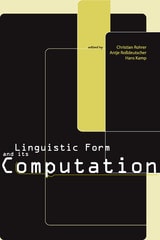
Linguistic Form and Its Computation
Edited by Christian Rohrer, Antje Rossdeutscher, and Hans Kamp
CSLI, 2001
Linguistics and Computation
Edited by Jennifer S. Cole, Georgia M. Green, and Jerry L. Morgan
CSLI, 1995
Linking Literacies
Perspectives on L2 Reading-Writing ConnectionsDiane Belcher and Alan Hirvela, Editors
University of Michigan Press, 2001
Linking Literacies provides the most up to date theoretical overview of the connection between reading and writing in second language acquisition. Belcher and Hirvela have brought together the definitive collection of developments in reading-writing relations research and pedagogy. Papers are organized into these parts:
Ground Practice: Theory, Research, and History
In the Classroom: Teaching Reading as Writing and Writing as Reading
(E)Merging Literacies and the Challenge of Textual Ownership
Technology-Assisted Reading and Writing.
In addition to examining the ways in which L1 influences have affected the development of L2 reading-writing theory and pedagogy, Linking Literacies looks at how L2 reading-writing scholarship has created an identity separate of an L1 framework. Linking Literacies examines a broad range of questions and concerns within the structure of L2 reading-writing connections and L2 academic literacy through discussions of theory, research, and
Literary Circles and Cultural Communities in Renaissance England
Edited by Claude J. Summers & Ted-Larry Pebworth
University of Missouri Press, 2001
Although the literary circle is widely recognized as a significant feature of Renaissance literary culture, it has received remarkably little examination. In this collection of essays, the authors attempt to explain literary circles and cultural communities in Renaissance England by exploring both actual and imaginary ways in which they were conceived and the various needs they fulfilled. The book also pays considerable attention to larger theoretical issues relating to literary circles.
The essayists raise important questions about the extent to which literary circles were actual constructs or fictional creations. Whether illuminating or limiting, the circle metaphor itself can be extended or reformulated. Some of the authors discuss how particular circles actually operated, and some question the very concept of the literary circle. Literary Circles and Cultural Communities in Renaissance England will be an important addition to seventeenth-century studies.

Literature at the Barricades
The American Writer in the 1930sEdited by Ralph F. Bogardus and Fred Hobson
University of Alabama Press, 1982
This collection captures the sense—at times the ordeal—of the 1930s literary experience in America. Fourteen essayists deal with the experience of being a writer in a time of overwhelming economic depression and political ferment, and thereby illuminate the social, political, intellectual, and aesthetic problems and pressures that characterized the experience of American writers and influenced their works.
The essays, as a group, constitute a reevaluation of the American literature of the 1930s. At the same time they support and reinforce certain assumptions about the decade of the Great Depression—that it was grim, desperate, a time when dreams died and poverty became something other than genteel—they challenge other assumptions, chief among them in the notion that 1930s literature was uniform in content, drab in style, anti-formalist, and always political or sociological in nature. They leave us with an impression that there was variety in American writing of the 1930s and a convincing argument that the decade was not a retreat from the modernism of the 1920s. Rather it was a transitional period in which literary modernism was very much an issue and a force that bore imaginative fruit.
Living Matter
The Preservation of Biological Materials in Contemporary Art: An International Conference Held in Mexico City, June 3–5, 2019Rachel Rivenc
J. Paul Getty Trust, The, 2022
Eggshells, flowers, onion peels, sponge cake, dried bread, breast milk, bacteria, living organisms—these are just a few of the biological materials that contemporary artists are using to make art. But how can works made from such perishable ingredients be preserved? And what logistical, ethical, and conceptual dilemmas might be posed by doing so?
Because they are prone to rapid decay, even complete disappearance, biological materials used in art pose a range of unique conservation challenges. This groundbreaking book probes the issues associated with displaying, collecting, and preserving these unique works of art. The twenty-four papers from the conference present a range of case studies, prominently featuring artists’ perspectives, as well as conceptual discussions, thereby affording a comprehensive and richly detailed overview of current thinking and practices on this topic. Living Matter is the first publication to explore broadly the role of biological materials in the creative process and present a variety of possible approaches to their preservation.
The free online edition of this open-access publication is available at www.getty.edu/publications/living-matter/ and includes videos and zoomable illustrations. Also available are free PDF, EPUB, and Kindle/MOBI downloads of the book.

Living in a Law Transformed
Encounters with the Works of James Boyd WhiteJulen Etxabe and Gary Watt, eds.
Michigan Publishing Services, 2014
Locating the Proper Authorities
The Interaction of Domestic and International InstitutionsDaniel W. Drezner, Editor
University of Michigan Press, 2002
Logic Colloquium '92
Edited by Lázló Csirmaz, Dov M. Gabbay, and Maarten de Rijke
CSLI, 1995
Long Shadows
The Second World War in British Fiction and FilmEdited by Petra Rau
Northwestern University Press, 2016