Results by title
374 books match the query 'Economic History' and 15 start with l
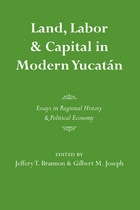
Land, Labor, and Capital in Modern Yucatan
Essays in Regional History and Political EconomyJeffrey T. Brannon
University of Alabama Press, 1991
Owing to Yucatan’s relative isolation, many assume that the history and economy of the peninsula have evolved in a distinctive way, apart from the central government in Mexico City and insulated from world social and economic factors. The essays in this volume suggest that this has not been the case: the process of development in Yucatan has been linked firmly to national and global forces of change over the past two centuries. The essays are by U.S., Mexican, Canadian, and Belizean social scientists representing both well-established and younger scholars. The result is a perspective on Yucatan’s historical development that is at once international, interdisciplinary, and intergenerational.
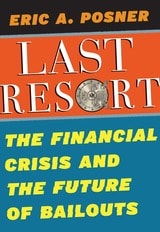
Last Resort
The Financial Crisis and the Future of BailoutsEric A. Posner
University of Chicago Press, 2018
The answer, according to Eric A. Posner, is no. The federal government freely and frequently violated the law with the bailouts—but it did so in the public interest. An understandable lack of sympathy toward Wall Street has obscured the fact that bailouts have happened throughout economic history and are unavoidable in any modern, market-based economy. And they’re actually good. Contrary to popular belief, the financial system cannot operate properly unless the government stands ready to bail out banks and other firms. During the recent crisis, Posner agues, the law didn’t give federal agencies sufficient power to rescue the financial system. The legal constraints were damaging, but harm was limited because the agencies—with a few exceptions—violated or improvised elaborate evasions of the law. Yet the agencies also abused their power. If illegal actions were what it took to advance the public interest, Posner argues, we ought to change the law, but we need to do so in a way that also prevents agencies from misusing their authority. In the aftermath of the crisis, confusion about what agencies did do, should have done, and were allowed to do, has prevented a clear and realistic assessment and may hamper our response to future crises.
Taking up the common objections raised by both right and left, Posner argues that future bailouts will occur. Acknowledging that inevitability, we can and must look ahead and carefully assess our policy options before we need them.
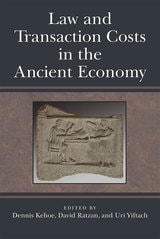
Law and Transaction Costs in the Ancient Economy
Dennis P. Kehoe, David M. Ratzan, and Uri Yiftach, editors
University of Michigan Press, 2015
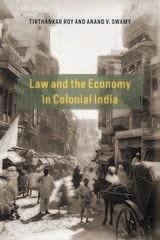
Law and the Economy in Colonial India
Tirthankar Roy and Anand V. Swamy
University of Chicago Press, 2021
Tirthankar Roy and Anand V. Swamy trace the beginnings of the current Indian legal system to the years of British colonial rule. They show how India inherited an elaborate legal system from the British colonial administration, which incorporated elements from both British Common Law and indigenous institutions. In the case of property law, especially as it applied to agricultural land, indigenous laws and local political expediency were more influential in law-making than concepts borrowed from European legal theory. Conversely, with commercial law, there was considerable borrowing from Europe. In all cases, the British struggled with limited capacity to enforce their laws and an insufficient knowledge of the enormous diversity and differentiation within Indian society. A disorderly body of laws, not conducive to production and trade, evolved over time. Roy and Swamy’s careful analysis not only sheds new light on the development of legal institutions in India, but also offers insights for India and other emerging countries through a look at what fosters the types of institutions that are key to economic growth.
Law and the Economy in a Young Democracy
India 1947 and BeyondTirthankar Roy and Anand V. Swamy
University of Chicago Press, 2022
Economists have long lamented how the inefficiency of India's legal system undermines the country’s economic capacity. How has this come to be? The prevailing explanation is that the postcolonial legal system is understaffed and under-resourced, making adjudication and contract enforcement slow and costly.
Taking this as given, Law and the Economy in a Young Democracy examines the contents and historical antecedents of these laws, including how they have stifled economic development. Economists Roy and Swamy argue that legal evolution in independent India has been shaped by three factors: the desire to reduce inequality and poverty; the suspicion that market activity, both domestic and international, can be detrimental to these goals; and the strengthening of Indian democracy over time, giving voice to a growing fraction of society, including the poor.
Weaving the story of India's heralded economic transformation with its social and political history, Roy and Swamy show how inadequate legal infrastructure has been a key impediment to the country's economic growth during the last century. A stirring and authoritative history of a nation rife with contradictions, Law and the Economy in a Young Democracy is essential reading for anyone seeking to understand India's current crossroads—and the factors that may keep its dreams unrealized.
Leading Questions
How Hegemony Affects the International Political EconomyRobert Pahre
University of Michigan Press, 1999
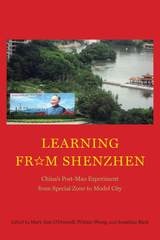
Learning from Shenzhen
China’s Post-Mao Experiment from Special Zone to Model CityEdited by Mary Ann O'Donnell, Winnie Wong, and Jonathan Bach
University of Chicago Press, 2017
Bringing China studies into dialogue with urban studies, the contributors explore how the post-Mao Chinese appropriation of capitalist logic led to a dramatic remodeling of the Chinese city and collective life in China today. These essays show how urban villages and informal institutions enabled social transformation through cases of public health, labor, architecture, gender, politics, education, and more. Offering scholars and general readers alike an unprecedented look at one of the world’s most dynamic metropolises, this collective history uses the urban case study to explore critical problems and possibilities relevant for modern-day China and beyond.

Leave Me Alone and I'll Make You Rich
How the Bourgeois Deal Enriched the WorldDeirdre Nansen McCloskey and Art Carden
University of Chicago Press, 2020
For readers looking for a distillation of McCloskey’s magisterial work, Leave Me Alone and I’ll Make You Rich is what you’ve been waiting for. In this lively volume, McCloskey and the economist and journalist Carden bring together the trilogy’s key ideas and its most provocative arguments. The rise of the west, and now the rest, is the story of the rise of ordinary people to a dignity and liberty inspiring them to have a go. The outcome was an explosion of innovation after 1800, and a rise of real income by an astounding 3,000 percent. The Great Enrichment, well beyond the conventional Industrial Revolution, did not, McCloskey and Carden show, come from the usual suspects, capital accumulation or class struggle. It came from the idea of economic liberty in Holland and the Anglosphere, then Sweden and Japan, then Italy and Israel and China and India, an idea that bids fair in the next few generations to raise up the wretched of the earth. The original shift to liberalism arose from 1517 to 1789 from theological and political revolutions in northwest Europe, upending ancient hierarchies. McCloskey and Carden contend further that liberalism and “innovism” made us better humans as well as richer ones. Not matter but ideas. Not corruption but improvement.
Leave Me Alone and I’ll Make You Rich draws in entertaining fashion on history, economics, literature, philosophy, and popular culture, from growth theory to the Simpsons. It is the perfect introduction for a broad audience to McCloskey’s influential explanation of how we got rich. At a time when confidence in the economic system is under challenge, the book mounts an optimistic and persuasive defense of liberal innovism, and of the modern world it has wrought.
Left Behind
Latin America and the False Promise of PopulismSebastian Edwards
University of Chicago Press, 2010
The political and economic history of Latin America has been marked by great hopes and even greater disappointments. Despite abundant resources—and a history of productivity and wealth—in recent decades the region has fallen further and further behind developed nations, surpassed even by other developing economies in Southeast Asia and elsewhere.
In Left Behind, Sebastian Edwards explains why the nations of Latin America have failed to share in the fruits of globalization and forcefully highlights the dangers of the recent turn to economic populism in the region. He begins by detailing the many ways Latin American governments have stifled economic development over the years through excessive regulation, currency manipulation, and thoroughgoing corruption. He then turns to the neoliberal reforms of the early 1990s, which called for the elimination of deficits, lowering of trade barriers, and privatization of inefficient public enterprises—and which, Edwards argues, held the promise of freeing Latin America from the burdens of the past. Flawed implementation, however, meant the promised gains of globalization were never felt by the mass of citizens, and growing frustration with stalled progress has led to a resurgence of populism throughout the region, exemplified by the economic policies of Venezuela’sHugo Chávez. But such measures, Edwards warns, are a recipe for disaster; instead, he argues, the way forward for Latin America lies in further market reforms, more honestly pursued and fairly implemented. As an example of the promise of that approach, Edwards points to Latin America's giant, Brazil, which under the successful administration of President Luis Inácio da Silva (Lula) has finally begun to show signs of reaching its true economic potential.
As the global financial crisis has reminded us, the risks posed by failing economies extend far beyond their national borders. Putting Latin America back on a path toward sustained growth is crucial not just for the region but for the world, and Left Behind offers a clear, concise blueprint for the way forward.
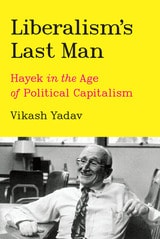
Liberalism's Last Man
Hayek in the Age of Political CapitalismVikash Yadav
University of Chicago Press, 2023
A modern reframing of Friedrich Hayek’s most famous work for the 21st century.
Friedrich Hayek’s The Road to Serfdom was both an intellectual milestone and a source of political division, spurring fiery debates around capitalism and its discontents. In the ensuing discord, Hayek’s true message was lost: liberalism is a thing to be protected above all else, and its alternatives are perilous.
In Liberalism’s Last Man, Vikash Yadav revives the core of Hayek’s famed work to map today’s primary political anxiety: the tenuous state of liberal meritocratic capitalism—particularly in North America, Europe, and Asia—in the face of strengthening political-capitalist powers like China, Vietnam, and Singapore. As open societies struggle to match the economic productivity of authoritarian-capitalist economies, the promises of a meritocracy fade; Yadav channels Hayek to articulate how liberalism’s moral backbone is its greatest defense against repressive social structures.
Liberalism's Last Man
Hayek in the Age of Political CapitalismVikash Yadav
University of Chicago Press, 2023
A modern reframing of Friedrich Hayek’s most famous work for the 21st century.
Friedrich Hayek’s The Road to Serfdom was both an intellectual milestone and a source of political division, spurring fiery debates around capitalism and its discontents. In the ensuing discord, Hayek’s true message was lost: liberalism is a thing to be protected above all else, and its alternatives are perilous.
In Liberalism’s Last Man, Vikash Yadav revives the core of Hayek’s famed work to map today’s primary political anxiety: the tenuous state of liberal meritocratic capitalism—particularly in North America, Europe, and Asia—in the face of strengthening political-capitalist powers like China, Vietnam, and Singapore. As open societies struggle to match the economic productivity of authoritarian-capitalist economies, the promises of a meritocracy fade; Yadav channels Hayek to articulate how liberalism’s moral backbone is its greatest defense against repressive social structures.
Lincoln and the Economics of the American Dream
Gabor S. Boritt
University of Illinois Press, 1994
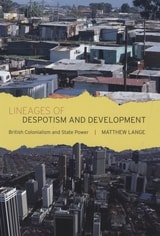
Lineages of Despotism and Development
British Colonialism and State PowerMatthew Lange
University of Chicago Press, 2009
Traditionally, social scientists have assumed that past imperialism hinders the future development prospects of colonized nations. Challenging this widespread belief, Matthew Lange argues in Lineages of Despotism and Development that countries once under direct British imperial control have developed more successfully than those that were ruled indirectly.
Combining statistical analysis with in-depth case studies of former British colonies, this volume argues that direct rule promoted cogent and coherent states with high levels of bureaucratization and inclusiveness, which contributed to implementing development policy during late colonialism and independence. On the other hand, Lange finds that indirect British rule created patrimonial, weak states that preyed on their own populations. Firmly grounded in the tradition of comparative-historical analysis while offering fresh insight into the colonial roots of uneven development, Lineages of Despotism and Development will interest economists, sociologists, and political scientists alike.
Literature Incorporated
The Cultural Unconscious of the Business Corporation, 1650-1850John O'Brien
University of Chicago Press, 2015
Examining British and American essays, poems, novels, and stories from the seventeenth through the nineteenth centuries, O’Brien pursues the idea of incorporation as a trope discernible in a wide range of texts. Key authors include John Locke, Eliza Haywood, Harriet Martineau, and Edgar Allan Poe, and each chapter is oriented around a type of corporation reflected in their works, such as insurance companies or banks. In exploring issues such as whether sentimental interest is the same as economic interest, these works bear witness to capitalism’s effect on history and human labor, desire, and memory. This period’s imaginative writing, O’Brien argues, is where the unconscious of that process left its mark. By revealing the intricate ties between literary models and economic concepts, Literature Incorporated shows us how the business corporation has shaped our understanding of our social world and ourselves.
Long-Term Factors in American Economic Growth
Edited by Stanley L. Engerman and Robert E. Gallman
University of Chicago Press, 1986