Results by title
917 books match the query 'Economics' and 33 start with l
L'hypothèse d'instabilité financière
Les processus capitalistes et le comportement de l'économieHyman P. Minsky
Diaphanes, 2013
L.A. Story
Immigrant Workers and the Future of the U.S. Labor MovementRuth Milkman
Russell Sage Foundation, 2006
Labor in the New Economy
Edited by Katharine G. Abraham, James R. Spletzer, and Michael Harper
University of Chicago Press, 2010
As the structure of the economy has changed over the past few decades, researchers and policy makers have been increasingly concerned with how these changes affect workers. In this book, leading economists examine a variety of important trends in the new economy, including inequality of earnings and other forms of compensation, job security, employer reliance on temporary and contract workers, hours of work, and workplace safety and health.
In order to better understand these vital issues, scholars must be able to accurately measure labor market activity. Thus, Labor in the New Economy also addresses a host of measurement issues: from the treatment of outliers, imputation methods, and weighting in the context of specific surveys to evaluating the strengths and weaknesses of data from different sources. At a time when employment is a central concern for individuals, businesses, and the government, this volume provides important insight into the recent past and will be a useful tool for researchers in the future.
Labor of Fire
The Ontology of Labor between Economy and CultureBruno Gullì
Temple University Press, 2005
Gullì lays the groundwork for his book by offering a critique of productive labor, and then maps out his productive/living labor distinction in detail, reviewing the work of Marx and others.
Laboring Below the Line
The New Ethnography of Poverty, Low-Wage Work, and Survival in the Global EconomyFrank Munger
Russell Sage Foundation, 2002
Labyrinths of Prosperity
Economic Follies, Democratic RemediesReuven Brenner
University of Michigan Press, 1994
Land and the Given Economy
The Hermeneutics and Phenomenology of DwellingTodd S. Mei
Northwestern University Press, 2017
Alarming environmental degradation makes ever more urgent the reconciliation of political economy and sustainability. Land and the Given Economy examines how the landed basis of human existence converges with economics, and it offers a persuasive new conception of land that transcends the flawed and inadequate accounts in classical and neoclassical economics.
Todd S. Mei grounds this work in a rigorous review of problematic economic conceptions of land in the work of John Locke, Adam Smith, David Ricardo, John Stuart Mill, Karl Marx, Henry George, Alfred Marshall, and Thorstein Veblen.
Mei then draws on the thought of Martin Heidegger to posit a philosophical clarification of the meaning of land—its ontological nature. He argues that central to rethinking land is recognizing its unique manner of being, described as its "givenness." Concluding with a discussion of ground rent, Mei reflects on specific strategies for incorporating the philosophical account of land into contemporary economic policies.
Revivifying economic frameworks that fail to resolve the impasse between economic development and sustainability, Land and the Given Economy offers much of interest to scholars and readers of philosophy, environmentalism, and the full spectrum of political economy.
Latin American Macroeconomic Reforms
The Second StageEdited by José Antonio González, Vittorio Corbo, Anne O. Krueger, and Aaron Tornell
University of Chicago Press, 2003
Contributors also work to identify future concerns and erect clear signposts for future reforms. For instance, now that inflation rates have been stabilized, one suggested "second stage" monetary reform would be to focus on reducing rates from high to low single digits. Financial sector reforms, it is suggested, should center on improving regulation and supervision. And, contributors argue, since fiscal stability has already been achieved in most countries, new fiscal reforms need to concentrate on institutionalizing fiscal discipline, improving the efficiency and equity of tax collection, and modifying institutional arrangements to deal with increasingly decentralized federal systems.
The analysis and commentary in this volume-authored not only by academic observers but by key Latin American policymakers with decades of firsthand experience-will prove important to anyone with an interest in the future of Latin American's continuing economic development and reform.
Contributors to this volume:
José Antonio González, Stanford University
Anne O. Krueger, International Monetary Fund
Vittorio Corbo, Pontifical Catholic University, Chile
Klaus Schmidt-Hebbel, Central Bank of Chile
Alejandro Werner, Bank of Mexico
Márcio G. P. Garcia, Pontifical Catholic University, Rio
Tatiana Didier, World Bank
Gustavo H. B. Franco, former president, Central Bank of Brazil
Francisco Gil Díaz, Minister of the Treasury, Mexico
Roberto Zahler, former governor, Central Bank of Chile
Ricardo J. Caballero, Massachusetts Institute of Technology
Philip L. Brock, University of Washington
Stephen Haber, Stanford University
Pablo E. Guidotti, Universidad Torcuato Di Tella, Buenos Aires
Vito Tanzi, International Monetary Fund
Enrique Dávila, Ministry of Finance, Mexico
Santiago Levy, Mexican Social Security Institute
Ricardo Fenochietto, private consultant, Buenos Aires
Rogério L. F. Werneck, Pontifical Catholic University, Rio
Carola Pessino, Universidad Torcuato di Tella, Buenos Aires
Michael Michaely, Hebrew University of Jerusalem
Law and Happiness
Edited by Eric A. Posner and Cass R. Sunstein
University of Chicago Press, 2010
Since the earliest days of philosophy, thinkers have debated the meaning of the term happiness and the nature of the good life. But it is only in recent years that the study of happiness—or “hedonics”—has developed into a formal field of inquiry, cutting across a broad range of disciplines and offering insights into a variety of crucial questions of law and public policy.
Law and Happinessbrings together the best and most influential thinkers in the field to explore the question of what makes up happiness—and what factors can be demonstrated to increase or decrease it. Martha Nussbaum offers an account of the way that hedonics can productively be applied to psychology, Cass R. Sunstein considers the unexpected relationship between happiness and health problems, Matthew Adler and Eric A. Posner view hedonics through the lens of cost-benefit analysis, David A. Weisbach considers the relationship between happiness and taxation, and Mark A. Cohen examines the role crime—and fear of crime—can play in people’s assessment of their happiness, and much more.
The result is a kaleidoscopic overview of this increasingly prominent field, offering surprising new perspectives and incisive analyses that will have profound implications on public policy.
Law, Legislation and Liberty, Volume 1
Rules and OrderF. A. Hayek
University of Chicago Press, 1978
Law, Legislation and Liberty, Volume 2
The Mirage of Social JusticeF. A. Hayek
University of Chicago Press, 1977
Law, Legislation and Liberty, Volume 3
The Political Order of a Free PeopleF. A. Hayek
University of Chicago Press, 1981
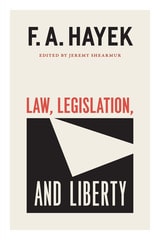
Law, Legislation, and Liberty, Volume 19
F. A. Hayek
University of Chicago Press, 2021
In this critical entry in the University of Chicago’s Collected Works of F. A. Hayek series, political philosopher Jeremy Shearmur collates Hayek’s three-part study of law and liberty and places Hayek’s writings in careful historical context. Incisive and unrestrained, Law, Legislation, and Liberty is Hayek at his late-life best, making it essential reading for understanding the philosopher’s politics and worldview.
These three volumes constitute a scaling up of the framework offered in Hayek’s famed The Road to Serfdom. Volume 1, Rules and Order, espouses the virtues of classical liberalism; Volume 2, The Mirage of Social Justice, examines the societal forces that undermine liberalism and, with it, liberalism’s capacity to induce “spontaneous order”; and Volume 3, The Political Order of a Free People, proposes alternatives and interventions against emerging anti-liberal movements, including a rule of law that resides in stasis with personal freedom.
Shearmur’s treatment of this challenging work—including an immersive new introduction, a conversion of Hayek’s copious endnotes to footnotes, corrections to Hayek’s references and quotations, and the provision of translations to material that Hayek cited only in languages other than English—lends it new importance and accessibility. Rendered anew for the next generations of scholars, this revision of Hayek’s Law, Legislation, and Liberty is sure to become the standard.
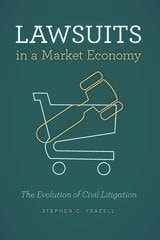
Lawsuits in a Market Economy
The Evolution of Civil LitigationStephen C. Yeazell
University of Chicago Press, 2018
Lawsuits in a Market Economy explains how contemporary civil litigation in the United States works and how it has changed over the past century. The book corrects common misconceptions—some of which have proved remarkably durable even in the face of contrary evidence—and explores how our constitutional structure, an evolving economy, and developments in procedural rules and litigation financing systems have moved us from expecting that lawsuits end in trial and judgments to expecting that they will end in settlements. Yeazell argues that today’s system has in some ways overcome—albeit inconsistently—disparities between the rich and poor in access to civil justice. Once upon a time, might regularly triumphed over right. That is slightly less likely today—even though we continue to witness enormous disparities in wealth and power.
The book concludes with an evaluation of recent changes and their possible consequences.
Learning to Work
The Case for Reintegrating Job Training and EducationW. Norton Grubb
Russell Sage Foundation, 1996

Leave Me Alone and I'll Make You Rich
How the Bourgeois Deal Enriched the WorldDeirdre Nansen McCloskey and Art Carden
University of Chicago Press, 2020
For readers looking for a distillation of McCloskey’s magisterial work, Leave Me Alone and I’ll Make You Rich is what you’ve been waiting for. In this lively volume, McCloskey and the economist and journalist Carden bring together the trilogy’s key ideas and its most provocative arguments. The rise of the west, and now the rest, is the story of the rise of ordinary people to a dignity and liberty inspiring them to have a go. The outcome was an explosion of innovation after 1800, and a rise of real income by an astounding 3,000 percent. The Great Enrichment, well beyond the conventional Industrial Revolution, did not, McCloskey and Carden show, come from the usual suspects, capital accumulation or class struggle. It came from the idea of economic liberty in Holland and the Anglosphere, then Sweden and Japan, then Italy and Israel and China and India, an idea that bids fair in the next few generations to raise up the wretched of the earth. The original shift to liberalism arose from 1517 to 1789 from theological and political revolutions in northwest Europe, upending ancient hierarchies. McCloskey and Carden contend further that liberalism and “innovism” made us better humans as well as richer ones. Not matter but ideas. Not corruption but improvement.
Leave Me Alone and I’ll Make You Rich draws in entertaining fashion on history, economics, literature, philosophy, and popular culture, from growth theory to the Simpsons. It is the perfect introduction for a broad audience to McCloskey’s influential explanation of how we got rich. At a time when confidence in the economic system is under challenge, the book mounts an optimistic and persuasive defense of liberal innovism, and of the modern world it has wrought.

Leaving Science
Anne E. Preston
Russell Sage Foundation, 2004
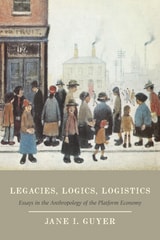
Legacies, Logics, Logistics
Essays in the Anthropology of the Platform EconomyJane I. Guyer
University of Chicago Press, 2016
Focusing on economic actors—whether ordinary consumers or financial experts—Guyer traces how people and institutions hold together past experiences (legacies), imagined scenarios and models (logics), and situational challenges (logistics) in a way that makes the performance of economic life (on platforms made of these legacies, logics, and logistics) work in practice. Individual essays explore a number of topics—including time frames and the future, the use of percentages in observations and judgments, the explanation of prices, the coexistence of different world currencies, the reapplication of longtime economic theories in new settings, and, crucially, how we talk about the economy, how we use stable terms to describe a turbulent system. Valuable as standalone pieces, the essays build into a cogent method of economic anthropology.
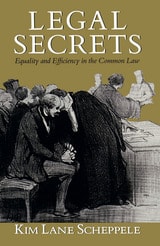
Legal Secrets
Equality and Efficiency in the Common LawKim Lane Scheppele
University of Chicago Press, 1988
Kim Lane Scheppele answers the question, Which secrets are legal secrets and what makes them so? She challenges the economic theory of law, which argues that judges decide cases in ways that maximize efficiency, and she shows that judges use equality as an important principle in their decisions. In the course of thinking about secrets, Scheppele also explores broader questions about judicial reasoning—how judges find meaning in legal texts and how they infuse every fact summary with the values of their legal culture. Finally, the specific insights about secrecy are shown to be consistent with a general moral theory of law that indicates what the content of law should be if the law is to be legitimate, a theory that sees legal justification as the opportunity to attract consent.
This is more than a book about secrets. It is also a book about the limits of an economic view of law. Ultimately, it is a work in constructive legal theory, one that draws on moral philosophy, sociology, economics, and political theory to develop a new view of legal interpretation and legal morality.
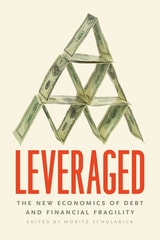
Leveraged
The New Economics of Debt and Financial FragilityEdited by Moritz Schularick
University of Chicago Press, 2022
The 2008 financial crisis was a seismic event that laid bare how financial institutions’ instabilities can have devastating effects on societies and economies. COVID-19 brought similar financial devastation at the beginning of 2020 and once more massive interventions by central banks were needed to heed off the collapse of the financial system. All of which begs the question: why is our financial system so fragile and vulnerable that it needs government support so often?
For a generation of economists who have risen to prominence since 2008, these events have defined not only how they view financial instability, but financial markets more broadly. Leveraged brings together these voices to take stock of what we have learned about the costs and causes of financial fragility and to offer a new canonical framework for understanding it. Their message: the origins of financial instability in modern economies run deeper than the technical debates around banking regulation, countercyclical capital buffers, or living wills for financial institutions. Leveraged offers a fundamentally new picture of how financial institutions and societies coexist, for better or worse.
The essays here mark a new starting point for research in financial economics. As we muddle through the effects of a second financial crisis in this young century, Leveraged provides a road map and a research agenda for the future.
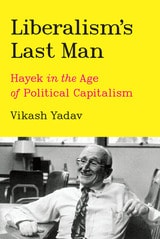
Liberalism's Last Man
Hayek in the Age of Political CapitalismVikash Yadav
University of Chicago Press, 2023
A modern reframing of Friedrich Hayek’s most famous work for the 21st century.
Friedrich Hayek’s The Road to Serfdom was both an intellectual milestone and a source of political division, spurring fiery debates around capitalism and its discontents. In the ensuing discord, Hayek’s true message was lost: liberalism is a thing to be protected above all else, and its alternatives are perilous.
In Liberalism’s Last Man, Vikash Yadav revives the core of Hayek’s famed work to map today’s primary political anxiety: the tenuous state of liberal meritocratic capitalism—particularly in North America, Europe, and Asia—in the face of strengthening political-capitalist powers like China, Vietnam, and Singapore. As open societies struggle to match the economic productivity of authoritarian-capitalist economies, the promises of a meritocracy fade; Yadav channels Hayek to articulate how liberalism’s moral backbone is its greatest defense against repressive social structures.
Liberalism's Last Man
Hayek in the Age of Political CapitalismVikash Yadav
University of Chicago Press, 2023
A modern reframing of Friedrich Hayek’s most famous work for the 21st century.
Friedrich Hayek’s The Road to Serfdom was both an intellectual milestone and a source of political division, spurring fiery debates around capitalism and its discontents. In the ensuing discord, Hayek’s true message was lost: liberalism is a thing to be protected above all else, and its alternatives are perilous.
In Liberalism’s Last Man, Vikash Yadav revives the core of Hayek’s famed work to map today’s primary political anxiety: the tenuous state of liberal meritocratic capitalism—particularly in North America, Europe, and Asia—in the face of strengthening political-capitalist powers like China, Vietnam, and Singapore. As open societies struggle to match the economic productivity of authoritarian-capitalist economies, the promises of a meritocracy fade; Yadav channels Hayek to articulate how liberalism’s moral backbone is its greatest defense against repressive social structures.
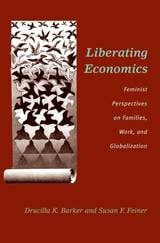
Liberating Economics
Feminist Perspectives on Families, Work, and GlobalizationDrucilla K. Barker and Susan F. Feiner
University of Michigan Press, 2004
Rooted in the two disciplines, this book draws on the rich tradition of interdisciplinary work in feminist social science scholarship to construct a parallel between the notions that the "personal is political" and "the personal is economic."
Drucilla K. Barker is Professor of Economics and Women's Studies, Hollins University.
Susan F. Feiner is Associate Professor of Economics and Women's Studies, University of Southern Maine.
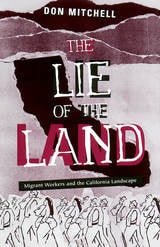
Lie Of The Land
Migrant Workers and the California LandscapeDon Mitchell
University of Minnesota Press, 1996
A hard-hitting look at the story behind California's famous scenery.
The beauty of the California landscape is integral to its place in the imagination of generations of people around the world. In The Lie of the Land, geographer Don Mitchell looks at the human costs associated with this famous scenery. Through an account of the labor history of the state, Mitchell examines the material and ideological struggles over living and working conditions that played a large part in the construction of the contemporary California landscape.
The Lie of the Land examines the way the California landscape was built on the backs of migrant workers, focusing on migratory labor and agribusiness before World War II. The book relates the historical geography of California to the processes of labor that made it, discussing not only significant strikes but also on the everyday existence of migrant workers in the labor camps, fields, and “Hoovervilles” where they lived. Mitchell places class struggle at the heart of social development, demonstrating concretely how farm workers affected their social and material environment, as well as exploring how farm owners responded to their workers’ efforts to improve their living and working conditions. Mitchell also places “reformers” in context, revealing the actual nature of their role in relation to migrant workers’ efforts—that of undermining the struggle for genuine social change. In addition, this volume captures the significance of the changing composition of the agricultural workforce, particularly in racial terms, as the class struggle evolved over a period of decades. Mitchell has written a narrative history that describes the intimate connection between landscape representations and the material form of geography. The Lie of the Land places people squarely in the middle of the landscapes they inhabit, shedding light on the complex and seemingly contradictory interactions between progressive state agents, radical workers, and California growers as they seek to remake the land in their own image.
Lincoln and the Economics of the American Dream
Gabor S. Boritt
University of Illinois Press, 1994
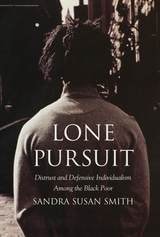
Lone Pursuit
Distrust and Defensive Individualism Among the Black PoorSandra Susan Smith
Russell Sage Foundation, 2007

Long-Term Care around the World
Edited by Jonathan Gruber and Kathleen McGarry
University of Chicago Press, 2025
A comparative analysis of both formal and informal long-term care in ten of the world’s wealthiest countries.
Nations throughout the world are in the midst of an enormous demographic transition, with life expectancy increasing and fertility falling, leading to a rapidly aging population and critical implications for long-term care around the world. This volume documents and compares long-term care programs in ten wealthy countries.
Analyses of survey data and government statistics show that the costs of long-term care are beyond the financial means of a large fraction of the elderly population in most countries, particularly the oldest and most disabled. As a result, public systems bear most of the cost of formal long-term care, such as care in an institution or paid home care. Most countries spend more on nursing homes than on home care, but this relationship varies widely as does the mix of care needs and resources used to define eligibility for public funding. At the same time, most care is provided informally through family or unpaid caregivers. The costs of informal care, including the foregone earnings of caregivers, are estimated to account for at least one-third of all long-term care spending in every country. Thus, any estimate of the social costs of long-term care must account for the implicit costs of informal care.
Low-Wage America
How Employers Are Reshaping Opportunity in the WorkplaceEileen Appelbaum
Russell Sage Foundation, 2003
Low-Wage Work in Denmark
Niels Westergaard-Nielsen
Russell Sage Foundation, 2008
Low-Wage Work in France
Eve Caroli
Russell Sage Foundation, 2008
Low-Wage Work in Germany
Gerhard Bosch
Russell Sage Foundation, 2008
Low-Wage Work in the Netherlands
Weimer Salverda
Russell Sage Foundation, 2008
Low-Wage Work in the Wealthy World
Jerome Gautie
Russell Sage Foundation, 2010