Results by title
2728 books match the query 'Education' and 94 start with l
LGBT Youth in America's Schools
Jason Cianciotto and Sean Cahill
University of Michigan Press, 2012
Jason Cianciotto and Sean Cahill, experts on lesbian, gay, bisexual, and transgender public policy advocacy, combine an accessible review of social science research with analyses of school practices and local, state, and federal laws that affect LGBT students. In addition, portraits of LGBT youth and their experiences with discrimination at school bring human faces to the issues the authors discuss.
This is an essential guide for teachers, school administrators, guidance counselors, and social workers interacting with students on a daily basis; school board members and officials determining school policy; nonprofit advocates and providers of social services to youth; and academic scholars, graduate students, and researchers training the next generation of school administrators and informing future policy and practice.

La Normalizacion del Deficiente
Actitudes del Profesorado (Teachers' Attitudes toward Mainstreaming Handicapped Children in Spain)Francisco Alberto Chueca y Mora
University of Michigan Press, 1988
Labor's Mind
A History of Working-Class Intellectual LifeTobias Higbie
University of Illinois Press, 2019
Laboring to Learn
Women's Literacy and Poverty in the Post-Welfare EraLorna Rivera
University of Illinois Press, 2007
The American adult education system has become an alternative for school dropouts, with some state welfare policies requiring teen mothers and women without high school diplomas to participate in adult education programs to receive aid. Currently, low-income women of color are more likely to be enrolled in the lowest levels of adult basic education. Very little has been published about women's experiences in these mandatory programs and whether the programs reproduce the conditions that forced women to drop out in the first place.
Lorna Rivera bridges the gap with this important study, the product of ten years' active ethnographic research with formerly homeless women who participated in adult literacy education classes before and after welfare reform. She draws on rich interviews with organizers and participants in the Adult Learners Program at Project Hope, a women's shelter and community development organization in Boston's Dudley neighborhood, one of the poorest in the city.
Analyzing the web of ideological contradictions regarding "work first" welfare reform policies, Rivera argues that poverty is produced and reproduced when women with low literacy skills are pushed into welfare-to-work programs and denied education. She examines how various discourses about individual choice and self-sufficiency shape the purposes of literacy, how low-income women express a sense of personal responsibility for being poor, and how neoliberal ideologies and practices compromise the goals of critical literacy programs. Throughout this study, the voices and experiences of formerly homeless women challenge cultural stereotypes about poor women, showing in personal and structural terms how social and economic forces shape and restrict opportunities for low-income women of color.

Landscape Of Desire
Greg Gordon
Utah State University Press, 2003
Landscape of Desire powerfully documents and celebrates a place and the evolutions that occur when human beings are intimately connected to their surroundings. Greg Gordon accomplishes this with a tapestry of writing that interweaves land use history, natural history, experiential education, and personal reflection. He tracks the geomorphology of southern Utah as well as the creatures and plants his student group encounters, the history lessons (planned and unplanned), the trials and joys of gathering so many individuals into a cohesive will, and his own personal epiphanies, restraints, insights, and disillusionments.
Landscape of Desire examines the plight of the western landscape. It discusses a wide range of issues, including mining, grazing, dams, recreation, wilderness, and land management. Since recreation has replaced extraction industries as the primary use of wilderness, especially in southern Utah, Gordon addresses its impactful qualities. He overviews the history of the conflict between preservation and development and places these issues in a cultural context. The text is presented in a narrative format, following the individuals of one field course Gordon lead that explored Muddy Creek and the Dirty Devil River from Interstate 70 to Lake Powell. Though each chapter focuses on the geologic formation the group is traveling through, the plants, animals, ecology, and human impacts are all tightly woven into the narrative. Not only does the land affect the members of the field course, but their attitudes and insights affect the land.
In Landscape of Desire Gordon achieves a vision of wholeness of this popular and contested region of Utah that centers around the implications of being human and also stewards of the wild.

Language Loyalties
A Source Book on the Official English ControversyEdited by James Crawford
University of Chicago Press, 1992
Supporters argue that English has always been our common language—a means of resolving conflicts in a nation of diverse racial, ethnic, and religious groups, and an essential tool of social mobility and cultural integration. Opponents charge that the amendment is unnecessary and that it threatens civil rights, educational opportunities, and free speech, wrapping racist biases in a cloak of patriotism.
Language Loyalties: A Source Book on the Official English Controversy provides a balanced, comprehensive guide to this complex and often confusing debate. It is an essential handbook and reference for advocates, educators, policymakers, jurists, scholars, and citizens who seek to join this debate fully informed. Addressing the issues involved in developing America's first planned national language policy, James Crawford has expertly collected and introduced more than eighty-five source documents and articles.
Language, Power, and Resistance
Mainstreaming Deaf EducationElizabeth S. Mathews
Gallaudet University Press, 2017
The research upon which this book is based examined the implications that mainstreaming has for the tensions between the hegemonic medical model of deafness and the social model of Deafness. This volume explores how different types of power are used in the deaf education system to establish, maintain, and also resist medical views of deafness. Mathews frames this discussion as one of power relations across parents, children, and professionals working within the system. She looks at how various forms of power are used to influence decisions, to resist decisions, and to shape the structure and delivery of deaf education. The author’s findings are a significant contribution to the debates on inclusive education for DHH students and will resonate in myriad social and geographic contexts.
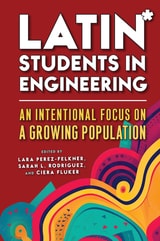
Latin* Students in Engineering
An Intentional Focus on a Growing PopulationLara Perez-Felkner
Rutgers University Press, 2024
Winner of the American Association of Hispanics in Higher Education Edited Volume Book of the Year Award
Winner of the 2026 Distinguished Contributions to Gender Equity in Educational Research Award from the American Educational Research Association
The growing population of engineering students who identify as Latin* are underrepresented in the field of engineering. Latin* refers to an individual of Latin American origin or descent, without restricting to a specific gender. The asterisk (*) includes related identity terms such as Latina/é/o/u/x.There is, however, a rising need to train U.S. students in engineering skills to meet the demands of our increasingly technological workforce. Structurally excluding Latin* students hinders their economic and educational opportunities in engineering. Latin* Students in Engineering examines the state of Latin* engineering education at present as well as considerations for policy and practice regarding engineering education aimed at enhancing opportunity and better serving Latin* students. The essays in this volume first consider, theoretically and empirically, the experiences of Latin* students in engineering education and then expand beyond the student level to focus on institutional and social structures that challenge Latin* students' success and retention. Finally, it illuminates emergent work and considers future research, policy, and practice.
Latina/o/x Education in Chicago
Roots, Resistance, and TransformationEdited by Isaura Pulido, Angelica Rivera, and Ann M. Aviles
University of Illinois Press, 2022
Insightful and enlightening, Latina/o/x Education in Chicago brings to light the ongoing struggle for educational equity in the Chicago Public Schools.

Law And Order And School
Daily Life In Educ Program For Juv DelinqShira Birnbaum
Temple University Press, 2001
As educational and justice agencies increasingly turn to private subcontractors to deliver an array of services and growing numbers of young people are channeled into non-traditional educational settings and correctional institutions, it is imperative that educators and the general public understand how these institutions work and what problems their students and staffs encounter. This on-the-ground examination of the education within the juvenile justice system will open your eyes to how we educate some of our neediest children.
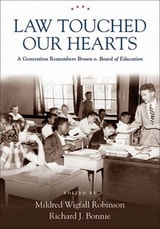
Law Touched Our Hearts
A Generation Remembers Brown v. Board of EducationMildred Wigfall Robinson
Vanderbilt University Press, 2008
What Brown did was to elevate race from the country's dirty secret to its most urgent topic of conversation. This book stands alone in presenting, in one source, stories of black and white Americans, men and women, from all parts of the nation, who were public school students during the years immediately after Brown. All shared an epiphany. Some became aware of race and the burden of racial separation. Others dared to hope that the yoke of racial oppression would at last be lifted.
The editors surveyed 4750 law professors born between 1936 and 1954, received 1000 responses, and derived these forty essays from those willing to write personal accounts of their childhood experiences in the classroom and in their communities. Their moving stories of how Brown affected them say much about race relations then and now. They also provide a picture of how social change can shape the careers of an entire generation in one profession.
Contributors provide accounts from across the nation. Represented are
-de jure states, those segregated by law at the time of Brown, including Alabama, Florida, Georgia, Louisiana, Maryland, Mississippi, North Carolina, South Carolina, Tennessee, Virginia, as well as the District of Columbia
-de facto states, those where segregation was illegal but a common practice, including California, Illinois, Kansas, Massachusetts, Missouri, New Jersey, New York, Ohio, Washington, and Wisconsin.
Law and the Shaping of Public Education, 1785-1954
Edited by David Tyack, Thomas James, and Aaron Benavot
University of Wisconsin Press, 1991
Law, Intellect, and Education
Francis A. Allen
University of Michigan Press, 1979
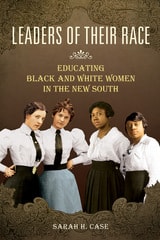
Leaders of Their Race
Educating Black and White Women in the New SouthSarah Case
University of Illinois Press, 2017
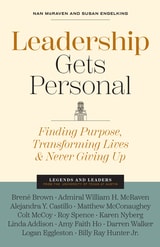
Leadership Gets Personal
Finding Purpose, Transforming Lives, and Never Giving UpNan McRaven and Susan Engelking
University of Texas Press, 2026
How the University of Texas shaped twelve people who changed the world.
College is a time for personal growth. But any Biology 101 student knows that growth (personal or otherwise) requires the right environment. Collecting the revealing and deeply personal stories of twelve UT alumni who became leaders in their fields, Leadership Gets Personal honors the transformative impact of the Forty Acres on those who learn and grow there.
Matthew McConaughey, Academy Award-winning actor and #1 New York Times best-selling author, was destined for law school, but with the encouragement of his UT community, he realized he was a born storyteller. Brené Brown, author of the #1 New York Times bestseller Dare to Lead, struggled for years before finding her purpose in the Social Work Department. Dr. Amy Ho knew she wanted to change the American health care system, and at UT she gained the confidence and skills to make a difference. Astronaut Karen Nyberg was a shy kid; her UT graduate studies propelled her to space. And Darren Walker would go on to become president of the Ford Foundation, taking inspiration from the financial aid counselors who made sure he got the education he yearned for. For these and other outstanding alumni profiled here, the road was often rocky. Through perseverance, humility, and collaboration, they learned not only to exercise leadership but to live it.

Leadership and Organizational Culture
New Perspectives on Administrative Theory and PracticeEdited by Thomas J. Sergiovanni and John E. Corbally
University of Illinois Press, 1984
Leading Academic Discussions
What Every University Student Needs to KnowRobyn Brinks Lockwood
University of Michigan Press, 2021
Although discussions are heavily reliant on words, they are also influenced and affected by other verbal cues, such as pronunciation, stress, pitch, or tone. Because speakers need to both notice and use these cues to make their messages clear to other participants, the text addresses these factors as well. Additionally, non-verbal communication plays an essential role as well, so one chapter is devoted to it.
Throughout the text, reflection questions about leading discussions are provided for those who are or hope to be teaching assistants (TAs) and project leads/managers. Video analysis tasks are included to accompany the six mini discussion videos that are open and available at www.press.umich.edu/elt/compsite/leading.
Leading for Tomorrow
A Primer for Succeeding in Higher Education LeadershipPamela L. Eddy
Rutgers University Press, 2020
Using an engaging case study approach, Leading for Tomorrow provides readers with real-world examples that will help them reflect on their own management and communication styles. It also shows newly minted administrators how they can follow best practices while still developing a style of leadership that is authentic and uniquely their own.
The book’s case studies offer practical solutions for how to deal with emerging trends and persistent problems in the field of higher education, from decreasing state funding to political controversies on campus. Leading for Tomorrow gives readers the tools they need to get the best out of their team, manage conflicts, support student success, and instill a campus culture of innovation that will meet tomorrow’s challenges.
Leading the Way
Student Engagement and Nationally Competitive AwardsSuzanne McCray
University of Arkansas Press, 2009
Leading the Way
Young Women's Activism for Social ChangeTrigg, Mary K
Rutgers University Press, 2009
Bringing together graduates of a women's leadership certificate program at Rutgers University's Institute for Women's Leadership, these essays provide a contrasting picture to assumptions about the current death of feminism, the rise of selfishness and individualism, and the disaffected Millennium Generation. Reflecting on a critical juncture in their lives, the years during college and the beginning of careers or graduate studies, the contributors' voices demonstrate the ways that diverse, young, educated women in the United States are embodying and formulating new models of leadership, at the same time as they are finding their own professional paths, ways of being, and places in the world. They reflect on controversial issues such as gay marriage, gender, racial profiling, war, immigration, poverty, urban education, and health care reform in a post-9/11 era.
Leading the Way introduces readers to young women who are being prepared and empowered to assume leadership roles with men in all public arenas, and to accept equal responsibility for making positive social change in the twenty-first century.

Leaping into Dance Literacy through the Language of Dance®
Teresa Heiland
Intellect Books, 2023
This book presents the theory and purpose underpinning the approaches to dance literacy as explored by the Language of Dance community in the United States and the United Kingdom. Through their teacher training programs, the community is changing the face of dance-based dance literacy using the practice of motif notation.
Arts literacy can deepen dance craft and transfer arts knowledge, capacities, and skills to lifelong learning. Dance-based dance literacy practices using notation enhance learners’ flexibility, adaptability, self-direction, initiative, productivity, responsibility, leadership, and cross-cultural skills. This volume ushers in a new era for educating with dance notation that focuses on learners’ engagement by making connections between the learning domains using constructivist and constructionist learning approaches. Based on work by dance educator Ann Hutchinson Guest and expanded upon by her protégés, this is the first book of its kind to bring together theory, praxis, original research outcomes, taxonomies, model lesson plans, learning domain taxonomies of dance, and voices of dance teachers who have explored using dance notation literacy.
Learning American Sign Language in High School
Motivation, Strategies, and AchievementRussell S. Rosen
Gallaudet University Press, 2015
Author Russell S. Rosen begins with the history of ASL as a foreign language in high schools, including debates about the foreign language status of ASL, the situation of deaf and hard of hearing students in classes, and governmental recognition of ASL as a language. Based on his study of five high school ASL programs, he defines the factors that motivate students, including community and culture, and analyzes strategies for promoting language processing and learning. Learning American Sign Language in High School provides strategies for teaching ASL as a second language to students with learning disabilities as well. Its thorough approach ensures the best opportunity for high school students to attain high levels of achievement in learning ASL.
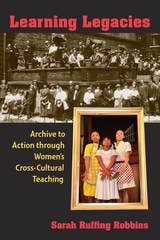
Learning Legacies
Archive to Action through Women's Cross-Cultural TeachingSarah Ruffing Robbins
University of Michigan Press, 2017

Learning Places
The Afterlives of Area StudiesMasao Miyoshi and H.D. Harootunian, eds.
Duke University Press, 2002
A tremendous amount of money flows—particularly within the sphere of East Asian studies, the contributors claim—from foreign agencies and governments to U.S. universities to underwrite courses on their histories and societies. In the process, this volume argues, such funds have gone beyond support to the wholesale subsidization of students in graduate programs, threatening the very integrity of research agendas. Native authority has been elevated to a position of primacy; Asian-born academics are presumed to be definitive commentators in Asian studies, for example. Area studies, the contributors believe, has outlived the original reason for its construction. The essays in this volume examine particular topics such as the development of cultural studies and hyphenated studies (such as African-American, Asian-American, Mexican-American) in the context of the failure of area studies, the corporatization of the contemporary university, the prehistory of postcolonial discourse, and the problematic impact of unformulated political goals on international activism.
Learning Places points to the necessity, the difficulty, and the possibility in higher education of breaking free from an entrenched Cold War narrative and making the study of a specific area part of the agenda of education generally. The book will appeal to all whose research has a local component, as well as to those interested in the future course of higher education generally.
Contributors. Paul A. Bové, Rey Chow, Bruce Cummings, James A. Fujii, Harry Harootunian, Masao Miyoshi, Tetsuo Najita, Richard H. Okada, Benita Parry, Moss Roberts, Bernard S. Silberman, Stefan Tanaka, Rob Wilson, Sylvia Yanagisako, Mitsuhiro Yoshimoto

Learning Theory in School Situations
Esther J. Swenson, George Lester Anderson, and Chalmers L. StacyIntroduction by T. R. McConnell
University of Minnesota Press, 1949
Learning Theory in School Situations was first published in 1949. Minnesota Archive Editions uses digital technology to make long-unavailable books once again accessible, and are published unaltered from the original University of Minnesota Press editions.
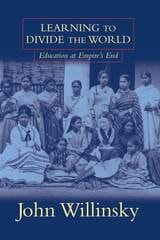
Learning To Divide The World
Education at Empire’s EndJohn Willinsky
University of Minnesota Press, 2000
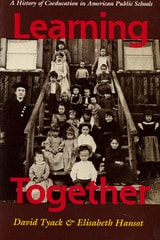
Learning Together
A History of Coeducation in American Public SchoolsDavid Tyack
Russell Sage Foundation, 1992
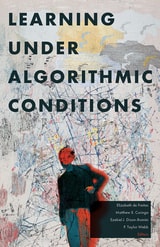
Learning Under Algorithmic Conditions
Elizabeth de Freitas
University of Minnesota Press, 2026
Exploring the influence of AI technologies on theories of reason, cognition, learning, and education
Learning Under Algorithmic Conditions presents twenty-seven concise essays that collectively chart the shifting terrain of learning in the age of artificial intelligence. Providing historical and philosophical context, this innovative volume features prominent scholars from the fields of media studies, philosophy, and education research, who shed light on how learning has become newly envisioned, machinic, and more-than-human. The contributors unravel various histories of machine intelligence and elucidate the current impact of machine learning technologies on practices of knowledge production. Teeming with theoretical and practical insights, Learning Under Algorithmic Conditions is an interdisciplinary guide for those working across the humanities and social sciences as well as anyone interested in understanding our changing social, political, and technical infrastructures.
Contributors: Craig Carson, Adelphi U; Felicity Coleman, U of the Arts London; Ed Dieterle; Shayan Doroudi, U of California, Irvine; David Gauthier, Utrecht U; Cathrine Hasse, Aarhus U; Talha Can İşsevenler, CUNY; Goda Klumbytė; Robb Lindgren, U of Illinois Urbana-Champaign; Michael Madiao; Henry Neim Osman; Luciana Parisi, Duke U; Carolyn Pedwell, Lancaster U; Arkady Plotnitsky, Purdue U; Julian Quiros, U of Pennsylvania; Sina Rismanchian; Warren Sack, U of California, Santa Cruz; R. Joshua Scannell, The New School; Gregory J. Seigworth, Millersville U; Rebecca Uliasz, U of Michigan; David Wagner, U of New Brunswick; Ben Williamson, U of Edinburgh.
Retail e-book files for this title are screen-reader friendly with images accompanied by short alt text and/or extended descriptions.
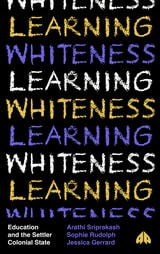
Learning Whiteness
Education and the Settler Colonial StateArathi Sriprakash
Pluto Press, 2022
Learning Whiteness examines the material conditions, knowledge politics and complex feelings that create and relay systems of racial domination. Focusing on Australia, the authors demonstrate how whiteness is fundamentally an educational project – taught within education institutions and through public discourse – in active service of the settler colonial state.
To see whiteness as learned is to recognize that it can be confronted. This book invites readers to reckon with past and present politics of education in order to imagine a future thoroughly divested from racism.
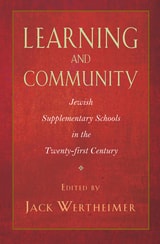
Learning and Community
Jewish Supplementary Schools in the Twenty-First CenturyJack Wertheimer
Brandeis University Press, 2009

Learning and Teaching the Ways of Knowing
Edited by Elliot Eisner
University of Chicago Press, 1985

Learning at the Back Door
Reflections on Non-Traditional Learning in the LifespanCharles A. Wedemeyer
University of Wisconsin Press, 1981
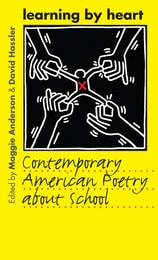
Learning by Heart
Contemporary American Poetry about SchoolMaggie Anderson
University of Iowa Press, 1999
Learning by Heart brings together a unique and diverse collection of poems about the experience of school as seen through the eyes of America's best contemporary poets. These poets capture the educational process not only in the classroom but as it takes place in libraries and hallways, on playing fields and at dances. Alternately joyous and defiant, they demonstrate how it is that young people come to find their place in the world.
Most of the poems in this anthology were written between 1970 and 1995, a period that encompasses both the halcyon years of poets-in-the-schools programs and the primary and secondary school years of many of the poets included. Their poems define school in that most contemporary sense — “with a multitude of voices”—reflecting perspectives from African American, Hispanic American, Asian American, and Native American as well as Anglo American backgrounds, from both public and private schools in rural and urban environments.
Learning by Heart offers a profound and timely statement about schools and learning as well as the role of art in education. Finally, these poems validate that most important lesson: even the most common of experiences is worthy of creative expression.
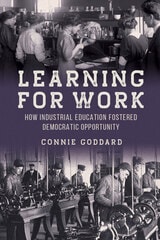
Learning for Work
How Industrial Education Fostered Democratic OpportunityConnie Goddard
University of Illinois Press, 2024
Rooting her account in John Dewey’s ideas, Goddard moves from early nineteenth century supporters of the union of learning and labor to the interconnected histories of CMTS, New Jersey’s Manual Training and Industrial School for Colored Youth, North Dakota’s Normal and Industrial School, and related programs elsewhere. Goddard analyzes the work of movement figures like abolitionist Theodore Weld, educators Calvin Woodward and Booker T. Washington, social critic W.E.B. Du Bois, Dewey himself, and his influential Chicago colleague Ella Flagg Young. The book contrasts ideas about manual training held by advocate Nicholas Murray Butler with those of opponent William Torrey Harris and considers overlooked connections between industrial education and the Arts and Crafts Movement.
An absorbing merger of history and storytelling, Learning for Work looks at the people who shaped industrial education while offering a provocative vision of realizing its potential today.
Learning from the Land
Wisconsin Land UseBobbie Malone
Wisconsin Historical Society Press, 1998

Learning from the Land
Wisconsin Land Use, TGBobbie Malone
Wisconsin Historical Society Press, 1999
Learning in Depth
A Simple Innovation That Can Transform SchoolingKieran Egan
University of Chicago Press, 2011
For generations, schools have aimed to introduce students to a broad range of topics through curriculum that ensure that they will at least have some acquaintance with most areas of human knowledge by the time they graduate. Yet such broad knowledge can’t help but be somewhat superficial—and, as Kieran Egan argues, it omits a crucial aspect of true education: deep knowledge.
Real education, Egan explains, consists of both general knowledge and detailed understanding, and in Learning in Depth he outlines an ambitious yet practical plan to incorporate deep knowledge into basic education. Under Egan’s program, students will follow the usual curriculum, but with one crucial addition: beginning with their first days of school and continuing until graduation, they will eachalso study one topic—such as apples, birds, sacred buildings, mollusks,circuses, or stars—in depth. Over the years, with the help and guidance of their supervising teacher, students will expand their understanding of their one topic and build portfolios of knowledge that grow and change along with them. By the time they graduate each student will know as much about his or her topic as almost anyone on earth—and in the process will have learned important, even life-changing lessons about the meaning of expertise, the value of dedication, and the delight of knowing something in depth.
Though Egan’s program may be radical in its effects, it is strikingly simple to implement—as a number of schools have already discovered—and with Learning in Depth as a blueprint, parents, educators, and administrators can instantly begin taking the first steps toward transforming our schools and fundamentally deepening their students’ minds.
Learning in the Plural
Essays on the Humanities and Public LifeDavid D. Cooper
Michigan State University Press, 2014
Learning the Hard Way
Masculinity, Place, and the Gender Gap in EducationMorris, Edward
Rutgers University Press, 2012
An avalanche of recent newspapers, weekly newsmagazines, scholarly journals, and academic books has helped to spark a heated debate by publishing warnings of a “boy crisis” in which male students at all academic levels have begun falling behind their female peers. In Learning the Hard Way, Edward W. Morris explores and analyzes detailed ethnographic data on this purported gender gap between boys and girls in educational achievement at two low-income high schools—one rural and predominantly white, the other urban and mostly African American. Crucial questions arose from his study of gender at these two schools. Why did boys tend to show less interest in and more defiance toward school? Why did girls significantly outperform boys at both schools? Why did people at the schools still describe boys as especially “smart”?
Morris examines these questions and, in the process, illuminates connections of gender to race, class, and place. This book is not simply about the educational troubles of boys, but the troubled and complex experience of gender in school. It reveals how particular race, class, and geographical experiences shape masculinity and femininity in ways that affect academic performance. His findings add a new perspective to the “gender gap” in achievement.
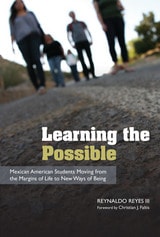
Learning the Possible
Mexican American Students Moving from the Margins of Life to New Ways of BeingReynaldo Reyes III; Foreword by Christian J. Faltis
University of Arizona Press, 2013
Laura, Christina, Luz, Maria, and Ruben, as the author calls them, had daunting challenges: difficulties with English, extremely low self-confidence, teenage motherhood, conflict between gender roles and personal desires, and a history of gang membership. Focusing on the importance of constructing a new identity as a successful student, Reynaldo Reyes III shares with readers the experiences of these marginalized students. Their stories, coupled with perspectives from instructors, CAMP staff and counselors, and the author’s own observations, illustrate the influence of past schooling, the persistence of culture, and the tensions and challenges inherent in developing a new identity.
This is a study of students who came from the margins and, in a very short time, moved toward the mainstream. In the micro view, it provides extraordinarily useful case studies of a successful intervention program in process. In the larger scope, it is a look at the socially constructed nature of possibility, hope, and success.
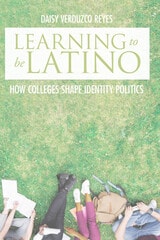
Learning to Be Latino
How Colleges Shape Identity PoliticsReyes, Daisy Verduzco
Rutgers University Press, 2018
Drawing on extensive ethnographic observations, Reyes shows how college campuses shape much more than students’ academic and occupational trajectories; they mold students’ ideas about inequality and opportunity in America, their identities, and even how they intend to practice politics.
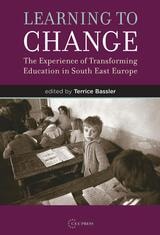
Learning to Change
The Experience of Transforming Education in South East EuropeTerrice Bassler
Central European University Press, 2005
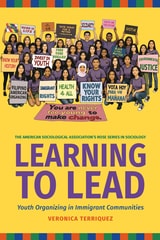
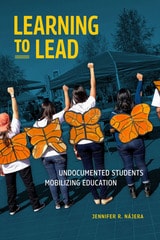
Learning to Lead
Grassroots Organizing in Immigrant CommunitiesVeronica Terriquez
Russell Sage Foundation, 2026
Children of immigrants make up more than one in four people in the United States under the age of thirty. Amid today’s multipronged attacks on immigrant communities and growing threats to democratic participation, these young people often encounter significant barriers to political participation. Despite these challenges, some children of immigrants and refugees engage in nonpartisan grassroots campaigns, addressing issues such as education, health, environmental justice, immigrant rights, housing, and voting rights. In Learning to Lead, sociologist Veronica Terriquez examines how youth organizing groups facilitate the civic and political engagement of low-income, second-generation immigrant adolescents, enabling them to collectively exercise power alongside their non-immigrant peers and adult allies.
Drawing on extensive survey, semi-structured interview, and other data, Terriquez shows that nonprofit youth organizing groups strengthen adolescents’ capacity to address the systemic challenges facing their communities through political engagement. Although these groups vary in the quality of their programming, they generally share a commitment to supporting young people’s healthy development, offer a critical form of civics education, and provide extensive guidance on how to participate in civic life. These groups adapt their programming in response to local demographic and political dynamics.
Many adolescents who join grassroots organizing groups face overlapping stresses related to poverty, immigration status, neighborhood violence, and other hardships. In response, youth organizing groups create spaces that support emotional well-being while also encouraging academic success and job-readiness. At the same time, they help young people develop a critical understanding of social inequality, power, and public policy. Through ethnic studies workshops and other activities, youth explore their own identities and learn about the histories and struggles of diverse communities.
This education often motivates second-generation immigrant and refugee youth to work in solidarity with their non-immigrant Black and Indigenous peers and deepens their understanding of the historical, economic, and political roots of community problems, as well as potential policy solutions. Unlike many youth-focused interventions, organizing groups also provide sustained, hands-on training in how to collectively exercise their voice in policy debates and government elections, effectively functioning as civic apprenticeships. Staff and experienced members mentor newer participants in basic civic skills such as public speaking, event planning, and community outreach, while also coaching them on strategies for mobilize peers and adult allies to contribute to nonpartisan campaigns.
Because of these intensive and formative experiences, adolescents who participate in youth organizing during high school tend to remain highly active in civic life into early adulthood. Terriquez concludes that these groups offer important lessons for schools and other youth-serving institutions seeking to strengthen engagement in a multiracial democracy.
Learning to Lead offers a thorough examination of the role of how young people acquire the capacities to become a meaningful political force.
Learning to Lead
Undocumented Students Mobilizing EducationJennifer R. Nájera
Duke University Press, 2024

Learning to Leave
The Irony of Schooling in a Coastal CommunityMichael Corbett
West Virginia University Press, 2020
Learning to Live with the Past
Krishna Kumar
Seagull Books, 2023
How does education shape political rivalry and hostility? The Partition of the Indian subcontinent in 1947—the violence that followed it, and its living legacy of rival nationalisms—has made a deep and pervasive impact on education in both India and Pakistan. In Learning to Live with the Past, educationist Krishna Kumar dwells on the complex terrain every history teacher has to navigate: how to make the past come alive without running the risk of creating a desire to lose this “pastness.”
Substantiating this question with a wealth of experiences gained from his extensive research on history textbooks, as well as his interactions with students and teachers in both countries, Kumar explores the integral function the discipline of history plays in the project of nation-building. To help children learn to live with the past, Kumar amplifies the need for spaces that create possibilities for inquiries into a “longer” common heritage shared by South Asia without necessarily denying a national narrative or encouraging an urge to undo the past.
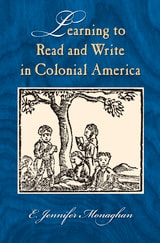
Learning to Read and Write in Colonial America
E. Jennifer Monaghan
University of Massachusetts Press, 2005
An experienced teacher of reading and writing and an award-winning historian, E. Jennifer Monaghan brings to vibrant life the process of learning to read and write in colonial America. Ranging throughout the colonies from New Hampshire to Georgia, she examines the instruction of girls and boys, Native Americans and enslaved Africans, the privileged and the poor, revealing the sometimes wrenching impact of literacy acquisition on the lives of learners.
For the most part, religious motives underlay reading instruction in colonial America, while secular motives led to writing instruction. Monaghan illuminates the history of these activities through a series of deeply researched and readable case studies. An Anglican missionary battles mosquitoes and loneliness to teach the New York Mohawks to write in their own tongue. Puritan fathers model scriptural reading for their children as they struggle with bereavement. Boys in writing schools, preparing for careers in counting houses, wield their quill pens in the difficult task of mastering a “good hand.” Benjamin Franklin learns how to compose essays with no teacher but himself. Young orphans in Georgia write precocious letters to their benefactor, George Whitefield, while schools in South Carolina teach enslaved black children to read but never to write.
As she tells these stories, Monaghan clears new pathways in the analysis of colonial literacy. She pioneers in exploring the implications of the separation of reading and writing instruction, a topic that still resonates in today's classrooms.
Monaghan argues that major improvements occurred in literacy instruction and acquisition after about 1750, visible in rising rates of signature literacy. Spelling books were widely adopted as they key text for teaching young children to read; prosperity, commercialism, and a parental urge for gentility aided writing instruction, benefiting girls in particular. And a gentler vision of childhood arose, portraying children as more malleable than sinful. It promoted and even commercialized a new kind of children's book designed to amuse instead of convert, laying the groundwork for the “reading revolution” of the new republic.

Learning to See Invisible Children
Inclusion of Children with Disabilities in Central AsiaKate Lapham
Central European University Press, 2013
Learning to Unlearn
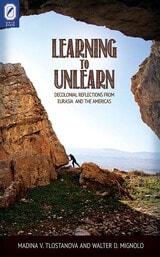
Decolonial Reflections from Eurasia and the AmericasMadina V. Tlostanova and Walter D. Mignolo
The Ohio State University Press, 2012
Learning to Unlearn: Decolonial Reflections from Eurasia and the Americas is a complex, multisided rethinking of the epistemic matrix of Western modernity and coloniality from the position of border epistemology. Colonial and imperial differences are the two key concepts to understanding how the logic of coloniality creates ontological and epistemic exteriorities. Being at once an enactment of decolonial thinking and an attempt to define its main grounds, mechanisms, and concepts, the book shifts the politics of knowledge from “studying the other” (culture, society, economy, politics) toward “the thinking other” (the authors).
Addressing areas as diverse as the philosophy of higher education, gender, citizenship, human rights, and indigenous agency, and providing fascinating and little-known examples of decolonial thinking, education, and art, Madina V. Tlostanova and Walter D. Mignolo deconstruct the modern architecture of knowledge—its production and distribution as manifested in the corporate university. In addition, the authors dwell on and define the echoing global decolonial sensibilities as expressed in the Americas and in peripheral Eurasia. The book is an important addition to the emerging transoceanic inquiries that introduce decolonial thought and non-Western border epistemologies not only to update or transform disciplines but also to act and think decolonially in the global futures to come.