Results by title
615 books match the query 'England' and 19 start with l
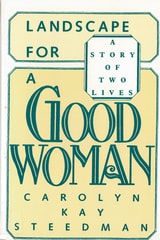
Landscape for a Good Woman
A Story of Two LivesCarolyn Kay Steedman
Rutgers University Press, 1987
This book is about lives lived out on the borderlands, lives for which the central interpretative devices of the culture don't quite work. It has a childhood at its centre - my childhood, a personal past - and it is about the disruption of that fifties childhood by the one my mother had lived out before me, and the stories she told about it.'
Intricate and inspiring, this unusual book uses autobiographical elements to depict a mother and her daughter and two working-class childhoods (Burnley in the 1920s, South London in the 1950s) and to find a place for their stories in history and politics, in psychoanalysis and feminism.
'Provocative and quite dazzling in its ambitions. . . Beautifully written, intellectually compelling'.' Judith Walkowitz
--From 500 Great Books by Women; review by Jesse Larsen.
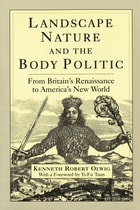
Landscape, Nature, and the Body Politic
From Britain's Renaissance to America's New WorldKenneth Robert Olwig
University of Wisconsin Press, 2002
Landscape, Nature, and the Body Politic explores the origins and lasting influences of two contesting but intertwined discourses that persist today when we use the words landscape, country, scenery, nature, national. In the first sense, the land is a physical and bounded body of terrain upon which the nation state is constructed (e.g., the purple mountain majesties above the fruited plain, from sea to shining sea). In the second, the country is constituted through its people and established through time and precedence (e.g., land where our fathers died, land of the Pilgrims’ pride). Kenneth Robert Olwig’s extended exploration of these discourses is a masterful work of scholarship both broad and deep, which opens up new avenues of thinking in the areas of geography, literature, theater, history, political science, law, and environmental studies.
Olwig tracks these ideas though Anglo-American history, starting with seventeenth-century conflicts between the Stuart kings and the English Parliament, and the Stuart dream of uniting Scotland with England and Wales into one nation on the island of Britain. He uses a royal production of a Ben Jonson masque, with stage sets by architect Inigo Jones, as a touchstone for exploring how the notion of "landscape" expands from artful stage scenery to a geopolitical ideal. Olwig pursues these contested concepts of the body politic from Europe to America and to global politics, illuminating a host of topics, from national parks and environmental planning to theories of polity and virulent nationalistic movements.
Language, Sign and Gender in Beowulf
Gillian R. Overing
Southern Illinois University Press, 1990
Not a book about what Beowulf means but how it means, and how the reader participates in the process of meaning construction.
Overing’s primary aim is to address the poem on its own terms, to trace and develop an interpretive strategy consonant with the extent of its difference. Beowulf’s arcane structure describes cyclical repetitions and patterned intersections of themes which baffle a linear perspective, and suggest instead the irresolution and dynamism of the deconstructionist free play of textual elements.
Chapter 1 posits the self/reader as a function of the text/language, examining the ways in which the text "speaks" the reader. Chapter 2 develops an interactive semiotic strategy in an attempt to describe an isomorphic relation between poem and reader, between text and self. Chapter 3 addresses the notions of text and self as more complex functions or formulations of desire, and thus complicates and expands the arguments of the two preceding chapters. The final chapter examines the issue of desire in the poem, and, to a lesser extent, desire in the reader (insofar as these may legitimately be viewed as distinct from each other).
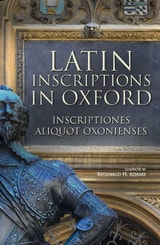
Latin Inscriptions in Oxford
Compiled with Translations by Reginald H. Adams
Bodleian Library Publishing, 2015
For Latin Inscriptions in Oxford, Reginald H. Adams, a former scholar at St. John’s College, University of Oxford, has translated a selection of Latin inscriptions. Among them, he finds a great many tributes and memorials—to Queen Anne, Cardinal Wolsey, and T. E. Lawrence, but also to Irene Frude, a “most kindly landlady” on Little Clarendon who “provided each day for almost thirty-five years enormous breakfasts.” Some of the inscriptions offer concise commentary—“Without experiment, it is not possible to know anything adequately.” While others are instructive like the Rhodes House’s warning, “Let no one who is smoke-bearing enter here.”
Evocative mementoes of the past, the inscriptions collected by Adams bring insight to the vivid history of Oxford, the city and the university.
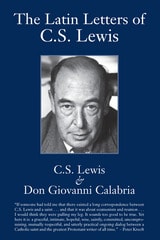
Latin Letters of C.S. Lewis
C.S. Lewis and Don Giovanni Calabria
St. Augustine's Press, 1999
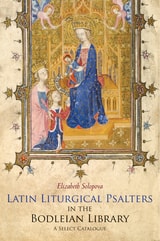
Latin Liturgical Psalters in the Bodleian Library
A Select CatalogueElizabeth Solopova
Bodleian Library Publishing, 2013
Latin Liturgical Psalters in the Bodleian Library describes more than one hundred psalters from Britain, France, the Netherlands, Germany, Austria, Italy, and Spain, ranging from the ninth to the sixteenth century and reflecting a wide range of requirements and interests. Each entry includes a description of the psalter’s contents, physical makeup, and provenance, alongside full-color images of pages, a bibliography, and tables to assist in the study of illumination and the liturgical use of psalms.
Bringing together important information on a stunning selection of little-known manuscripts held by the Bodleian Library, this volume will prove a valuable resource.
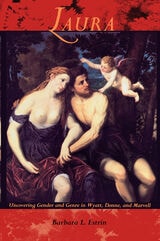
Laura
Uncovering Gender and Genre in Wyatt, Donne and MarvellBarbara L. Estrin
Duke University Press, 1994
Through close readings of the Rime sparse and the works of Wyatt, Donne, and Marvell, Estrin uncovers three Lauras: Laura-Daphne, who denies sexuality; Laura-Eve, who returns the poet’s love; and Laura-Mercury, who reinvents her own life. Estrin claims that in these three guises Laura subverts both genre and gender, thereby introducing multiple desires into the many layers of the poems. Drawing upon genre and gender theories advanced by Jean-François Lyotard and Judith Butler to situate female desire in the poem’s framework, Estrin shows how genre and gender in the Petrarchan tradition work together to undermine the stability of these very concepts.
Estrin’s Laura constitutes a fundamental reconceptualization of the Petrarchan tradition and contributes greatly to the postmodern reassessment of the Renaissance period. In its descriptions of how early modern poets formulate questions about sexuality, society and poetry, Laura will appeal to scholars of the English and Italian Renaissance, of gender studies, and of literary criticism and theory generally.

Law and Justice in the 1950s
Case Studies From a Neglected DecadeEdited by Fiona Cownie and Rosemary Auchmuty
University of London Press, 2026
The 1950s were a decade of considerable legal development in England and Wales, despite often being regarded as very conservative in contrast to the more radical 1960s and 1970s. This collection illustrates the breadth of those developments, providing a sociolegal perspective on a range of topics across criminal, property, family, commercial, environmental, and public law, as well as legal education.
Drawing on case studies from the Great London Smog in 1952, the treatment of women in the Wolfenden Report, divorce law reform, the takeover battle for the Savoy Hotel in 1953, law on the radio, and more, this book throws new light on current debates about the relationship between law and issues of justice, inclusion, and equality in different spheres of activity.
Written for historians and legal specialists alike, Law and Justice in the 1950s explores the stories behind the laws in this neglected decade. In revealing the historical context, arguments, and controversies raised at the time and the different perspectives of the parties involved, it offers a greater understanding of why we have the law we have now and of these issues as they continue to be played out in the early twenty-first century.

Legal Records at Risk
A Strategy for Safeguarding our Legal HeritageClare Cowling
University of London Press, 2019
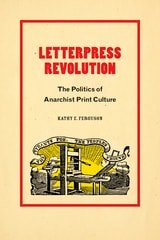
Letterpress Revolution
The Politics of Anarchist Print CultureKathy E. Ferguson
Duke University Press, 2023
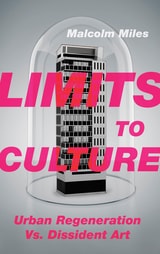
Limits to Culture
Urban Regeneration vs. Dissident ArtMalcolm Miles
Pluto Press, 2015

Literal Figures
Puritan Allegory and the Reformation Crisis in RepresentationThomas H. Luxon
University of Chicago Press, 1995
Why did Puritan Christianity repeatedly turn to allegorical forms of representation in spite of its own intolerance of "Allegorical fancies?" Luxon demonstrates that Protestant doctrine itself was a kind of allegory in hiding, one that enabled Puritans to forge a figural view of reality while championing the "literal" and the "historical". He argues that for Puritanism to survive its own literalistic, anti-symbolic, and millenarian challenges, a "fall" back into allegory was inevitable. Representative of this "fall," The Pilgrim's Progress marks the culminating moment at which the Reformation's war against allegory turns upon itself. An essential work for understanding both the history and theory of representation and the work of John Bunyan, Literal Figures skillfully blends historical and critical methods to describe the most important features of early modern Protestant and Puritan culture.
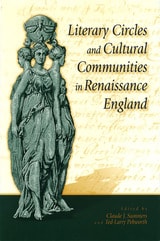
Literary Circles and Cultural Communities in Renaissance England
Edited by Claude J. Summers & Ted-Larry Pebworth
University of Missouri Press, 2001
Although the literary circle is widely recognized as a significant feature of Renaissance literary culture, it has received remarkably little examination. In this collection of essays, the authors attempt to explain literary circles and cultural communities in Renaissance England by exploring both actual and imaginary ways in which they were conceived and the various needs they fulfilled. The book also pays considerable attention to larger theoretical issues relating to literary circles.
The essayists raise important questions about the extent to which literary circles were actual constructs or fictional creations. Whether illuminating or limiting, the circle metaphor itself can be extended or reformulated. Some of the authors discuss how particular circles actually operated, and some question the very concept of the literary circle. Literary Circles and Cultural Communities in Renaissance England will be an important addition to seventeenth-century studies.
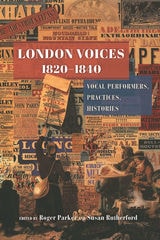
London Voices, 1820–1840
Vocal Performers, Practices, HistoriesEdited by Roger Parker and Susan Rutherford
University of Chicago Press, 2019
It is the London of this period that editors Roger Parker and Susan Rutherford pinpoint in this book, which chooses one broad musical category—voice—and engages with it through essays on music of the streets, theaters, opera houses, and concert halls; on the raising of voices in religious and sociopolitical contexts; and on the perception of voice in literary works and scientific experiments with acoustics. Emphasizing human subjects, this focus on voice allows the authors to explore the multifaceted issues that shaped London, from the anxiety surrounding the city’s importance in the musical world at large to the changing vocal imaginations that permeated the epoch. Capturing the breadth of sonic stimulations and cultures available—and sometimes unavoidable—to residents at the time, London Voices, 1820–1840 sheds new light on music in Britain and the richness of London culture during this period.
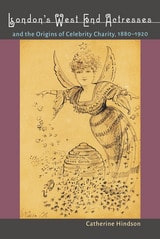
London's West End Actresses and the Origins of Celebrity Charity, 1880-1920
Catherine Hindson
University of Iowa Press, 2016
In the late nineteenth century, theatre’s fundraising for charitable causes shifted from male-dominated and private to female-directed and public. Although elite women had long been involved in such enterprises, they took on more authority in this period. At the same time, regular, high-profile public charity events became more important and much more visible than private philanthropy. Actresses became key figures in making the growing number of large and heavily publicized fundraisers successful. By 1920, the attitude was “Get an actress first. If you can’t get an actress, then get a duchess.” Actresses’ star power, their ability to orchestrate large events quickly, and their skill at performing a kind of genteel extortion made them essential to this model of charity. Actresses also benefited from this new role. Taking a prominent, public, offstage position was crucial in making them, individually and collectively, respectable professionals.
Author Catherine Hindson reveals this history by examining the major types of charity events at the turn of the twentieth century, including fundraising matinees, charity bazaars and costume parties, theatrical tea and garden parties, and benefit performances. Her study concludes with a look at the involvement of actresses in raising funds for British soldiers serving in the Anglo-Boer War and the First World War.
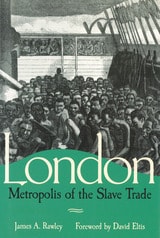
London, Metropolis of the Slave Trade
James A. Rawley & Foreword by David Eltis
University of Missouri Press, 2003
"The recognition that ordinary people could and did trade in slaves, as well as the fact that ordinary people became slaves, is, indeed, the beginning of comprehending the enormity of the forced migration of eleven million people and the attendant deaths of many more."
Rawley draws on material from the year 1700 to the American Civil War as he explores the role of London in the trade. He covers its activity as a port of departure for ships bound for Africa; its continuing large volume after the trade extended to Bristol and Liverpool; and the controversy between London’s parliamentary representatives, who defended the trade, and the abolitionist movement that was quartered there.
Sweeping in scope and thorough in its analysis, this collection of essays from a seasoned scholar will be welcomed by historians concerned with slavery and the slave trade, as well as by students just beginning their exploration of this subject.
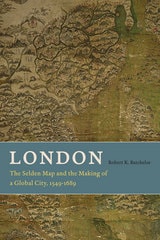
London
The Selden Map and the Making of a Global City, 1549-1689Robert K. Batchelor
University of Chicago Press, 2013
Lost Property
The Woman Writer and English Literary History, 1380-1589Jennifer Summit
University of Chicago Press, 2000
Lost Property traces the representation of women writers from Margery Kempe and Christine de Pizan to Elizabeth I and Mary Queen of Scots, exploring how the woman writer became a focal point for emerging theories of literature and authorship in English precisely because of her perceived alienation from tradition. Through original archival research and readings of key literary texts, Summit writes a new history of the woman writer that reflects the impact of such developments as the introduction of printing, the Reformation, and the rise of the English court as a literary center.
A major rethinking of the place of women writers in the histories of books, authorship, and canon-formation, Lost Property demonstrates that, rather than being an unimaginable anomaly, the idea of the woman writer played a key role in the invention of English literature.

Louder Than Bombs
A Life with Music, War, and PeaceEd Vulliamy
University of Chicago Press, 2020
Describing the artists, songs, and concerts that most influenced him, Vulliamy brings together the two largest threads of his life—music and war. Louder Than Bombs covers some of the most important musical milestones of the past fifty years, from Jimi Hendrix playing “Machine Gun” at the Isle of Wight Festival in 1970 to the Bataclan in Paris under siege in 2015. Vulliamy was present for many of these historic moments, and with him as our guide, we see them afresh, along the way meeting musicians like B. B. King, Graham Nash, Patti Smith, Daniel Barenboim, Gustavo Dudamel, and Bob Dylan. Vulliamy peppers the book with short vignettes—which he dubs 7" singles—recounting some of his happiest memories from a lifetime with music. Whether he’s working as an extra in the Vienna State Opera’s production of Aida, buying blues records in Chicago, or drinking coffee with Joan Baez, music is never far from his mind. As Vulliamy discovers, when horror is unspeakable, when words seem to fail us, we can turn to music for expression and comfort, or for rage and pain. Poignant and sensitively told, Louder Than Bombs is an unforgettable record of a life bursting with music.