Results by title
22 books match the query 'Effects'
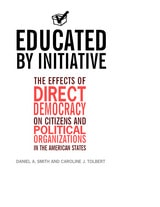
Educated by Initiative
The Effects of Direct Democracy on Citizens and Political Organizations in the American StatesDaniel A. Smith and Caroline J. Tolbert
University of Michigan Press, 2004
--Kristina Wilfore, Executive Director, Ballot Initiative Strategy Center and Foundation
Educated by Initiative moves beyond previous evaluations of public policy to emphasize the educational importance of the initiative process itself. Since a majority of ballots ultimately fail or get overturned by the courts, Smith and Tolbert suggest that the educational consequences of initiative voting may be more important than the outcomes of the ballots themselves. The result is a fascinating and thoroughly-researched book about how direct democracy teaches citizens about politics, voting, civic engagement and the influence of special interests and political parties. Designed to be accessible to anyone interested in the future of American democracy, the book includes boxes (titled "What Matters") that succinctly summarize the authors' data into easily readable analyses.
Daniel A. Smith is Associate Professor of Political Science at the University of Florida.
Caroline J. Tolbert is Associate Professor of Political Science at Kent State University.
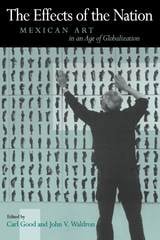
Effects Of The Nation
Mexican Art In Age Of Globalizationedited by Carl Good and John V. Waldron
Temple University Press, 2001
Mexico is a particularly apt focus, partly because of the vitality of its culture, partly because of its changing political identity, and partly because of the impact of borders and borderlessness on its national character. The ten essays collected here look at a wide range of aesthetic productions -- especially literature and the visual arts -- that give context to how art and society interact.
Steering a careful course between the nostalgia of nationalism and the insensitivity of globalism, these essays examine modernism and postmodernism in the Mexican setting. Individually, they explore the incorporation of historical icons, of vanguardism, and of international influence. From Diego Rivera to Elena Garro, from the Tlateloco massacre to the Chiapas rebellion, from mass-market fiction to the film Aliens, the contributors view the many sides of Mexican life as relevant to the creation of a constantly shifting national culture. Taken together, the essays look both backward and forward at the evolving effect of the Mexican nation.

Hidden Victims
The Effects of the Death Penalty on Families of the AccusedSharp, Susan F
Rutgers University Press, 2005
"Everyone concerned with the effects of capital punishment must have this book."—Margaret Vandiver, professor, department of criminology and criminal justice, University of Memphis
Murderers, particularly those sentenced to death, are considered by most to be unusually heinous, often sub-human, and entirely different from the rest of us. In Hidden Victims, sociologist Susan F. Sharp challenges this culturally ingrained perspective by reminding us that those individuals facing a death sentence, in addition to being murderers, are brothers or sisters, mothers or fathers, daughters or sons, relatives or friends. Through a series of vivid and in-depth interviews with families of the accused, she demonstrates how the exceptionally severe way in which we view those on death row trickles down to those with whom they are closely connected. Sharp shows how family members and friends—in effect, the indirect victims of the initial crime—experience a profoundly complicated and socially isolating grief process.
Departing from a humanist perspective from which most accounts of victims are told, Sharp makes her case from a sociological standpoint that draws out the parallel experiences and coping mechanisms of these individuals. Chapters focus on responses to sentencing, the particular structure of grieving faced by this population, execution, aftermath, wrongful conviction, family formation after conviction, and the complex situation of individuals related to both the killer and the victim.
Powerful, poignant, and intelligently written, Hidden Victims challenges all of us—regardless of which side of the death penalty you are on—to understand the economic, social, and psychological repercussions that shape the lives of the often forgotten families of death row inmates.
Inflation
Causes and EffectsEdited by Robert E. Hall
University of Chicago Press, 1983
This volume presents the latest thoughts of a brilliant group of young economists on one of the most persistent economic problems facing the United States and the world, inflation. Rather than attempting an encyclopedic effort or offering specific policy recommendations, the contributors have emphasized the diagnosis of problems and the description of events that economists most thoroughly understand. Reflecting a dozen diverse views—many of which challenge established orthodoxy—they illuminate the economic and political processes involved in this important issue.
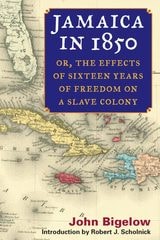
Jamaica in 1850
or, The Effects of Sixteen Years of Freedom on a Slave ColonyJohn Bigelow Introduction by Robert J. Scholnick
University of Illinois Press, 2000
A reporter's firsthand portrait of formerly enslaved Jamaicans in the years after emancipation
John Bigelow’s Jamaica in 1850 provided an important document in the antislavery movement in the United States and Great Britain. Jamaica’s economy had collapsed after the 1838 emancipation. American supporters of enslavement used the Jamaican example to argue that abolition at home would unleash economic and social chaos. Bigelow’s vivid eyewitness reporting undermined that widely held view by proving Jamaica’s problems originated in the incompetence of absentee white planters and an obsolete colonial system. As Bigelow showed, many once-enslaved Jamaicans had in fact become successful small-scale landowners in the twelve years after emancipation while the large plantations languished.
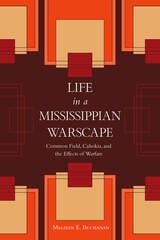
Life in a Mississippian Warscape
Common Field, Cahokia, and the Effects of WarfareMeghan E. Buchanan
University of Alabama Press, 2022
Analyzes Mississippian daily life at Cahokia’s environs during wartime
In Life in a Mississippian Warscape: Common Field, Cahokia, and the Effects of Warfare Meghan E. Buchanan posits that to understand the big histories of warfare, political fragmentation, and resilience in the past archaeologists must also analyze and interpret the microscale actions of the past. These are the daily activities of people before, during, and after historical events. Within warscapes, battles take place in peoples’ front yards, family members die, and the impacts of violence in near and distant places are experienced on a daily basis. This book explores the microscale of daily lives of people living at Common Field, a large, palisaded mound center, during the period of Cahokia’s abandonment and the spread of violence and warfare throughout the Southeast.
Linking together ethnographic, historic, and archaeological sources, Buchanan discusses the evidence that the people of Common Field engaged in novel and hybrid practices in these dangerous times. At the microscale, they adopted new ceramic tempering techniques, produced large numbers of serving vessels decorated with warfare-related imagery, adapted their food practices, and erected a substantial palisade with specially prepared deposits. The overall picture that emerges at Common Field is of a people who engaged in risk-averse practices that minimized their exposure to outside of the palisade and attempted to seek intercession from otherworldly realms through public ceremonies involving warfare-related iconography.

Lightning Electromagnetics
Electrical processes and effects, Volume 2Vernon Cooray
The Institution of Engineering and Technology, 2022
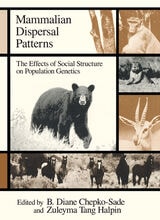
Mammalian Dispersal Patterns
The Effects of Social Structure on Population GeneticsEdited by B. Diane Chepko-Sade and Zuleyma Tang Halpin
University of Chicago Press, 1987
Theoretical work in population genetics indicates that such social factors as skewed sex ratios, restrictive mating patterns, and delayed age of first reproduction will lower the reproductive variability of a population by reducing the number of genotypes passed from one generation to the next. Field studies have shown that many mammalian species do exhibit many such social characteristics. Among horses, elephant seals, and a number of primates, the majority of females are inseminated by only a fraction of the males. In pacts of wolves and mongooses, usually only the highest-ranking male and female breed in a given season. Although socially restricted mating tends to lower genetic variability in isolated populations, it actually tends to increase genetic variability in subdivided populations with low rates of migration between subunits. Among some species there is little dispersal and thus little gene flow between subpopulations; other species travel far afield before mating.
The contributors to this volume examine actual data from populations of mammals, the way patterns of dispersal correlate with the genetic structure of individuals and populations, and mathematical models of population structure. This interdisciplinary approach has an important bearing on work in conservation of both wildlife and zoo populations, for it shows that the home range and the population size needed to maintain genetic variability can differ greatly from one species to the next. The volume also offers a fruitful model for future research.
Medicare
Intentions, Effects, and Politics, Volume 26Mark A. Peterson, ed.
Duke University Press, 0
A complete understanding of the particular and peculiar structure of Medicare can be gained only by considering the ideas, politics, and institutions of the 1960s that shaped it. With this historical perspective, the articles in this collection can move beyond partisan arguments and politically motivated reform proposals. Instead, they outline educated guidelines for improving Medicare and debunk commonly held but false assumptions about the program. In "How Not to Think about Medicare" the field’s most noted scholar, Theodore Marmor, exposes four such misconceptions, including the program’s seeming inability to control costs and ward off what some call a fiscal tsunami—the aging of the baby boomers. Other contributions address frequently overlooked functions of Medicare. While the program is known for its universal health coverage for the elderly and the disabled, for instance, Medicare also serves a crucial role in overseeing hospital performance and furthering health education. This special issue concludes with a discussion of Marmor’s recently revised classic book, The Politics of Medicare, by five leading specialists who interpret the present Medicare program in light of its original construct and current political influences.
Contributors. Michael Gusmano, Jacob Hacker, Nancy M. Kane, Stephen A. Magnus, Theodore Marmor, Jonathan Oberlander, Eric M. Patashnik, Mark A. Peterson, Mark J. Schlesinger, Carolyn Tuohy, Bruce Vladeck, Julian Zelizer
Misalignment of Exchange Rates
Effects on Trade and IndustryEdited by Richard C. Marston
University of Chicago Press, 1988
Contributors to Misalignment of Exchange Rates address a series of questions about misalignment. Several papers investigate the causes of misalignment and the extent to which observed movements in real exchange rates can be attributed to misalignment. These studies are conducted both empirically, through the experiences of the United States, Great Britain, Japan, and the countries of the European Monetary System, and theoretically, through models of imperfect competition. Attention is then turned to the effects of misalignment, especially on employment and production, and to detailed estimates of the effects of changes in exchange rates on several industries, including the U.S. auto industry. In response to the contention that there is significant "hysteresis" in the adjustment of employment and production to changes in exchange rates, contributors also attempt to determine whether the effects of misalignment can be reversed once exchange rates return to earlier levels. Finally, the issue of how to avoid—or at least control—misalignment through macroeconomic policy is confronted.

Nuclear Nuevo México
Colonialism and the Effects of the Nuclear Industrial Complex on NuevomexicanosMyrriah Gómez
University of Arizona Press, 2022
Contrary to previous works that suppress Nuevomexicana/o presence throughout U.S. nuclear history, Nuclear Nuevo México focuses on recovering the voices and stories that have been lost or ignored in the telling of this history. By recuperating these narratives, Myrriah Gómez tells a new story of New Mexico, one in which the nuclear history is not separate from the collective colonial history of Nuevo México but instead demonstrates how earlier eras of settler colonialism laid the foundation for nuclear colonialism in New Mexico.
Gómez examines the experiences of Nuevomexicanas/os who have been impacted by the nuclear industrial complex, both the weapons industry and the commercial industry. Gómez argues that Los Alamos was created as a racist project that targeted poor and working-class Nuevomexicana/o farming families, along with their Pueblo neighbors, to create a nuclear empire. The resulting imperialism has left a legacy of disease and distress throughout New Mexico that continues today.

Social Security Programs and Retirement Around the World
The Effects of Pension Reforms on the Income Distribution of RetireesEdited by Axel Börsch-Supan and Courtney C. Coile
University of Chicago Press, 0
A wide-ranging comparative analysis of the effects of pension reforms on the income distribution among retirees.
Pension reforms enacted in many developed economies since the late 1990s increased labor force participation among older workers. Did they also generate greater inequality in retirement income? Social Security Programs and Retirement Around the World: The Effects of Pension Reforms on the Income Distribution of Retirees examines whether these reforms redistributed social security wealth in ways that disproportionately benefited or harmed retirees at different points in the income distribution. The chapters present country-specific analyses for Belgium, Canada, Denmark, France, Germany, Italy, Japan, the Netherlands, Spain, and the United Kingdom. Using microdata and counterfactual simulations, they find a quite varied picture: in six of the ten countries studied, pension reform reduced income inequality among retirees, while in three countries the reforms expanded it. Across countries, benefit-level changes, rather than behavioral responses to altered retirement incentives, account for most of the redistributive impact. In countries that cut benefits uniformly, lower-income retirees suffered more than higher-income retirees due to shorter life expectancies. When new programs supplemented across-the-board cuts with support for lower earners, however, inequality declined.
Social Security Programs and Retirement around the World
The Effects of Reforms on Retirement BehaviorEdited by Axel Börsch-Supan and Courtney C. Coile
University of Chicago Press, 2025
A global analysis of the effects of social security reforms on the retirement incentives and labor force trends of older workers.
Employment among older men and women has increased dramatically in recent years, reversing a downward trend in the closing decades of the twentieth century. Social Security Programs and Retirement around the World examines how changing retirement incentives have reshaped labor force participation trends among older workers. The chapters feature country-specific analyses for Belgium, Canada, Denmark, France, Germany, Italy, Japan, Netherlands, Spain, Sweden, the United Kingdom, and the United States. They find that while there is significant heterogeneity across countries, the reforms of recent decades have generally reduced the implicit tax on work at older ages. These changes correlate positively with labor force participation. The studies exploit the variation in the timing and extent of reforms of retirement incentives and employ microeconometric methods to investigate whether this correlation reflects a causal relationship. Policy changes appear to have contributed to rising labor force activity, but other factors like the role of women in the labor force, improved health, and changes in private pensions likely also play important roles.
Sound
Dialogue, Music, and EffectsKalinak, Kathryn
Rutgers University Press, 2015
Succeeding Generations
On the Effects of Investments in ChildrenRobert Haveman
Russell Sage Foundation, 1994
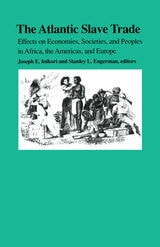
The Atlantic Slave Trade
Effects on Economies, Societies and Peoples in Africa, the Americas, and EuropeJoseph E. Inikori and Stanley L. Engerman
Duke University Press, 1992
Among the questions these essays address are: the social cost to Africa of this forced migration; the role of slavery in the economic development of Europe and the United States; the short-term and long-term effects of the slave trade on black mortality, health, and life in the New World; and the racial and cultural consequences of the abolition of slavery. Some of these essays originally appeared in recent issues of Social Science History; the editors have added new material, along with an introduction placing each essay in the context of current debates.
Based on extensive archival research and detailed historical examination, this collection constitutes an important contribution to the study of an issue of enduring significance. It is sure to become a standard reference on the Atlantic slave trade for years to come.
Contributors. Ralph A. Austen, Ronald Bailey, William Darity, Jr., Seymour Drescher, Stanley L. Engerman, David Barry Gaspar, Clarence Grim, Brian Higgins, Jan S. Hogendorn, Joseph E. Inikori, Kenneth Kiple, Martin A. Klein, Paul E. Lovejoy, Patrick Manning, Joseph C. Miller, Johannes Postma, Woodruff Smith, Thomas Wilson
The Effects of Taxation on Capital Accumulation
Edited by Martin Feldstein
University of Chicago Press, 1987
The Effects of Taxation on Multinational Corporations
Edited by Martin Feldstein, James R. Hines Jr., and R. Glenn Hubbard
University of Chicago Press, 1995
In an attempt to quantify the effect of tax policy on international investment choices, this volume presents in-depth analyses of the interaction of international tax rules and the investment decisions of multinational enterprises. Ten papers assess the role played by multinational firms and their investment in the U.S. economy and the design of international tax rules for multinational investment; analyze channels through which international tax rules affect the costs of international business activities; and examine ways in which international tax rules affect financing decisions of multinational firms. As a group, the papers demonstrate that international tax rules have significant effects on firms' investment and other financing decisions.
The Effects of U.S. Trade Protection and Promotion Policies
Edited by Robert C. Feenstra
University of Chicago Press, 1997
The volume concludes that some policies can act to both protect imports and promote exports, that the threat of protectionist policies can often have effects that are as pronounced as their implementation, and that regulatory policy has as great an impact on trade and investment patterns as does trade policy itself. It will be of crucial interest to international trade economists, policy specialists, and political scientists.
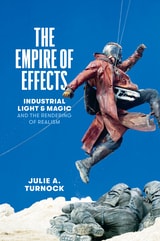
The Empire of Effects
Industrial Light and Magic and the Rendering of RealismJulie A. Turnock
University of Texas Press, 2022
2024 Finalist, Marshall McLuhan Outstanding Book Award, Media Ecology Association
How one company created the dominant aesthetic of digital realism.
Just about every major film now comes to us with an assist from digital effects. The results are obvious in superhero fantasies, yet dramas like Roma also rely on computer-generated imagery to enhance the verisimilitude of scenes. But the realism of digital effects is not actually true to life. It is a realism invented by Hollywood—by one company specifically: Industrial Light & Magic.
The Empire of Effects shows how the effects company known for the puppets and space battles of the original Star Wars went on to develop the dominant aesthetic of digital realism. Julie A. Turnock finds that ILM borrowed its technique from the New Hollywood of the 1970s, incorporating lens flares, wobbly camerawork, haphazard framing, and other cinematography that called attention to the person behind the camera. In the context of digital imagery, however, these aesthetic strategies had the opposite effect, heightening the sense of realism by calling on tropes suggesting the authenticity to which viewers were accustomed. ILM’s style, on display in the most successful films of the 1980s and beyond, was so convincing that other studios were forced to follow suit, and today, ILM is a victim of its own success, having fostered a cinematic monoculture in which it is but one player among many.

The Wounded Jung
Effects of Jung's Relationships on His Life and WorkRobert C. Smith
Northwestern University Press, 1997
Smith begins by exploring Jung's formative and transformative life experience, including his relationships with a deeply troubled mother and despairing father, with Sigmund Freud, and with the various women in his life. The relationships to his parents, in particular, have been remarkably unexplored by scholars. Smith then shows how these experiences shaped Jung's thoughts and writing -including his reassessment of religion as inner process - as well as his fascination with gnosticism and alchemy; the attention Jung gives to psychology as myth and the realization of selfhood; and his reinterpretation of evil as a process to be integrated into the proper sphere of human existence.
Smith's findings are based on the unprecedented number of primary sources to which he had access, including archival research, his own interviews with many of Jung's intimates, and personal correspondence with Jung himself, as well as on the synthesis of a wide range of recent scholarship on Jung. The culmination of many years of scholarship and reflection, this book should be read by anyone interested in spiritual healing or the connection between psychology and religion.
Themes out of School
Effects and CausesStanley Cavell
University of Chicago Press, 1988
Fantasies of film and television and literature, flashes across the landscape of literary theory, philosophical discourse, and French historiography give Cavell his starting points in these twelve essays. Here is philosophy in and out of "school," understood as a discipline in itself or thought through the works of Shakespeare, Molière, Kierkegaard, Thoreau, Brecht, Makavejev, Bergman, Hitchcock, Astaire, and Keaton.