Results by title
1832 books match the query 'Essays' and 70 start with l
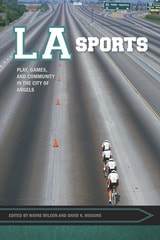
LA Sports
Play, Games, and Community in the City of AngelsWayne Wilson
University of Arkansas Press, 2018
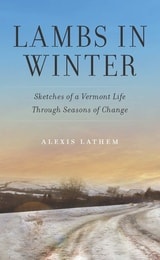
Lambs in Winter
Sketches of a Vermont Life Through Seasons of ChangeAlexis Lathem
University of Massachusetts Press, 2025
Finding hope in a small farm, an engaged community, and an age-old connection to the earth
After half a lifetime spent moving from place to place, Alexis Lathem at last settled down with her husband on a small farm near Vermont’s largest city. The lyric essays of Lambs in Winter take readers through the seasonal cycles of raising sheep and hens and growing fruits and vegetables while confronting the challenges of winter storms, summer floods, invasive weeds, and pests and diseases.
Ever conscious of her place in a historically colonized and ecologically degraded landscape, Lathem wrestles with ethical questions that come to many rural dwellers who—following Thoreau—set out to “live deliberately,” in a time of climate crisis, persistent racial inequity, and growing economic inequality. Likewise, she grapples with the moral complexities of small-scale animal husbandry. Through her efforts at self-provisioning, without holding illusions of the self-reliant individual, Lathem finds herself deeply embedded in the community and reliant on others, especially as her region deals with repeated catastrophic flooding brought on by climate change.
Through elegant prose and insightful investigations into pressing contemporary issues, Lathem evokes the world of her farm and the surrounding countryside with a spiritual awareness of the human journey on this earth. Living in place, attuned to the unfolding changes in the world around her, gives her much to grieve, but the pages of Lambs in Winter are luminous with moments of joy and beauty.
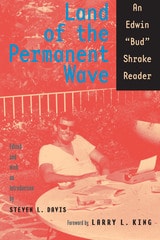
Land of the Permanent Wave
An Edwin "Bud" Shrake ReaderBy Bud Shrake
University of Texas Press, 2008
Edwin "Bud" Shrake is one of the most intriguing literary talents to emerge from Texas. He has written vividly in fiction and nonfiction about everything from the early days of the Texas Republic to the making of the atomic bomb. His real gift has been to capture the Texas Zeitgeist. Legendary Harper's Magazine editor Willie Morris called Shrake's essay "Land of the Permanent Wave" one of the two best pieces Morris ever published during his tenure at the magazine. High praise, indeed, when one considers that Norman Mailer and Seymour Hersh were just two of the luminaries featured at Harper's during Morris's reign.
This anthology is the first to present and explore Shrake's writing completely, including his journalism, fiction, and film work, both published and previously unpublished. The collection makes innovative use of his personal papers and letters to explore the connections between his journalism and his novels, between his life and his art. An exceptional behind-the-scenes look at his life, Land of the Permanent Wave reveals and reveres the life and calling of a writer whose legacy continues to influence and engage readers and writers nearly fifty years into his career.
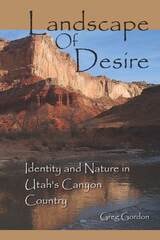
Landscape Of Desire
Greg Gordon
Utah State University Press, 2003
Landscape of Desire powerfully documents and celebrates a place and the evolutions that occur when human beings are intimately connected to their surroundings. Greg Gordon accomplishes this with a tapestry of writing that interweaves land use history, natural history, experiential education, and personal reflection. He tracks the geomorphology of southern Utah as well as the creatures and plants his student group encounters, the history lessons (planned and unplanned), the trials and joys of gathering so many individuals into a cohesive will, and his own personal epiphanies, restraints, insights, and disillusionments.
Landscape of Desire examines the plight of the western landscape. It discusses a wide range of issues, including mining, grazing, dams, recreation, wilderness, and land management. Since recreation has replaced extraction industries as the primary use of wilderness, especially in southern Utah, Gordon addresses its impactful qualities. He overviews the history of the conflict between preservation and development and places these issues in a cultural context. The text is presented in a narrative format, following the individuals of one field course Gordon lead that explored Muddy Creek and the Dirty Devil River from Interstate 70 to Lake Powell. Though each chapter focuses on the geologic formation the group is traveling through, the plants, animals, ecology, and human impacts are all tightly woven into the narrative. Not only does the land affect the members of the field course, but their attitudes and insights affect the land.
In Landscape of Desire Gordon achieves a vision of wholeness of this popular and contested region of Utah that centers around the implications of being human and also stewards of the wild.
Landscape of Modernity
Essays on New York City, 1900-1940David Ward
Russell Sage Foundation, 1992
Langston Hughes and the *Chicago Defender*
Essays on Race, Politics, and Culture, 1942-62Langston Hughes. Edited by Christopher C. De Santis
University of Illinois Press, 1995
But it was as a columnist for the famous African-American newspaper the Chicago Defender that Hughes chronicled the hopes and despair of his people. For twenty years, he wrote forcefully about international race relations, Jim Crow, the South, white supremacy, imperialism and fascism, segregation in the armed forces, the Soviet Union and communism, and African-American art and culture. None of the racial hypocrisies of American life escaped his searing, ironic prose.
This is the first collection of Hughes's nonfiction journalistic writings. For readers new to Hughes, it is an excellent introduction; for those familiar with him, it gives new insights into his poems and fiction.
Last Water on the Devil's Highway
A Cultural and Natural History of Tinajas AltasBill Broyles, Gayle Harrison Hartmann, Thomas E. Sheridan, Gary Paul Nabhan, and Mary Charlotte Thurtle
University of Arizona Press, 2013
Now an expert cast of authors describes, narrates, and explains the human and natural history of this special place in a thorough and readable account. Addressing the latest archaeological and historical findings, they reveal why Tinajas Altas was so important and how it related to other waterholes in the arid borderlands. Readers can feel like pioneers, following in the footsteps of early Native Americans, Spanish priests and soldiers, gold seekers and borderland explorers, tourists, and scholars.
Combining authoritative writing with a rich array of more than 180 illustrations and maps as well as detailed appendixes providing up-to-date information on the wildlife and plants that live in the area, Last Water on the Devil’s Highway allows readers to uncover the secrets of this fascinating place, revealing why it still attracts intrepid tourists and campers today.
Lateness and Longing
On the Afterlife of PhotographyGeorge Baker
University of Chicago Press, 2023
Beginning in the 1990s, a series of major artists imagined the expansion of photography, intensifying its ideas and effects while abandoning many of its former medium constraints. Simultaneous with this development in contemporary art, however, photography was moving toward total digitalization.
Lateness and Longing presents the first account of a generation of artists—focused on the work of Zoe Leonard, Tacita Dean, Sharon Lockhart, and Moyra Davey—who have collectively transformed the practice of photography, using analogue technologies in a dissident way and radicalizing signifiers of older models of feminist art. All these artists have resisted the transition to the digital in their work. Instead—in what amounts to a series of feminist polemics—they return to earlier, incomplete, or unrealized moments in photography’s history, gravitating toward the analogue basis of photographic mediums. Their work announces that photography has become—not obsolete—but “late,” opened up by the potentially critical forces of anachronism.
Through a strategy of return—of refusing to let go—the work of these artists proposes an afterlife and survival of the photographic in contemporary art, a formal lateness wherein photography finds its way forward through resistance to the contemporary itself.
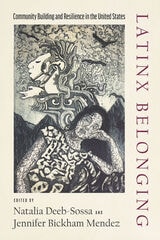
Latinx Belonging
Community Building and Resilience in the United StatesEdited by Natalia Deeb-Sossa and Jennifer Bickham Mendez
University of Arizona Press, 2022
What does it mean to be Latinx? This pressing question forms the core of Latinx Belonging, which brings together cutting-edge research to discuss the multilayered ways this might be answered.
Latinx Belonging is anchored in the claim that Latinx people are not defined by their marginalization but should instead be understood as active participants in their communities and contributors to U.S. society. The volume’s overarching analytical approach recognizes the differences, identities, and divisions among people of Latin American origin in the United States, while also attending to the power of mainstream institutions to shape their lives and identities. Contributors to this volume view “belonging” as actively produced through struggle, survival, agency, resilience, and engagement.
This work positions Latinxs’ struggles for recognition and inclusion as squarely located within intersecting power structures of gender, race, sexuality, and class and as shaped by state-level and transnational forces such as U.S. immigration policies and histories of colonialism. From the case of Latinxs’ struggles for recognition in the arts, to queer Latinx community resilience during COVID-19 and in the wake of mass shootings, to Indigenous youth’s endurance and survival as unaccompanied minors in Los Angeles, the case studies featured in this collection present a rich and textured picture of the diversity of the U.S. Latinx experience in the twenty-first century.
Contributors
Andrés Acosta
Jack “Trey” Allen
Jennifer Bickham Mendez
Stephanie L. Canizales
Christopher Cuevas
Natalia Deeb-Sossa
Yvette G. Flores
Melanie Jones Gast
Monika Gosin
Pierrette Hondagneu-Sotelo
Nolan Kline
Verónica Montes
Yvonne Montoya
Michael De Anda Muñiz
Suzanne Oboler
Gilda L. Ochoa
Dina G. Okamoto
Marco Antonio Quiroga
Michelle Téllez
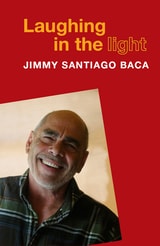
Laughing in the Light
Jimmy Santiago Baca
Museum of New Mexico Press, 2020
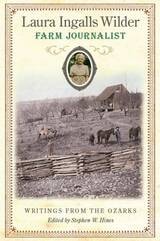
Laura Ingalls Wilder, Farm Journalist
Writings from the OzarksEdited by Stephen W. Hines
University of Missouri Press, 2007
Before Laura Ingalls Wilder found fame with her Little House books, she made a name for herself with short nonfiction pieces in magazines and newspapers. Read today, these pieces offer insight into her development as a writer and depict farm life in the Ozarks—and also show us a different Laura Ingalls Wilder from the woman we have come to know.
This volume collects essays by Wilder that originally appeared in the Missouri Ruralist between 1911 and 1924. Building on the initial compilation of these articles under the title Little House in the Ozarks, this revised edition marks a more comprehensive collection by adding forty-two additional Ruralist articles and restoring passages previously omitted from other articles.
Writing as “Mrs. A. J. Wilder” about modern life in the early twentieth-century Ozarks, Laura lends her advice to women of her generation on such timeless issues as how to be an equal partner with their husbands, how to support the new freedoms they’d won with the right to vote, and how to maintain important family values in their changing world. Yet she also discusses such practical matters as how to raise chickens, save time on household tasks, and set aside time to relax now and then.
New articles in this edition include “Making the Best of Things,” “Economy in Egg Production,” and “Spic, Span, and Beauty.” “Magic in Plain Foods” reflects her cosmopolitanism and willingness to take advantage of new technologies, while “San Marino Is Small but Mighty” reveals her social-political philosophy and her interest in cooperation and community as well as in individualism and freedom. Mrs. Wilder was firmly committed to living in the present while finding much strength in the values of her past.
A substantial introduction by Stephen W. Hines places the essays in their biographical and historical context, showing how these pieces present Wilder’s unique perspective on life and politics during the World War I era while commenting on the challenges of surviving and thriving in the rustic Ozark hill country. The former little girl from the little house was entering a new world and wrestling with such issues as motor cars and new “labor-saving” devices, but she still knew how to build a model small farm and how to get the most out of a dollar.
Together, these essays lend more insight into Wilder than do even her novels and show that, while technology may have improved since she wrote them, the key to the good life hasn’t changed much in almost a century. Laura Ingalls Wilder, Farm Journalist distills the essence of her pioneer heritage and will delight fans of her later work as it sheds new light on a vanished era.
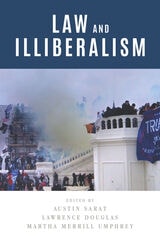
Law and Illiberalism
Edited by Austin Sarat, Lawrence Douglas, and Martha Merrill Umphrey
University of Massachusetts Press, 2022
Does the law shield citizens from authoritarian regimes? Are the core beliefs of classical liberalism—namely the rights of all individuals and constraints on state power—still protected by law? Liberalism and its expansion of rights could not exist without the legal system, and unsurprisingly, many scholars have explored the relationship between law and liberalism. However, the study of law and illiberalism is a relatively recent undertaking, a project that takes on urgency in light of the rise of authoritarian powers, among them Donald Trump’s administration, Viktor Orban’s Hungary, Recep Erdogan’s Turkey, and Jair Bolsanoro’s Brazil.
In this volume, six penetrating essays explore the dynamics of the law and illiberal quests for power, examining the anti-liberalism of neoliberalism; the weaponization of “free speech”; the role of the administrative state in current crises of liberal democracy; the broad and unstoppable assault on facts, truth, and reality; and the rise of conspiracism leading up to the Capitol insurrection. In addition to the editors, contributors include Sharon Krause, Elizabeth Anker, Jeremy Kessler, Lee McIntyre, and Nancy Rosenblum.
Law and Religion in a Secular Age
Rafael Domingo
Catholic University of America Press, 2023
Law and the Postmodern Mind
Essays on Psychoanalysis and JurisprudencePeter Goodrich and David Gray Carlson, Editors
University of Michigan Press, 1998
Law and the Visible
Edited by Austin Sarat, Lawrence Douglas, and Martha Merrill Umphrey
University of Massachusetts Press, 2021
Individual essays discuss the culpability of those who record violence, the history of racialized violence as it streams through police bodycams, the idea of digital images as objective or neutral, the logics of surveillance and transparency, and a defense of anonymity in the digital age.
Contributors include Benjamin J. Goold, Torin Monahan, Kelli Moore, Eden Osucha, Jennifer Peterson, and Carrie A. Rentschler.
Law's Mistakes
Austin Sarat
University of Massachusetts Press, 2016
The essays in Law's Mistakes explore the things that law recognizes as errors and the way it responds to them. They identify the jurisprudential and political perspectives that underlie different understandings of what is or is not a legal mistake, and examine the fraught, contested, and evolving relationship between law and error. And they offer templates for thinking about what mistakes can tell us about the aspirations and limits of law, and for understanding how our imagining of law is enabled and shaped by its juxtaposition to a condition labeled mistake.
In addition to the volume editors, contributors include Paul Schiff Berman, Sonali Chakravarti, Jody L. Medeira, Stewart Motha, Kunal Parker, and Jordan Steiker.

Learning From Robben Island
Govan Mbeki’s Prison WritingsGovan Mbeki
Ohio University Press, 1991
In the late fifties and early sixties, Govan Mbeki was a central figure in the African National Congress and director of the ANC campaigns from underground. Born of a chief and the daughter of a Methodist minister in the Transkei of South Africa in 1910, he worked as a teacher, journalist, and tireless labor organizer in a lifetime of protest against the government policy of apartheid. Over two decades of imprisonment on Robben Island did not consign him to obscurity. Along with Nelson Mandela and Walter Sisulu, his name has become a symbol of resistance, not only to the oppressed people of South Africa, but also to the international community who have conferred on him many honors and awards.
Learning in the Plural
Essays on the Humanities and Public LifeDavid D. Cooper
Michigan State University Press, 2014
Learning to Glow
A Nuclear ReaderJohn Bradley
University of Arizona Press, 2000
In Learning to Glow, twenty-four essays testify to many of the unsuspected human and environmental costs of atomic science. They show that Americans have paid a terrible price for supposedly "winning" the Cold War--for although the nuclear nightmare may be over, we are still living with nuclear threats every day. Writers such as Scott Russell Sanders, Terry Tempest Williams, and Barbara Kingsolver reveal the psychic and emotional fallout of the Cold War and of subsequent developments in nuclear science. The essays include personal testimonies of what it was like to grow up with family members in nuclear-related jobs; hard-hitting journalism on the health and environmental costs of our nuclear policies and practices; and poignant stories of coming to terms with nuclear power, including contributions by writers who revisit Hiroshima in an attempt to heal the wounds left by the Bomb.
These essays offer an alternative to the official version of nuclear history as told to us by school textbooks, government authorities, and nuclear industry officials. They are stories of and by ordinary people who have suffered the consequences of the decisions made by those in power-stories that have been largely ignored, dismissed, or suppressed. They will challenge readers to re-examine their preconceptions about the way we deal with issues of nuclear arms and radioactive waste because they show that nuclear history does not belong to experts but to us all.
Contributors:
Marilou Awiakta
John Bradley
Jim Carrier
Alison Hawthorne Deming
Mary Dickson
Edward Dougherty
Ray Gonzalez
Karl Grossman
Sonya Huber
Barbara Kingsolver
Valerie Kuletz
Mary Laufer
Kay Mack
Craig McGrath
Bill Mesler
Richard H. Minear
Randy Morris
Mayumi Oda
Catherine Quigg
Richard Rawles
Kenneth Robbins
Scott Russell Sanders
David Seaborg
Terry Tempest Williams
Bill Witherup
Phil Woods
Leavetakings
EssaysCorinna Cook
University of Alaska Press, 2020
Leaving a Legacy
Lessons from the Writings of Daniel DrakePhilip Diller
University of Minnesota Press, 2019
Leaving a Legacy: Lessons from the Writings of Daniel Drake is a selective collection of excerpts from the vast writings from the nineteenth-century doctor and medical pioneer Daniel Drake. From Drake’s life, documented here in his own words from excerpts of lectures, personal journal entries, presentations, speeches, books, and letters to his children, readers learn about the scope of his accomplishments in medicine, contributions to his community, and dedication to his family. Diller goes beyond biography to contextualize Drake’s life choices and what made him a role model for today’s physicians. Diller selected one hundred and eighty thematically arranged excerpts, which he paired with original reflection questions to guide the reader through thought-provoking prompts. In doing so, Diller presents the lessons from Drake’s remarkable life and work as a guide for others who wish to build an enduring legacy.
Lectures and Essays in Criticism
The Complete Prose Works of Matthew ArnoldMatthew Arnold; Edited by R. H. Super
University of Michigan Press, 1962
Legacies, Logics, Logistics
Essays in the Anthropology of the Platform EconomyJane I. Guyer
University of Chicago Press, 2016
Focusing on economic actors—whether ordinary consumers or financial experts—Guyer traces how people and institutions hold together past experiences (legacies), imagined scenarios and models (logics), and situational challenges (logistics) in a way that makes the performance of economic life (on platforms made of these legacies, logics, and logistics) work in practice. Individual essays explore a number of topics—including time frames and the future, the use of percentages in observations and judgments, the explanation of prices, the coexistence of different world currencies, the reapplication of longtime economic theories in new settings, and, crucially, how we talk about the economy, how we use stable terms to describe a turbulent system. Valuable as standalone pieces, the essays build into a cogent method of economic anthropology.
Legality and Legitimacy
Carl Schmitt
Duke University Press, 2004
Legality and Legitimacy is sure to provide a compelling reference point in contemporary debates over the challenges facing constitutional democracies today. In addition to Jeffrey Seitzer’s translation of the 1932 text itself, this volume contains his translation of Schmitt’s 1958 commentary on the work, extensive explanatory notes, and an appendix including selected articles of the Weimar constitution. John P. McCormick’s introduction places Legality and Legitimacy in its historical context, clarifies some of the intricacies of the argument, and ultimately contests Schmitt’s claims regarding the inherent weakness of parliamentarism, constitutionalism, and the rule of law.
Legends of the Common Stream
John Hanson Mitchell
University of Massachusetts Press, 2021
While Mitchell never leaves the brook's shores, he draws from a range of traditions and takes readers on excursions to regions and cultures across the globe and across time, making the case that our contemporary separation from nature goes hand in hand with our alienation from the world of myth. This book seeks to restore these broken relationships and offers the reminder that while cultures may come and go, the stream goes on forever.
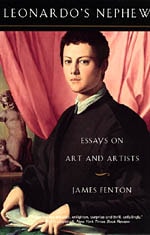
Leonardo's Nephew
Essays on Art and ArtistsJames Fenton
University of Chicago Press, 2000
"Ingenious. . . . Intrigued by emerging and unstable reputations, [Fenton] introduces us to Leonardo da Vinci's half-brother's son Pierino: a precocious sculptor celebrated by Vasari but virtually forgotten since."—Publishers Weekly
"Not surprisingly, Fenton displays throughout the passionate attentiveness of a scholar, the enthusiasm of an amateur, and the urbane cleverness of an English journalist."—Washington Post Book World
"[Fenton] is not, like Baudelaire, a poet moonlighting as art critic; he is something else again—a poetic art historian." —Karen Wright, Observer
"These essays educate, enlighten, surprise and thrill, unfailingly."—Robin Lippincott, New York Times Book Review

Let There Be Night
Testimony on Behalf of the DarkPaul Bogard
University of Nevada Press, 2008

Letters from the Country
Carol Bly
University of Minnesota Press, 1999
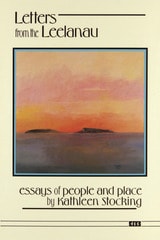
Letters from the Leelanau
Essays of People and PlaceKathleen Stocking
University of Michigan Press, 1990
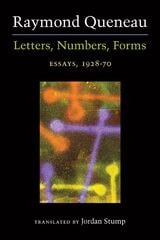
Letters, Numbers, Forms
Essays, 1928-70Raymond Queneau
University of Illinois Press, 2007
Compiled from two volumes of Raymond Queneau's essays (Bâtons, chiffres et lettres and Le Voyage en Grèce), these selections find Queneau at his most playful and at his most serious, eloquently pleading for a certain classicism even as he reveals the roots of his own wildly original oeuvre. Ranging from the funny to the furious, they follow Queneau from modernism to postmodernism by way of countless fascinating detours, including his thoughts on language, literary fashions, myth, politics, poetry, and other writers (Faulkner, Flaubert, Hugo, and Proust). Translator Jordan Stump provides an introduction as well as explanatory notes about key figures and Queneau himself.
Liberal Democracy and the Limits of Tolerance
Essays in Honor and Memory of Yitzhak RabinRaphael Cohen-Almagor, Editor
University of Michigan Press, 2000
Liberalism without Illusions
Essays on Liberal Theory and the Political Vision of Judith N. ShklarEdited by Bernard Yack
University of Chicago Press, 1996
In this tightly organized collection of essays, sixteen distinguished political theorists explore Shklar's intellectual legacy, focussing on both her own ideas and the broad range of issues that most intrigued her. The volume opens with a series of varied and illuminating assessments of Shklar's conception of liberal politics. The second section, with essays on Descartes and Racine, Hobbes, Rousseau, and Laski, emphasizes the relation between individual freedom and moral psychology in modern political thought. The third section addresses contemporary issues, such as the role of hypocrisy, offensive speech, and constitutional courts in liberal democracies. The book concludes with an autobiographical essay by Shklar that provides a vivid sense of her singular voice and personality.
The contributors to this volume are Bruce Ackerman, Seyla Benhabib, John Dunn, Amy Gutmann, Stanley Hoffmann, Stephen Holmes, George Kateb, Isaac Kramnick, Patrick Riley, Nancy Rosenblum, Quentin Skinner, Rogers M. Smith, Tracy B. Strong, Dennis F. Thompson, Michael Walzer, and Bernard Yack.
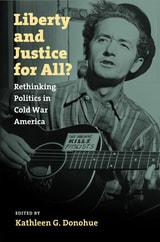
Liberty and Justice for All?
Rethinking Politics in Cold War AmericaKathleen G. Donohue
University of Massachusetts Press, 2012
From the congressional debate over the “fall of China” to the drama of the Army–McCarthy hearings to the kitchen faceoff between Richard Nixon and Nikita Khrushchev, the political history of the early Cold War was long dominated by studies of presidential administrations, anticommunism, and foreign policy. In Liberty and Justice for All? a group of distinguished historians representing a variety of disciplinary perspectives—social history, cultural history, intellectual history, labor history, urban history, women's history, African American studies, and media studies—expand on the political history of the early Cold War by rethinking the relationship between politics and culture. How, for example, did folk music help to keep movement culture alive throughout the 1950s? How did the new medium of television change fundamental assumptions about politics and the electorate? How did American experiences with religion in the 1950s strengthen the separation of church and state? How did race, class, and gender influence the relationship between citizens and the state? These are just some of the questions addressed in this wide-ranging set of essays.
In addition to volume editor Kathleen G. Donohue, contributors include Howard Brick, Kari Frederickson, Andrea Friedman, David Greenberg, Grace Elizabeth Hale, Jennifer Klein, Laura McEnaney, Kevin M. Schultz, Jason Scott Smith, Landon R. Y. Storrs, and Jessica Weiss.

Life Is What Happens While You Make Other Plans
A Memoir by Jerry Kolins
Michigan Publishing Services, 2021
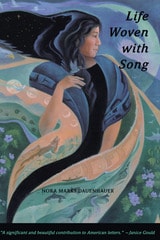
Life Woven with Song
Nora Marks Dauenhauer
University of Arizona Press, 2000
In prose, Dauenhauer presents stories such as "Egg Boat"--the tale of a twelve-year-old girl fishing the North Pacific for the first time alone--and an autobiographical piece that reveals much about Tlingit lifeways. Then in a section of short lyrical poems she offers crystalline tributes to her land and people. In a concluding selection of plays, Dauenhauer presents three Raven stories that were adapted as stage plays from oral versions told in Tlingit by three storytellers of her community. These plays were commissioned by the Naa Kahidi Theater and have been performed throughout America and Europe. They take the form of a storyteller delivering a narrative while other members of the cast act and dance in masks and costumes.
Collectively, Dauenhauer's writings form an "autoethnography," offering new insight into how the Tlingit have been affected by modernization and how Native American culture perseveres in the face of change. Despite the hardships her people have seen, this woman affirms the goodness of life as found in family and community, in daily work and play, and in tribal traditions.
Lifeworlds
Essays in Existential AnthropologyMichael Jackson
University of Chicago Press, 2012
Lights in the Forest
Rabbis Respond to Twelve Essential Jewish QuestionsRabbi Paul Citrin
Central Conference of American Rabbis, 2014
Perfect for self-study, group study, adult learning, and conversion, the collection strives to encourage further study and ongoing discussion through presenting Judaism's intellectual and spiritual tools as means for leading a life full of purpose and commitment.
Questions addressed by the anthology can found below:
-Questions about God
-Questions about Our Humanity
-Questions about the Jewish People
Like Love
Michele Morano
The Ohio State University Press, 2020
Crushes. Infatuations. Attractions. Unexpected, inexplicable allure. Entanglements steeped in taboo and disruption. In Like Love, nothing is off limits.
In these remarkable essays, Michele Morano explores the pleasures, possibilities, strangeness, and lessons of unconsummated romance. With insight and imagination, Like Love interweaves poignant, humorous episodes from adulthood with the backstory of a young family’s turbulent breakup. When Morano was an adolescent in blue-collar Poughkeepsie, New York, her mother left her father for a woman in an era when LGBTQ parents were widely viewed as “unfit.” Through the turmoil, adolescent Morano paid attention, tucking away the stories that were shaping her and guiding her understanding of love.
Turning romantic clichés inside out and challenging us to rethink our notions about what it means to love, Like Love tells hard and necessary truths about the importance of desire in growing, traveling, mourning, parenting, and figuring out who you are in the world. With precision and depth, Morano explores what it means to find ourselves in relationships that are not quite—but almost—like love.
Lincoln and Freedom
Slavery, Emancipation, and the Thirteenth AmendmentEdited by Harold Holzer and Sara Vaughn Gabbard
Southern Illinois University Press, 2007
Lincoln’s reelection in 1864 was a pivotal moment in the history of the United States. The Emancipation Proclamation had officially gone into effect on January 1, 1863, and the proposed Thirteenth Amendment had become a campaign issue. Lincoln and Freedom: Slavery, Emancipation, and the Thirteenth Amendment captures these historic times, profiling the individuals, events, and enactments that led to slavery’s abolition. Fifteen leading Lincoln scholars contribute to this collection, covering slavery from its roots in 1619 Jamestown, through the adoption of the Constitution, to Abraham Lincoln’s presidency.
This comprehensive volume, edited by Harold Holzer and Sara Vaughn Gabbard, presents Abraham Lincoln’s response to the issue of slavery as politician, president, writer, orator, and commander-in-chief. Topics include the history of slavery in North America, the Supreme Court’s Dred Scott decision, the evolution of Lincoln’s view of presidential powers, the influence of religion on Lincoln, and the effects of the Emancipation Proclamation.
This collection effectively explores slavery as a Constitutional issue, both from the viewpoint of the original intent of the nation’s founders as they failed to deal with slavery, and as a study of the Constitutional authority of the commander-in-chief as Lincoln interpreted it. Addressed are the timing of Lincoln’s decision for emancipation and its effect on the public, the military, and the slaves themselves.
Other topics covered include the role of the U.S. Colored Troops, the election campaign of 1864, and the legislative debate over the Thirteenth Amendment. The volume concludes with a heavily illustrated essay on the role that iconography played in forming and informing public opinion about emancipation and the amendments that officially granted freedom and civil rights to African Americans.
Lincoln and Freedom provides a comprehensive political history of slavery in America and offers a rare look at how Lincoln’s views, statements, and actions played a vital role in the story of emancipation.
Lincoln's America
1809 - 1865Edited by Joseph R. Fornieri and Sara Vaughn Gabbard
Southern Illinois University Press, 2008
To fully understand and appreciate Abraham Lincoln’s legacy, it is important to examine the society that influenced the life, character, and leadership of the man who would become the Great Emancipator. Editors Joseph R. Fornieri and Sara Vaughn Gabbard have done just that in Lincoln’s America: 1809–1865, a collection of original essays by ten eminent historians that place Lincoln within his nineteenth-century cultural context.
Among the topics explored in Lincoln’s America are religion, education, middle-class family life, the antislavery movement, politics, and law. Of particular interest are the transition of American intellectual and philosophical thought from the Enlightenment to Romanticism and the influence of this evolution on Lincoln's own ideas.
By examining aspects of Lincoln’s life—his personal piety in comparison with the beliefs of his contemporaries, his success in self-schooling when frontier youths had limited opportunities for a formal education, his marriage and home life in Springfield, and his legal career—in light of broader cultural contexts such as the development of democracy, the growth of visual arts, the question of slaves as property, and French visitor Alexis de Tocqueville’s observations on America, the contributors delve into the mythical Lincoln of folklore and discover a developing political mind and a changing nation.
As Lincoln’s America shows, the sociopolitical culture of nineteenth-century America was instrumental in shaping Lincoln’s character and leadership. The essays in this volume paint a vivid picture of a young nation and its sixteenth president, arguably its greatest leader.
Lincoln's Legacy
Ethics and PoliticsEdited by Phillip Shaw Paludan
University of Illinois Press, 2007
The four new essays in Lincoln's Legacy describe major ethical problems that the sixteenth president navigated what can be learned from how he did so. The distinguished and award-winning Lincoln scholars William Miller, Mark E. Neely Jr., Phillip Shaw Paludan, and Mark Summers describe Lincoln’s attitudes and actions during encounters with questions of politics, law, constitutionalism, patronage, and democracy. The remarkably focused essays include an assessment of Lincoln's virtues in the presidency, the first study on Lincoln and patronage in more than a decade, a challenge to the cliché of Lincoln the democrat, and a study of habeas corpus, Lincoln, and state courts. On the eve of the bicentennial celebration of Lincoln’s birth, Lincoln’s Legacy highlights his enduring importance in contemporary conversations about law, politics, and democracy.
Lincoln, the Law, and Presidential Leadership
Edited by Charles M. Hubbard
Southern Illinois University Press, 2015
The volume’s contributors not only address specific situations and issues that assisted in Lincoln’s development of a new understanding of law and its application but also show Lincoln’s remarkable presidential leadership. Among the topics covered are civil liberties during wartime; presidential pardons; the law and Lincoln’s decision-making process; Lincoln’s political ideology and its influence on his approach to citizenship; Lincoln’s defense of the Constitution, the Union, and popular government; constitutional restraints on Lincoln as he dealt with slavery and emancipation; the Lieber codes, which set forth how the military should deal with civilians and with prisoners of war; the loyalty (or treason) of government employees, including Lincoln’s domestic staff; and how Lincoln’s image has been used in presidential rhetoric. Although varied in their strategies and methodologies, these essays expand the understanding of Lincoln’s vision for a united nation grounded in the Constitution.
Lincoln, the Law, and Presidential Leadership shows how the sixteenth president’s handling of complicated legal issues during the Civil War, which often put him at odds with the Supreme Court and Congress, brought the nation through the war intact and led to a transformation of the executive branch and American society.
Line upon Line
Essays on Mormon DoctrineGary J. Bergera
Signature Books, 1989
Among the contributors are Thomas G. Alexander, Peter C. Appleby, George Boyd, David John Buerger, Van Hale, Boyd Kirkland, Blake Ostler, Stephen L Richards, Kent E. Robson, Thaddeus E. Shoemaker, Vern Swanson, Dan Vogel, and Linda P. Wilcox.
For anyone who has assumed that Mormon doctrine appeared whole-cloth in a single revelation, Line Upon Line is an important primer. No issue, however central to Latter-day Saint theology, is exempt from gradual development over time. This includes the nature of God, the progression of the soul, free agency, the possibility of repentance and forgiveness through a divine sacrifice, the creation of the world, evolution of the species, and the nature and origin of evil.
In Line Upon Line, sixteen thoughtful, compelling essays offer reflective historical discussions of the development of Mormon doctrine from the statements of church leaders to the writings of LDS theologians to canonized scripture, rather than on the authors’ personal speculations. Noting the relative strengths and weaknesses of various theological or doctrinal teachings due to limited human understanding, the contributors suggest that differences of opinion can indicate the presence of genuine and sincere faith that God’s truth is nevertheless present in scriptural metaphor.
Lineages of the Literary Left
Essays in Honor of Alan M. WaldHoward Brick, Robbie Lieberman, and Paula Rabinowitz, Editors
Michigan Publishing Services, 2015
Lingering Inland
A Literary Tour of the MidwestEdited by Andy Oler Foreword by José Olivarez
University of Illinois Press, 2025
Lion and Lamb
A Portrait of British Moral DualityMihir Bose
Haus Publishing, 2018
In Britain’s Eternal Dilemma, Mihir Bose shows how those who voted to leave the E.U. want Britain to roar like a lion. In contrast, the Remainers saw Brexit as a self-inflicted wound, believing the only option is to live symbiotically with the rest of Europe for a common future. Writing from the unique perspective of an immigrant, Bose personifies this ongoing debate: He has experienced racism in his near half century in Britain, but he has also been provided unimaginable opportunities to become a writer, opportunities he would never have had in his native India. This timely book demonstrates that Britain is still wresting with its two-sided identity while also showing that Brexit is still the number one priority on the European political agenda.
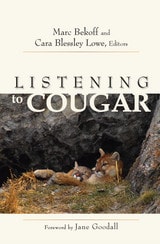
Listening to Cougar
Marc Bekoff
University Press of Colorado, 2007
Contributors include: Rick Bass, Marc Bekoff, Janay Brun, Julia B. Corbett, Deanna Dawn, J. Frank Dobie, Suzanne Duarte, Steve Edwards, Joan Fox, Gary Gildner, Wendy Keefover-Ring, Ted Kerasote, Christina Kohlruss, Barry Lopez, BK Loren, Cara Blessley Lowe, Steve Pavlik, David Stoner, and Linda Sweanor.
Marc Bekoff has published twenty books, including The Emotional Lives of Animals, and is a professor emeritus of ecology and evolutionary biology at the University of Colorado at Boulder. Writer and photographer Cara Blessley Lowe is author of Spirit of the Rockies and co-founder of The Cougar Fund.
BK Loren, in Listening to Cougar: "If the lion, in all its dark, nocturnal otherness, in all its light, internal sameness, does not exist for future generations, if we destroy its habitat, or call open season on it, what could we possibly find to replace it? It is precisely because we fear large predators that we need them. They hold within them so many things that we have lost, or are on the verge of losing, personally and collectively, permanently and forever. If we sacrifice the fear, we also sacrifice the strength, the wildness, the beauty, the awe." Foreword by Jane Goodall
Lit from Within
Contemporary Masters on the Art and Craft of WritingKevin Haworth; Dinty W. Moore
Ohio University Press, 2011
Literary Imagination, Ancient and Modern
Essays in Honor of David GreneEdited by Todd Breyfogle
University of Chicago Press, 1999
Ranging as widely as Grene's own interests in Greek and Roman antiquity, in drama, poetry, and the novel, in the art of translation, and in English history, these essays include discussions of the Odyssey and Ulysses, the Metamorphoses of Ovid and Apuleius, Mallarmé's English and T. S. Eliot's religion, and the mutually antipathetic minds of Edmund Burke and Thomas Jefferson. The introduction by Todd Breyfogle sketches for the first time the contours of Grene's own thought.
Classicists, political theorists, intellectual historians, philosophers, and students of literature will all find much of value in the individual essays here and in the juxtaposition of their themes.
Contributors: Saul Bellow, Seth Benardete, Todd Breyfogle, Amirthanayagam P. David, Wendy Doniger, Mary Douglas, Joseph N. Frank, Victor Gourevitch, Nicholas Grene, W. R. Johnson, Brendan Kennelly, Edwin McClellan, Françoise Meltzer, Stephanie Nelson, Conor Cruise O'Brien, Martin Ostwald, Robert B. Pippin, James Redfield, Sandra F. Siegel, Norma Thompson, and David Tracy
Literary Journalism across the Globe
Journalistic Traditions and Transnational InfluencesJohn S. Bak
University of Massachusetts Press, 2011
At the end of the nineteenth century, several countries were developing journalistic traditions similar to what we identify today as literary reportage or literary journalism. Yet throughout most of the twentieth century, in particular after World War I, that tradition was overshadowed and even marginalized by the general perception among democratic states that journalism ought to be either “objective,” as in the American tradition, or “polemical,” as in the European. Nonetheless, literary journalism would survive and, at times, even thrive. How and why is a story that is unique to each nation.
Though largely considered an Anglo-American phenomenon today, literary journalism has had a long and complex international history, one built on a combination of traditions and influences that are sometimes quite specific to a nation and at other times come from the blending of cultures across borders. These essays examine this phenomenon from various international perspectives, documenting literary journalism's rich and diverse heritage and describing its development within a global context.
In addition to the editors, contributors include David Abrahamson, Peiqin Chen, Clazina Dingemanse, William Dow, Rutger de Graaf, John Hartsock, Nikki Hessell, Maria Lassila-Merisalo, Edvaldo Pereira Lima, Willa McDonald, Jenny McKay, Sonja Merljak Zdovc, Sonia Parratt, Norman Sims, Isabel Soares,and Soenke Zehle.